
Umberto Eco: A Library of the World – Official Trailer
I’ve shared the video below before, but a few years ago, and it’s still great.
Umberto Eco, “I was always narrating“
Umberto Eco: A Library of the World – Official Trailer
I’ve shared the video below before, but a few years ago, and it’s still great.
Umberto Eco, “I was always narrating“
Given how connected he was, I suppose it was only a matter of time before my Indo-European research project led me in the direction of T.S. Eliot. It came in the lead I was following with Jean de Menasce, who was instrumental in getting Émile Benveniste out of France in the second world war.
De Menasce was from a Jewish family, born in Egypt, who later converted and became a Catholic priest. He was a student of Benveniste’s in the 1930s, and became a major scholar of Zoroastrianism. De Menasce and Graham Greene were students together at Balliol College in Oxford in the early 1920s, and de Menasce got to know Eliot around that time. Eliot had only been at Oxford for a year, and left before de Menasce was there, but it seems it was on his return visits he got to know de Menasce. De Menasce translated Eliot into French, as he also did Bertrand Russell around the same time. Jean-Michel Roessli has written about Eliot and de Menasce (academia.edu).
It seems de Menasce’s archive used to be at the Bibliothèque du Saulchoir (which Foucault used at the end of his life, and which used to have the papers of the Centre Michel Foucault) but is now at the Bibliothèque universitaire des langues et civilisations (BULAC). There are a few letters from Benveniste and Dumézil there, so it’s on a list of places to visit at some point. [Update: there are papers by de Menasce at both BULAC and Saulchoir. I say a little about my visit to Saulchoir here.]
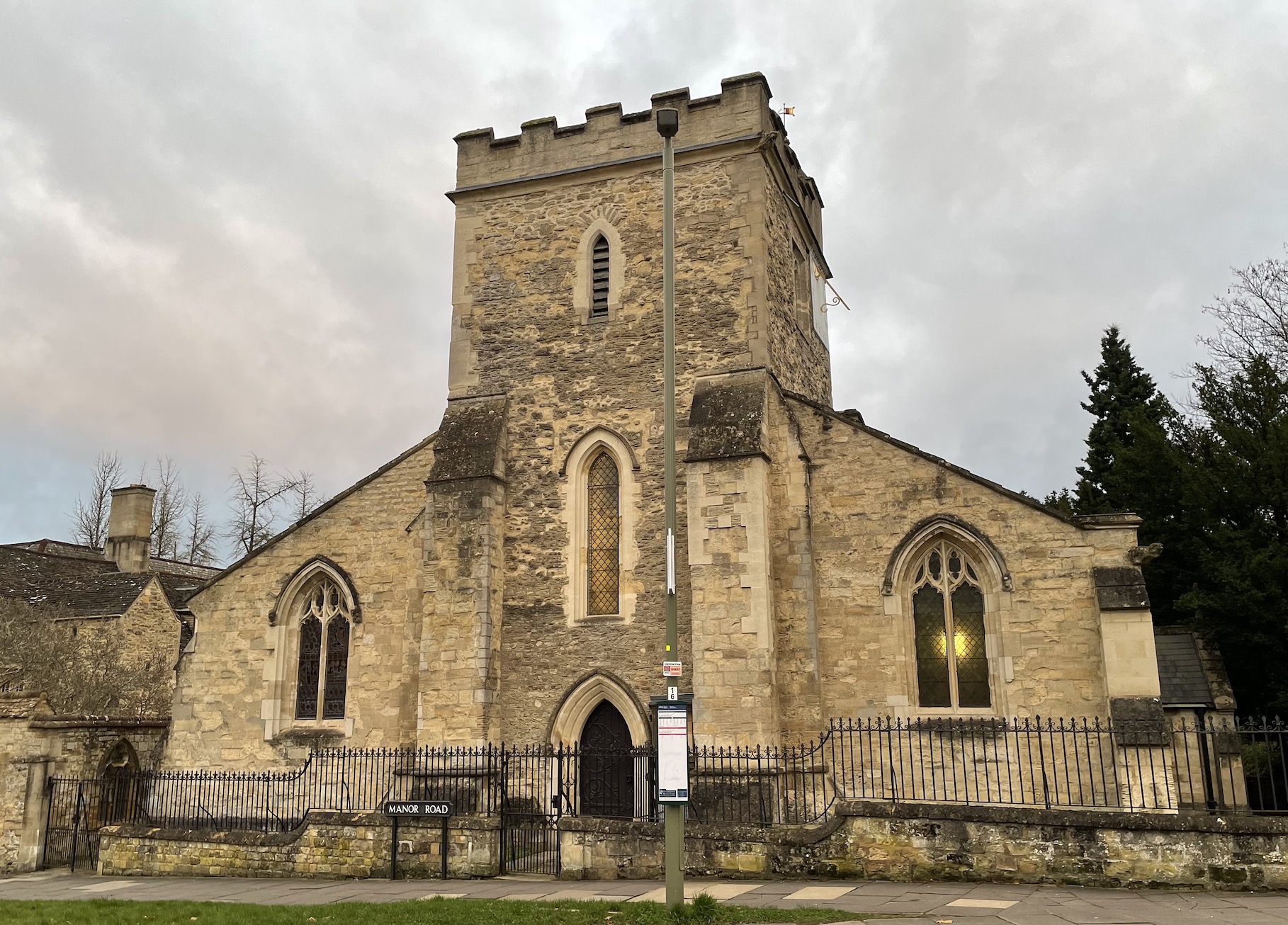
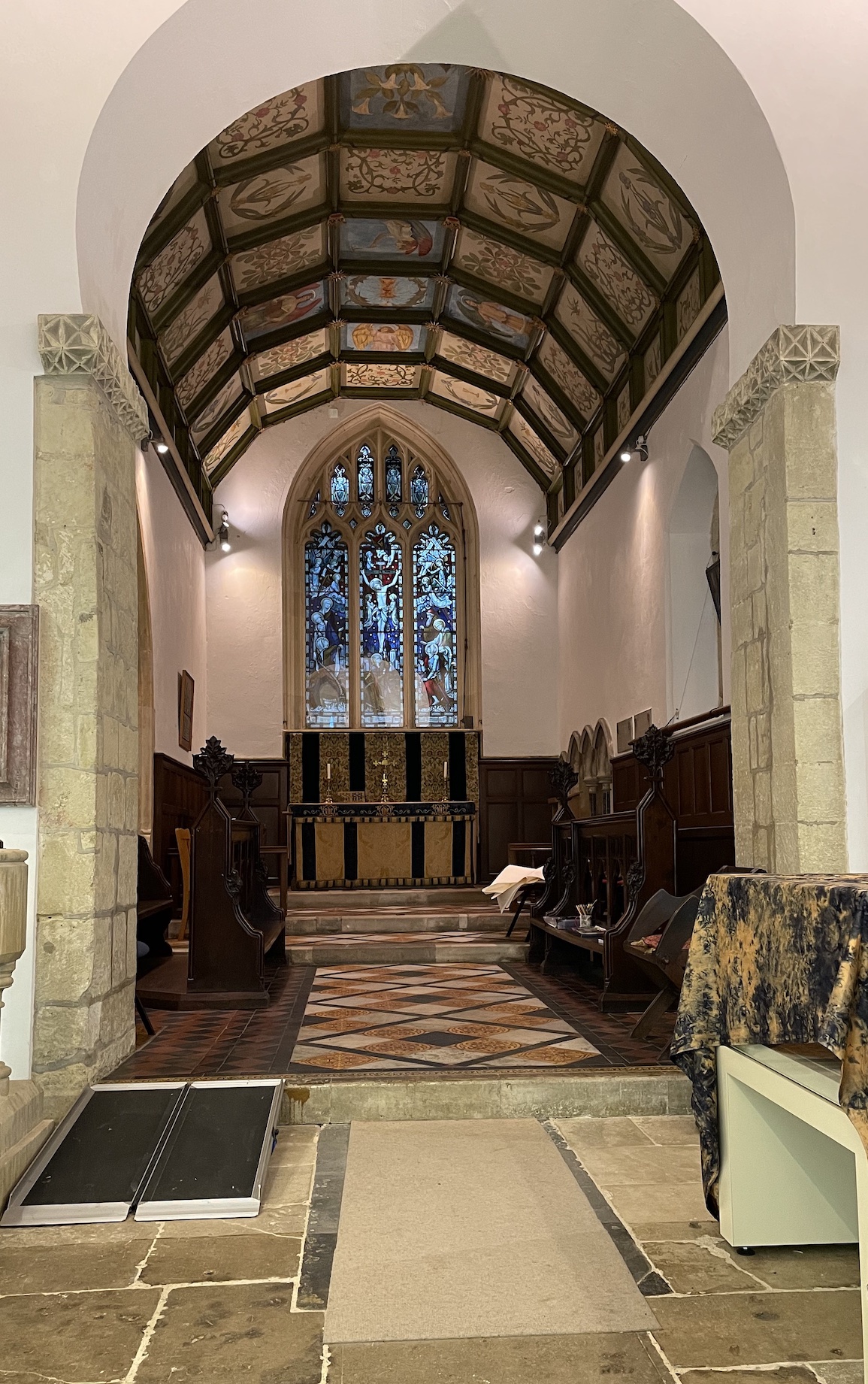
But then I found that de Menasce had donated some material relating to Eliot to Balliol College. And since I wanted to go to Oxford to see a couple of books at the Bodleian, this was an easy side-trip. The Balliol archive is not at the main college library, but at St Cross Church, Holywell, a short walk away. Going there was an interesting way to spend an afternoon, though cold, as the reading room is in the nave of the church. De Menasce’s donation includes the books Eliot dedicated to him, some of the translations he made, both in published form and proofs, a little correspondence and related materials. (The list of material is here.)
Update 24 May 2024: In the Benveniste archive at the Bibliothèque nationale de France, there are his translations of Eliot’s Four Quartets. Chloé Laplantine has dated these to 1947. As her abstract notes, there is no context to the translations in the file.
Bruno Latour, How to Inhabit the Earth: Interviews with Nicolas Truong, trans. Julie Rose – Polity, October 2023
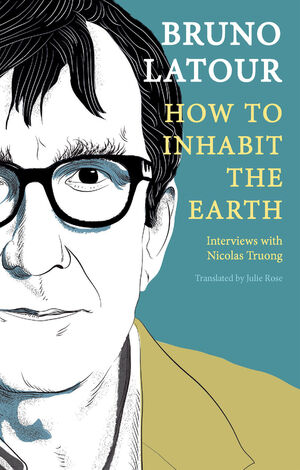
In a series of televised interviews broadcast in spring 2022, Bruno Latour explained, in clear and straightforward terms, how humans have changed the planet and why environmental disasters are an intrinsic part of modern life. We have now come to realize that all life depends on a thin skin of our planet that is only few kilometres thick – what scientists call the ‘critical zone’. Our capacity to continue to live on a planet we are transforming is now at risk and if we wish to survive as a species, we must put an end to the mechanisms of destruction, rethink our connection to living beings, and face head-on the confrontation between the extractivists who are exploiting the Earth’s resources and the ecologists.
This poignant reflection on the greatest challenge of our time was also an opportunity for Latour to explain the underlying thread that guided his work throughout his career, from his pathbreaking research on the social construction of scientific knowledge to his last writings on the Anthropocene.
Julien Larregue, Hereditary: The Persistence of Biological Theories of Crime – Stanford University Press, January 2024
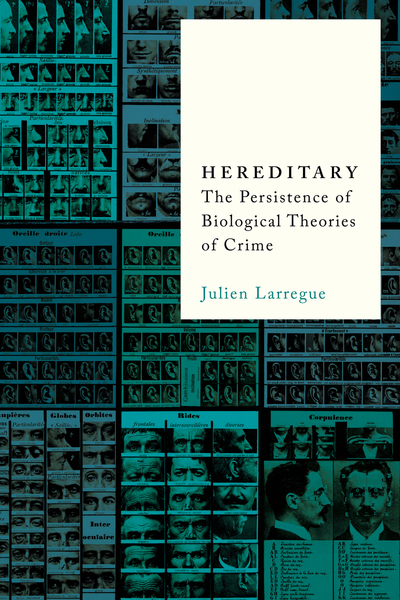
Since the 1990s, a growing number of criminal courts around the world have been using expert assessments based on behavioral genetics and neuroscience to evaluate the responsibility and dangerousness of offenders. Despite this rapid circulation, however, we still know very little about the scientific knowledge underlying these expert evaluations. Hereditary traces the historical development of biosocial criminology in the United States from the 1960s to the present, showing how the fate of this movement is intimately linked to that of the field of criminology as a whole. In claiming to identify the biological and environmental causes of so-called “antisocial” behaviors, biosocial criminologists are redefining the boundary between the normal and the pathological. Julien Larregue examines what is at stake in the development of biosocial criminology. Beyond the origins of delinquency, Larregue addresses the reconfiguration of expertise in contemporary societies, and in particular the territorial struggles between the medical and legal professions. For if the causes of crime are both biological and social, its treatment may call for medical as well as legal solutions.
Jeffrey Ahlman, Ghana: A Political and Social History – Bloomsbury, November 2023
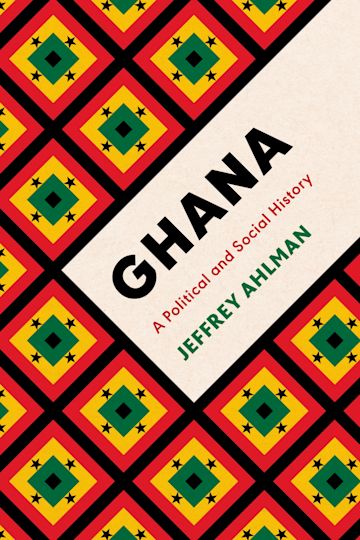
Few African countries have attracted the international attention that Ghana has. In the late-nineteenth and early twentieth centuries, the then-colonial Gold Coast emerged as a key political and intellectual hub for British West Africa. Half a century later, when Ghana became the first sub-Saharan state to emerge from European colonial rule, it became a key site for a burgeoning, transnational, African anticolonial politics that drew activists, freedom fighters, and intellectuals from around the world. As the twentieth century came to a close, Ghana also became an international symbol of the putative successes of post-Cold-War African liberalization and democratization projects.
Here Jeffrey Ahlman narrates this rich political history stretching from the beginnings of the very idea of the “Gold Coast” to the country’s 1992 democratization, which paved the way for the Fourth Republic. At the same time, he offers a rich social history stretching that examines the sometimes overlapping, sometimes divergent nature of what it means to be Ghanaian through discussions of marriage, ethnicity, and migration; of cocoa as a cultural system; of the multiple meanings of chieftaincy; and of other contemporary markers of identity. Throughout it all, Ahlman distills decades of work by other scholars while also drawing on a wide array of archival, oral, journalistic, and governmental sources in order to provide his own fresh insights.
For its clear, comprehensive coverage not only of Ghanaian history, but also of the major debates shaping nineteenth- and twentieth-century African politics and society more broadly, Ghana: A Political and Social History is a must-read for students and scholars of African Studies.
Joseph Albernaz, Common Measures: Romanticism and the Groundlessness of Community – Stanford University Press, August 2024
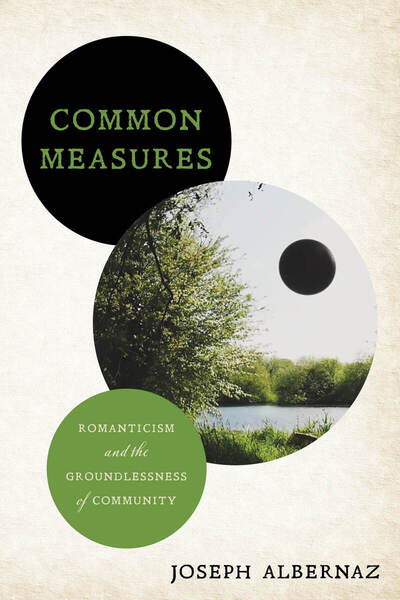
What happens to the experience of community when the grounds of communal life collapse? The Romantic period’s upheaval cast both traditional communal organizations of life and outgrowths of the new revolutionary age into crisis. In this context, Joseph Albernaz argues that Romantic writers articulate a vital conception of “groundless community,” while following this idea through its aesthetic, ecological, political, and philosophical registers into the present.
Amidst the violent expropriation of the commons, Romantic writers including the Wordsworths, Clare, Hölderlin, and the revolutionary abolitionist Robert Wedderburn reimagined the forms of their own lives through literature to conceive community as groundless, a disposition toward radically open forms of sharing—including with nonhuman beings—without recourse to any collective identity. Both a poetics and ethics, groundless community names an everyday sociality that surges beneath and against the enclosures of property and identity, binding us to the movements of the earth.
Unearthing Romanticism’s intersections with the history of communism and the general strike, Albernaz also demonstrates how Romantic literature’s communal imagination reverberates through later theories of community in Bataille, Derrida, Nancy, Moten, and others. With sharp close readings, new historical constellations, and innovative theoretical paradigms, Common Measures recasts the relationship of the Romantic period to the basic terms of modernity.
Philip Hutch and Elaine Stratford, Landscape, Association, Empire: Imagining Van Diemen’s Land – Palgrave Macmillan, 2023
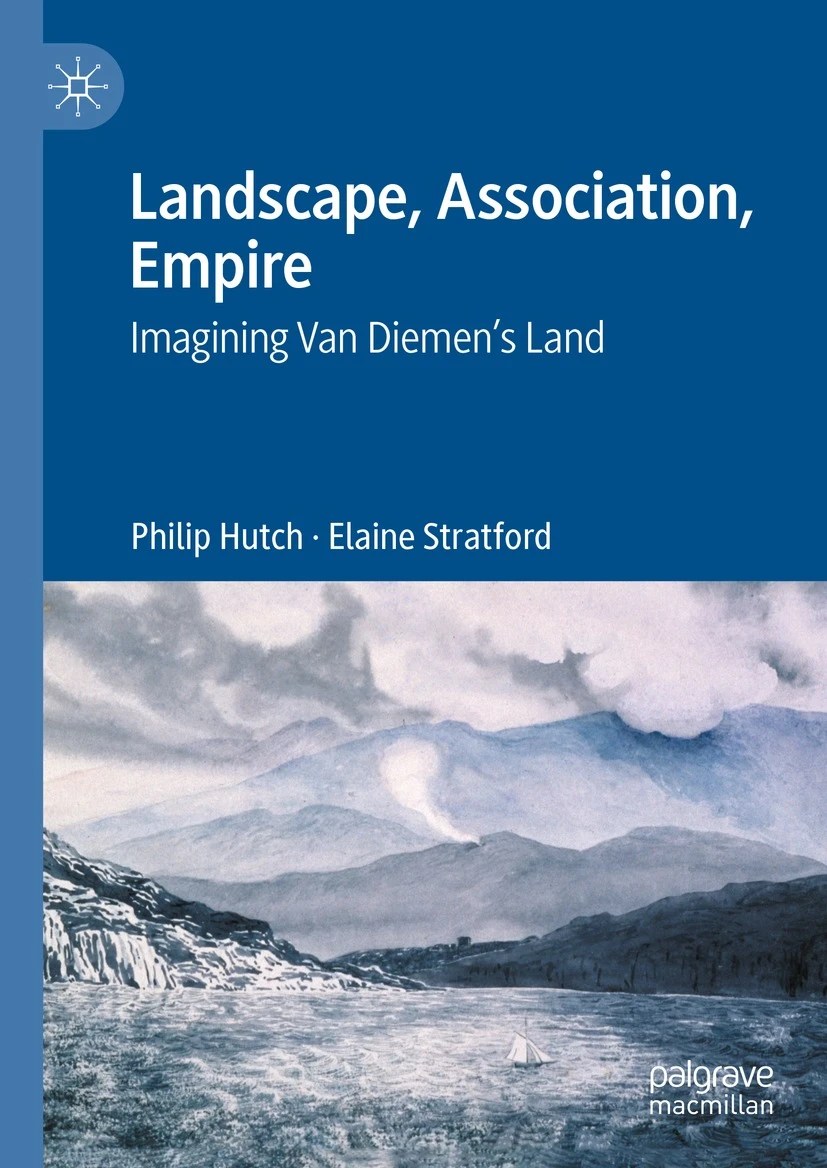
This book tells a compelling story about invasion, settler colonialism, and an emergent sense of identity in place, as seen through topographical and landscape images by seven fascinating artists. Their ways of imagining the Vandemonian landscape are part of a much larger story about how aesthetic forces shaped empire and colony, place and migration, and people’s lives. They remain intriguing through-lines of global significance and local meaning.
At Foucault News, Clare O’Farrell asks for information – What fountain pen did Foucault write with?
Editor: I have recently developed an interest in fountain pens and was wondering if anybody knew what brand of fountain pen Foucault used? He may have used a biro (like Ian Fleming) but most writers at the time he was writing would have used fountain pens.
From the biographies and from those currently working in the archives we know he wrote by hand and that his writing is no easy matter to decypher. He had a secretary who was expert in decyphering his writing and typing up his work for publication.
For those of you curious about the writing instruments used by other philosophers and Martin Heidegger in particular, there is an interesting discussion on the Fountain Pen Network concerning Heidegger’s writing instruments and a most informative article by Richard Polt titled ‘Heidegger’s Typewriter’ published in 2022. (With thanks to Stuart Elden for both these references.)
If you have any information, feel free to leave a comment on this post or to email me directly.
For several years Bernard Harcourt and colleagues at The Columbia Center for Contemporary Critical Thought have been running a series of 13/13 seminars. The seminars usually have short essays by participants available online, and now they are being collected on a single site – The 13/13 Essays. Includes the sessions on Foucault, Nietzsche, Critique, Revolution, Praxis, Utopia, Abolition Democracy and the current series on Coöperism.
W.C. Hackett, Outside the Gates – Angelico, 2021
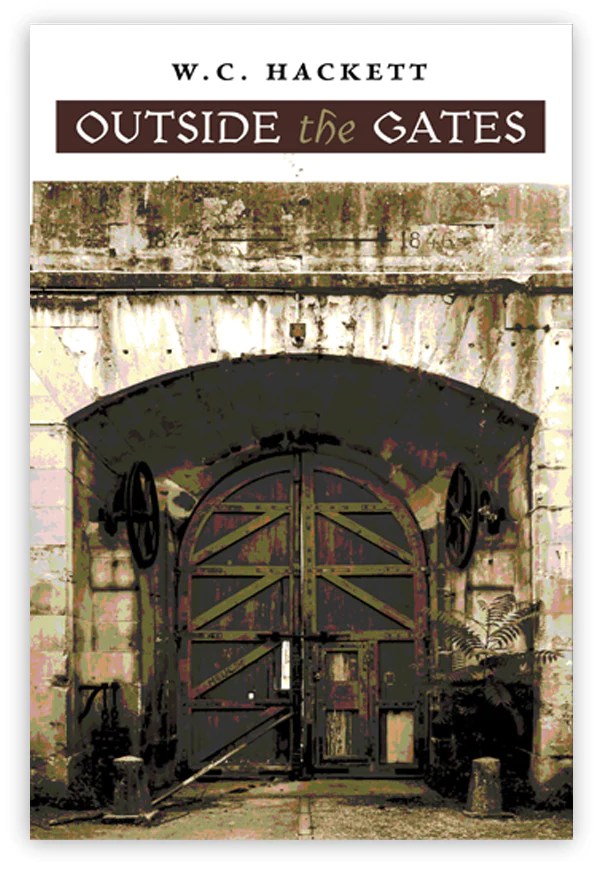
The gates of Drancy Internment Camp in the northeast suburbs of Paris served as a holding pen for thousands of Jews during the German occupation of France in World War II. Jean Wahl, philosophy professor, poet, bachelor at the top of Parisian society before his arrest, was among those very few who escaped.
In this searing historical novel by W. C. Hackett, the story is told in Wahl’s own voice, from the moment he passed beyond the gates of the camp to his harrowing flight for the Free Zone in the south. Based on extensive archival research, Outside the Gates binds by spell in a work of vast interior proportions, bringing the reader face to face with the defining mortal questions Jean Wahl himself faces recollecting his year of trial.

