Raymond Ruyer, Cybernetics and the Origin of Information, Rowman & Littlefield, December 2023

Raymond Ruyer, Cybernetics and the Origin of Information, trans. Amélie Berger-Soraruff, Andrew Iliadis, Daniel W. Smith and Ashley Woodward, Rowman & Littlefield, December 2023

[October 2025: link updated to the Bloomsbury site. They also publish the earlier translation The Genesis of Living Forms.]

One of the lost classics of French philosophy, Cybernetics and the Origin of Information has never before been published in English. Raymond Ruyer—who was a major influence on Simondon and Deleuze, among others—originally wrote this book, one of the first critiques of Norbert Wiener’s cybernetics program, in 1954. At once critical and analytical, it is a deep exploration of information theory, cybernetics, and the philosophical assumptions and implications of both. Among the themes covered in the book are the main types of information machines, information’s relationship to behavior and communication, and the nature of entropy and time in cybernetics. This translation contributes to understanding the rich history of cybernetics and the philosophy of information. A true hidden gem in the history of philosophical thought, this text will help readers understand foundational criticisms of ideas that have led to artificial intelligence.
Posted in Raymond Ruyer | Leave a comment

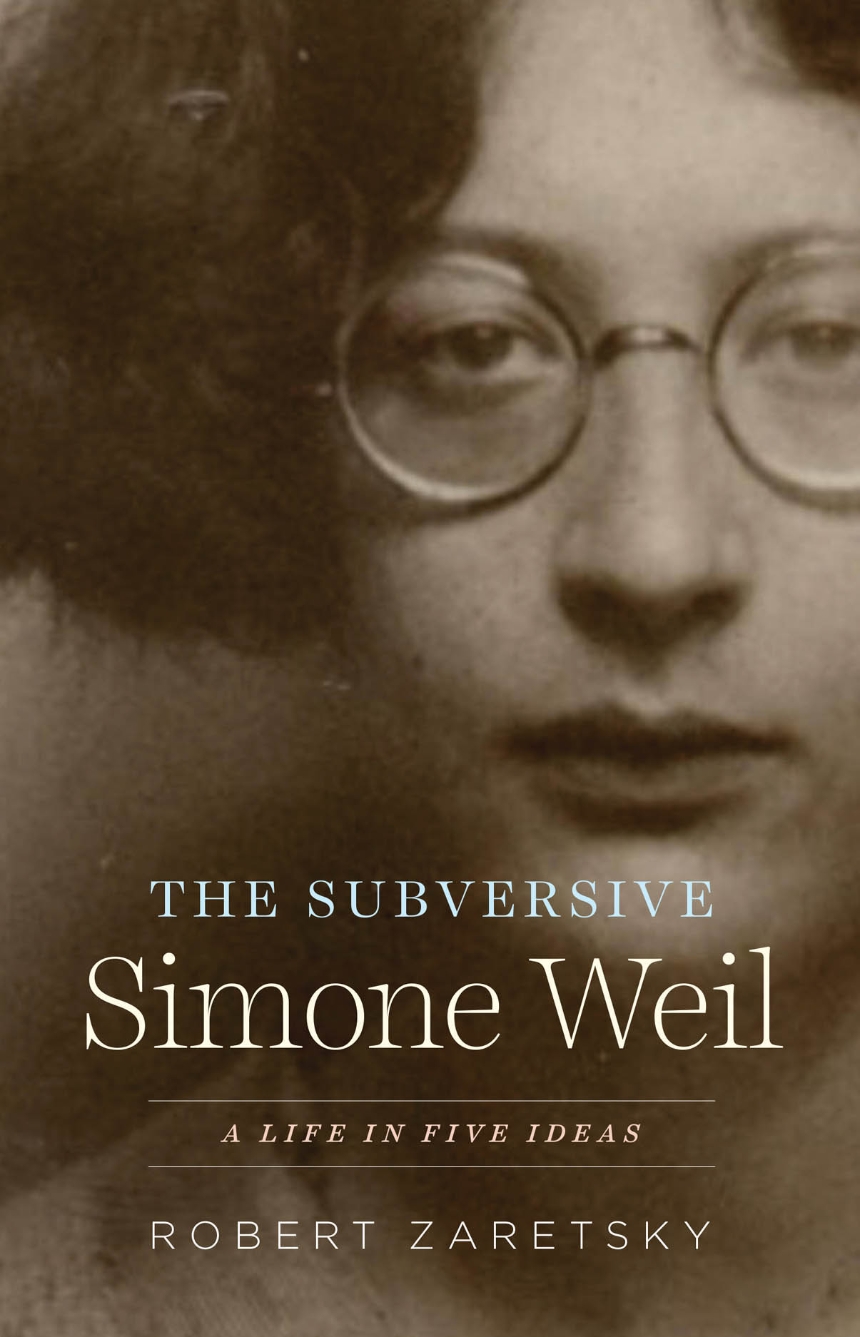
Robert Zaretsky, The Subversive Simone Weil: A Life in Five Ideas – University of Chicago Press, 2021, paperback 2023

Robert Zaretsky, The Subversive Simone Weil: A Life in Five Ideas – University of Chicago Press, 2021, paperback 2023

Known as the “patron saint of all outsiders,” Simone Weil (1909–43) was one of the twentieth century’s most remarkable thinkers, a philosopher who truly lived by her political and ethical ideals. In a short life framed by the two world wars, Weil taught philosophy to lycée students and organized union workers, fought alongside anarchists during the Spanish Civil War and labored alongside workers on assembly lines, joined the Free French movement in London and died in despair because she was not sent to France to help the Resistance.

Though Weil published little during her life, after her death, thanks largely to the efforts of Albert Camus, hundreds of pages of her manuscripts were published to critical and popular acclaim. While many seekers have been attracted to Weil’s religious thought, Robert Zaretsky gives us a different Weil, exploring her insights into politics and ethics, and showing us a new side of Weil that balances her contradictions—the rigorous rationalist who also had her own brand of Catholic mysticism; the revolutionary with a soft spot for anarchism yet who believed in the hierarchy of labor; and the humanitarian who emphasized human needs and obligations over human rights. Reflecting on the relationship between thought and action in Weil’s life, The Subversive Simone Weil honors the complexity of Weil’s thought and speaks to why it matters and continues to fascinate readers today.

Posted in Uncategorized | Leave a comment

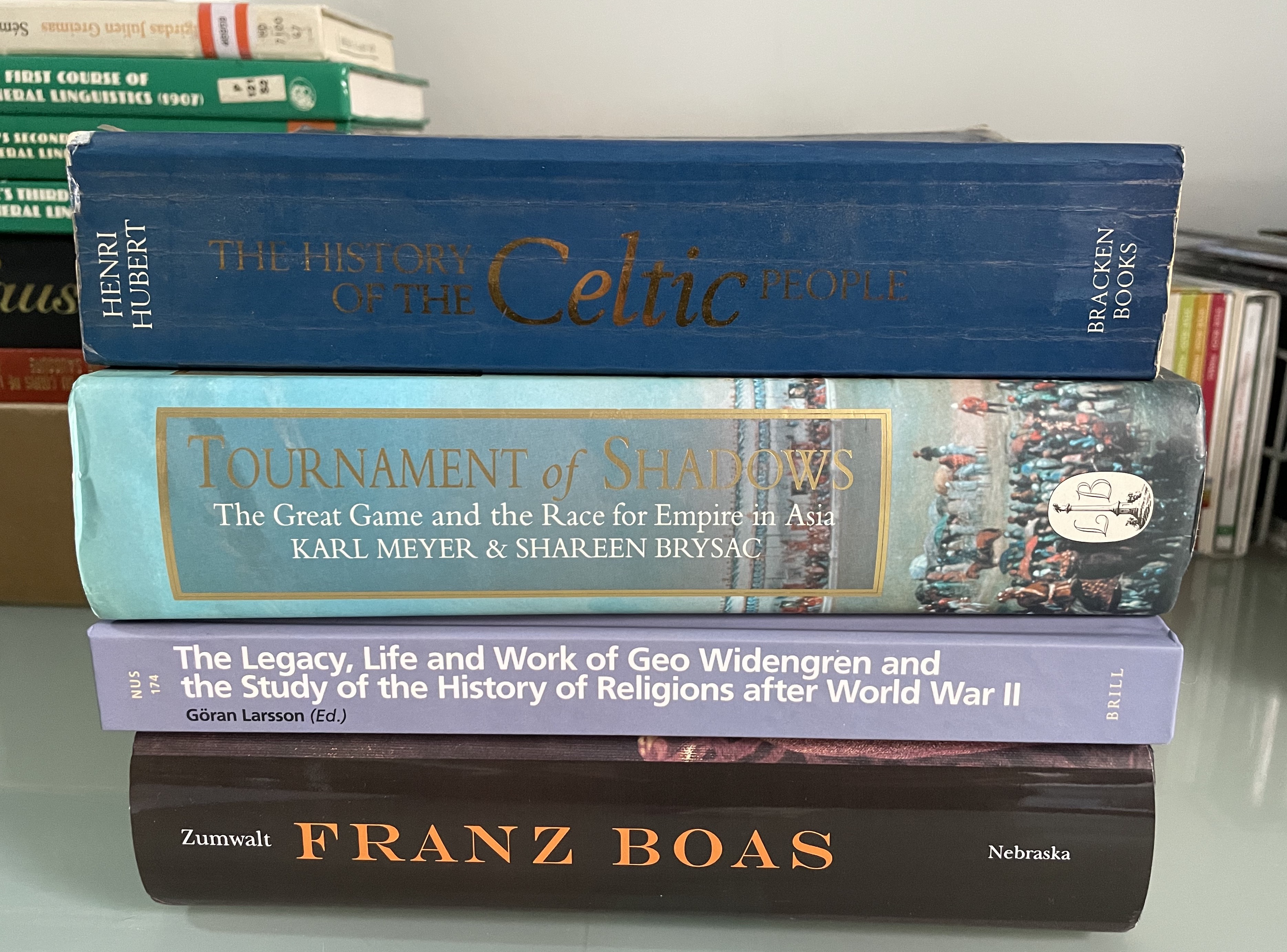
Books received – Hubert, Meyer & Brysac, Larsson, Zumwalt

Henri Hubert’s History of the Celtic Peoples (which contains two of his French books in translation); Karl Meyer and Sharon Brysac, Tournament of Shadows: The Great Game and the Race for Empire in Asia; Gören Larsson (ed.), The Legacy, Life and Work of Geo Widengren and the Study of the History of Religions after World War II; and the second volume of Rosemary Lévy Zumwalt’s biography – Franz Boas: Shaping Anthropology and Fostering Social Justice.

Posted in Uncategorized | Leave a comment

Vladimir Hamed-Troyansky, Empire of Refugees: North Caucasian Muslims and the Late Ottoman State – Stanford University Press, February 2024

Vladimir Hamed-Troyansky, Empire of Refugees: North Caucasian Muslims and the Late Ottoman State – Stanford University Press, February 2024

Between the 1850s and World War I, about one million North Caucasian Muslims sought refuge in the Ottoman Empire. This resettlement of Muslim refugees from Russia changed the Ottoman state. Circassians, Chechens, Dagestanis, and others established hundreds of refugee villages throughout the Ottoman Balkans, Anatolia, and the Levant. Most villages still exist today, including what is now the city of Amman. Muslim refugee resettlement reinvigorated regional economies, but also intensified competition over land and, at times, precipitated sectarian tensions, setting in motion fundamental shifts in the borderlands of the Russian and Ottoman empires.

Empire of Refugees reframes late Ottoman history through mass displacement and reveals the origins of refugee resettlement in the modern Middle East. Vladimir Hamed-Troyansky offers a historiographical corrective: the nineteenth-century Ottoman Empire created a refugee regime, predating refugee systems set up by the League of Nations and the United Nations. Grounded in archival research in over twenty public and private archives across ten countries, this book contests the boundaries typically assumed between forced and voluntary migration, and refugees and immigrants, rewriting the history of Muslim migration in the nineteenth and early twentieth centuries.

Posted in Uncategorized | Leave a comment

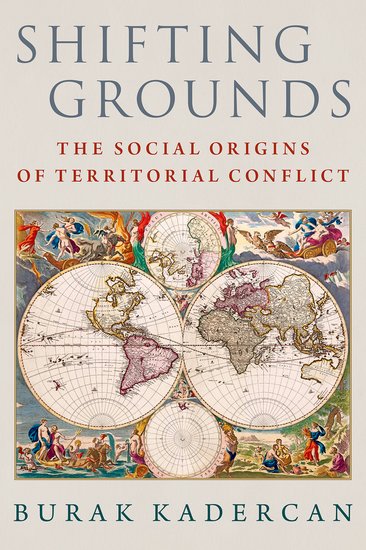
Burak Kadercan, Shifting Grounds: The Social Origins of Territorial Conflict – Oxford University Press, October 2023

Burak Kadercan, Shifting Grounds: The Social Origins of Territorial Conflict – Oxford University Press, October 2023

Territory has always played a key role in the origins, conduct, and consequences of armed conflict. For territories to exist in any meaningful sense, human groups need to think of them in the first place, and then act upon these thoughts: territory is what states and societies make of it. 

In Shifting Grounds, Burak Kadercan draws upon a wide variety of cases, ranging from the Thirty Years War to ISIS, to examine the relationship between “territorial ideas” and armed conflict. He argues that states and societies have adhered to different forms of territoriality across time and space, and territory, as well as territorial control, has meant different things in different time periods and regions. Building on this premise, Kadercan makes two claims. First, how state elites conceive territory within and beyond their domains affects their military objectives as well as methods and strategies for waging war. Second, adherence to different forms of territoriality leads to different modes and patterns of war, and wars themselves may affect how state elites and societies conceive territories. Kadercan then turns to the transformative roles that wars can play in shaping dominant territorial ideas and geopolitical assumptions and how the impact of such wars differs in Western and non-Western regions. 

Ranging broadly across different eras and world regions, Shifting Grounds sheds light on the shifting nature of the relationship between territorial ideas and armed conflict not only in the context of the distant the past, but also in present-day global politics.

Posted in Uncategorized | Leave a comment

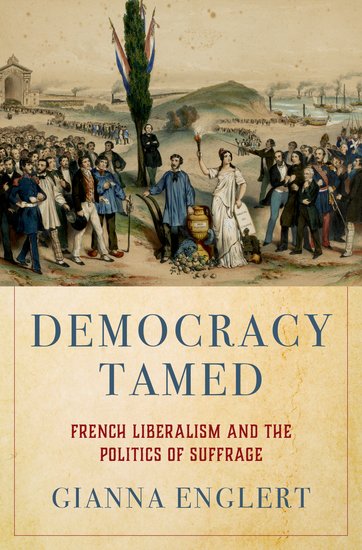
Gianna Englert, Democracy Tamed: French Liberalism and the Politics of Suffrage, Oxford University Press, April 2024

Gianna Englert, Democracy Tamed: French Liberalism and the Politics of Suffrage, Oxford University Press, April 2024

Does good democratic government require intelligent, moral, and productive citizens? Can our political institutions educate the kind of citizens we wish or need to have? With recent arguments “against democracy” and fears about the rise of populism, there is growing scepticism about whether liberalism and democracy can continue to survive together. Some even question whether democracy is worth saving. 

In Democracy Tamed, Gianna Englert argues that the dilemmas facing liberal democracy are not unique to our present moment, but have existed since the birth of liberal political thought in nineteenth-century France. Combining political theory and intellectual history, Englert shows how nineteenth-century French liberals championed the idea of “political capacity” as an alternative to democratic political rights and argued that voting rights should be limited to capable citizens who would preserve free, stable institutions against revolutionary passions and democratic demands. Liberals also redefined democracy itself, from its ancient meaning as political rule by the people to something that, counterintuitively, demanded the guidance of a capable few rather than the rule of all.

Understandably, scholarly treatments of political capacity have criticized the idea as exclusionary and potentially dangerous. Englert argues instead that political capacity was a flexible standard that developed alongside a changing society and economy, allowing liberals to embrace democracy without abandoning their first principles. She reveals a forgotten, uncharted path of liberalism in France that remained open to political democracy while aiming to foster citizen capacity. Overall, Democracy Tamed tells the story of how the earliest liberals deployed their notion of the “new democracy” to resist universal suffrage. But it also reveals how later liberals would appropriate their predecessors’ antidemocratic arguments to safeguard liberal democracies as we have come to know them.

Posted in Uncategorized | Leave a comment

Valentina Antoniol, Foucault et la guerre: À partir de Schmitt, contre Schmitt – Éditions Mimesis, November 2023

Valentina Antoniol, Foucault et la guerre: À partir de Schmitt, contre Schmitt – Éditions Mimesis, November 2023

Cet essai est consacré aux analyses de Michel Foucault sur la guerre, un sujet qui n’a pas toujours reçu l’attention qu’il mérite et qui joue pourtant un rôle déterminant dans l’œuvre de l’auteur. Les réflexions de Foucault sont ici mises en relation avec celles de Carl Schmitt – une comparaison rarement établie, et sur laquelle la littérature critique reste encore faible aujourd’hui.

Update December 2023: There is a video of a lecture in English here (via Foucault News):

Society Must Be Defended. Society Must Be Attacked: Foucault as a Critic of Schmitt

Update 2: The Italian version is now published – Valentina Antoniol, Foucault critico di Schmitt. Genealogie e guerra, Rubbetino, March 2024

Posted in Carl Schmitt, Michel Foucault | 1 Comment

Georges Bataille correspondence – taking a look at the bound volumes at the Bibliothèque nationale de France

A lot of letters to and from Georges Bataille have been published (for example, here), but the two bound volumes of correspondence at the Bibliothèque nationale are still something to behold. Given how much of his library and correspondence has been sold and scattered, it’s great to see so many letters in one place.

Image from https://www.edition-originale.com/en/literature/signed-books-inscribed/bataille-lettre-autographe-signee-a-denise-1943-60699

There are letters from and some to an extraordinary range of people – Axelos, Bachelard, Blanchot, Caillois, Camus, René Char, Marguerite Duras, Eliade, Max Ernst, Jaspers, Klossowski, Koyré, Kojève… Lacan, Lévi-Strauss, Magritte, Malraux, Merleau-Ponty, Jean Piel, Eric Weil…

The full listing is here – volume I and volume II.

Magritte’s letters are accompanied by an ink sketch of a scene of daylight and clouds, with a door opening to darkness and a crescent moon. He entitles this “Le Savoir”, dates it to 1961 and dedicates it “à Georges Bataille”. It’s a version of this painting.

The Lacan postcard is from Sils Maria, showing the Nietzsche plaque:

Image from https://www.reisereporterin.de/literaturreise-schweiz/nietzsche-sils-maria/

It’s signed both by Jacques and Sylvia, who used to be Bataille’s wife before she married Lacan.

There were only a couple of things in here which I really wanted to look at for my current work, but this was certainly an interesting collection – and absolutely priceless.

Posted in Albert Camus, Alexandre Koyré, Claude Lévi-Strauss, Friedrich Nietzsche, Gaston Bachelard, Georges Bataille, Jacques Lacan, Karl Jaspers, Kostas Axelos, Maurice Blanchot, Maurice Merleau-Ponty, Mircea Eliade, Pierre Klossowski, Roger Caillois, Uncategorized | 3 Comments

Mara van der Lugt, Dark Matters: Pessimism and the Problem of Suffering – Princeton University Press, paperback September 2023

Mara van der Lugt, Dark Matters: Pessimism and the Problem of Suffering – Princeton University Press, paperback September 2023

In the seventeenth and eighteenth centuries, philosophers engaged in heated debates on the question of how God could have allowed evil and suffering in a creation that is supposedly good. Dark Matters traces how the competing philosophical traditions of optimism and pessimism arose from early modern debates about the problem of evil, and makes a compelling case for the rediscovery of pessimism as a source for compassion, consolation, and perhaps even hope.

Bringing to life one of the most vibrant eras in the history of philosophy, Mara van der Lugt discusses legendary figures such as Leibniz, Hume, Voltaire, Rousseau, Kant, and Schopenhauer. She also introduces readers to less familiar names, such as Bayle, King, La Mettrie, and Maupertuis. Van der Lugt describes not only how the earliest optimists and pessimists were deeply concerned with finding an answer to the question of the value of existence that does justice to the reality of human suffering, but also how they were fundamentally divided over what such an answer should look like.

A breathtaking work of intellectual history by one of today’s leading scholars, Dark Matters reveals how the crucial moral aim of pessimism is to find a way of speaking about suffering that offers consolation and does justice to the fragility of life.

Posted in Uncategorized | Leave a comment

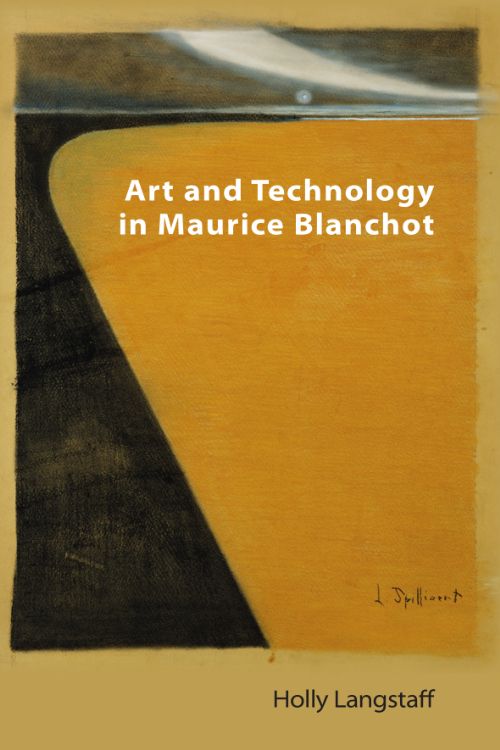
Holly Langstaff, Art and Technology in Maurice Blanchot – Edinburgh University Press, October 2023 (print and open access e-book)

Holly Langstaff, Art and Technology in Maurice Blanchot – Edinburgh University Press, October 2023 (print and open access e-book)

Demonstrates Blanchot’s ongoing importance for contemporary philosophical debate about technology, the post-human, and ecological thinking
  • Demonstrates a considerable shift in Blanchot’s thinking from 1940s to 1980s
  • Highlights the significance of Blanchot for important figures of twentieth-century French thought such as Jacques Derrida, Michel Foucault, and Bernard Stiegler
  • Argues for the continued relevance of Blanchot to twenty first-century debates in literary theory and criticism

Holly Langstaff reappraises the influential French thinker Maurice Blanchot’s writing from the 1940s to his late work in the 1980s, demonstrating how Blanchot’s exploration of the question of technology remains decisive throughout his career.

She situates Blanchot’s fictional and critical work in the context of his thinking of art as techne – as it develops out of Martin Heidegger’s philosophy. While Blanchot follows Heidegger in the view that writing is a form of techne, he never appeals for salvation from the menace of technology in the modern era. Rather, he sees in all forms of technology the opportunity for a new way of thinking beyond value. This, Blanchot calls an entirely different sort of affirmation.

Posted in Maurice Blanchot, Uncategorized | 1 Comment