John Robertson (ed.), Time, History and Political Thought – Cambridge University Press, June 2023

John Robertson (ed.), Time, History and Political Thought – Cambridge University Press, June 2023

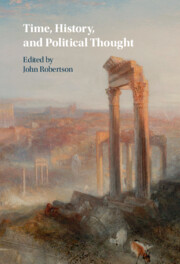
Between the cliché that ‘a week is a long time in politics’ and the aspiration of many political philosophers to give their ideas universal, timeless validity lies a gulf which the history of political thought is uniquely qualified to bridge. For that history shows that no conception of politics has dispensed altogether with time, and many have explicitly sought legitimacy in association with forms of history. Ranging from Justinian’s law codes to rival Protestant and Catholic visions of political community after the Fall, from Hobbes and Spinoza to the Scottish Enlightenment, and from Kant and Savigny to the legacy of German Historicism and the Algerian Revolution, this volume explores multiple ways in which different conceptions of time and history have been used to understand politics since late antiquity. Bringing together leading contemporary historians of political thought, Time, History, and Political Thought demonstrates just how much both time and history have enriched the political imagination.

Posted in Uncategorized | Leave a comment

Lyndsey Stonebridge, We are Free to Change the World: Hannah Arendt’s Lessons in Love and Disobedience – Penguin, January 2024

Lyndsey Stonebridge, We are Free to Change the World: Hannah Arendt’s Lessons in Love and Disobedience – Penguin, January 2024 (US; UK)

The violent unease of today’s world would have been familiar to Hannah Arendt. Tyranny, occupation, disenchantment, post-truth politics, conspiracy theories, racism, mass migration: She lived through them all.

Born in the first decade of the last century, she escaped fascist Europe to make a new life for herself in America, where she became one of its most influential—and controversial—public intellectuals. She wrote about power and terror, exile and love, and above all, about freedom. Questioning—thinking—was her first defense against tyranny. She advocated a politics of action and plurality, courage and, when necessary, disobedience.

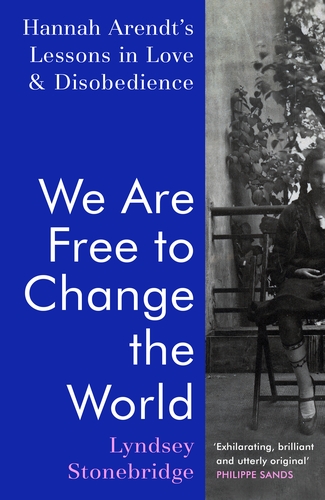
We Are Free to Change the World is a book about the Arendt we need for the twenty-first century. It tells us how and why Arendt came to think the way she did, and how to think when our own politics goes off the rails. Both a guide to Arendt’s life and work, and its dialogue with our troubled present, We Are Free to Change the World is an urgent call for us to think, as Hannah Arendt did—unflinchingly, lovingly, and defiantly—through our own unpredictable times.

Posted in Hannah Arendt | Leave a comment

Thomas Vesting, State Theory and the Law: An Introduction – Edward Elgar, 2022, paperback 2023

Thomas Vesting, State Theory and the Law: An Introduction – Edward Elgar, 2022, paperback 2023

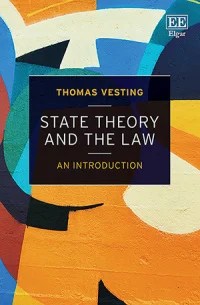
There has been renewed and growing interest in exploring the significant role played by law in the centralization of power and sovereignty – right from the earliest point. This timely book serves as an introduction into state theory, providing an overview of the conceptual history and the interdisciplinary tradition of the continental European general theory of the state.

Chapters present a theory of the state grounded in cultural analysis and show liberal democracy to be the paradigm of today’s western nation-state. The analysis includes the emergence of legal forms and institutions that are linked either to the constitutional state (the securing of civil liberties and fundamental rights), the welfare state (social and welfare law), or the network-state (regulation of complex digital technologies). Thomas Vesting focuses on illustrating the fundamental features of these evolutionary stages – the three layers constituting the modern state – and reveals their cultural and social preconditions.

This book will be an ideal read for students, postgraduates, and other academic audiences with interests in state theory, jurisprudence, legal theory, political theory, and legal philosophy.

Posted in Uncategorized | 1 Comment

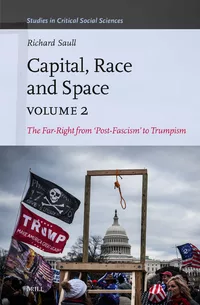
Richard Saull, Capital, Race and Space, two volumes – Brill, 2023

Richard Saull, Capital, Race and Space, two volumes – Brill, 2023; paperbacks with Haymarket in summer 2024

Capital, Race and Space, Volume I: The Far Right from Bonapartism to Fascism

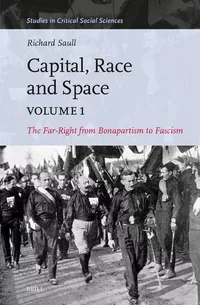
In this first volume of Capital, Race and Space, Richard Saull offers an international historical sociology of the European far-right from its origins in the 1848 revolutions to fascism. Providing a distinct and original explanation of the evolution and mutations of the far-right Saull emphasizes its international causal dimensions through the prism of uneven and combined development. 

Focusing on the twin (political and economic) transformations that dominated the second half of the nineteenth century the book discusses the connections between class, race, and geography in the evolution of far-right movements and how the crises in the development of a liberal world order were central to the advance of the far-right ultimately helping to produce fascism.

Capital, Race and Space, Volume II: The Far Right from ‘Post-Fascism’ to Trumpism

In this second volume of Capital, Race and Space, Richard Saull offers an international historical sociology of the Western far-right from the end of World War II to its contemporary manifestations in Trumpism and Brexit. Focusing on its international causal dimensions, Saull draws on the theory of uneven and combined development to provide a distinct and original explanation of the evolution and mutations of the ‘post-fascist’ far-right. 

Despite the transformed geopolitical context of capitalist development after 1945 – with decolonization and the end inter-imperial rivalry – the far-right continued to be intimately connected to the consolidation of the anti-communist liberal order. Thereafter, the far-right also formed an important, if contradictory, element within the neoliberal historical bloc that emerged in the 1980s and has been the main ideo-political beneficiary of the 2007-8 neoliberal crisis.

Posted in Uncategorized | Leave a comment

Tehlike, Suç ve Haklar: Michel Foucault ile Jonathan Simon’ın Söyleşisi, trans. Utku Özmakas, Ayrıntı Yayınları, October 2023

Tehlike, Suç ve Haklar, 2023: Michel Foucault ile Jonathan Simon’ın Söyleşisi, trans. Utku Özmakas, Ayrıntı Yayınları, October 2023

A text I edited from the Berkeley archive, “Danger, Crime and Rights: A Conversation between Michel Foucault and Jonathan Simon“, which originally appeared in Theory, Culture and Society in 2016, has been translated into Turkish by Utku Özmakas as a short book.

The Turkish version comes with a short new introduction by me. I will share the English text of this Introduction here in a few weeks.

İngilizcede 2016’da yayımlanan bu metin Michel Foucault ile Jonathan Simon arasında Ekim 1983’te San Francisco’da yapılan bir konuşma kaydının yazıya dökülmesiyle ortaya çıktı. Foucault Kitaplığı’nın üçüncü kitabı olarak Utku Özmakas’ın çevirisiyle ilk defa Türkçede. Foucault ve Simon, filozofun 1977’de verdiği “19. Yüzyıl Adli Psikiyatrisinde ‘Tehlikeli Kişi’ Kavramına Dair” başlıklı konferansını ele alarak başlıyorlar sohbete ve hukuk sisteminde tehlike, suç, sorumluluk ve haklar üzerine bir tartışmaya geçiyorlar. Bu söyleşi metnine Stuart Elden’in Türkçe baskıya yazdığı kısa önsöz, İngilizce baskıya yazdığı giriş ve Simon’un söyleşiye dair geriye dönük yorumu eşlik ediyor. Bir hukuk sistemi, belli bir anda, belli bir toplumdaki bir güç ilişkisinin, bir kuvvet ilişkisinin ifadesidir, dolayısıyla hukukun herhangi bir şekilde kutsallaştırılmaması gerekir. Gelgelelim haklar ve hukuk tam olarak aynı şey değildir. Her halükârda bir kuruma, bir yasaya, bir hukuk sistemine karşı bu kurumların, yasaların, hukuk sisteminin temelinde olan ya da olduğu varsayılan haklar adına karşı durmanın ya da bunlarla mücadele etmenin önemli olduğunu düşünüyorum.

The publisher, Ayrıntı Yayınları, are also translating my book The Archaeology of Foucault.

Posted in Jonathan Simon, Michel Foucault, Uncategorized | Leave a comment

Richard Cockett, Vienna: How the City of Ideas Created the Modern World – Yale University Press, September 2023

Richard Cockett, Vienna: How the City of Ideas Created the Modern World – Yale University Press, September 2023; paperback August 2024

How can one European capital be responsible for most of the West’s intellectual and cultural achievements in the twentieth century?

Viennese ideas saturate the modern world. From California architecture to Hollywood Westerns, modern advertising to shopping malls, orgasms to gender confirmation surgery, nuclear fission to fitted kitchens—every aspect of our history, science, and culture is in some way shaped by Vienna.

The city of Freud, Wittgenstein, Mahler, and Klimt was the melting pot at the heart of a vast metropolitan empire. But with the Second World War and the rise of fascism, the dazzling coteries of thinkers who squabbled, debated, and called Vienna home dispersed across the world, where their ideas continued to have profound impact.

Richard Cockett gives us the entirety of this extraordinary story. Tracing Vienna’s rich intellectual history from psychoanalysis to Reaganomics, Cockett encompasses everything from the communist rebels of Red Vienna to the neoliberal economists of the Austrian School. This is the panoramic account of how one city made the modern world—and how we all remain inescapably Viennese.

Posted in Uncategorized | Leave a comment

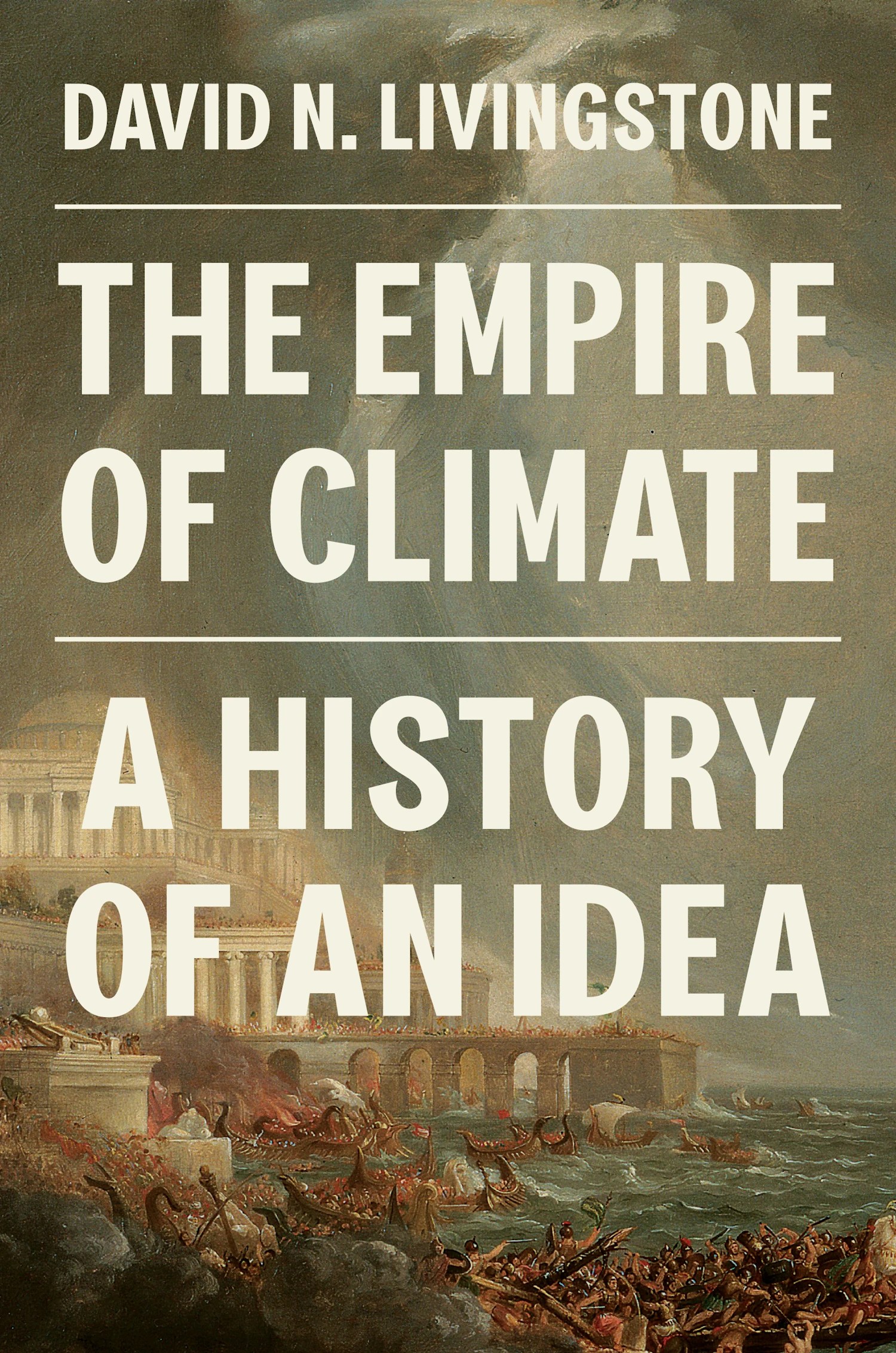
David N. Livingstone, The Empire of Climate: A History of an Idea – Princeton University Press, April 2024

David N. Livingstone, The Empire of Climate: A History of an Idea – Princeton University Press, April 2024

Scientists, journalists, and politicians increasingly tell us that human impacts on climate constitute the single greatest threat facing our planet and may even bring about the extinction of our species. Yet behind these anxieties lies an older, much deeper fear about the power that climate exerts over us. The Empire of Climate traces the history of this idea and its pervasive influence over how we interpret world events and make sense of the human condition, from the rise and fall of ancient civilizations to the afflictions of the modern psyche.

Taking readers from the time of Hippocrates to the unfolding crisis of global warming today, David Livingstone reveals how climate has been critically implicated in the politics of imperial control and race relations; been used to explain industrial development, market performance, economic breakdown; and served as a bellwether for national character and cultural collapse. He examines how climate has been put forward as an explanation for warfare and civil conflict, and how it has been identified as a critical factor in bodily disorders and acute psychosis.

A panoramic work of scholarship, The Empire of Climate maps the tangled histories of an idea that has haunted our collective imagination for centuries, shedding critical light on the notion that everything from the wealth of nations to the human mind itself are subject to climate’s imperial rule.

Posted in Uncategorized | Leave a comment

Stefan Kipfer, Urban Revolutions: Urbanisation and (Neo-)Colonialism in Transatlantic Context – Haymarket, September 2023

Stefan Kipfer, Urban Revolutions: Urbanisation and (Neo-)Colonialism in Transatlantic Context – Haymarket, September 2023

Now in paperback:

What do struggles over pipelines in Canada, housing estates in France, and shantytowns in Martinique have in common? In Urban Revolutions, Stefan Kipfer shows how these struggles force us to understand the (neo-)colonial aspects of capitalist urbanization in a comparatively and historically nuanced fashion. In so doing, he demonstrates that urban research can offer a rich, if uneven, terrain upon which to develop the relationship between Marxist and anti-colonial intellectual traditions. After a detailed dialogue between Henri Lefebvre and Frantz Fanon, Kipfer engages creole literature in the French Antilles, Indigenous radicalism in North America and political anti-racism in mainland France.

Posted in Frantz Fanon, Henri Lefebvre, Uncategorized, urban/urbanisation | Leave a comment

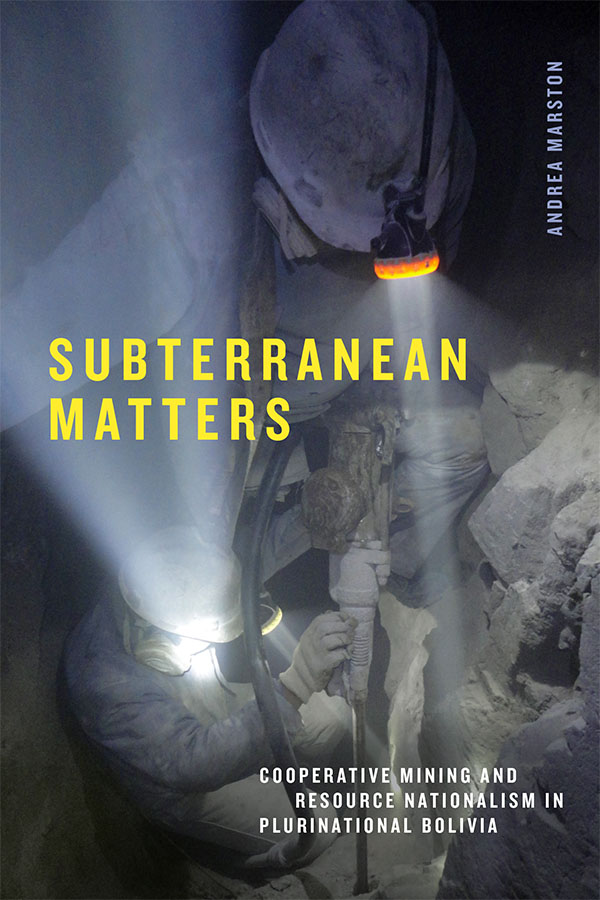
Andrea Marston, Subterranean Matters: Cooperative Mining and Resource Nationalism in Plurinational Bolivia – Duke University Press, March 2024

Andrea Marston, Subterranean Matters: Cooperative Mining and Resource Nationalism in Plurinational Bolivia – Duke University Press, March 2024

In Subterranean Matters, Andrea Marston examines the ongoing history of Bolivian mining cooperatives, an economic formation that has been central to Bolivian politics and to the country’s economy. Marston outlines how mining cooperatives occupy a contradictory place in Bolivian politics. They were major backers of left-wing president Evo Morales in 2006 and participated significantly in the crafting of the constitution that would declare Bolivia a plurinational state. At the same time, many Bolivians regard them as thieves because they derive personal profits from the subterranean mineral resources that are the legal inheritance of all Bolivians. Through extensive fieldwork underground in Bolivian cooperative mines, Marston explores how these miners—and the subterranean spaces they occupy—embody the tensions at the heart of Bolivia’s plurinational project. Marston shows how a shared feature of left-wing and right-wing politics in Bolivia is a persistent commitment to nation and nationalism, illustrating how bodies, identities, and resources fit into this complex political matrix.

Posted in Uncategorized | Leave a comment

CFP: The Aesthetics of Geopower: Imagining Planetary Histories and Hegemonies, 4 & 5 April 2024, University of Amsterdam

Call for Papers: The Aesthetics of Geopower: Imagining Planetary Histories and Hegemonies, 4-5 April 2024, University of Amsterdam

Deadline for proposals: 15 October 2023.

For this two-day, single-stream, and in-person conference, sponsored by the Amsterdam School for Cultural Analysis and Dutch Research Council, scholars are invited to explore how the human and nonhuman forces shaping and emerging from the earth are articulated in art and cultural practice.

Keynote Speakers: 

Macarena Gómez-Barris (Brown University, author of The Extractive Zone: Social Ecologies and Decolonial Perspectives, Duke University Press, 2017)

Federico Luisetti (University of St. Gallen, author of Non-human Subjects: An Ecology of Earth Beings (Cambridge University Press, forthcoming)

If the earth was once passed off as a neutral backdrop to human life, in the present age of ecological derangement it has reemerged as fraught with relations of power and politics. In this context, cultural theorists have put forward the rubric of geopower to conceptualize the ways that power is exerted over and through but also by the earth (Clare 2013; Neyrat 2019; Yusoff 2018). Having long been entangled with extractive, racial capitalism (Bain 2023, 1-2), geopower is becoming especially visible amid climate change and discourses of the Anthropocene. From proposals for solar geoengineering to legislation extending legal personhood to ecological entities such as the Ganga River, contemporary manifestations of geopower indicate how politics and planetarity are colliding in complex ways that are increasingly defining the present and will shape the future. 

Extrapolated from Michel Foucault’s thinking of biopower, geopower—or “geontopower” in Elizabeth A. Povinelli’s alternative formulation (2016)—has been theorized along several overlapping trajectories (Tola 2022; Luisetti 2019). For some, it primarily signifies the “government of the earth” (Diran & Traisnel 2019, 44) and implicates the technologies and tactics through which dominant subjects frame and exploit not just terrestrial environments but those “defined into nature” under patriarchal and colonial orders (Caputi 2020, 183). For another strand of theory, which draws on posthuman philosophies of life and matter (esp. Grosz 2008), geopower names the nonhuman forces of the earth, which permeate, condition, but also often disrupt or imperil humanly regulated environments (Clark 2011; Grosz, Yusoff, & Clark 2017). 

Building on these developments, this conference explores how geopower intersects with aesthetics, taken expansively as referring to art, film, literature, and other forms of cultural practice, as well as sensed materiality and embodied perception. Our premise is that the aesthetic, far from being secondary or supplemental to the forces shaping the earth, is centrally entailed and embedded in dynamics of geopower. This can be seen in the visual construction of “the Earth system” as an object of calculation, conservation, and control, or in scholarly, literary, and filmic narratives of the Anthropocene, which cast different human subjects as planetary culprits or custodians (Bonneuil & Fressoz 2016). The earth’s inhuman forces, meanwhile, have a transgressive vitality that often registers aesthetically and might be articulated in artistic practice (Sheikh 2017). Such forces suffuse cultural practice even when not explicitly thematized, whether because some artistic scenes are economically aligned with particular regimes of resource extraction (Acosta 2020) or because cultural works are necessarily composed of planetary materialities, which precede and exceed discursive or authorial framings of the aesthetic (Parikka 2015). 

To probe the connections among power, planetarity, and the aesthetic, we call on scholars, critics, and practitioners across disciplines to reflect on how diverse formations of geopower are enabled and mediated, but also challenged in cultural practice. How do conceptual, visual, poetic, or narratological framings of the earth calibrate social approaches to environments? Which marginalized perspectives can be brought forward to develop alternative representations or counter-histories of geopower? How is it imbricated with racializing, (neo)colonial, and cisheteropatriarchal orders? And how might theories of geopower be rethought by attending to its material manifestations or reimagined in literary and artistic experiment? 

In addressing these and other questions pertaining to the aesthetics of geopower, contributors are invited to explore narratives, images, and practices relating to any genre or medium, or events, discourses, and materialities in any historical and geographical context. Possible topics might include (but are not limited to): 

—cross-cultural perspectives on/representations of the earth as an aesthetic object; 

—the significance of land and planetary forces in decolonial thought and practice; 

—the aesthetics of geoengineering, from speculation to design; 

—climate fiction and narrative constructions of geopower; 

—articulations of the earth’s materialities in the arts and cultural practice; 

—the role of mapping, remote sensing, and technological mediation in planetary governance; 

—the politics and aesthetics of “deep time” imaginaries; 

—Embodied and multi-sensory apprehensions of planetary power; 

—representations of resource extraction and new commodity frontiers;

—the aestheticization of planetary forces that exceed and transcend the human;

—creative interventions that make visible the inequities and injustices of geopower.

Submission

Please submit abstracts (max. 300 words for 20 minute presentations) and a short biographical note (max. 250 words) to aestheticsgeopower@gmail.com by 15 October 2023.

Kindly send submissions as a single pdf document of max. two pages. To deepen mutual engagement, papers will be circulated a week before the conference; each participant will be assigned a respondent and asked to act as primary respondent to an assigned paper in return. Selected papers will be invited for inclusion in an edited volume. No conference fees will be charged.

Organized by Dr Simon Ferdinand (www.simonferdinand.com) and Dr Colin Sterling (www.colinsterling.com) of the University of Amsterdam. 

Full details and references at the conference website

Posted in Uncategorized | Leave a comment