Frédéric Keck, How French Moderns Think: The Lévy-Bruhl Family, From “Primitive Mentality” to Contemporary Pandemics – HAU books, December 2023

Frédéric Keck, How French Moderns Think: The Lévy-Bruhl Family, From “Primitive Mentality” to Contemporary Pandemics – HAU books, December 2023

This book traces the contributions of the Lévy-Bruhl family to social and political thought and expertise in 20th-century France, shaping the anticipation of economic and health crises.

How French Moderns Think tells the story of the French sociological tradition through four generations of the Lévy-Bruhl family: Lucien, who founded the Institute of Ethnology at the University of Paris; his son Henri, who founded the Institute of Roman Law; his grandson Raymond, who took part in the creation of the National Institute of Statistics and Economic Studies; and his great-grandson Daniel, a vaccine specialist at the Institute of Public Health. This family history casts a new light on the philosophical debates about “primitive mentality” and the “savage mind.” By drawing on the expert knowledge inherent in this family genealogy, the articulation between the logical and the “pre-logical” is not a cognitive question but rather a problem of anticipating unpredictable events. By relating Lévy-Bruhl’s engagements from the Dreyfus Affair to the Minister of Armaments during the First World War, Keck narrates the confrontation of the socialist ideal of justice and truth with the French colonial experience and its transformations in global technologies preparing for pandemics.

Posted in Uncategorized | Leave a comment

Italo Calvino on writing

Italo Calvino, The Written World and the Unwritten World: Collected Non-Fictiontrans. Ann Goldstein (Penguin) – two nice passages about writing, taken from the title essay.

I have to say that most of the books I’ve written and those I have it in mind to write originate in the idea that writing such a book seemed impossible to me. When I’m convinced that a certain type of book is completely beyond the capacities of my temperament and my technical skills, I sit down at my desk and start writing it (p. 129).

In a certain sense, I believe that we always write about something we don’t know: we write to make it possible for the unwritten world to express itself through us. At the moment my attention shifts from the regular order of the written lines and follows the mobile complexity that no sentence can contain or use up, I feel close to understanding that from the other side of the words, from the silent side, something is trying to emerge, to signify through language, like tapping on a prison wall (p. 130).

Posted in Italo Calvino, Uncategorized, Writing | Leave a comment

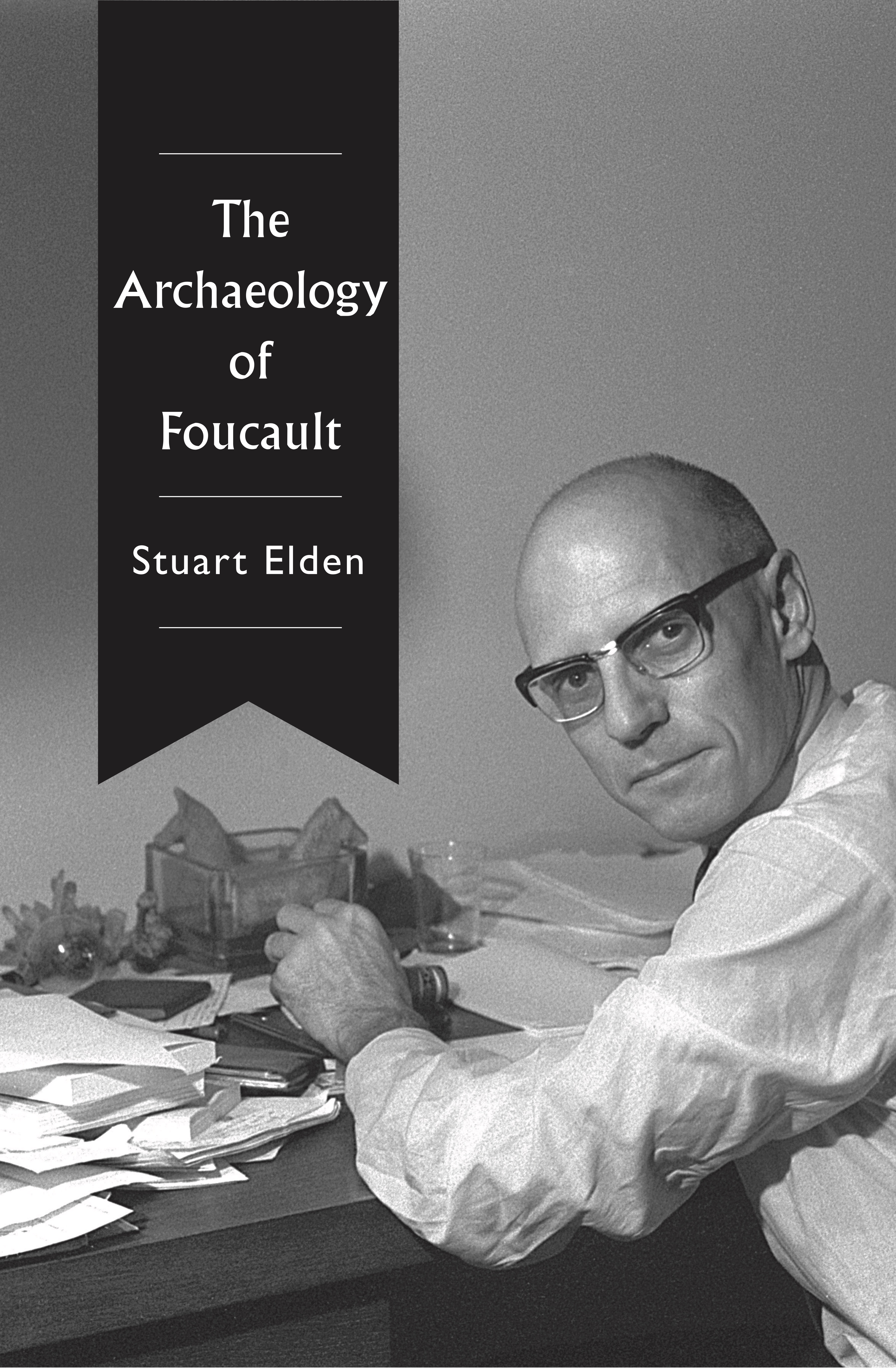
The Archaeology of Foucault (Polity, 2023) – New Books Network discussion with Dave O’Brien

I discuss my recent book The Archaeology of Foucault (Polity, 2023) on the New Books Network with Dave O’Brien (audio)

Dave has now generously discussed all the books in this series:

Foucault’s Last Decade, 21 September 2016

Foucault: The Birth of Power, 6 November 2017

The Early Foucault, 11 February 2022

we also discussed Shakespearean Territories, 18 December 2020

Many thanks Dave!

More information on all the Foucault books, discussions, reviews and research updates here.

The Polity books page is here.

Posted in Foucault's Last Decade, Foucault: The Birth of Power, Michel Foucault, The Archaeology of Foucault, The Early Foucault, Uncategorized | 2 Comments

Benjamin Tallis, Identities, Borderscapes, Orders: (In)Security, (Im)Mobility and Crisis in the EU and Ukraine – Springer, February 2023

Benjamin Tallis, Identities, Borderscapes, Orders: (In)Security, (Im)Mobility and Crisis in the EU and Ukraine – Springer, February 2023

This book provides a pre-history of Russia’s war on Ukraine and Europe’s relations to it, illuminating the deep roots of the EU’s neighbourhood crisis as well as the migration crises the Union created in the last decade. To do so, the book employs a new and innovative framework that allows for a comprehensive, yet nuanced analysis of borders and a more cogent interpretation of their socio-political consequences.

Drawing on interdisciplinary scholarship the book analytically examines the key common elements of borderscapes and links them in related arrays to allow for nuanced evaluation of both their particular and cumulative effects, as well as interpretation of their overall consequences, particularly for issues of identities and orders. The book offers a significant conceptual and theoretical advance, providing a transferable conceptualization of borderscapes to guide research, analysis, and interpretation. Drawing on the author’s experience in policy, practice and academia, it also makes a methodological contribution by pushing the boundaries of reflexivity in interpretive International Relations (IR) research. 

Analyzing three main sites in Central and Eastern Europe (CEE), the book challenges conventional critical wisdom on EU bordering in the Schengen zone, at its external frontiers, and in its Eastern neighborhood. In so doing, it sheds new light on the politics of post-communist transitions as well as the contemporary politics of CEE. It also shows how EU bordering and its relations to identities and orders created great benefits for many Europeans, but also hindered the lives of many others and became self-defeating. This book is a must-read for scholars, students, and policy-makers, interested in a better understanding of Critical Border Studies (CBS) in particular, and International Relations in general. It will also appeal to anyone interested in CEE or wishing to get a deeper understanding of Russia’s war and the fight for Europe’s future.

Posted in Uncategorized | Leave a comment

Engin Isin, The conditions of planetary citizenship – online lecture, 13 April 2023

Engin Isin, The conditions of planetary citizenship – online lecture, 13 April 2023, 4pm BST

registration required via Eventbrite

This lecture outlines the conditions that are creating planetary citizenship movements in the 21st century. The planetary citizens are activists, cosmopolitical, agonistic, solidaristic, and disobedient. The planetary citizens are mobile, multiple, and transversal. They act against injustice and for justice by performing abolishment, disobedience, refusal, and resistance. We will discuss how the gatekeepers have taken notice and developed various strategies of incorporation, pacification, and immobilization of planetary citizenship movements.

About the speaker: https://www.qmul.ac.uk/politics/staff/profiles/isinengin.html

Responding to the widespread cynicism, disengagement and alienation citizens across the globe express towards official political cultures, this series investigates the idea of ‘the critical citizen’. What constitutes a critical citizen? And can a critical citizenry be (re-) activated as an antidote to contemporary political crises?

More information on the Language, Literature and Politics Research Group can be found here

Posted in Engin Isin | 1 Comment

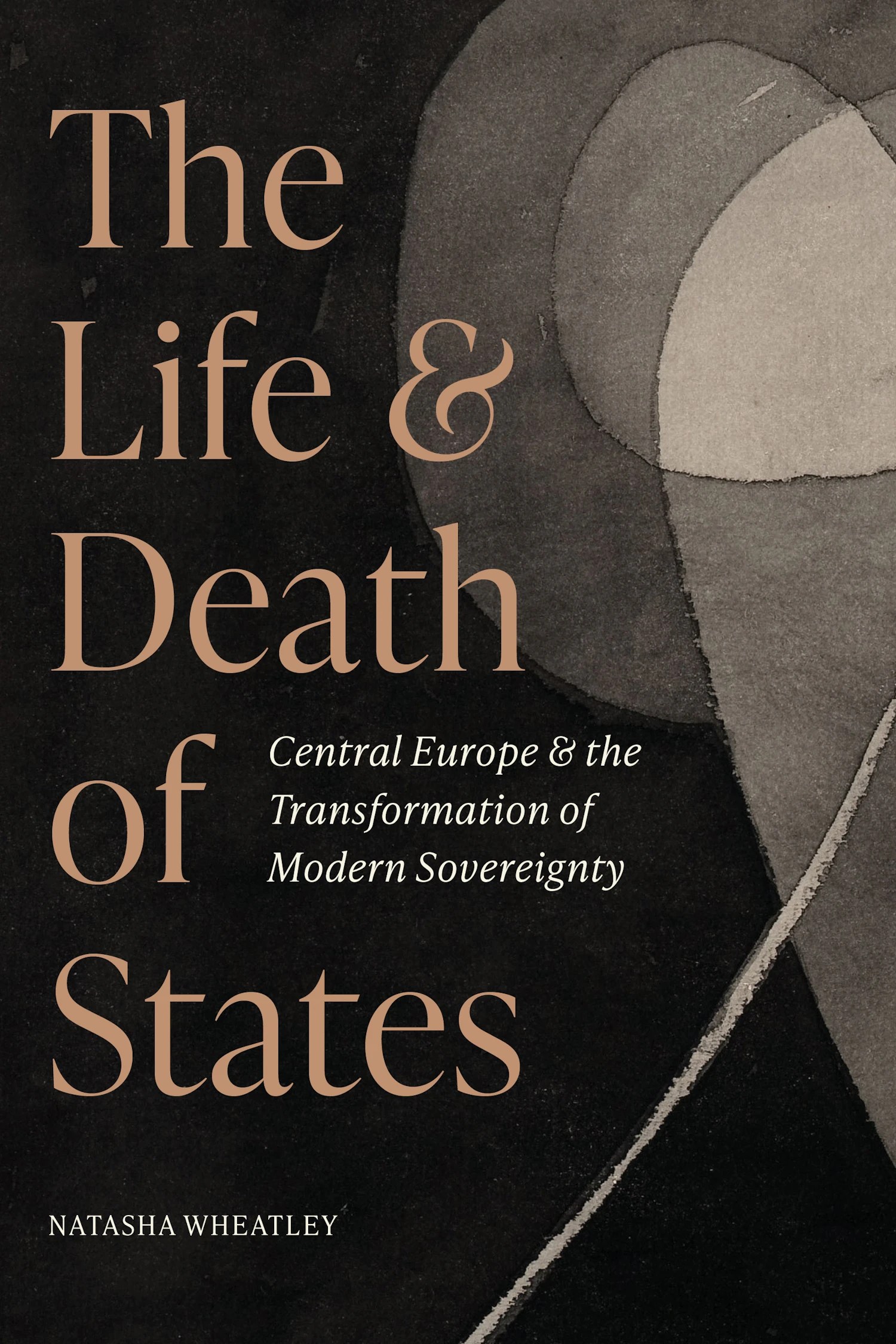
Natasha Wheatley, The Life and Death of States: Central Europe and the Transformation of Modern Sovereignty – Princeton University Press, June 2023

Natasha Wheatley, The Life and Death of States: Central Europe and the Transformation of Modern Sovereignty – Princeton University Press, June 2023

Sprawled across the heartlands of Europe, the Habsburg Empire resisted all the standard theories of singular sovereignty. The 1848 revolutions sparked decades of heady constitutional experimentation that pushed the very concept of “the state” to its limits. This intricate multinational polity became a hothouse for public law and legal philosophy and spawned ideas that still shape our understanding of the sovereign state today. The Life and Death of States traces the history of sovereignty over one hundred tumultuous years, explaining how a regime of nation-states theoretically equal under international law emerged from the ashes of a dynastic empire.

Natasha Wheatley shows how a new sort of experimentation began when the First World War brought the Habsburg Empire crashing down: the making of new states. Habsburg lands then became a laboratory for postimperial sovereignty and a new international order, and the results would echo through global debates about decolonization for decades to come. Wheatley explores how the Central European experience opens a unique perspective on a pivotal legal fiction—the supposed juridical immortality of states.

A sweeping work of intellectual history, The Life and Death of States offers a penetrating and original analysis of the relationship between sovereignty and time, illustrating how the many deaths and precarious lives of the region’s states expose the tension between the law’s need for continuity and history’s volatility.

Update December 2025: lecture and discussion here – thanks to dmf for the link

Posted in Uncategorized | Leave a comment

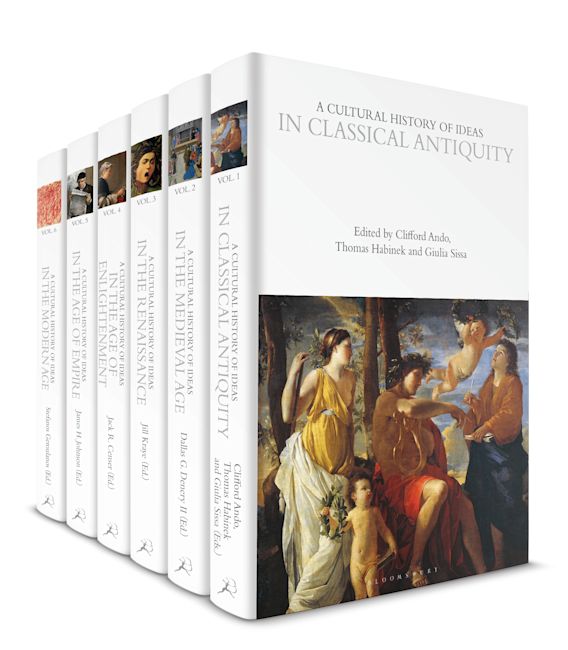
Peter T. Struck and Sophia Rosenfeld (eds.), A Cultural History of Ideas – Bloomsbury, six volumes, November 2022

Peter T. Struck and Sophia Rosenfeld (eds.), A Cultural History of Ideas – Bloomsbury, six volumes, November 2022

A massive, six-volume reference work, at a high price, but looks impressive if you can find a suitable library copy…

How has the nature of ideas evolved over time? How have ideas been shaped, employed and received in different social and cultural contexts?

In a work that spans 2,800 years, these ambitious questions are addressed by 62 experts, each contributing an overview of a particular theme in a specific period in history. The volumes explore the development of ideas , primarily in the West, from a range of disciplinary angles.

Individual volume editors ensure the cohesion of the whole and, for ease of navigation, chapter titles are identical across each of the volumes. This schema offers the reader the choice of reading about a specific period in one of the volumes or following one theme across history by reading the relevant chapter in each of the 6.

The 6 volumes cover: 1. – Classical Antiquity (800 BCE – 500 CE); 2. – Medieval Age (500 – 1450); 3. – Renaissance (1450 – 1650) ; 4. – Age of Enlightenment (1650 – 1800); 5. – Age of Empire (1800 – 1920); 6. – Modern Age (1920 – 2000+).

Themes (and chapter titles) are: Knowledge; The Human Self; Ethics and Social Relations; Politics and Economies; Nature; Religion and the Divine; Language, Poetry and Rhetoric; The Arts; History.

The page extent is approximately 1,728pp with c. 240 illustrations. Each volume opens with Notes on Contributors, Series Preface and Introduction, and concludes with Notes, Bibliography and an Index.

Posted in Uncategorized | Leave a comment

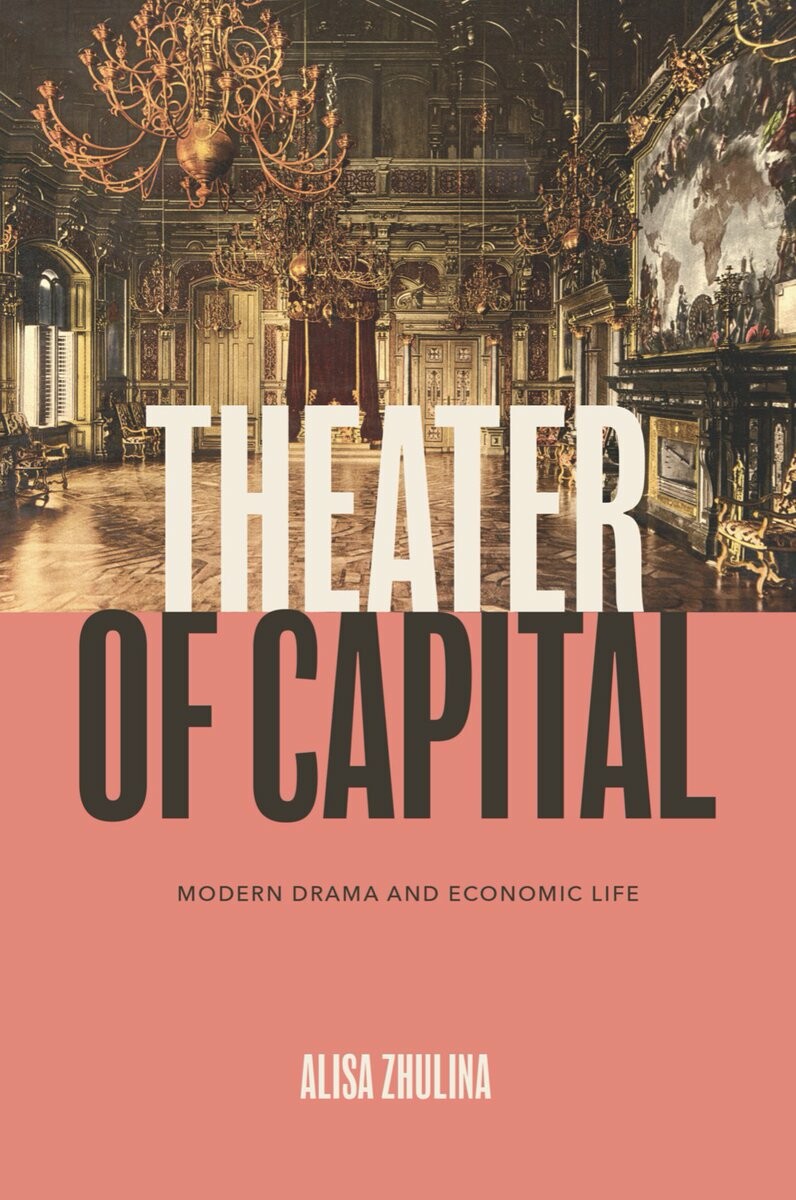
Alisa Zhulina, Theater of Capital: Modern Drama and Economic Life – Northwestern University Press, January 2024

Alisa Zhulina, Theater of Capital: Modern Drama and Economic Life – Northwestern University Press, January 2024

Reads canonical works of modern drama in relation to the economic ideas of their era

Emerging amid the turbulent rise of market finance and wider socioeconomic changes, modern drama enacted vital critiques of art and life under capitalism. Alisa Zhulina shows how fin-de-siècle playwrights such as Henrik Ibsen, August Strindberg, Anton Chekhov, George Bernard Shaw, and Gerhart Hauptmann interrogated the meaning of this newly coined economic concept. Acutely aware of their complicity in the system they sought to challenge, these playwrights staged economic questions as moral and political concerns, using their plays to explore the theories of Adam Smith, Karl Marx and Friedrich Engels, Max Weber, and others within the boundaries of bourgeois theater.

Theater of Capital: Modern Drama and Economic Life reveals the prescient and unsettling visions of life in a new financial and societal reality in now-canonical plays such as A Doll’s HouseMiss Julie, and The Cherry Orchard as well as in lesser-known and long-overlooked works. This wide-ranging study prompts us to reevaluate modern drama and its legacy for the urgent economic and political questions that our present moment.

“An extraordinary book whose scope and ambition are truly impressive. Alisa Zhulina works hard to overcome the academic silos that separate the humanities from economic theory by recuperating a more expansive notion of economics—that of the oikos—to put them in a productive exchange. All of this is executed with the highest rigor, intelligence, and creativity, and grounded in an expansive knowledge of the materials. There aren’t many scholars today who can match Zhulina’s linguistic and intellectual range.” —Leonardo Lisi, Johns Hopkins University 

Posted in Uncategorized | Leave a comment

Generative AI and University Futures: Three Seminars at University of Manchester, May 2023

Generative AI and University Futures: Three Seminars at University of Manchester, May 2023

We’re hosting 3 in person seminars about generative AI and university futures at the University of Manchester on Critical AI literacy (May 10th), Assessment Reform (May 17th) and Training for Academics (May 24th). All in person from 3pm to 5pm on those dates. Please only register if you intend to participate in person because we have a limited number of places available for each event, which we intend to offer in the order of registration.

Since it was launched in November 2022, Open AI’s ChatGPT has enthralled millions with its uncanny ability to respond to queries in a conversational manner. Its capacity to immediately respond to natural language questions with detailed factual knowledge has sparked debate about whether the typical forms of university-based assessment can survive this technological innovation. While there are many questions remaining to be answered about how different groups within the student community perceive these developments, and the extent to which they are already being used in assessment, there is a widespread belief within the university sector that something fundamental has shifted. This rapid growth in generative AI’s capacity to automatically produce authoritative cultural forms presents a challenge to the university as a custodian of knowledge and conferrer of credentials…

More details and booking form here.

Posted in Uncategorized | Leave a comment

Excerpt from The Archaeology of Foucault at The Montreal Review (open access)

A short excerpt from the coda of The Archaeology of Foucault is available open access at The Montréal Review.

It discusses Foucault’s tributes to Jean Hyppolite and the visits to SUNY Buffalo in 1970 and 1972.

Thanks to publicity staff at Polity for making this possible, and the editor Tony Tsonchev for the invitation to include something.

More details on the book at the Polity website.

I also did an interview on the book for the New Books Network this week, which the host Dave O’Brien says will be available next week. [update: now available here]

Posted in Jean Hyppolite, Michel Foucault, The Archaeology of Foucault | Leave a comment