Martha Nussbaum and Politics; Hannah Arendt and Politics – Edinburgh University Press, January 2023

Brandon Robshaw, Martha Nussbaum and Politics – Edinburgh University Press, January 2023

Providing an overview of the political and ethical philosophy of Martha Nussbaum, this book presents the ideas of this significant philosopher and shows how her thought, while rooted in the traditions of classical philosophy, illuminates a number of current, controversial issues. The book takes a chronological approach and aims to show how Nussbaum’s thought has continually grown and developed. It takes the reader through her views on ethics, political philosophy, feminism and women’s rights, LGBT issues, animal rights, religious tolerance and accommodation, contemporary politics, and global justice. It also explores contested areas of her thought, such as the extent to which she is a perfectionist liberal, challenges to her view that religion merits special accommodations, utilitarian objections to the capabilities approach, criticisms of her brand of liberal feminism, and cosmopolitan objections to her nation-state-based liberal conception of global justice. Each chapter focuses on a book from a different stage of her career, starting with her first book, The Fragility of Goodness and ending with her most recent, The Cosmopolitan Tradition.

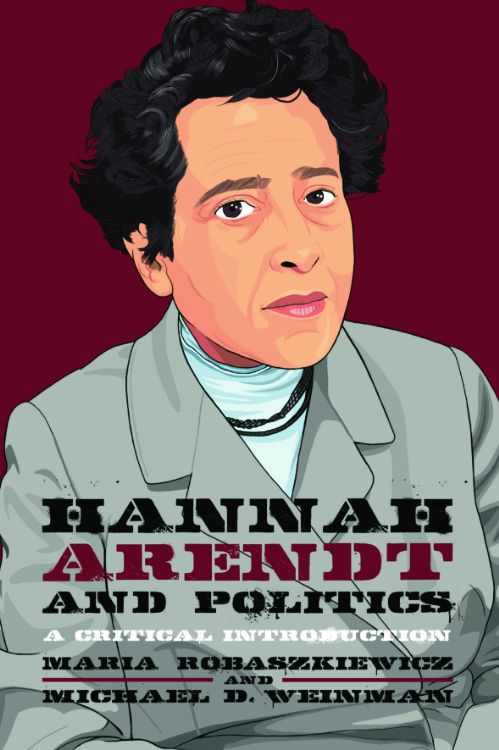
Maria Robaszkiewicz, Michael Weinman, Hannah Arendt and Politics – Edinburgh University Press, January 2023

Hannah Arendt has been classified as a critical theorist, a phenomenologist, an anti-feminist, a feminist ally, a democratic theorist, a republican theorist, a Heidegerrian, and a nostalgic Hellenophile. This book responds to these perspectives in two ways. First, we recognize that one can legitimately derive all these positionings from one or another of her writings; second, we insist nevertheless and precisely because all these approaches play some role in her work that her readers ought to follow her own claim that she ‘does not belong to any club’. Instead, we introduce her works as exercises in political thinking, treating her as a dialogue partner, whose judgments and opinions remain open for reflection and discussion.
Posted in Hannah Arendt, Uncategorized | Leave a comment

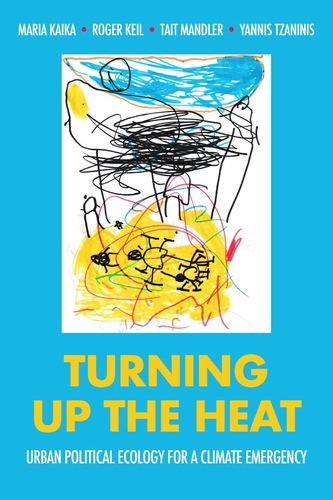
Maria Kaika, Roger Keil, Tait Mandler and Yannis Tzaninis (eds.), Turning up the heat: Urban political ecology for a climate emergency – Manchester University Press, February 2023

Maria Kaika, Roger Keil, Tait Mandler and Yannis Tzaninis (eds.), Turning up the heat: Urban political ecology for a climate emergency – Manchester University Press, February 2023

Since its emergence in the 1990s, the field of Urban Political Ecology (UPE) has focused on unsettling traditional understandings of the ‘city’ as entirely distinct from nature, showing instead how cities are metabolically linked with ecological processes and the flow of resources. More recently, a new generation of scholars has turned the focus towards the climate emergency. Turning up the heat seeks to turn UPE’s critical energies towards a politically engaged debate over the role of extensive urbanisation in addressing socio-environmental equality in the context of climate change.

The collection brings together theoretical discussions and rigorous empirical analysis by key scholars spanning three generations, engaging UPE in current debates about urbanisation and climate change. Engaging with cutting edge approaches including feminist political ecology, circular economies, and the Anthropocene, case studies in the book range from Singapore and Amsterdam to Nairobi and Vancouver. Contributors make the case for a UPE better informed by situated knowledges: an embodied UPE that pays equal attention to the role of postcolonial processes and more-than-human ontologies of capital accumulation within the context of the climate emergency. Acknowledging UPE’s rich intellectual history and aiming to enrich rather than split the field, Turning up the heat reveals how UPE is ideally positioned to address contemporary environmental issues in theory and practice.

Posted in Uncategorized | 1 Comment

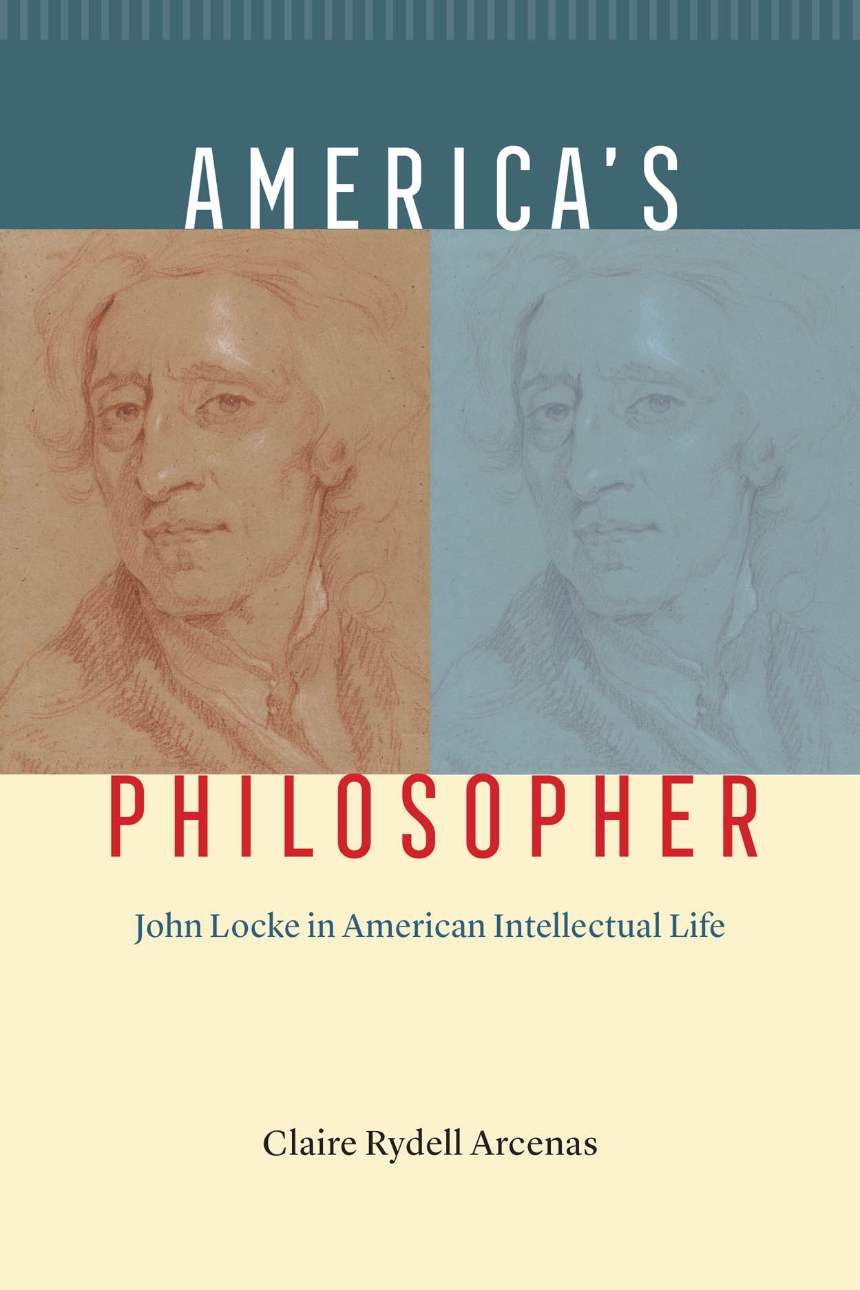
Claire Rydell Arcenas, America’s Philosopher: John Locke in American Intellectual Life – University of Chicago Press, 2022

Claire Rydell Arcenas, America’s Philosopher: John Locke in American Intellectual Life – University of Chicago Press, 2022

The influence of polymath philosopher John Locke (1632–1704) can still be found in a dizzying range of fields, as his writings touch on issues of identity, republicanism, and the nature of knowledge itself. Claire Rydell Arcenas’s new book tells the story of Americans’ longstanding yet ever-mutable obsession with this English thinker’s ideas, a saga whose most recent manifestations have found the so-called Father of Liberalism held up as a right-wing icon.

The first book to detail Locke’s trans-Atlantic influence from the eighteenth century until today, America’s Philosopher shows how and why interpretations of his ideas have captivated Americans in ways few other philosophers—from any nation—ever have. As Arcenas makes clear, each generation has essentially remade Locke in its own image, taking inspiration and transmuting his ideas to suit the needs of the particular historical moment. Drawing from a host of vernacular sources to illuminate Locke’s often contradictory impact on American daily and intellectual life from before the Revolutionary War to the present, Arcenas delivers a pathbreaking work in the history of ideas.

Posted in John Locke | 1 Comment

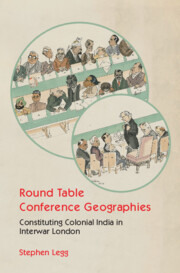
Stephen Legg, Roundtable Conference Geographies: Constituting Colonial India in Interwar London – Cambridge University Press, March 2023

Stephen Legg, Roundtable Conference Geographies: Constituting Colonial India in Interwar London – Cambridge University Press, March 2023

Just an expensive hardback at present, unfortunately.

Round Table Conference Geographies explores a major international conference in 1930s London which determined India’s constitutional future in the British Empire. Pre-dating the decolonising conferences of the 1950s–60s, the Round Table Conference laid the blueprint for India’s future federal constitution. Despite this the conference is unanimously read as a failure, for not having comprehensively reconciled the competing demands of liberal and Indian National Congress politicians, of Hindus and Muslims, and of British versus Princely India. This book argues that the conference’s three sessions were vital sites of Indian and imperial politics that demand serious attention. It explores the spatial politics of the conference in terms of its imaginary geographies, infrastructures, host city, and how the conference was contested and represented. The book concludes by asking who gained through representing the conference as a failure and explores it, instead, as a teeming political, social and material space.

Posted in Uncategorized | Leave a comment

Michel Foucault, Le Discours philosophique, edited by Daniele Lorenzini and Orazio Irrera – EHESS/Gallimard/Seuil, May 2023

Michel Foucault, Le Discours philosophique, edited by Daniele Lorenzini and Orazio Irrera – Gallimard/Seuil/EHESS, May 2023

This is a previously unpublished manuscript, probably from 1966, written after The Order of Things and before or alongside early work on what became The Archaeology of Knowledge.

Starting to appear in online bookstores, with title page and table of contents shared online:

Posted in Michel Foucault | 1 Comment

Books received – Leroi-Gourhan, Blanchot, Vogl, Ungar, Heidegger, Bobic and Haghighi

Some second-hand books connected in part to the ongoing research on Indo-European though in France, the latest volume of the Heidegger Gesamtausgabe and copies of Joseph Vogl, Capital and Ressentiment: A Short History of the Present and Nikolina Bobic and Farzaneh Haghighi (eds.), The Routledge Handbook of Architecture, Urban Space and Politics, Volume I: Violence, Spectacle and Data – kindly sent by the publisher and editors.

Posted in Martin Heidegger, Uncategorized | Leave a comment

Archive: Sennett and Foucault on Sexuality and Solitude (audio recording and other links)

Audio recording of Michel Foucault and Richard Sennett discussing Sexuality and Solitude. The date there is given as 1979, but I think this was actually in November 1980.
The edited transcript was published in 1981 in the London Review of Books It is translated into French in Dits et écrits and reprinted in Essential Works volume I, though without Sennett’s remarks.
I’ve added this to my list of audio and video recordings of Foucault (that list is hard to keep uptodate as things are removed or links change).

Clare O'Farrell's avatarFoucault News

Richard Sennett and Michel Foucault, Sennett and Foucault on Sexuality and Solitude (1979)
New Books Network, 2 Feb 2023.

[See site for recording]

In 1979, sociologist and NYIH founder Richard Sennett, and philosopher Michel Foucault, discussed the connections between the history of sexuality and self consciousness. In this episode from the Vault, the two discuss their research and, by extension, the underpinnings of the idea of solitude.

View original post

Posted in Uncategorized | 2 Comments

Pierre Hadot, Don’t Forget to Live: Goethe and the Tradition of Spiritual Exercise – University of Chicago Press, April 2023

Pierre Hadot, Don’t Forget to Live: Goethe and the Tradition of Spiritual Exercise – University of Chicago Press, trans. Michael Chase, April 2023

The esteemed French philosopher Pierre Hadot’s final work, now available in English.
With a foreword by Arnold I. Davidson and Daniele Lorenzini.
 
In his final book, renowned philosopher Pierre Hadot explores Goethe’s relationship with ancient spiritual exercises—transformative acts of intellect, imagination, or will. Goethe sought both an intense experience of the present moment as well as a kind of cosmic consciousness, both of which are rooted in ancient philosophical practices. These practices shaped Goethe’s audacious contrast to the traditional maxim memento mori (Don’t forget that you will die) with the aim of transforming our ordinary consciousness. Ultimately, Hadot reveals how Goethe cultivated a deep love for life that brings to the forefront a new maxim: Don’t forget to live.

Posted in Pierre Hadot, Uncategorized | Leave a comment

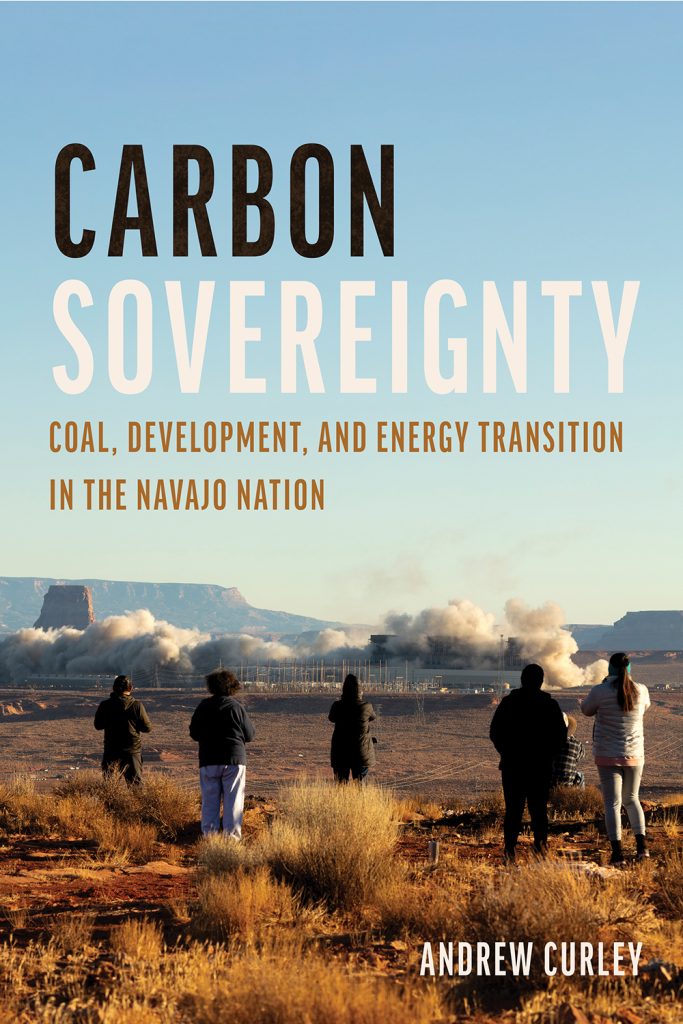
Andrew Curley, Carbon Sovereignty: Coal, Development, and Energy Transition in the Navajo – University of Arizona Press, April 2023

Andrew Curley, Carbon Sovereignty: Coal, Development, and Energy Transition in the Navajo – University of Arizona Press, April 2023

For almost fifty years, coal dominated the Navajo economy. But in 2019 one of the Navajo Nation’s largest coal plants closed.

This comprehensive new work offers a deep dive into the complex inner workings of energy shift in the Navajo Nation. Geographer Andrew Curley, a member of the Navajo Nation, examines the history of coal development within the Navajo Nation, including why some Diné supported coal and the consequences of doing so. He explains the Navajo Nation’s strategic choices to use the coal industry to support its sovereignty as a path forward in the face of ongoing colonialism. Carbon Sovereignty demonstrates the mechanism of capitalism through colonialism and the construction of resource sovereignty, in both the Navajo Nation’s embrace and its rejection of a coal economy.

For the people of the Navajo Nation, energy sovereignty is dire and personal. Thanks to on-the-ground interviews with Diné coal workers, environmental activists, and politicians, Curley documents the real consequences of change as they happened. While some Navajo actors have doubled down for coal, others have moved toward transition. Curley argues that political struggles ultimately shape how we should understand coal, capitalism, and climate change. The rise and fall of coal magnify the nuance and complexity of change. Historical and contemporary issues intermingle in everyday life with lasting consequences.

Posted in Uncategorized | Leave a comment

Alain Corbin, A History of the Wind, trans. William Peniston – Polity, November 2022

Alain Corbin, A History of the Wind, trans. William Peniston – Polity, November 2022

Everyone knows the wind’s touch, its presence, its force. Sometimes it roars and howls, at other times we hear its wistful sighs and feel its soothing caresses. Since antiquity, humans have borne witness to the wind and relied on it to navigate the seas. And yet, despite its presence at the heart of human experience, the wind has evaded scrutiny in our chronicles of the past.

In this brilliantly original volume, Alain Corbin sets out to illuminate the wind’s storied history. He shows how, before the nineteenth century, the noisy emptiness of wind was experienced and described only according to the sensations it provoked. Imagery of the wind featured prominently in literature, from the ancient Greek epics through the Renaissance and romanticism to the modern era, but little was known about where the wind came from and where it went. It was only in the late eighteenth century, with the discovery of the composition of air, that scientists began to understand the nature of wind and its trajectories. From that point on, our understanding of the wind was shaped by meteorology, which mapped the flows of winds and currents around the globe. But while science has enabled us to understand the wind and, in some respects, to harness it, the wind has lost nothing of its mysterious force. It still has the power to destroy, and in the wind’s ethereal presence we can still feel its connection with creation and death.

Posted in Uncategorized | Leave a comment