Joseph Vogl, Capital and Ressentiment: A Short Theory of the Present, translated by Neil Solomon – Polity, November 2022

Joseph Vogl, Capital and Ressentiment: A Short Theory of the Present, translated by Neil Solomon – Polity, November 2022

The proliferation of social media has provided ideal conditions in which feelings of anger and frustration can be expressed and shared, forming a deep pool of ressentiment that is being drawn upon and exploited by populist and authoritarian leaders.

In his new book, Joseph Vogl shows how this dynamic is rooted in the fusing of finance capital and information in a new form of information capitalism that is reshaping the affective economy of our societies.  The capital accumulation strategies of powerful new platforms and social media are pushing people into fragmented, opposing, and conflictual communities where ressentiment is nurtured and grows.  The feelings of grievance and rejection generated by capitalism are redirected into attacks on migrants, foreigners, and others, thereby deflecting their critical potential, and bolstering the system that is their source. It is the cunning of ressentiment that provides the key to understanding why, despite the profusion of communication in our social media age, global finance and information capital can be neither understood nor attacked as a totalizing power.

This brilliant analysis of the ways in which information capitalism is transforming the affective economy of our societies will be of great interest to anyone concerned with the forces that are shaping our societies today.

Posted in Uncategorized | Leave a comment

Engin Isin relaunched website – The Subjects of Politics

Engin Isin has relaunched his website – The Subjects of Politics – with most of his publications available to download, some thematic organisation with “reflections on concepts and methods that guided it and the questions that motivated it”, along with possible connections to an “interest in images”.

Posted in Uncategorized | Leave a comment

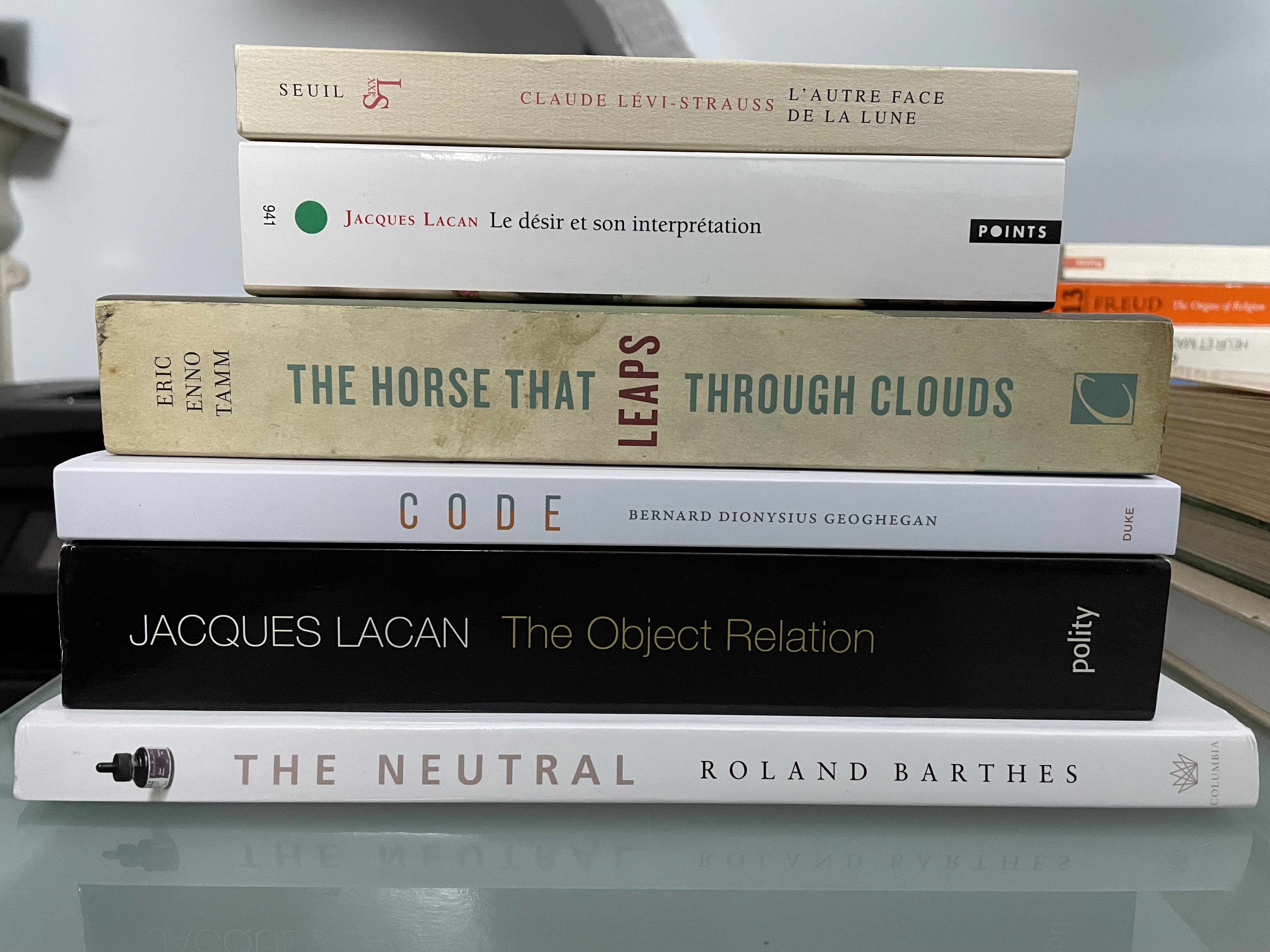
Books received – Lévi-Strauss, Lacan, Tamm, Geoghegan, Barthes

A few books bought recently, including Bernard Dionysius Geoghegan, Code: From Information Theory to French Theory and Jacques Lacan’s The Object Relation, recently out in paperback.

Posted in Claude Lévi-Strauss, Jacques Lacan, Roland Barthes | Leave a comment

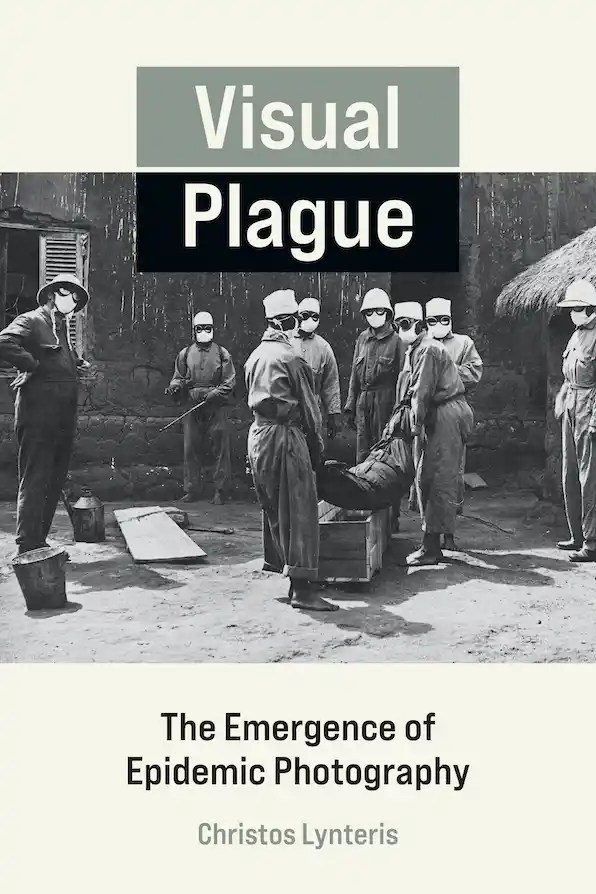
Christos Lynteris, Visual Plague: The Emergence of Epidemic Photography – MIT Press, October 2022 (print and open access)

Christos Lynteris, Visual Plague: The Emergence of Epidemic Photography – MIT Press, October 2022

Available in print and open access

How epidemic photography during a global pandemic of bubonic plague contributed to the development of modern epidemiology and our concept of the “pandemic.”

In Visual Plague, Christos Lynteris examines the emergence of epidemic photography during the third plague pandemic (1894–1959), a global pandemic of bubonic plague that led to over twelve million deaths. Unlike medical photography, epidemic photography was not exclusively, or even primarily, concerned with exposing the patient’s body or medical examinations and operations. Instead, it played a key role in reconceptualizing infectious diseases by visualizing the “pandemic” as a new concept and structure of experience—one that frames and responds to the smallest local outbreak of an infectious disease as an event of global importance and consequence.

As the third plague pandemic struck more and more countries, the international circulation of plague photographs in the press generated an unprecedented spectacle of imminent global threat. Nothing contributed to this sense of global interconnectedness, anticipation, and fear more than photography. Exploring the impact of epidemic photography at the time of its emergence, Lynteris highlights its entanglement with colonial politics, epistemologies, and aesthetics, as well as with major shifts in epidemiological thinking and public health practice. He explores the characteristics, uses, and impact of epidemic photography and how it differs from the general corpus of medical photography. The new photography was used not simply to visualize or illustrate a pandemic, but to articulate, respond to, and unsettle key questions of epidemiology and epidemic control, as well as to foster the notion of the “pandemic,” which continues to affect our lives today.

“Of deeply satisfying methodological and historiographical richness, this book demonstrates how photographs reconceptualized epidemiological practices and imaginations. It presents a compelling historical analysis in which photographs are integral ‘think-spaces’ that open up innovative interpretative possibilities.”

Elizabeth Edwards, Professor Emerita of Photographic History, De Montfort University Leicester

“A fantastic book. Lynteris tells an astonishing story of plague photography and, in doing so, offers clues for thinking through the images and imaginaries that attempt to hold our present pandemic moment.”

Todd Meyers, Marjorie Bronfman Chair in Social Studies of Medicine, McGill University

Posted in Uncategorized | Leave a comment

Jing Tsu, Kingdom of Characters: A Tale of Language, Obsession, and Genius in Modern China – Allen Lane, January 2022 [paperback January 2023]

Now also available in paperback – Jing Tsu, Kingdom of Characters (UK ; USA)

stuartelden's avatarProgressive Geographies

Jing Tsu, Kingdom of Characters: A Tale of Language, Obsession, and Genius in Modern China – Allen Lane, January 2022 [paperback January 2023 – UK; USA]

China today is one of the world’s most powerful nations, yet just a century ago it was a crumbling empire with literacy reserved for the elite few, left behind in the wake of Western technology. InKingdom of Characters, Jing Tsu shows that China’s most daunting challenge was a linguistic one: to make the formidable Chinese language – a 2,200-year-old writing system that was daunting to natives and foreigners alike – accessible to a globalized, digital world.

Kingdom of Charactersfollows the bold innovators who adapted the Chinese script – and the value-system it represents – to the technological advances that would shape the twentieth century and beyond, from the telegram to the typewriter to the smartphone. From the exiled reformer…

View original post 74 more words

Posted in Uncategorized | 1 Comment

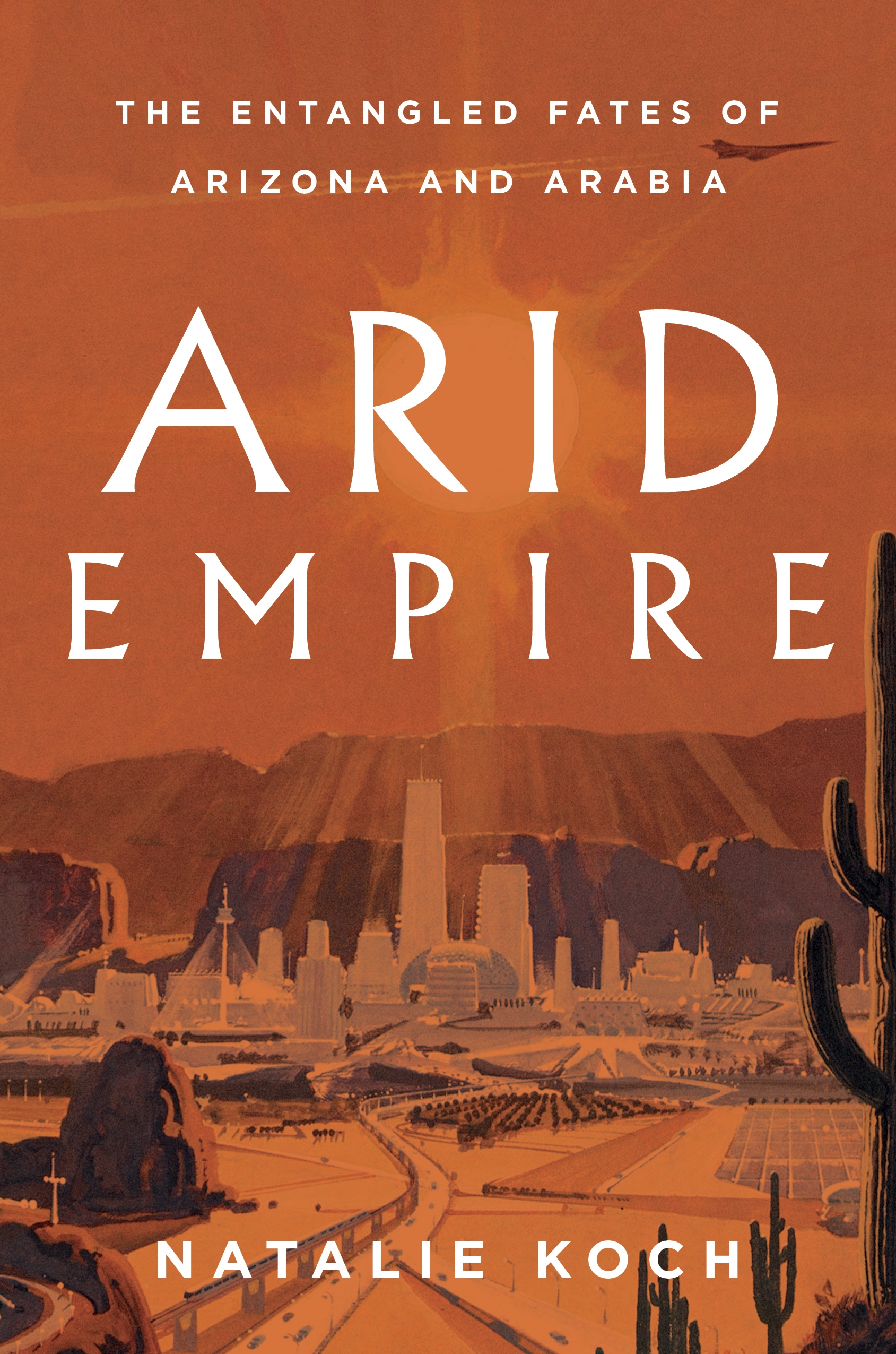
Natalie Koch, Arid Empire: The Entangled Fates of Arizona and Arabia – Verso, January 2023

Natalie Koch, Arid Empire: The Entangled Fates of Arizona and Arabia – Verso, January 2023

A revelatory new history of the colonization of the American West, by way of camels, date palms, and Biosphere 2

The iconic deserts of the American southwest could not have been colonized and settled without the help of desert experts from the Middle East. For example: In 1856, a caravan of thirty-three camels arrived in Indianola, Texas, led by a Syrian cameleer the Americans called “Hi Jolly.” This “camel corps,” the US government hoped, could help the army secure the new southwest swath of the country just wrested from Mexico. Though the dream of the camel corps—and sadly, the camels—died, the idea of drawing on expertise, knowledge, and practices from the desert countries of the Middle East did not.

As Natalie Koch demonstrates in this evocative, narrative history, the exchange of colonial technologies between the Arabian Peninsula and United States over the past two centuries—from date palm farming and desert agriculture to the utopian sci-fi dreams of Biosphere 2 and Frank Herbert’s Dune—bound the two regions together, solidifying the colonization of the US West and, eventually, the reach of American power into the Middle East. Koch teaches us to see deserts anew, not as mythic sites of romance or empty wastelands but as an “arid empire,” a crucial political space where imperial dreams coalesce.

[Update: Thanks for the comment below for pointing to this 2019 open access article: See OA article Koch, N., (2019) “AgTech in Arabia: ‘spectacular forgetting’ and the technopolitics of greening the desert”, Journal of Political Ecology 26(1), 666-686. doi: https://doi.org/10.2458/v26i1.23507]

Posted in Uncategorized | 1 Comment

Alyssa Battistoni, “Latour’s Metamorphosis”, New Left Review Sidecar (open access)

Alyssa Battistoni, “Latour’s Metamorphosis“, New Left Review Sidecar (open access)

Posted in Bruno Latour | Leave a comment

Andrea Mubi Brighenti, Elias Canetti and Social Theory: The Bond on Creation – Bloomsbury, January 2023

Andrea Mubi Brighenti, Elias Canetti and Social Theory: The Bond on Creation – Bloomsbury, January 2023

Elias Canetti is a key thinker in the trend towards the renewal of social theory for the 21st century. He is increasingly being recognised in the social and political sciences for the seminal text, Crowds and Power (1960). While this work can sometimes be criticised for its alleged anti-historicity, anti-modernism, fixation on death, and a dark vision of humankind, Crowds and Power can, in fact, be interpreted as a study and a critique of the mono-dimensionality and the obsessiveness of power. In Canetti’s own words, it is an attempt ‘to find the weak spot of power’ and, ultimately, an invitation to recognise and explore the endless richness of human transformations. 

Elias Canetti and Social Theory argues that the alleged anti-modernism of Canetti actually makes him morecontemporary than many contemporary social-political thinkers. It deals with key concepts within socio-political theory including: commands, increase, resistance, and commonality. Each of these ideas is connected with real, lived social realities making this book a compelling argument for Canetti’s crucial relevance today.

Posted in Uncategorized | Leave a comment

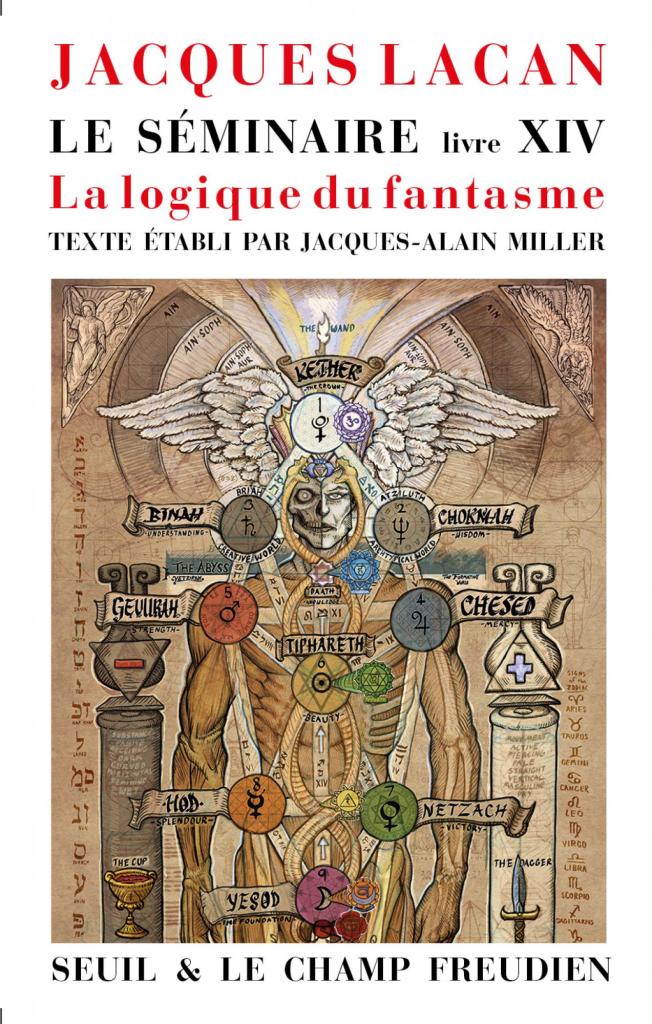
Jacques Lacan, Le Séminaire Livre XIV: La Logique du fantasme, ed. Jacques-Alain Miller – Seuil, January 2023

Jacques Lacan, Le Séminaire Livre XIV: La Logique du fantasme, ed. Jacques-Alain Miller – Seuil, January 2023

After a long gap, and some legal problems, the publication of the seminar is ongoing once again:

« Logique du fantasme », l’expression revient tout du long du Séminaire comme un leitmotiv. Cependant, nulle leçon ne lui est consacrée, ni même un développement un peu soutenu. Est-ce à dire que la logique du fantasme joue ici le rôle d’une Arlésienne nouvelle manière ? Non, si l’on veut bien admettre que cette logique est le point de convergence des propos de Lacan, ce que j’ai voulu indiquer en intitulant le tout dernier chapitre « L’axiome du fantasme ».

C’est ainsi qu’il commence en croisant audacieusement le groupe mathématique de Klein avec le cogito cartésien, modifié de manière à délivrer l’alternative « Ou je ne suis pas, ou je ne pense pas ». D’où Lacan trouve occasion à résumer en quatre temps le cours d’une analyse.

Autre croisement mathématico-psychanalytique : l’acte sexuel éclairé à partir du Nombre d’or. Il s’ensuit qu’ « il n’y a pas d’acte sexuel », amorce de ce dit devenu pont-aux-ânes : « il n’y a pas de rapport sexuel ».

On trouvera aussi l’invention d’une « valeur de jouissance », inspirée par Marx, et on aura la surprise de voir le grand Autre, « lieu de la parole », nouvellement défini comme « le corps », lieu primordial de l’écriture.

Bien d’autres vues et constructions saisissantes attendent le lecteur s’il veut bien suivre dans ses méandres, piétinements, revirements, et aussi avancées et fulgurances, une pensée obstinée et profondément honnête, qui, lorsqu’elle rencontre telle pierre d’achoppement, ne la contourne jamais, mais s’emploie à en faire une pierre angulaire.

Posted in Jacques Lacan | Leave a comment

Territorial Bodies: World Culture in Crisis – University of Warwick, 25 February 2023 [registration now open]

Registration is now open – Territorial Bodies, Warwick, 25 February 2023 – https://warwick.ac.uk/fac/arts/hrc/confs/territorialbodies/

stuartelden's avatarProgressive Geographies

Territorial Bodies: World Culture in Crisis

Saturday 25th February 2023, University of Warwick

[update: registration now open]

Keynote Addresses:

Dr. Lauren Wilcox, University of Cambridge

Prof. Kathryn Yusoff, Queen Mary University London

Call for Papers now available

In his discussion of the socio-ecological crisis of capitalism, Jason Moore dismisses the theoretical tendency to describe ‘twin’ social and environmental crises, arguing that ‘these are in fact a singular process of transformation that today we call a crisis’ (2011: 136). In order to interrogate the singular socio-ecological crisis further, this conference proposes ‘territorial bodies’ as a critical framework for readings of contemporary world culture, synthesising interdisciplinary approaches to embodiment and violence studies. It considers how the ‘territorial body’ offers an analytical tool for addressing urgent social, ecological, and political challenges, from ecological breakdown to the rise of statelessness, to violence against women and racial exploitation. Key questions include:

  • How…

View original post 209 more words

Posted in Uncategorized | 1 Comment