George Steinmetz, The Colonial Origins of Modern Social Thought: French Sociology and the Overseas Empire – Princeton University Press, April 2023

George Steinmetz, The Colonial Origins of Modern Social Thought: French Sociology and the Overseas Empire – Princeton University Press, April 2023


The Introduction is open access here
In this provocative and original retelling of the history of French social thought, George Steinmetz places the history and development of modern French sociology in the context of the French empire after World War II. Connecting the rise of all the social sciences with efforts by France and other imperial powers to consolidate control over their crisis-ridden colonies, Steinmetz argues that colonial research represented a crucial core of the renascent academic discipline of sociology, especially between the late 1930s and the 1960s. Sociologists, who became favored partners of colonial governments, were asked to apply their expertise to such “social problems” as detribalization, urbanization, poverty, and labor migration. This colonial orientation permeated all the major subfields of sociological research, Steinmetz contends, and is at the center of the work of four influential scholars: Raymond Aron, Jacques Berque, Georges Balandier, and Pierre Bourdieu.

In retelling this history, Steinmetz develops and deploys a new methodological approach that combines attention to broadly contextual factors, dynamics within the intellectual development of the social sciences and sociology in particular, and close readings of sociological texts. He moves gradually toward the postwar sociologists of colonialism and their writings, beginning with the most macroscopic contexts, which included the postwar “reoccupation” of the French empire and the turn to developmentalist policies and the resulting demand for new forms of social scientific expertise. After exploring the colonial engagement of researchers in sociology and neighboring fields before and after 1945, he turns to detailed examinations of the work of Aron, who created a sociology of empires; Berque, the leading historical sociologist of North Africa; Balandier, the founder of French Africanist sociology; and Bourdieu, whose renowned theoretical concepts were forged in war-torn, late-colonial Algeria.
Posted in Uncategorized | 1 Comment

Elisabetta Basso’s Young Foucault reviewed in The Journal of the History of the Behavioral Sciences (behind paywall; some excerpts here)

I have a review of Elisabetta Basso’s excellent Young Foucault: The Lille manuscripts on psychopathology, phenomenology, and anthropology, 1952–1955, translated by Marie Satya McDonough (Columbia University Press, 2022) in The Journal of the History of the Behavioral Sciences. The review is unfortunately behind a paywall, so here are some of the key bits:

Box 46 [of the Foucault archive] is especially noteworthy. It contains 400 pages of manuscripts, most of which have recently been published but await translation. There are notes for a course on the question of philosophical anthropology, probably delivered both at the University of Lille and the École normale supérieure (ENS) in Paris in the early 1950s, a manuscript with the title Phénoménologie et psychologie, probably from around 1953–1954, and another manuscript from a similar time, without a title but published as Binswanger et l’analyse existentielle (Foucault, 2021a, 2021b, 2022). The editor of the last text is Elisabetta Basso, and the book under review here is an exemplary analysis of the importance of these manuscripts. 

Basso’s work on Foucault’s relation to Binswanger’s approach to psychoanalysis dates from her Italian book Michel Foucault e la Daseinsanalyse (2007), through articles in English and French, as coeditor of the important collection Foucault à Münsterlingen: À l’origine de l’Histoire de la folie (Bert & Basso, 2015), and as editor of some important correspondence, including Foucault’s with Binswanger (in Foucault à Münsterlingen) and the Binswanger‐ Gaston Bachelard letters (Basso ed. 2016). She was, therefore, the natural editor of the Binswanger et l’analyse existentielle manuscript, and her contextualization in that book is a crucial guide. 

Young Foucault takes all of that work and deepens, reassesses, and expands it. It is a significant contribution to our understanding of Foucault’s intellectual development, focusing on the box 46 manuscripts, all written while Foucault was teaching in Lille between 1952 and 1955…

Basso is excellent on situating the Binswanger et l’analyse existentielle manuscript in relation to the published ‘Dream and Existence’ introduction, as well as to Foucault’s interest in psychology and a network of thinkers around Binswanger, especially Roland Kuhn. She shows how Jacqueline Verdeaux was not just significant as Foucault’s collaborator on the ‘Dream and Existence’ translation, but also for providing him with some clinical experience, working in a laboratory at the Hôpital Saint‐Anne and at the Fresnes correctional center. She reconstructs the story of Foucault’s visits to Switzerland to meet Binswanger and Kuhn, especially the first visit to Münsterlingen, in which Foucault, Jacqueline and Georges Verdeaux also attended a Mardi Gras fête des fous. Foucault mentions this festival of the mad, where residents in the asylum would parade in masks and costumes, obliquely later in life, but Basso shows how important this was in the connection to Binswanger and Kuhn. While Young Foucault is good on the story, Foucault à Münsterlingen should also be consulted for the valuable documentary and photographic record it provides. There are a few interesting photographs and manuscript pages reproduced in this book too. While Basso makes use of a large number of archival sources, she also uses some material still in private hands, including letters between Verdeaux and Foucault…

Basso is an invaluable guide to much of this rich new material. 

I’d be happy to share the full review with people if interested. Please email me.

Posted in Gaston Bachelard, Ludwig Binswanger, Michel Foucault | 2 Comments

John Guillory, Professing Criticism: Essays on the Organization of Literary Study – University of Chicago Press, December 2022

John Guillory, Professing Criticism: Essays on the Organization of Literary Study – University of Chicago Press, December 2022

A sociological history of literary study—both as a discipline and as a profession.
 
As the humanities in higher education struggle with a labor crisis and with declining enrollments, the travails of literary study are especially profound. No scholar has analyzed the discipline’s contradictions as authoritatively as John Guillory. In this much-anticipated new book, Guillory shows how the study of literature has been organized, both historically and in the modern era, both before and after its professionalization. The traces of this volatile history, he reveals, have solidified into permanent features of the university. Literary study continues to be troubled by the relation between discipline and profession, both in its ambivalence about the literary object and in its anxious embrace of a professionalism that betrays the discipline’s relation to its amateur precursor: criticism. 

In a series of timely essays, Professing Criticism offers an incisive explanation for the perennial churn in literary study, the constant revolutionizing of its methods and objects, and the permanent crisis of its professional identification. It closes with a robust outline of five key rationales for literary study, offering a credible account of the aims of the discipline and a reminder to the professoriate of what they already do, and often do well.

Posted in Uncategorized | Leave a comment

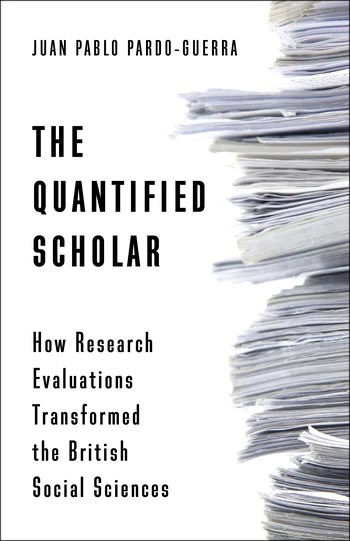
Juan Pablo Pardo-Guerra, The Quantified Scholar: How Research Evaluations Transformed the British Social Sciences – Columbia University Press, August 2022; reviewed at London Review of Books by John Whitfield

Juan Pablo Pardo-Guerra, The Quantified Scholar: How Research Evaluations Transformed the British Social Sciences – Columbia University Press, August 2022; reviewed at London Review of Books by John Whitfield – doesn’t seem to require subscription to read.

The books looks important, but the review is a good brief (3000 words) overview of the UK higher education review process – perhaps especially useful for those outside it to understand something of what has happened.

Since 1986, the British government, faced with dwindling budgets and growing calls for public accountability, has sought to assess the value of scholarly work in the nation’s universities. Administrators have periodically evaluated the research of most full-time academics employed in British universities, seeking to distribute increasingly scarce funding to those who use it best. How do such attempts to quantify the worth of knowledge change the nature of scholarship?

Juan Pablo Pardo-Guerra examines the effects of quantitative research evaluations on British social scientists, arguing that the mission to measure academic excellence resulted in less diversity and more disciplinary conformity. Combining interviews and original computational analyses, The Quantified Scholar provides a compelling account of how scores, metrics, and standardized research evaluations altered the incentives of scientists and administrators by rewarding forms of scholarship that were closer to established disciplinary canons. In doing so, research evaluations amplified publication hierarchies and long-standing forms of academic prestige to the detriment of diversity. Slowly but surely, they reshaped academic departments, the interests of scholars, the organization of disciplines, and the employment conditions of researchers.

Critiquing the effects of quantification on the workplace, this book also presents alternatives to existing forms of evaluation, calling for new forms of vocational solidarity that can challenge entrenched inequality in academia.

Posted in Uncategorized | Leave a comment

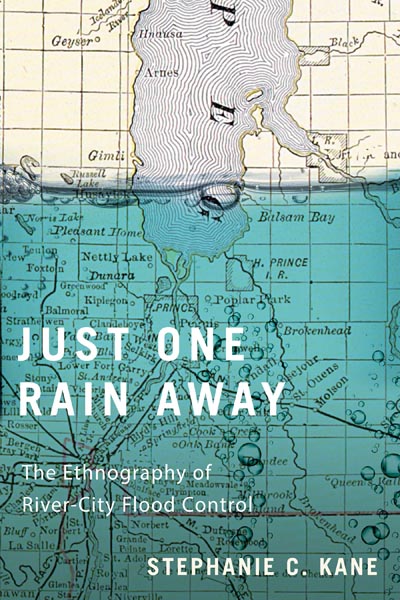
Stephanie C. Kane, Just One Rain Away: The Ethnography of River-City Flood Control – McGill-Queen’s University Press, December 2022

Stephanie C. Kane, Just One Rain Away: The Ethnography of River-City Flood Control – McGill-Queen’s University Press, December 2022

Not long ago it seemed flood control experts were close to mastering the unruly flows funnelling toward Hudson Bay and the Prairie city of Winnipeg. But as more intense and out-of-synch flood events occur, wary cities like Winnipeg continue to depend on systems and specifications that will soon be out of date. Rivers have impulses that defy many of the basic human assumptions underpinning otherwise sophisticated technologies. This is the river-city expression of climate change. 

In Just One Rain Away Stephanie Kane shows how geoscience, engineering, and law converge to affect flood control in Winnipeg. She questions technicalities produced and maintained in tandem with settler folkways at the expense of the plural legal cultures of Indigenous nations. The dynamics of this experimental ethnography feel familiar yet strange: here, many of the starring actors are not human. Ice and water – materializing as bodies, elements, and digital signals – act with diatoms, diversions, sensors, sandbags, and satellites, looping theories about glacial erratics and feminist science studies into scenes from neighbourhood parks, conferences, survey maps, plays, archival photos, a novel, an emergency press conference, LiDAR images, and a lab experiment in a bathtub. 

Through storytelling and environmental analytics, Just One Rain Away provides a starting point for cross-cultural discussions about how expert knowledge and practice should inform egalitarian decision-making about flood control and, more broadly, decolonize current ways of thinking, being, and becoming with rivers.

Posted in Uncategorized | 1 Comment

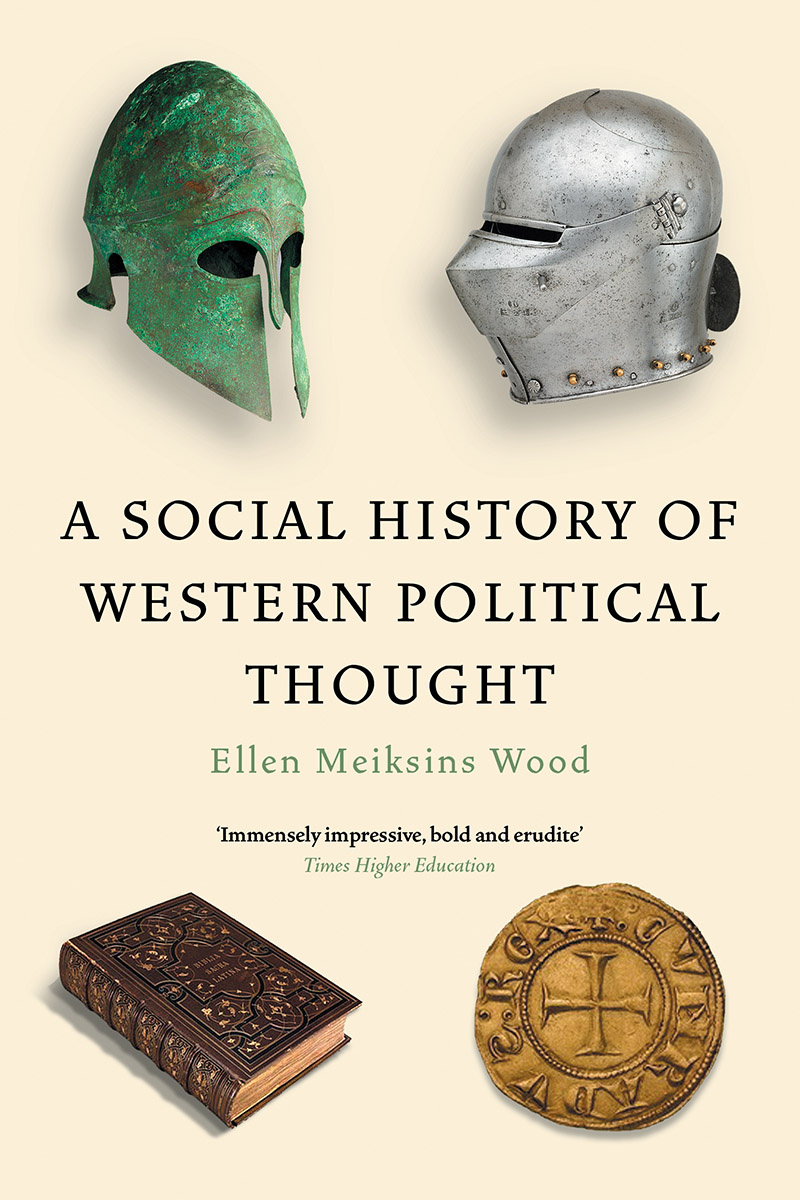
Ellen Meiksins Wood, A Social History of Western Political Thought – Verso, August 2022

Ellen Meiksins Wood, A Social History of Western Political Thought – Verso, August 2022

In this groundbreaking work, Ellen Meiksins Wood rewrites the history of political theory, from Plato to Rousseau. Treating canonical thinkers as passionately engaged human beings, Wood examines their ideas not simply in the context of political languages but as creative responses to the social relations and conflicts of their time and place. She identifies a distinctive relation between property and state in Western history and shows how the canon, while largely the work of members or clients of dominant classes, was shaped by complex interactions among proprietors, labourers and states. Western political theory, Wood argues, owes much of its vigour, and also many ambiguities, to these complex and often contradictory relations.

In this new edition, incorporating both volumes, the book takes us from classical antiquity to the age of enlightenement. In the first volume, Wood traces the development of the Western tradition from classical antiquity through to the Middle Ages in the perspective of social history—a significant departure not only from the standard abstract history of ideas but also from other contextual methods. In the second volume, Wood moves on to explore the formation of the modern state, the rise of capitalism, the Renaissance and Reformation, the scientific revolution and the Age of Enlightenment. In her focus on canonical thinkers through the ages, Wood illuminates a rich and provocative legacy of political ideas unmatched in Western history.

Posted in Uncategorized | Leave a comment

Aileen Fyfe, Noah Moxham, Julie McDougall-Waters, and Camilla Mørk Røstvik, A History of Scientific Journals: Publishing at the Royal Society, 1665-2015 – UCL Press, October 2022 (print and open access pdf)

Aileen Fyfe, Noah Moxham, Julie McDougall-Waters, and Camilla Mørk Røstvik, A History of Scientific Journals: Publishing at the Royal Society, 1665-2015 – UCL Press, October 2022 (print and open access pdf)

Modern scientific research has changed so much since Isaac Newton’s day: it is more professional, collaborative and international, with more complicated equipment and a more diverse community of researchers. Yet the use of scientific journals to report, share and store results is a thread that runs through the history of science from Newton’s day to ours. Scientific journals are now central to academic research and careers. Their editorial and peer-review processes act as a check on new claims and findings, and researchers build their careers on the list of journal articles they have published. The journal that reported Newton’s optical experiments still exists. First published in 1665, and now fully digital, the Philosophical Transactions has carried papers by Charles Darwin, Dorothy Hodgkin and Stephen Hawking. It is now one of eleven journals published by the Royal Society of London.

Unrivalled insights from the Royal Society’s comprehensive archives have enabled the authors to investigate more than 350 years of scientific journal publishing. The editorial management, business practices and financial difficulties of the Philosophical Transactions and its sibling Proceedings reveal the meaning and purpose of journals in a changing scientific community. At a time when we are surrounded by calls to reform the academic publishing system, it has never been more urgent that we understand its history.

Posted in Uncategorized | Leave a comment

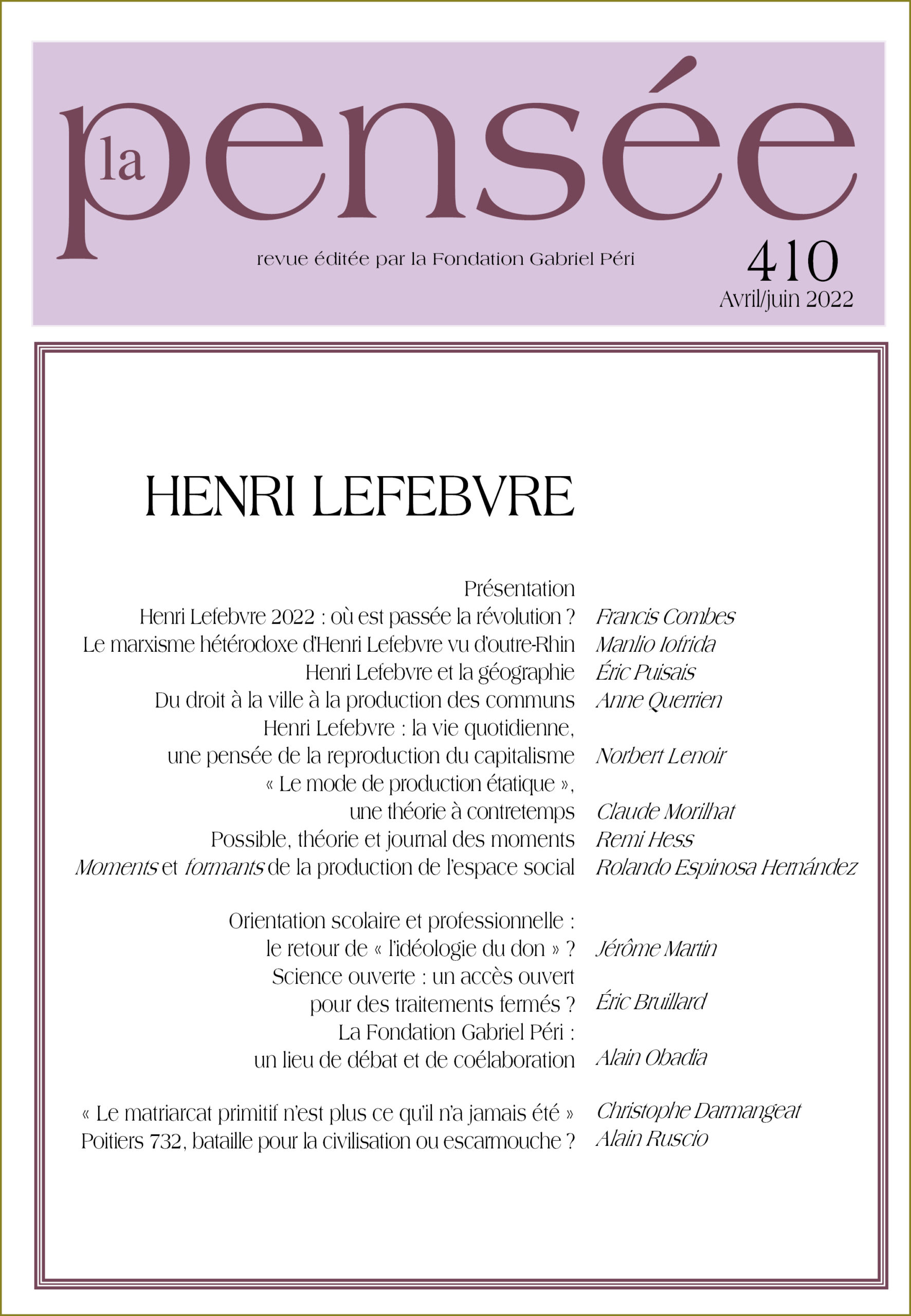
La Pensée 410 – special issue on Henri Lefebvre

La Pensée 410special issue on Henri Lefebvre

Les 24 et 25 mars 2022 s’est tenu à Paris un colloque, organisé par La Pensée, le Groupe d’études du matérialisme rationnel et la Fondation Gabriel Péri, consacré à l’étude et à l’hommage d’Henri Lefebvre.

Henri Lefebvre est un philosophe français mondialement connu, lu et traduit par plusieurs générations dans le monde, son Le marxisme, édité aux PUF dans la collection « Que sais-je ? », est la plus forte vente de cet éditeur depuis 1948.

[…] Le voyage au pays philosophique de Lefebvre peut s’épanouir sous le soleil radieux de l’audace ou s’égarer dans la brume déconcertante des concepts, mais, quoi qu’il en soit, le voyage en vaut la peine. Henri Lefebvre nous oblige à penser dans la bousculade des certitudes ébranlées et dans la résignation d’un confort perdu. Au cours de ce colloque, chacun, tour à tour, a partagé ses enthousiasmes ou confessé ses doutes, pour le plus grand profit de nos lecteurs…

Posted in Henri Lefebvre | Leave a comment

Kristi Sweet, Kant on Freedom, Nature, and Judgment: The Territory of the Third Critique – Cambridge University Press, January 2023 [and open access Introduction]

stuartelden's avatarProgressive Geographies

Kristi Sweet, Kant on Freedom, Nature, and Judgment: The Territory of the Third Critique – Cambridge University Press, January 2023

Another expensive hardback, but looks interesting…

[update: the Introduction is available open access]

Kant’s Critique of Judgment seems not to be an obviously unified work. Unlike other attempts to comprehend it as a unity, which treat it as serving either practical or theoretical interests, Kristi Sweet’s book posits it as examining a genuinely independent sphere of human life. In her in-depth account of Kant’s Critical philosophical system, Sweet argues that the Critique addresses the question: for what may I hope? The answer is given in Kant’s account of ‘territory,’ a region of experience that both underlies and mediates between freedom and nature. Territory forms the context in which purposiveness without a purpose, the Ideal of Beauty, the sensus communis, genius and aesthetic ideas, and Kant’s conception of life and proof…

View original post 78 more words

Posted in Uncategorized | Leave a comment

Victor Konrad and Anne-Laure Amilhat Szary, Border Culture: Theory, Imagination, Geopolitics – Routledge, December 2022

Victor Konrad and Anne-Laure Amilhat Szary, Border Culture: Theory, Imagination, Geopolitics – Routledge, December 2022

This book introduces readers to the cultural imaginings of borders: the in-between spaces in which transnationalism collides with geopolitical cooperation and contestation.

Recent debates about the “refugee crisis” and the spread of the COVID-19 pandemic have politicized culture at and of borders like never before. Border culture is no longer culture at the margins but rather culture at the heart of geopolitics, flows, and experience of the transnational world. Increasingly, culture and borders are everywhere yet nowhere. In border spaces, national narratives and counter-narratives are tested and evaluated, coming up against transnational culture. This book provides an extensive and critical vision of border culture on the move, drawing on numerous examples worldwide and a growing international literature across border and cultural studies. It shows how border culture develops in the human imagination and manifests in human constructs of “nation” and “state”, as well as in transnationalism. By analyzing this new and expanding cultural geography of border landscapes, the book shows the way to a fresh, broader dialogue.

Exploring the nature and meaning of the intersection of border and culture, this book will be an essential read for students and researchers across border studies, geopolitics, geography, and cultural studies.

Posted in Boundaries, Territory | 1 Comment