Thomas Pynchon sells his archive

Thomas Pynchon sells his archive

Biblioklept's avatarBiblioklept

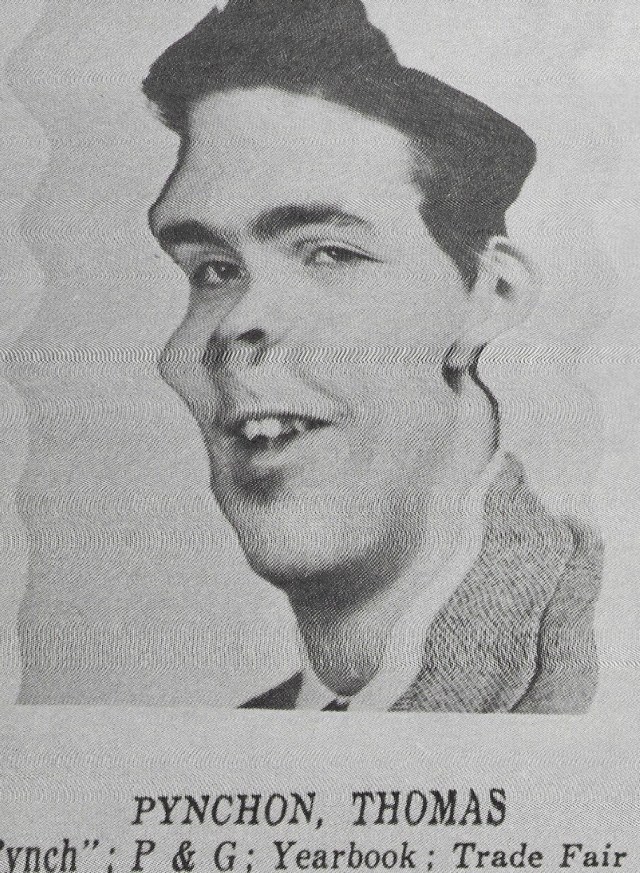
At The New York Times, Jennifer Schuessler reports that Thomas Pynchon has sold his archive to Huntington Library, Art Museum and Botanical Gardens in San Marino, California.

The article notes that the “archive includes 48 boxes — 70 linear feet, in archivist-speak — of material dating from the late 1950s to the 2020s” and includes :typescripts and drafts of all his published books”  to date as well as “copious research notes on the many, many subjects (World War II rocketry, postal history, 18th-century surveying) touched on in his encyclopedic novels.” And while the documents include letters related to publishing, it includes “no private letters or other personal material” — and no photographs of Pynchon.

The article also claims that Pynchon’s son Jackson “is described as having ‘compiled and represented the archive.'” (The passive voice there is a bit cryptic, but I guess cryptic is Pynchonian, so.)

The article…

View original post 47 more words

Posted in Uncategorized | Leave a comment

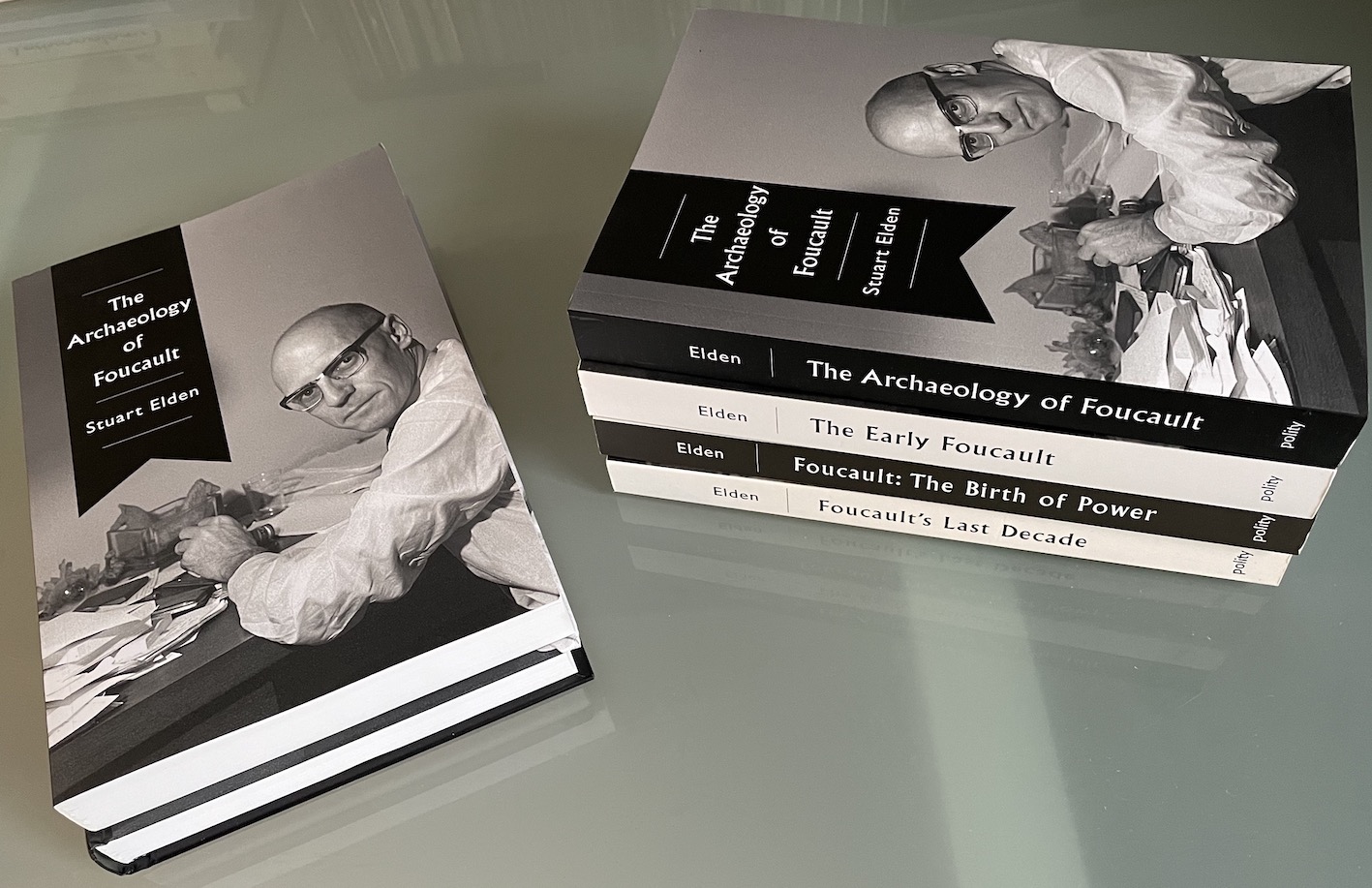
Stuart Elden, The Archaeology of Foucault – Polity, December 2022

Stuart Elden, The Archaeology of Foucault – Polity, December 2022

The fourth and final book in my series of studies of Foucault’s career is now published in the UK. US and rest of the world will follow in early 2023. Polity’s books are distributed by Wiley, and they should be able to deliver worldwide.

Here’s the back cover description of the book:

On 20 May 1961 Foucault defended his two doctoral theses; on 2 December 1970 he gave his inaugural lecture at the Collège de France. Between these dates, he published four books, travelled widely, and wrote extensively on literature, the visual arts, linguistics, and philosophy. He taught both psychology and philosophy, beginning his explorations of the question of sexuality.

 Weaving together analyses of published and unpublished material, this is a comprehensive study of this crucial period. As well as Foucault’s major texts, it discusses his travels to Brazil, Japan, and the USA, his time in Tunisia, and his editorial work for Critique and the complete works of Nietzsche and Bataille.

It was in this period that Foucault developed the historical-philosophical approach he called ‘archaeology’ – the elaboration of the archive – which he understood as the rules that make possible specific claims. In its detailed study of Foucault’s archive the book is itself an archaeology of Foucault in another sense, both excavation and reconstruction.

This book completes a four-volume series of major intellectual histories of Foucault. Foucault’s Last Decade was published by Polity in 2016; Foucault: The Birth of Power followed in 2017; and The Early Foucault in 2021.

And the three very generous endorsements:

“This final volume of Elden’s magisterial history offers a fascinating insight into Foucault’s life and work throughout the 1960s.”
Camille Robcis, Columbia University

“For we students of Foucault and avid readers of his books, the articulation with debates of the time and the reorientations of his thought seemed clear enough. What an illusion! Building on the new archive and testimonies with amazing intellectual empathy, Stuart Elden recreates the latent discourse. We can embark on a new reading and understanding of the great archaeologist of our culture.”
Étienne Balibar, author of On Universals

“Stuart Elden concludes his series on Foucault with another work of meticulous scholarship, unearthing archival sources, variants of Foucault’s publications, and links to his contemporaries in the exciting intellectual context of the 1960s.”
Clare O’Farrell, Queensland University of Technology

Completing this book brings to an end a long project, which grew substantially in scope over time. The books were written and published effectively as two pairs – Foucault’s Last Decade and Foucault: The Birth of Power, and then The Early Foucault and The Archaeology of Foucault – and in almost reverse chronological order. The reason for this was really that initially I planned to work on just the final phase of Foucault’s career, but the opening up of the archive meant that I could go further and further back. It also led to the side project on Georges Canguilhem, which produced a short book for Polity’s Key Contemporary Thinkers series.

The Archaeology of Foucault is the longest of the four books – together they are about 420,000 words, about 1,100 pages in print – a significant undertaking for me. It’s been a fascinating project to work on, and in process, if only in part with content, has shaped how I will do the research for the new project on Indo-European thought in Twentieth-Century France in important ways.

I’ve been sharing research updates on the process of doing the work on these books. Those for The Archaeology of Foucault are here, and the others linked from here, along with links to reviews of the earlier books.

I’ve also been sharing some Foucault research resources as I’ve been doing this work. I hope somebody else finds these useful.

Posted in Canguilhem (book), Etienne Balibar, Foucault's Last Decade, Foucault: The Birth of Power, Friedrich Nietzsche, Georges Bataille, Georges Canguilhem, Mapping Indo-European Thought in Twentieth Century France, Michel Foucault, My Publications, The Archaeology of Foucault, The Early Foucault, Uncategorized | 2 Comments

Stuart Elden, ‘Editing Georges Dumézil’s Mitra-Varuna’, Berfrois, December 2022

Update September 2025: the Berfrois site is now closed and the archive has been removed. My piece can now be found here.

I have a short piece at Berfrois, ‘Editing Georges Dumézil’s Mitra-Varuna‘.

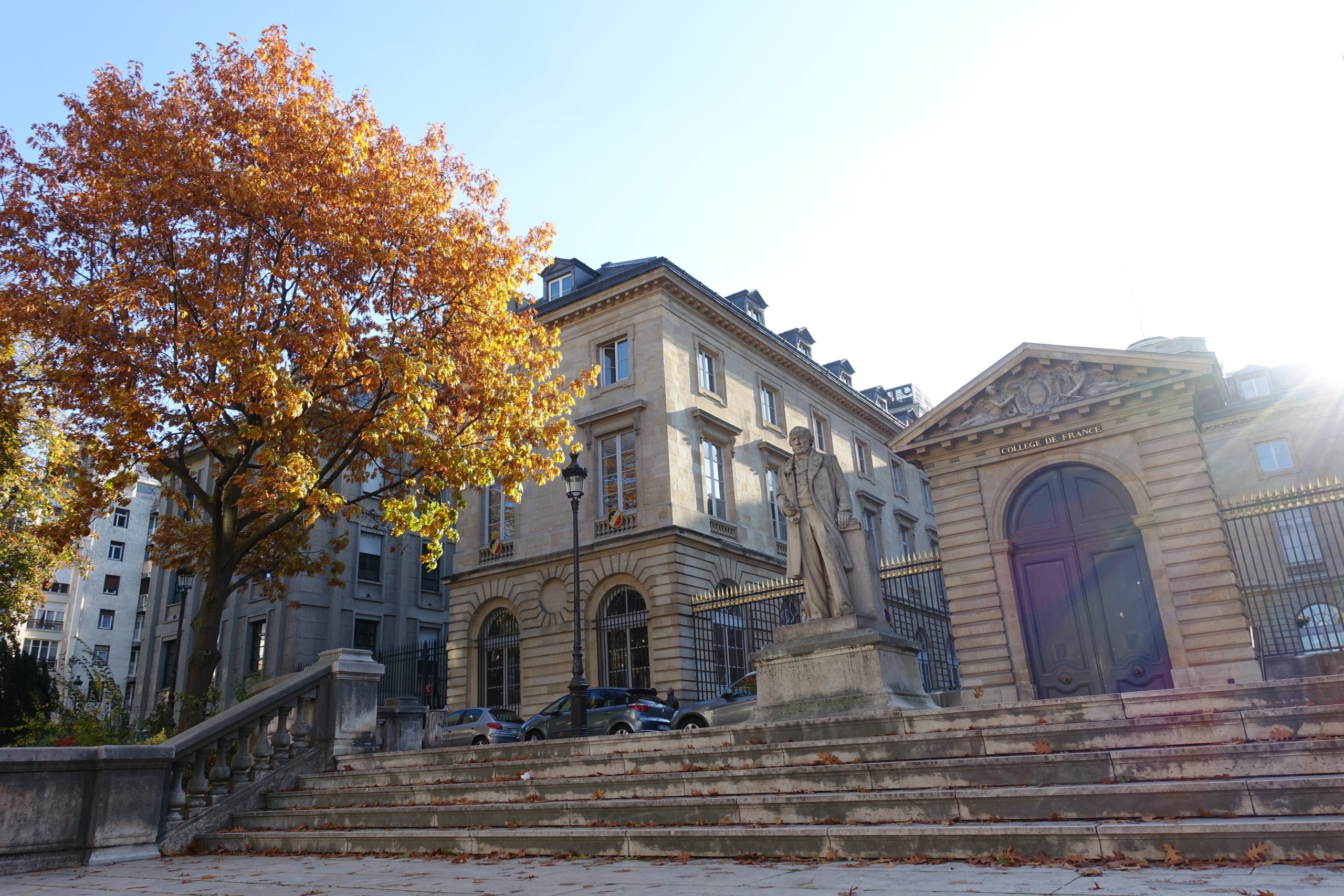
Guilhem Vellut: Collège de France, Paris, 2016 (CC)

In May 1940, the month of the invasion of France by Germany, a short book by the comparative mythologist and linguist Georges Dumézil was published. Entitled Mitra-Varuna: An Essay on Two Indo-Representations of Sovereignty, copies became very hard to find, and after the war Dumézil reedited the text with some changes. That revised edition appeared in March 1948. Forty years later, two years after Dumézil’s death, this second edition was translated into English by Derek Coltman with Zone books, though it has become hard to find and available only in libraries, pirated pdfs, or rather expensive second-hand copies. In 2023, the translation will become available again, in a new critical edition with HAU books. [continues here]

Sadly Berfrois is closing, so I want to thank Russell Bennetts and the team for their work, for being continually interesting, and for hosting several pieces of my writing over the years, including some reviews of texts by Foucault or about Foucault, a biography of Kantorowicz, on Kant, and a couple of pieces on Shakespeare.

Posted in Ernst Kantorowicz, Georges Dumézil, Immanuel Kant, Mapping Indo-European Thought in Twentieth Century France, Michel Foucault, William Shakespeare | Leave a comment

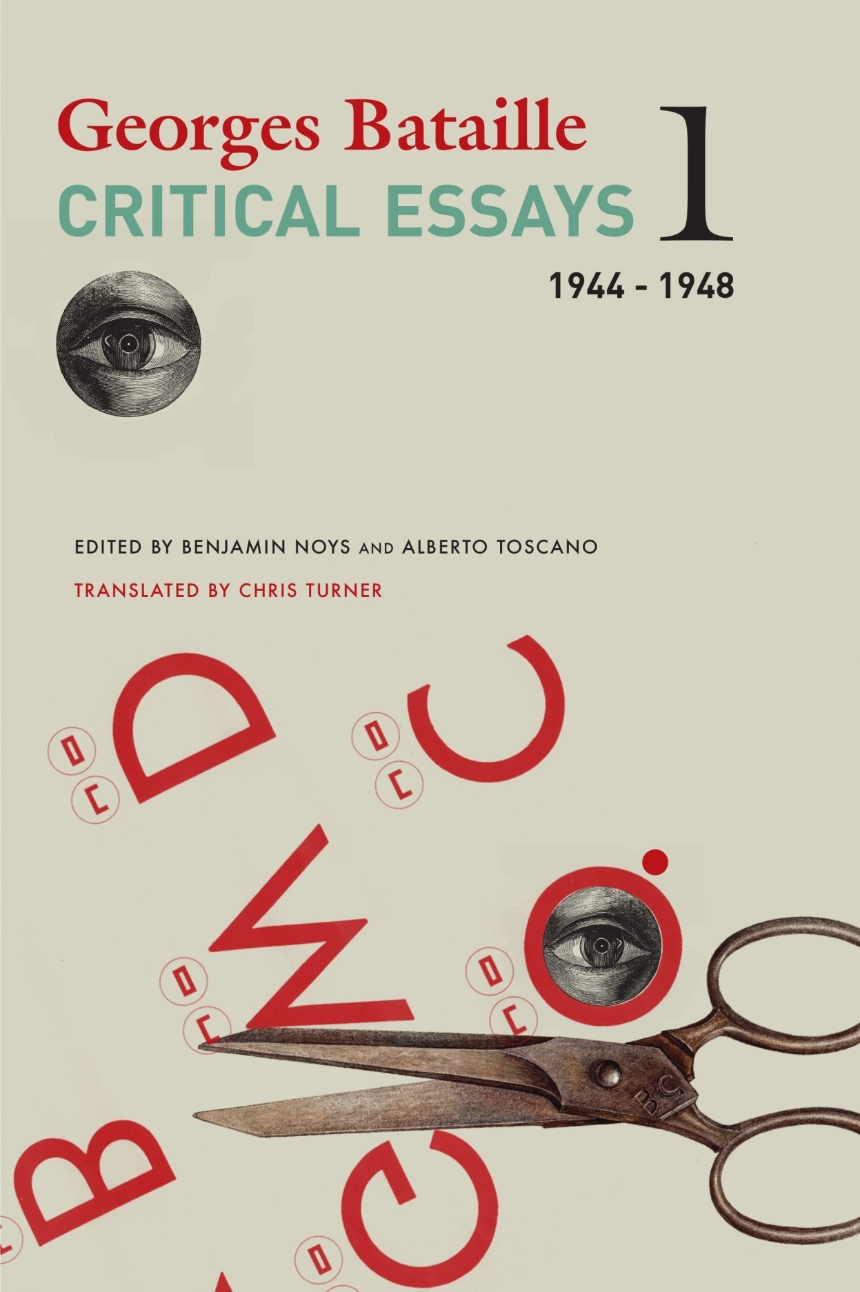
Georges Bataille, Critical Essays Volume I: 1944-1948, ed. Alberto Toscano and Benjamin Noys, trans. Chris Turner – Seagull, February 2023

Georges Bataille, Critical Essays Volume I: 1944-1948, ed. Alberto Toscano and Benjamin Noys, trans. Chris Turner – Seagull, February 2023

[Update: 34 early issues of Critique are available on Gallica – it looks like fewer, but some are double issues, and issues 1-7 are available as a single large file]

This first book in a three-volume collection of Georges Bataille’s essays introduces English readers to his philosophical and critical writings.

In the aftermath of the Second World War, French thinker and writer Georges Bataille forged a singular path through the moral and political impasses of his age. In 1946, animated by “a need to live events in an increasingly conscious way,” and to reject any compartmentalization of intellectual life, Bataille founded the journal Critique. Adopting the format of the review essay, he surveyed the post-war cultural landscape while advancing his reflections on excess, non-knowledge, and the general economy. Focusing on literature as a mode of sovereign uselessness, he tackled prominent and divisive figures such as Henry Miller and Albert Camus.

In keeping with Critique’s mission to explore the totality of human knowledge, Bataille’s articles did not just focus on the literary but featured important reflections on the science of sexuality, the Chinese Revolution, and historical accounts of drunkenness, among other matters. Throughout, he was attuned to how humanity would deal with the excessive forces of production and destruction it had unleashed, his aim being a way of thinking and living that would inhabit that excess.

This is the first of three volumes collecting Bataille’s post-war essays. Beginning with an article on Nietzsche and fascism written shortly after the liberation of Paris and running to the end of 1948, these texts make available for the first time in English the systematic diversity of Bataille’s post-war thought.

This is good news – when I was putting together my bibliography of Bataille in English, I was struck by how few of his papers in Critique had been translated, and thought this would be a worthwhile project. It’s great this is happening, and in such capable hands.

Posted in Alberto Toscano, Georges Bataille | Leave a comment

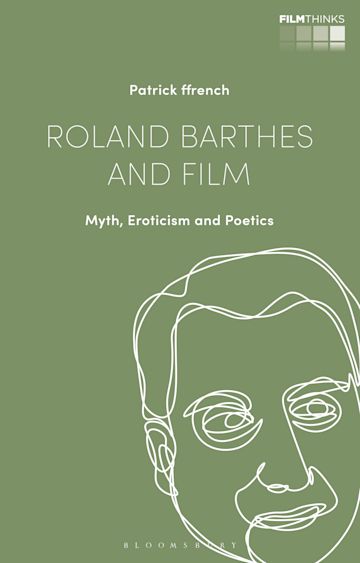
Patrick ffrench, Roland Barthes and Film: Myth, Eroticism and Poetics – Bloomsbury, April 2021 and New Books Network discussion

Patrick ffrench, Roland Barthes and Film: Myth, Eroticism and Poetics – Bloomsbury, April 2021

The Introduction and part of the first chapter are available at the above link.

There is also a New Books Network discussion with Bill Schaffer.

Suspicious of what he called the spectator’s “sticky” adherence to the screen, Roland Barthes had a cautious attitude towards cinema. Falling into a hypnotic trance, the philosopher warned, an audience can become susceptible to ideology and “myth”. In this book, Patrick Ffrench explains that although Barthes was wary of film, he engaged deeply with it. Barthes’ thought was, Ffrench argues, punctuated by the experience of watching films – and likewise his philosophy of photography, culture, semiotics, ethics and theatricality have been immensely important in film theory.

Focusing particularly on the essays ‘The Third Meaning’ and ‘On Leaving the Cinema’ and the acclaimed book Camera Lucida, Ffrench examines Barthes’ writing and traces a persistent interest in films and directors, from Fellini and Antonioni, to Eisenstein, the Marx Brothers and Hitchcock. Ffrench explains that although Barthes found pleasure in “leaving the cinema” – disconnecting from its dangerous allure by a literal exit or by forcefully breaking the trance – he found value in returning to the screen anew. Barthes delved beneath the pull of progressing narrative and the moving image by becoming attentive to space and material aesthetics. This book presents an invaluable reassessment of one of the most original and subtle thinkers of the twentieth-century: a figure indebted to the movies.

Posted in Roland Barthes, Uncategorized | Leave a comment

David I. Backer, Althusser and Education: Reassessing Critical Education – Bloomsbury, July 2022 (print, and open access)

David I. Backer, Althusser and Education: Reassessing Critical Education – Bloomsbury, July 2022 (print, and open access)

Louis Althusser was one of the foremost Marxist philosophers of the 20th century. His thinking laid the groundwork for critical educational theory, yet it is often misunderstood in critical pedagogy and sociology of education. In this open access book, David Backer reexamines Althusser’s philosophy of education, presents its flawed reception in critical educational research, and draws out what the philosophy has to offer us today. Correcting the record about Althusser’s thinking in the traditional narrative of critical educational research becomes an opportunity to revisit fundamental questions for thinking about school in its social context. For students and researchers of education, critical theory, sociology of education, and critical pedagogy, this book will be a resource for rethinking the social foundations of education, both as a field and as a set of theoretical frameworks for educational research.

Posted in Louis Althusser | Leave a comment

Kristi Sweet, Kant on Freedom, Nature, and Judgment: The Territory of the Third Critique – Cambridge University Press, January 2023 [and open access Introduction]

Kristi Sweet, Kant on Freedom, Nature, and Judgment: The Territory of the Third Critique – Cambridge University Press, January 2023

Another expensive hardback, but looks interesting…

[update: the Introduction is available open access]

Kant’s Critique of Judgment seems not to be an obviously unified work. Unlike other attempts to comprehend it as a unity, which treat it as serving either practical or theoretical interests, Kristi Sweet’s book posits it as examining a genuinely independent sphere of human life. In her in-depth account of Kant’s Critical philosophical system, Sweet argues that the Critique addresses the question: for what may I hope? The answer is given in Kant’s account of ‘territory,’ a region of experience that both underlies and mediates between freedom and nature. Territory forms the context in which purposiveness without a purpose, the Ideal of Beauty, the sensus communis, genius and aesthetic ideas, and Kant’s conception of life and proof of God are best interpreted. Encounters in this sphere are shown to refer us to a larger, more cosmic sense of a whole to which both freedom and nature belong.

Argues that the question to which the third Critique speaks is: for what may I hope

Treats historically dismissed sections of the text as central to Kant’s project

Presents two seemingly disparate sections of Kant’s third Critique as part of a unified project of completing his critical system

Update October 2025: NDPR review by Lara Ostaric

Posted in Immanuel Kant, Uncategorized | 7 Comments

Joanne Yao, The Ideal River: How Control of Nature Shaped the International Order – Manchester University Press, March 2022 and New Books Network discussion

Joanne Yao, The Ideal River: How Control of Nature Shaped the International Order – Manchester University Press, March 2022

Just an expensive hardback at the moment, unfortunately.

Environmental politics has traditionally been a peripheral concern for international relations theory, but increasing alarm over global environmental challenges has elevated international society’s relationship with the natural world into the theoretical limelight. IR theory’s engagement with environmental politics, however, has largely focused on interstate cooperation in the late twentieth century, with less attention paid to how the eighteenth- and nineteenth-century quest to tame nature came to shape the modern international order.

The ideal river examines nineteenth-century efforts to establish international commissions on three transboundary rivers – the Rhine, the Danube, and the Congo. It charts how the Enlightenment ambition to tame the natural world, and human nature itself, became an international standard for rational and civilized authority and informed our geographical imagination of the international. This relationship of domination over nature shaped three core IR concepts central to the emergence of early international order: the territorial sovereign state; imperial hierarchies; and international organizations. The book contributes to environmental politics and international relations by highlighting how the relationship between society and nature is not a peripheral concern, but one at the heart of international politics.

There is a discussion at the New Books Network with Stentor Danielson. Thanks to dmf for the links.

Posted in Uncategorized | 1 Comment

Sean D. Kirkland, Heidegger and the Destruction of Aristotle: On How to Read the Tradition – Northwestern University Press, July 2023

Sean D. Kirkland, Heidegger and the Destruction of Aristotle: On How to Read the Tradition – Northwestern University Press, July 2023

A bold new conception of Heidegger’s project of Destruktion as a method of interpreting history

For Martin Heidegger, our inherited traditions provide the concepts through which we make our world intelligible. Concepts we can also oppose, disrupt, and even exceed. First, however, if Western philosophy is our inheritance, we must submit it to Destruktion—starting with Aristotle. Heidegger and the Destruction of Aristotle: On How to Read the Tradition presents a new conception of Heidegger’s “destruction” as a way of reading.

Situated between Nietzschean genealogy and Derridean deconstruction, this method uncovers in Aristotle the most vital originating articulations of the Western tradition and gives us the means to confront it. Sean D. Kirkland argues this is not a rejection of the past but a sophisticated and indeed timely hermeneutic tool—a complex, illuminating, and powerful method for interpreting historical texts at our present moment. Acknowledging the historical Heidegger as a politically compromised and still divisive figure, Kirkland demonstrates that Heideggerian destruction is a method of interpreting history that enables us to reorient and indeed transform its own most troubling legacies.

“This is an astonishing book. Short but to the point, it profoundly challenges ingrained assumptions about Destruktion in Heidegger’s early thought and the role that concept fulfills in fundamental texts of philosophy. Sean D. Kirkland is uniquely qualified to tackle this topic, which is an obvious lacuna in the research on Heidegger, and the insightfulness and originality of this work positions him as one of the preeminent scholars of his generation on the subject.” —Dimitris Vardoulakis, author of Spinoza, the Epicurean: Authority and Utility in Materialism

Posted in Martin Heidegger | Leave a comment

Some bibliographical questions about Roland Barthes [with some answers]

Some bibliographical questions about Roland Barthes. Any answers much appreciated – and with the first three will hopefully interesting to others; the final one is more a remark (or, as the cliché goes, more of a comment than a question).

[Update: I had some very useful answers to these questions, or suggestions of people to ask, from Lisa Downing, Bernard Dionysius Geoghegan, Sunil Manghani, Oliver Davis and Naomi Waltham Smith. In particular, Patrick ffrench and @BelseyMemorial provided a lot of useful information. I’ve shared all of this below.]

1. Barthes’s Collège de France courses seem to be complete in French, and all are translated into English [How to Live Together, The Neutral and The Preparation of the Novel], but some of his EPHE courses are edited in French, i.e. Le Discours amoureux, but far from all. As far as I know, none of the EPHE courses are translated. Some of the courses are out of print in French, possibly because they are being gradually reprinted in the Seuil Points series. Any plans for more courses in French and/or translations of what we have already?

[Update: As well as Le Discours amoureux, seminars from the EPHE on Sarrasine de Balzac (1967-68 and 1968-69) and Le Lexique de l’auteur (1973-74) have been published.

Other seminars have been discussed, but not published. Apparently there are no plans to translate those that are published.

Barthes’s 1966-67 seminar Recherches sur le discours de l’Histoire is discussed and part-presented in Maria O’Sullivan, “Roland Barthes: genèse d’un séminaire inédit“, Avant-Dire, 133-64. This contains some of Barthes’s notes in facsimile and transcription.

There is a useful discussion of Barthes’s 1964-69 seminars on rhetoric – Claudia Amigo Pino, “The Rhetorical Mission: Barthes’s Seminars from 1964 to 1969“, Barthes Studies 5, 2019, 53-71]

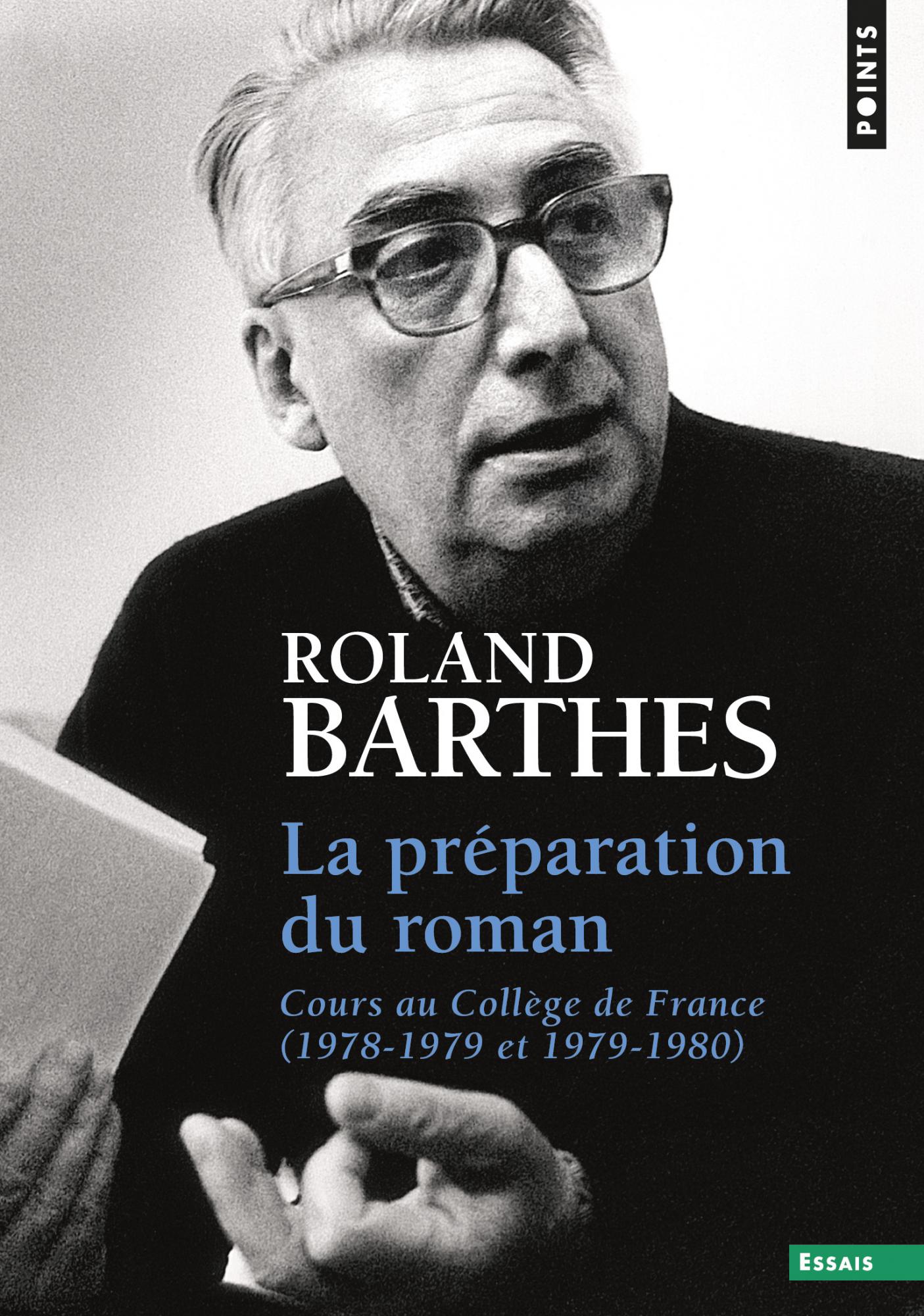
2. At least some lecture courses have been edited twice – once on the basis of manuscripts and later with the addition of material from recordings. That’s certainly the case with La préparation du roman. The English translations with Columbia University Press are based on the former. Are there plans to update the translations?

[Update: the English translator of The Preparation of the Novel, Kate Briggs, discusses the updated French edition in an essay: “Augmentation infinie de la mayonnaise: On the New Edition of Roland Barthes’s La Préparation du roman“, Barthes Studies 7, 2021, 49-64. This is a great analysis of the difference between the written and transcribed texts, with reflections on lecturing and translating. It indicates that she “would love to see the new edition translated into English”, but does not indicate that this is being done. It also, persuasively to my mind, shows why the two French editions should be consulted, and that the new one does not make the old one “obsolete”. The same would therefore be the case with a new translation. “Crucially, what we don’t have in the new edition, what is missing, along with (Natalie) Léger’s original editor’s introduction and the materials for the seminars, are precisely the notes. We no longer have Barthes’s notes qua preparatory notes” (p. 61)]

3. Is there a comprehensive list of translations of short pieces by Barthes, ideally keyed to the Oeuvres complètes? It’s easy enough to find translations of books, but not always of articles. I’m looking for the sort of thing Richard Lynch has done with Foucault, or I did with Georges Bataille or Ludwig Binswanger. I can reference things just in French, but if there is a translation I’d like to consult and reference that too.

[Update: there is a comprehensive bibliography, doing exactly what I was looking for. Neil Badmington, “Roland Barthes in English: A Guide to Translations“, Barthes Studies 7, 2021, 149-223. ]

4. Why did nobody tell me that Barthes discusses territory in Comment Vivre Ensemble/How to Live Together? Most of it is based on animal ethology, but there are some interesting parts.

While I discuss Barthes in relation to Foucault in my books on Foucault, I started going back to some of his work because of his appreciation for the work of Émile Benveniste, who is part of my new project on Indo-European thought in twentieth-century France.

Posted in Emile Benveniste, Georges Bataille, Ludwig Binswanger, Mapping Indo-European Thought in Twentieth Century France, Michel Foucault, Roland Barthes, Uncategorized | 2 Comments