As he often said, Foucault never wanted his work to become dead theory or inspire a cult following. From metaphors that compare his ideas to ‘a box of tools’ to characterisations of his work as a challenge or an invitation, his books and ethos continue to illuminate contemporary critical thought. His books continue to invite interpretations and re-interpretations. His ideas are taken up and made to work in the present. His lectures give us a glimpse of Foucault’s thought in action. His interviews show us how he positioned himself as a public intellectual. His life continues to offer us models of militancy, passion, experimentation and critique.
This seminar intends to engage as many facets of Foucault as possible. It is inviting engagements with…
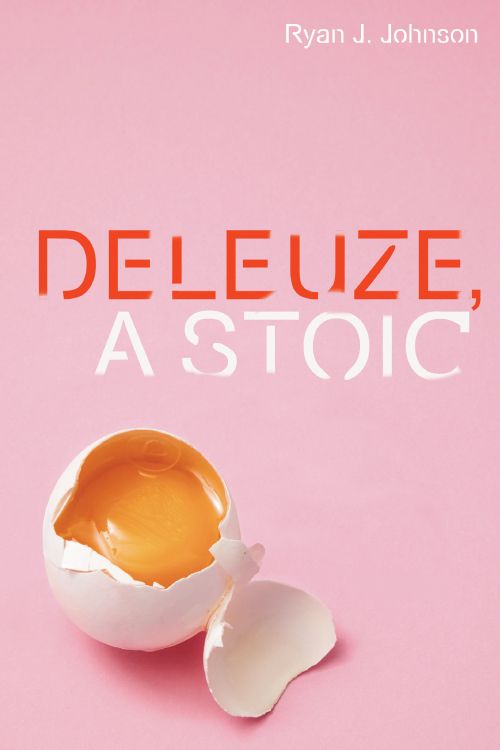
Ryan Johnson – Deleuze: A Stoic, Edinburgh University Press, February 2022
Deleuze, A Stoic shows Deleuze’s engagement with Stoicism produced many of his most singular and powerful ideas, reveals a lasting influence on Gilles Deleuze by mapping his provocative reading of ancient Stoicism, unearths new possibilities for bridging contemporary philosophy and classics by engaging a vital yet recently rising area of scholarship: continental philosophy’s relationship to ancient philosophy, and introduces the untranslated Stoic scholarship published by pre- and post-Deleuzian French philosophers of antiquity to the English-reading world. Deleuze dramatises the story of ancient philosophy as a rivalry of four types of thinkers: the subverting pre-Socratics, the ascending Plato, the interiorising Aristotle and the perverting Stoics. Deleuze assigns the Stoics a privileged place because they introduced a new orientation for thinking and living that turns the whole story of philosophy inside out.
Review: “Johnson has produced a profound and erudite study of the stoic roots of Deleuze’s philosophy. This work is of vital importance for those interested in Deleuze, the continuing relevance of the stoic tradition, and, more fundamentally, the ethics of materialism.” – Dr. Henry Somers-Hall, Royal Holloway, University of London
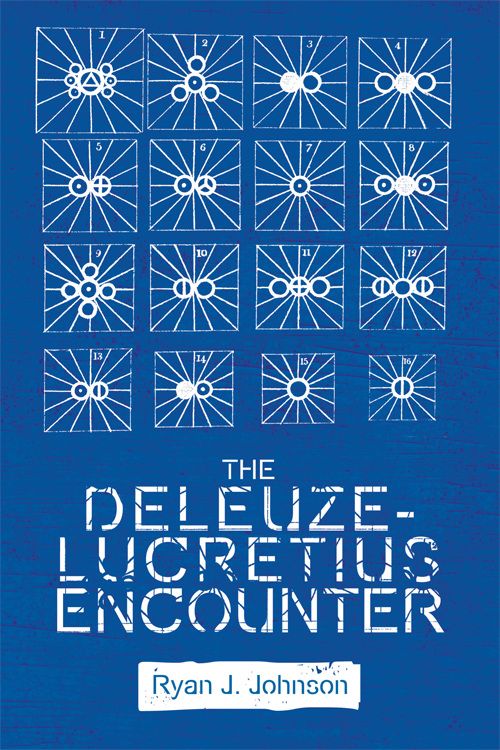
The Deleuze-Lucretius Encounter explores how Deleuze’s thought was shaped by Lucretian atomism – a formative but often-ignored influence from ancient philosophy. More than any other 20th-century philosopher, Deleuze considers himself an apprentice to the history of philosophy. But scholarship has ignored one of the more formative influences on Deleuze: Lucretian atomism. Deleuze’s encounter with Lucretius sparked a way of thinking that resonates throughout all his writings: from immanent ontology to affirmative ethics, from dynamic materialism to the generation of thought itself. Filling a significant gap in Deleuze Studies, Ryan J. Johnson tells the story of the Deleuze-Lucretius encounter that begins and ends with a powerful claim: Lucretian atomism produced Deleuzianism.
Review:” Readers will be surprised and charmed at the parallels Ryan Johnson finds between Deleuze and Lucretius. The lines he draws from Ancient atomist ideas about relations, movements, and speeds, through to Deleuzian materialism are exciting and convincing. The book is packed with interesting ideas and twists and is exacting in its scholarship. On top of that, it is beautifully written.” – Jay Lampert, Duquesne University
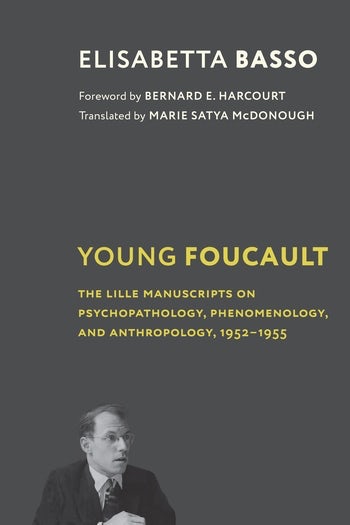
In the 1950s, long before his ascent to international renown, Michel Foucault published a scant few works. His early writings on psychology, psychopathology, and anthropology have been dismissed as immature. However, recently discovered manuscripts from the mid-1950s, when Foucault was a lecturer at the University of Lille, testify to the significance of the work that the philosopher produced in the years leading up to the “archaeological” project he launched with History of Madness.
Elisabetta Basso offers a groundbreaking and in-depth analysis of Foucault’s Lille manuscripts that sheds new light on the origins of his philosophical project. She considers the epistemological style and methodology of these writings as well as their philosophical context and the scholarly networks in which Foucault was active, foregrounding his relationship to existential psychiatry. Young Foucault blurs the boundaries between biography and theory, exploring the transformations—and, at times, contradictions—that characterize the intellectual trajectory of a philosopher who, as Foucault himself put it, “turned to psychology, and from psychology to history.” Retracing the first steps of the philosopher’s intellectual journey, Basso shows how Foucault’s early writings provide key insights into his archaeological work of the 1960s. Assembling a vast array of archival sources—including manuscripts, reading notes, notes for lectures and conferences, and correspondence—this book develops a new and deeper understanding of Foucault’s body of work.
Pleased to share the details of this seminar, co-organised with Richard Wilson. The event is online, sadly, instead of at the lovely Garrick’s Temple to Shakespeare. The seminar is free, but registration required. Please go to https://www.eventbrite.com/e/277708412337
Today I enjoyed speaking about the work that went into The Early Foucault with the Genealogy in the Humanities project (Syracuse University and Cornell University). Thanks to Alex Livingston and Verena Erlenbusch-Anderson for organising, and those who attended and asked questions. Good to see Colin Koopmann, Niki Kasumi Clements and Hugo da Costa, only one of whom I’ve met in person, but all have been in contact about this and related projects for a while.
At the moment, that’s the last talk on Foucault in the schedule – the next speaking events are about different things. Today is the end of term at Warwick, I’m on leave next term, and then the fellowship. This blog will be quiet for the next couple of weeks, but sometime in the last week this blog hit 3 million visits. Thanks to all who continue to read…
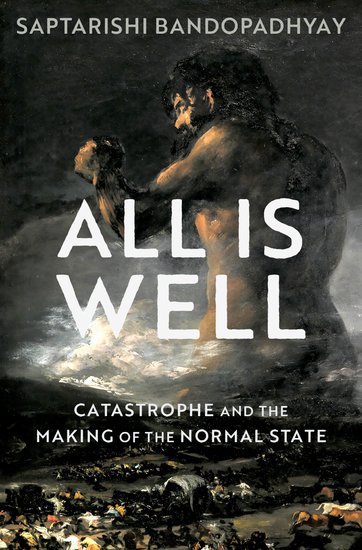
Disasters are all around us. In everyday parlance, disasters are understood as exceptional occurrences that destroy human life, property, and resources. For centuries, people have looked to political authorities for protection from disasters and for relief in the aftermath. Yet, the COVID-19 pandemic and an endless torrent of storms, floods, and forest fires have shown that modern states and intergovernmental institutions frequently fail this burden. Worse, world leaders routinely ignore evidence that accelerated climate change is an already-rolling planetary catastrophe. So, what is a “disaster”? Who determines when and why a disaster has occurred or ceased? And what is the relationship between such occurrences and modern states who promise to “manage” them?
In All Is Well, Saptarishi Bandopadhyay argues that there is no such thing as a “disaster” outside of rituals of legal, administrative, and scientific contestation through which such occurrences are morally distinguished from the rhythms of everyday life. Disasters, Bandopadhyay asserts, are artifacts of “normal” rule. They result from the same, mundane strategies of knowledge-making and violence by which authorities, experts, and lay people struggle to develop state-like power, to define and defend the social order.
Challenging traditional narratives, All Is Well looks at “disaster management” as a historical process that produces both catastrophes and political authorities. To do so, Bandopadhyay draws on three case studies: the Marseille plague of 1720, the Lisbon earthquake of 1755, and the Bengal famine of 1770. As far back as the eighteenth century, aspiring rulers understood disasters to be occasions for testing their state-like ambitions as they swapped divine authority for the supremacy of natural rights, Enlightenment ideals, and colonial rule. Bandopadhyay examines these exercises in catastrophe conservation and state formation and shows how the underlying beliefs and resulting insights underwrite sophisticated but deeply inequitable present-day norms and practices of global governance. He concludes that climate change, and the national and international authorities designed to fight it, are products of three centuries of disaster management, and civilizational survival depends on reckoning with this past.
There is a discussion on the New Books Network – thanks to dmf for the link
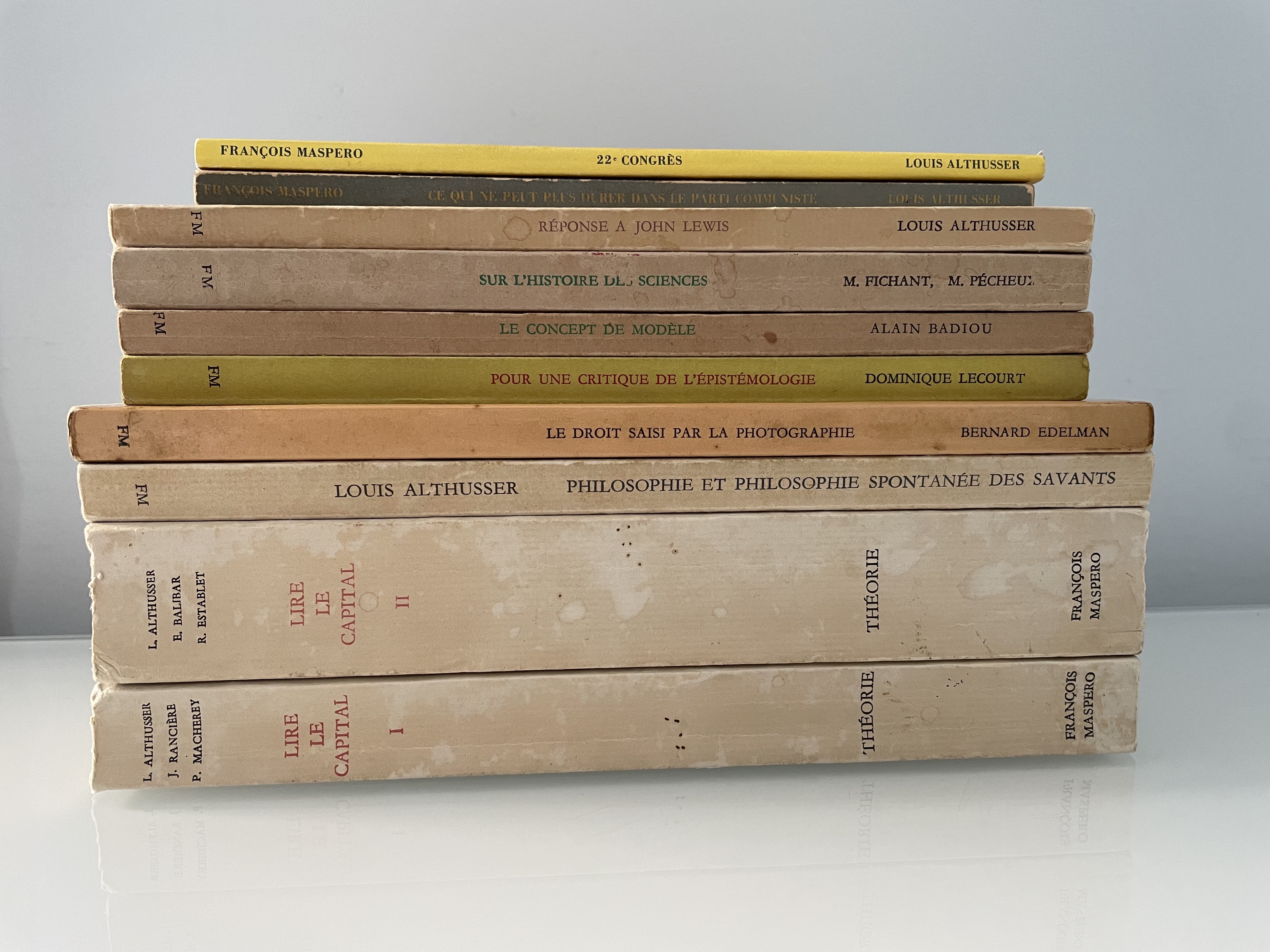
From 1965 until 1980, Louis Althusser edited the Théorie series of books, each released by the pioneering French publisher François Maspero. Here Stuart Elden charts the history of the series, and the impact it had on French, and global, Marxist philosophy.
China today is one of the world’s most powerful nations, yet just a century ago it was a crumbling empire with literacy reserved for the elite few, left behind in the wake of Western technology. In Kingdom of Characters, Jing Tsu shows that China’s most daunting challenge was a linguistic one: to make the formidable Chinese language – a 2,200-year-old writing system that was daunting to natives and foreigners alike – accessible to a globalized, digital world.
Kingdom of Characters follows the bold innovators who adapted the Chinese script – and the value-system it represents – to the technological advances that would shape the twentieth century and beyond, from the telegram to the typewriter to the smartphone. From the exiled reformer who risked death to advocate for Mandarin as a national language to the imprisoned computer engineer who devised input codes for Chinese characters on the lid of a teacup, generations of scholars, missionaries, librarians, politicians, inventors, nationalists and revolutionaries alike understood the urgency of their task and its world-shaping consequences.
With larger-than-life characters and a thrilling narrative, Kingdom of Characters offers an astonishingly original perspective on one of the twentieth century’s most dramatic transformations.
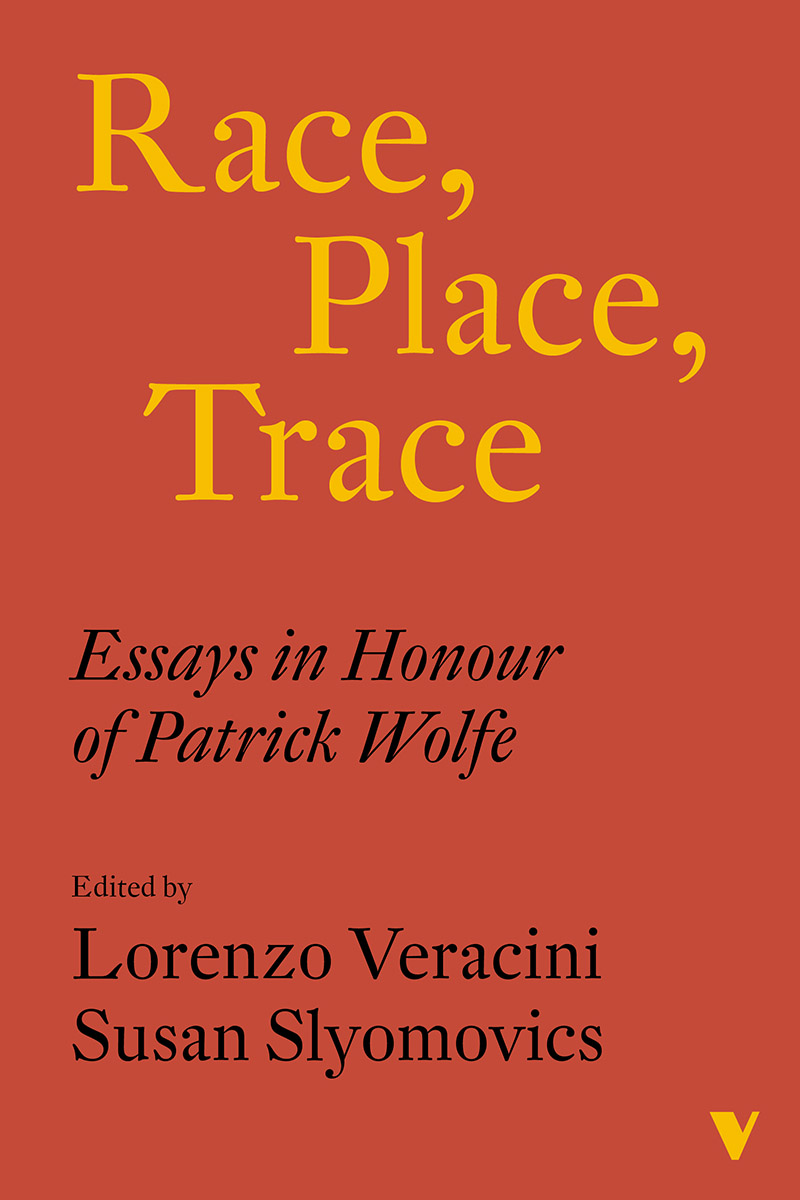
This edited collection celebrates Patrick Wolfe’s contribution to the study and critique of settler colonialism as a distinct mode of domination. The book emphasises Wolfe’s militant and interdisciplinary scholarship, together with his determination to acknowledge Indigenous perspectives and the efficacy of Indigenous resistance. Racial capitalism and settler colonialism are as entwined now as they always have been, and keeping both in mind at the same time highlights the need to establish and nurture solidarities that reach across established divides.
Unsettling the World is the first book-length treatment of Edward Said’s influential cultural criticism from the perspective of a political theorist. Arguing that the generative power of Said’s thought extends well beyond Orientalism, the book explores Said’s writings on the experience of exile, the practice of “contrapuntal” criticism, and the illuminating potential of worldly humanism. Said’s critical vision, Morefield argues, provides a fresh perspective on debates in political theory about subjectivity, global justice, identity, and the history of political thought. Most importantly, she maintains, Said’s approach offers theorists a model of how to bring the insights developed through historical analyses of imperialism and anti-colonialism to bear on critiques of contemporary global crises and the politics of American foreign policy.