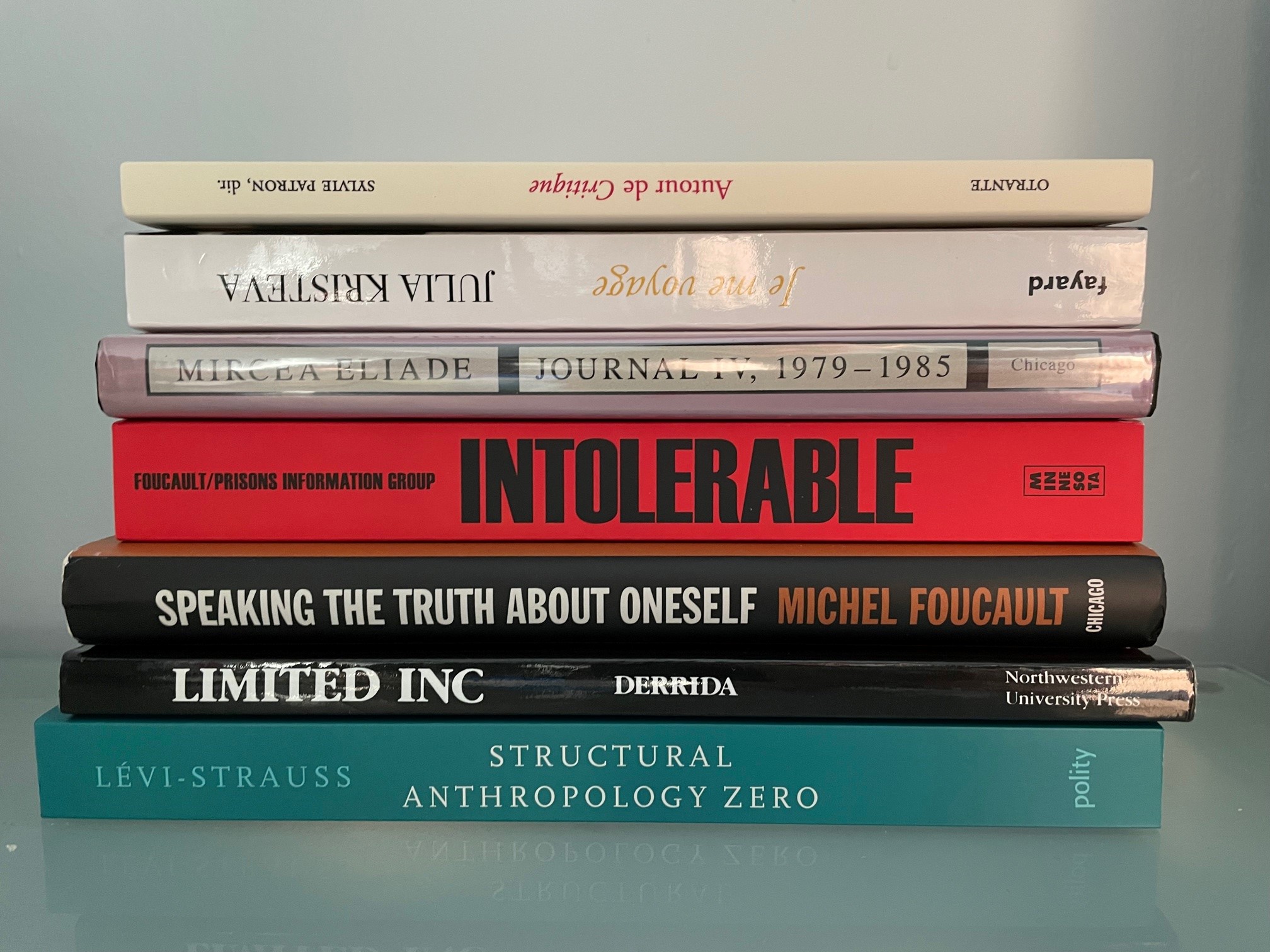
This is the first English translation of a compelling and highly original reading of Epicurus by Jean-Marie Guyau. This book has long been recognized as one of the best and most concerted attempts to explore one of the most important, yet controversial ancient philosophers whose thought, Guyau claims, remains vital to modern and contemporary culture. Throughout the text we are introduced to the origins of the philosophy of pleasure in Ancient Greece, with Guyau clearly demonstrating how this idea persists through the history of philosophy and how it is an essential trait in the Western tradition.
With an introduction by Keith Ansell-Pearson and Federico Testa, which contextualizes the work of Guyau within the canon of French thought, and notes on both further reading and on…
Update: the book is discussed at the New Books Network here.
There is no more contentious and perennial issue in the history of modern Western thought than the vexed relationship between the genesis of an idea and its claim to validity beyond it. Can ideas or values transcend their temporal origins and overcome the sin of their original context, and in so doing earn abiding respect for their intrinsic merit? Or do they inevitably reflect them in ways that undermine their universal aspirations? Are discrete contexts so incommensurable and unique that the smooth passage of ideas from one to the other is impossible? Are we always trapped by the limits of our own cultural standpoints and partial perspectives, or can we somehow escape their constraints and enter into a fruitful dialogue with others?
These persistent questions are at the heart of the discipline known as intellectual history, which deals not only with ideas, but also with the men and women who generate, disseminate, and criticize them. The essays in this collection, by one of the most recognized figures in the field, address them through engagement with leading intellectual historians—Hans Blumenberg, Quentin Skinner, Hayden White, Isaiah Berlin, Frank Ankersmit—as well other giants of modern thought—Max Weber, Emile Durkheim, Georg Simmel, Walter Benjamin, Theodor Adorno, and Georg Lukács. They touch on a wide variety of related topics, ranging from the heroism of modern life to the ability of photographs to lie. In addition, they explore the fraught connections between philosophy and theory, the truth of history and the truthfulness of historians, and the weaponization of free speech for other purposes.
Describes a new, systematic process philosophy of science and technology focused on the agency and mobility of objects
Tells the first history of Western science and technology focused on the agency and mobility of objects
Argues that objects are metastable processes, not discrete things, unlike other theories that consider objects as passive and static
Surveys many areas of contemporary thought including new materialism and speculative realism as well as quantum theory, category theory and chaos theory
Throughout the history of science and technology, objects have been understood in many ways but rarely have they been understood to play an active role in the production of knowledge. This has led to largely anthropocentric theories and histories of science, which treat nature as passive objects viewed by independent observers.
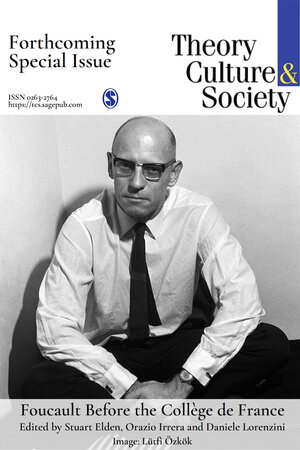
A translation of a piece by Foucault, online first in Theory, Culture and Society – part of the special issue on ‘Foucault before the Collège de France’ I am co-editing with Orazio Irrera and Daniele Lorenzini. The translation is by Nancy Luxon, and the text appeared in French in Critique and then Folie, Langage, Littérature, edited by Henri-Paul Fruchaud, Daniele Lorenzini and Judith Revel, Paris: Vrin, 2019.
Literature and madness dominate Michel Foucault’s early writings in the 1960s, and indeed much of his career. In this text, Foucault considers the relation between madness, language, and silence; the difficult frontier between language and literary convention; and the experience of madness within language. He moves from a meditation on madness, to a rare commentary on theatre, stagecraft, and Artaud, and finishes by considering literature’s capacity for rupture. ‘Literature and Madness’ is a translation of a text written by Foucault in the 1960s, and recently published in Folie, langage, littérature, ed. Henri-Paul Fruchaud, Daniele Lorenzini and Judith Revel (Paris: Vrin, 2019, 89–109). This version includes a translator’s introduction by Nancy Luxon and was given a distinct subtitle to distinguish it from a similar lecture with the same title in that volume.
The other papers so far available from this issue are listed here, along with some video abstracts. Some of the papers are available open access, others require subscription.
“Michel Foucault psychologue ?” par Philippe Sabot et Elisabetta Basso Maison Européenne des Sciences de l’Homme et de la Société, 25 novembre 2021, Lille, France
“Michel Foucault psychologue ?” par Philippe Sabot et Elisabetta Basso Maison Européenne des Sciences de l’Homme et de la Société, 25 novembre 2021, Lille.
“Michel Foucault psychologue ?” par Philippe Sabot et Elisabetta Basso
Maison Européenne des Sciences de l’Homme et de la Société, le jeudi 25 novembre à 18:00
De 1952 à 1955, Michel Foucault est assistant de psychologie à la Faculté des Lettres de Lille. C’est là qu’il rédige un ouvrage sur Ludwig Binswanger (1881-1966) fondateur de l’analyse existentielle. Resté à l’état de manuscrit, il est publié par les soins d’Elisabetta Basso. On prend la mesure de l’intérêt porté par Foucault à la psychiatrie et à la psychologie et de leur importance dans sa formation. Si sa recherche bifurque à partir de 1961…
It was twenty years ago today that my first book, Mapping the Present: Heidegger, Foucault and the Project of a Spatial History was published. I received an advance on 4 October 2001. The contract was signed with Athlone, who became Continuum before the book actually appeared, and now is with Bloomsbury Academic. For an academic book and one by a first-time author I was told that it sold quite well. The original print run is long gone. Unfortunately it’s continued to go up in price, and is now rather expensive, even if it’s just print-on-demand. There are pdfs circulating of course…
I am very grateful to Tristan Palmer, the editor working with the Key Writings Lefebvre collection, who asked for my cv. Eleonore Kofman and Elizabeth Lebas had asked me to be involved in the project, and Tristan wanted to see who this new guy was. This would have been late 1998 I think, as I remember him saying “who’s publishing your PhD?” I was in early discussion with another publisher, but he was keen, got reports on a proposal quickly, and so it ended up with them. I didn’t quite have a contract before my viva, but it was pretty close. I realise this is unusual, even at the time, and so I count myself very fortunate.
When I did submit it, the two reports on the manuscript were really positive – basically both said publish as is. I don’t think I had to make any changes. This has never happened since! Of course it had gone through careful reading by my PhD supervisor, Mark Neocleous, and two examiners, Michael Dillon and Kevin Hetherington. Although the PhD was passed with only five typos, I did take the viva seriously and made some changes as a result. Among these, the Nietzsche chapter was cut out with some parts redistributed, the Introduction reworked, some other editing, but it wasn’t that different. I did that editing work in a very dark ‘garden flat’ in Leamington Spa, in my first year at University of Warwick (the first time I was there, on a series of temporary contracts). Derek Gregory and Barry Smart wrote the lovely endorsements – and I think they must have been the readers too.
It’s obviously an important book for me given how much I’ve done since on Foucault, but my Lefebvre work began around this time too – there was a Lefebvre chapter in the PhD which didn’t make the final version, but was the germ of what became my second book, Understanding Henri Lefebvre, along with the editing work I got involved with, which also continues. And my third book, Speaking Against Number, picked up and developed some of the Heidegger themes, and part of it was a proper answer to a question Mick asked in the viva. The ‘spatial’ angle put me in conversation with Geography, and I remember in particular Jeremy Crampton talking about it on crit-geog-forum (back when that was worth reading). I met and worked with Jeremy only later. The reviews in Geography journals, and some pieces I wrote for them helped secure the post at Durham, so it’s a book that opened up a lot of what I did subsequently.
The Foucault reading in the book was based on essentially what Foucault himself published, with the enormous benefit of Dits et écrits collecting almost all of the shorter pieces. (The challenge of locating those pieces before this would have been huge, especially as this was well before online resources became as widely available.) The first Collège de France lecture course came out in 1997, late in the work for the PhD. There is obviously a lot more available now – far more than Foucault published himself. Taking account of all of this, beginning with the courses, led to the work which became Foucault’s Last Decade and its prequels many years later.
I never did understand the cover. I quite like the colour, and the black inner cover of the original (now lost with the print-on-demand version). But the brain scans were always an odd choice. I used to call it the Grateful Dead album cover choice. And its subtitle really should have been … and the Politics of a Spatial History. Even today, my experience is that authors and editors tend to lose struggles with publishers on two things, covers and titles. (Polity and University of Chicago Press are the exceptions!) And my titles have got shorter too.
A lot of the book was written in West London, where I lived in various shared houses during the PhD, and in the two places I mention in the acknowledgements, just outside of Bath and Chamonix in the Alps. I did a lot of work in libraries too, especially at the British Library, then in the old reading room of the British Museum, and at the University of Essex, on trips home to see family. The book is dedicated to my Dad, who died about a year before I submitted the PhD. And in between submitting the thesis and revising it as a book, I met Susan. So it’s a book that has a personal history as well as an intellectual one for me.
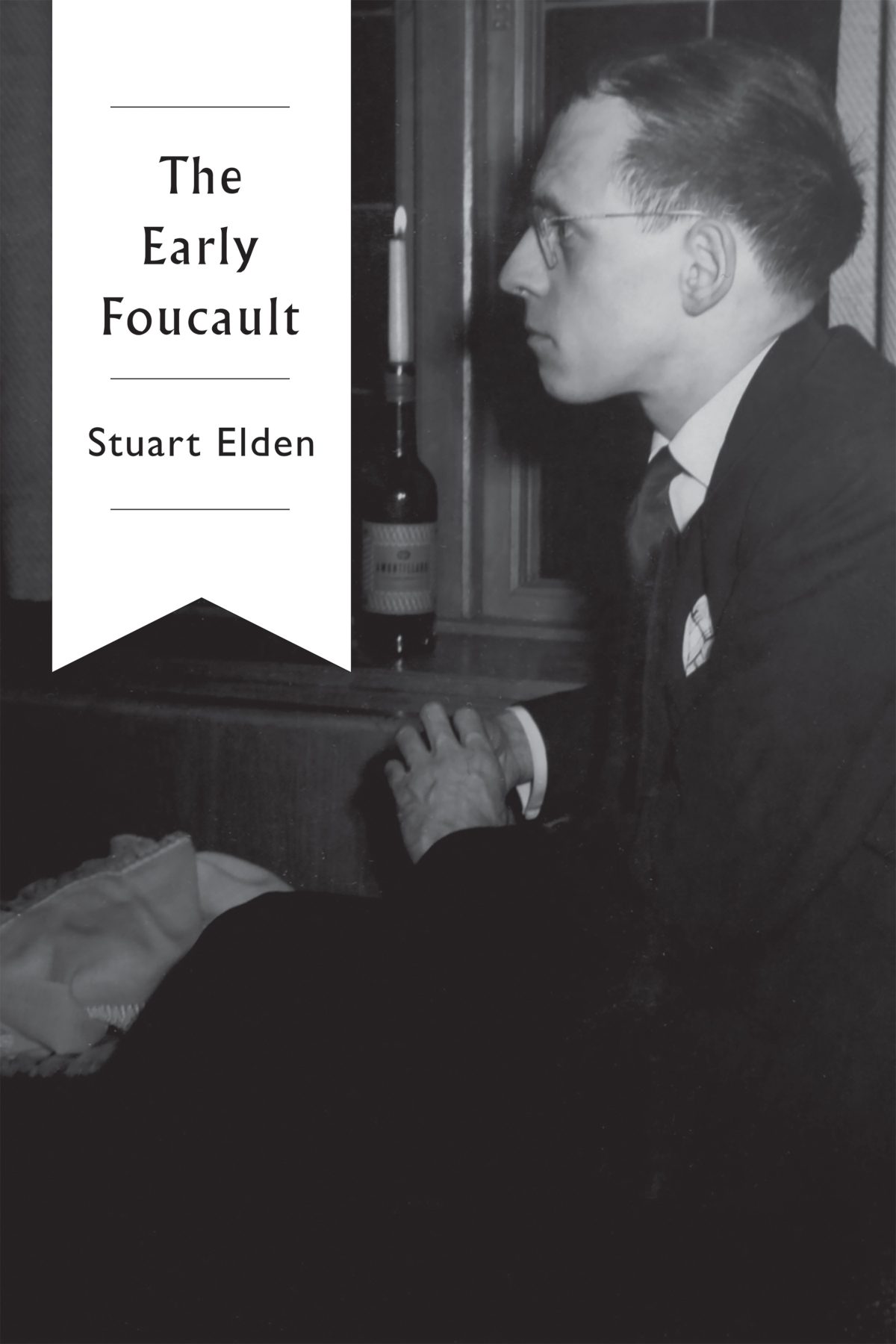
Stuart Elden’s The Early Foucault is the third of a four-volume study of the origins and development of Michel Foucault’s thought. This book is the first one regarding the period it covers, basically the 1950s, but it is the third to be published. It will be soon followed by a fourth and final book, that will cover the ‘archaeological’ period and Foucault’s forays into art history and literary criticism. External factors explain the disconnect between the order of production and the chronology. Elden’s first two books dealt with the publication of Foucault’s lectures at the Collège de France. The publication of the Lectures began in 1997, with the publication of the sixth lecture, Il faut défendre la société (1975-1876). Additional volumes followed it, released not in the order of their delivery by Foucault, but on the availability of audio recordings of the lectures. Foucault’s preparatory notes and other ancillary materials later supplemented and eventually displaced the recordings. Elden’s earlier books responded to the availability of the Lectures and the will to integrate the new material into a coherent picture.The First Foucault and the forthcoming book on Archaeology deal with the archive material made available to the public in recent years. This material includes reading and preparatory notes, lectures of the period before his appointment to The College de France, manuscripts in different degrees of development, philosophical diaries, bibliographies, etc.
Elden is one of the first to attempt a synthetic picture of this wealth of materials. He relies on archival material from Foucault and his contemporaries, detailed comparisons between different editions of published works, and a thorough familiarity with the secondary literature. [continues here]
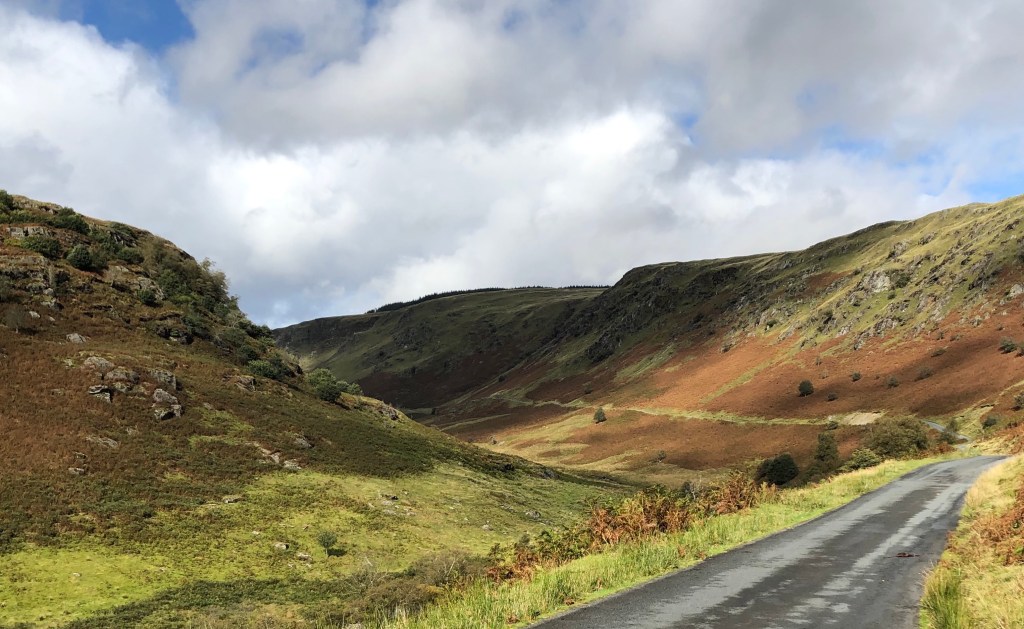
In the last part of the summer I was able to make some good progress on this manuscript. In late August and early September I had two-week writing and cycling break in Wales. The weather was good until the last day, and I got to do quite a lot of cycling, of which the highlight was Rhayader to Aberystwyth and back on the mountain road. I also did a lot of work on this book manuscript.
Much of the work was with the chapter on The Order of Things. I now have a fairly complete discussion of the book, the 1965 Brazil course where Foucault lectured on his manuscript in progress, and on some of the responses to the book particularly from Sartre and the relation Foucault had to structuralism. I also have short parts on some related material – the TV discussions with Badiou and others; the dialogue with Raymond Aron in 1967; the discussions with Raymond Bellour; the Introduction to the Port-Royal Grammar; and more briefly on the seminar paper on Cuvier, and the review of Cassirer. I looked again at Philippe Sabot’s books on Les Mots et les choses, which are really helpful – I can’t think of a comparable study in English. His notes to the Œuvres edition of Les Mots et les choses are also important. With Brazil, I needed to look at the manuscript again, but I was able to do that in Paris and the discussion is now in broad shape. I’ve previously mentioned Heliana de Barros Conde Rodrigues’s Portuguese book which is now translated into French as Michel Foucault au Brésil, and Marcelo Hoffman’s special issue of the Carceral Notebooks on ‘Foucault and the Politics of Resistance in Brazil’. Most of these discussions look at the several visits of the 1970s, but there is nonetheless some very useful contextualisation of the 1965 course.
I went back over the chapter on Nietzsche, and spent quite a bit of time trying to line up the chronology of the materials – either published, in the archive, or presumed lost. This led me to re-read the later lectures on Nietzsche which I discuss in Foucault: The Birth of Power – especially the one from McGill part-published in Lectures on the Will to Know and the first of the Truth and Juridical Forms lectures from Brazil. I also looked, yet again, at ‘Nietzsche, Genealogy, History’ and the inaugural lecture The Order of Discourse. The discussion of Foucault’s work with Deleuze in editing the French edition of Nietzsche’s works was in quite good shape already. There were some things I could only resolve by looking back at the Nietzsche materials in the Paris archive, but I’m now much happier with the organisation of the material in the draft chapter.
In connection with this chapter, I re-read some work by Pierre Klossowski which Foucault mentions in correspondence – his book on Nietzsche and Living Currency. I think this chapter is probably where I will discuss Foucault’s reviews of Deleuze, but I’ve yet to begin drafting that. I also read, again, Foucault’s little books of interviews with Claude Bonnefoy and Roger-Pol Droit (the first is translated as Speech Begins After Death, the second is only part-translated in Politics, Philosophy, Culture). These give some useful indicators on a number of themes, but are especially good on discussing Foucault’s attitude to writing.
While in Wales I tried to focus on new writing or reorganising notes rather than editing what I had drafted before, but there was a lot of fiddling around with material, including in some of the chapters I’d thought were in fairly good draft form. There was also quite a lot of cutting – the word limit is going to be a real problem with this book, especially given the range of material I’m trying to discuss.
Being away from an internet connection (and no phone signal for about a mile) was liberating even if sometimes frustrating. It’s one of the reasons why I like this place I’ve been staying. It’s amazing how much time is wasted even with work things – with a connection I can try to find a journal article immediately, or add a book to the British Library basket and order for the next visit, find a second-hand copy in a bookstore, or check something else. In some ways that’s great, but it’s much more time efficient to make a list of those things and check them in one go, rather than immediately as they arise. A quick detour – I’ll just check this – can lead to something else, and before you know it, you’re several steps away from the focus. Not being able to do that – or even get a book from a shelf to check a quote or find a reference – can mean a lot of things that are provisional or unresolved while writing, but it’s much better for keeping on track. Social media, news sites, etc. are an obvious distraction. I block those – either entirely or for discrete periods when I’m writing – as a matter of course. And I can try to discipline myself only to check email at specific times. But I only rarely turn off the internet entirely when working at home. Perhaps it’s something I should do more often.
Getting to Paris earlier in the summer proved impossible, but I was able to have a short visit before term began. I spent quite a bit of time before I left trying to do everything I could to prepare for that. Time there was precious even before, but in the current circumstances I didn’t want to be doing things there I could have done elsewhere, or find I can’t make sense of an archival document because I wasn’t ready – i.e. I didn’t yet know well enough a published text of which the archive has a variant. I can’t avoid these kinds of things entirely, since I’ve learned that the path is never straightforward or linear, but I did want to maximise the time there. Apart from the complications of two governments and travel restrictions, there were also some issues with Warwick authorising the trip, since they administer the grant which I’m using. But it was possible and I’m now hoping to get back in reading week, or maybe over the Christmas teaching break. However, I’m not sure things will be easier in the autumn and winter than they are now. Logistically this was already the most difficult trip to plan.
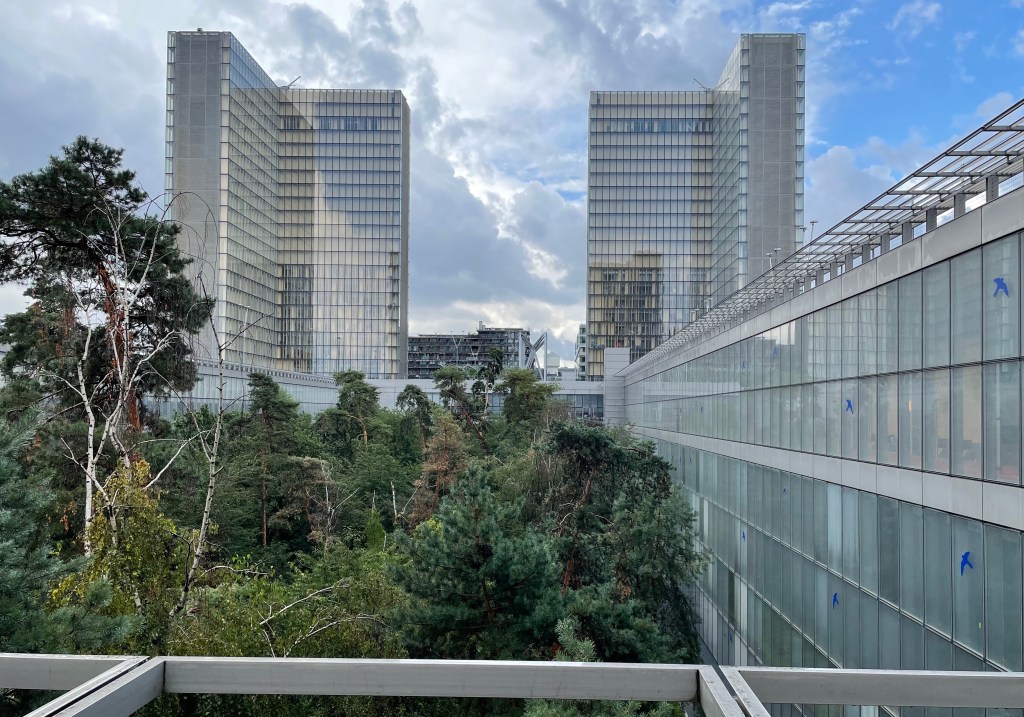
In Paris I did my usual practice of a full day in the archive, at the Richelieu site of the Bibliothèque nationale, and then heading across the city to the Mitterand site for a couple more hours in the evening. I can do quite a lot of work with the material on the open shelves, but there are loads of things in the printed collection which are hard to find in the UK. Among other things I was able to resolve things about the dating of Foucault’s work on the Nietzsche Œuvres, find the full transcripts of the TV interviews with Badiou (rather than the edited ones), an ENS report of the tribute session to Jean Hyppolite, and see the originals of Foucault’s interviews with Tunisian newspapers.
In the archive, I largely concentrated on material I’d seen before, but which I needed to look at again. So, I went back over the boxes of material on art and literature, to largely complete the work on those chapters. Some of those manuscripts are already published, and more are planned. The Nietzsche box has some important material for this period, notably what remains of his Vincennes course from 1969-70, and related lectures in Buffalo, Montréal, and Rio. The Brazil course on Les mots et les choses was also really important. Looking at the manuscripts of another well-known lecture opened up a much bigger issue than I imagined. I need to do the work, but I might write more about this.
While in Wales I also did a little work on the chapter on The Archaeology of Knowledge, mainly in relation to interviews and other things leading up to it. But I still need to write the discussion of the book itself, and all the preparatory materials that exist. That’s probably the most substantial job left with this book. It also requires much more time in the archive, since there are some substantial manuscripts for the book’s preparation – a complete early draft, a fragmentary draft, and a related but abandoned project. There are also some very interesting lecture materials from this period.
In addition to this chapter on that book and the related materials, I have a lot still to do with the Madness and Medicine chapters, and the Sexuality chapter, for which I really just have a bunch of notes. But the manuscript is certainly a lot further forward than it was a month ago. Term begins on Monday…
Previous updates on this book are here. The Early Foucault was published by Polity in June 2021, and updates for its writing are here. A list of the resources on this site relating to Foucault – bibliographies, audio and video files, some textual comparisons, some short translations, etc. – can be found here. The earlier books in this series are Foucault: The Birth of Power and Foucault’s Last Decade, both available from Polity.

“A People’s Atlas of Nuclear Colorado” Project Demo / Launch Join us for the public launch of “A People’s Atlas of Nuclear Colorado, a digital public humanities project that documents and interprets nuclear geographies and legacies of the Cold War. The Atlas draws together background information, archival materials, accessible scholarly essays, and artist interventions into the legacies of the domestic Cold War. Grounded in the specific location of Colorado and its nuclear materials and ecologies, the Atlas allows users to explore the US nuclear complex and its many scales of operation, relational geographies, and troubling future.
Sept. 21 Tuesday 5:30pm – 6:45 Eastern
“Spatial Justice as Research Practice: Public Scholarship and the Politics of Mapping In/Justice” This panel brings together researchers engaged with a diverse array of recent spatial humanities projects to consider the conceptual, practical, and political dimensions of their work. What practices of data collection and interpretation might guide the creation of spatial platforms about (in)justice? What publics are envisioned and assembled by these projects? What roles can design play—infrastructurally, graphically, and experientially—to trouble distanced consumption and foster recognition? And finally, what practices of collaboration, coordination, and (anti-) institutionalization have been developed that further, enact, and clarify the work’s underlying liberatory goals? Join us for a discussion of three projects: Detours: A Decolonial Guide to Hawai’i (HōkūlaniK. Aikau & Vernadette Vicuña Gonzalez); Separados/Torn Apart (Alex Gil); and A People’s Guide to Nuclear Colorado (Sarah Kanouse & Shiloh Krupar).