Online Seminar ’Digital Archives: Space, Time and Memory’, October 20, 2021

Online Seminar ’Digital Archives: Space, Time and Memory’ in association with ICCE, Goldsmiths, University of London

Date/Time: Wednesday October 20, 2021 

09.00 – 11:30 (London time) 

10.00 – 12.30 (Berlin Time) 

17.00 – 19.30 (Tokyo Time) 

Focusing on digital archives, we will explore the impact of artificial intelligence on practices of meaning-making and memory formation. 

Posted in Uncategorized | Leave a comment

Books received – Federici, Kitchin, Morton, Morton & Bieler, Vincent, Caillois, Gamble, Garrett

Some books in recompense for review work for Bristol University Press and one pre-ordered from Polity, the new edition of Silvia Federici’s modern classic, Caliban and the Witch and two books from Adam David Morton, which he kindly sent to me – Unravelling Gramsci and Global Capitalism, Global War, Global Crisis, co-authored with Andreas Bieler.

Posted in Adam David Morton, Antonio Gramsci | Leave a comment

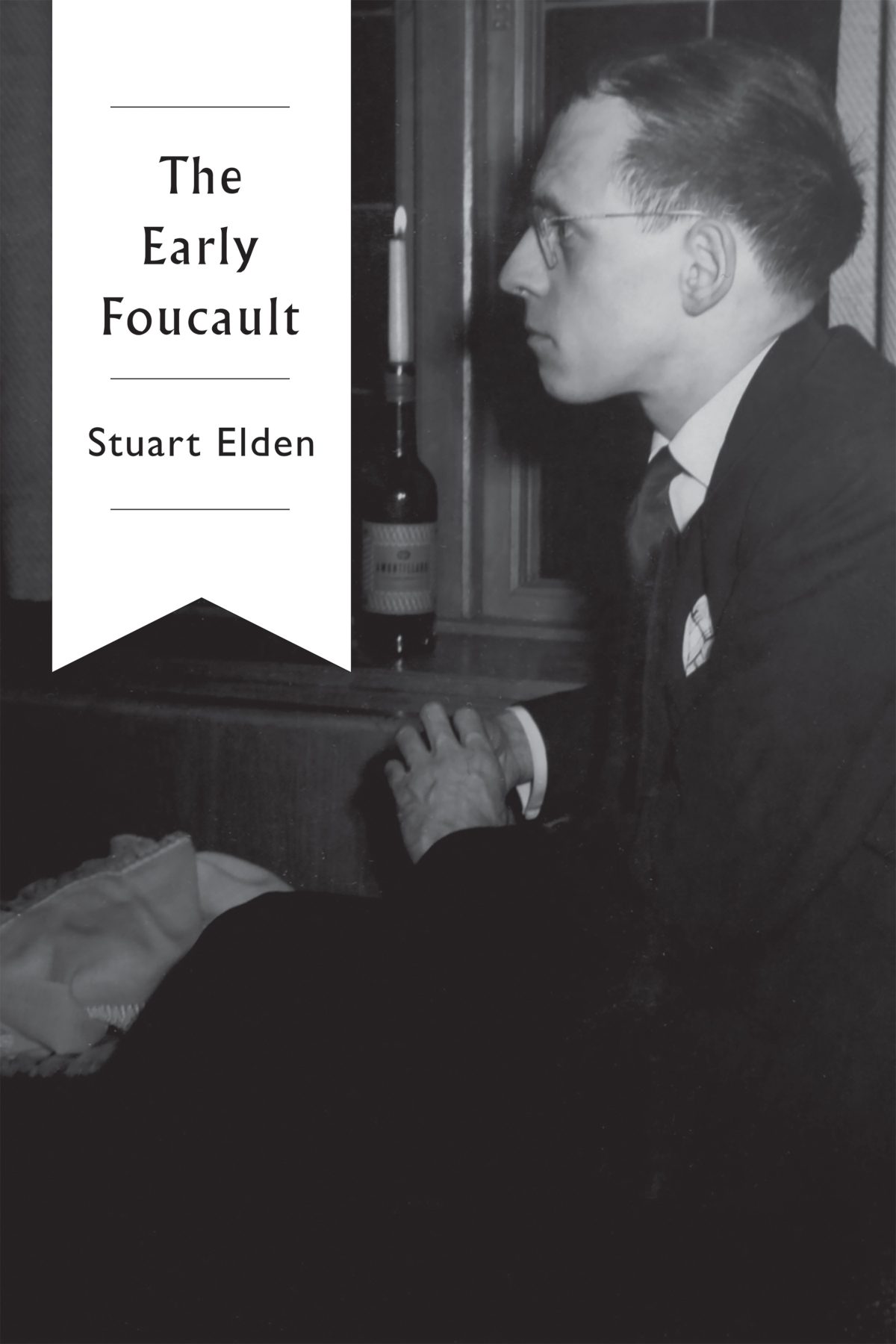
David Beer on The Early Foucault at The Fragment

David Beer on The Early Foucault at The Fragment

Reading Elden’s most recent installment in the series, The Early Foucault, is to be mesmerised by sheer detail. Focusing on the 1950s, a period before Foucault was established, Elden is deep in the archives. From amongst the dusty files, the book gives glimpses behind the curtain. As well as reading across different editions and versions of published works it also layers-in the type of insights that can only come from opening boxes and handling papers. At one point, for instance, Elden noticed, contrary to what is often thought, that Foucault was actually working on Nietzsche as far back as the mid 1950s – this is a discovery that is made due to some notes scrawled on the back of an early draft version of another piece of writing. This is one amongst many such moments. As a result, most of the book’s content is totally fresh, even to those who have read Foucault. It also means that it could be read by someone with no interest in Foucault but who is interested in writing, theory and the emergence of thinkers. By focusing on the period before Foucault’s well-known works, and during a time when there were few publications to work with, the archive has been allowed more space than in the previous volumes. The consequence is a rich engagement with the inner workings of ideas. The more archival focus of this book gives it even more of a backstage view on proceedings.

A really generous and thoughtful review – thank you!

Posted in Uncategorized | Leave a comment

The Archaeology of Foucault update 9: further work on linguistics, Roussel and the 1970 visits to Buffalo and Japan

This manuscript is slowly coming together. I’ve continued working on the linguistics and literary analysis texts in Folie, langage, littérature. For space reasons, I’ve had to keep the discussion of these down, though in many respects they reinforce or supplement points made in the other, fuller texts. I also wrote a long discussion of the “What is an Author?” lecture, with some discussion of the changes between the 1969 Paris and 1970 Buffalo version, and a little on the Paris discussion (on the textual issues see here). The last part of this chapter is a discussion of the translation of the translation Foucault made of Leo Spitzer, with some discussion of the question about its dating, which continues to bother me. This chapter is now in pretty good shape.

I have developed the Coda a bit more, with some discussion of the other Buffalo lectures on Flaubert and Balzac. This led me down a little detour as I wanted to read or reread some of the texts Foucault discusses. I also developed the discussion of the 1970 visit to Japan, notably the “Return to History” lecture with its important discussion of Georges Dumézil. I also say a little about the 1970 inaugural lecture at the Collège de France, “The Order of Discourse”. With some of these texts I have already discussed them in the Introduction to Foucault: The Birth of Power, and there is some, probably inevitable, thematic overlap between the end of this book and the start of that one. While I hope people will read this series of books, I also need to make sure this book works as a standalone study. But the short treatment of “The Order of Discourse” allows me to admit to an error I made in Foucault: The Birth of Power, where I said that we only had the published version of the lecture. Foucault prefaces the French book with a note that some passages were not read for reasons of time. I said we had no way of knowing what Foucault said rather than what he wrote. That isn’t actually the case, as the Collège de France published the earlier version. I got a copy of this hard to find text a few years ago, and while a very detailed comparison (available here) is far too long for the book, it is good to correct my mistake.

So now the Coda discusses Jean Hyppolite’s death and memorial, the visits to Buffalo and Japan, and then has a closing section which looks at how power begins to come to the fore in Foucault’s work. I have also drafted something which acts both as an ending to this book, but also somewhat to the series as a whole, particularly looking at the sense of the term archaeology. It’s a bit odd to have written the end of the book before completing some of the middle. There are now some chapters in complete draft, and others which are just a lot of notes and draft bits.

I also finally put together the section in the Literature chapter discussing the Raymond Roussel book and some related texts. The Roussel book is a difficult one to summarise. Another irritation is that Foucault doesn’t provide any references to the Roussel texts he discusses, so where I say something about his analysis of a specific, I go looking for the reference to Roussel too. Warwick doesn’t have a complete set of his Œuvres, either in the 1960s edition or the more recent one, and what is does have is in the store rather than the shelves, so that slows things up. One passage isn’t from Roussel himself, and that took a bit of work to find. But apart from a few things to check, this chapter is now in good shape.

Alongside this work, one of the books I read was Benoît Peeters, Trois ans avec Derrida: Les carnets d’un biographe(Paris: Flammarion, 2010). Peeters is author of a substantial biography of Derrida (French and English). This book is his diary while writing the biography, discussing the scope of the book, the archival work, and interviews with people who knew Derrida. Lots of interesting things – and it made me wish I’d kept a diary through this Foucault work, rather than just this series of updates. I was particularly interested by his discussion of the different types of biographies that could be written of a figure, and what he was trying to do and avoid (especially pp. 186-90). Particularly striking was the discussion of what type of biography is possible early and what only becomes possible much later. He began his biography less than three years after Derrida’s death in 2004, and the book was published in 2010. He indicates the key issue of his having access to many people who knew Derrida, and how a later biographer would not have that, but that sources become available much later (p. 103). I’ve often thought about that when I’ve reflected on biography – either in Do we need a new biography of Michel Foucault? (requires subscription; or see here) or the afterword I wrote for the reedition of David Macey’s biography of Foucault. Although I don’t see my series of books as a biography, there are undoubtedly biographical elements, and I have access to an extensive archive which Macey, Didier Eribon and James Miller did not have when they wrote in the late 1980s and early 1990s.

I had a few more days at London libraries including the British Library and the Warburg Institute. Getting reader slots for other libraries proved difficult – numbers are still restricted, but the staff at the Tate Gallery were really helpful in providing a scan of one piece. The British Library now doesn’t need slots to be booked in advance, which should make the autumn easier.

I’ve done some more work on the Dumézil editing project, and some reference work on a text by Lefebvre has taken up some time. I’ve written before about the challenges of completing Lefebvre’s references, and may do so again. When editing Lefebvre I’ve always tried to complete his incomplete references, and to provide ones where he fails to do so. With this piece, as with the rural book we co-edited, I’ve been helped by Adam David Morton. 

I’m now off to Wales for a couple of weeks, for a writing and cycling retreat. It’s the same place I went last year, with no WIFI and barely a phone signal for about a mile in any direction. It’s a great place to disconnect, read and write. I’m hoping to make progress with the chapters that discuss The Order of Things and The Archaeology of Knowledge, among other bits of the manuscript. I got a little ahead of the first of these with a brief note on the changes between the version of “The Prose of the World” chapter that was published beforehand and the one in the book itself. I’ll also need to incorporate a discussion of the version of the text Foucault used as the basis for his course in Brazil in 1965. With The Archaeology of Knowledge the comparisons are much more extensive, as there are two drafts of the book in the archive – one complete and one more fragmentary. For these I’ll need some more time in Paris. I’m now hopeful I can get there in September.

Previous updates on this book are hereThe Early Foucault was published by Polity in June 2021, and updates for its writing are here. A list of the resources on this site relating to Foucault – bibliographies, audio and video files, some textual comparisons, some short translations, etc. – can be found here. The earlier books in this series are Foucault: The Birth of Power and Foucault’s Last Decade, both available from Polity.

Posted in Jean Hyppolite, Michel Foucault, The Archaeology of Foucault, The Early Foucault | 2 Comments

Dave Beer, ‘Editing Bits’ – reflections on writing and editing

Dave Beer, ‘Editing Bits‘ – some very interesting reflections on writing and especially about stages of editing a manuscript.

There are lots most things about Writing and Publishing – posts from me and links on this site.

Posted in Writing | Leave a comment

Peter Merriman, Space – Routledge, Key Ideas in Geography, February 2022

Peter Merriman, Space – Routledge, Key Ideas in Geography, February 2022

Space is the first accessible text which provides a comprehensive examination of approaches that have crossed between such diverse fields as philosophy, physics, architecture, sociology, anthropology, and geography.

The text examines the influence of geometry, arithmetic, natural philosophy, empiricism and positivism to the development of spatial thinking, as well as focussing on the contributions of phenomenologists, existentialists, psychologists, Marxists and post-structuralists to how we occupy, live, structure, and perform spaces and practices of spacing. The book emphasises the multiple and partial construction of spaces through the embodied practices of diverse subjects, highlighting the contributions of feminists, queer theorists, anthropologists, sociologists and post-colonial scholars to academic debates. In contrast to contemporary studies which draw a clear line between scientific and particularly quantitative approaches to space and spatiality and more ‘lived’ human enactments and performances, this book highlights the continual influence of different mathematical and philosophical understandings of space and spatiality on everyday western spatial imaginations and registers in the twenty-first century.

Space is possibly the key concept underpinning research in geography, as well as being of central importance to scholars and practitioners working across the arts, humanities, social sciences, and physical sciences. 

1. Introduction  2. Genealogies of Western Spatial Thinking  3. Geometric and Arithmetic Spaces  4. Psy-Spaces and Spatialities  5. Phenomenological and Existential Spatialities  6. Different Spatialities / Spaces of Difference  7. Production, Structuring and the Spatialities of Power  8. Representing, Practising, Spacing  9. Conclusions  Addendum: COVID-19 Spaces and Spatialities in the UK

‘Space is one of the most taken-for-granted, contested, and elusive of geographical concepts. In this engaging and accessible book, Peter Merriman guides us expertly through the twists and folds in the emergence of western conceptions of space and spatiality. Skillfully drawing together and appraising the most influential approaches to this complex topic, Merriman provides a compelling account of how space can be understood as abstract, lively, and intensely political. Merriman’s book will be an important and welcome resource for anyone in the social sciences and humanities seeking to make sense of how and why space matters.’

Derek McCormack, Professor of Cultural Geography, University of Oxford, UK

‘In this comprehensive survey, Peter Merriman provides a valuable map of the different ways in which space has been understood and practiced. An excellent guide for students – and their teachers – in a range of disciplines.’

Stuart Elden, Professor of Political Theory and Geography, Warwick University, UK

‘Space is both the most obvious thing in the world – where would we all be without it? what would we all be without it?  – and an enigma. As we play with it, it plays with us. Peter Merriman does a fine job of outlining all of the ways in which writers from many disciplines have played with and practised space, sensed and been sensed by it. A classic.’

Sir Nigel Thrift, Visiting Professor at the University of Oxford and Tsinghua University and an Emeritus Professor at the University of Bristol, UK

Posted in Uncategorized | 1 Comment

Books received – Eliade, Barthes, Foucault, Kristeva, Griffiths

Mostly bought second-hand, but also the new translation of Foucault’s early courses on sexuality from Columbia University Press. My endorsement is on the website but didn’t make the cut for the back cover.

Posted in Julia Kristeva, Michel Foucault, Mircea Eliade, Roland Barthes | 6 Comments

Intolerable: Writings from Michel Foucault and the Prisons Information Group (1970-1980), University of Minnesota Press – book launch, 3 September 2021

Intolerable: Writings from Michel Foucault and the Prisons Information Group (1970-1980), University of Minnesota Press – book launch, 3 September 2021

The book was edited by Kevin Thompson and Perry Zurn, and translated by Perry Zurn and Erik Beranek. Register for the launch here.

Founded by Michel Foucault and others in 1970–71, the Prisons Information Group (GIP) circulated information about the inhumane conditions within the French prison system. Intolerable makes available for the first time in English a fully annotated compilation of materials produced by the GIP during its brief but influential existence, including an exclusive new interview with GIP member Hélène Cixous and writings by Gilles Deleuze and Jean Genet. 

These archival documents—public announcements, manifestos, reports, pamphlets, interventions, press conference statements, interviews, and round table discussions—trace the GIP’s establishment in post-1968 political turmoil, the new models of social activism it pioneered, the prison revolts it supported across France, and the retrospective assessments that followed its denouement. At the same time, Intolerable offers a rich, concrete exploration of Foucault’s concept of resistance, providing a new understanding of the arc of his intellectual development and the genesis of his most influential book, Discipline and Punish.

Presenting the account of France’s most vibrant prison resistance movement in its own words and on its own terms, this significant and relevant collection also connects the approach and activities of the GIP to radical prison resistance movements today.

The Prisons Information Group was a crucial part of Foucault’s political trajectory, but it was an intensely collaborative project between intellectuals, prisoners, and their families. Expertly translated and introduced, this is the definitive collection of the group’s writings. Although the focus is France, the texts also illuminate other European countries, while the Algerian war opens up questions of colonialism, and the group’s links to the Black Panthers make it important for an understanding of the politics of race. A significant book that is both long overdue and a timely intervention in contemporary debates about police and prison abolition and reform.—

 Stuart Elden, author of The Early Foucault

Intolerable contributes to incarceration studies by highlighting the contributions (and pointing to the contradictions) of the Prisons Information Group (GIP). By emphasizing the activism of the GIP, it demonstrates how the author and theorist as an academic activist was influenced by the militancy of political actors and revolutionaries who took great risks, especially as incarcerated intellectuals and rebels, to challenge repression structured by racial/colonial capitalism and captivity.—

 Joy James, author of Seeking the Beloved Community: A Feminist Race Reader

Posted in Gilles Deleuze, Michel Foucault | 1 Comment

Human Geography special issue – Friedrich Engels and Geography

Human Geography special issue – Friedrich Engels and Geography

The Introduction by Camilla Royle is open access, the rest requires subscription

Friedrich Engels (1820–1895) was Marx’s closest collaborator. He was influential in promoting Marxism both during Marx’s lifetime and after it. However, he is mentioned less often than Marx in geography. This editorial introduces a special issue of Human Geography on Friedrich Engels and Geography. It gives a brief overview of the key events in his life, discusses some of the geographical themes in Engels’ work – especially his relevance for work in political ecology, urbanism and geopolitics – and outlines the contents of the special issue.

Posted in Uncategorized | Leave a comment

Karla Mallette, Lives of the Great Languages: Arabic and Latin in the Medieval Mediterranean – University of Chicago Press, 2021

Karla Mallette, Lives of the Great Languages: Arabic and Latin in the Medieval Mediterranean – University of Chicago Press, 2021

The story of how Latin and Arabic spread across the Mediterranean to create a cosmopolitan world of letters.

In this ambitious book, Karla Mallette studies the nature and behaviors of the medieval cosmopolitan languages of learning—classical Arabic and medieval Latin—as they crossed the Mediterranean. Through anecdotes of relationships among writers, compilers, translators, commentators, and copyists, Mallette tells a complex story about the transmission of knowledge in the period before the emergence of a national language system in the late Middle Ages and early modernity.

Mallette shows how the elite languages of learning and culture were only tenuously related to the languages of everyday life. These languages took years of study to master, marking the passage from intellectual childhood to maturity. In a coda to the book, Mallette speculates on the afterlife of cosmopolitan languages in the twenty-first century, the perils of monolingualism, and the ethics of language choice. The book offers insight for anyone interested in rethinking linguistic and literary tradition, the transmission of ideas, and cultural expression in an increasingly multilingual world.

Posted in Uncategorized | 1 Comment