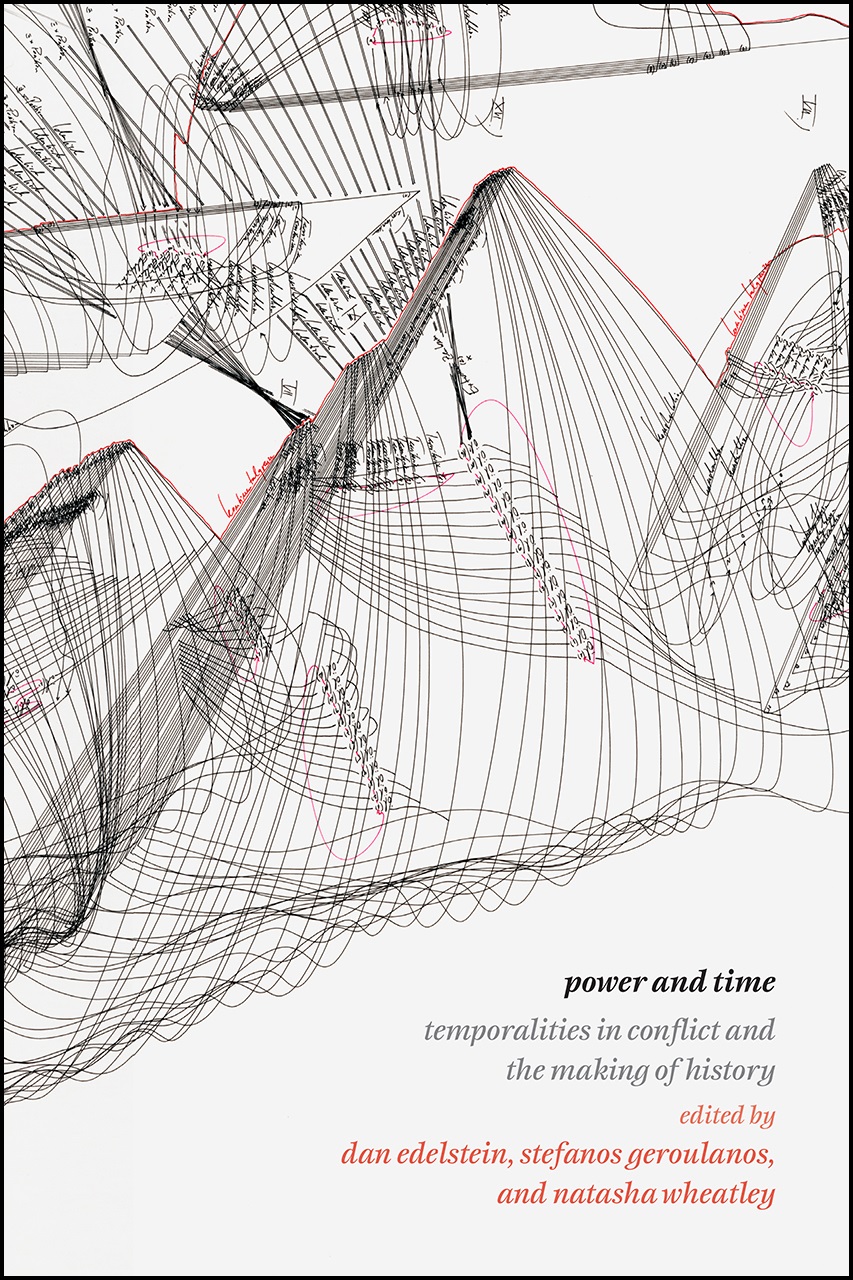
The edited volume Power and Time: Temporalities in Conflict and the Making of History (2020) appeared last year from the University of Chicago Press. The work is co-edited by Dan Edelstein (William H. Bonsall Professor of French and Professor of History at Stanford University), Stefanos Geroulanos (Professor of History at New York University), and Natasha Wheatley (Assistant Professor of History at Princeton University). Power and Time’s seventeen chapters span disciplinary approaches ranging from history, to law, to anthropology, to the history of art, and each illustrates how political authority is constituted through the shaping of temporal regimes in historically-specific ways: The expansionist futurity of the Nazi “New Man” meets the apocalyptic presentism of the Manson Family “cult,” meets the “deep time” of our Age of Plastic. In their introduction, the editors propose a new theoretical model of historical temporality, chronocenosis (inspired by the biological notion of biocenosis), a term which reflects not only “the multiplicity but also the conflict of temporal regimes operating in any given moment” (4). The volume goes on to explore competing orders of time not only as they are reflected in iconic moments of rupture, such as the French Revolution, but also in “silenced clashes” stabilized by often unnoticed but decisive temporal frameworks: “An aesthetics of power and time offers a way for organizing the complexity of power, for locating [its] multiple and conflicting temporal regimes, and for understanding how these get harmonized into a seemingly sinuous, often undifferentiated temporal experience that largely eschews conflict” (37). Contributing editor Jonathon Catlin interviewed the editors about their new volume.
The sociological imagination and the artistic imagination have been historically intertwined, at once reciprocal and conflicting, complementary and tensional. This connection is nowhere more apparent than in the work of Zygmunt Bauman. His conception and practice of sociology were always infused with a literary and artistic sensibility. He wrote extensively on the relationship between sociology and the arts, and especially on sociology and literature; he frequently drew on literary writers in his exploration and elucidation of sociological problems; and he was an avid and passionate consumer and practitioner of art, especially film and photography.
This volume brings together hitherto unknown or rare pieces by Bauman on the themes of culture and art, including previously unpublished material from the Bauman Archive at the University of Leeds. A substantial introduction by the editors provides readers with a lucid guide through this material and develops connections to Bauman’s other works.
The first volume in a series of books that will make available the lesser-known writings of one of the most influential social thinkers of our time, Culture and Art will be of interest to students and scholars across the arts, humanities and social sciences, and to a wider readership.
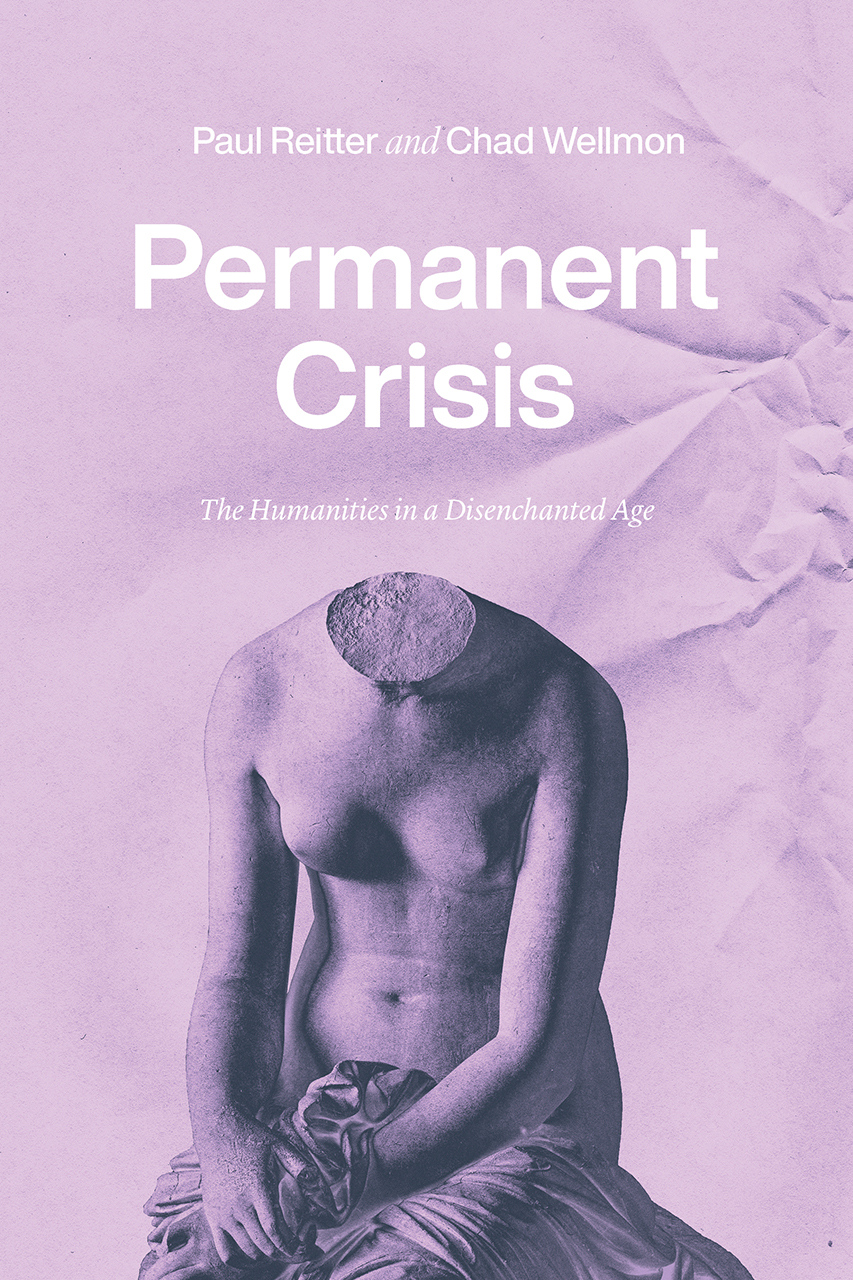
The humanities, considered by many as irrelevant for modern careers and hopelessly devoid of funding, seem to be in a perpetual state of crisis, at the mercy of modernizing and technological forces that are driving universities towards academic pursuits that pull in grant money and direct students to lucrative careers. But as Paul Reitter and Chad Wellmon show, this crisis isn’t new—in fact, it’s as old as the humanities themselves.
Today’s humanities scholars experience and react to basic pressures in ways that are strikingly similar to their nineteenth-century German counterparts. The humanities came into their own as scholars framed their work as a unique resource for resolving crises of meaning and value that threatened other cultural or social goods. The self-understanding of the modern humanities didn’t merely take shape in response to a perceived crisis; it also made crisis a core part of its project. Through this critical, historical perspective, Permanent Crisis can take scholars and anyone who cares about the humanities beyond the usual scolding, exhorting, and hand-wringing into clearer, more effective thinking about the fate of the humanities. Building on ideas from Max Weber and Friedrich Nietzsche to Helen Small and Danielle Allen, Reitter and Wellmon dig into the very idea of the humanities as a way to find meaning and coherence in the world.
Marking the centenary of Walter Benjamin’s immensely influential essay, “Toward the Critique of Violence,” this critical edition presents readers with an altogether new, fully annotated translation of a work that is widely recognized as a classic of modern political theory.
The volume includes twenty-one notes and fragments by Benjamin along with passages from all of the contemporaneous texts to which his essay refers. Readers thus encounter for the first time in English provocative arguments about law and violence advanced by Hermann Cohen, Kurt Hiller, Erich Unger, and Emil Lederer. A new translation of selections from Georges Sorel’s Reflections on Violence further illuminates Benjamin’s critical program. The volume also includes, for the first time in any language, a bibliography Benjamin drafted for the expansion of the essay…
I was pleased to be asked to give one of the British Academy 10-Minute Talks on The Early Foucault (Polity, 2021)
The world’s leading professors explain the latest thinking in the humanities and social sciences in just 10 minutes.
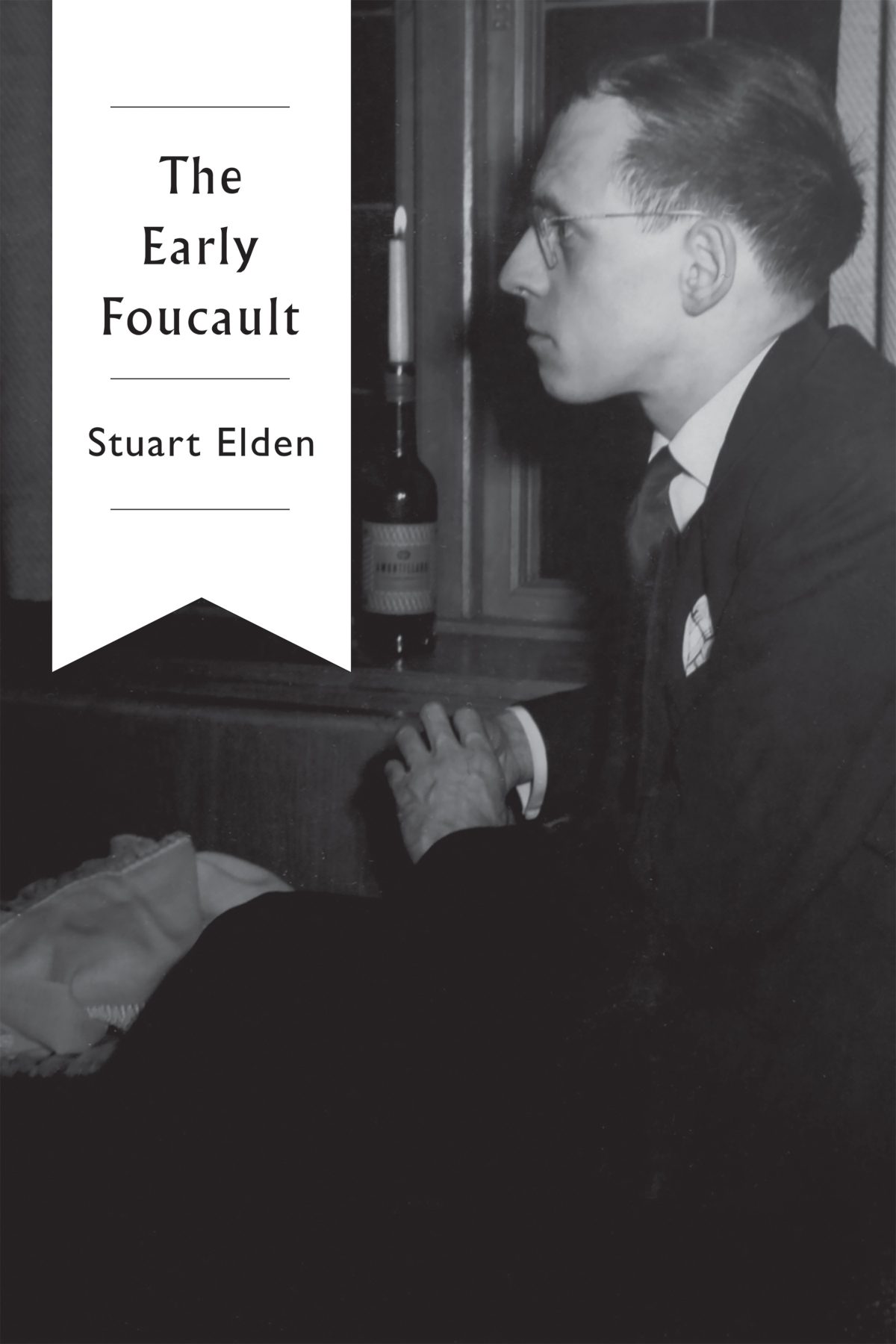
In this talk Stuart Elden discusses his new book, The EarlyFoucault and the research he did on the first period of Michel Foucault’s career. In particular, he highlights what Foucault did before the History of Madness in 1961 and how he came to write that book as well as the way newly available archival materials help to make sense of the period.
10-Minute Talks are a series of pre-recorded talks from Fellows of the British Academy screened each Wednesday onYouTube and also available on Apple Podcasts.
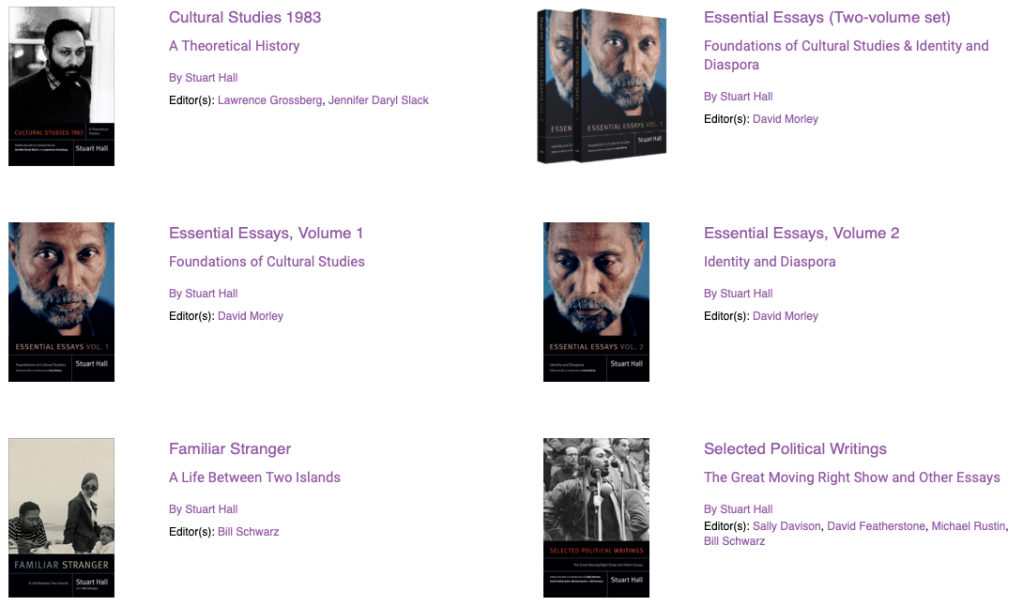
Writings on Media gathers more than twenty of Stuart Hall’s media analyses, from scholarly essays such as “Encoding and Decoding” (1973) to other writings addressed to wider publics. Hall explores the practices of news photography, the development of media and cultural studies, the changing role of television, and how the nation imagines itself through popular media. He attends to Britain’s imperial history and the politics of race and cultural identity as well as the media’s relationship to the political project of the state. Testifying to the range and agility of Hall’s critical and pedagogic engagement with contemporary media culture—and also to his collaborative mode of working—this volume reaffirms his stature as an innovative media theorist while demonstrating the continuing relevance of his methods of analysis.
The extensive collection of Hannah Arendt’s papers held at the Library of Congress are available online.
The papers of author, educator, political philosopher, and public intellectual Hannah Arendt (1906-1975) constitute a large and diverse collection (25,000 items; 82,597 images) reflecting a complex career. The collection spans the years 1898 to 1977, with the bulk of the material beginning in 1948, three years before Arendt’s naturalization as an American citizen. The papers contain correspondence, articles, lectures, speeches, book manuscripts, transcripts of Adolf Eichmann’s trial proceedings, notes, printed matter pertaining to Arendt’s writings, family and personal materials, evidence of Arendt’s network of fellow intellectuals, editors, writers, and theorists, and documentation of her academic affiliations and courses taught.
Arendt biographer Samantha Rose Hill has a good piece at Literary Hub on the archives and her own work with them.
The book is now published, in both hardback and paperback, and is in bookstores, though getting copies outside of the UK might still take a while. It’s available as an e-book too.
There is a piece at the Polity blog about the book here.
This is my tenth authored book, and the third in what has become a four-volume series on Foucault’s intellectual history. The Early Foucault was the hardest of the Foucault series to write, even before the pandemic made completing it very difficult. The book was maybe 95% finished before everything changed. I wrote a series of updates on the research process, which can be found here. The fourth and final book of the series is well underway, and will hopefully be completed in early 2022, though much depends on travel restrictions and getting back to the archives.
Many thanks to all at Polity for their work on bringing The Early Foucault to a successful conclusion. While it took me a bit longer to complete it, Polity have seen this through the production process with their customary efficiency. It’s a book I’m very pleased with, as it discusses some little-known parts of Foucault’s trajectory. I learned a huge amount in researching it, so I hope that some of that comes across to its readers. But of course, there will be things I don’t discuss and other things will become clearer as more research is done. The publication of early manuscripts and teaching notes will hopefully lead to more interest in this period. I hope my book is a useful map for others to follow and fill in detail.
Here’s the back cover text and the three generous endorsements:
It was not until 1961 that Foucault published his first major book, History of Madness. He had been working as an academic for a decade, publishing a few works including a short book, teaching in Lille and Paris, organizing cultural programmes and lecturing in Uppsala, Warsaw and Hamburg. Although he published little in this period, Foucault wrote much more, some of which has been preserved and only recently become available to researchers.
Drawing on archives in France, Germany, Switzerland, Sweden and the USA, this is the most detailed study yet of Foucault’s early career. It recounts his debt to teachers including Louis Althusser, Jean Hyppolite, Maurice Merleau-Ponty and Jean Wahl; his diploma thesis on Hegel; and his early teaching career. It explores his initial encounters with Georges Canguilhem, Jacques Lacan, and Georges Dumézil, and analyses his sustained reading of Friedrich Nietzsche, Edmund Husserl and Martin Heidegger. Also included are detailed discussions of his translations of Ludwig Binswanger, Victor von Weizsäcker, and Immanuel Kant; his clinical work with Georges and Jacqueline Verdeaux; and his cultural work outside of France.
Investigating how Foucault came to write History of Madness, Stuart Elden shows this great thinker’s deep engagement with phenomenology, anthropology and psychology. An outstanding, meticulous work of intellectual history, The Early Foucault sheds new light on the formation of a major twentieth-century figure.
This book is the third of four major intellectual histories of Michel Foucault, exploring newly released archival material and covering the French thinker’s entire academic career. Foucault’s Last Decade was published by Polity in 2016; Foucault: The Birth of Power followed in 2017; and The Archaeology of Foucault will publish in the early 2020s.
‘Elden’s compendious coverage of Foucault’s intellectual career constitutes the contemporary apogee of scholarship on Foucault.’ Mark G. E. Kelly, Western Sydney University
‘This is a work of immense scholarship. Stuart Elden provides a wealth of contextual information on Foucault’s less familiar early career.’ Clare O’Farrell, Queensland University of Technology
‘Stuart Elden’s comprehensive, finely crafted investigation of the early Foucault is much more than a contribution to Foucault studies. It’s an exemplary guide to writing intellectual history.’ Michael J. Shapiro, University of Hawai’i, Manoa