An elegant new translation of Benjamin’s moving evocation of the experiences of his urban childhood
Composed in exile in the 1930s and published as a whole only after his death, the miniatures that make up Benjamin’s Berlin Childhood are crystallized images of childhood experienced in a city later surrendered to fascism. No ordinary autobiography, the book is a Proustian experiment in memory and a meditative tour of the iconic spaces of a city irretrievably lost to the adult. Instead of details of family and friends, these miniatures evoke the sensory richness of childhood in images of the squares and courtyards, the parks and monuments of Berlin, the child’s schoolbooks and the gloomy flats of elderly relatives. As Benjamin’s friend Theodor Adorno writes in his afterword, ‘the images the book brings up into a disturbing proximity are not idyllic and not contemplative. The shadow of Hitler’s Reich falls across them. Dreamlike, they unite that horror with something that has long existed.’
This new translation includes an introduction by Antonia Hofstätter, highlighting the way this nearly century-old work resonates with contemporary readers and inspires hope by providing access to strata of experience not governed by instrumentality and domination.
J’ai mis des années avant d’oser écrire sur Hélène. Elle n’était pas que l’étranglée de la rue d’Ulm. Elle était un mystère, une femme aux multiples identités, une personnalité opaque, hermétique aux récits. Le meurtrier possède sa biographie en plusieurs tomes, des rayonnages entiers, des archives dédiées. On l’étudie. On le lit. Elle : rien. Il lui a écrit des Lettres à Hélène, des centaines de pages. Des mots publiés, sans ses réponses, à elle. Si cette femme est un mystère, si j’en sais si peu sur elle, que faire ? Lorsque l’on n’est ni historienne ni biographe, quel intérêt d’écrire sur une autre personne ? J’ai fini par répondre à cette question, parce que chaque femme a droit à la parole. J’ai longtemps tâtonné avant de la nommer. On l’appelle Althusser, Rytmann, Legotien. Comment choisir ? Un jour, pourtant, j’ai réussi à l’appeler Hélène. C’est drôle parce que chez les féministes, on se méfie des personnes qui appellent les femmes par leur prénom. Mais les choses se meuvent dans la vie et il m’a semblé que ce prénom disait tout d’elle, et la poésie et la mer, et la force et le langage. Il m’a semblé que le prénom Hélène la révélait davantage que ses patronymes changeants, ses noms de code et d’épouse. Il racontait aussi sans doute la tragédie qui l’attendait.
Thanks to Jana Bacevic for the news about this book.
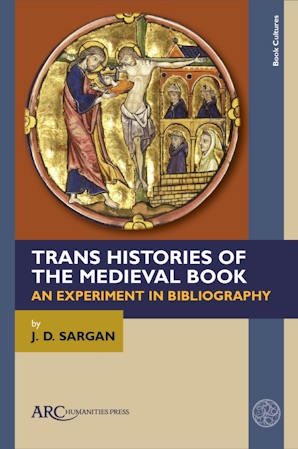
Archival collections are political spaces: the decisions that govern whose histories are preserved, when, and by whom are not neutral. They reflect the communities that make them. For most of western history queer, trans, and gender non-conforming people were excluded from such communities. Premodern trans experiences went largely unreported and reconstructing such histories relies on the piecing together of ephemeral glimpses. Literary scholars developed tactics and tools to read through the traces, with hugely generative results that highlight the richness of non-normative premodern genders. But how do we move beyond the limits of the trace to uncover a more expansive history of premodern gender non-conformity?
This book takes a methodological approach to the question. An experiment in applying trans approaches to the study of the premodern book offers alternatives both for trans histories and for book historical methods.
Offers a systematic account of the notion of political glory in Hannah Arendt’s work
Reposes the problematic of a secular, earthly immortality
Proposes a new form of political solidarity with the murdered, expelled and those still being produced as superfluous
Critiques the modern concept of history that renders factual truth superfluous and which has led to our ‘post-truth’ world
Presents a new secular trinity that replaces the Roman trinity of tradition, religion and authority
In this book, Peg Birmingham argues that privileging the event of natality and new beginnings in Hannah Arendt’s political thought overlooks her central problematic with the modern and contemporary production of economic and political superfluousness, treating all life and the earth itself as disposable.
In the face of this unrelenting production, that will not stop until it has destroyed all worlds and the earth itself, Birmingham shows that Arendt’s primary concern is with radically rethinking the Greek notion of immortality and its heroic glory as earthly immortality. This is rooted in a new form of universal solidarity with those who have been produced as superfluous and consigned to holes of oblivion at sea, desert crossings, prisons and camps.
The overlooked art of late medieval English manuscript illumination—its initials, borders, and non-figurative designs—finally receives its first book-length examination. Far from being mere decoration, the designs that adorned manuscripts during the age of Chaucer, the Wars of the Roses, and the rise of the Tudors reveal a dynamic visual culture long dismissed by art historians. In this groundbreaking work, Kathleen E. Kennedy argues that English aniconic illumination—ornament that avoids depicting human figures—offers vital insights into aesthetics, communication, and design in a transformative period of history. Kennedy demonstrates how these manuscripts embody early Renaissance artistic strategies and anticipate modern notions of user experience.
Bridging medieval studies, media studies, design history, and communications, Illuminating Media highlights the surprising endurance of these visual strategies in contemporary culture, from the design of passports to the layout of currency. Written in crisp, engaging prose, the book offers a new way of seeing both medieval art and modern design, making a powerful case for the value of interdisciplinary scholarship.
An illustrated story of the relationship between mapping and secrecy, charting the role maps played in concealing and revealing knowledge across centuries.
Is there anything more intriguing than a secret map? One that reveals clandestine information or meanings, or a map that is itself a secret? Secret Maps features over one hundred examples of these kinds of maps, connected by their varied relationships to secrecy, and ranging from the twelfth to the twenty-first centuries and across the globe. They include views into state secrecy and power—such as maps used for domestic and military purposes, imperial expansion, espionage, and surveillance as well as those with private or commercial uses, such as charts of private land, trade routes, or the flights of private jets. The maps span widely in their scope and cover issues of broad interest, from old-fashioned spying to contemporary concerns about technology and privacy.
As illuminating as it is thrilling, Secret Maps unearths the once-hidden routes, landscapes, and locations that have covertly shaped our world.
Some years ago, Philippe Chevallier alerted me to the importance of the 1977 German translation of the first volume of Foucault’s History of Sexuality as Sexualität und Wahrheit: Der Wille zum Wissen. This text included a brief preface by Foucault translated from his French original, and then translated back into French for Dits et écrits by Jacques Chavy. The same text appeared in the Italian translation, there dated to September 1977, and that has been translated into English, but the original French manuscript of the preface has not been published, and there is no direct English translation of that text.
Aside from the interesting preface, another reason for the importance of the German edition is that in the inside cover there is a list of the forthcoming volumes which differs from both the original 1976 plan, and the subsequent volumes which were actually published.
The 1976 plan, advertised on the original edition of the first volume and in Le Monde in November 1976, reads:
1. La volonté de savoir [The Will to Know]
2. La Chair et le corps [The Flesh and the Body]
3. La Croisade des enfants [The Children’s Crusade]
4. La Femme, la mère et l’hystérique [The Woman, The Mother, and the Hysteric]
5. Les Pervers [The Perverse]
6. Populations et races [Populations and Races].
Front page of Le Monde, 5 November 1976, announcing the series and the planned volumes
Foucault published none of these beyond the first, but the logic of this arrangement is outlined in the first volume:
Hence the domain we must analyse in the different studies that will follow the present volume is that dispositif of sexuality: its formation on the basis of the Christian notion of the flesh, and its development through the four great strategies that were deployed in the nineteenth century: the sexualisation of children, the hysterization of women, the specification of the perverse, and the regulation of populations—all strategies that went by way of a family which must be viewed, not as a force of prohibition [puissance d’interdiction], but as a major [capital] factor of sexualization (Histoire de la sexualité, Vol I, 150; History of Sexuality Vol I, 113-4).
On Boxing Day 1976, while on sabbatical from the Collège de France, Foucault declined an invitation from R.D. Laing to give a lecture to the Philadelphia Association in London in July 1977, saying that he was trying to complete the next two volumes of the series, and had to stay at his desk.
The first German edition of Foucault’s first volume has a listing which is retained in the 1979 reprint but disappears from the later paperback, which reads:
2. Die Geständnisse des Fleisches
3. Der Kinderkreuzzug
4. Bevölkerung und Rassen
5. Die Frau, die Mütter und die Hysterische
6. Die Perversen
This list is interesting for a few reasons, not least that in September 1977 Foucault is still listing a series of thematic volumes. The original French version of the German preface is in box 51 of the main Foucault fonds at the Bibliothèque nationale de France, NAF 28730, and this typescript also includes this list of volumes. In Foucault’s French original it reads:
T I La volonté de savoir
T. II Les aveux de la chair. [Confessions of the Flesh]
T III Le croisade des jeunes gens. [The Young People’s Crusade]
T IV Population et races. [Population and Races]
T. V La femme, la mère et l’hysterique. [The Woman, The Mother, and the Hysteric]
T. VI Les pervers [The Perverse]
There are, I think, three things to note. First, the second volume, on the Church and confession, now has the planned title Les Aveux de la chair, not La Chair et le corps. This is in September 1977, less than a year after the first volume appeared in French. Michel Senellart suggested in his editorial work for the Pléiade Œuvres (Vol 2, p. 1504) that Les Aveux de la chair was an earlier title, but I think Philippe Chevallier is correct that it is unlikely Foucault would have changed the title twice, eventually reverting to the original. More likely, as Chevallier suggests, is that Foucault changed the title from La Chair et le corps to Les Aveux de la chair around the time of this German edition (Michel Foucault et le christianisme, 2nd edition, p. 343 and note).
Second, some of the books have shifted position in the series. Population and Races moves up to the fourth position, meaning the volume on women, previously the fourth, is now the fifth; and that on the perverse adult was the fifth and now the sixth.
The third thing is that the book on the campaign against childhood masturbation, still third on the list, changes title from La Croisade des enfants [The Children’s Crusade] to Le Croisade des jeunes gens [The Young People’s Crusade]. That’s in itself a shame, since it loses the connection to the 1212 crusade to Jerusalem, and its resonance in popular culture. But its position immediately after the one on the church suggests it was the other volume being worked on in 1976 and 1977, as Foucault told Laing.
We now know what happened to the projected second volume. Foucault shifted focus and time period, and although he drafted material on the late medieval church, he finally completed a book on the early Church Fathers. There is extensive material in Paris for the earlier versions, stretching from themes discussed in The Abnormals course in 1974-75 through to what appeared in the posthumously-published text. Chevallier wrote an exceptional book on Foucault and Christianity in 2011 in which he used some of the intermediate drafts. He was one of the first, other than Foucault’s editors, to see this material. He had an excellent paper in Maynooth Philosophical Papers in 2022 discussing archival materials which have become available in recent years, which is effectively a version of one of the chapters of the revised 2024 second edition of Michel Foucault et le christianisme. As well as the account I provided in Foucault’s Last Decade, which indicated Chevallier’s 2011 work (especially pp. 128-29), I’d also point to how Niki Kasumi Clements is doing very detailed work on how these manuscripts developed over time. For now, see her “Foucault’s Christianities” and “Veridiction and Juridiction in Confessions of the Flesh”, though her promised book Foucault the Confessor is eagerly awaited.
The recently-published Les Hermaphrodites, a manuscript which I discuss here, appears to be all that survives of another volume of the History of Sexuality series, which Foucault first mentions as a separate book in 1978, and then in an interview with Frank Mort and Roy Peters in May 1979 says will be the third volume after one on the “Catholic Christian confessional”. The existence of the list in the 1977 German edition indicates that the hermaphrodites idea emerged between then and 1978, when he mentions it in the publication of the Herculine Barbin text. In late 1979, when the Arcadie journal published the proceedings of a conference from 24-27 May 1979 at which Foucault spoke on hermaphrodites, the editor André Baudry said that they apologised for not including Foucault’s text. He added that Foucault “is currently working on an important book about the ideas he presented to the Congress in his speech”, and that a revised version of his talk will appear in the journal in a subsequent issue (Le Regard des Autres, p. 25). The revised text was first used as the introduction to the American edition of the Herculine Barbin memoir in 1980, and in a slightly longer version in Arcadie later that year. The conference paper itself exists in the Paris archives (Fonds Michel Foucault, NAF 28730, box 82).
It is also well-known that at the end of his life, Foucault reworked the series, so that volumes II and III – L’Usage des plaisirs [The Use of Pleasure] and Le Souci de soi [The Care of the Self] – would be followed by the book on the Christian Church, Les Aveux de la Chair. That book, so long the holy grail for Foucault scholars, was finally edited and published in 2018 and translated into English as Confessions of the Flesh in 2021. As I try to outline in my book Foucault’s Last Decade, the transition between the initially promised series and the final, nearly complete one, was a long and complicated story, with interim plans and alternative arrangements considered. But I wrote that book before the archives in Paris were fully opened up to researchers, making use of draft materials for the actually published volumes II and III, but not having access to the manuscript or typescript of Les Aveux de la Chair. I reviewed the French version of Foucault’s text in 2018 for Theory, Culture & Society. Chevallier’s article in Maynooth Philosophical Papers gives a very useful overview of the extant materials for the book on Christianity, in its multiple forms.
In Foucault’s Last Decade, following an indication by Daniel Defert, I also discussed how the final form of the History of Sexuality also changed between 1983 and 1984, with what became volumes II and III initially one long manuscript, before Foucault rearranged material into the two volumes. The manuscript drafts of that volume and other material have been available in the archive for decades (NAF 28284, boxes 2-5).
In other words, there are published traces of at least five plans of the History of Sexuality:
November-December 1976 – the list advertised on and alongside the publication of volume I
September 1977 – the list included in the German translation, with Les Aveux de la chair the new title for volume II
c.1978 – insertion of an additional or replacement volume on hermaphrodites, specified as the third volume in 1979
c.1983 – Les Aveux de la chair becomes volume III, to be preceded by a volume on antiquity, entitled L’Usage des plaisirs. In interviews at this time Le Souci de soi is mentioned as forthcoming, but outside the sexuality series and with different material.
1984 – split of the volume on antiquity into two, L’Usage des plaisirs and Le Souci de soi, followed by Les Aveux de la chair as Volume IV. This was advertised, for example, in a flyer included in early copies of volumes II and III.
The German translation and its list of forthcoming volumes is therefore an important indication of the shifting programme.
It is worth underlining that some of the originally planned volumes had material drafted, even though they were unpublished by Foucault. The recently published Les Hermaphrodites gives an indication of the type of material which exists in the archives. There is, for example, a lot of draft text destined for the volume on the medieval church, some material for the book on the crusade against childhood masturbation, and, somewhat later, for a book on techniques of the self, at one point called Le Souci de soi, before that was reused as a title in the History of Sexuality series, and at another point mentioned as Le Gouvernement de soi et des autres, which Foucault also used as the title for his final two courses.
There is a lot of Foucault still to be discovered, and certainly to be dated and situated: it really is extraordinary how much material he produced in his last decade.
Acknowledgements
Thanks to Kurt Borg, Philippe Chevallier, Niki Kasumi Clements, Vicky Kluzik, and Philipp K. Rosemann for texts or discussions.
I write about the “watershed” which Foucault questions between pagan antiquity and early Christianity, a notion he takes from Peter Brown, here.
References
Herculine Barbin dite Alexina B, ed. Michel Foucault, Paris: Gallimard, 1978; Herculine Barbin, Being the Recently Discovered Memoirs of a Nineteenth-century French Hermaphrodite, trans. Richard McDougall, New York: Pantheon, 1980.
André Baudry ed. Le Regard des autres: Actes du congrès international [24 au 27 mai 1979], Paris: Arcadie, 1979.
Philippe Chevallier, Michel Foucault et le christianisme, Lyon: ENS Éditions, 2011 (open access), 2nd edition, 2024.
Philippe Chevallier,“The Birth of Confessions of the Flesh: A Journey through the Archives”, trans. Charles A. Piecyk, Maynooth Philosophical Papers 11, 2022, 55-73.
Niki Kasumi Clements, “Foucault’s Christianities”, Journal of the American Academy of Religion 89 (1), 2021, 1-40.
Niki Kasumi Clements, “Veridiction and Juridiction in Confessions of the Flesh”, European Journal of Philosophy 31 (3), 809-19.
Stuart Elden, Foucault’s Last Decade, Cambridge: Polity, 2016.
Michel Foucault, Histoire de la sexualité I: La Volonté de savoir, Paris: Gallimard, 1976; trans. Robert Hurley as The History of Sexuality I: The Will to Knowledge, London: Penguin, 1978.
Michel Foucault, Sexualität und Wahrheit: Der Wille zum Wissen, trans. Ulrich Raulff and Walter Seitter, Frannkfurt-am-Main: Suhrkamp, 1977.
Michel Foucault, La Volontà di sapere: Storia della sessualità 1, trans. Pasquale Pasquino and Giovanna Procacci, Milano: Giangiacomo Feltrinelli, 1978.
Michel Foucault, “Introduction”, in Herculine Barbin, Being the Recently Discovered Memoirs of a Nineteenth-century French Hermaphrodite, trans. Richard McDougall, Brighton: Harvester, 1980.
Michel Foucault, “Le vrai sexe”, Arcadie 27 (323), 1980, 617-25; reprinted in Dits et écrits, eds. Daniel Defert and François Ewald, Paris: Gallimard, four volumes, 1994, Vol IV, 115-23.
Michel Foucault, Histoire de la sexualité II: L’Usage des plaisirs, Paris: Gallimard, 1984; The History of Sexuality Volume II: The Use of Pleasure, trans. Robert Hurley, London: Penguin, 1985.
Michel Foucault, Histoire de la sexualité III: Le Souci de soi, Paris: Gallimard, 1984; The History of Sexuality Volume III: The Care of the Self, trans. Robert Hurley, London: Penguin, 1986.
Michel Foucault, “Preface to the Italian edition of La volonte de savoir”, trans. Lorenzo Chiesa, Pli: The Warwick Journal of Philosophy 13 [Foucault: Madness/Sexuality/Biopolitics], 2002, 11-12.
Michel Foucault, Les Anormaux: Cours au Collège de France, 1974-1975, eds. Valerio Marchetti and Antonella Salomoni, EHESS/Gallimard/Seuil, 1999, revised edition by Élisabetta Basso, Paris: Points, 2024; trans. Graham Burchell as Abnormal: Lectures at the Collège de France 1974–1975, London: Verso, 2003.
Michel Foucault, Œuvres, Bibliothèque de la Pléiade, ed. Frédéric Gros, Paris: Gallimard, two volumes, 2015.
Michel Foucault, Histoire de la sexualité IV: Les Aveux de la chair, ed. Frédéric Gros, Paris: Gallimard, 2018; The History of Sexuality Volume IV: Confessions of the Flesh,trans. Robert Hurley, London: Penguin, 2021.
Michel Foucault, Les Hermaphrodites, eds. Henri-Paul Fruchaud and Arianna Sforzini, Paris: Gallimard, 2025.
Frank Mort and Roy Peters, ‘Foucault Recalled: Interview with Michel Foucault’, New Formations 55, 2005, 9-22.
Philipp K. Rosemann, “On the Christian Turn in Foucault’s Thought: Apropos of Foucault, les Pères, le sexe”, Maynooth Philosophical Papers 11, 2022, 75-84.
Archives
Fonds Michel Foucault, NAF 28284, Bibliothèque nationale de France – drafts of L’Archéologie du savoir and Histoire de la sexualité Volumes II and III
MS Laing, R.D. Laing Collection, University of Glasgow
This is the 46th post of a weekly series, where I post short essays with some indications of further reading and sources, but which are not as formal as something I’d try to publish more conventionally. They are usually tangential to my main writing focus, a home for spare ideas, asides, dead-ends and possible futures. I hope there is some interest in them. They are provisional and suggestions are welcome. A few, usually shorter, pieces in a similar style have been posted mid-week.
[Updated 24 November 2025 to clarify that the second printing of the German translation retains the original listing. It appears to have disappeared in is retained in the later paperback.]
The concept of concept plays a central role in philosophy, serving both as a subject of study in disciplines such as logic, epistemology, and philosophy of mind, and as a methodologically central notion for those who think that philosophy is essentially concerned with analysing, deconstructing, developing, or ameliorating concepts. But what exactly are concepts, and why have they become so significant in philosophy? The chapters of this volume explore critical moments in the history of the concept of concept, investigating why and how philosophers across different eras and cultures have understood concepts’ nature, acquisition, and relationship to the entities to which they apply. Spanning classical Greek to modern Western philosophies, and incorporating Chinese, Indian, and Islamic traditions, the volume examines concepts as means for categorizing the world – tracing their evolution from elements of thought to foundational components of reality, and the transformation of the concept into the key notion of philosophy.
There are essays by Johanna Oksala and Philipp Kender, and a special section on Foucault’s reading of Nietzsche, with pieces by Orazio Irrera, Federico Testa, Emmanuel Salanskis, Daniele Lorenzini and Frédéric Porcher.
This issue includes a ‘Buffalo dossier’ – an article by me about what the University at Buffalo archives tell us about Foucault’s two visiting posts there in 1970 and 1972, and an article by Leonhard Riep with a detailed discussion of Foucault’s 1972 Buffalo course.
All essays and reviews are available open access.
From the editorial:
Foucault visited the State University of New York at Buffalo twice at the beginning of the 1970s. In 1970, he gave a course on the desire for knowledge in French literature in the nineteenth and twentieth centuries. He came back two years later to lead a seminar on the figure of the criminal in the literature of the eighteenth and nineteenth centuries, and to give an important lecture series on the “History of Truth,” which was recorded and has just been published in French under the title Histoire de la vérité (ed. H.-P. Fruchaud and O. Irrera, Paris: Vrin, 2025). This dossier offers an invaluable overview of Foucault’s teaching at SUNY Buffalo in those years, with special focus on his lectures on the history of truth.
In “Foucault at Buffalo in 1970 and 1972: The Desire for Knowledge, The Criminal in Literature, and The History of Truth,” Stuart Elden(University of Warwick, UK) provides an invaluable survey of the archival material available at the University at Buffalo concerning Foucault’s visits. In particular, using the personnel files and correspondence with John K. Simon, as well as the audio recordings of the 1972 lectures on the history of truth and parts of the 1970 course on the desire for knowledge, Elden reports on what we know of Foucault’s teaching there and its role in the initial reception of his thought in the United States.
In “‘The History of Truth’: Foucault in Buffalo, 1972,” Leonhard Riep(Goethe University Frankfurt am Main, Germany) offers a reading of Foucault’s 1972 lecture series on the “History of Truth” based on the audio recordings available in the archives at the University at Buffalo. In particular, Riep reconstructs the two main knowledge-power complexes that Foucault analyzes there: the “truth of measure” in relation to the question of justice in the ancient Greek legal system and the “truth of investigation” within the discourse on war and the appeasement of society in medieval law. Riep shows that these lectures provide invaluable insight into the methodological foundations of Foucault’s archaeological approach.
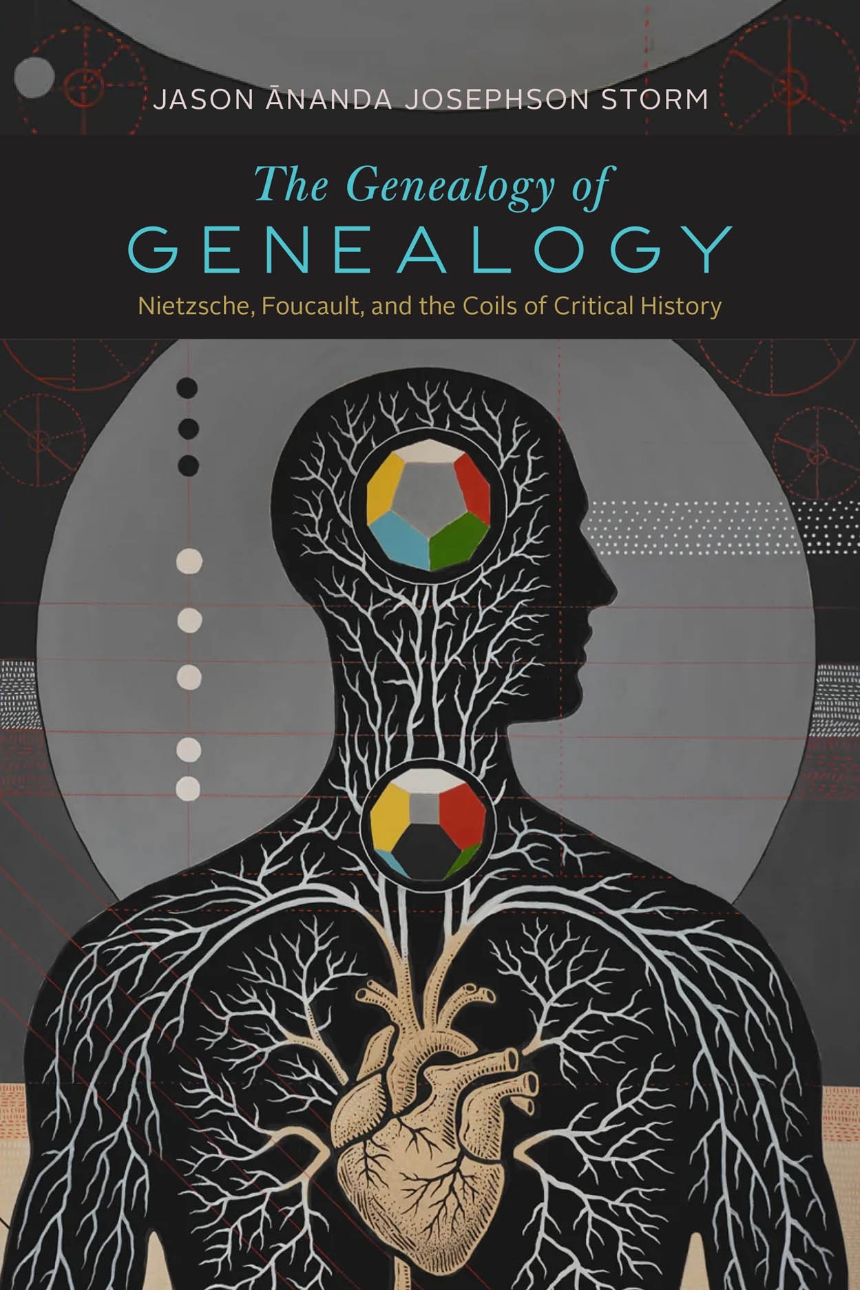
A daring reassessment of the critical method that reshaped the humanities—and an invitation to imagine new ways of doing history. The genealogical method—a mode of historical analysis that shows that what looks timeless is in fact contingent, bound to shifting relations of meaning, knowledge, and power—has become the dominant paradigm of humanistic inquiry. In The Genealogy of Genealogy, Jason Ānanda Josephson Storm turns this influential practice back on itself, tracing its unlikely rise through Nietzsche and Foucault and uncovering its suppressed ties to eugenics and racism. He rethinks the very stakes of critical history and proposes new tools for thinking about historical continuity, change, and difference.
Provocative and timely, The Genealogy of Genealogy offers both a diagnosis and a vision, challenging scholars across the humanities and social sciences to rethink how we write history and whether our most trusted methods are fit for the futures we seek to build.