Entre 1975 et 1977, Jacques Derrida s’engage dans un séminaire énigmatique, voire obscur au premier abord, intitulé La Chose. Ce séminaire se révèle pourtant l’un des plus fascinants de son œuvre : il se situe au carrefour de plusieurs de ses textes les plus audacieux, La Dissémination, Glas, La Vérité en peinture et La Carte postale. Déjà, il mobilise la lecture des corpus philosophiques, littéraires et psychanalytiques que Derrida ne cessera d’approfondir dans les décennies suivantes. Chaque année d’enseignement est consacrée à une analyse à la fois parallèle et alternée où le philosophe fait se croiser l’œuvre de Heidegger avec celles de Ponge (1975), de Blanchot (1976) et de Freud (1977). La Chose permet ainsi de redécouvrir ces textes en montrant toute l’attention que le philosophe accorde à cette chose non humaine – un apport philosophique essentiel pour les grandes questions d’écologie, de matérialisme et d’éthique qui sont les nôtres aujourd’hui. Derrida avait un jour formulé le souhait de réunir ces séminaires et ses notes sur la thématique de « Donner le temps » (1977-1978). Ce vœu est maintenant exaucé en publiant dans ce volume la sixième séance inédite de Donner le temps II, où il soulignait le lien étroit reliant la chose et le don car, selon Derrida, « le don est peut-être l’affaire de la chose, la chose affaire du don »
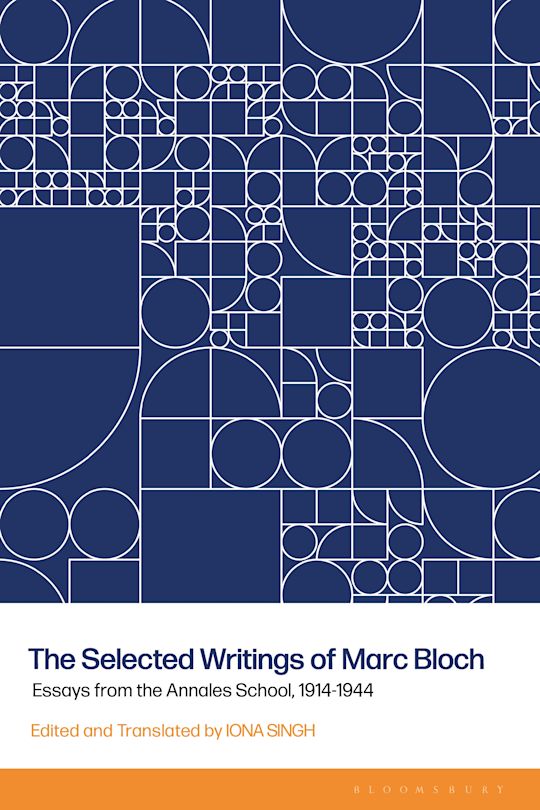
This book brings a selection of the influential writings of Marc Bloch into the English language, largely for the very first time. Chronologically arranged to trace the developmental arc of Bloch’s historical philosophy, the translations in The Selected Writings of Marc Bloch offer an illuminating insight into the theories of a pioneer historian and original founder of the renowned Annales school of French social history.
The carefully curated translations in this volume reveal Bloch’s thoughts on questions that historical studies has grappled with since the birth of the discipline. Why should history exist at all? What value does it have? What exactly is a science of history? What is the actual role of the historian in historical studies?
This collection presents Bloch’s precise understanding of the contours of the discipline of history, defined by the abuttal and transgression of its borders by other subjects. Consequently, it provides a theoretical underpinning for multidisciplinary and interdisciplinary concepts via historical studies, pulling into its fold diverse themes such as customs, agriculture, economics, nutrition, technology, manners, art, fashion, and countless other topics explored by Bloch himself in the process.
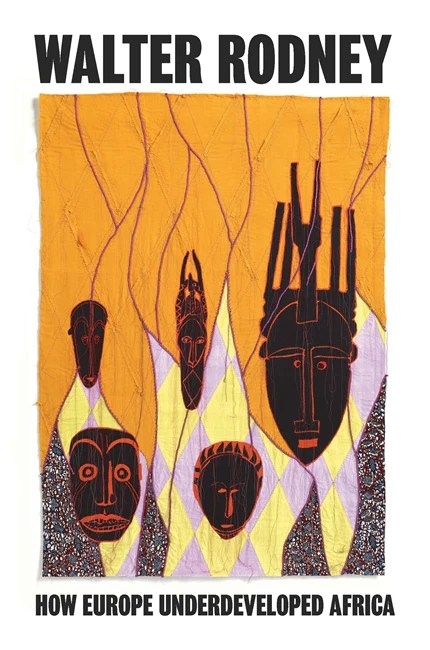
An exemplary work of political, economic, and historical analysis, powerfully introduced by Angela Davis
How Europe Underdeveloped Africa is an ambitious masterwork of political economy, detailing the impact of slavery and colonialism on the history of international capitalism. In this classic book, Rodney makes the unflinching case that African maldevelopment is not a natural feature of geography, but a direct product of imperial extraction from the continent, a practice that continues up into the present. Meticulously researched, How Europe Underdeveloped Africa remains an unshakably relevant study of the so-called “great divergence” between Africa and Europe, just as it remains a prescient resource for grasping the the multiplication of global inequality today.
In this new edition, Angela Davis offers a striking foreword to the book, exploring its lasting contributions to a revolutionary and feminist practice of anti-imperialism.
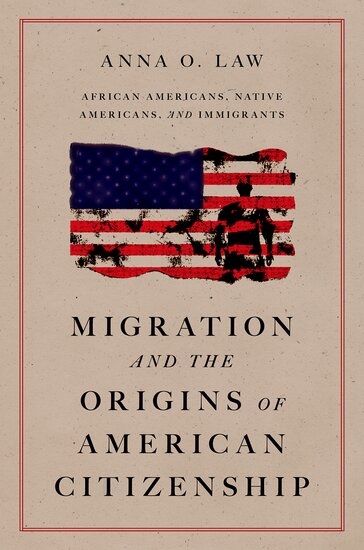
Since the late nineteenth century, the US federal government has enjoyed exclusive authority to decide whether someone has the ability to enter and stay in US territory. But freedom of movement was not guaranteed in the British colonies or early US. By contrast, voluntary migrants were met with strict laws and policies created by colonies and states, which denied free mobility and settlement in their territories to unwanted populations.
Migration and the Origins of American Citizenship presents a story of constitutional development that traces the confluence of the logics of slavery and settler colonialism in early legal rulings and public policy about migration and citizenship. The book examines the division of labor between the national and state governments that endured for over a century, reasons why that arrangement changed in the late nineteenth century, and what the transformation meant for people subject to those regimes of control. Drawing into one study the migration policy histories of groups of people that are usually studied separately, and combining the methodologies of political science, history, and law, Anna O. Law reveals the unmistakable effects of slavery and Native American dispossession in modern US immigration policy.
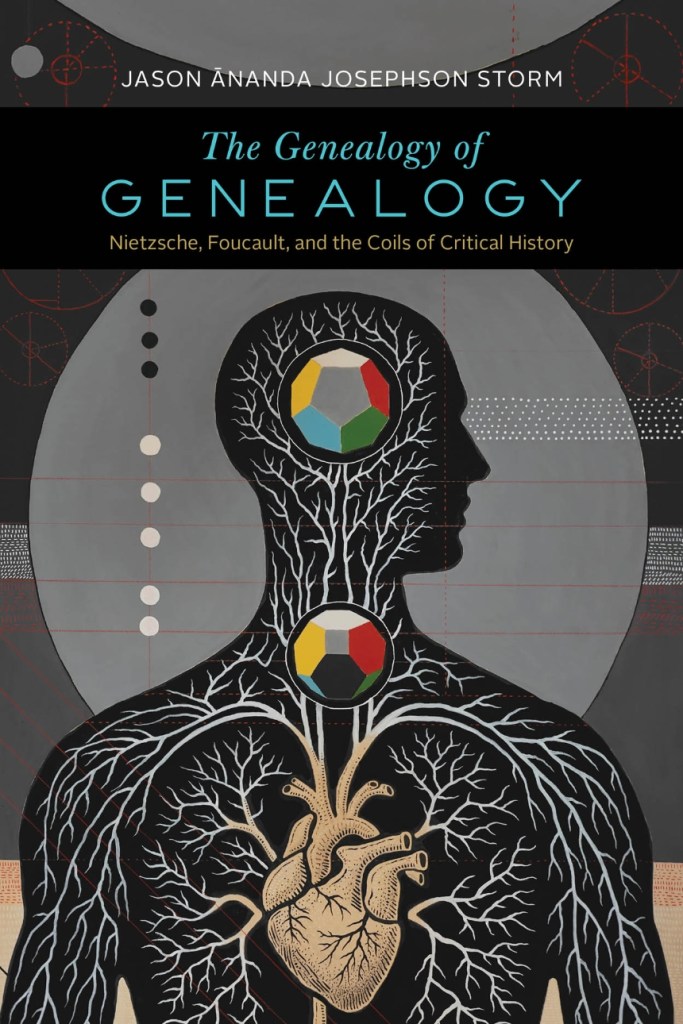
There was a lot I learned, and much I liked, about Jason Ānanda Josephson Storm’s recently published The Genealogy of Genealogy: Nietzsche, Foucault, and the Coils of Critical History (University of Chicago Press, 2026). There was also a great deal which has made me pause, slow down and reconsider. What follows isn’t a traditional review, which I’ve not been asked to write, and not an outline of what I liked and learned from the book. Rather, it uses the book’s arguments to add a bit of detail and some other considerations.
Essentially Storm’s argument is that the term ‘genealogy’, used so much in the contemporary humanities and social sciences to describe a particular style of historical work, is much more complicated and contested than usually acknowledged. The term’s popularity is largely due to Foucault’s use, and in particular his reading of Nietzsche’s work, notably in the 1971 essay “Nietzsche, Genealogy, History”. Storm argues, though, that Nietzsche does not use the term to designate his own work, and that his On the Genealogy of Morality takes genealogy as the object of his critique, the target of his polemic. Storm argues Foucault’s reading is tendentious, but has been powerful and effective. Storm shows that genealogy as a mode of historical inquiry is tangled up with genealogy in its more common usage – heritage, lineage, race, and so on.
In part, Storm’s project is very similar to Jacqueline Stevens’s 2003 essay “On the Morals of Genealogy”, which also questions Foucault’s reading. But Storm’s book is much more than a critical examination of this essay, and expands the analysis to think of how genealogy is a questionable term and one we should be resistant to using. It has a lot to offer for an intellectual history of Foucault’s career and the way the idea of genealogy has been taken up. It also provides some very interesting discussion of some of the French readings of Nietzsche which preceded and in part anticipated Foucault – Georges Bataille and Gilles Deleuze are well known, but there is some useful discussion of Jean Wahl, whose importance to Foucault is generally neglected. His reading of Heidegger was, I’ve argued, really significant to Foucault; Storm concentrates on what he says about Nietzsche which I think is an important contribution.
Partly because of Stevens’s essay, I think it’s long been known that Foucault’s reading of Nietzsche on genealogy is questionable, that Foucault describes Nietzsche’s approach in a way which he would have rejected. I would be more inclined to think about why Foucault made the reading he did, and the intellectual development of his reading of Nietzsche. The 1971 essay comes after some earlier work by Foucault on Nietzsche, including a course at Vincennes and some lectures in North America. Until recently these were largely unknown, read by a few in the archive, but in 2024 they were edited by Bernard Harcourt. For a reading of Foucault’s development, and how he came to distil his reading of Nietzsche into this single essay – one of only a couple of pieces he wrote on Nietzsche of which he authorised publication – a reading of this volume is really important. I say something about Foucault’s analysis of Nietzsche, and how important his reading of Nietzsche was to his own intellectual development in my books on Foucault, particularly The Early Foucault and The Archaeology of Foucault. Storm discusses the course at Vincennes published in Harcourt’s collection, and has some interesting things to say about the way the essay developed from that. But I think more could and should be done with reading these earlier texts, and it will be interesting to see how that volume generates a renewed interest in Foucault’s long engagement with Nietzsche. Some initial articles on this are in a recent issue of Foucault Studies.I was working with the texts in the archive, since when I was writing they were unpublished; Storm worked both in the archive and with Harcourt’s edition.
What is striking here, I think, is that although Foucault explicitly aligns his project with Nietzsche from quite early – it’s there in the History of Madness in 1961, for example, when he describes it as “beneath the sun of the great Nietzschean quest” – it comes with a serious hesitation to label his own project as genealogy. The 1971 essay is intended to be a text about Nietzsche, and I think it’s interesting that Foucault does not use the term genealogy to describe his own approach for a few more years. Of course, in the 1960s he described what he was doing as archaeology, and the relation or contrast between archaeology and genealogy has been much discussed. Storm’s analysis touches on this, and we have much to consider on this point as a consequence of his reading. In one interview in the 1960s Foucault does say that how he understands archaeology is closer to Nietzschean genealogy than structuralism (quoted by Storm, p. 191), but it’s almost another decade before he claims what he is doing is genealogy explicitly. I don’t intend to go into all the references here. But for a while, Foucault describes a supplementary approach to ‘archaeology’ as ‘dynastics’, and it seems this might the term until it gets supplanted by ‘genealogy’. Storm briefly discusses ‘dynastics’ in this book (pp. 211-12). I trace that shift in detail in an essay which came out in 2025, “Foucault, Dynastics and Power Relations: Between Archaeology and Genealogy”. I was intrigued by the way Foucault only fully opts for the term ‘genealogy’ to describe his own work some years after he has discussed it in relation to Nietzsche.
Storm recognises that Georges Dumézil is significant for Foucault’s intellectual development. He indicates that Didier Eribon has done work on this, particularly in Michel Foucault et ses contemporains,and generously mentions my books on Foucault, reporting that in The Early Foucault I said that Dumézil’s influence was “a topic that requires further investigation” (p. 173, cited in Storm, The Genealogy of Genealogy, p. 311 n. 61). But while Dumézil is someone Foucault discusses through his career, in terms of approach he is most significant for an earlier period of Foucault’s development – Storm traces it in relation to structure and structuralism, but as he indicates it is also there in the use of the term ‘archaeology’.
In his 1949 book L’héritage indo-européen à Rome, Dumézil had said that while material remains of the Indo-European people may be limited, “there is abundant documentation in words, myths, institutions, and so on”. In order to examine their civilisation, he said that we “are therefore obliged to develop, alongside an archaeology of objects and sites, an archaeology of representations and behaviours” (p. 43). Foucault copied this passage in his notebooks and it is clear that it was important in the formulation of his own approach. I discussed this in my books on Foucault; Storm quotes the same passage (p. 170). Troels Krarup has also written about this in his study of “archaeological methodology” in Foucault. Storm adds to this discussion, though it is striking that Krarup, Storm and I have come to this understanding of Foucault’s fundamental debt to Dumézil independently, within a few years of each other.
I’ve tried to discuss something of Dumézil’s importance to Foucault in a few pieces since I completed my series of books on Foucault. One book chapter discussed the way Foucault makes use of Dumézil’s work for his understanding of sovereignty; an article in the Journal of the History of Ideas examined Foucault’s readings of Dumézil’s work in his lectures on antiquity throughout his career. I’ve seen these pieces as something of a bridge between the series of Foucault books and my book manuscript on Benveniste, Dumézil and Indo-European thought in France. I’ve also discussed Foucault’s relation to structuralism in a chapter in Daniele Lorenzini’s The Foucauldian Mindcollection. There I make the case that Foucault’s connection to structuralism is really through his relation to Dumézil, not supposed parallels to Lévi-Strauss, Lacan or others. All this is to say that the Foucault-Dumézil connection is in need of investigation beyond Eribon, although that remains an indispensable starting point. Storm’s book is, alongside Krarup (and I hope my pieces), another step forward in that work.
Foucault’s wish to disassociate himself from structuralism, especially around 1970, is well known. One unconvincing point by Storm was his suggestion that because archaeology was indebted to Dumézil, Foucault wanted to distance himself from that approach, in part because of one of flare-ups of the debate about Dumézil’s politics (see, i.e. pp. 186-87; 224-25). The relation of Foucault to Dumézil’s politics is an interesting question, but the chronology seems off to me – Foucault was explicit in referencing Dumézil in lectures from 1957 through to 1984, with particularly important ones in 1970, 1971, 1972, 1976, 1981, 1983, and 1984. I just don’t see a pause in the engagement, or in their personal relations, which would coincide with the political question.
As I said, this piece is not a review, and there is much more in the book I liked, a lot I learned and much that gave me reason to reconsider. These are initial thoughts based on a first reading, but I suspect it is a book I will return to. I thoroughly recommend the book to anyone interested in Foucault and Nietzsche, and I think it will have a lot to say to debates about historical methodology in the humanities and social sciences. These few thoughts and references hopefully add something to a conversation which I hope that the book begins.
(As ever, if any of my articles or chapters are hard to access, just send me an email and I’ll share a pdf.)
References
Georges Dumezil, L’héritage indo-européen à Rome, Paris: Gallimard, 1949.
Stuart Elden, The Early Foucault, Cambridge: Polity, 2021.
Stuart Elden, The Archaeology of Foucault, Cambridge: Polity, 2023.
Stuart Elden, “The Yoke of Law and the Lustre of Glory: Foucault and Dumézil on Sovereignty”, in Martina Tazzioli and William Walters (eds.), Handbook on Governmentality, Cheltenham: Edward Elgar, 2023, 38-53
Stuart Elden, “Foucault and Structuralism”, The Foucauldian Mind, ed. Daniele Lorenzini, London: Routledge, forthcoming 2026, 218-29.
Didier Eribon, Michel Foucault et ses contemporains, Paris: Fayard, 1994.
Michel Foucault, “Nietzsche, la généalogie, l’histoire”, Dits et écrits, eds. Daniel Defert and François Ewald, Paris: Gallimard, four volumes, 1994, Vol II, 136-56; “Nietzsche, Genealogy, History”, trans. Donald F. Bouchard and Sherry Simon, in Donald F. Bouchard ed., Language, Counter-Memory, Practice: Selected Essays and Interviews, Ithaca: Cornell University Press, 1977, 139-64 (and many reprints, including in The Foucault Reader and the second volume of Essential Works).
Michel Foucault, Nietzsche: Cours, conférences et travaux, ed. Bernard Harcourt, Paris: Seuil/Gallimard/EHESS, 2024.
Jason Ānanda Josephson Storm, The Genealogy of Genealogy: Nietzsche, Foucault, and the Coils of Critical History, Chicago: University of Chicago Press, 2026.
This is the 77th post of a weekly series, posted every Sunday throughout 2025, and continuing into a second year. The posts are short essays with indications of further reading and sources. They are not as formal as something I’d try to publish more conventionally, but are hopefully worthwhile as short sketches of histories and ideas. They are usually tangential to my main writing focus, a home for spare parts, asides, dead-ends and possible futures. I hope there is some interest in them. They are provisional and suggestions are welcome. A few, usually shorter, pieces in a similar style have been posted mid-week. I’m not sure I’ll keep to a weekly rhythm throughout 2026, but there will be at least a few more pieces.
The full chronological list of ‘Sunday histories’ is here, with a thematic ordering here.
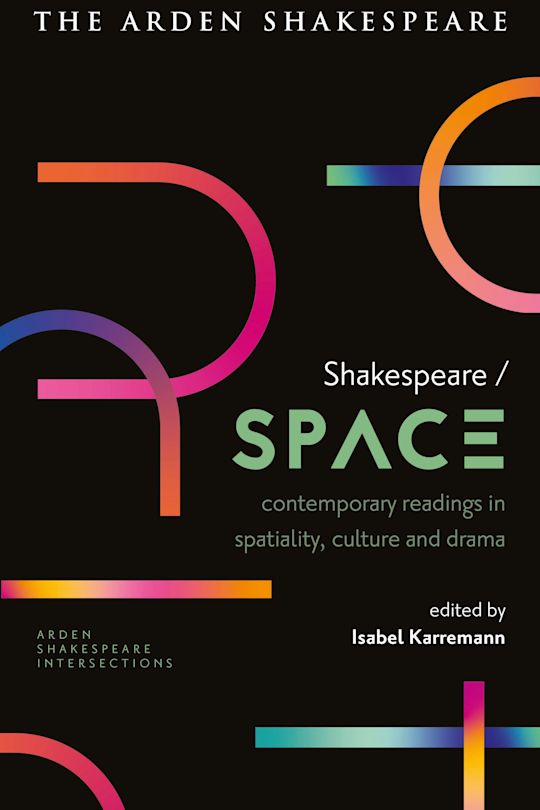
Shakespeare / Space explores new approaches to the enactment of ‘space’ in and through Shakespeare’s plays, as well as to the material, cognitive and virtual spaces in which they are enacted. With contributions from 14 leading and emergent experts in their fields, the collection forges innovative connections between spatial studies and cultural geography, cognitive studies, memory studies, phenomenology and the history of the emotions, gender and race studies, rhetoric and language, translation studies, theatre history and performance studies.
Each chapter offers methodological reflections on intersections such as space/mobility, space/emotion, space/supernatural, space/language, space/race and space/digital, whose critical purchase is demonstrated in close readings of plays like King Lear, The Comedy of Errors, Othello and Shakespeare’s history plays. They testify to the importance of space for our understanding of Shakespeare’s creative and theatrical practice, and at the same time enlarge our understanding of space as a critical concept in the humanities. It will prove useful to students, scholars, teachers and theatre practitioners of Shakespeare and early modern studies.
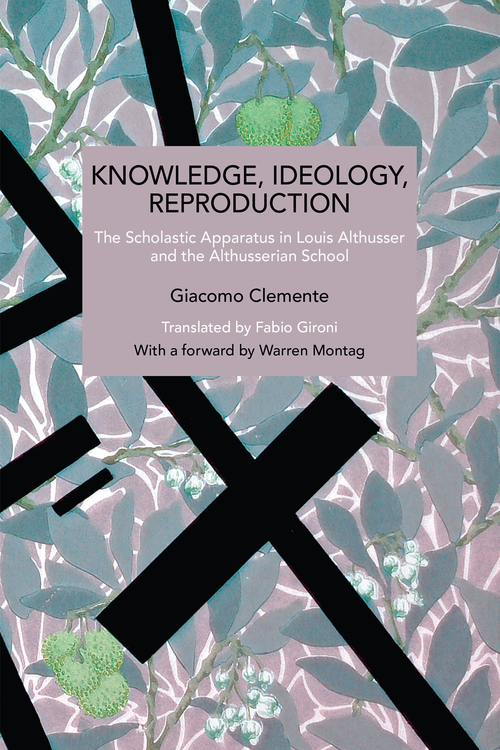
The first book-length examination of the theses developed by Louis Althusser and his collaborators on the processes of class-based educational formation and the function of schools. Drawing largely on unpublished writings that have been overlooked by scholars of both Althusser and critical pedagogy, Knowledge, Ideology, Reproduction reveals that, for Althusser and the Groupe Spinoza, educational formation and the position of knowledge are central, decisive issues in understanding the real forces driving the mechanisms of social reproduction. This perspective enables a critical interrogation of knowledge transmission and opens up new possibilities for transformative educational practices.
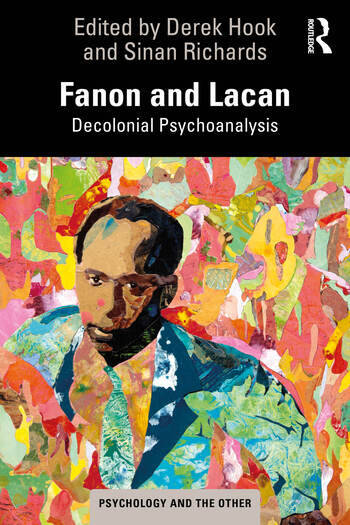
Fanon and Lacan: Decolonial Psychoanalysis explores the influence of psychoanalysis on Frantz Fanon’s thought and delves into Fanon’s innovative use of psychoanalysis as a way of diagnosing and addressing the socio-psychological traumas of colonialism and racialised structures of power.
The contributors in this volume highlight how, by engaging with Lacanian concepts such as the mirror stage, the imago, and the body-in-pieces, Fanon rearticulated psychoanalysis into a vernacular form responsive to the dilemmas of racism and colonial violence. Beginning with a comparative historical investigation of Fanon and Lacan’s works, the book goes on to query the role played by key figures – Octave Mannoni, Maurice Merleau-Ponty, François Tosquelles, and others – in establishing points of connection between the respective decolonial and clinical projects of Fanon and Lacan. Readers will uncover how Fanon’s critical dialogue with Lacan and Francophone psychoanalysis more broadly opens new pathways for confronting the unconscious foundations of racism and exclusion, while offering tools for exploring disalienation and liberation.
Ideal for scholars, students, and practitioners in psychoanalysis, the history of psychoanalysis, postcolonial studies and critical theory, this book is essential for anyone seeking to understand the intersection of colonialism, race and the psyche.
A blueprint for revolution: part manifesto, part performance, and a provocation to rethink the very idea of change.
In 1958, Belgian surrealist Marcel Mariën drafted a plan to topple capitalism on a global scale—achievable in a single year, in any place, at any time. The catch? It required three hundred accomplices, and it was destined to fail.
Mariën’s text dares to imagine the unimaginable, offering a blueprint as much for play as for politics. By fusing the spirit of surrealism with the urgency of the atomic age, Mariën exposes the thin line between theory and performance, reality and fiction. This book captures one of his boldest gestures: a proposal not to succeed, but to alter the very way we think about revolution.
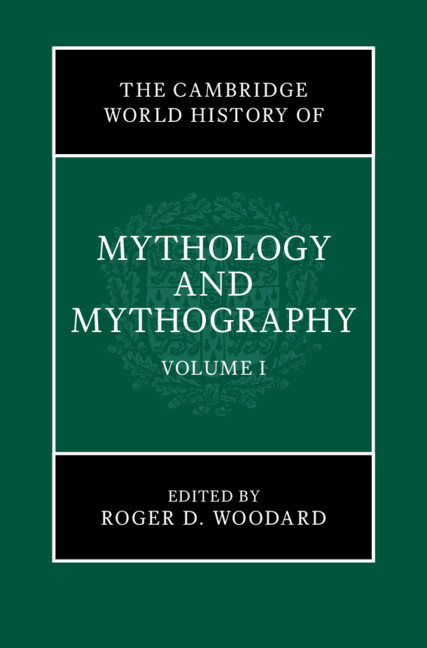
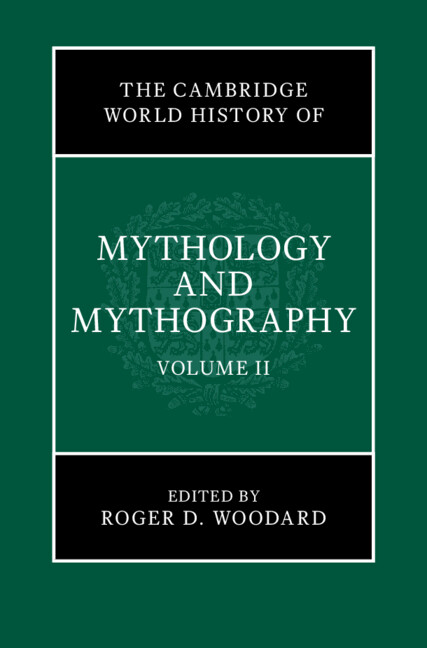
Roger D. Woodard ed. The Cambridge World History of Mythology and Mythography – Cambridge University Press, two volumes, February 2027: volume 1; volume 2
The Cambridge History of Mythology and Mythography offers a comprehensive overview of the history, theory, and practice of mythic analysis. From antiquity to the present day, and from the Americas to Africa, Eurasia, and Oceania, it demonstrates how mythic traditions have played a seminal role in a variety of cultures and civilizations. It also traces the origins and earliest expression of various mythic traditions, their similarities and differences, mutual influences, and their evolution. In addition, this History explores the key roles that literary figures, oral traditionalists, ethnologists, and cinematographers have played in collecting, cataloguing, interpreting, and reinterpreting the mythic traditions. It demonstrates how their work has influenced the transmission and perception of those traditions and enables an appreciation of the similarities and differences between mythological traditions. This comprehensive reference volume also brings an inter- and multi-disciplinary perspective to the topic, revealing how the interaction of various approaches contributes to the study of mythology across the world.
I have a chapter in here on “Benveniste, Dumézil and Indo-European Thought in Twentieth Century France”.