Stephen Connelly, Leibniz: A Contribution to the Archaeology of Power – Edinburgh University Press, March 2021

Stephen Connelly, Leibniz: A Contribution to the Archaeology of Power – Edinburgh University Press, March 2021
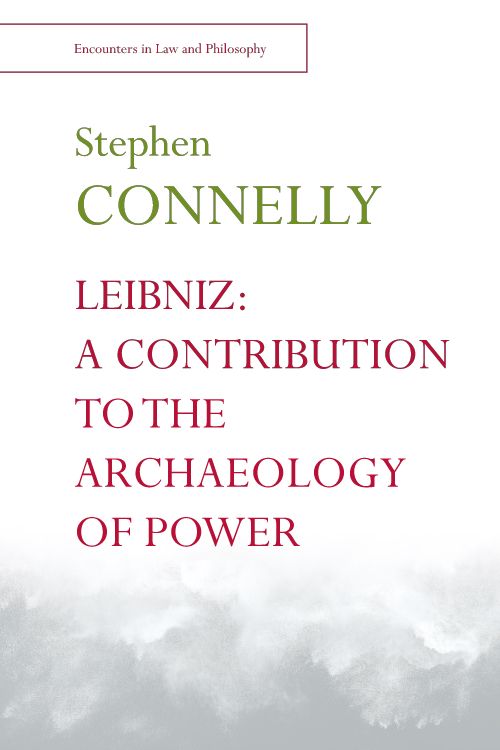
A critical reading of Leibniz’s legal theory, linking law, space and power 

Contributes to an archaeology of power

Investigates the deep link between law, space and power

Provides an overview of key concepts from Scholastic thought which are difficult to find in English

The concept of power has been a major feature of natural law theories. It evolved over the course of several centuries and was arguably the defining notion in both Hobbes’ and Spinoza’s doctrines of natural right. Yet Leibniz appears to effect a reversal in this millennium-long trajectory and demotes power to a derivative term of his philosophy. 

What was the rationale behind this radical change? And what does this reversal mean for the philosophy that follows?

Posted in Baruch Spinoza, Gottfried Leibniz | Leave a comment

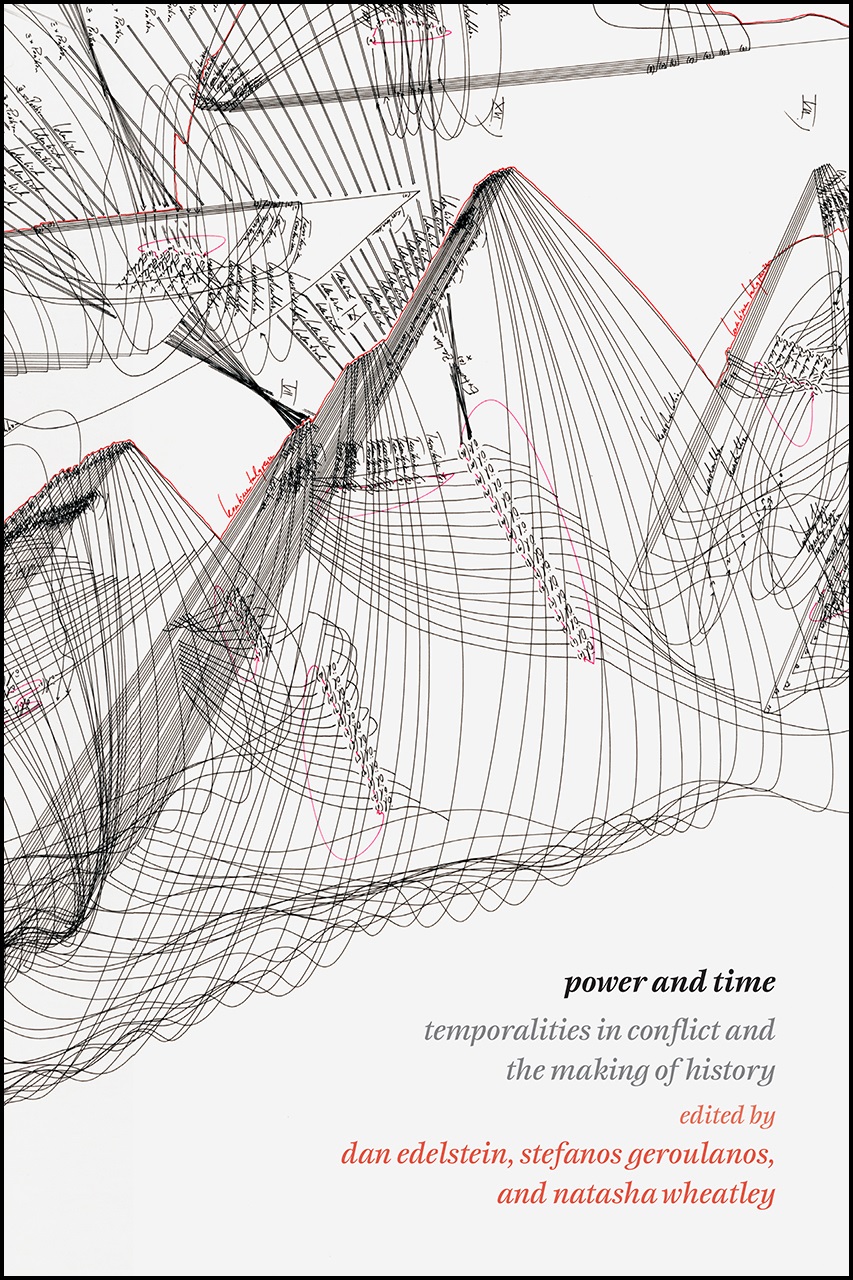
Power and Time: Temporalities in Conflict and the Making of History, edited by Dan Edelstein, Stefanos Geroulanos and Natasha Wheatley – University of Chicago Press, December 2020

Now published

stuartelden's avatarProgressive Geographies

9780226481623Power and Time: Temporalities in Conflict and the Making of History, edited by Dan Edelstein, Stefanos Geroulanos and Natasha Wheatley – University of Chicago Press, December 2020

Time is the backdrop of historical inquiry, yet it is much more than a featureless setting for events. Different temporalities interact dynamically; sometimes they coexist tensely, sometimes they clash violently. In this innovative volume, editors Dan Edelstein, Stefanos Geroulanos, and Natasha Wheatley bring together essays that challenge how we interpret history by focusing on the nexus of two concepts— “power” and “time”—as they manifest in a wide variety of case studies. Analyzing history, culture, politics, technology, law, art, and science, this engaging book shows how “temporal regimes” are constituted through the shaping of power in historically specific ways. Power and Time includes seventeen essays on a wide variety of subjects: human rights; sovereignty; Islamic, European, and Indian history; slavery; capitalism; revolution; the…

View original post 361 more words

Posted in Uncategorized | Leave a comment

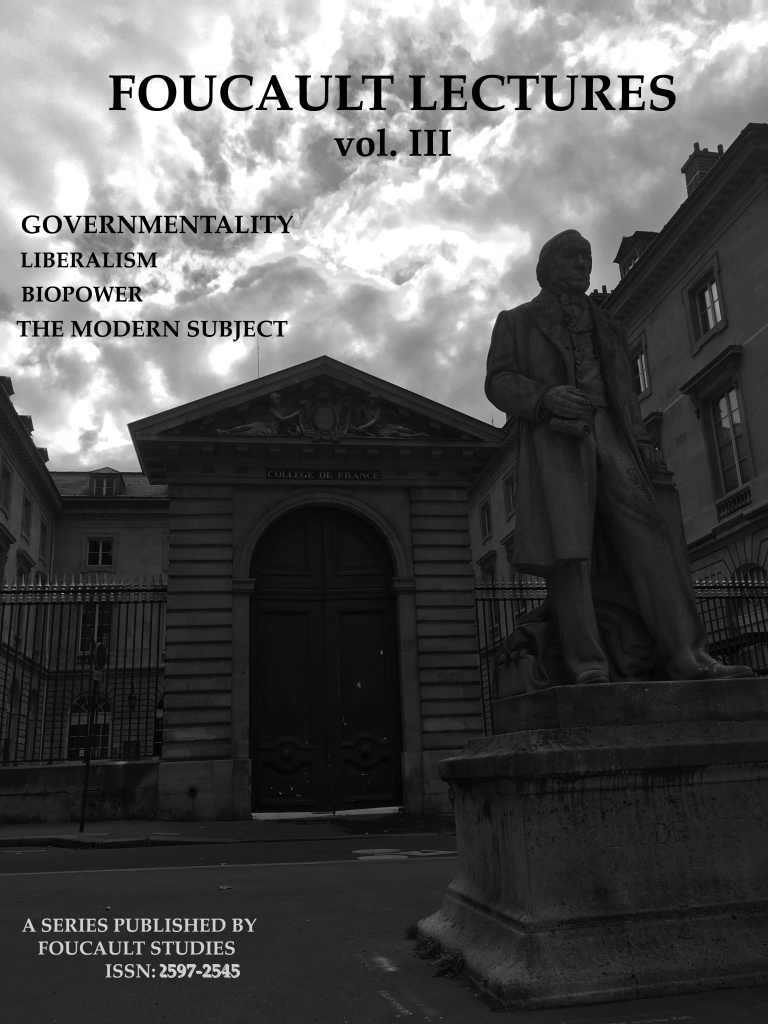
Foucault Studies. New series on Foucault’s lectures (2020)

New series of readings of Foucault’s Collège de France lecture course – all open access.

Clare O'Farrell's avatarFoucault News

Vol III, No 1: Governmentality, Liberalism, Biopower, Genealogy of the Modern Subject.

Foucault’s Lectures at the Collège de France 1978-80 Security, Territory and Population; The Birth of Biopolitics; On the Government of the Living.
Volume III of the Foucault Lecture Series.
Published: 2020-12-16

EDITORIAL [extract]
Sverre Raffnsøe, Alain Beaulieu, Barbara Cruikshank, Knut Ove Eliassen, Marius Gudmand-Høyer, Thomas Götselius, Daniele Lorenzini, Hernan Camilo Pulido Martinez, Johanna Oksala, Clare O’Farrell, Rodrigo Castro Orellana, Eva Bendix Petersen, Alan Rosenberg, Dianna Taylor, Signe Macholm Müller & Asker Bryld Staunæs.

The editors of Foucault Studies are pleased to publish this volume of Foucault Lectures containing three articles, each devoted to discussing one of Foucault’s yearly series of lectures at the Collège de France.

In “The Beginning of a Study of Biopower,” Verena Erlenbusch-Anderson (Syracuse University) centers the attention on Foucault’s 1978 lecture course at the Collège de France entitled Security, Territory…

View original post 272 more words

Posted in Uncategorized | Leave a comment

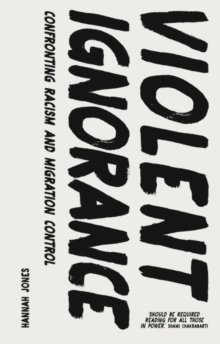
Hannah Jones, Violent Ignorance : Confronting Racism and Migration Control – Zed/Bloomsbury, January 2021 (and virtual book launch on 28 January 2021)

Hannah Jones, Violent Ignorance : Confronting Racism and Migration Control – Zed/Bloomsbury, January 2021

An elected politician is assassinated in the street by a terrorist associated with extreme political groups, and the national response is to encourage picnics.

Thousands of people are held in prison-like conditions without judicial oversight or any time-limit on their sentence.

An attempt to re-assert national sovereignty and borders leads thousands of citizens to register for dual citizenship with other countries, some overcoming family associations with genocide in their second country of nationality to do so. This is life in the UK today. How then are things still continuing as ‘normal’? How can we confront these phenomena and why do we so often refuse to?

What are the practices that help us to accommodate the unconscionable?

How might we contend with the horrors that meet us each day, rather than becoming desensitized to them?Violent Ignorance sets out to examine these questions through an understanding of how the past persists in the present, how trauma is silenced or reappears, and how we might reimagine identity and connection in ways that counter – rather than ignore – historic violence.

In particular Hannah Jones shows how border controls and enforcement, and its corollary, racism and violence, have shifted over time.

Drawing on thinkers from John Berger to Ben Okri, from Audre Lorde to Susan Sontag, the book questions what it means to belong, and discusses how hierarchies of belonging are revealed by what we can see, and what we can ignore.

There is also a virtual book launch

The launch event will be an in-conversation between Hannah Jones and Shami Chakrabarti, followed by a participant Q+A chaired by Nisha Kapoor. It will take place on Thursday, 28th January, 6pm-7.30pm.

It will be a Zoom event, free and open to all but places are limited – register here https://violentignorance.eventbrite.co.uk

Posted in Uncategorized | 1 Comment

Abolition Democracy – 7/13 Beyond the Punitive Society (video)


Center for Contemporary Critical Thought – Columbia University

A Joint Session with The Centre for Research in Post-Kantian European Philosophy at the University of Warwick: Miguel Beistegui, Henrique Carvalho, Stuart Elden, Daniele Lorenzini, Goldie Osuri, Irene Dal Poz, Federico Testa, and Bernard E. Harcourt read and discuss The Punitive Society by Michel Foucault. Opening with a conversation on the play LOCKDOWN with playwright Cori Thomas and Adnan Khan.

Posted in Michel Foucault | Leave a comment

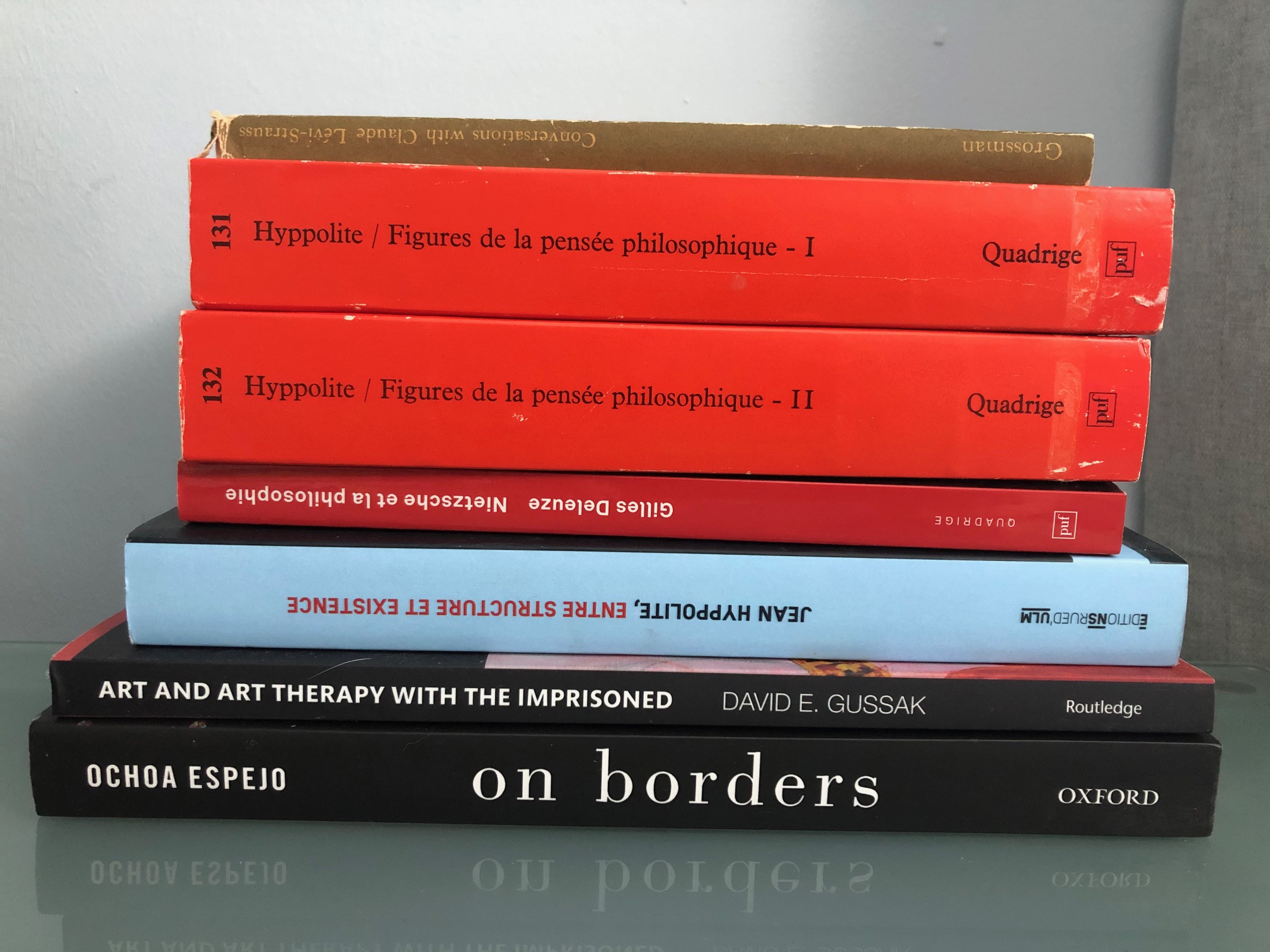
Books received – Lévi-Strauss, Hyppolite, Deleuze, Gussak, Ochoa Espejo

Some books by Lévi-Strauss, Hyppolite and Deleuze, along with Paulina Ochoa Espejo, On Borders: Territories, Legitimacy, and the Rights of Place and David Gussak, Art and Art Therapy with the Imprisoned, sent by the publisher.

Posted in Claude Lévi-Strauss, Gilles Deleuze | Leave a comment

Cristina A. Bejan, Intellectuals and Fascism in Interwar Romania: The Criterion Association – Palgrave, 2019 and discussion at New Books Network

Cristina A. Bejan, Intellectuals and Fascism in Interwar Romania: The Criterion Association – Palgrave, 2019 and discussion at New Books Network with Steven Seegel

In 1930s Bucharest, some of the country’s most brilliant young intellectuals converged to form the Criterion Association. Bound by friendship and the dream of a new, modern Romania, their members included historian Mircea Eliade, critic Petru Comarnescu, Jewish playwright Mihail Sebastian and a host of other philosophers and artists. Together, they built a vibrant cultural scene that flourished for a few short years, before fascism and scandal splintered their ranks. Cristina A. Bejan asks how the far-right Iron Guard came to eclipse the appeal of liberalism for so many of Romania’s intellectual elite, drawing on diaries, memoirs and other writings to examine the collision of culture and extremism in the interwar years. The first English-language study of Criterion and the most thorough to date in any language, this book grapples with the complexities of Romanian intellectual life in the moments before collapse.

Posted in Uncategorized | Leave a comment

Ann Heberlein, On Love and Tyranny: The Life and Politics of Hannah Arendt – Anansi, January 2021

Ann Heberlein, On Love and Tyranny: The Life and Politics of Hannah Arendt – Anansi, translated by Alice Menzies, January 2021

In an utterly unique approach to biography, On Love and Tyranny traces the life and work of the iconic German Jewish intellectual Hannah Arendt, whose political philosophy and understandings of evil, totalitarianism, love, and exile prove essential amid the rise of the refugee crisis and authoritarian regimes around the world. 

What can we learn from the iconic political thinker Hannah Arendt? Well, the short answer may be: to love the world so much that we think change is possible.

The life of Hannah Arendt spans a crucial chapter in the history of the Western world, a period that witnessed the rise of the Nazi regime and the crises of the Cold War, a time when our ideas about humanity and its value, its guilt and responsibility, were formulated. Arendt’s thinking is intimately entwined with her life and the concrete experiences she drew from her encounters with evil, but also from love, exile, statelessness, and longing. This strikingly original work moves from political themes that wholly consume us today, such as the ways in which democracies can so easily become totalitarian states; to the deeply personal, in intimate recollections of Arendt’s famous lovers and friends, including Heidegger, Benjamin, de Beauvoir, and Sartre; and to wider moral deconstructions of what it means to be human and what it means to be humane.

On Love and Tyranny brings to life a Hannah Arendt for our days, a timeless intellectual whose investigations into the nature of evil and of love are eerily and urgently relevant half a century later.

Posted in Uncategorized | Leave a comment

‘From Dynastics to Genealogy’, my contribution to Abolition Democracy 13/13, Beyond the Punitive Society

On 7 January 2021 I’ll be part of a panel discussion for the Abolition Democracy 13/13 series, hosted by Bernard E. Harcourt at the Columbia Center for Contemporary Critical Thought, and co-organised with Daniele Lorenzini of The Centre for Research in Post-Kantian European Philosophy at Warwick. We will be discussing Foucault’s 1972-73 lecture course The Punitive Society. Before the event, which will be live-streamed, participants have been asked to post a short piece about one or more ideas in the course. I’ve written a piece entitled ‘From Dynastics to Genealogy‘, which is a synopsis of a longer piece in progress.

It can be read here, and the other contributions from Goldie Osuri, Daniele Lorenzini, Bernard Harcourt, Rahsaan Thomas and others here. That last link has all the details of how to follow the discussion.

Posted in Bernard E. Harcourt, Michel Foucault | 3 Comments

Novels and biographies read in 2020

A strange year of reading. For long periods I found it very hard to concentrate on reading that wasn’t immediately useful for a writing project or other work task (and even then…). Novels were a particular struggle. I found reading diaries, memoirs and autobiographies a bit easier, and so there are quite a few of those in here. Perhaps this was in part to see how creative work had been done in the past in difficult circumstances.

  • John le Carré, A Legacy of Spies
  • Natalie Haynes, The Children of Jocasta
  • Gillian Rose, Love’s Work (memoir)
  • Michael Joyce, Foucault in Winter, in the Linnaeus Garden
  • Stephen Fry, Mythos
  • Susan Cain, Quiet (non-fiction)
  • Kazuo Ishiguro, Never Let Me Go
  • Elizabeth Gilbert, The Signature of all Things
  • Sven-Erik Liedman, A World to Win: The Life and Works of Karl Marx
  • Rüdiger Safranski, Nietzsche: A Philosophical Biography
  • Christine Leunens, Caging Skies
  • Hermann Broch, The Death of Virgil
  • Alice Jardine, At the Risk of Thinking: An Intellectual Biography of Julia Kristeva
  • Amy Sackville, Painter to the King
  • Michael Scammell, Arthur Koestler: The Indispensable Intellectual
  • Italo Calvino, The Castle of Crossed Destinies
  • Mircea Eliade, Journal I: 1945-1955
  • Mircea Eliade, No Souvenirs: Journal 1957-69
  • Neil Gaiman, Norse Mythology
  • Snorri Sturluson, The Prose Edda (again)
  • Sally Rooney, Normal People
  • Marina Lewycka, A Short History of Tractors in Ukrainian
  • Honoré de Balzac, Eugénie Grandet 
  • Mircea Eliade, The Portugal Journal
  • Howard Eiland and Michael W Jennings, Walter Benjamin: A Critical Life
  • Hilary Mantel, Fludd
  • Philip K Dick, The Man in the High Castle
  • Sue Prideaux, Strindberg – A Life
  • Alastair Davidson, Antonio Gramsci: Towards an Intellectual Biography
  • Mircea Eliade, Ordeal by Labyrinth: Conversations with Claude-Henri Rocquet
  • Maya Jasanoff, The Dawn Watch: Joseph Conrad in a Global World
  • Sid Smith, In the Court of King Crimson: An Observation over 50 Years
  • Julia Kristeva, Hannah Arendt (biography)
  • Jeff Love, The Black Circle: A Life of Alexandre Kojève
  • David Lagercrantz, The Girl who Takes an Eye for an Eye
  • Ahmed Othmani, Beyond Prison (memoir/non-fiction)
  • Peter Salmon, An Event, Perhaps: A Biography of Jacques Derrida
  • Philip Roth, The Plot Against America
  • Claude Lévi-Strauss, Conversations with Didier Eribon
  • Edna O’Brien, The Little Red Chairs
  • Patrick Wilcken, Claude Lévi-Strauss: The Poet in the Laboratory (biography)
  • Michael Palin, North Korea Journal
  • John Schad, The Late Walter Benjamin

When I’ve posted these lists before, I often get questions. Here’s what I’ve said in reply before.

Posted in Uncategorized | Leave a comment