Matthew Hart, Extraterritorial: A Political Geography of Contemporary Fiction – Columbia University Press, August 2020, discussed at New Books Network

Matthew Hart, Extraterritorial: A Political Geography of Contemporary Fiction – Columbia University Press, 2020 is discussed at New Books Network

Extraterritorial: A Political Geography of Contemporary Fiction (Columbia University Press, 2020) explores how texts—literary and visual—help us engage with the space that goes beyond the limits of visible geographical borders and legal regulations. By drawing attention to the loci that produce borderline experiences (detention camps, consulates, international waters), Matthew Hart guides his readers through experiences that ask to reconsider the ways in which geographical places and the implications they produce are perceived. The repercussions of the extraterritorial experiences may include transitional modes for constructing and re-discovering one’s identity. This opens up a broader dimension with which Extraterritorial: A Political Geography of Contemporary Fiction engages. With his book, Hart offers an acute intervention into how a text functions in a globalized community, which entails the reconsideration of how literature and art respond to the twenty-first-century transcultural shifts that are often marked with political anxieties.
Posted in Uncategorized | Leave a comment

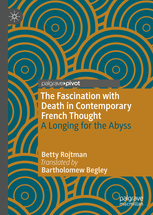
Betty Rojtman, The Fascination with Death in Contemporary French Thought: A Longing for the Abyss – Palgrave Pivot, 2020 – with discussion at New Books

Betty Rojtman, The Fascination with Death in Contemporary French Thought:  A Longing for the Abyss – Palgrave Pivot, 2020 – with discussion at New Books with Renee Garfinkel

This book analyses a cultural phenomenon that goes to the very roots of Western civilization: the centrality of death in our sense of human existence. It does so through a close reading of seminal works by the most creative authors of modern French thought, such as Maurice Blanchot, Jacques Lacan, and Jacques Derrida. These works encode an entire ethics of postmodernism. Betty Rojtman offers the reader a prism through which to see anew the key issues of the twentieth century: tragedy, finitude, nothingness–but also contestation, liberty, and sovereignty. Little by little we understand that this fascination with death may be just the other side of humankind’s great protest, its thirst for the infinite and its desire to be. Finally, Rojtman tries to offer another view on these fundamental questions by shifting to a parallel cultural reference: Kabbalah. 

Thanks to dmf for this link.

Posted in Uncategorized | Leave a comment

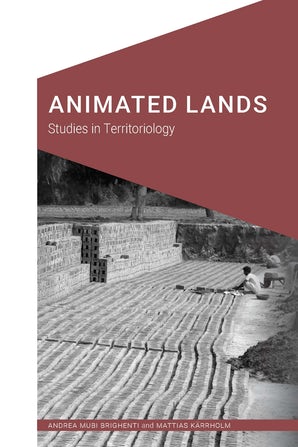
Andrea Mubi Brighenti and Mattias Kärrholm, Animated Lands: Studies in Territoriology – University of Nebraska Press, November 2020

Andrea Mubi Brighenti and Mattias Kärrholm, Animated Lands: Studies in Territoriology – University of Nebraska Press, November 2020

In Animated Lands Andrea Mubi Brighenti and Mattias Kärrholm focus on territory as a living phenomenon—and territoriality as an active and constantly reshaping force. They explore the complexity of territorial production through a series of parallel investigations into fundamental territorial themes, such as rhythm, synchronization, melody, morphogenesis, and animism.

The notion of territory is excavated through case studies including the analysis of urban playgrounds, homemaking, the transformations of urban walls, and the stabilization of peculiar building types such as the house-museum. These empirical examples span such cities as Ahmedabad, Amsterdam, London, and Rome. Animated Lands provides a broad introduction to what a theory of territories could be and how it could help to advance sociospatial studies.

Posted in Uncategorized | Leave a comment

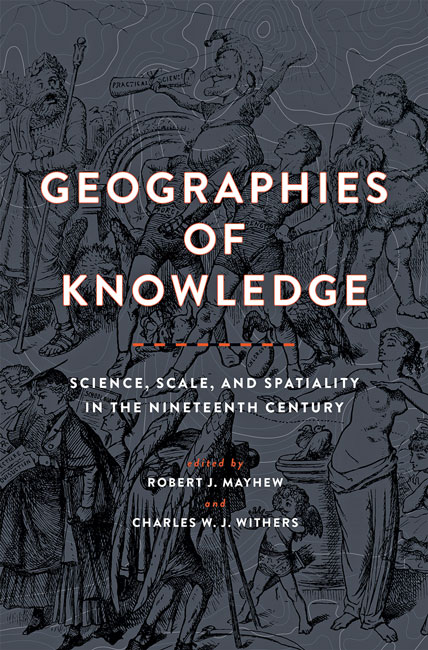
Robert J. Mayhew and Charles W. J. Withers (eds.), Geographies of Knowledge: Science, Scale, and Spatiality in the Nineteenth Century – Johns Hopkins University Press, August 2020

Robert J. Mayhew and Charles W. J. Withers (eds.), Geographies of Knowledge: Science, Scale, and Spatiality in the Nineteenth Century – Johns Hopkins University Press, August 2020

There is a short blog post about the collection here.

Over the past twenty years, scholars have increasingly questioned not just historical presumptions about the putative rise of modern science during the long nineteenth century but also the geographical contexts for and variability of science during the era. In Geographies of Knowledge, an internationally distinguished array of historians and geographers examine the spatialization of science in the period, tracing the ways in which scale and space are crucial to understanding the production, dissemination, and reception of scientific knowledge in the nineteenth century.

Engaging with and extending the influential work of David Livingstone and others on science’s spatial dimensions, the book touches on themes of empire, gender, religion, Darwinism, and much more. In exploring the practice of science across four continents, these essays illuminate the importance of geographical perspectives to the study of science and knowledge, and how these ideas made and contested locally could travel the globe.

Dealing with everything from the local spaces of the Surrey countryside to the global negotiations that proposed a single prime meridian, from imperial knowledge creation and exploration in Burma, India, and Africa to studies of metropolitan scientific-cum-theological tussles in Belfast and in Confederate America, Geographies of Knowledge outlines an interdisciplinary agenda for the study of science as geographically situated sets of practices in the era of its modern disciplinary construction. More than that, it outlines new possibilities for all those interested in knowledge’s spatial characteristics in other periods. 

Contributors: John A. Agnew, Vinita Damodaran, Diarmid A. Finnegan, Nuala C. Johnson, Dane Kennedy, Robert J. Mayhew, Mark Noll, Ronald L. Numbers, Nicolaas Rupke, Yvonne Sherratt, Charles W. J. Withers

Posted in Uncategorized | Leave a comment

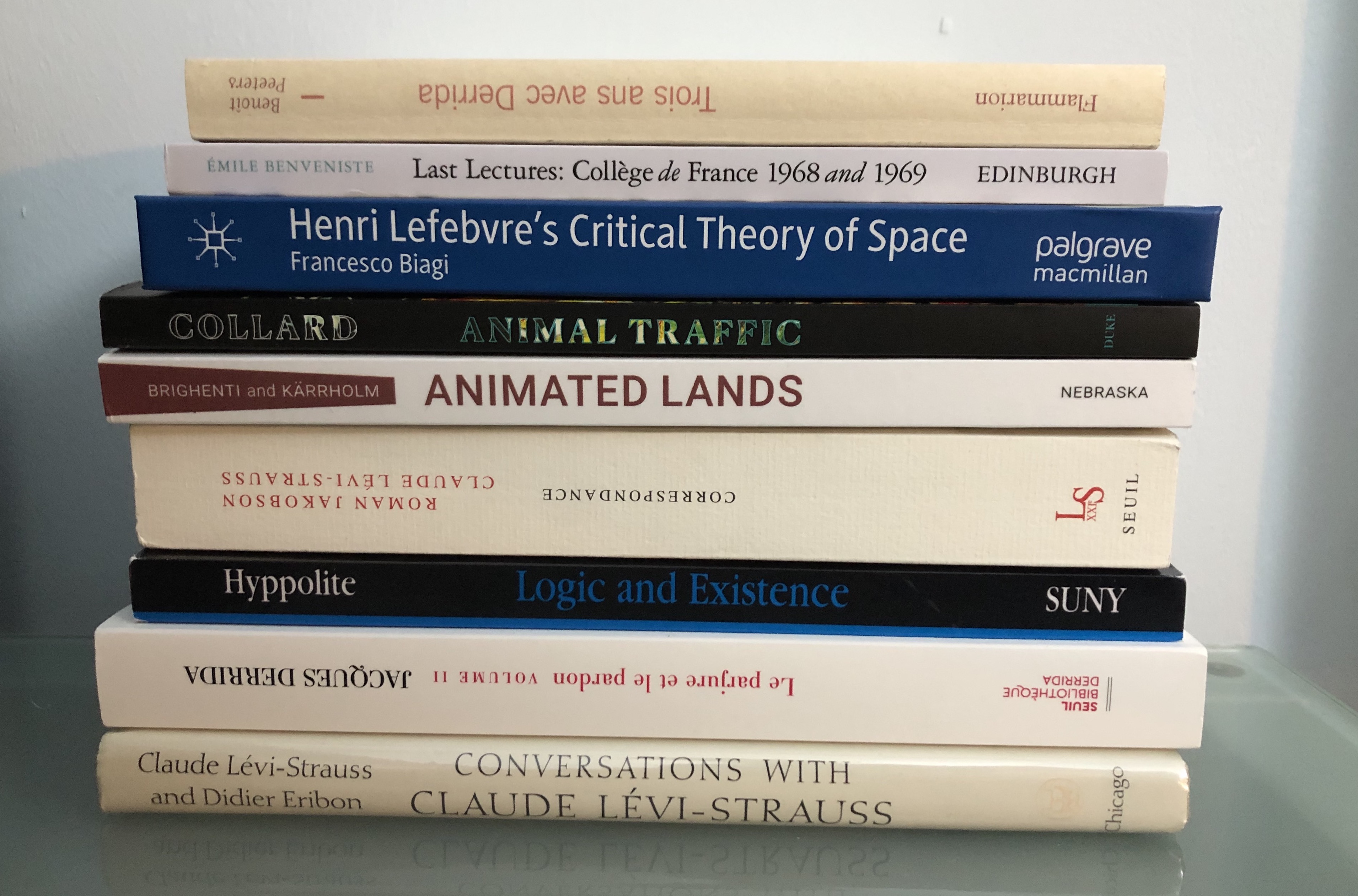
Books received – Peeters, Benveniste, Biagi, Collard, Brighenti & Karrholm, Lévi-Strauss and Jakobson, Hyppolite, Derrida, Lévi-Strauss and Eribon

Alongside some books bought new or second-hand for the Foucault work and related projects, I was sent a copy of Rosemary Clare-Collard, Animal Traffic: Lively Capital in the Global Exotic Pet Trade by the publisher, Animated Lands: Studies in Territoriology by the authors Andrea Mubi Brighenti and Mattias Kärrholm , and Francesco Biagi, Henri Lefebvre’s Critical Theory of Space in recompense for review work.

Posted in Claude Lévi-Strauss, Emile Benveniste, Henri Lefebvre, Jacques Derrida, Roman Jakobson, Territory | Leave a comment

Stuart Hall, Selected Writings on Marxism and Selected Writings on Race and Difference – Duke University Press, April 2021

Stuart Hall, Selected Writings on Marxism and Selected Writings on Race and Difference – Duke University Press, April 2021.

Throughout his career Stuart Hall engaged with Marxism in varying ways, actively rethinking it to address the particular political and cultural exigencies of the moment. This collection of Hall’s key writings on Marxism surveys the formative questions central to his interpretations of and investments in Marxist theory and practice. It includes Hall’s readings of canonical texts by Marx and Engels, Gramsci, and Althusser, his exchanges with other prominent thinkers about Marxism, his use of Marxist frameworks to theorize specific cultural phenomena and discourses, and later period work in which he distanced himself from his earlier attachments to Marxism. In addition, editor Gregor McLennan’s introduction and commentary offer in-depth context and fresh interpretations of Hall’s thought. Selected Writings on Marxism demonstrates that grasping his complex relationship to Marxism is central to understanding the corpus of Hall’s work.

In Selected Writings on Race and Difference, editors Paul Gilroy and Ruth Wilson Gilmore gather more than twenty essays by Stuart Hall that highlight his extensive and groundbreaking engagement with race, representation, identity, difference, and diaspora. Spanning the whole of his career, this collection includes classic theoretical essays such as “The Whites of their Eyes” (1979) and “Race, the Floating Signifier” (1997). It also features public lectures, political articles, and popular pieces that circulated in periodicals and newspapers, which demonstrate the breadth and depth of Hall’s contribution to public discourses of race. Foregrounding how and why the analysis of race and difference should be concrete and not merely descriptive, this collection gives organizers and students of social theory ways to approach the interconnections of race with culture and consciousness, state and society, policing and freedom.

These and other books in the new Duke University Press catalog.

Posted in Stuart Hall | Leave a comment

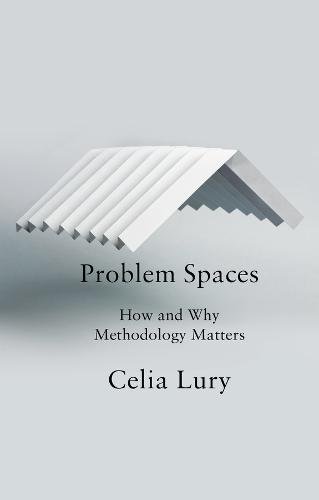
Celia Lury, Problem Spaces: How and Why Methodology Matters – Polity, November 2020

Celia Lury, Problem Spaces: How and Why Methodology Matters – Polity, November 2020

In this innovative book, Celia Lury argues that the time has come for us to explore the world not only with new methods, but with a new approach to methodology itself. Fundamental changes are taking place in how we produce knowledge, how we communicate it and, indeed, what we consider to be knowledge. These changes demand innovative and creative responses to research questions.   

Lury’s rethinking of the nature of social inquiry starts by reconceptualizing the ‘problem space’. Problems are not static or a ‘given’; rather, they are created and continually recomposed as part of the methodological process itself. Following the line of thought that methods are practices that articulate as much as capture a social problem, Lury further develops the notion of compositional methodology to think through its implications. With remarkable fluency, the book draws into conversation a range of hot-button issues, both longstanding and novel, from observation, reflexivity, recursive measurement and feminist methodologies, to participation, context, datafication and platformization.   

Always with an eye to the methodological potential of new trends, the book provides a strong challenge to much received wisdom and argues that a combination of techniques can contribute to better understanding of the problem spaces we all inhabit.

Posted in Uncategorized | Leave a comment

Mark Neocleous, A Critical Theory of Police Power – new edition, Verso, January 2021 [and New Books discussion]

Mark Neocleous, A Critical Theory of Police Power – new edition, Verso, January 2021

[update – discussion of the new edition at the New Books podcast]

Putting police power into the centre of the picture of capitalism

The ubiquitous nature and political attraction of the concept of order has to be understood in conjunction with the idea of police. Since its first publication, this book has been one of the most powerful and wide-ranging critiques of the police power.

Neocleous argues for an expanded concept of police, able to account for the range of institutions through which policing takes place. These institutions are concerned not just with the maintenance and reproduction of order, but with its very fabrication, especially the fabrication of a social order founded on wage labour. By situating the police power in relation to both capital and the state and at the heart of the politics of security, the book opens up into an understanding of the ways in which the state administers civil society and fabricates order through law and the ideology of crime. The discretionary violence of the police on the street is thereby connected to the wider administrative powers of the state, and the thud of the truncheon to the dull compulsion of economic relations.

“If you want to understand the origins and purpose of police powers, and their relation to law, to the state, and to bourgeois social order, there is no better author than Mark Neocleous and no better book than this.”

– David Correia, author of Police: A Field Guide

“Mark Neocleous’s modern classic has never been more timely. The substantial new Introduction takes this pioneering text into the present with a trenchant discussion of recent events and debates. In its coruscating critique of the failures of a liberal response to police power, it is, again, a provocative and urgent intervention.”

– Stuart Elden

“Neocleous explodes the liberal myth that police exist to to keep us safe or to enforce the law. Instead, they constantly reproduce a social order rooted in race and class exploitation at the heart of racial capitalism.”

– Alex Vitale

Posted in Uncategorized | 1 Comment

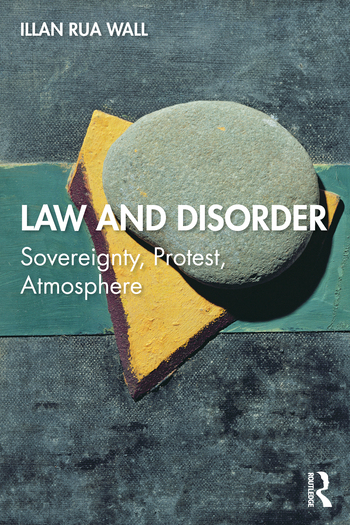
Illan rua Wall, Law and Disorder: Sovereignty, Protest, Atmosphere – Routledge, December 2020

Illan rua Wall, Law and Disorder: Sovereignty, Protest, Atmosphere – Routledge, December 2020

Focusing on the moment when social unrest takes hold of a populace, Law and Disorder offers a new account of sovereignty with an affective theory of public order and protest.
 
In a state of unrest, the affective architecture of the sovereign order begins to crumble. The everyday peace and calm of public space is shattered as sovereign peace is challenged. In response, the state unleashes the full force of its exceptionality, and the violence of public order policing is deployed to restore the affects and atmospheres of habitual social relations. This book is a work of contemporary critical legal theory. It develops an affective theory of sovereign orders by focusing on the government of affective life and popular encounters with sovereignty. The chapters explore public order as a key articulation between sovereignty and government. In particular, policing of public order is exposed as a contemporary mode of exceptionality cast in the fires of colonial subjection. The state of unrest helps us see the ordinary effects of the sovereign order, but it also points to crowds as the essential component in the production of unrest. The atmospheres produced by crowds seep out from the squares and parks of occupation, settling on cities and states. In these new atmospheres, new possibilities of political and social organisation begin to appear. In short, crowds create the affective condition in which the settlement at the heart of the sovereign order can be revisited. This text thus develops a theory of sovereignty which places protest at its heart, and a theory of protest which starts from the affective valence of crowds. 
 
This book’s examination of the relationship between sovereignty and protest is of considerable interest to readers in law, politics and cultural studies, as well as to more general readers interested in contemporary forms of political resistance.

Posted in Uncategorized | Leave a comment

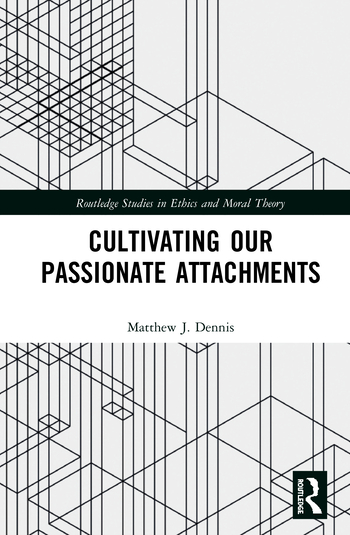
Matthew J. Dennis, Cultivating our Passionate Attachments – Routledge, 2020

Matthew J Dennis, Cultivating our Passionate Attachments – Routledge, 2020

Does a flourishing life involve pursuing passionate attachments? Can we choose what these passionate attachments will be? This book offers an original theory of how we can actively cultivate our passionate attachments. The author argues that not only do we have reason to view passionate attachments as susceptible to growth, change, and improvement, but we should view these entities as amenable to self- cultivation. He uses Pierre Hadot’s and Michel Foucault’s accounts of Hellenistic self-cultivation as vital conceptual tools to formulate a theory of cultivating our passionate attachments. First, their accounts offer the conceptual resources for a philosophical theory of how we can cultivate our passionate attachments. Second, the exercises of self- cultivation they focus on allow us to outline a practical method though which we can cultivate our passionate character. Doing this brings out a significantly new dimension to the role of the passionate attachments in the flourishing life and offers theoretical and practical accounts of how we can cultivate them based on the Hellenistic conception of self-directed character change.

Cultivating Our Passionate Attachments will be of interest to advanced students and scholars working in virtue ethics, moral philosophy, and ancient philosophy.

Posted in Uncategorized | 1 Comment