What matters isn’t your writing software, it’s your file structures (sorry!)

Some interesting reflections on organisation for a large writing project.

Katherine Firth's avatarResearch Degree Insiders

Thanks to Anuja Cabraal who asked this question! It’s about 2,500 words of answer, so this is absolutely a Definitive Guide. A few of the technical details here I also discuss in my earlier blog, ‘Three secrets in MSWord that will supercharge your productivity‘, but this is a lot more comprehensive!

People often ask me about my writing software, and it’s an ever-popular question for new and long-term researchers. When we spend so much time writing and editing, it’s essential that we use tools that support us to be effective. What’s more, so many programs now make jobs quick and easy that used to take hours of focussed labour: from finding secondary literature, accessing archives, formatting references, finding themes in NVivo, making graphs, editing images, running complex equations, formatting documents, finding spelling and grammar issues… surely there’s a software that basically writes the thesis for you? Sadly…

View original post 2,406 more words

Posted in Uncategorized | Leave a comment

John Agnew ed. The Confines of Territory – Routledge, November 2020

9780367560706John Agnew ed. The Confines of Territory – Routledge, November 2020

A collection of papers from Territory, Politics, Governance, edited by John Agnew, the former editor of the journal. Pleased to have one of my articles in here (original available here). Only an expensive hardback at present, unfortunately.

The word ‘territory’ has taken on renewed significance in a world where its close association with state sovereignty has made a serious comeback, invoked alike by proponents of Brexit in the UK, ‘Making America Great Again’ in the USA, and myriad populists from India to Brazil by way of Italy and Hungary. The word has had a contentious history in social science and political theory. In its first seven years, the journal Territory, Politics, Governance has published numerous articles examining the ways in which territory figures into contemporary political debates and its limits as a concept when applied to a world in which sovereignty never has simply pooled up within self-evidently distinctive blocs of space named as ‘territories.’ Among other things, the limits of territory are apparent in terms of the history of a global capitalism that always bursts beyond established boundaries, the fact that some states are much more powerful and exercise much more spatial reach than do others, and that the political uses of territory in its current usage date back predominantly to seventeenth century Europe rather than being historically transcendental or worldwide.

The articles in this book are selected from Territory, Politics, Governance to survey many of the dilemmas and questions that haunt the concept of territory even as its current efflorescence in political discourse ignores them.

Table of Contents
1. Introduction

John Agnew

Section 1: Territorial Perspectives

2. The territorialization of property in land: space, power and practice

Nicholas Blomley

3. Territory, Scale and Why Capitalism Matters

Kevin R. Cox

4. Territory, Politics, Governance and Multispatial Metagovernance

Bob Jessop

5. On the ecological blindspot in the territorial rights debate

Omar Dahbour

Section 2: Interrogating Territory

6. When Territory Deborders Territoriality

Saskia Sassen

7. Taking back control? The myth of territorial sovereignty and the Brexit fiasco

John Agnew

8. How Should We Do the History of Territory?

Stuart Elden

Section 3: Confines of Territory

9. Revisiting politicide: state annihilation in Israel/Palestine

Merav Amir

10. The intertwined geopolitics and geoeconomics of hopes/fears: China’s triple economic bubbles and the ‘One Belt One Road’ imaginary

Ngai-Ling Sum

11. Territories in contestation: relational power in Latin America

Nick Clare, Victoria Habermehl and Liz Mason-Deese
Posted in Bob Jessop, John Agnew, Saskia Sassen, Uncategorized | Leave a comment

Verso Book Club launched – subscription service to receive print and e-books

Book_Club_July-Verso Book Club launched – three levels of subscription, from e-book access to e-book and some physical copies a month, to e-book and more physical copies a month. A good way to support this press at this difficult time for publishing. All levels give a 50% discount for all Verso books.

In our 50th year, we are excited to announce the Verso Book Club! Join now and get every new ebook that we publish, as well as one or more new books in the mail if you choose a print subscription. All Book Club members will also get 50% off everything on our website, for as long as you are a subscriber. To celebrate our 50th year of radical publishing and the launch of our book club, each member tier is 50% off for the first three months.

You can choose between three options: the Verso Reader digital subscription, Verso Subscriber for print and digital, and Verso Comrade to receive even more books in the mail (including one new work of politics or theory every month, as well as the occasional classic from Verso’s backlist). Learn more about the different member options here.

Every month we’ll offer a carefully curated selection of our best new titles, across a wide range of topics and subject areas, to bring you books that everyone at Verso regards as essential reading. In mid-July, we’ll email all members with more details about the August book club selection—including a letter from the editor—so that you can choose which one you want to receive, any time before the end of the month.

Posted in Uncategorized | Leave a comment

The rush to claim an undersea mountain range (BBC News)

The rush to claim an undersea mountain range (BBC News)

Interesting piece on the Lomonosov Ridge between Siberia, Greenland and Canada. Klaus Dodds, Phil Steinberg and Ingrid Medby all interviewed.

Screenshot 2020-07-27 at 09.14.29

Posted in Boundaries, terrain, Territory, Uncategorized | Leave a comment

Laleh Khalili and Rowland Atkinson – global flows of capital, commodities and people (video)

Laleh Khalili and Rowland Atkinson – global flows of capital, commodities and people (video, via The Gamming)

As part of Verso Live events, Rowland Atkinson (author of Alpha City) and Laleh Khalili (author of Sinews of War and Trade) in conversation about global flows of capital, commodities and people.

Posted in Uncategorized | Leave a comment

Historians Call for a Review of Home Office Citizenship and Settlement Test

Historians call for a review of UK Home Office Citizenship and Settlement test

Historical Association's avatarHistory blog archive

21 July 2020

Historians Call for a Review of Home Office Citizenship and Settlement Test

We are historians of Britain and the British Empire and writing in protest at the on-going misrepresentation of slavery and Empire in the “Life in the UK Test”, which is a requirement for applicants for citizenship or settlement (“indefinite leave to remain”) in the United Kingdom. The official handbook published by the Home Office is fundamentally misleading and in places demonstrably false. For example, it states that ‘While slavery was illegal within Britain itself, by the 18th century it was a fully established overseas industry’ (p.42). In fact, whether slavery was legal or illegal within Britain was a matter of debate in the eighteenth century, and many people were held as slaves. The handbook is full of dates and numbers but does not give the number of people transported as slaves on British ships (over…

View original post 2,734 more words

Posted in Uncategorized | Leave a comment

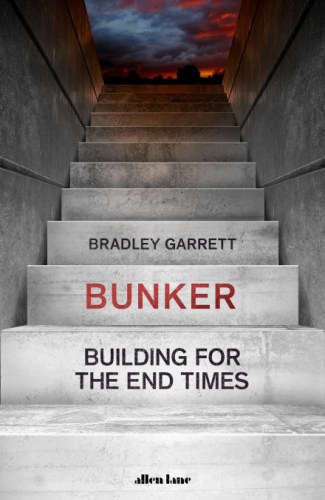
Bradley Garrett, Bunker: Building for the End Times – Allen Lane, August 2020 (and Guardian article)


imageBradley Garrett, Bunker: Building for the End Times – Allen Lane, August 2020

Update: see also this piece in The Guardian

Bunker is an extraordinary achievement; a big-thinking, deep-diving, page-turning study of fear, privilege and apocalypse told through the space of the bunker. Garrett has written a gripping, grim, witty work of geography and ethnography, which he completed – with eerie timeliness – in the first weeks of the COVID pandemic. A book about prepping and prognostication, then, which had already foretold its own future’ Robert MacFarlane

Today, the bunker has become the extreme expression of our greatest fears: from pandemics to climate change and nuclear war. And once you look, it doesn’t take long to start seeing bunkers everywhere.

In Bunker, acclaimed urban explorer and cultural geographer Bradley Garrett explores the global and rapidly growing movement of ‘prepping’ for social and environmental collapse, or ‘Doomsday’. From the ‘dread merchants’ hustling safe spaces in the American mid-West to eco-fortresses in Thailand, from geoscrapers to armoured mobile bunkers, Bunker is a brilliant, original and never less than deeply disturbing story from the frontlines of the way we live now: an illuminating reflection on our age of disquiet and dread that brings it into new, sharp focus.

The bunker, Garrett shows, is all around us: in malls, airports, gated communities, the vehicles we drive. Most of all, he shows, it’s in our minds.

Posted in Uncategorized | 1 Comment

The History of Verso Books with Tariq Ali and Sebastian Budgen (video)

The History of Verso Books – very interesting discussion between Tariq Ali and Sebastian Budgen, which also covers the history of New Left Review, the publishing house New Left Books which became Verso, and the history of the British left more generally. Right at the end there is a discussion of the books they should have published, including one modern classic that they turned down…

Posted in Uncategorized | Leave a comment

Topical map of COVID-19 social research literature

This looks a very useful resource on the academic literature. My own list continues to be updated – https://progressivegeographies.com/resources/geographers-sociologists-philosophers-etc-on-covid-19/

Deborah Lupton's avatarThis Sociological Life

I have been busy checking out the explosion of peer-reviewed articles published recently in social science journals on the COVID crisis. I located over 120 such articles, and have conducted a rapid topic mapping process to support my own COVID-related research.

In case anyone else might find this document useful, it can be accessed here: Lupton – Map of Social Research on COVID 19 July 2020 (updated version 20 July 2020).

View original post

Posted in Uncategorized | Leave a comment

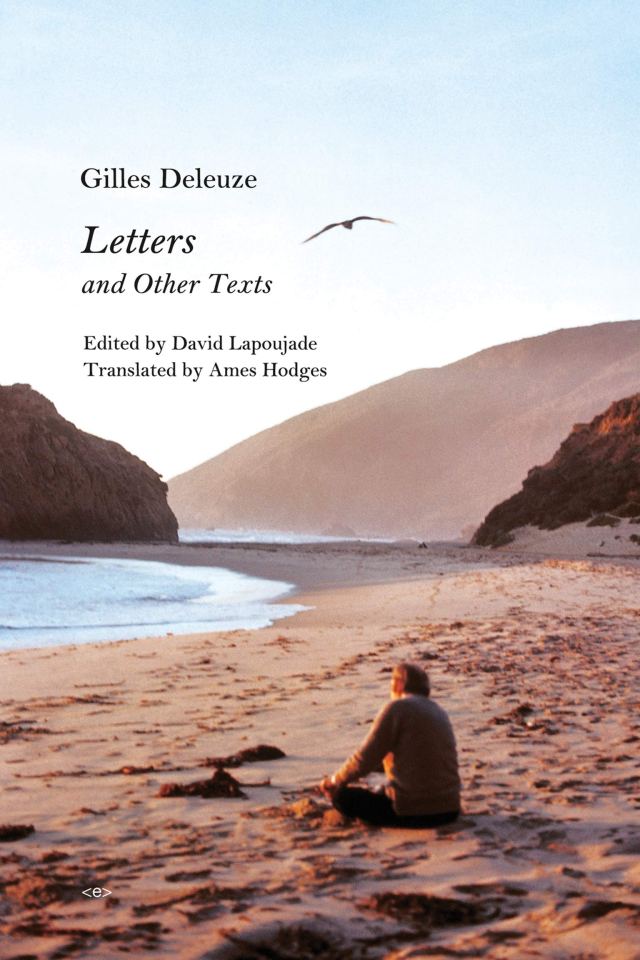
Gilles Deleuze, Letters and Other Texts (Semiotext(e)) June 23, 2020

Deleuze’s Letters and Other Texts translated into English.

Thomas Nail's avatarThe Philosophy of Movement

81yr--rqvLL.jpg

A posthumous collection of writings by Deleuze, including letters, youthful essays, and an interview, many previously unpublished.

Letters and Other Texts is the third and final volume of the posthumous texts of Gilles Deleuze, collected for publication in French on the twentieth anniversary of his death. It contains several letters addressed to his contemporaries (Michel Foucault, Pierre Klossowski, François Châtelet, and Clément Rosset, among others). Of particular importance are the letters addressed to Félix Guattari, which offer an irreplaceable account of their work as a duo from Anti-Oedipus to What is Philosophy? Later letters provide a new perspective on Deleuze’s work as he responds to students’ questions.

his volume also offers a set of unpublished or hard-to-find texts, including some essays from Deleuze’s youth, a few unusual drawings, and a long interview from 1973 on Anti-Oedipus with Guattari.

___________________________________________

Congratulations to David L. This looks like a great…

View original post 28 more words

Posted in Uncategorized | 1 Comment