Heliana de Barros Conde Rodrigues, Michel Foucault au Brésil: Présence, effets, résonances – Harmattan, 2020


Heliana de Barros Conde Rodrigues, Michel Foucault au Brésil: Présence, effets, résonances – Harmattan, 2020 This is a translation of a Portguese study which I’ve mentioned here before – Ensaios sobre Michel Foucault no Brasil: Presença, efeitos, ressonâncias (Lamparina 2016).

Thanks to Adalbert Saurma for the link.

L’ouvrage enquête sur les cinq visites de Michel Foucault au Brésil, entre 1965 et 1976. Le philosophe visita alors São Paulo, Rio de Janeiro, Belo Horizonte, Salvador, Recife et Belém. Michel Foucault a laissé une trace profonde dans le Brésil de la dictature militaire. Les objectifs de cette recherche comprennent une audiographie de la présence du Foucault-corps au Brésil, ainsi qu’une analyse critique de la primauté conférée à quelques procédures, catégories, problématiques et concepts foucaldiens par les intellectuels et militants brésiliens.

The original book was reviewed by Marcelo Hoffman as In the Shadow of Dictatorship: Foucault in Brazil at the Theory, Culture & Society website. Marcelo also edited a theme issue of Carceral Notebooks on Foucault and the politics of resistance in Brazil, vol. 13, 2017 (open access).


Posted in Michel Foucault, Uncategorized | 1 Comment

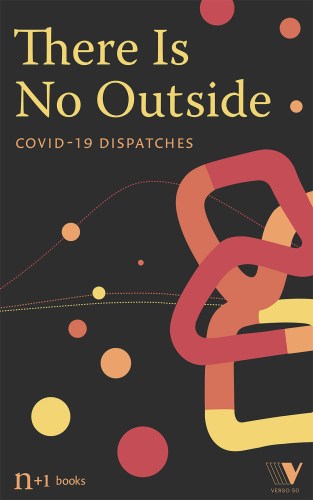
There Is No Outside: Covid-19 Dispatches -a FREE ebook collection from Verso and ⁦‪@nplusonemag‬⁩, edited by Jessie Kindig, Mark Krotov, and Marco Roth

200507-NoOutside-draft2There Is No Outside: Covid-19 Dispatches -a FREE ebook collection from Verso and ⁦‪@nplusonemag‬⁩‬⁩, edited by Jessie Kindig, Mark Krotov, and Marco Roth.

An urgent collection of essays on the global pandemic, from n+1 and Verso Books

A collaboration between the renowned magazine of literature and politics, n+1, and Verso Books, this collection tracks the course of Covid-19 across the circuits of global capital to New York’s prisons and emergency rooms, Los Angeles’s homeless encampments, and the migrant camps in Greece; and into the intimate spaces of our homes, our ideas of how to live, and into our bodies and cells.

We hear from sex workers without work and sailors quarantined on their ships, witness the pandemic from the quiet devastation of upstate New York and quarantined Rome as well as the streets of Delhi, Kashmir, and London and the emergency room of a New York City hospital. From some of the most exciting and thoughtful young writers around the globe, There Is No Outside explores the unspooling wreckage of Covid-19 and helps us on what might come in the aftermath.

With contributions from Andrew Liu, Rachel Ossip, Gabriel Winant, Francesco Pacifico, Sarah Resnick, Teresa Thornhill, Shigraf Zahbi, Debjani Bhattacharyya, Banu Subramaniam, Mark Krotov, Karim Sariahmed, Ana Cecilia Alvarez, Jack Norton, Laleh Khalili, Aaron Timms, Sonya Aragon, Sean Cooper, Chloe Aridjis, and Marco Roth, and with an introduction by Jessie Kindig.

Posted in Uncategorized | Leave a comment

Faut-il brûler… Sade, Dumézil, Heidegger, Kafka – a question on the use of a trope [updated]

Updated with some comments from two blog readers – that there was an earlier question of Faut-il brûler le Louvre, and a later use of the term, with a suggestion of a longer historical lineage.

stuartelden's avatarProgressive Geographies

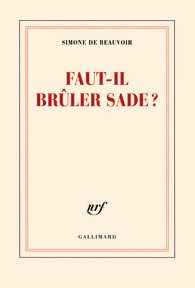
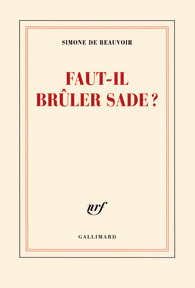
product_9782070135004_195x320I had previously thought that the use of the expression ‘Faut-il brûler… ?’ – ‘must we burn.. ?’ someone or something was due to Simone de Beauvoir. Her text Faut-il brûlerSade? first appeared in Les temps modernes in 1951 and 1952, and was then collected in Privilèges in 1955 and later reprinted with the essay title as that of the book.

There is a book by Didier Eribon called Faut-il brûler Dumézil? (1992) and an essay by Thomas Sheehan entitled ‘L’affaire Faye: Faut-il brûler Heidegger?‘ from 2016. I’m sure there are many more.

I’m uncomfortable with the use of the term ‘burn’, given the legacy of actual book burnings, though that is presumably part of the point of its use. But today I realised that Maurice Merleau-Ponty wrote a short piece entitled ‘Faut-il brûler Kafka’, which was first published in Action in 1946. It is collected in his

View original post 607 more words

Posted in Uncategorized | 1 Comment

Nina Power and Justin Murphy, Introduction to Bataille – video beginning an online course

Nina Power and Justin Murphy, Introduction to Bataille – video beginning an online course. More details on the course here – thanks to Jeremy Crampton for the links.

Posted in Georges Bataille, Nina Power, Uncategorized | 1 Comment

Michael Wood and Adam Shatz, The Theory Truce, LRB conversations (podcast)

Michael Wood and Adam Shatz, The Theory Truce, LRB conversations (podcast)

Michael Wood talks to Adam Shatz about critical theory, its origins, developments and various diversions, and where it stands today.

The conversation marks the publication of the eighth volume in the LRB Collections series, The Meaninglessness of Meaning: Writing about the theory wars from the ‘London Review of Books’ by contributors including Pierre Bourdieau, Judith Butler, Richard Rorty, Lorna Sage, John Sturrock and Michael Wood.

Click here to buy the book from the LRB Store.

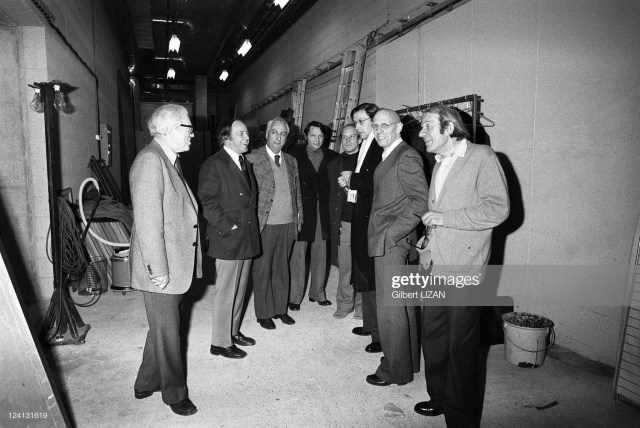
Thanks to dmf for the link. To illustrate, the LRB uses this photo, found in Marie Gil’s biography of Barthes and at Getty Images:

gettyimages-124131619-2048x2048

I previously shared this photo, and with a bit of help, identified the figures as left to right – Elliot Carter, Pierre Boulez, Roland Barthes, Jean-Claude Risset, Gerald Bennett, Michel Decoust, Michel Foucault, and Gilles Deleuze.

Posted in Gilles Deleuze, Michel Foucault, Roland Barthes, Uncategorized | 1 Comment

Anna Krakus and Cristina Vatulescu, “Foucault in Poland: A Secret Archive”, Diacritics, 2020 (open access at present)

front_coverAnna Krakus and Cristina Vatulescu, “Foucault in Poland: A Secret Archive“, Diacritics, Vol 47 No 2, 2020.

It seems to be open access at present. It’s a great piece on an important year in Foucault’s life – I was lucky enough to see a version before publication.

Michel Foucault relished telling a Cold War story: in 1959, the Polish secret police “trapped him by using a young translator” and then “demanded his departure” from Poland, where he had arrived less than a year before as director of the French Cultural Center. This article investigates the archival traces surrounding this honey trap story, as well as the many baffling and instructive archival silences. Our research in French and Polish archives, including the former secret police archives, tracks the vertiginous relationships between documents, events, non-events, rumors, and ellipses. We use the Foucault in (and especially out of) Poland story as a window onto the intersection of Western and Eastern surveillance and archive theories and practices. The most influential Western theorist of surveillance believed that his writing and sexuality made him the target of Eastern Bloc surveillance. The groundbreaking theorist and lover of archives suspected himself inscribed in Eastern Bloc secret police archives. Ultimately, the narrative of this search, with particular attention paid to archival silences, leads us to a reevaluation of Foucault’s archival theory as well as of our understanding of Soviet era secret police archives and surveillance practices.


Posted in Michel Foucault, Uncategorized | 1 Comment

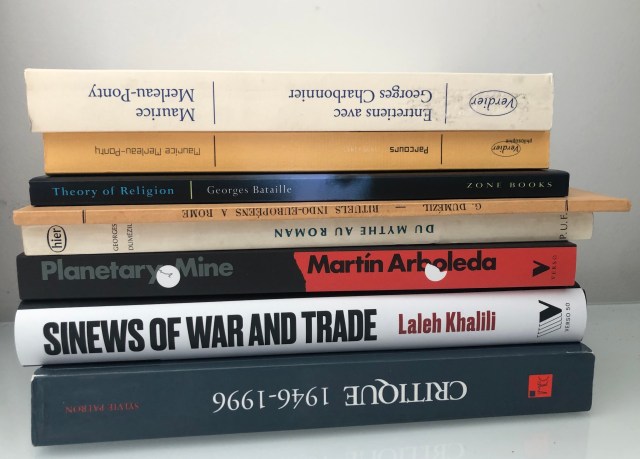
Books received – Merleau-Ponty, Bataille, Dumézil, Arboleda, Khalili, Patron

IMG_3320Second-hand books by Merleau-Ponty, Bataille and Dumézil; Martin Arboleda, Planetary Mine and Laleh Khalili, Sinews of War and Trade from the Verso sale; and Sylvie Patron, Critique 1946-1996.

Posted in Georges Bataille, Georges Dumézil, Maurice Merleau-Ponty, Uncategorized | Leave a comment

Faut-il brûler… Sade, Dumézil, Heidegger, Kafka – a question on the use of a trope [updated]

product_9782070135004_195x320I had previously thought that the use of the expression ‘Faut-il brûler… ?’ – ‘must we burn.. ?’ someone or something was due to Simone de Beauvoir. Her text Faut-il brûler Sade? first appeared in Les temps modernes in 1951 and 1952, and was then collected in Privilèges in 1955 and later reprinted with the essay title as that of the book.

There is a book by Didier Eribon called Faut-il brûler Dumézil? (1992) and an essay by Thomas Sheehan entitled ‘L’affaire Faye: Faut-il brûler Heidegger?‘ from 2016. I’m sure there are many more.

I’m uncomfortable with the use of the term ‘burn’, given the legacy of actual book burnings, though that is presumably part of the point of its use. But today I realised that Maurice Merleau-Ponty wrote a short piece entitled ‘Faut-il brûler Kafka’, which was first published in Action in 1946. It is collected in his Parcours 1935-1951. Merleau-Ponty was one of the editors of Les temps modernes, so de Beauvoir’s title was surely a nod towards this. [Just to clarify, the title/question was possibly that of the journal, to which Merleau-Ponty and others were responding.]

Was the phrase used before Merleau-Ponty in this sense? I’m interested in any examples from before him, or between him and de Beauvoir, but specifically in relation to an author whose works are debatable, and I think all in these examples it is where it is their right-wing or reactionary politics is at stake – a reversal of from the book burnings of the 1930s and 1940s.

Update: Cesare Birignani writes about this, which I share with permission:

Dear Stuart,
The “faut-il brûler” trope may be an echo of an “enquête” launched in 1920 by “L’Esprit nouveau,” the journal founded by the painter Amédée Ozenfant and Charles-Edouard Jeanneret, who began there to use the pseudonym Le Corbusier. The journal asked its readers a deadpan, Dadaist question: “Doit-on brûler le Louvre?” (no. 2, Nov. 1920). Responses came from at least three dozen readers (a mix of artists, gallerists, art critics, and writers) and were published with the title “Faut-il brûler le Louvre?” (nos. 6 and 8, March and May 1921). (The “enquête” is attached; the full journal is at http://arti.sba.uniroma3.it/esprit/)
This is probably a bit of a stretch, but there may be a “L’Esprit nouveau”-“Les Temps modernes” connection through Jean Paulhan, who knew Le Corbusier since at least 1938 (and possibly much earlier) and in July 1945 went on a trip to Switzerland with Le Corbusier and Jean Dubuffet.
All the best,
Cesare Birignani

“Enquête: Doit-on brûler le Louvre?” L’Esprit nouveau, no. 2 (Nov. 1920), unpaginated [last page of the issue, right before the advertisements]

“Réponses à notre enquête: Faut-il brûler le Louvre?” L’Esprint nouveau, no. 6 (March 1921), pp. 1-8 [inserted after p. 718]
(with responses by Charles Lalo, Amelia Defries, Paul Bonifas, Marguerite Miraillet, Jacques Fouquet, Georges Carette, Jean Françis Laglenne, Pierre Bohin, Benvenuto, Paul Budry, Juan Gris, Pierre Aveline, Paul Molnar-Contat, Fernand Divoire, Maurice Raynal, Léonce Rosenberg, Ch. Tenroc, Belvol, Jean Violier, Henri J. Pierre, André Lévy, D. Kakabadze, Solé de Sojo, Jules Roblin, Georges Celly, I.-R. Rimbert, Armand Salanou)

“Réponses à notre enquête (Fin): Faut-il brûler le Louvre?” L’Esprit nouveau, no. 8 (May 1921), pp. 960-962
(with responses by Louis Emie, Camille Mathy, Michele Gascella, Henri Heimick, Vincent Huidobro, René-Louis Doyon, Georges d’Ago, Auguste Lumière, Alfons Maseras, Andry-Farcy)

Update 2: another reader writes:

As it is the case most of the time in our correspondence, I can only contribute marginally. In your last mail you recommended Tiphaine Samoyault’s biography of Roland Barthes – thanks a lot! – & I’m currently reading it (German edition, Berlin 2015: Suhrkamp). In chapter 11 (title: “Literatur”, subchapter: “Barthes erklärt sich”) Samoyault writes about the Racine debate between Barthes & Picard. In this context, I’ve just read: “Das Buch [Critique et Vérité] erscheint im März, knapp sechs Monate nach dem von Picard, mit einer werbewirksamen Banderole: ‘Muss man Barthes verbrennen?’ (p. 508, emphasis added). This is 20 years after Merlau-Ponty’s use of the trope & what might be interesting is that the use here has become (self)ironic & a mere device for selling books.

And he follows up:

In the French case, book burnings seem to have a special political impact since the Revolution. So, perhaps the use of the trope after 1945 is not so much to be seen in reaction to right-wing book burnings in the first half of the 20th century but rather in the historical continuity of left politics & rhetoric in France?

Posted in Georges Dumézil, Martin Heidegger, Maurice Merleau-Ponty, Simone de Beauvoir, Uncategorized | 1 Comment

Keith Thomas on the working methods of a historian (archive)

This wonderful piece is back open access as part of the LRB’s archive.

stuartelden's avatarProgressive Geographies

Keith Thomas on the working methods of a historian – archive piece from the LRB.

I shared this back in the early days of this blog, but I came across it again today, and it’s worth another read.

View original post

Posted in Uncategorized | 1 Comment

Michel Foucault, Confessions of the Flesh: History of Sexuality Volume IV, translated by Robert Hurley – Penguin January 2021

9781524748036Michel Foucault, Confessions of the Flesh: History of Sexuality Volume IV, translated by Robert Hurley, edited by Frédéric Gros – Penguin January 2021

Long awaited news of the English translation of this text, first published in French in early 2018.

Brought to light at last–the fourth volume in the famous History of Sexuality series by one of the most influential thinkers of the twentieth century, his final work, which he had completed, but not yet published, upon his death in 1984

Michel Foucault’s philosophy has made an indelible impact on Western thought, and his History of Sexuality series–which traces cultural and intellectual notions of sexuality, arguing that it is profoundly shaped by the power structures applied to it–is one of his most influential works. At the time of his death in 1984, he had completed–but not yet edited or published–the fourth volume, which posits that the origins of totalitarian self-surveillance began with the Christian practice of confession. This is a text both sweeping and deeply personal, as Foucault–born into a French Catholic family–undoubtedly wrestled with these issues himself. Since he had stipulated “Pas de publication posthume,” this text has long been secreted away. However, the sale of the Foucault archives in 2013–which made this text available to scholars–prompted his nephew to seek wider publication. This attitude was shared by Foucault’s longtime partner, Daniel Defert, who said, “What is this privilege given to Ph.D students? I have adopted this principle: It is either everybody or nobody.”

Thanks to James Stanescu for the link. My review essay on the French text is here; other links and reports here.

Posted in Michel Foucault, Uncategorized | 3 Comments