Romanic Review theme issue: – “Category Crossings: Bruno Latour and Medieval Modes of Existence” – freely available online for three months

m_coverimageRomanic Review theme issue: – “Category Crossings: Bruno Latour and Medieval Modes of Existence” – freely available online for three months

Bruno Latour’s philosophical project has long been conceived as a critique of modernity, starting with Enlightenment dualisms (nature/culture, words/things, sacred/secular) and extending to the Cyber Age’s promise of unmediated access to knowledge (what Latour calls “Double Click”). The contributors to “Category Crossings,” guest-edited by Marilynn Desmond and Noah D. Guynn, consider the relevance of Latour’s critique for the study of the medieval premodern and ask how his call for a renewal of metaphysics—and for a diplomatic encounter between the various modes of existence—might be used to defamiliarize modern intellectual habits. Read the issue, free for three months, here.

More details here.

Posted in Uncategorized | Leave a comment

Online launch of “Critical Zones” exhibition at ZKM (video and links)

Online launch of “Critical Zones” exhibition at ZKM (video and links)

Fri, 22.05., 6 pm (CEST): OPENING Sat–Sun, 23.–24.05.2020: STREAMING FESTIVAL The exhibition “Critical Zones – Observatories for Earthly Politics” about the critical situation of the earth falls through the Corona crisis into a critical time. A new earth policy also requires a new exhibition policy: We are broadcasting! The growing exhibition at the ZKM will be combined with a digital exhibition that will also be rising steadily. The museum will become a “home museum” with a virtual accompanying program. On May 22, 2020 from 6 pm, the exhibition will open with a streaming festival lasting several days, which will span the weekend of May 22–24, 2020. The program will consist of streamed guided tours through the virtual space as well as through the real, but not public exhibition, and will include interviews and lectures. We cordially invite you to the virtual exhibition opening on May 22, 2020 at 6 pm! // HIGHLIGHTS: Introduction with Bruno Latour & Peter Weibel // Guided tour through the virtual exhibition // “Anthropocene Lecture” (Bruno Latour) // screening play “Moving Earth”/ Lecture “Earth Tidings” // Filmscreening & Talk with Donna Haraway: “Storytelling for Earthly Survival” // Walk across the ZKM orchard

To mark the opening of the exhibition there is a free virtual opening and streaming festival, including guided tours, interviews, talks, discussions, film screenings and more – with Bruno Latour, Donna Haraway, Peter Weibel, Jennifer Gabrys, Eyal Weizman, Alexandra Arènes, Soheil Hajmirbaba, Marie-Claire Pierret, Jan Zalasiewicz, Bettina Korintenberg, Barbara Kiolbassa, Tim Lenton, Sébastien Dutreuil, Simon Schaffer, Joseph Leo Koerner, Ali Gharib, Dipesh Chakrabarty, Emanuele Coccia, Vinciane Despret, Frédérique Aït-Touati, Adam G. Riess, Bruce Clarke, John Feldman and many others. This includes free online screenings of Donna Haraway: Story Telling for Earthly Survival by Fabrizio Terranova and Symbiotic Earth: How Lynn Margulis Rocked the Boat and Started a Scientific Revolution by John Feldman. You can find the programme here, the livestream here, the digital edition of the exhibition here.

thanks to dmf for the link

Posted in Uncategorized | Leave a comment

Cat Moir, Ernst Bloch’s Speculative Materialism: Ontology, Epistemology, Politics – Brill 2019; paperback forthcoming with Haymarket, December 2020

Cat Moir, Ernst Bloch’s Speculative Materialism – paperback forthcoming in December 2020

stuartelden's avatarProgressive Geographies

2019-10-25-Ernst-Block-Cat-Moir.jpgCat Moir, Ernst Bloch’s Speculative Materialism: Ontology, Epistemology, Politics – Brill 2019; paperback forthcoming with Haymarket, December 2020

In Ernst Bloch’sSpeculative Materialism: Ontology, Epistemology, Politics, Cat Moir offers a new interpretation of the philosophy of Ernst Bloch. The reception of Bloch’s work has seen him variously painted as a naïve realist, a romantic nature philosopher, a totalitarian thinker, and an irrationalist whose obscure literary style stands in for a lack of systematic rigour. Moir challenges these conceptions of Bloch by reconstructing the ontological, epistemological, and political dimensions of his speculative materialism. Through a close, historically contextualised reading of Bloch’s major work of ontology, Das Materialismusproblem, seine Geschichte und Substanz (The Materialism Problem, its History and Substance), Moir presents Bloch as one of the twentieth century’s most significant critical thinkers.

Currently only an expensive hardback, but since it’s part of the Historical Materialism series, this should mean a…

View original post 20 more words

Posted in Uncategorized | 2 Comments

Thomas Nail, Marx in Motion: A New Materialist Marxism – Oxford UP, August 2020

marxinmotion_r2-oup-version-1Thomas Nail, Marx in Motion: A New Materialist Marxism – Oxford University Press, August 2020

More details and discount codes at Thomas Nail’s blog.

Karl Marx is the most historically foundational and systematic critic of capitalism to date, and the years since the 2008 financial crisis have witnessed a rebirth of his popular appeal. In a world of rising income inequality, right-wing nationalisms, and global climate change, people are again looking to the father of modern socialism for answers.

As this book argues, every era since Marx’s death has reinvented him to fit its needs. There is not one Marx forever and for all time. There are a thousand Marxes. As Thomas Nail contends, one of the most significant contributions of Marx’s work is that it treats theory itself as a historical practice. Reading Marx is not just an interpretative activity but a creative one. As our historical conditions change, so do the kinds of questions we pose and the kinds of answers we find in Marx’s writing.

This book is a return to the writings of Karl Marx, including his under-appreciated dissertation, through the lens of the pressing philosophical and political problems of our time: ecological crisis, gender inequality, colonialism, and global mobility. However, the aim of this book is not to make Marxism relevant by “applying” it to contemporary issues. Instead, Marx in Motion, the first new materialist interpretation of Marx’s work, treats Capital as if it were already a response to the present.

Thomas Nail argues that Marx was a new materialist avant la lettre. He argues that Marx did not believe history was determined, or that matter was passive, or that humans were separate or superior to nature. Marx did not even have a labor theory of value. Marxists argue that new materialists lack a sufficient political and economic theory, and new materialists argue that Marx’s materialism is human-centric and mechanistic. This book aims to solve both problems by proposing a new materialist Marxism.

Posted in Karl Marx, Uncategorized | 1 Comment

CFP: The geographical research implications of COVID-19 – Geographical Research

Call for Papers and invitation to circulate to your networks

Geographical Research

The geographical research implications of COVID-19

The spread around the world of the Corona Virus, or Covid-19, is an explicitly geographical phenomenon. Deploying a geographical sensibility to understand and analyse the many social, political, and economic challenges emerging from the COVID-19 pandemic is key. Geographers working across a range of research areas and with a diversity of geographical theories, methodologies and research skills have much to contribute in the short, medium and long term.

Geographical Research invites commentaries or early investigations into the many geographies of COVID-19, including, but not limited to, contributions on:

  • demographic profiles
  • digital geographies
  • education geographies
  • environments and ecologies
  • health and care
  • housing and home
  • political and/or legal geographies
  • social and/or cultural geographies
  • urban and/or rural geographies

We welcome 250 word abstracts and 6 keywords in alphabetical order by close of business on 1 June 2020. Abstracts will be vetted by the editorial team and proposing editors, @Matthew Kearnes and @Dallas Rogers.

If your abstract is accepted, we will notify you within two weeks. Those abstracts which are accepted will need to be fully developed as for 2,500 to 5,000 word papers by 31 July 2020 and will be subject to double-blind peer review, but we expect to ask reviewers to accelerate their engagement and draw specifically from our Editorial Board for such ends.

Our guidelines for submission are being overhauled at the moment as we move to a new style. Those submissions invited to go to full paper stage should be in a 12-font text in accessible plain Australian English and should account for an international readership. The full paper should include the abstract, 6 keywords, and a key insights statement of about 100 words, and be divided by logical headings and/or subheadings. Note any conflicts of interest. Use APA referencing style. Follow other requirements provided in ScholarOne, https://mc.manuscriptcentral.com/geor, to which papers should be submitted.

My list of pieces by Geographers, sociologists, philosophers etc. on covid-19 continues to be updated, though not as frequently as before.

Posted in Uncategorized | 1 Comment

Rowland Atkinson, Alpha City: How London Was Captured by the Super-Rich – Verso, June 2020

9781788737975-bcd97c2ec89850ef033459b7fd2ce75dRowland Atkinson, Alpha City How London Was Captured by the Super-Rich – Verso, June 2020

How London was bought and sold by the Super-Rich, and what it means for the rest of us

Who owns London? In recent decades, it has fallen into the hands of the super-rich. It is today the essential “World City” for High-Net-Worth Individuals and Ultra-High-Net-Worth Individuals. Compared to New York or Tokyo, the two cities that bear the closest comparison, it has the largest number of wealthy people per head of population. Taken as a whole, London is the epicentre of the world’s finance markets, an elite cultural hub, and a place to hide one’s wealth.

Rowland Atkinson presents a history of the property boom economy, going back to the end of Empire. It tells the story of eager developers, sovereign wealth and grasping politicians, all paving the way for the wealthy colonisation of the cityscape. The consequences of this transformation of the capital for capital is the brutal expulsion of the urban poor, austerity, cuts, demolitions, and a catalogue of social injustices. This Faustian pact has resulted in the sale and destruction of public assets, while the rich turn a blind eye toward criminal money laundering to feather their own nests.

Alpha City moves from gated communities and the mega-houses of the super-rich to the disturbing rise of evictions and displacements from the city. It shows how the consequences of widening inequality have an impact on the urban landscape.

Posted in Uncategorized, urban/urbanisation | 1 Comment

Heliana de Barros Conde Rodrigues, Michel Foucault au Brésil: Présence, effets, résonances – Harmattan, 2020


Heliana de Barros Conde Rodrigues, Michel Foucault au Brésil: Présence, effets, résonances – Harmattan, 2020 This is a translation of a Portguese study which I’ve mentioned here before – Ensaios sobre Michel Foucault no Brasil: Presença, efeitos, ressonâncias (Lamparina 2016).

Thanks to Adalbert Saurma for the link.

L’ouvrage enquête sur les cinq visites de Michel Foucault au Brésil, entre 1965 et 1976. Le philosophe visita alors São Paulo, Rio de Janeiro, Belo Horizonte, Salvador, Recife et Belém. Michel Foucault a laissé une trace profonde dans le Brésil de la dictature militaire. Les objectifs de cette recherche comprennent une audiographie de la présence du Foucault-corps au Brésil, ainsi qu’une analyse critique de la primauté conférée à quelques procédures, catégories, problématiques et concepts foucaldiens par les intellectuels et militants brésiliens.

The original book was reviewed by Marcelo Hoffman as In the Shadow of Dictatorship: Foucault in Brazil at the Theory, Culture & Society website. Marcelo also edited a theme issue of Carceral Notebooks on Foucault and the politics of resistance in Brazil, vol. 13, 2017 (open access).


Posted in Michel Foucault, Uncategorized | 1 Comment

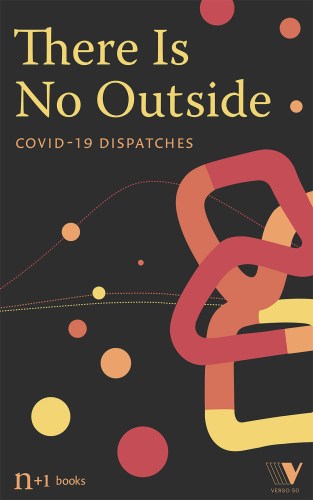
There Is No Outside: Covid-19 Dispatches -a FREE ebook collection from Verso and ⁦‪@nplusonemag‬⁩, edited by Jessie Kindig, Mark Krotov, and Marco Roth

200507-NoOutside-draft2There Is No Outside: Covid-19 Dispatches -a FREE ebook collection from Verso and ⁦‪@nplusonemag‬⁩‬⁩, edited by Jessie Kindig, Mark Krotov, and Marco Roth.

An urgent collection of essays on the global pandemic, from n+1 and Verso Books

A collaboration between the renowned magazine of literature and politics, n+1, and Verso Books, this collection tracks the course of Covid-19 across the circuits of global capital to New York’s prisons and emergency rooms, Los Angeles’s homeless encampments, and the migrant camps in Greece; and into the intimate spaces of our homes, our ideas of how to live, and into our bodies and cells.

We hear from sex workers without work and sailors quarantined on their ships, witness the pandemic from the quiet devastation of upstate New York and quarantined Rome as well as the streets of Delhi, Kashmir, and London and the emergency room of a New York City hospital. From some of the most exciting and thoughtful young writers around the globe, There Is No Outside explores the unspooling wreckage of Covid-19 and helps us on what might come in the aftermath.

With contributions from Andrew Liu, Rachel Ossip, Gabriel Winant, Francesco Pacifico, Sarah Resnick, Teresa Thornhill, Shigraf Zahbi, Debjani Bhattacharyya, Banu Subramaniam, Mark Krotov, Karim Sariahmed, Ana Cecilia Alvarez, Jack Norton, Laleh Khalili, Aaron Timms, Sonya Aragon, Sean Cooper, Chloe Aridjis, and Marco Roth, and with an introduction by Jessie Kindig.

Posted in Uncategorized | Leave a comment

Faut-il brûler… Sade, Dumézil, Heidegger, Kafka – a question on the use of a trope [updated]

Updated with some comments from two blog readers – that there was an earlier question of Faut-il brûler le Louvre, and a later use of the term, with a suggestion of a longer historical lineage.

stuartelden's avatarProgressive Geographies

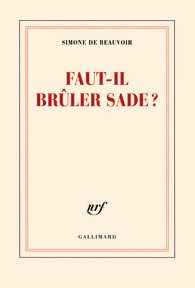
product_9782070135004_195x320I had previously thought that the use of the expression ‘Faut-il brûler… ?’ – ‘must we burn.. ?’ someone or something was due to Simone de Beauvoir. Her text Faut-il brûlerSade? first appeared in Les temps modernes in 1951 and 1952, and was then collected in Privilèges in 1955 and later reprinted with the essay title as that of the book.

There is a book by Didier Eribon called Faut-il brûler Dumézil? (1992) and an essay by Thomas Sheehan entitled ‘L’affaire Faye: Faut-il brûler Heidegger?‘ from 2016. I’m sure there are many more.

I’m uncomfortable with the use of the term ‘burn’, given the legacy of actual book burnings, though that is presumably part of the point of its use. But today I realised that Maurice Merleau-Ponty wrote a short piece entitled ‘Faut-il brûler Kafka’, which was first published in Action in 1946. It is collected in his

View original post 607 more words

Posted in Uncategorized | 1 Comment

Nina Power and Justin Murphy, Introduction to Bataille – video beginning an online course

Nina Power and Justin Murphy, Introduction to Bataille – video beginning an online course. More details on the course here – thanks to Jeremy Crampton for the links.

Posted in Georges Bataille, Nina Power, Uncategorized | 1 Comment