Katja Diefenbach, Spinoza in Post-Marxist Philosophy: Speculative Materialism – trans. Gerrit Jackson, Edinburgh University Press, November 2025

Katja Diefenbach, Spinoza in Post-Marxist Philosophy: Speculative Materialism – trans. Gerrit Jackson, Edinburgh University Press, November 2025

Expensive, and e-book is currently listed for the same price, unfortunately.

Revises continental philosophy’s portrayals of the relationships between matter, affect, thought and the power of the multitude

  • Provides a comprehensive overview and detailed analysis of central concepts and controversies in French post-Marxist and poststructuralist Spinoza scholarship
  • Introduces, and intervenes in, the post-Marxist and poststructuralist controversies over Spinoza’s concepts of immanent causality, conatus, and power of the multitude as tools to rethink politics in contemporary radical thought
  • Incorporates historical context with an extensive discussion of Dutch colonial capitalism
  • Provides conceptual and contextual groundwork for further research in Spinoza studies, early modern political philosophy, post-Marxism, poststructuralism, and French intellectual history
  • Widens access to the intellectual wealth of authors not yet widely translated into English, such as Ferdinand Alquié and Martial Gueroult

The book begins from the insight that very few seventeenth-century philosophers have received more antithetical interpretations than Baruch de Spinoza. He has been regarded as an atheist and a rationalist, as a pantheist and a vitalist, as a Jewish critic of religion and a great thinker in the Marrano tradition. In the twentieth century, however, Spinoza was conceived as a materialist who was strikingly ahead of his time, providing Marxism with concepts of overdetermined dialectics, plural temporality and nonteleological praxis.

Beginning with Althusser’s interest in the concept of immanent causality, the book reconstructs post-Marxist readings of Spinoza from Negri to Balibar, Matheron to Tosel, and Gueroult to Deleuze. It examines how these authors adapt Spinoza’s unconventional doctrines of the differentiality of being, the self-forming capacity of matter, the excess of the positive affects, and the multitude’s power of self-government. The book fundamentally revises continental philosophy’s portrayals of the relationships between matter, affect, thought, and the multitude.

Posted in Uncategorized | Leave a comment

Brett Heino, Literary Geographies and the Work of David Ireland: An Australian Atlas – Springer, 2025

Brett Heino, Literary Geographies and the Work of David Ireland: An Australian Atlas – Springer, 2025

book launch with Adam David Morton, 31 October 2025 – Glee books, Sydney

Update November 2025: Brett’s comments from the launch are here; Adam’s comments are here.

This book explores the spatiality of post-World War II Australian society through the vehicle of David Ireland’s literature. Employing concepts from radical geography and structural Marxist literary theory, it posits the existence of a spatial unconscious of literary texts, whereby they encode the spatiality of the society into which they are born. By mining the spatial unconscious of Ireland’s texts, we can create a complex, unique and highly fertile atlas of the spaces and places of Australia. In particular, Ireland’s works ideologically handle the contradictory relationship between capitalism’s regime of abstract space, rooted in the production process and the state, and the meaningful social places that can be forged out of the struggle of social forces including workers, lumpenproletarians, women and indigenous peoples. In the midst of the contemporary spatial crisis, this study of Ireland is a form of mapping, creating an atlas by which we might plot our past and present and orient ourselves to the future.

Posted in Uncategorized | Leave a comment

Graham Holderness, Shakespeare and a Place Calling Itself Rome – Routledge, June 2025

Graham Holderness, Shakespeare and a Place Calling Itself Rome – Routledge, June 2025

This new examination of Shakespeare’s four Roman tragedies (Julius CaesarTitus AndronicusCoriolanus and Antony and Cleopatra) revisits Shakespeare’s dramatic recreations of ancient Rome in the light of considerations of place:

  • the places from which Shakespeare initiated his imaginative reconstructions, where plays are written and performed
  • the places he constructed within the plays, the places the plays imagine and recreate, together with the places from which he derived them
  • the places within which we as readers and spectators experience those creations, where such plays are read, viewed and critically analysed.

Alongside this analysis the book explores contemporary critical debates and the uses of place and space in selected modern adaptations – the Taviani brothers’ Italian film Caesar Must Die, Julie Taylor’s film Titus, John Osborne’s play A Place Calling Itself Rome and Ahmed Shawqi’s Arabic Death of Cleopatra.

The book provides a descriptive, palimpsestic map of the places within which Shakespeare’s Roman plays operate, tracing the contours of Rome’s Republic and Empire, overlaid with the Europe of Shakespeare’s day, in which a Romanised London looked with fascination towards the East, towards Rome and Alexandria. Equipped with such a map we can attempt to do what Shakespeare did: to recreate ancient Rome in conjunction and rapprochement with its early modern and modern counterparts.

Posted in William Shakespeare | 2 Comments

Étienne Wolff and the biology of monsters – writing as a prisoner of war, Collège de France administrator, and the engagement with his work by Georges Canguilhem, Georges Bataille and Michel Foucault

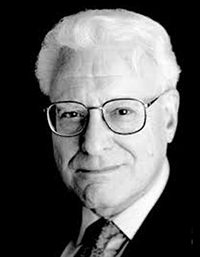
Étienne Wolff

In exploring the histories of professors and their teaching at the Collège de France, I’ve often looked at correspondence between chairs, candidates and the administrator. Administrators are elected from within the professoriate and have quite a lot of power in elections. Edmond Faral and Marcel Bataillon were important, for example, in the stories of Émile Benveniste, Georges Dumézil, Claude Lévi-Strauss and Alexandre Koyré (on Koyré’s unsuccessful attempt, see here). The biologist Étienne Wolff (1904-96) held a chair in experimental embryology at the Collège from 1955 until his 1974 retirement, and was administrator from 1966 and 1974. (He is in the middle of the front row in this 1967 photograph of the professors.) His course summaries, biography and obituaries are on the Collège’s website. In 1972 he was elected to the Académie française. Earlier in his career he worked at the University of Strasbourg, joining there in 1931, completing his doctorate in 1936, and eventually becoming chair of zoology. Wolff is an interesting figure, whose work was read by philosophers, and who seemed comfortable in dialogue with them.

Wolff’s 1946 book La Science des monstres begins with a survey of different types of monsters in biology, ranging from humans to other mammals to birds. Monstrosity here seems to mean any kind of abnormality, generally in terms of a birth defect. Wolff’s own experimental work is only a part of what he discusses in the book, but he does devote a lot of attention to how monsters can be produced in the laboratory. (I am not sure how this could be reconciled with Wolff’s advocacy for animal rights.)

Some quotes from the book’s conclusion give a sense of his argument, and why his work was of interest to philosophers: “Teratology was at first regarded as a science ancillary to anatomy, of which it remained for a long time a poor relation, attractive for what it had of the mysterious, disconcerting for what it had of the inexplicable” (p. 236). It was historically “a dry science” confined to work with “the cadavers in jars in collections”, but is now seen, he suggests, as “a living branch of Embryology, more specifically of experimental Embryology” (p. 236). This means it is no longer seen as a distinct science, but linked to the more general laws of development. “There follows a formula that has been abused, but which in this case is not false: the monster is the exception that proves the rule” (p. 236).

La Science des monstres was published in 1948, but was completed in 1941 – the preface is dated to November of that year in Edelbach, Austria, while he was a prisoner of war (p. 10). An addenda to it, dated to Strasbourg on 24 December 1945, says that there was little he would now change, but that he was able to supplement the text with photographs and figures (pp. 10-11). Wolff had been an artillery officer and had been captured during the Battle of France in 1940. He spent the rest of the war as a prisoner at Oflag XVII-A, a camp for officers. There he was a leading figure in the Université de Captivité, where he taught alongside the mathematics professor Jean Leray, the geologist François Ellenberger and the philosopher Raymond Ruyer. Wolff was Jewish, and Anna Maria Sigmund, Peter Michor, and Karl Sigmund suggest that he was “by all testimonies a driving force behind the university, but obliged, for racial reasons, to keep discreetly in the background” (“Leray in Edelbach”, p. 42; see Christophe Eckes, “Captivité et consécration scientifique”, p. 43; Sanchez-Palencia, “Recherche et enseignement en captivité”). The camp awarded diplomas which were officially ratified after the war. Wolff was moved to Oflag X-C in Lübeck, northern Germany in 1944. This was the second POW camp in which Fernand Braudel was imprisoned, and in which he wrote much of The Mediterranean and the Mediterranean World in the Age of Philip II. Oflag X-C was liberated by the British Army in May 1945, after which prisoners were repatriated. Edelbach was, in contrast, liberated by the Red Army, though many of the prisoners had been relocated by that time.

It is surely in part due to the peculiar nature of teaching in a camp which led to the nature of the book Wolff wrote, not so much in terms of the content, but the form. The book has an introductory tone, although it gets quite specialised, and is not over-encumbered by references. Even without knowing its context of composition, it feels like it was written without access to libraries. “It was written far from all documentation” (p. 9). More than this, for an experimental scientist, it was in part a product of an enforced separation from the laboratory. A shorter guide on related material, and using many of the same examples and illustrations, is his “La genèse des monstres” for the Pléiade encyclopedia on biology in 1965. A good sense of his overall work in this area is in Fernand Lot, “Entretien avec Étienne Wolff”.

In his study of monstrosity, Figures de la tératologie scientifique, Pierre Ancet situates Wolff as the last figure in a distinguished lineage of Étienne and Isidore Geoffroy Saint-Hilaire and Camille Dareste. Isabel Gabel argues that the philosopher Raymond Ruyer’s conversations with Wolff were fundamental to his philosophical research, and especially for the manuscript which became his Éléments de psycho-biologie, published after the war.

Wolff was also known for his 1946 book Les Changements de sexe, also written while in captivity. The preface is dated to 1 November 1943 in Edelbach (p. 11). Both this and La Science des monstres appeared in a Gallimard series directed by Jean Rostand, L’Avenir de la science. In his memoir, Trois pattes pour un canard, Wolff says that these two books were based on his teaching in the camp, and that without the enforced discipline they may not have been written (p. 119 n. 15). Once again, Wolff was writing without access to a laboratory. As he says in the preface to Les Changements de sexe: “Deprived of any original references and even the most current books, I had to rely mainly on my memory” (p. 11).

This book was reviewed by Georges Bataille in Critique in 1947 and was used by Michel Foucault in his 1964 Clermont-Ferrand course on sexuality (see the editor Claude-Olivier Doron’s notes to La Sexualité, p. 34 n. 16 and 36 n. 41-44; Sexuality, p. 47 n. 16; 50 n. 41-44). Wolff discusses the difference between genetic and genital sex, showing how experimentally the latter can be changed in embryos, and that until a certain stage of development is not determined, but that genetic sex is fixed at fertilization (p. 285). The discussion of hermaphroditism in Chapter XI of La Science des monstres would presumably also have interested Foucault, though I know of no references to this in his work. The topic is also discussed throughout Les Changements de sexe.

At Strasbourg Wolff was a colleague of Georges Canguilhem, though this must have been only after the war, since Canguilhem taught in Strasbourg from 1941, by which time Wolff was a prisoner of war. Canguilhem had initially quit teaching in a lycée under Vichy to work with the resistance instead, but joined the University of Strasbourg to replace Jean Cavaillès, who had moved to the Sorbonne. It was there that Canguilhem completed his doctorate in medicine, though during the German occupation of Alsace-Lorraine the University was in exile in Clermont-Ferrand. Canguilhem’s doctorate in medicine was The Normal and the Pathological; his later doctorate in philosophy was La formation du concept de réflexe aux XVIIe et XVIIIe siècles.Canguilhem taught at Strasbourg until 1948, when he was appointed Inspector General of Philosophy, a position he held until he succeeded Gaston Bachelard at the Sorbonne in 1955.

I never mentioned Wolff in my book Canguilhem in 2019, except as the editor of a book in which Canguilhem has an essay. But his work is discussed in several places by Canguilhem, including The Normal and the Pathological – both the original 1943 text and the 1966 ‘New Reflections’ – and Knowledge of Life, especially the essay on monstrosity. Canguilhem knew Wolff’s work well – he references the 1936 primary thesis Les bases de la tératogenèse expérimentale des vertébrés amniotes, through to the post-war books Les Changements de sexe, La science des monstres, and the 1963 collection Chemins de la vie. The indexes of the Œuvres complètes would reveal more references, many of which are explored in a 2018 article by Matteo Vagelli, who also gives some indications of where Canguilhem used Wolff’s work in his teaching, with references to the courses in his archives.

Canguilhem’s “Monstrosity and the Monstrous” lecture was delivered on 9 February 1962, to the Institut des hautes études in Belgium, before appearing in the journal Diogène at the end of that year (La Connaissance de la vie, p. 236 n. *; Knowledge of Life, 182 n. 31). Canguilhem’s first reference to Wolff in this piece is to a lecture Wolff gave at the Collège philosophique on 24 January 1962. I have been unable to find a published trace of this lecture. Canguilhem’s discussion of Wolff is part of the inspiration for his claim that “life is poor in monsters, while the fantastic is a world” (La Connaissance de la vie, p. 183, see 173; Knowledge of Life, p. 145, see p. 136).

Canguilhem and Wolff were both participants in a conference to celebrate the centenary of Claude Bernard’s Introduction à l’étude de la médecine expérimentale held in Paris on 29 June-2 July 1965. Bernard had taught at the Collège de France, and the event was jointly organised by that institution and the Fondation Singer-Polignac. (There is a plaque marking the building where Bernard had his laboratory on the corner of Rue des Écoles and Rue Saint-Jacques; and a statue of him stands in front of the main entrance.) The first day was held at the Collège, and the subsequent days took place at the Fondation. Bernard Halpern, chair of experimental medicine at the Collège, led the event, but Wolff opened the proceedings, followed by the Minister for Education, Christian Fouchet. (Around this time, Foucault was part of the Fouchet Commission on education reform. See my The Archaeology of Foucault, pp. 91-93 and its references.) Two volumes of papers came from the event – Philosophie et méthodologie scientifiques de Claude Bernard and Les Concepts de Claude Bernard sur le milieu intérieur. Wolff and Fouchet’s opening speeches are included in the first of these two volumes (pp. 1-3, 4-6), as is Canguilhem’s contribution (pp. 23-32). Bernard was a frequent reference for Canguilhem in his work. The links between Wolff and Bernard on experimentation are briefly mentioned by Samuel Talcott in his Georges Canguilhem and the Problem of Error (p. 160).

On Saturday 26th February 1966, Wolff presented “Le climat de la découverte en biologie” to the Société française de philosophie, invited by the society’s president Jean Wahl. Wahl was also the organiser of the Collège philosophique. The discussion which follows Wolff’s lecture had contributions by several people identified by surname alone, but they include Pierre-Maxime Schuhl, vice-president of the society, Canguilhem, the Hegel scholar Jean Hyppolite, the chemist and physicist Adrienne Weill (daughter of the philosopher Léon Brunschvicg) and, I think, the psychologist Eugène Minkowski. Canguilhem asks whether the idea of a “climate” in the idea of “climate of discovery” can be used in biology in the same way it is used in geography, as plural, encompassing regions of the world, of a city, or even of a “micro-climate”. He wonders if this could be analysed in terms of the “level of the laboratory… discipline… convergence of disciplines” (p. 133). He develops this idea in terms of discoveries in laboratories (p. 134). Wolff pushes back a bit, noting that it is not so much that the methods are distinct, but their objects, and that working hypotheses were often trading on previous approaches, even if they sometimes differed. He clarifies: “The climate is not only the methods which are used in laboratories, but the affective tonalities which are found there. The affective climates are very different from one laboratory to another” (p. 135).

In his inaugural lecture to the Collège, in 1970, Foucault describes how each discipline includes “true and false propositions”, but excludes “beyond its margins, a whole teratology of knowledge [savoir]”. Foucault uses this to discuss a familiar theme of the exterior of a science, of errors only happening in what Canguilhem’s calls “within the true”, and evokes “prowling monsters” outside (L’Ordre du discours, 25; “The Order of Discourse”, 153-54). I don’t think Foucault ever uses the evocative phrase “teratology of knowledge” elsewhere, though monstrosity was of course a major theme of his 1974-75 Collège course, The Abnormals. That course has no mention of Wolff, and its focus is much more human and historical than his work. But I wonder if the mention of teratology in the inaugural lecture was a nod to Wolff, the administrator at the time he was elected and began lecturing at the Collège.

Of course, Wolff’s primary work was with scientists, and his courses at the Collège were for a specialist audeince. Some of the lectures presented to his seminar there in 1965-66 were collected in a volume simultaneously published in French and English – De l’embryologie expérimentale à la biologie moléculaire;The Relationship Between Experimental Embryology and Molecular Biology. The tribute volume to Wolff, published the year after his retirement, Embryologie chimique et expérimentale, is filled with contributions on his more scientific aspects, from biology to chemistry and medicine. The interest in his work by philosophers is absent.


A video of a lecture by Wolff, “La Genése des monstres”, is on the Canal website. (Content warning: some graphic images of birth defects in humans and other animals, and experimentation on embryos. The video is in French and does not have subtitles.)

A short film about him from INA is on Youtube, “Les dialoges d’Etienne Wolff“, which has quite a bit about his cat… French subtitles can be turned on for this.

Confusingly, in 2022 another Étienne Wolff edited a book of essays on monsters and monstrosities from antiquity until the present, but this is not the same person!

References

Embryologie chimique et expérimentale: résultats récents; livre jubilaire offert à É. Wolff, Paris: Masson et Cie, 1975. 

Pierre Ancet, Figures de la tératologie scientifique: Étienne et Isidore Geoffroy Saint-Hilaire, Camille Dareste, Étienne Wolff, Dijon: Éditions Universitaires de Dijon, 2022.

Georges Bataille, “Qu’est-ce que le sexe?” Critique 11, 1947, 363-72; reprinted in Œuvres completes XI, Articles 1, 1944-1949, eds. Francis Marmande with Sibylle Monod, Paris: Gallimard, 1988, 210-221; “What is Sex?” in Critical Essays 1: 1944-1948, trans. Chris Turner, eds. Alberto Toscano and Benjamin Noys, Seagull Books, 2023, 134-45.

Georges Canguilhem, Le normal et le pathologique, Paris: Presses Universitaires de France, 12th edn, 2015 [1943/1966]; reprinted in Œuvres complètes, Vol II; trans. Carolyn R. Fawcett and Robert S. Cohen as The Normal and the Pathological, New York: Zone, 1991 [1978].

Georges Canguilhem, La Connaissance de la vie, Paris: Vrin, 1952, second edition, 1965; reprinted in Œuvres complètes, Vol II; Knowledge of Life, trans. Stefanos Geroulanos and Daniela Ginsburg, New York: Fordham University Press, 2009.

Georges Canguilhem, La formation du concept de réflexe aux XVIIe et XVIIIe siècles, Paris: PUF, second edition, 1977 [1955]; reprinted in Œuvres complètes, Vol II.

Georges Canguilhem, “Théorie et technique de l’expérimentation chez Claude Bernard”, in Étienne Wolff, Christian Fouchet, Bernard A. Houssay et al. Philosophie et méthodologie scientifiques de Claude Bernard, Paris: Masson & Cie, 1967, 23-32; reprinted in Études d’histoire et de philosophie des sciences, Paris: 1983 [1968], 143-55 and Œuvres complètes, Vol III, 430-47.

Georges Canguilhem, Œuvres complètes, ed. Camille Limoges et. al., Paris: Vrin, six volumes, 2011-25.

Collège de France, “Étienne Wolff: Embryologie expérimentale”, https://www.college-de-france.fr/fr/chaire/etienne-wolff-embryologie-experimentale-chaire-statutaire

Christophe Eckes, “Captivité et consécration scientifique: Reconsidérer la trajectoire académique du mathématicien prisonnier de guerre Jean Leray (1940-1947)”, Genèses 121, 2020, 31-51.

Stuart Elden, Canguilhem, Cambridge: Polity, 2019.

Stuart Elden, The Archaeology of Foucault, Cambridge: Polity, 2023.

Michel Foucault, L’Ordre du discours, Paris: Gallimard, 1971; “The Order of Discourse”, trans. Thomas Scott-Railton in Nancy Luxon (ed.), Archives of Infamy: Foucault on State Power in the Lives of Ordinary Citizens, Minneapolis: University of Minnesota Press, 2019, 141-73.

Michel Foucault, Les Anormaux: Cours au Collège de France (1974–1975), eds. Valerio Marchetti and Antonella Salomani, Paris: Seuil/Gallimard, 1999; Abnormal: Lectures at the Collège de France 1974–1975, trans. Graham Burchell, London: Verso, 2003.

Michel Foucault, La Sexualité: Cours donné à l’université de Clermont- Ferrand (1964), suivi de Le Discours de la sexualité: Cours donné à l’université de Vincennes (1969), ed. Claude-Olivier Doron, Paris: EHESS/Gallimard/Seuil, 2018; Sexuality: The 1964 Clermont-Ferrand and 1969 Vincennes Lectures, trans. Graham Burchell, New York: Columbia University Press, 2021.

Isabel Gabel, “La biologie, la réflexivité et l’histoire: Réinscrire Canguilhem dans son milieu”, Revue d’histoire des sciences 71 (2), 2018, 155-78.

Roger Heim, Bernard Halpern, Yvon Bourges et. al. Les Concepts de Claude Bernard sur le milieu intérieur, Paris: Masson & Cie, 1967.

Fernand Lot, “L’homme qui crée des monstres. Entretien avec Étienne Wolff de l’Académie Française”, Science et recherche odontostomatologiques, 2 (1), 1972, 59-71.

Raymond Ruyer, Éléments de psycho-biologie, Paris: Presses Universitaires de France, 1946. 

Evariste Sanchez-Palencia, “Recherche et enseignement en captivité: Leray à Edelbach”, Histoire des sciences / Evolution des disciplines et histoire des découvertes, 2015, https://www.academie-sciences.fr/pdf/hse/evol_Sanchez3.pdf

Anna Maria Sigmund, Peter Michor, Karl Sigmund, “Leray in Edelbach”, The Mathematical Intelligencer 27 (2), 2005, 41-50.

Samuel Talcott, Georges Canguilhem and the Problem of Error, London: Palgrave, 2019. 

Matteo Vagelli, “De la science des monstres: Canguilhem et la tératologie expérimentale d’Étienne Wolff”, Revue d’histoire des sciences 71 (2), 2018, 243-70.

Étienne Wolff, Les bases de la tératogénèse expérimentale des Vertébrés amniotes d’après les résultats de méthodes directes and L’évolution après l’éclosion des Poulets males transformés en intersexués par l’hormone femelle injectée aux jeunes embryons, Strasbourg: Imprimerie Alsacienne, 1936.

Étienne Wolff, Les Changements de sexe, Paris: Gallimard, 1946.

Étienne Wolff, La science des monstres, Paris: Gallimard, 1948.

Étienne Wolff, Chemins de la vie, Paris: Hermann, 1963.

Étienne Wolff, “La genèse des monstres”, in Jean Rostand and Andrée Tétry eds., Biologie, Paris: Gallimard, 1965, 561-620.

Étienne Wolff, “Le climat de la découverte en biologie”, Bulletin de la Société française de philosophie, 60 (4), 1966, 119-49. Part of the discussion is reprinted in Canguilhem, Œuvres completes V, 83-87.

E. Wolff ed., De l’embryologie expérimentale à la biologie moléculaire, Paris: Dunod, 1967; The Relationship Between Experimental Embryology and Molecular Biology, New York: Gordon and Breach, 1967.

Étienne Wolff, Christian Fouchet, Bernard A. Houssay et al. Philosophie et méthodologie scientifiques de Claude Bernard, Paris: Masson & Cie, 1967.

Étienne Wolff, Trois pattes pour un canard: souvenirs d’un biologist, Paris: Fondation Singer-Polignac, 1990.

Étienne Wolff [not the same person] ed., Monstres et monstruosités de l’Antiquité à nos jours: En Occident et en Orient, Paris: Harmattan, 2022.

Videos

“La genèse des monstres”, https://www.canal-u.tv/chaines/cerimes/la-genese-des-monstres

“Les dialoges d’Etienne Wolff”, INA, https://www.youtube.com/watch?v=Lf3xrUKkfMU

“Etienne WOLFF sur l’utilisation des découvertes scientifiques”, INA, https://www.ina.fr/ina-eclaire-actu/video/i05210909/etienne-wolff-sur-l-utilisation-des-decouvertes-scientifiques


This is the 38th post of a weekly series, where I post short essays with some indications of further reading and sources, but which are not as formal as something I’d try to publish more conventionally. They are usually tangential to my main writing focus, a home for spare ideas, asides, dead-ends and possible futures. I hope there is some interest in them. They are provisional and suggestions are welcome. A few shorter pieces in a similar style have been posted mid-week.

The full chronological list of ‘Sunday histories’ is here, with a thematic ordering here.

Posted in Alexandre Koyré, Étienne Wolff, Canguilhem (book), Fernand Braudel, Georges Bataille, Georges Canguilhem, Michel Foucault, Sunday Histories, The Archaeology of Foucault, Uncategorized | 7 Comments

Daniel Wortel-London, The Menace of Prosperity: New York City and the Struggle for Economic Development, 1865–1981 – University of Chicago Press, July 2025 and two interviews

Daniel Wortel-London, The Menace of Prosperity: New York City and the Struggle for Economic Development, 1865–1981 – University of Chicago Press, July 2025

I’ve shared news of the book before, but there are also interviews at Phenomenal World and the University of Chicago Press blog

Upends entrenched thinking about cities, demonstrating how urban economies are defined—or constrained—by the fiscal imagination of policymakers, activists, and residents.
 
Many local policymakers make decisions based on a deep-seated belief: what’s good for the rich is good for cities. Convinced that local finances depend on attracting wealthy firms and residents, municipal governments lavish public subsidies on their behalf. Whatever form this strategy takes—tax-exempt apartments, corporate incentives, debt-financed mega projects—its rationale remains consistent and assumed to be true. But this wasn’t always the case. Between the 1870s and the 1970s, a wide range of activists, citizens, and intellectuals in New York City connected local fiscal crises to the greed and waste of the rich. These figures saw other routes to development, possibilities rooted in alternate ideas about what was fiscally viable.
 
In The Menace of Prosperity, Daniel Wortel-London argues that urban economics and politics are shaped by what he terms the “fiscal imagination” of policymakers, activists, advocates, and other figures. His survey of New York City during a period of explosive growth shows how residents went beyond the limits of redistributive liberalism to imagine how their communities could become economically viable without the largesse of the wealthy. Their strategies—which included cooperatives, public housing, land-value taxation, public utilities, and more—centered the needs and capabilities of ordinary residents as the basis for local economies that were both prosperous and just.
 
Overturning stale axioms about economic policy, The Menace of Prosperity shows that not all growth is productive for cities. Wortel-London’s ambitious history demonstrates the range of options we’ve abandoned and hints at the economic frameworks we could still realize—and the more democratic cities that might result.

Posted in Uncategorized | 1 Comment

Rahul Rao, The Psychic Lives of Statues: Reckoning with the Rubble of Empire – Pluto, March 2025

Rahul Rao, The Psychic Lives of Statues: Reckoning with the Rubble of Empire – Pluto, March 2025

From Cape Town to Bristol and Richmond, statues have become sites of resistance and contestation of our imperial past and postcolonial present. The Psychic Lives of Statues by Rahul Rao offers an insightful exploration of these global controversies, demonstrating that beneath their surface lie deeper struggles over race, caste, and the politics of decolonisation.

Rao takes readers on a journey through South Africa, England, the US, Ghana, India, Australia, and Scotland, revealing how statue controversies have dramatically rearranged the canon of anticolonial political thought. By examining these debates through a personal and literary lens, Rao addresses the multifaceted issues of justice, cultural memory, and belonging.

The Psychic Lives of Statues examines both the toppling of colonial statues and the raising of postcolonial ones, demonstrating that the statue form as a medium of representation and a bid for immortality is by no means obsolete. Engaging with artists, scholars, and activists, Rao provides fresh perspectives on how societies grapple with and reinterpret the past and present through iconography.

Posted in Uncategorized | Leave a comment

Michel Serres, Hermes III – trans. Randolph Burks, University of Minnesota Press, February 2026

Michel Serres, Hermes III – trans. Randolph Burks, University of Minnesota Press, February 2026

Unlocking the hidden patterns of knowledge—where science, art, and philosophy speak a common language

Hermes III: Translation is the third volume in Michel Serres’s renowned Hermes series, an ambitious exploration of the deep interconnections among disparate fields of knowledge. While Hermes II: Interference traced the overlapping echoes of ideas across realms, Hermes III moves to translate the structural logics of one field—be it genetics, painting, or philosophy—into the language of another. Revealing how the humanities, science, and art share hidden combinatory architectures, Serres exposes the underlying unity of knowledge systems typically thought distinct.

Through an array of examples—from Monod’s Chance and Necessity to works by Descartes, Leibniz, Comte, Turner, and Roumain—Serres shows how translation uncovers informational and mathematical patterns that shape both ancient and modern thought. This illuminating methodology leads Serres to issue a stark warning: when knowledge is detached from its guiding purpose, it becomes vulnerable to appropriation by destructive political forces.

Yet Serres’s vision remains ultimately hopeful. By tracing knowledge systems back to their mythic and structural roots, Hermes III: Translation gestures toward more harmonious relationships between fields. A rare synthesis of philosophy, science, art, and literature, this work will engage readers interested in the interdependence of disciplines and the possibilities for a more unified, humane understanding of knowledge.

Posted in Uncategorized | 1 Comment

Barry Stocker ed. Derrida: Ethics in Deconstruction – Routledge, September 2025

Barry Stocker ed. Derrida: Ethics in Deconstruction – Routledge, September 2025

Ethics in Deconstruction is vital reading for anyone interested in Derrida and the ethical implications of deconstruction broadly defined. It offers a comprehensive set of essays on the ethics of deconstruction and deconstruction as an ethical enterprise. Derrida is the main focus, but essays also look at Sextus Empiricus, Kierkegaard, Heidegger, Arendt, Lévinas, Lyotard, Deleuze, and others. This volume broadly defines ethics to include law, justice, politics, religion, and practical reason. The essays explore topics including biopolitics, hospitality, speech and language, consciousness and affection, animality, democracy, sovereignty, nationality and nationalism, Enlightenment, poetics, responsibility, economics, decision theory, promises, the institution of ethics, alterity, and otherness. An editor’s introduction provides a unifying oversight of the multiplicity of topics, and an editor’s afterthought takes the discussion forward with regard to the status of moral law. This volume’s contents are distinctive in their wide-ranging coverage of deconstruction, including its boundaries and its others. The reader’s assumptions about deconstruction, ethics, and their contexts will be challenged and renewed. This book is essential reading for anyone concerned with the philosophy of Derrida and the ethical possibilities of deconstruction in many forms across themes and disciplines. It was originally published as a special issue of Angelaki.

Posted in Jacques Derrida, Uncategorized | 1 Comment

Séverine Kodjo-Grandvaux, African Philosophies, trans. Matthew B. Smith – Polity, June 2025

Séverine Kodjo-Grandvaux, African Philosophies – trans. Matthew B. Smith, Polity, June 2025

For many students of philosophy in the West, philosophy is understood as a discipline stemming from Ancient Greece, embracing the great thinkers of medieval and early modern Europe and continuing through to the present day.  To the extent that other philosophical traditions are taken into account, these tend to be selected philosophical traditions of Asia.  Rarely is African philosophy considered in this context, even though Africa and the West are deeply interconnected through long histories of colonialism and slavery.   

In this important book Séverine Kodjo-Grandvaux argues that a serious engagement with African philosophy is long overdue.  She shows that there is a rich tradition of philosophical thought in Africa that addresses issues ranging from the legacies of colonialism to the nature of time, the state, responsibility, identity, dignity and personhood.  An engagement with African philosophy also offers a fresh perspective on Western philosophy, prompting us to interrogate ourselves and our own history.  Conceptualizing African philosophy becomes a way of conceptualizing the world and of understanding how to know ourselves through the gaze of another. 

African Philosophies is not so much a survey of philosophy in Africa but rather an account of how the question of African philosophy emerged in the second half of the 20th century and of what we can learn from a serious engagement with African philosophy today.  It will be of great interest to students and scholars in philosophy, in colonial and postcolonial studies and throughout the humanities.

Posted in Uncategorized | Leave a comment

Tim Cresswell, The Citizen and a Vagabond: A Politics of Mobility – University of Minnesota Press, March 2026

Tim Cresswell, The Citizen and a Vagabond: A Politics of Mobility – University of Minnesota Press, March 2026

An expansive treatise on the power relations that govern our movement

The Citizen and the Vagabond develops a theoretical approach to the study of mobility and its relationship to the production, maintenance, and transformation of social and cultural hierarchies. Expanding upon his foundational work on the subject, Tim Cresswell examines human movement from around the globe to better understand the various forms of inequality and injustice that shape our lives.

Establishing a framework for movement in terms of rhythm, speed, routes, and friction, Cresswell extends these themes to address the Covid-19 pandemic and subsequent lockdowns, exploring what this turbulent period reveals to us about the politics of mobility. He demonstrates that while flexibility and ease of movement are typically considered markers of personal freedom, increased mobility brings with it new modes of control and surveillance. As he investigates the hierarchies and embodied experiences that emerge amid these tensions, Cresswell employs two figures: the citizen, whose mobility within and across borders is expected and accepted, and the vagabond, whose perpetual mobility is deemed suspect and in need of ordering.

In conversation with the work of theorists such as Mimi Sheller, Zygmunt Bauman, Paul Virilio, Henri Lefebvre, Ivan Illich, and Anna Tsing, Cresswell reaches beyond geography to incorporate insights from the humanities and social sciences. An interdisciplinary intervention into the study of mobility and citizenship, The Citizen and the Vagabond provides a new set of coordinates from which to grasp the shifting dynamics of movement and power.

Posted in Uncategorized | Leave a comment