
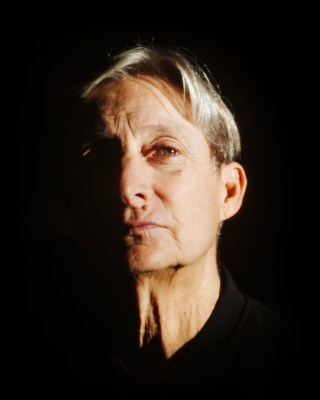
 Judith Butler interview in The New Yorker – ‘Judith Butler wants us to reshape our rage’
The Force of Nonviolence: The Ethical in the Political is out with Verso this month
Judith Butler interview in The New Yorker – ‘Judith Butler wants us to reshape our rage’
The Force of Nonviolence: The Ethical in the Political is out with Verso this month
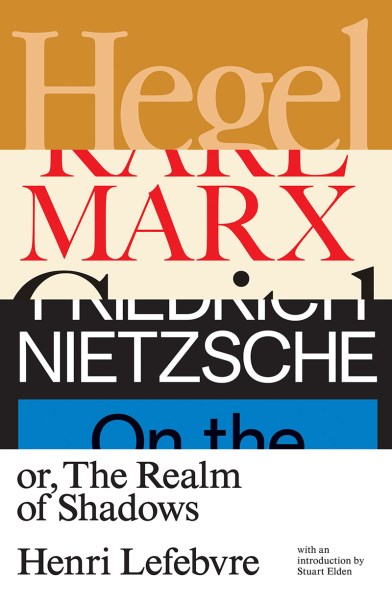 Henri Lefebvre, Hegel, Marx, Nietzsche Or the Realm of Shadows – translated by David Fernbach, introduced by Stuart Elden, Verso, February 2020
Now out from Verso – and a reminder that if buying from Verso direct it will come with a bundled e-book.
The great French Marxist philosopher weighs up the contributions of the three major critics of modernity
Henri Lefebvre saw Marx as an ‘unavoidable, necessary, but insufficient starting point’, and always insisted on the importance of Hegel to understanding Marx. Metaphilosophy also suggested the significance he ascribed to Nietzsche, in the ‘realm of shadows’ through which philosophy seeks to think the world. Hegel, Marx, Nietzsche: or the Realm of the Shadows proposes that the modern world is, at the same time, Hegelian in terms of the state, Marxist in terms of the social and society and Nietzschean in terms of civilisation and its values. As early as 1939, Lefebvre had pioneered a French reading of Nietzsche that rejected the philosopher’s appropriation by fascists, bringing out the tragic implications of Nietzsche’s proclamation that ‘God is dead’ long before this approach was followed by such later writers as Foucault, Derrida and Deleuze. Forty years later, in the last of his philosophical writings, Lefebvre juxtaposed the contributions of the three great thinkers, in a text that’s themes remain surprisingly relevant today.
Chronotopic Cartographies – British Library, 16-17 July 2020
full details here
An International Conference: 16th and 17th July, 2020.
The Knowledge Centre, The British Library, London. NW1 2DB.
KEYNOTES: Robert Tally; Anders Engberg-Pedersen; James Kneale
This two-day interdisciplinary conference is hosted by the AHRC Funded Chronotopic Cartographies project in partnership with The British Library. It comes out of primary research into the digital visualisation of space and time for fictional works that have no real-world correspondence. Chronotopic Cartographies develops digital methods and tools that enable the mapping of literary works by generating graphs as “maps” directly out of the coded text.
The Call for Papers emerges from the project and the interdisciplinary fields that it draws upon: literature; narratology; corpus linguistics; onomastics; digital and spatial humanities; geography; cartography; gaming. We welcome papers from those working in or across these fields but also from anyone with an interest in the problematics of mapping, visualising and analysing space, time and text from any disciplinary perspective. We seek to bring together and juxtapose different approaches in order to advance knowledge.
We invite submissions in the form of either 20-minute papers or 5-minute poster sessions. Individuals giving a paper or poster may also wish to run informal workshops for shared knowledge exchange.
Questions and Areas of Interest: What kind of digital models are most useful for the Humanities? How do insights from the Humanities reshape digital methods? What can mapping a text uncover or reveal? What happens if we release mapping from GIS? How can we connect virtual, actual and imaginative pathways meaningfully? How do we productively move between visual and verbal meaning? How do we accommodate the multiple dimensions of literature within 2D, 3D or 4D space? How do we ground time? Does everything have to happen somewhere? How do we map unquantifiable space and place? What is the value of “fuzzy” geography?
Deadline Extended to 29th February 2020. (Notification of Acceptance: 20th March 2020).
SHORT PAPERS: Abstracts of 300 words.
POSTERS: Abstracts of 150 words.
WORKSHOPS: Brief description + technical requirements.
E-mail abstracts to Dawn Stobbart: d.stobbart1@lancaster.ac.uk
The conference fee is £150 (standard) £75 (concessions) for this two-day event. A limited number of bursaries will be available.
 Sara Smith, Political Geography: A Critical Introduction – Wiley-Blackwell, April 2020
Political geography is the study of how power struggles both shape and are shaped by the places in which they occur—the spatial nature of political power. Political Geography: A Critical Introduction helps students understand how power is related to space, place, and territory, illustrating how everyday life and the world of global conflict and nation-states are inextricably intertwined. This timely, engaging textbook weaves critical, postcolonial, and feminist narratives throughout its exploration of key concepts in the discipline.
Accessible to students new to the field, this text offers critical approaches to political geography—including questions of gender, sexuality, race, and difference—and explains central political concepts such as citizenship, security, and territory in a geographic context. Case studies incorporate methodologies that illustrate how political geographers perform research, enabling students to develop a well-rounded critical approach rather than merely focusing on results. Chapters cover topics including the role of nationalism in shaping allegiances, the spatial aspects of social movements and urban politics, the relationship between international relations and security, the effects of non-human actors in politics, and more. Global in scope, this book:
- Highlights a diverse range of globally-oriented issues, such as global inequality, that demonstrate the need for critical political geography
- Demonstrates how critiques of political geography intersect with decolonial, feminist, and queer movements
- Covers the Eurocentric origins of many of the discipline’s key concepts
- Integrates advances in political geography theory and firsthand accounts of innovative research from rising scholars in the field
- Explores both intimate stories from everyday life and abstract concepts central to contemporary political geography
Political Geography: A Critical Introduction is an ideal resource for students in political and feminist geography, as well as graduate students and researchers seeking an overview of the discipline.
In the last update, I mentioned the work I’d been doing in Paris and Tübingen, and said I’d agreed to write a book on Foucault in the 1960s, again for Polity, with the working title of The Archaeology of Foucault immediately after I’ve finished this one on the 1950s.
Since then I’ve been back in Paris, mainly working through the Bibliothèque nationale collection of Foucault’s papers from the 1940s and 1950s. There are all sorts of fascinating things here, and if I was writing a biography I would doubtless do a lot more with it. I’m interested in the intellectual side of his life only, and so it’s letters from people like Ludwig Binswanger and Georges Dumézil that hold most interest. There is also some important correspondence about his posts in Lille and Uppsala, as well as some concerning early publications, including some contracts. These really help with being precise on dates. But as well as resolving a few things that were uncertain, there were more than a few surprising things which have given me other things to track down and try to resolve. Some of the material here has been used in the Foucault à Münsterlingen book and the Un succès philosophique collection. But there are also student ID cards, flyers for events, his PCF membership card, some address books, photographs, school timetables, exercise books and some essays, pay slips and tax returns, insurance for his car… Letters to his family are under an embargo until 2050, but there is still a lot of stuff available.
One box I looked at mainly for completeness sake was interesting, not for its direct content but for a connection I can now make. I’ve mentioned before how Foucault used letters, flyers and other bits and pieces as scrap paper, either to write notes on or to fold to keep papers together. One of these in this box was a letter from a lawyer saying he was enclosing a letter for Foucault to sign. The date looked familiar, and cross-referencing it with my timeline and another source showed that it related to Foucault’s transfer of Histoire de la folie to Gallimard from Plon. A quick online search showed that this lawyer did indeed work for Gallimard. A minor link in a story now has a source.
A couple of letters are in another collection at the BnF, so I had to go the Music reading room to consult them. Foucault had some friendships with composers in the 1950s, and especially important was his relationship with Jean Barraqué. The correspondence between Foucault and Barraqué isn’t here – both Didier Eribon and Barraqué’s biographer Paul Griffiths discuss it, so I’m trying to get access. But checking what the BnF does have relating to Barraqué was itself interesting. Another file could be consulted at the Bibliothèque-Musée de l’Opéra, so I went there one morning.
I’ve also been spending some early evenings at the main Mitterand site, working on some texts that are hard to find in the UK. These include some old issues of journals in which Georges and Jacqueline Verdeaux published the results of their work at the Hôpital Sainte-Anne. Foucault worked with them as an assistant in the early 1950s. And this site is helpful for finding most of the things that the archival material makes me want to check. The microfilm and microfiche readers at the BnF are seriously old and hard work. Unlike the British Library they are not linked to computers which allow you to scan and email images, and working with texts on them is more than a bit of a pain. But some things that the BnF has can only be accessed this way, so I spent several hours on them.
I also ordered the Annales of the Université de Lille for all the years Foucault taught there, as part of an attempt to pin down exactly what he taught and when. But the library didn’t give me access to them, saying some were lost and some being conserved. I’ve looked at these before at the British Library but wanted to look again. Eventually I found that they have been digitised by the Lille university library and are accessible online, though unfortunately only as single page images and not searchable. Again a slow process which would be much quicker on paper. This gave a bit of information, but not all that I was hoping for, so I’ll keep searching.

Collège de France
Last week I went to the Collège de France for the first time – something I probably should have done years ago, given how much I’ve written about Foucault’s lectures there. My reason was that they have the archives of Dumézil. There is only a very partial inventory online, so I had to go there first to consult the version of paper and work out what I wanted to see. There is not much concerning Foucault, but a few related things were useful.
The Archives Nationales has a letter Foucault wrote to Ignace Meyerson. I was alerted to this by Alessandro de LimaFrancisco’s thesis on Foucault and psychology. I’d been to the Archives Nationales before for an exhibition, but most of the collection has relocated from the central Paris site to a new building in the suburbs at Pierrefitte-sur-Seine, so I took a trip out there one rainy Saturday. The file also has letters from Dumézil to Meyerson.
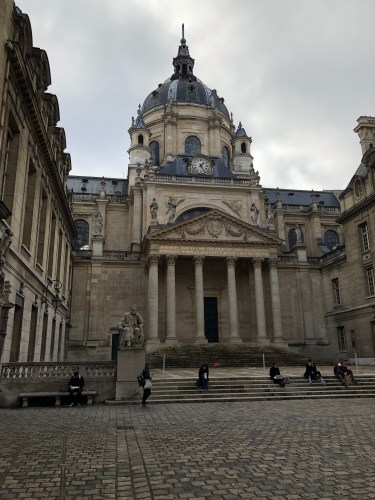
Sorbonne
Most of the time I’ve been given access to things fairly easily, though getting into the Sorbonne library was a bit more complicated. You couldn’t get a library account set up without going in person; you couldn’t check availability of things until you had an account; and then when I was all set up in the library the document couldn’t be ordered online. But once I went to the Salle du Reserve, and just asked for it, they brought it in minutes. I think I have now seen all of the extant copies of Foucault’s secondary thesis on Kant, or at least all that are accessible – his own, Canguilhem’s, Hyppolite’s, the Sorbonne’s and the photocopy at IMEC. A bit obsessive, no doubt, but I now have a definitive answer to a question that was bothering me.
I still have a few days in Paris later on this trip, but tomorrow I’m back up to IMEC. There I will be mainly going back through some Althusser’s papers that relate to Foucault, but also hoping to do a bit of work with the Jean Wahl archive.
The previous updates on this project are here; and the previous books Foucault’s Last Decade and Foucault: The Birth of Power available from Polity. The related book Canguilhem came out in 2019, and is discussed a bit more here. Several Foucault research resources such as bibliographies, short translations, textual comparisons and so on, produced while doing the work for these books, are available here.
 Geoffroy de Lagasnerie, Foucault against Neoliberalism? translated by Matthew Maclellan – Rowman, June 2020
In the late 1970s, Michel Foucault dedicated a number of controversial lectures on the subject of neoliberalism. Had Foucault been seduced by neoliberalism? Did France’s premier leftist intellectual, near the end of his career, turn to the right? In this book, Geoffroy de Lagasnerie argues that far from abandoning the left, Foucault’s analysis of neoliberalism was a means of probing the limits and lacunae of traditional political philosophy, social contract theory, Marxism, and psychoanalysis. For Lagasnerie, Foucault’s analysis was an attempt to discover neoliberalism’s singularity, understand its appeal, and unearth its emancipatory potential in order to construct a new art of rebelliousness. By reading Foucault’s lectures on neoliberalism as a means of developing new practices of emancipation, Lagasnerie offers an original and compelling account of Michel Foucault’s most controversial work.
 Kirsten Simonsen and Lasse Koefoed, Geographies of Embodiment: Critical Phenomenology and the World of Strangers – Sage, 2020
This is the latest book in the Society and Space series
Geographies of Embodiment provides a critical discussion of the literatures on the body and embodiment, and humanism and post-humanism, and develops arguments about “otherness” and “encounter” which have become key ideas in urban studies, and studies of the city. It situates these arguments in a wider political context, looking at power-relations through case studies at urban, national and transnational scales.
These arguments are situated across disciplinary boundaries, at the borderline between between philosophy and social science that is associated to critical phenomenology, and reaches across Human Geography, Sociology, Philosophy, Anthropology, Cultural Studies and Urban Studies.
Geographies of Embodiment by Koefoed and Simonsen presents articulate and sophisticated insights into issues about encounters, space and bodies through a practice-orientated reading of phenomenology. The book draws upon four projects over the last fifteen years about cities, encounters and nationalism to offer critical and engaging readings of encounters, embodiment, and the politics of urban life. This is an important text for critical and engaged scholars working in human geography, urban studies and racial and ethnic studies.
Peter Hopkins, Professor of Social Geography, Newcastle University
Rarely do I think that any book is a ‘must-read’, but that is surely the case with Geographies of Embodiment: Phenomenology and Strangers. Located on the border between philosophy and social science, this is a deeply theoretical book that is anchored by significant empirical research. Koefoed and Simonsen have written a powerful argument for a new humanism, one that is rooted in complex critical theories and phenomenological philosophies, yet is supported by important empirical work on the geographies of embodiment, practice and difference. The result is a book that makes us rethink present understandings of humanism, especially as the ‘human’ in humanism is (re)made in embodied spatial practice.
Lawrence D. Berg, Professor in Critical Geography at the University of British Columbia
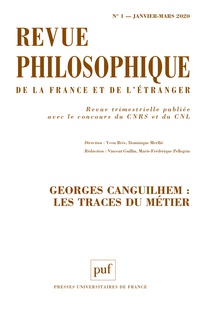 Georges Canguilhem : les traces du métier – special issue of Revue philosophique de la France et de l’étranger 2020/1. Includes pieces by Giuseppe Bianco, Jean-François Braunstein, Xavier Roth, Gisèle Sapiro and others. Articles are in French, and requires subscription.
The new wave of studies on Canguilhem is related to the creation of an archival center gathering his manuscripts at the CAPHES library and to the publication of his complete works. The heterogeneity of Canguilhem’s writings, which cover sixty years of philosophical activity, could be better grasped if we consider it as the material trace of a profession, that of philosopher, taking place in different contexts and historical periods.
 ‘Territory without Borders‘ – my short 2011 piece published in the Harvard International Review has been translated into Turkish by Utku Özmakas. Many thanks to Utku for doing this translation – and for alerting me and the journal that the piece had disappeared. It’s now available again – both pieces open access.
The piece was written while The Birth of Territory was in production, and I try to argue that while borders are crucial – and I give some examples in 2011 that have intensified today – I try to disentangle the relation between territory and borders.
Rather, what I want to do here is to raise the question of whether we can think territory without dependence on borders. This does not mean we should conceive of a territory without borders, an imagined space which has neither limit nor end. Instead, we should stop using a notion of “border,” “boundary,” or “boundedness” as the key element to define territory, as a concept. I want to suggest that the standard definition of territory as a bordered, bounded or defined space is actually an impediment to understandings of geopolitical relations. In short, I think we need a better theory of territory. We should not take the standard definition of territory as a bounded space under the control of a group, perhaps a state, straight-forwardly. As I look back through history to trace the emergence of modern territorial notions, I hope to address two key questions. How did a singular conception of territory emerge out of the divergent systems of organization that have historically characterized global political culture? And how does that definition inform the modern understanding of global political relations?
It’s a short piece, but I give a very brief summary of the history I trace in The Birth of Territory, and connect it up to some contemporary issues.
Michel Foucault, Binswanger et l’analyse existentielle, edited by Elisabetta Basso – EHESS/Gallimard/Seuil, forthcoming April 2020. Nothing on the publisher sites yet, but it is listed in online bookstores. More details when available.
This is a substantial text by Foucault which seems to have begun as a course at Lille, but is developed into a more polished manuscript, which may have been intended as a thesis. Foucault published a long introduction to Binswanger’s ‘Dream and Existence’ in 1954, but this manuscript is distinct from that work. This edition is part of a new series of publications from Foucault’s archive before the Collège de France. It is the second to be published, after the two courses on sexuality that appeared in late 2018. I discuss this text in The Early Foucault, and it will be good to have an edited version of this manuscript available before I complete that book.

