Cambridge University Press textbooks open access

Cambridge University Press is making higher education textbooks in HTML format free to access online during the coronavirus outbreak.
https://www.cambridge.org/core/what-we-publish/textbooks#

Thanks to dmf for posting this as a comment – reposting here to give it more exposure.

COVID19 HE textbooks banner

Cambridge University Press is making higher education textbooks in HTML format free to access online during the coronavirus outbreak.

Over 700 textbooks, published and currently available, on Cambridge Core are available regardless of whether textbooks were previously purchased.

We recommend a Laptop/Desktop computer with Google Chrome for the best viewing experience. Textbook content is read only and cannot be downloaded.

Free access is available until the end of May 2020.
Posted in Uncategorized | 1 Comment

Progressive Geographies over the coming weeks and months – what is, and isn’t appropriate at this time?

I’m not entirely sure how much or what kind of blogging to do over the coming weeks. This blog has been quieter over the past few weeks anyway, and with the current situation most of what I post seems increasingly irrelevant. At the moment, I don’t feel I have anything to add to the chorus of commentary about coronavirus itself, despite the connection to some themes of my previous work – Foucault’s work on medicine and public health, surveillance and so on; Canguilhem’s interest in biology and medicine; Shakespeare on contagion…

So, I’m torn. It’s having an effect on my own work, in a very minor way, with the cancellation of some talks and all forthcoming archival work. But I am still trying to do some writing, and had an update on the work I’ve recently done for The Early Foucault ready to post. I also have a couple of recordings of talks that I was planning on sharing. So, some degree of normal service, or inappropriate in the current situation? Comments welcome.

Update: I should have added that in 2014-15 I put together a reading list on the Ebola crisis. This was because of a personal connection to what was happening, and a sense that there wasn’t a comparable place providing links. I did give one short talk on Ebola, and it’s continued to be part of my Geopolitics Today teaching at Warwick.

Posted in Uncategorized | 8 Comments

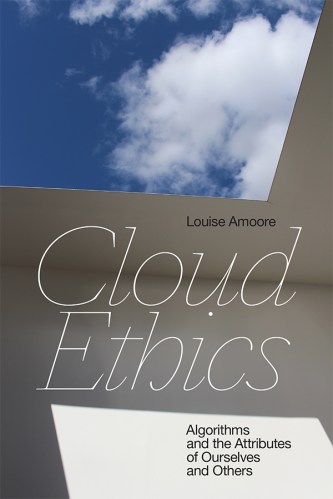
Louise Amoore, Cloud Ethics: Algorithms and the Attributes of Ourselves and Others – Duke UP, May 2020 (and link to Introduction)

978-1-4780-0831-6_prLouise Amoore, Cloud Ethics: Algorithms and the Attributes of Ourselves and Others – Duke University Press, May 2020.

Great to see this book is imminent – the Introduction can be read here.

In Cloud Ethics Louise Amoore examines how machine learning algorithms are transforming the ethics and politics of contemporary society. Conceptualizing algorithms as ethicopolitical entities that are entangled with the data attributes of people, Amoore outlines how algorithms give incomplete accounts of themselves, learn through relationships with human practices, and exist in the world in ways that exceed their source code. In these ways, algorithms and their relations to people cannot be understood by simply examining their code, nor can ethics be encoded into algorithms. Instead, Amoore locates the ethical responsibility of algorithms in the conditions of partiality and opacity that haunt both human and algorithmic decisions. To this end, she proposes what she calls cloud ethics—an approach to holding algorithms accountable by engaging with the social and technical conditions under which they emerge and operate.
“Beautifully written and richly documented, Louise Amoore’s Cloud Ethicsanalyzes the workings of algorithms in contemporary society, from those assessing security risks to self-learning and self-programming neural nets. She draws on her extensive interviews with experts in the field to explore the nuances of algorithmic doubt and certainty. Finally, she calls for a new ethics of doubt in which the individual components of algorithms are scrutinized to open new spaces for critique that can ‘crack open’ the seemingly certain fabulations of algorithmic calculation. Technically stunning and critically informed, this book is required reading for anyone interested in how to resist the current trends toward algorithmic governmentality.” — N. Katherine Hayles, Distinguished Research Professor of English, University of California, Los Angeles
“Calling for an embrace of the contingency and doubt that is inherent in the structure and working of algorithms, this important book refuses mythologies of certainty and machinic omnipotence. Framing computation as a partial accounting, Cloud Ethics moves beyond the unproductive binaries of ‘good’ and ‘bad,’ to consider algorithms as generative of complex political possibilities.” — Caren Kaplan, author of Aerial Aftermaths: Wartime from Above
Posted in Louise Amoore, Uncategorized | Leave a comment

NYU and Bologna talks cancelled

Unfortunately two forthcoming talks, at New York University on 26 March 2020 and at the University of Bologna on 12 May 2020, have been cancelled. The organisers and I hope they can been rearranged for a later date.

I cut my time in Uppsala short last week, and now won’t get to the Yale and Princeton libraries I’d planned to visit on the US trip. I’ve also had to cancel a few days in Paris. Most of these things were cancelled shortly before more and more things started to get restricted. All minor in the big picture, of course.

Posted in Conferences, Michel Foucault, The Early Foucault, Uncategorized | 2 Comments

Books received – Cacciari, Webster, Shakespeare, Jardine, Butler, Lefebvre, Iyengar, Beaufret

IMG_2165.jpg

Mainly in recompense for review work for Bloomsbury, including the final volume of the Arden Shakespeare Third Series, and Alice Jardine’s biography of Julia Kristeva, along with Judith Butler’s new book The Force of Nonviolence, Henri Lefebvre, Hegel, Marx, Nietzsche or the Realm of Shadows, and the first volume of Jean Beaufret’s Leçons de Philosophie.

Posted in Henri Lefebvre, Judith Butler, Julia Kristeva, Uncategorized, William Shakespeare | 1 Comment

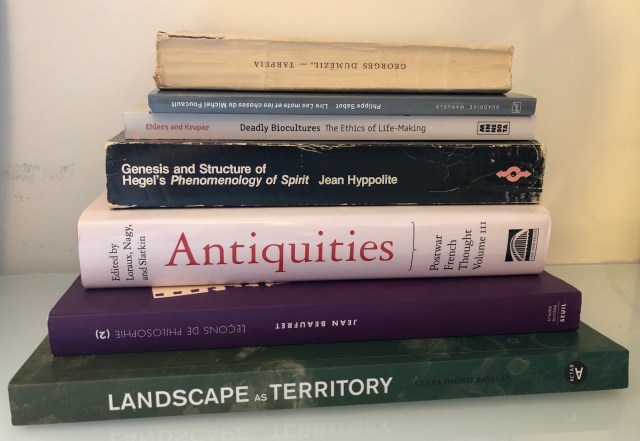
Books received – Dumézil, Sabot, Ehlers and Krupar, Hyppolite, Loraux et al, Beaufret, Landscape as Territory

A mixed pile of things, mainly bought second-hand; along with two books I was sent – Nadine Ehlers and Shiloh Krupar, Deadly Biocultures: The Ethics of Life-Making, and Landscape as Territory, edited by Clara Olóriz Sanjuán. The last has a transcription of a lecture I gave at the Architectural Association. It’s a visually stunning collection and I’m looking forward to the other contributions.

IMG_2166.jpg

Posted in Georg Wilhelm Friedrich Hegel, Georges Dumézil, Michel Foucault, Territory, Uncategorized | Leave a comment

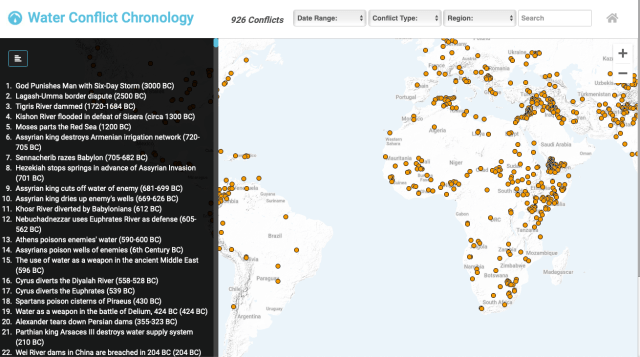
Mapping water conflicts

Screenshot 2020-02-28 at 09.50.58

http://www.worldwater.org/conflict/map/ – thanks to dmf for the link to this and the podcast in a previous post.

Posted in Uncategorized | Leave a comment

Interstitial – Podcast on space and consequences of our designs

Interstitial – Podcast on space and consequences of our designs

Each episode features one author on a new book that offers critical ways of understanding the worlds we make. Transdisciplinary perspectives from across the arts, social sciences, and humanities every Tuesday. Produced by David Huber.

Posted in Uncategorized | Leave a comment

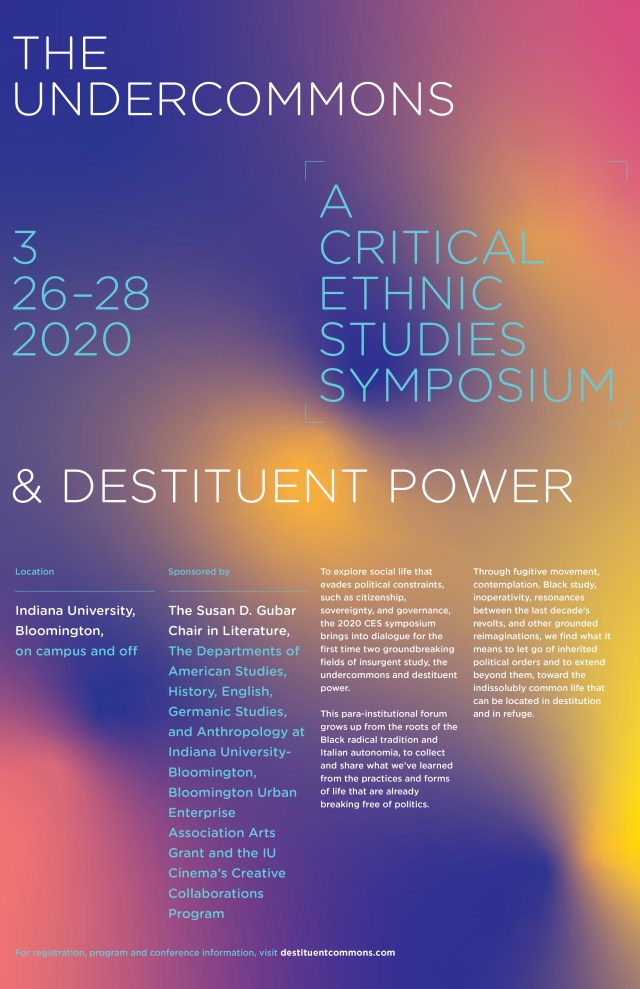
The Undercommons and Destituent Power, Indiana University, March 26-28, 2020

Copy of dest con no bleed-01.jpgThe Undercommons and Destituent Power, Indiana University, March 26-28, 2020 – full details here.
On March 26-28, 2020, Indiana University’s annual Critical Ethnic Studies symposium will bring into dialogue two fields of insurgent study: the undercommons and destituent power.

To explore social life that evades political constraints, such as citizenship, sovereignty, and governance, we turn to the groundbreaking work of Fred Moten, Stefano Harney and Giorgio Agamben.

This para-institutional forum grows up from the roots of the Black radical tradition and Italian autonomia, to collect and share what we’ve learned from the practices and forms of life that are already breaking free of politics.

Through fugitive movement, contemplation, Black study, inoperativity, resonances between the last decade’s revolts, and other grounded reimaginations, we find what it means to let go of inherited political orders and to extend beyond them, toward the indissolubly common life that can be located in destitution and in refuge.

Posted in Uncategorized | Leave a comment

On Geographies of Violence: Michael Watts interviewed by Stuart Elden (Society and Space archive)

5e3c4eb362272561035bea67_boarding-oil-platform-2005On Geographies of Violence: Michael Watts interviewed by Stuart Elden

An interview I did with Michael Watts a few years ago has been reposted on the Society and Space magazine site. Many thanks to Natalie Oswin for making this available again.

Posted in Uncategorized | 1 Comment