Cat Moir, Ernst Bloch’s Speculative Materialism: Ontology, Epistemology, Politics – Brill 2019; paperback forthcoming with Haymarket, December 2020

2019-10-25-Ernst-Block-Cat-Moir.jpgCat Moir, Ernst Bloch’s Speculative Materialism: Ontology, Epistemology, Politics – Brill 2019; paperback forthcoming with Haymarket, December 2020

In Ernst Bloch’s Speculative Materialism: Ontology, Epistemology, Politics, Cat Moir offers a new interpretation of the philosophy of Ernst Bloch. The reception of Bloch’s work has seen him variously painted as a naïve realist, a romantic nature philosopher, a totalitarian thinker, and an irrationalist whose obscure literary style stands in for a lack of systematic rigour. Moir challenges these conceptions of Bloch by reconstructing the ontological, epistemological, and political dimensions of his speculative materialism. Through a close, historically contextualised reading of Bloch’s major work of ontology, Das Materialismusproblem, seine Geschichte und Substanz (The Materialism Problem, its History and Substance), Moir presents Bloch as one of the twentieth century’s most significant critical thinkers.

Currently only an expensive hardback, but since it’s part of the Historical Materialism series, this should mean a paperback will follow. There’s also a discussion of the book at the University of Sydney on 25 October 2019.


Posted in Uncategorized | 1 Comment

Stuart Schrader, Badges without Borders: How Global Counterinsurgency Transformed American Policing – U California Press, November 2019

Now published – Stuart Schrader, Badges without Borders

stuartelden's avatarProgressive Geographies

9780520295629.jpgStuart Schrader, Badges without Borders: How Global Counterinsurgency Transformed American Policing– University of California Press, November 2019

From the Cold War through today, the U.S. has quietly assisted dozens of regimes around the world in suppressing civil unrest and securing the conditions for the smooth operation of capitalism. Casting a new light on American empire, Badges Without Borders shows, for the first time,  that the very same people charged with global counterinsurgency also militarized American policing at home.

In this groundbreaking exposé, Stuart Schrader shows how the United States projected imperial power overseas through police training and technical assistance—and how this effort reverberated to shape the policing of city streets at home. Examining diverse records, from recently declassified national security and intelligence materials to police textbooks and professional magazines, Schrader reveals how U.S. police leaders envisioned the beat to be as wide as the globe and worked to put…

View original post 44 more words

Posted in Uncategorized | Leave a comment

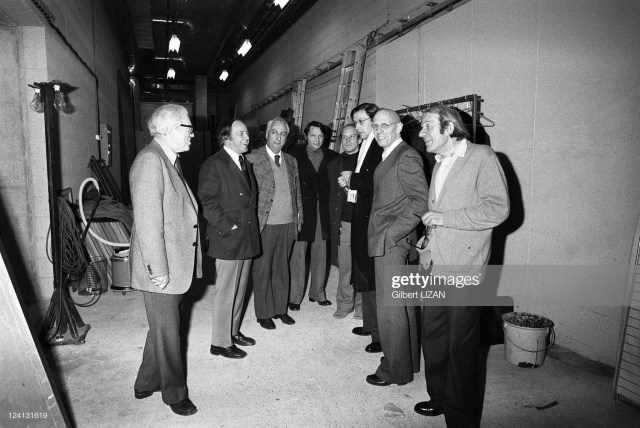
‘Le Temps musical’ video – Elliott Carter, Pierre Boulez, Roland Barthes, Jean-Claude Risset, Gerald Bennett, Michel Decoust, Michel Foucault, Gilles Deleuze

Many thanks to all who commented on Twitter and Facebook on yesterday’s photo – especially Alistair Leadbetter and Rangel Luis Manuel.

gettyimages-124131619-2048x2048

FRANCE – FEBRUARY 23: Michel Foucault, Roland Barthes and Pierre Boulez in Paris, France on February 23, 1978. (Photo by Gilbert UZAN/Gamma-Rapho via Getty Images)

From left to right, the people are Elliott Carter, Pierre Boulez, Roland Barthes, Jean-Claude Risset, Gerald Bennett, Michel Decoust, Michel Foucault, Gilles Deleuze.

[Update: on Facebook, Caleb Salgado suggests it isn’t Elliott Carter, but might be Milton Babbitt. Babbitt seems less likely, but it might not be Carter. There are some other images of this person with Foucault here. There is also an image of Carter in 1978 here (picture 4)]

Carter.JPG

There are some details on the event here.

Rangel also sent a link to a video of the event, organised by IRCAM at the Centre Pompidou. It includes Foucault’s contribution, which I’d not seen before.

It can be seen here [Update February 2023: this link seems to be broken; but it is also here].

Posted in Gilles Deleuze, Michel Foucault, Roland Barthes, Uncategorized | 2 Comments

Books received – Gabrys, Arendt, de Beauvoir, Prideaux, Brown, Milgram

Jennifer Gabrys, How to do Things with Sensors; Hannah Arendt, Between Past and Future; Simone de Beauvoir, The Second Sex; Sue Prideaux, I am Dynamite! A Life of Friedrich Nietzsche; Wendy Brown, In the Ruins of Neoliberalism; and Stanley Milgram, Obedience to Authority.

Jennifer Gabrys’s book was sent by the publisher; the rest were bought new or second-hand. Most are related to this year’s teaching.

Posted in Friedrich Nietzsche, Hannah Arendt, Simone de Beauvoir, Wendy Brown | Leave a comment

Boulez, Barthes… Foucault and Deleuze – who else is in the photo?

Yesterday I posted this picture on Twitter, asking who the three middle figures were – left to right, Boulez, Barthes, ?, ?, ?, Foucault and Deleuze. The photo was taken from Monoskop, which says it was taken at IRCAM, Paris, in February 1978.

[Update: see below for details, but it is Boulez, Barthes, Jean-Claude Risset, Gerald Bennett, Michel Decoust, Foucault, Deleuze]

Boulez_Barthes_Foucault_Deleuze_1978.jpg

I said that I thought the person next to Barthes was the composer Jean-Claude Risset, and @BarthesStudies suggested that the composer and conductor Michel Decoust was next to Foucault. But they also indicated that this was a cropped version of a larger picture, found in Marie Gil’s biography of Barthes, or at Getty Images:

gettyimages-124131619-2048x2048

This includes another figure I don’t recognise.

So, that would mean – unknown, Boulez, Barthes, Risset, unknown, Decoust, Foucault, Deleuze.

Anyone help with the other two people?

[Update: see below for details, but it is Elliott Carter, Pierre Boulez, Roland Barthes, Jean-Claude Risset, Gerald Bennett, Michel Decoust, Michel Foucault, Gilles Deleuze]

Alistair Leadbetter has suggested that Elliott Carter and Gerald Bennett may be the two others. The conference programme is here – medias.ircam.fr/xcd4f03 which lists Bennett, Risset and Decoust. Carter’s work was featured in a concert immediately before the conference.

Posted in Gilles Deleuze, Michel Foucault, Roland Barthes, Uncategorized | 4 Comments

Wendy Brown, In the Ruins of Neoliberalism: The Rise of Antidemocratic Politics in the West, Columbia UP, 2019 – and New Books Network discussion

9780231550536.jpgWendy Brown, In the Ruins of Neoliberalism: The Rise of Antidemocratic Politics in the West, Columbia University Press, 2019

Across the West, hard-right leaders are surging to power on platforms of ethno-economic nationalism, Christianity, and traditional family values. Is this phenomenon the end of neoliberalism or its monstrous offspring?

In the Ruins of Neoliberalism casts the hard-right turn as animated by socioeconomically aggrieved white working- and middle-class populations but contoured by neoliberalism’s multipronged assault on democratic values. From its inception, neoliberalism flirted with authoritarian liberalism as it warred against robust democracy. It repelled social-justice claims through appeals to market freedom and morality. It sought to de-democratize the state, economy, and society and re-secure the patriarchal family. In key works of the founding neoliberal intellectuals, Wendy Brown traces the ambition to replace democratic orders with ones disciplined by markets and traditional morality and democratic states with technocratic ones.

Yet plutocracy, white supremacy, politicized mass affect, indifference to truth, and extreme social disinhibition were no part of the neoliberal vision. Brown theorizes their unintentional spurring by neoliberal reason, from its attack on the value of society and its fetish of individual freedom to its legitimation of inequality. Above all, she argues, neoliberalism’s intensification of nihilism coupled with its accidental wounding of white male supremacy generates an apocalyptic populism willing to destroy the world rather than endure a future in which this supremacy disappears.

There is a discussion of the book at the New Books Network. Thanks to dmf for the link.


Posted in Uncategorized, Wendy Brown | 1 Comment

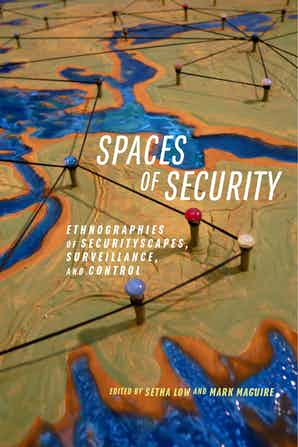
Setha Low and Mark Maguire (eds.), Spaces of Security: Ethnographies of Securityscapes, Surveillance, and Control – NYU Press, 2019

9781479870066.jpgSetha Low and Mark Maguire (eds.), Spaces of Security: Ethnographies of Securityscapes, Surveillance, and Control – NYU Press, 2019

An ethnographic investigation into the dynamics between space and security in countries around the world

It is difficult to imagine two contexts as different as a soccer stadium and a panic room. Yet, they both demonstrate dynamics of the interplay between security and space. This book focuses on the infrastructures of security, considering locations as varied as public entertainment venues to border walls to blast-proof bedrooms.

Around the world, experts, organizations, and governments are managing societies in the name of security, while scholars and commentators are writing about surveillance, state violence, and new technologies. Yet in spite of the growing emphasis on security, few truly consider the spatial dimensions of security, and particularly how the relationship between space and security varies across cultures.

This volume explores spaces of security not only by attending to how security is produced by and in spaces, but also by emphasizing the ways in which it is constructed in the contemporary landscape. The book explores diverse contexts ranging from biometrics in India to counterterrorism in East Africa to border security in Argentina. The ethnographic studies demonstrate the power of a spatial lens to highlight aspects of security that otherwise remain hidden, while also adding clarity to an elusive and dangerous way of managing the world.

Posted in Setha Low, Uncategorized | Leave a comment

Conference at Harvard University on Foucault’s Confessions of the Flesh (2019)

Conference at Harvard University on Foucault’s Confessions of the Flesh

Clare O'Farrell's avatarFoucault News

Conference at Harvard University on Foucault’s Confessions of the Flesh

5 December 2019

In February 2018, the fourth and final volume of Michel Foucault’s History of Sexuality project—Confessions of the Flesh—was published for the first time in French by Éditions Gallimard. This is an extraordinary publishing event since the book was not supposed to have been printed at all. This one-day conference will assess the reception and impact of this missing volume of Foucault’s History of Sexuality. It will highlight the text of Confessions of the Flesh, its place in Foucault’s oeuvre, the context in which he wrote, and the contemporary relevance of this new work. It is far enough away from the Foucault-overload of past decades that it is now possible to freshly examine the enduring value of this influential thinker—a re-examination inspired by the belated publication of his final book.

Organizers
Julian Bourg (Boston College)
Annabel Kim (Harvard…

View original post 160 more words

Posted in Uncategorized | Leave a comment

Books received – Foucault, Althusser, Dumézil, Kant

Some older books by Althusser, Dumézil, and Kant, and the most recent collection of Foucault’s lectures and writings, Folie, language, littérature, sent by the publisher. Books 13 Oct

Posted in Georges Dumézil, Immanuel Kant, Louis Althusser, Michel Foucault, Uncategorized | Leave a comment

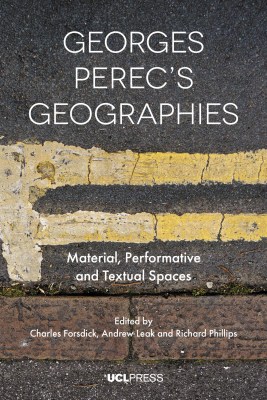
Georges Perec’s Geographies: Material, Performative and Textual Spaces – UCL Press 2019 (open access e-book)

_jpg_rgb_1500h.jpgGeorges Perec’s Geographies: Material, Performative and Textual Spaces, edited by Charles Forsdick, Andrew Leak, and Richard Phillips – UCL Press 2019. Available in physical copy and as an open access e-book.

Georges Perec, novelist, filmmaker and essayist, was one of the most inventive and original writers of the twentieth century. A fascinating aspect of his work is its intrinsically geographical nature. With major projects on space and place, Perec’s writing speaks to a variety of geographical, urban and architectural concerns, both in a substantive way, including a focus on cities, streets, homes and apartments, and in a methodological way, experimenting with methods of urban exploration and observation, classification, enumeration and taxonomy.

Georges Perec’s Geographies is the first book to offer a rounded picture of Perec’s geographical interests. Divided into two parts, Part I, Perec’s Geographies, explores the geographies within Perec’s work in film, literature and radio, from descriptions of streets to the spaces of his texts, while Part II, Perecquian Geographies, explores geographies in a range of material and metaphorical forms, including photographic essays, soundscapes, theatre, dance and writing, created by those directly inspired by Perec.

Georges Perec’s Geographies extends the body of Perec criticism beyond Literary and French Studies to disciplines including Geography, Urban Studies, Planning and Architecture to offer a complete and systematic examination of Georges Perec’s geographies. The diversity of readings and approaches will be of interest not only to Perec readers and fans but to students and researchers across these subjects.

Posted in Uncategorized | 2 Comments