A first-of-its-kind handbook outlining best practices and common pitfalls for students and textual scholars interested in beginning to work with manuscripts
While manuscripts are rare in most of the world today, they were once ubiquitous. Before the printing press, literature was preserved and transmitted through handwritten copies containing variant readings, mistakes, corrections, and other unique features. Those who study premodern texts, however, often use as their primary sources not these diverse artifacts but critical editions that present a single convenient hybrid text.
Brent Nongbri and Liv Ingeborg Lied argue that knowledge of manuscripts is important for all interpreters of ancient texts, even if learning how to study them can be confusing and intimidating. In this book they draw on their decades of experience with Jewish and Christian manuscripts to demystify manuscript work. Combining their interests in manuscripts as material artifacts with the ethical issues surrounding the study of manuscripts, Lied and Nongbri guide students through the main phases of research, from considerations of provenance and access to the practicalities of on-site research, analysis, and publication. The book includes aids for locating manuscripts, helpful case studies, tips for organizing data, a glossary, suggestions for further reading, and more.
Written in an engaging style with students in mind, this handbook provides an invaluable resource for anyone who wants to study a manuscript for the first time.
In this book, Morgan Golf-French offers a new interpretation of late Enlightenment German historiography in relation to ideas about race, culture, and politics. By paying close attention to the institutions within which these ideas were articulated, Golf-French reveals their complex and idiosyncratic development in the work of the prominent—and controversial—historians August Ludwig Schlözer, Christoph Meiners, Johann Gottfried Eichhorn, and Charles de Villers. As the book shows, these ideas and their authors not only shaped the major controversies of the time, from the rise of abolitionism to the dissolution of the Holy Roman Empire, but produced tropes and arguments of lasting significance in European thought.
The book argues that the ideas about race and culture which emerged in the years preceding the French Revolution were crucial in shaping German responses to the crises years of 1789–1815. Readers will discover both the contemporary significance of these ideas in early modern Germany and important insights into their long-term impact. As the book argues, the Enlightenment should be understood on its own terms, as an important phase in European intellectual history ultimately bound to the world of ancien régime Europe.
The Moment of Cubism – One of Berger’s most important collections of art criticism wherein he suggests that Cubism was a moment rather than a movement and makes a case for Cubism’s revolutionary influence
Landscapes – A survey of the aesthetic landscapes that have informed, challenged and nourished John Berger’s understanding of the world
Corker’s Freedom – A tender and bittersweet novel of a man’s dreams of freedom and romance
Available open access digitally under CC-BY-NC-ND licence.
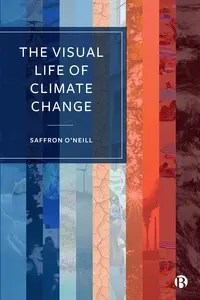
Images can play a key role in communication – but climate change imagery can be formulaic and narrow in perspective. Going beyond polar bears and wildfires, this book is a manifesto for opening up the visual discourse on climate.
Rather than portraying scenarios that can be remote from many people’s lives, Saffron O’Neill shows how images can be powerful tools to engage viewers and enable them to connect different issues together. With engaging case studies and practical advice throughout, the book shows how visuals can represent climate change in more diverse, equitable, inclusive and responsible ways.
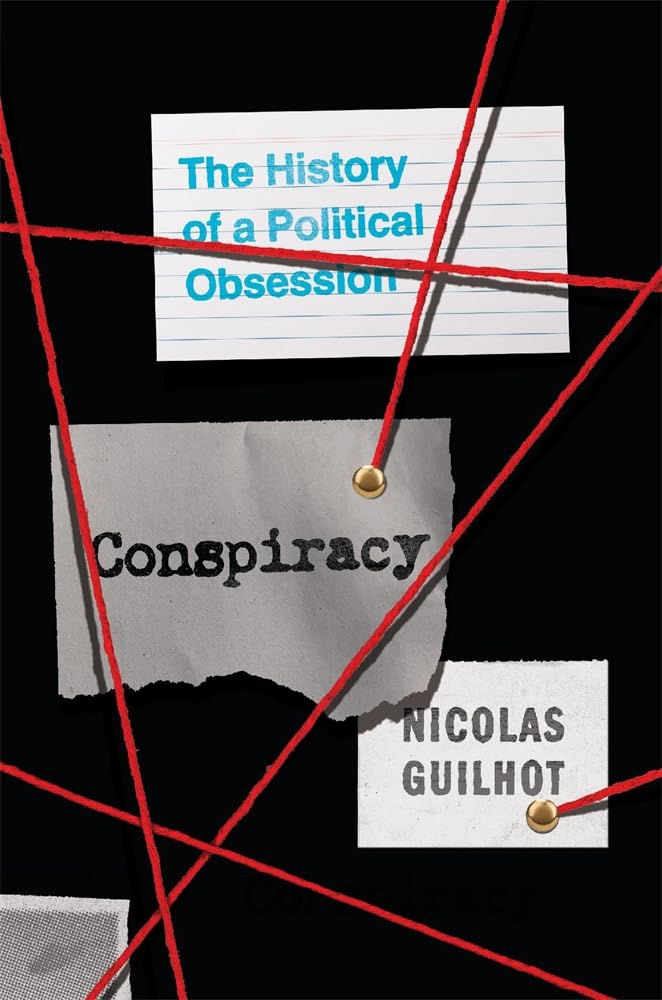
Pundits, scholars, and the general public alike have argued that conspiratorial thinking is the greatest threat to liberal democracy. Nicolas Guilhot, however, challenges us to see conspiracy theories as a sign of the public’s desperation in light of liberal democracy’s failures. Conspiracism is widespread across the political spectrum, as citizens struggle with their disenfranchisement. How are we to imagine the future at the purported “end of history”? And how might this impasse make us susceptible to hallucinations and paranoia?
Conspiracy shows that narratives of conspiracy historically gain popularity when politics ceases to offer hope and apocalyptic thinking becomes a last refuge. Taking the reader from Karl Popper’s coining of the term “conspiracy theory” in 1948 through the essential commentary of Hannah Arendt, Alexandre Koyré, Richard Hofstadter, and others, Guilhot reveals how the fear of conspiracies has always operated against a backdrop of antagonism between the powerful and the many, the rich and the poor, the oligarchy and the masses. Today’s fear of a grand plot is no exception.
Turning conventional wisdom on its head, Guilhot shows that society’s focus on truth and falsehood masks how conspiracy theories feed on the dysfunctions of liberal democracies that no longer offer credible pathways toward a better future. Conspiracy theories offer a ready-made explanation for the feeling that one lacks agency and freedom. Rather than the cause of the current crisis, they are one of its consequences.
After Émile Benveniste suffered a major stroke in late 1969, his former student and friend Georges Redard planned to publish some of Benveniste’s incomplete projects. Redard was by this time teaching at the University of Bern in Switzerland. One volume did appear after Benveniste’s death, Études sogdiennes in 1979, which collected most of his short writings on this language. Another volume was announced but never completed was Études de dialectologie iranienne, based on field notebooks kept by Benveniste when he conducted research in Iran and Afghanistan between February and August 1947. This research will be discussed on the basis of various archival sources in my study of Benveniste and Georges Dumézil. But while Redard clearly intended to publish the work which Benveniste had been unable to complete, no such study ever appeared.
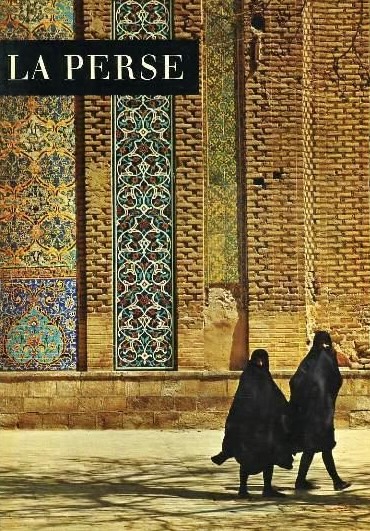
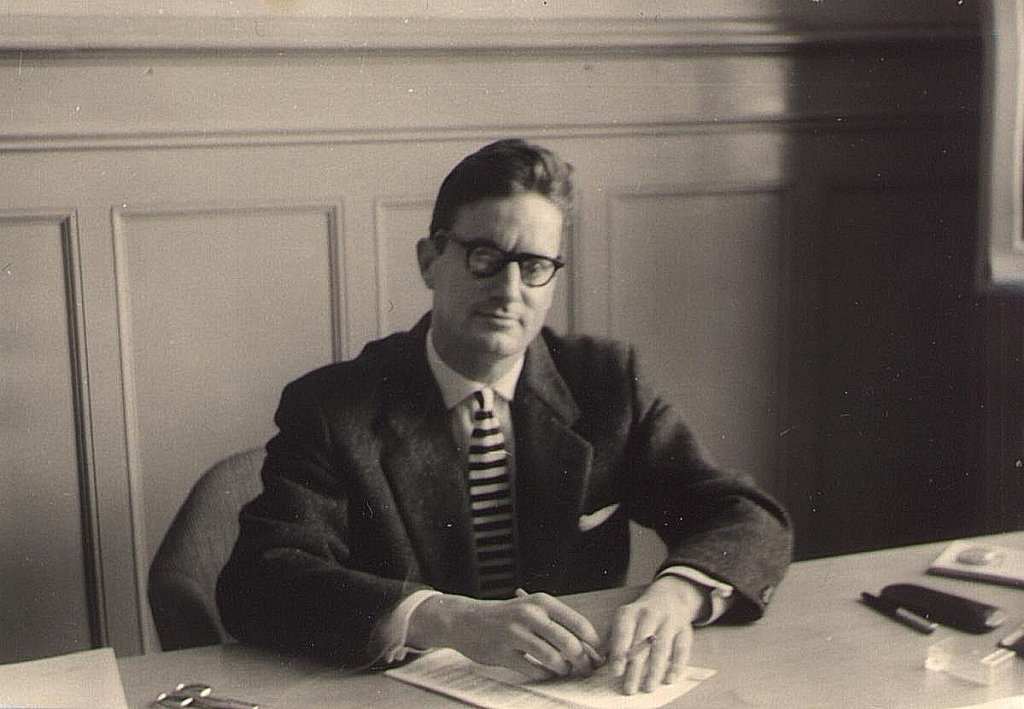
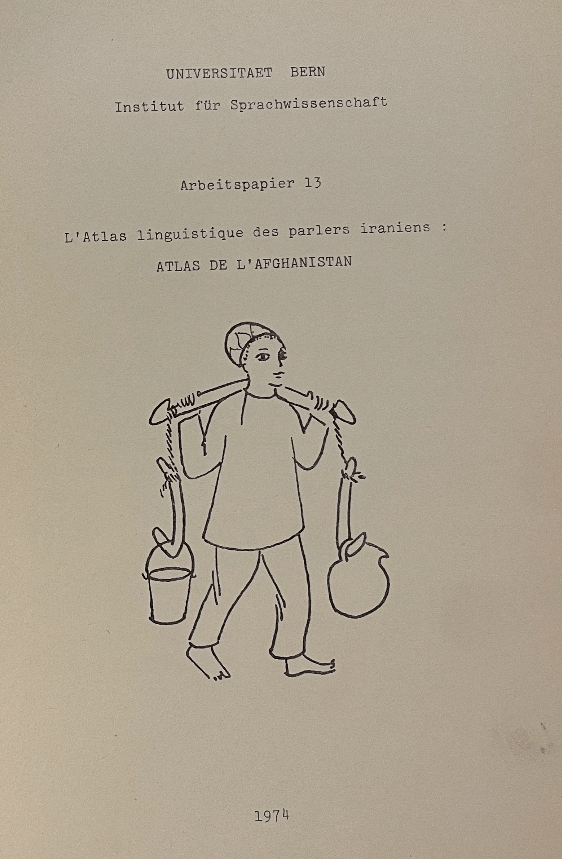
A composite image of the cover of La Perse (which has text by Redard), a photograph of Redard, and the illustrated cover of one of the working papers.
Redard’s failure to edit the notes of his friend may be related to his own research on a closely related topic – his long-promised but never completed Linguistic Atlas of Iranian, for which the planned first part was on Iranian languages spoken in Afghanistan (for overviews of his work, see pieces by Claude Sandoz and Gérard Fussman). Redard outlined the scope of his interest in Iranian languages in “Panorama linguistique de l’Iran” in 1954, looking at the history of the languages spoken in the area but only briefly surveying the present moment. It was made clear that the research on dialects could only be done by fieldwork, since most of these variants were not written down and if they were, it was done in foreign alphabets which did not always preserve key features of the spoken versions (pp. 145-46). He already indicated some of the challenges of doing such research in this difficult terrain, with problems of access to remote communities (pp. 147-48).
But the reward is commensurate with the effort. In the solitude of these desolate lands, under a relentlessly radiant sky, languages of a thousand-year-old civilisation survive, and they alone still allow us to study its progress and to examine its mysterious origins (p. 148).
Redard points in particular to Sever Pop, La dialectologie: Aperçu historique et méthodes d’enquête linguistiques, as an inspiration for the approach, but even though this has some treatment of non-European languages he notes that this says nothing about Iranian languages (“L’Atlas des parlers iraniens”, 70). Redard also indicates some existing European linguistic atlases as a comparison to the study they undertook in Afghanistan (“Etat des travaux et publication”, p. 10).
The basic methodology was to use questionnaires, recording vocabulary for many words, with a particular focus on “agricultural, pastoral and artisanal terminology”, and some focus on morphology and syntax (Redard, “L’Atlas des parlers iraniens”, p. 71). The questionnaire itself is hard to find, but there is a copy in the Sprachwissenschaft library of the University of Bern. Some tape recordings were made, on a Stellavox SM5 reel-to-reel recorder – portable by the standards of the time – but much was written down by hand. Fieldwork was ethnographic as well as linguistic, and they were accompanied by a professional photographer, Dominique Darbois, and an illustrator, Li Gelpke-Rommel, for parts of the work (“L’Atlas des parlers iraniens”, p. 72). Dominique Darbois and Jeannine Auboyer collaborated on L’Afghanistan et son art, The Art of Afghanistan, in 1968.
Redard reported on progress at the 24th, 25th and 26th International Congress of Orientalists in Munich in 1957, Moscow in 1960, and New Delhi in 1964; and at an International Conference on linguistic atlases held in Rome in 1967. Reports from Munich, Moscow and Rome were published; while the New Delhi proceedings just listed his title. Attempts to get UNESCO funding for the project were unsuccessful, but they received support from some national research foundations as well as the Iranian Shah and Minister for Education. Redard worked with some other Swiss academics, Iranian scholars and research assistants. Georg Morgenstierne headed the Comité international de dialectologie iranienne, which meant Redard was advised by many of Europe’s leading Iranists, including Walter Bruno Henning, Benveniste, and Ilya Gershevitch (I write about two other moments in Henning’s career here and here).
It is clear from Redard’s reports that the scale of the project did not allow speedy conclusions. He notes that in areas to be studied population density was low but “linguistic differentiation very great” (“L’Atlas des parlers iraniens”, pp. 70-71). One researcher could spend a week in 35 locations a year, which meant it would take five years to survey the Persian territory. The project required work in other countries with Iranian speaking populations, and Redard therefore appealed for support from governments and scholars in “Turkey, Iraq, Pakistan, China (Sarikoli) and above all the USSR and Afghanistan” (“Atlas linguistique de l’Iran 1957-1960”, p. 295). There were other difficulties including working in a Muslim country with limited access to female informants, and inaccurate maps for areas where research had to take place. Some of the work had to be conducted in border areas with non-Iranian languages, and nomadic and semi-nomadic people presented a challenge for a geographical map of language distribution. The solution was to examine these groups in their winter areas.
Redard reported that a German press was prepared to run a series entitled Archiv für iranische Dialektologie or Beiträge zur iranischen Dialektologie, and planned to report on interim progress before the Atlas itself, though he indicated that publications were likely to appear at “irregular intervals” (“Atlas linguistique de l’Iran 1957-1960”, p. 295). He presented on more general issues raised by work in linguistic geography at the Ninth International Congress of Linguists in Cambridge, Massachusetts in 1962 (“Le renouvellement des méthodes en linguistique géographique”). Redard also published two articles, both in Festschriften, of a series he called “Notes de dialectologie iranienne”, which are informed by the Atlas project – “Le palmier à Kuhr” and “Camelina”. (Benveniste also contributed to both of those collections.)
No volume of the planned Atlas was ever published. Perhaps Redard’s most thorough statement comes in his chapter “Other Iranian Languages”, commissioned by Thomas Sebeok for his Current Trends in Linguistics series. However this chapter ends with the note that the text “is regrettably incomplete. The concluding section was sent from Iran but never received by the editors; it will appear elsewhere” (p. 121 n. 18). This note summarises a long story, beginning with an initial commission in February 1967, with a deadline of 31 December 1967. It leads thorough missed deadlines in the winter of 1967-68 and stretching through the spring and summer of 1968 when he was unwell and spent time in hospital. Eventually he submitted a partial manuscript in late 1968, shortly before leaving for Afghanistan.
Redard missed repeated deadlines to submit the additional material, partly due to recurrent illness which again led to his hospitalisation. He eventually submitted an incomplete manuscript in mid-March 1969 and promised more to follow in ten days. There was extensive correspondence, increasingly desperate between the editor Thomas Sebeok in Indiana, the publisher Mouton & Co in the Netherlands and Redard in Switzerland to try to get the material, delaying the book by more than a year. It is unclear that Redard ever sent the missing material. Sebeok wrote to his editorial assistant in April 1969 to say that he was sending the “translation of Redard’s further instalment”. He noted “whether the last one or not we have no way to tell. Assume that it is and forward to Mouton accordingly”. Fatally he added that they would not send the translation “to the author for checking”, contrary to their usual practice, but that he could “make minor corrections in galley”. The assumption that they had the complete text led to the release of the honorarium, of $300, a lot of money in 1969. In May 1969 some additional material was received, but somewhere between Sebeok’s assistant telling Mouton it was being translated and needed to be added, something went wrong. In June, Mouton were told to “go ahead and typeset the Redard article”, perhaps without having received the material. Crucially this letter said Redard had “sent nothing new”. It appears that Sebeok’s assistant meant nothing since the part being translated in May; but Mouton took this to mean nothing since the part they already had. A note from Mouton suggests they had received pp. 42-46 of Redard’s text, which they incorrectly assumed to be the end.
This could have been resolved at proof stage. But Redard did not return the galley proofs, sent to him in November 1969, despite reminders by mail and cable. Sebeok and his team amended the proofs themselves and sent them back to Mouton in January 1970. When Redard finally saw the proofs in April 1970, he was appalled, and wrote in strong terms about the missing material, which he says had been sent, but the editor and press pushed back hard saying that he needed to have alerted them much earlier. The problem was partly that the pagination for subsequent chapters was fixed, so they considered printing it at the end of the volume as an appendix, even in French if there was no time for translation. Sebeok and his assistant claimed they had never received the final part. It seems Redard did not even keep a manuscript. In the end, the press was forced to add the note that it was incomplete, and suggested that the remaining part could appear elsewhere, perhaps in the press’s journal Linguistics, and that an offprint could be mailed with the book. It seems Redard never took up this offer, either because the lack of a manuscript prevented him from reconstituting the material, or because it was never actually written.
One part of the wider research project was the Linguistic Atlas of Afghanistan. In 1967 in response to a conference question, Redard said that this would be the first part of the wider Iranian atlas to be published (“L’Atlas des parlers iraniens”, p. 76). It was led by Redard with Charles Kieffer, with advice from Morgenstierne until his death in 1978. Kieffer had been a student of Benveniste’s Iranian and Comparative Grammar classes at the École pratique des hautes études between 1965-66 and 1968-69. Redard reported on wider the work in a small pamphlet in 1974, L’Atlas linguistique des parlers iraniens, which also included two pieces by Kieffer and one by Sanaoullah Sana, along with maps and drawings. These were all papers presented to the 29th International Congress of Orientalists, held in Paris in July 1973 (L’Atlas linguistique des parlers iraniens, p. 3). As far as I can tell, no formal proceedings of this event were published. It was held in Paris to celebrate the 100th anniversary of the first Congress, and was the last to be held with this name. There, again, Redard acknowledges the support of Benveniste and Morgenstierne, and notes that the previously sceptical Henning was now more supportive of the work being conducted (“Etat des travaux et publication”, p. 7). But it is important to recognise that the research was not just conducted by Europeans, but was a genuine partnership with Afghan scholars. Redard particularly indicates N.A. Shāker, who directed the Linguistic Institute at the University of Kabul, and had spent six months in Switzerland, and S.E. Abd-ul-Ghafūr Farhādi (“Etat des travaux et publication”, 8).
Redard recounts that the Afghanistan work was completed between 1962 and 1971, with data gathered in 252 areas, with 269 completed questionnaires (“Etat des travaux et publication”, p. 9). In 1974 he said that six volumes were planned, with the first to cover “the questionnaires, the transcription system, the reports of the inquiries and a large number of drawings and photographs” (“Etat des travaux et publication”, p. 17). Neither this volume nor any of the subsequent ones were published. Redard published no other work from this project either, though a short piece on dialectology by Redard and Kieffer concerning shoe-making in Bāmyān appeared in 1968 in a tribute to Kaj Barr (“La fabrication des chaussures à Bāmyān. Notes de dialectologie afghane”).
Gérard Fussman hints at the political challenges to the Iranian Atlas project, but does not explain further. Fussman was author of the 1972 Atlas Linguistique des Parlers Dardes et Kafirs [Linguistic Atlas of Dardic and Kafiri (or Nuristani) Speakers], so had experience in a similar field, spanning Afghanistan, Pakistan and disputed Kashmir. Redard reports on these difficulties in 1967, saying that the part of Pakistan they were most interested in was in revolt against the government. The central government were therefore unwilling to allow linguists access, as they feared they might be more interested in oil than languages (Redard, “L’Atlas des parlers iraniens”, p. 76). Because of this, the research was going to begin with Afghanistan, which was relatively stable at the time. The Iranian Revolution of 1978-79 and the Soviet invasion of Afghanistan in December 1979 added to these difficulties, and made further fieldwork almost impossible. Redard apparently said that the Afghan material was gathered “at the eleventh hour” before much was irretrievably lost.
In 1974 Kieffer provided an outline of how they were planning to map their findings, but while useful this was only a preliminary report (“L’établissement des cartes phonétiques: premiers resultants”). Kieffer wrote a doctoral thesis on the languages of the Lōgar valley of Maidan Wardak province in 1975. Benveniste directed his research at the Centre national de la recherche scientifique (CNRS) from 1964, and in 1966 suggested Kieffer focus research “on this rapidly disappearing Ōrmurī language”. Lazard took over the supervision in 1970, and Kieffer worked closely with Redard too. Kieffer published “Les formules de lamentations funèbres des femmes à Caboul: awåz andåxtan-e zanå. Note de dialectologie et d’ethnographie afghanes” in one of the 1975 tribute volumes to Benveniste. After a great deal of additional work he published his grammar of Ōrmurī in 2003, but adds that his planned work on Persian and Pashto was delayed because of “the impossibility of visiting the field for twenty years”, as well as the delays with the Atlas, on which he was “relying greatly” (Grammaire de l’ōrmuṛī de Baraki-Barak (Lōgar, Afghanistan),pp. 15, 20). Kieffer would go on to publish a study of taboos and prohibitions in the languages of Afghanistan in 2011. Daniel Septfonds has compiled a useful list of his other publications.
Kieffer said of the Atlas that the “materials are assembled, only the commentary remains unfinished. Unfortunately this ALA still sleeps in the archives of the University of Berne” (Tabous, interdits et obligations de langage en Afghanistan, [6]).
The Atlas remained in that state and Kieffer’s death in 2015 seems to have broken the last link in the chain back through Redard to Benveniste’s work in 1947. However, in 2018 the Norwegian Institute of Philology launched a project to make use of these extensive archives. This aims to revive the Atlas in its original form, aiming to give a historical sense of the data collected by Redard and his colleagues (see here). A brief report and some photographs are on the Institute’s Facebook page. There is also an ongoing project by Erik Anonby, Mortaza Taheri-Ardali and Amos Hayes to produce a new Atlas of the languages of Iran.
Acknowledgements
Thank you to Florence Shahabi for some useful information about the Norwegian project and sharing one of the hard-to-find reports.
References
Erik Anonby, Mortaza Taheri-Ardali and Amos Hayes, “The Atlas of the Languages of Iran (ALI): A Research Overview”, Iranian Studies 52 (1-2), 2019, 199-230.
Émile Benveniste, “Coutumes funéraires de l’Arachosie ancienne”, in W. B. Henning and E. Yarshater eds., A Locust’s Leg: Studies in honour of S.H. Taquizadeh, London: Percy Lund, Humphries & Co, 1962, 39-43.
Émile Benveniste, “La racine yat- en indo-iranien”, in Indo-Iranica: Mélanges présentés à Georg Morgenstierne à l’occasion de son soixante-dixième anniversaire, Wiesbaden: Otto Harrassowitz, 1964, 21-27.
Émile Benveniste, Études sogdiennes, ed. Georges Redard, Wiesbaden: Dr Ludwig Reichert Verlag, 1979.
Dominique Darbois and Jeannine Auboyer, L’Afghanistan et son art, Paris: Éditions du cercle d’art, 1968; The Art of Afghanistan, trans. Peter Kneebone, Feltham: Paul Hamlyn, 1968.
Gérard Fussman, Atlas Linguistique des Parlers Dardes et Kafirs, Paris: École française d’Extrême-Orient/A. Maisonneuve, two volumes, 1972.
Ch.-M. Kieffer and G. Redard, “La fabrication des chaussures à Bāmyān. Notes de dialectologie afghane”, Acta Orientalia 31, 1968, 47-53.
Charles M. Kieffer, Les parlers de la vallée du Lôgar-Wardak (Afghanistan): Étude de dialectologie iranienne, Ph.D. dissertation, Sorbonne Nouvelle, Paris, 1975.
Charles Kieffer, “Les formules de lamentations funèbres des femmes à Caboul: awåz andåxtan-e zanå. Note de dialectologie et d’ethnographie afghanes”, in Mélanges linguistiques offerts à Émile Benveniste, Paris, 1975, 313-23.
Charles M. Kieffer, Grammaire de l’ōrmuṛī de Baraki-Barak (Lōgar, Afghanistan), Wiesbaden: Dr Ludwig Reichert Verlag, 2003.
Charles M. Kieffer, Tabous, interdits et obligations de langage en Afghanistan: Éléments du vocabulaire de la vie privée en terre d’Islam, Wiesbaden: Reichert, 2011.
Ch. M. Kieffer, “L’établissement des cartes phonétiques: premiers resultants”, in L’Atlas linguistique des parlers iraniens, in Georges Redard, L’Atlas linguistique des parlers iraniens: L’Atlas de l’Afghanistan, Universität Bern, Instituts für Sprachwissenschaft, Arbeitspapier 13, Bern, 1974, 21-34.
Sever Pop, La dialectologie: Aperçu historique et méthodes d’enquête linguistiques, Louvain: Chez l’auteur, 2 volumes, 1950.
Georges Redard, “Panorama linguistique de l’Iran”, Asiatischen Studien VIII,1954, 137-48.
Georges Redard, “Projet d’un atlas linguistique de l’Iran”, in Herbert Franke ed., Akten des Vierundzwanzigsten Internationalen Orientalisten-Kongresses München 28. August bis 4. September 1957, Wiesbaden: Deutsche Morgenländische Gesellschaft, 1959,440-44.
Georges Redard, Atlas Linguistique de l’Iran: questionnaire normal, Berne: Chez l’auteur, 1960.
Georges Redard, “Le palmier à Kuhr: Notes de dialectologie iranienne I” in W. B. Henning and E. Yarshater eds., A Locust’s Leg: Studies in honour of S.H. Taquizadeh, London: Percy Lund, Humphries & Co, 1962, 213-19.
Georges Redard, “Atlas linguistique de l’Iran 1957-1960”, Proceedings of the International Congress of Orientalists XXV, Moscow: Kraus, five volumes, 1963, Vol II, 294-96.
Georges Redard, “Le renouvellement des méthodes en linguistique géographique”, in Horace G. Lunt ed., Proceedings of the Ninth International Congress of Linguists, Cambridge, Mass. August 27-31, 1962, The Hague: De Gruyter, 1964, 252-57.
Georges Redard, “Camelina: Notes de dialectologie iranienne II”, in Indo-Iranica: Mélanges présentés à Georg Morgenstierne à l’occasion de son soixante-dixième anniversaire, Wiesbaden: Otto Harrassowitz, 1964, 155-62.
Georges Redard, “Le renouvellement des méthodes en linguistique géographique”, in Horace G. Lunt ed., Proceedings of the Ninth International Congress of Linguists, Cambridge, Mass. August 27-31, 1962, The Hague: De Gruyter, 1964, 252-57.
Georges Redard, “Atlas linguistique des parles iranniens” [sic]: Proceedings of the Twenty-Sixth International Congress of Orientalists, New Delhi: Organising Committee XXVI International Congress of Orientalists, four volumes, 1966-70, Vol II, 254.
Georges Redard, “L’Atlas des parlers iraniens”, in Atti del convegno internationale sul Tema: Gli atlanti linguistici Problemi e risultati (Roma 20-24 ottobre 1967), Rome: Accademia Nazionale dei Lincei, 1969, 69-75, with discussion 76-78.
Georges Redard, “Other Iranian Languages” in Thomas A. Sebeok ed., Current Trends in Linguistics, vol. 6, La Haye-Paris: Mouton & Co, 1970, 97-135.
Georges Redard, L’Atlas linguistique des parlers iraniens: L’Atlas de l’Afghanistan, Universität Bern, Instituts für Sprachwissenschaft, Arbeitspapier 13, Bern, 1974.
Claude Sandoz, “Georges Redard (1922-2005)”, Cahiers Ferdinand de Saussure 58, 2005, 21-25
Harold Bailey papers, Ancient India and Iran Trust, Georges Redard-Harold Bailey correspondence
This is the 67th post of a weekly series, posted every Sunday throughout 2025, and continuing into a second year. The posts are short essays with indications of further reading and sources. They are not as formal as something I’d try to publish more conventionally, but are hopefully worthwhile as short sketches of histories and ideas. They are usually tangential to my main writing focus, a home for spare parts, asides, dead-ends and possible futures. I hope there is some interest in them. They are provisional and suggestions are welcome. A few, usually shorter, pieces in a similar style have been posted mid-week. I’m not sure I’ll keep to a weekly rhythm in 2026, but there will be at least a few more pieces.
The full chronological list of ‘Sunday histories’ is here, with a thematic organisation here.
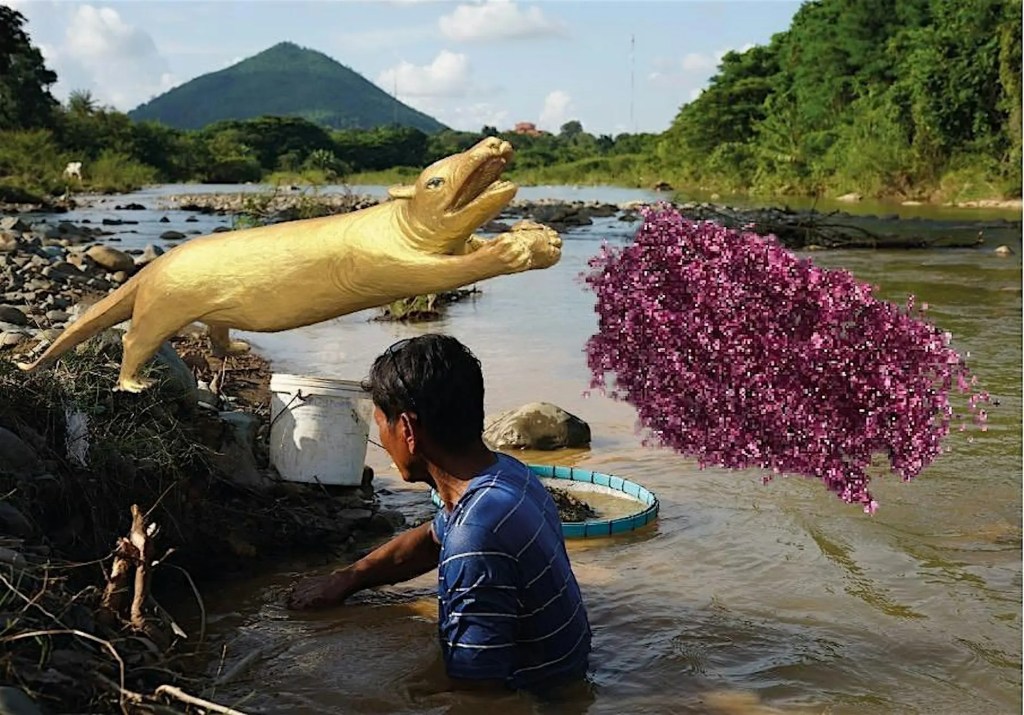
A fragment of ruby, a hand-written list of sapphire sales from February 1918, a much-loved pop song crooned during Cambodia’s second ‘Golden-Age’, a necklace of tumbled garnet chips, a golden otter, a mosquito infected with drug-resistant malaria, a head-dress from Ancient Rome, an up-turned muddy plastic bottle on a bamboo stick. Any and all of these offer generative beginnings for telling Earth Stories from Cambodia’s Land of the Gemstones.
The Land of the Gemstones, located in Cambodia’s North-Western forested uplands, has for millennia been a source of gemstones, a site of geopolitical controversy and a richly fabled land. Yet in the wake of the Khmer Rouge whose genocidal regime was funded by extraction of stones and timber from the area, many of these stories remain untold. For the past three years we (a group of Cambodian and British researchers and artists) have been collaborating with miners, cutters, dealers, stones and spirits to track gemstone geobiographies and explore the lithic intimacies of lives lived seeking, shaping and protecting gemstones.
The Earth Stories we share here draw together ethnography, image, song and stone in a geopoetic response to the challenges of living and researching lithic lives in the Land of the Gemstones. Some of these challenges are unique to this place and its practices, others are shared with those mining around the world and all sit within the impulse to complicate the Earth stories that colonialisms have told.
Harriet Hawkins is Professor of GeoHumanities at Royal Holloway, University of London. Her research focuses on the intersections of geography, art, creativity, aesthetics, and the imagination. She explores how creative practices can contribute to critical contemporary issues – such as the current and future use of underground spaces, and engagements with climate change. Her recent research project, THINK DEEP, was funded the European Research Council. She is the author of For Creative Geographies(Routledge 2013), Creativity (Routledge 2016) and Geography, Art, Research: Artistic Research in the GeoHumanities (Routledge 2020).
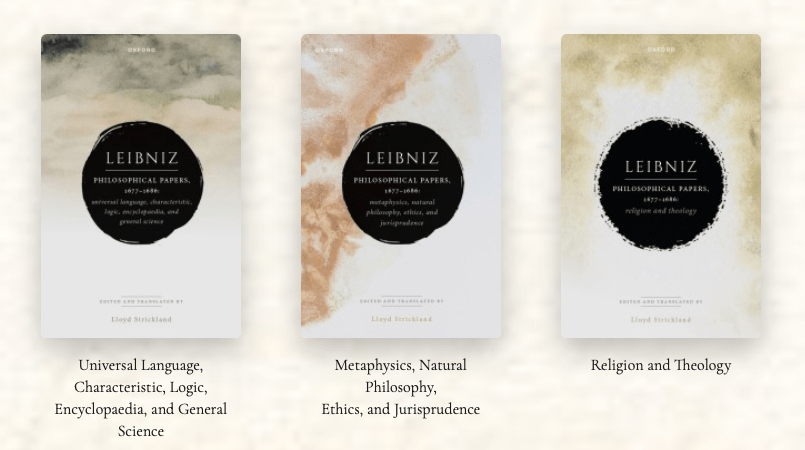
The three volumes of Leibniz’s Philosophical Papers (1677–1686) published by Oxford University Press represent the first stage in a larger project to recover Leibniz’s philosophical writings directly from manuscript sources and present them in a scholarly English edition.
Leibniz continued writing philosophy for another thirty years after 1686, and much of this later work has never been brought together in a modern English edition. The project now turns to these later writings.
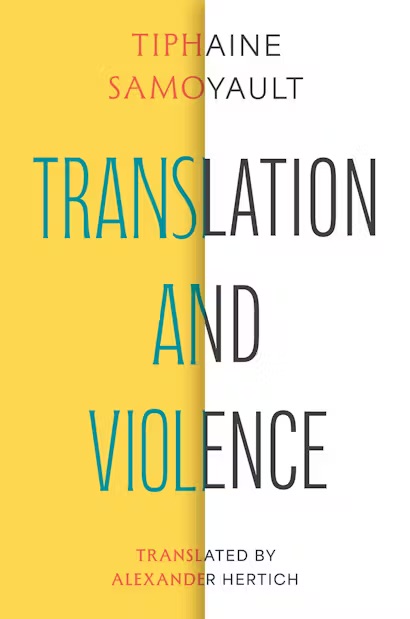
Tiphaine Samoyault, Translation and Violence, trans. Alexander Hertich, Princeton University Press, September 2026
The rapid development of AI-powered translation tools is making translation more accessible than ever before, raising in a dramatic new way the old utopian promise of translation—to allow transparent dialogue across linguistic barriers. But algorithmic translation brings great risks, including increasing inequalities in linguistic representation, reinforcing the dominance of a few languages, accelerating the disappearance of vulnerable languages, and even ostensibly eliminating the need to learn foreign languages. In Translation and Violence, Tiphaine Samoyault offers a provocative rethinking of the ethics and politics of translation in the age of AI. She shows how translation can be linguistically and politically violent—but also how it can be a means of resistance, justice, and reparation.
The book examines links between translation and violence during European colonialism and South African apartheid, under totalitarian regimes, and in Nazi camps. It engages with numerous philosophers and translation theorists, among them Derrida, Berman, Meschonnic, Glissant, and Spivak. And it offers detailed analyses of important literary texts that illustrate the violences of translating, including works by Proust, Primo Levi, Celan, and Perec.
Despite the violence that translation can do, Translation and Violence argues for a theory and practice of translation that can contribute to dialogue between cultures, literatures, and languages, and to the political possibility of creating a common world.
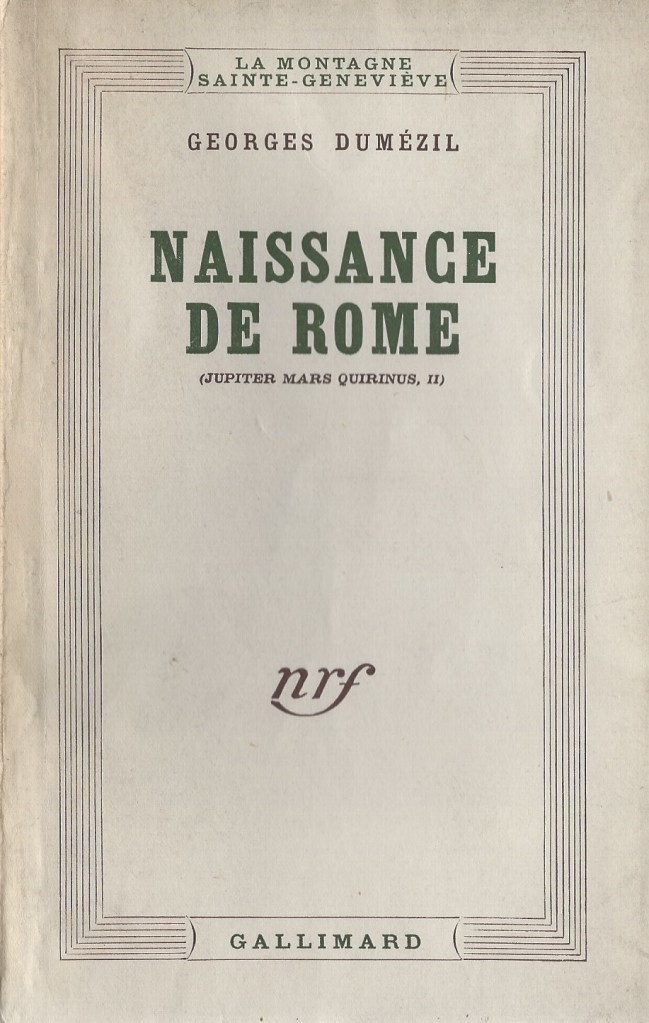
With only rare exceptions, I’ve not tended to buy second-hand books with a view to the edition or dedications. Generally, I’ve been getting hold of copies because of the content, and the relatively few times I’ve looked for a first edition has been when that is different from later reprints. This was the case, for example, with some of Foucault’s early books.
One of the exceptions was getting a book from the sale of Georges Bataille’s library – a copy of Musset, dedicated by Henri Lefebvre. That copy is briefly mentioned and photographed here.
With Georges Dumézil, tracking down some of his books can be a challenge in any edition or condition, and one of the few times I tried hard to get a first edition was with Mitra-Varuna, in part because of changes between it and the second edition, and the editorial work I was doing. I did eventually get a copy, and I say a bit more about the challenges of finding the first edition here.
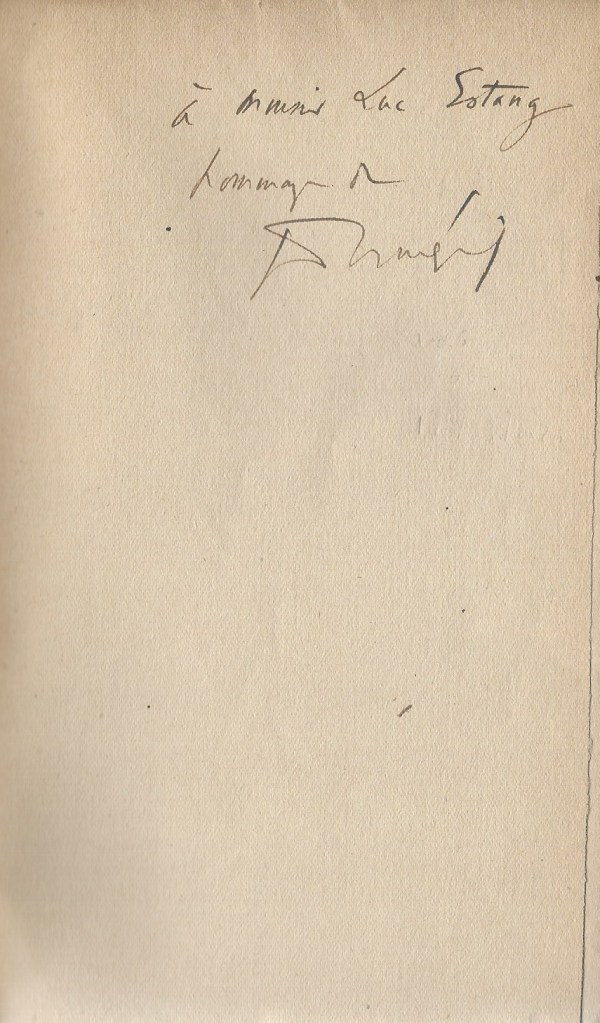
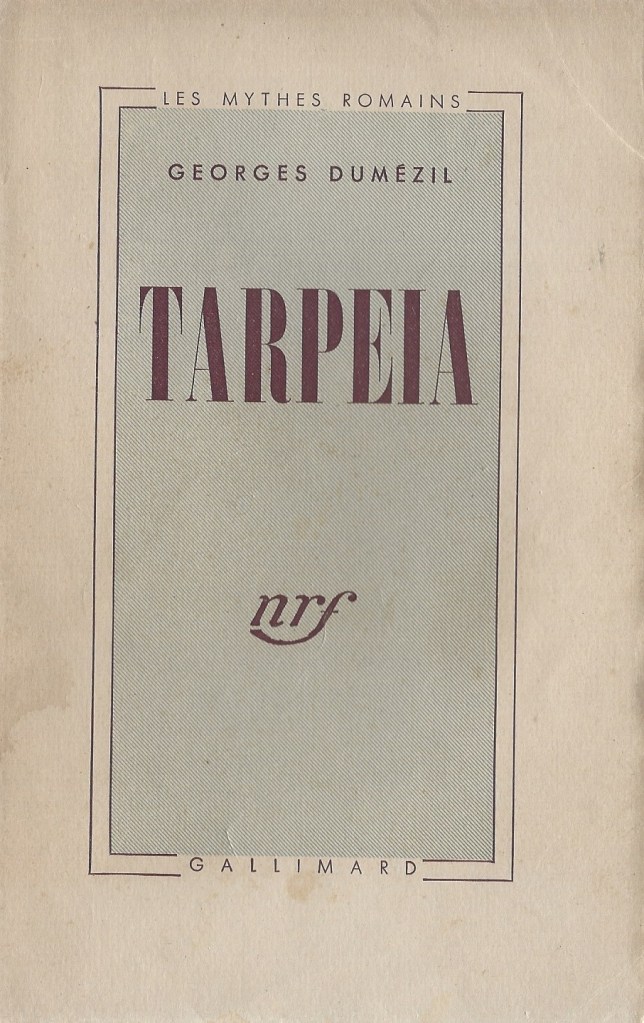
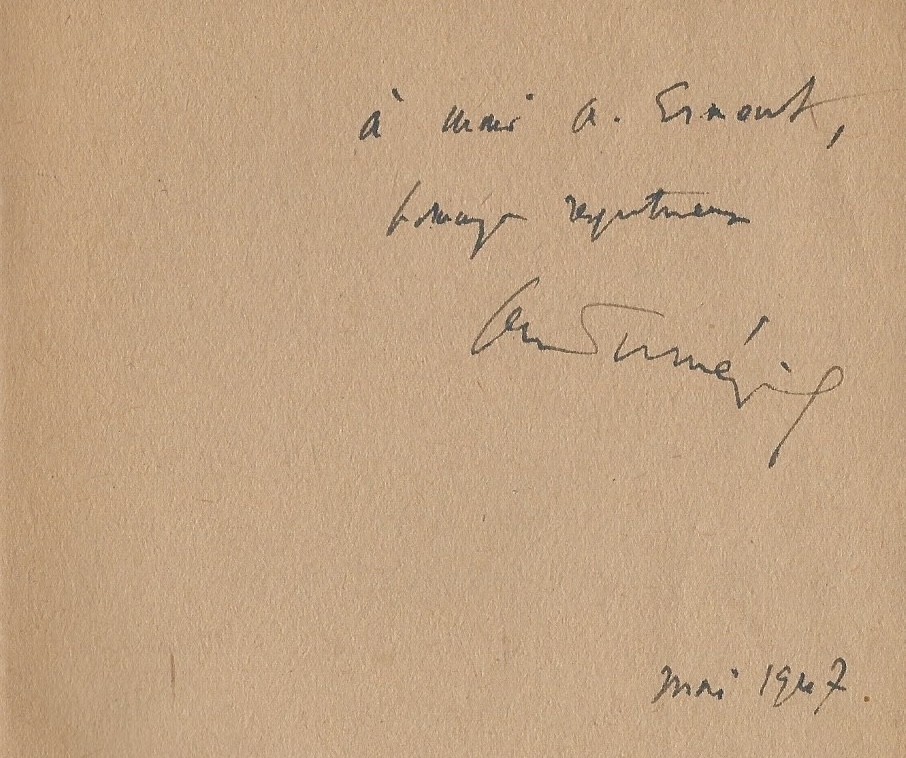
With his other books, with two exceptions I have found copies, and by chance, a couple of them have dedications. They were not especially expensive – I’m not sure that the sellers realised it was his handwriting, which is hard to read, and Dumézil hardly has the premium to his name that, for example, a signed book by Foucault would have.
The copy of Naissance de Rome has the dedication: “à Monsieur Luc Estang / hommage de Dumézil”.
The copy of Tarpeia says “à Monsieur A. Ernest, hommage respectueux / Georges Dumézil / mai 1947”.
The dedicatees are in themselves interesting. Alfred Ernout was a colleague of Dumézil’s at the Collège de France and a specialist on Latin. He and Antoine Meillet co-authored an etymological dictionary of Latin. But Ernout had known Dumezil for decades, teaching him at a lycée in Troyes.
Luc Estang was the pen-name of the unfortunately named Luc Bastard, a novelist, poet and literary critic. I know little about his links to Dumezil, though it is not surprising they would have known each other.
References
Georges Dumézil, Tarpeia, Paris: Gallimard, 1947 (Les Mythes Romaines series).
Georges Dumézil, Naissance de Rome (Jupiter, Mars, Quirinus II), Paris: Gallimard, 1944.
Alfred Ernout and Antoine Meillet, Dictionnaire étymologique de la langue latine: Histoire des mots, Paris: Klincksieck, revised fourth edition, 2001 [1932].
This note is in the same style as the ‘Sunday histories‘ posts, though its minor status means I’ve posted it mid-week.