Historical Materialism 15th Annual Conference – 8-11 November 2018, SOAS, London

Historical Materialism 15th Annual Conference – 8-11 November 2018, SOAS, London
 Foucault in California [A True Story—Wherein the Great French Philosopher Drops Acid in the Valley of Death] – Heyday 2019. This is the famous/infamous memoir of Simeon Wade, with a foreword by Heather Dundas.
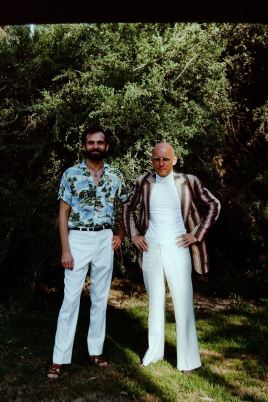
In The Lives of Michel Foucault, David Macey quotes the iconic French philosopher as speaking “nostalgically…of ‘an unforgettable evening on LSD, in carefully prepared doses, in the desert night, with delicious music, [and] nice people.’” This came to pass in 1975, when Foucault spent Memorial Day weekend in Southern California at the invitation of Simeon Wade—ostensibly to guest-lecture at the Claremont Graduate School where Wade was an assistant professor, but in truth to explore what he called the Valley of Death. Led by Wade and Wade’s partner Michael Stoneman, Foucault experimented with psychedelic drugs for the first time; by morning he was crying and proclaiming that he knew Truth.
Foucault and Wade in 1975 – click to see full picture from Boom California.
Foucault in California is Wade’s firsthand account of that long weekend. Felicitous and often humorous prose vaults readers headlong into the erudite and subversive circles of the Claremont intelligentsia: parties in Wade’s bungalow, intensive dialogues between Foucault and his disciples at a Taoist utopia in the Angeles Forest (whose denizens call Foucault “Country Joe”); and, of course, the fabled synesthetic acid trip in Death Valley, set to the strains of Bach and Stockhausen. Part search for higher consciousness, part bacchanal, this book chronicles a young man’s burgeoning friendship with one of the twentieth century’s greatest thinkers.
It’s a great subtitle, certainly, but the cover is perhaps a little disappointing, especially when there are such great photos of Foucault on this ‘trip’. Simeon Wade died in October 2017, but shortly before his death he took part in a fascinating interview with Heather Dundas. It’s available in Boom California – which also has some of the photos.
Another picture of Foucault with Wade and Stoneman was used for a feature in Time magazine in 1981, and can be seen here. The ‘Chez Foucault’ fanzine by Wade – an interesting document and the only English source of an interview is available here.
CFP: From Sense to Machinic Becoming – the 12th Annual Deleuze & Guattari Studies Conference
Royal Holloway, University of London 8-10 July 2019
The year of the 12th Annual Deleuze & Guattari conference marks the 50th anniversary of three crucial events in the development of their work that would have lasting impact: Deleuze’s publication of his second major work The Logic of Sense; Guattari’s composition of his ‘Machine and Structure’, which critically reviewed both that work and Deleuze’s earlier Difference and Repetition; and the pair’s first face-to-face meeting. The conference theme aims to capture this important point of transition that sees the close of Deleuze’s earlier solo career and the beginning of Deleuze and Guattari’s collaboration, which brings with it their break with structuralism and psychoanalysis as well as explorations of whole new areas of aesthetics, ethics, politics, archaeology, science, evolutionary theory, and more.
Full details here
 Shakespearean Territories was due to be published this week, but there is a slight delay – apparently due to the printer and to paper shortages in the US (this really is a thing).
It should available very soon, hopefully in the next week or two, and I’ll post here when available.
CFP: Translating Philosophy and Theory – Style, Rhetoric and Concepts – Warwick, 11 May 2019
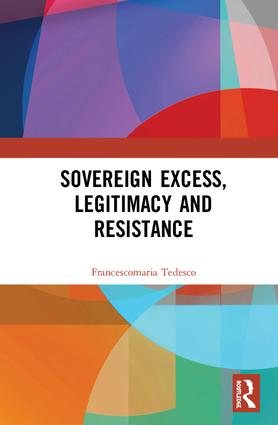 Francescomaria Tedesco, Sovereign Excess, Legitimacy and Resistance – Routledge 2018 (usual grumbles about Routledge’s pricing apply, though this does have a cheaper e-book)
When talking about his film Salò, Pasolini claimed that nothing is more anarchic than power, because power does whatever it wants, and what power wants is totally arbitrary. And yet, upon examining the murderous capital of modern sovereignty, the fragility emerges of a power whose existence depends on its victims’ recognition. Like a prayer from God, the command implores to be loved, also by those whom it puts to death. Benefitting from this “political theurgy” as the book calls it (the idea that a power, like God, claiming to be full of glory, constantly needs to be glorified) is Barnardine, the Bohemian murderer in Shakespeare’s Measure for Measure, as he, called upon by power to the gallows, answers with a curse: ‘a pox o’ your throats’.
He does not want to die, nor, indeed, will he. And so, he becomes sovereign. On a level with and against the State.
Design Agency within Earth Systems – 26 October 2018, Architecture Association, London
Further details here. I’ll be in discussion with Neil Brenner and Jose Alfredo Ramirez at the end of the event.

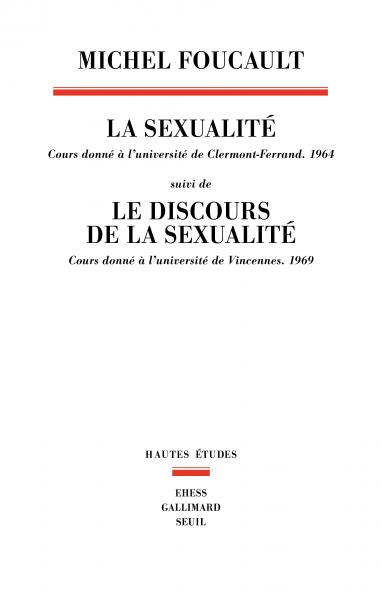 Foucault’s 1964 course from Clermont-Ferrand La sexualité together with the 1969 course from Vincennes Le discours de la sexualité has now been published – received a copy yesterday.
This is the first of a planned seven volumes of material from before the Collège de France. This volume is edited by Claude-Olivier Doran. Discussions are underway for an English translation.
La Sexualité. Cours donné à l’université de Clermont-Ferrand (1964) suivi de Le Discours de la sexualité. Cours donné à l’université de Vincennes (1969)
Michel Foucault avait engagé le projet d’une histoire de la sexualité dès les années 1960, et lui avait notamment consacré deux cours, jusqu’ici inédits.
Le premier, donné à Clermont-Ferrand en 1964, s’interroge sur les conditions d’apparition, en Occident, d’une conscience problématique et d’une expérience tragique de la sexualité, ainsi que de savoirs qui la prennent pour objet. Partant d’une réflexion sur l’évolution du statut des femmes et du droit du mariage, ce cours aborde l’ensemble des savoirs sur la sexualité, de la biologie ou l’éthologie à la psychanalyse.
Le second, donné à Vincennes en 1969, prolonge en même temps qu’il déplace ces interrogations. Foucault s’y intéresse en détail à l’émergence d’un savoir biologique sur la sexualité et à la manière dont celle-ci a été investie dans un ensemble d’utopies au long des XIXe et XXe siècles : utopies transgressives de Sade à Histoire d’O., utopies intégratives, visant à réconcilier la société et la nature sexuelle de l’Homme, de Fourier à Marcuse. C’est l’occasion pour Foucault d’approfondir sa généalogie critique du double thème de la sexualité naturelle et de la libération sexuelle, engagée dès 1964 mais qui prend d’autant plus de sens après Mai 1968.
Ces cours sont deux jalons essentiels pour une archéologie de la sexualité comme expérience moderne. On y découvre un Foucault qui n’hésite pas à faire jouer les données biologiques sur la sexualité contre une certaine conception étriquée du sujet humain ; un Foucault attentif à maintenir le potentiel transgressif contenu dans l’expérience sexuelle et à analyser les conditions économiques, sociales et épistémologiques de sa constitution récente en objet de savoir et en enjeu politique.Michel Foucault avait engagé le projet d’une histoire de la sexualité dès les années 1960, et lui avait notamment consacré deux cours, jusqu’ici inédits.
Le premier, donné à Clermont-Ferrand en 1964, s’interroge sur les conditions d’apparition, en Occident, d’une conscience problématique et d’une expérience tragique de la sexualité, ainsi que de savoirs qui la prennent pour objet. Partant d’une réflexion sur l’évolution du statut des femmes et du droit du mariage, ce cours aborde l’ensemble des savoirs sur la sexualité, de la biologie ou l’éthologie à la psychanalyse.
Le second, donné à Vincennes en 1969, prolonge en même temps qu’il déplace ces interrogations. Foucault s’y intéresse en détail à l’émergence d’un savoir biologique sur la sexualité et à la manière dont celle-ci a été investie dans un ensemble d’utopies au long des XIXe et XXe siècles : utopies transgressives de Sade à Histoire d’O., utopies intégratives, visant à réconcilier la société et la nature sexuelle de l’Homme, de Fourier à Marcuse. C’est l’occasion pour Foucault d’approfondir sa généalogie critique du double thème de la sexualité naturelle et de la libération sexuelle, engagée dès 1964 mais qui prend d’autant plus de sens après Mai 1968.
Ces cours sont deux jalons essentiels pour une archéologie de la sexualité comme expérience moderne. On y découvre un Foucault qui n’hésite pas à faire jouer les données biologiques sur la sexualité contre une certaine conception étriquée du sujet humain ; un Foucault attentif à maintenir le potentiel transgressif contenu dans l’expérience sexuelle et à analyser les conditions économiques, sociales et épistémologiques de sa constitution récente en objet de savoir et en enjeu politique.Michel Foucault avait engagé le projet d’une histoire de la sexualité dès les années 1960, et lui avait notamment consacré deux cours, jusqu’ici inédits.
Le premier, donné à Clermont-Ferrand en 1964, s’interroge sur les conditions d’apparition, en Occident, d’une conscience problématique et d’une expérience tragique de la sexualité, ainsi que de savoirs qui la prennent pour objet. Partant d’une réflexion sur l’évolution du statut des femmes et du droit du mariage, ce cours aborde l’ensemble des savoirs sur la sexualité, de la biologie ou l’éthologie à la psychanalyse.
Le second, donné à Vincennes en 1969, prolonge en même temps qu’il déplace ces interrogations. Foucault s’y intéresse en détail à l’émergence d’un savoir biologique sur la sexualité et à la manière dont celle-ci a été investie dans un ensemble d’utopies au long des XIXe et XXe siècles : utopies transgressives de Sade à Histoire d’O., utopies intégratives, visant à réconcilier la société et la nature sexuelle de l’Homme, de Fourier à Marcuse. C’est l’occasion pour Foucault d’approfondir sa généalogie critique du double thème de la sexualité naturelle et de la libération sexuelle, engagée dès 1964 mais qui prend d’autant plus de sens après Mai 1968.
Ces cours sont deux jalons essentiels pour une archéologie de la sexualité comme expérience moderne. On y découvre un Foucault qui n’hésite pas à faire jouer les données biologiques sur la sexualité contre une certaine conception étriquée du sujet humain ; un Foucault attentif à maintenir le potentiel transgressif contenu dans l’expérience sexuelle et à analyser les conditions économiques, sociales et épistémologiques de sa constitution récente en objet de savoir et en enjeu politique.Michel Foucault avait engagé le projet d’une histoire de la sexualité dès les années 1960, et lui avait notamment consacré deux cours, jusqu’ici inédits.
Le premier, donné à Clermont-Ferrand en 1964, s’interroge sur les conditions d’apparition, en Occident, d’une conscience problématique et d’une expérience tragique de la sexualité, ainsi que de savoirs qui la prennent pour objet. Partant d’une réflexion sur l’évolution du statut des femmes et du droit du mariage, ce cours aborde l’ensemble des savoirs sur la sexualité, de la biologie ou l’éthologie à la psychanalyse.
Le second, donné à Vincennes en 1969, prolonge en même temps qu’il déplace ces interrogations. Foucault s’y intéresse en détail à l’émergence d’un savoir biologique sur la sexualité et à la manière dont celle-ci a été investie dans un ensemble d’utopies au long des XIXe et XXe siècles : utopies transgressives de Sade à Histoire d’O., utopies intégratives, visant à réconcilier la société et la nature sexuelle de l’Homme, de Fourier à Marcuse. C’est l’occasion pour Foucault d’approfondir sa généalogie critique du double thème de la sexualité naturelle et de la libération sexuelle, engagée dès 1964 mais qui prend d’autant plus de sens après Mai 1968.
Ces cours sont deux jalons essentiels pour une archéologie de la sexualité comme expérience moderne. On y découvre un Foucault qui n’hésite pas à faire jouer les données biologiques sur la sexualité contre une certaine conception étriquée du sujet humain ; un Foucault attentif à maintenir le potentiel transgressif contenu dans l’expérience sexuelle et à analyser les conditions économiques, sociales et épistémologiques de sa constitution récente en objet de savoir et en enjeu politique.
 Renske Doorenspleet, Rethinking the Value of Democracy: A Comparative Perspective – September 2018 (unfortunately only in expensive hardback at present)
This book is the first comprehensive analysis of the instrumental value of democracy in a comparative perspective. Based on extensive analyses of quantitative studies from different disciplines, it explores both the expected beneficial and harmful impact of democracy. Democracy’s reputation as delivering peace and development while controlling corruption is an important source of its own legitimacy. Yet, as this book acutely demonstrates, the arguments tend to be normatively driven interventions in ideologically charged policy debates. The book argues that we need neither a utopian framing of democracy as delivering all ‘good things’ in politics nor a cynical one that emphasizes only the ‘dangerous underbelly’ of this form of government. The author also raises critical questions about the value of the study of democracy: the choice for particular concepts and measures, the unknown mechanisms, and the narrow focus on specific instrumental values. This volume will be necessary reading for anyone interested in debates on democracy in the contemporary global context.
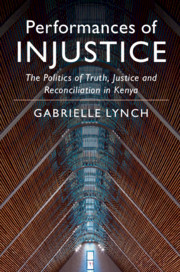 Gabrielle Lynch, Performances of Injustice The Politics of Truth, Justice and Reconciliation in Kenya – CUP, August 2018
Following unprecedented violence in 2007/8, Kenya introduced two classic transitional justice mechanisms: a truth commission and international criminal proceedings. Both are widely believed to have failed, but why? And what do their performances say about contemporary Kenya; the ways in which violent pasts persist; and the shortcomings of transitional justice? Using the lens of performance, this book analyses how transitional justice efforts are incapable of dealing with how unjust and violent pasts actually persist. Gabrielle Lynch reveals the story of an ongoing political struggle requiring substantive socio-economic and political change that transitional justice mechanisms can theoretically recommend, and which they can sometimes help to initiate and inform, but which they cannot implement or create, and can sometimes unintentionally help to reinforce