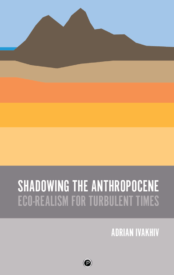
Adrian J. Ivakhiv, Shadowing the Anthropocene: Eco-Realism for Turbulent Times – Punctum Books, 2018

180502shadowingtheanthropocene-cover-front-draft-647x1024-174x275.pngAdrian J. Ivakhiv, Shadowing the Anthropocene: Eco-Realism for Turbulent Times – Punctum Books, 2018

available in paperback or pdf download (minimum price $5; free after six months)

Update: reader’s guide

A spectre is haunting humanity: the spectre of a reality that will outwit and, in the end, bury us. “The Anthropocene,” or The Human Era, is an attempt to name our geological fate – that we will one day disappear into the layer-cake of Earth’s geology – while highlighting humanity in the starring role of today’s Earthly drama. In Shadowing the Anthropocene, Adrian Ivakhiv proposes an ecological realism that takes as its starting point humanity’s eventual demise. The only question for a realist today, he suggests, is what to do now and what quality of compost to leave behind with our burial.

The book engages with the challenges of the Anthropocene and with a series of philosophical efforts to address them, including those of Slavoj Žižek and Charles Taylor, Graham Harman and Timothy Morton, Isabelle Stengers and Bruno Latour, and William Connolly and Jane Bennett. Along the way, there are volcanic eruptions and revolutions, ant cities and dog parks, data clouds and space junk, pagan gods and sacrificial altars, dark flow, souls (of things), and jazz.

Ivakhiv draws from centuries old process-relational thinking that hearkens back to Daoist and Buddhist sages, but gains incisive re-invigoration in the philosophies of Charles Sanders Peirce and Alfred North Whitehead. He translates those insights into practices of “engaged Anthropocenic bodymindfulness” – aesthetic, ethical, and ecological practices for living in the shadow of the Anthropocene.

“What can process philosophies teach us about the Anthropocene? In Shadowing the Anthropocene, Adrian Ivakhiv  shows how a new eco-realism untangles several traditions of thought and practice to come to terms with the contemporary condition. The author himself takes huge steps in the direction needed.  A rich, bracing, and illuminating book!” ~ William E. Connolly, author, Facing the Planetary: Entangled Humanism and the Politics of Swarming
Posted in Uncategorized | Leave a comment

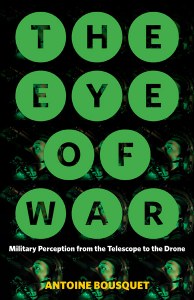
Antoine Bousquet, The Eye of War: Military Perception from the Telescope to the Drone – U Minnesota Press, October 2018

image_mini.jpgAntoine Bousquet, The Eye of War: Military Perception from the Telescope to the Drone – University of Minnesota Press, October 2018 (and website here)

How perceptual technologies have shaped the history of war from the Renaissance to the present

Antoine Bousquet provides a sweeping historical overview of military perception technologies and a disquieting lens on a world that is, increasingly, one in which anything or anyone that can be perceived can be destroyed. Bousquet explores the implications of militarized perception for the character of war in the twenty-first century and the place of human subjects within its increasingly technical armature.

This wonderfully erudite genealogy of the increasingly precise ways in which the linkage of military perception and weaponry has brought us to the point where being detected puts one within a spatio-temporally fine-grained ‘kill box’ is fascinating and important. Ranging over hundreds of years of documents, beginning with telescopes and ending with the overlap of light and death in the laser, Bousquet’s work will be both at the forefront of security studies and a crucial addition to the knowledge base of concerned citizens.

John Protevi, author of Life, War, Earth: Deleuze and the Sciences

Posted in Uncategorized | Leave a comment

Andy Merrifield, Endgame Marxism (and Urbanism)

Andy Merrifield on Marx, Beckett and more…

Posted in Uncategorized | 1 Comment

Intervention – “Christine Blasey Ford and Geographies of Aggression and Repair”

Natalie Oswin on the recent US Senate Supreme Court hearing

Antipode Editorial Office's avatarAntipodeFoundation.org

Natalie Oswin
Department of Geography, McGill University
natalie.oswin@mcgill.ca

Dr. Christine Blasey Ford testified before the Senate Judiciary Committee in Washington, DC on Thursday 27 September 2018. Commentaries on this event are already so numerous they could fill multiple volumes. This is not surprising. The stakes were incredibly high. The drive to fill a Supreme Court seat with a partisan, conservative white man was high on the how-to-slide-the-US-into-authoritarianism to do list. The lives, livelihoods, and bodily autonomy of women, people of colour, Indigenous people, migrants, trans people, queers, differently abled people – in other words, anyone not aligned with the white male supremacist end game of the current Republican administration (which is not to say that only or all “whites” and “males” are aligned with this project – think “homonationalism”, “model minorities”, “post-feminism”…) – hang in the balance.

I write this commentary to add to critical discourse at this historical conjuncture…

View original post 2,820 more words

Posted in Uncategorized | Leave a comment

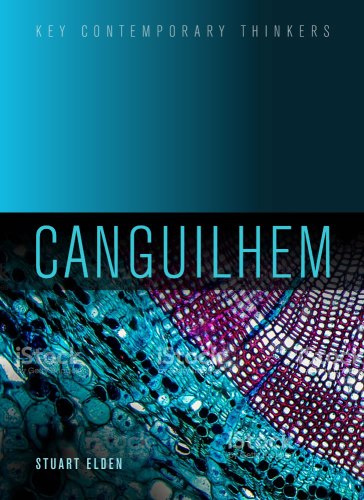
Cover design, endorsements and preorder details for Stuart Elden, Canguilhem – Polity, 2019

Canguilhem cover.jpegI’m pleased to share the cover design of my forthcoming book Canguilhem (Polity, 2019).
It’s part of the Key Contemporary Thinkers series and is available to preorder from Wiley in ebook, paperback and hardcover. The book is due for publication in February in the UK, and April in the rest of the world. The proofs are on my desk, and this schedule fits with my previous experience with Polity.

Here are the generous endorsements, description and table of contents:

‘The patience, clarity, and erudition we expect of Stuart Elden’s books are on full display in this exceptional work. More than a simple Introduction, Canguilhem enables readers to see the outlines, stakes, and details of the works of an important thinker.’
John Protevi, Louisiana State University

‘This impressive and meticulously researched volume which includes a wealth of references to archival material provides the first comprehensive introduction in English to a figure recognised as a seminal influence by post War French thinkers, including Foucault and Althusser.’
Clare O’Farrell, Queensland University of Technology

Georges Canguilhem (1904-1995) was an influential historian and philosopher of science, as renowned for his teaching as for his writings. He is best known for his book The Normal and the Pathological, originally his doctoral thesis in medicine, but he also wrote a thesis in philosophy on the concept of the reflex, supervised by Gaston Bachelard. He was the sponsor of Michel Foucault’s doctoral thesis on madness. However, his work extends far beyond what is suggested by his association with these thinkers. Canguilhem also produced a series of important works on the natural sciences, including studies of evolution, psychology, vitalism and mechanism, experimentation, monstrosity and disease.

Stuart Elden discusses the whole of this important thinker’s complex work, including recently rediscovered texts and archival materials. Canguilhem always approached questions historically, examining how it was that we came to a significant moment in time, outlining tensions, detours and paths not taken. The first comprehensive study in English, this book is a crucial guide for those coming to terms with Canguilhem’s important contributions, and will appeal to researchers and students from a range of fields.

Abbreviations

1. Foundations

2. The Normal and the Pathological

3. Philosophy of Biology

4. Physiology and the Reflex

5. Regulation and Psychology

6. Evolution and Monstrosity

7. Philosophy of History

8. Writings on Medicine

9. Legacies

Timeline

Posted in Canguilhem (book), Georges Canguilhem, My Publications, Uncategorized | 1 Comment

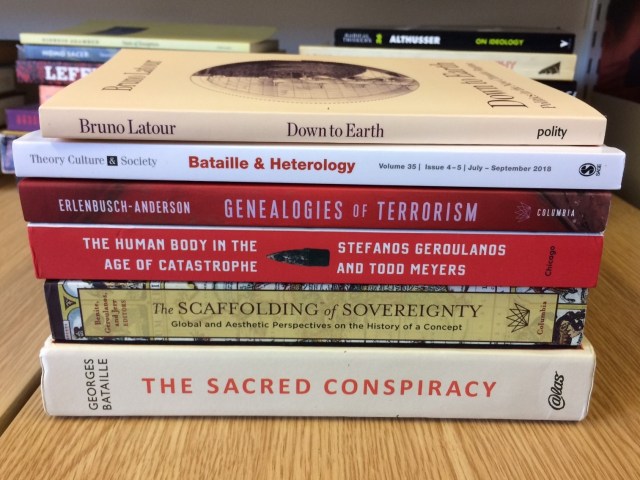
Books received – Latour, TCS, Erlenbusch-Anderson, Geroulanos and Meyers, Benite, Geroulanos and Jerr (eds.), Bataille

books.jpg
Bruno Latour, Down to Earth: Politics in the New Climatic Regime; the latest Theory, Culture and Society which is a theme issue on Bataille and Heterology; Verena Erlenbusch-Anderson, Genealogies of Terrorism: Revolution, State Violence, Empire; Stefanos Geroulanos and Todd Meyers, The Human Body in the Age of Catastrophe: Brittleness, Integration, Science and the Great War; Zvi Ben-Dor Benite, Stefanos Geroulanos, and Nicole Jerr (eds.), The Scaffolding of Sovereignty: Global and Aesthetic Perspectives on the History of a Concept and Georges Bataille, The Sacred Conspiracy: The Internal Papers of the Secret Society of Acephale.

Stefanos kindly sent copies of his two books, and I was one of the people who wrote an endorsement for Verena’s book. I’m on the board of Theory, Culture and Society. I say a bit about the Bataille book here.

Posted in Bruno Latour, Georges Bataille, Theory, Culture and Society, Uncategorized | Leave a comment

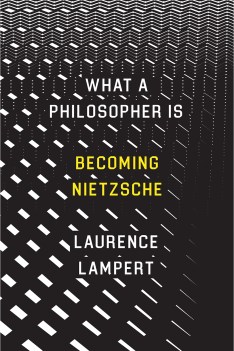
Laurence Lampert, What a Philosopher Is? Becoming Nietzsche – reviewed at NDPR

9780226488110.jpgLaurence Lampert, What a Philosopher Is? Becoming Nietzsche (U Chicago Press, 2018) – reviewed at NDPR

It’s a very critical review of what sounds like a fascinating book. I suspect there is something of the clash within North American approaches to Nietzsche playing out here. Here’s the press description:

The trajectory of Friedrich Nietzsche’s thought has long presented a difficulty for the study of his philosophy. How did the young Nietzsche—classicist and ardent advocate of Wagner’s cultural renewal—become the philosopher of Will to Power and the Eternal Return?

With this book, Laurence Lampert answers that question. He does so through his trademark technique of close readings of key works in Nietzsche’s journey to philosophy: The Birth of Tragedy, Schopenhauer as Educator, Richard Wagner in Bayreuth, Human All Too Human, and “Sanctus Januarius,” the final book of the 1882 Gay Science. Relying partly on how Nietzsche himself characterized his books in his many autobiographical guides to the trajectory of his thought, Lampert sets each in the context of Nietzsche’s writings as a whole, and looks at how they individually treat the question of what a philosopher is. Indispensable to his conclusions are the workbooks in which Nietzsche first recorded his advances, especially the 1881 workbook which shows him gradually gaining insights into the two foundations of his mature thinking. The result is the most complete picture we’ve had yet of the philosopher’s development, one that gives us a Promethean Nietzsche, gaining knowledge even as he was expanding his thought to create new worlds.

Posted in Uncategorized | Leave a comment

Liz Morrish and Helen Sauntson, Academic Irregularities: Language and Neoliberalism in Higher Education – forthcoming from Routledge

Liz Morrish and Helen Sauntson, Academic Irregularities: Language and Neoliberalism in Higher Education – forthcoming from Routledge. Announcement on the Academic Irregularities blog, from which I’ve taken the following description:

We all know that universities in the UK and elsewhere are very different places than they were 20 years ago. There has been a massive reorientation of universities away from their previous mission as serving the public good, as repositories of knowledge, as a refuge from the discipline of the market and capitalism, and governed by the pursuit of knowledge for its own sake. The purpose of universities is routinely assumed to be to serve the economic needs of the country, or even of individuals who graduate from them. Cultural and political changes such as consumerism, marketization, New Public Management with its focus on metrics, audit and performance management, have left their imprint on the very language we use to talk about universities – and indeed on the language the university uses to talk about its staff and students. Neoliberalism is a contested term but we use it to designate a broad agreement that universities have reorganised their priorities – and perhaps been coerced by successive governments to do so –  to align with ‘the market’. We uncover the power relations and contradictions experienced by those working and studying in UK and other (largely) western universities. We  make connections between economic and political developments in society, and the changes to conditions of labour and values operating in universities. We find that the nature of academic identities has been resignified so that lecturers and professors feel less autonomous and more ‘managed’. Some academics try and resist the new discoursde, but it is becoming rather difficult to do so in a context when its use is compulsory. Some of these changes have left academics feeling alienated and deprofessionalised. 

This is an original critique of the neoliberal university and it sits within an emerging discipline of Critical University Studies. We build our case from firm evidence of discourse which echoes the concerns of neoliberal ideology: competition, the market, personal responsibility and benefit, value for money, return on investment and efficiency. Over the three or four years of the project, we amassed a large collection of  documents from university management training courses, performance reviews, university and student union marketing materials, mission statements, REF and TEF policies. Then we got to work with the tools of applied linguistics, such as corpus linguistics, critical discourse analysis and appraisal analysis, to analyse them. We have unearthed metaphors which seek to normalize the discourse of the market, the student as consumer and the academic as corporate subject. We take a look at some of the adjectives and nouns which seem to shift their meanings to the extent they are meaningless: excellence, quality, innovation, vision etc. The discourse analysed throughout the book is more than just a reflection of neoliberal ideology –it is arguably constitutive of ideological change, and of a new kind of neoliberal, self-managing, subordinate subject.

The book brings the tools of applied linguistics to bear on some central questions for critical university studies:

  1. What does a critical linguistic analysis of managerial discourse reveal about academic values and identities?
  2. How can the tools of applied linguistics be used to enhance knowledge and understanding about critical university studies?
  3. What can critical linguistic analysis reveal about the role of discourse in formulating resistance to the managerial project?

It sounds great, but why publish such a book with Routledge, of all publishers?

Posted in Publishing, Uncategorized, Universities | 1 Comment

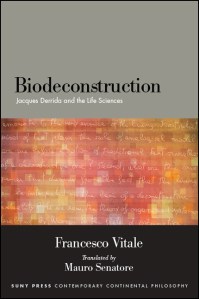
Francesco Vitale, Biodeconstruction: Jacques Derrida and the Life Sciences reviewed

Now with a link to a second review at Critical Inquiry

stuartelden's avatarProgressive Geographies

63719_cov.jpgFrancesco Vitale, Biodeconstruction: Jacques Derrida and the Life Sciences is reviewed at NDPR by Hans-Jörg Rheinberger. The book appeared earlier this year with SUNY Press, translated by Mauro Senatore.

Update: another good review at Critical Inquiry (thanks to Peter Gratton for this link)

The first chapter of the book is available to download here.

Here’s the first paragraph of the review:

Francesco Vitale has written a remarkable book. It rests on an extended analysis of the largely unpublished seminar La vie la mort that Jacques Derrida gave in the winter of 1975-76. The rumor is widespread that Derrida was more or less agnostic about the scientific developments of his time. This book tells us otherwise. Apparently, Derrida had a deep interest in the development of the life sciences, beginning with the physiological underpinnings of Freud’s fin de siècle meta-psychological writings up to mid-twentieth century molecular biology, and including the evolution…

View original post 107 more words

Posted in Uncategorized | Leave a comment

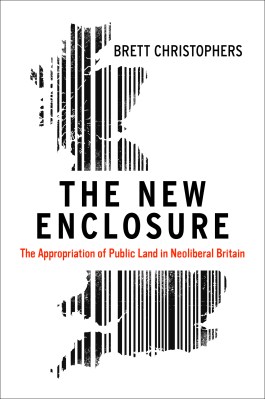
Book Launch: ‘The New Enclosure’ by Brett Christophers – London, October 30, 6pm

Christophers---New-Enclosure-e7f7e2137b3be7d2d7d88933e746c901.jpgBook Launch: ‘The New Enclosure’ by Brett Christophers

University College London, October 30, 6pm – free, but booking required. Details of the book itself, published by Verso, are here.

Much has been written about Britain’s trailblazing post-1970s privatisation programme, but the biggest privatisation of them all has until now escaped scrutiny: the privatisation of land. Since Margaret Thatcher took power in 1979, and hidden from the public eye, about 10 per cent of the entire British land mass, including some of its most valuable real estate, has passed from public to private hands. Forest land, defence land, health service land and above all else local authority land—for farming and school sports, for recreation and housing—has been sold off en masse. Why? How? And with what social, economic and political consequences? The New Enclosureprovides the first ever study of this profoundly significant phenomenon, situating it as a centrepiece of neoliberalism in Britain and as a successor programme to the original eighteenth-century enclosures. With more public land still slated for disposal, the book identifies the stakes and asks what, if anything, can and should be done.

Posted in Uncategorized | Leave a comment