The London Of Charles Dickens: Mapped

Screen Shot 2018-08-27 at 09.17.01 (2).png

The London Of Charles Dickens: Mapped – not new, but new to me. An interesting mapping project of Dickens’s life and novels.

Charles Dickens is intimately associated with London like no other author. The city features in all of his novels, usually as the main setting.
Two years ago, we set ourselves the task of reading every novel and mapping their London locations. Here are the results. We’ve also included the many addresses that Dickens called home, so you can see how his novels often feature those areas he was most familiar with.

Londonist article about the project here; map itself here.

Posted in Uncategorized | Leave a comment

Foucault and Nietzsche A Critical Encounter edited by Joseph Westfall and Alan Rosenberg (and NDPR review)

stuartelden's avatarProgressive Geographies

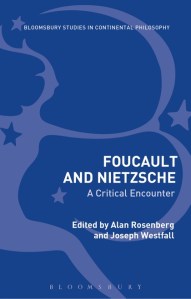
9781474247399Foucault and Nietzsche A Critical Encounter edited by Joseph Westfall and Alan Rosenberg, due out with Bloomsbury in February 2018. Looks great, but what a shame about the prohibitive price.

Foucault’s intellectual indebtedness to Nietzsche is apparent in his writing, yet the precise nature, extent, and nuances of that debt are seldom explored. Foucault himself seems sometimes to claim that his approach is essentially Nietzschean, and sometimes to insist that he amounts to a radical break with Nietzsche. This volume is the first of its kind, presenting the relationship between these two thinkers on elements of contemporary culture that they shared interests in, including the nature of life in the modern world, philosophy as a way of life, and the ways in which we ought to read and write about other philosophers.

The contributing authors are leading figures in Foucault and Nietzsche studies, and their contributions reflect the diversity of…

View original post 197 more words

Posted in Uncategorized | Leave a comment

Critical Perspectives on Migration in the Twenty-First Century – open access book from E-IR

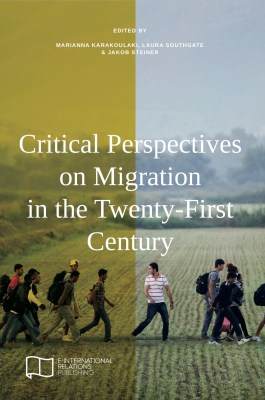
Migration-coverCritical Perspectives on Migration in the Twenty-First Century – open access book from E-IR

Thousands of people risk their lives daily by crossing borders in search of a better life. During 2015, over one million of these people arrived in Europe. Images of refugees in distress became headline news in what was considered to be the worst humanitarian crisis in Europe since 1945. This book provides a critical overview of recent migration flows and offers answers as to why people flee, what happens during their flight and investigates the various responses to mass migratory movements. Divided in two parts, the book addresses long-running academic, policy and domestic debates, drawing on case studies of migration in Europe, the Middle East and the Asia-Pacific. Coming from a variety of different fields, the contributors provide an interdisciplinary approach and open the discussion on the reasons why migration should be examined critically.

Edited by: Marianna Karakoulaki, Laura Southgate & Jakob Steiner

Contributors: Sally Clark, Kamel Doraï, Susana Ferreira, Andriani Fili, Benjamin Hulme, Amadu Wurie Khan, Dora Kostakopoulou, Anitta Kynsilehto, Nicola Langdon, Emma Larking, Valsamis Mitsilegas, Thomas Nail, Özlem Özdemir and Jenny Poon

Thanks to dmf for the link.

Posted in Uncategorized | Leave a comment

Andrea Mubi Brighenti and Mattias Kärrholm (eds.) Urban Walls: Political and Cultural Meanings of Vertical Structures and Surfaces – Routledge, 2018

9781138304338Andrea Mubi Brighenti and Mattias Kärrholm (eds.) Urban Walls: Political and Cultural Meanings of Vertical Structures and Surfaces  – Routledge, 2018 (usual pricing issues)

In recent years, an increasing number of separation walls have been built around the world. Walls built in urban areas are particularly striking in that they have exacted a heavy toll in terms of human suffering. As territorialising devices, walls can be protective, but the protection they grant is never straightforward. This collection invites inquiry into the complexities of the social life of walls, observing urban spaces as veritable laboratories of wall-making – places where their consequences become most visible. A study of the relationship between walls and politics, the cultural meaning of walls and their visibility, whether as barriers or as legible – sometimes spectacular – surfaces, and their importance for social processes, Urban Walls shows how walls extend into media spaces, thus drawing a multidimensional geography of separation, connection, control and resistance. As such, the collection will appeal to scholars of sociology, anthropology, geography, architecture and politics with interests in urban studies and social theory.

“Walls and cities have long been partners, but their relationship has been understudied. This creative and important collection takes the social and political work of the urban wall seriously. Rather than a self-evident object, the wall becomes lively, talkative, mobile and ambivalent, dividing yet also connecting. A valuable and original contribution.”

Nicholas Blomley, Simon Fraser University, Canada

“It is a remarkable feat for an edited volume to read as cohesively and with such strong focus as Urban Walls. The walls included here (violent walls, but also vulnerable ones; aquatic, immunising, yet totally exposed and medialised walls; affective and playful, immaterial and palimpsestic walls) are marked by the wounds of history, geography and politics that surround them but also that are generated by them. These walls feel as material and fleshy as if we were placing our hand on their surface.”

Andreas Philippopoulos-Mihalopoulos, , University of Westminster, UK

“An instructive and compelling examination of walls in their multiple present forms. The emphasis on the material and vertical puts this at the heart of contemporary debates. Historically situated, richly illustrated, and with a view to wider themes as much as empirical detail, this is an important contribution to politics, geography and urban studies.”

Stuart Elden, University of Warwick, UK

Posted in Uncategorized, urban/urbanisation | Leave a comment

Books received – Chevalier & Greacen on Foucault, Fanon x 2, McCormack, Baring on Derrida

IMG_3559 copy.jpgPhilippe Chevalier and Tim Greacen (eds.), Folie et justice: Relire Foucault; Frantz Fanon, Black Skin, White Masks; Derek McCormack, Atmospheric Things: On the Allure of Environmental Envelopment; Edward Baring, The Young Derrida and French Philosophy, 1945-1968 and Frantz Fanon, Alienation and FreedomDerek’s book was sent by Duke University Press; Fanon may be part of next year’s teaching,.

Posted in Frantz Fanon, Jacques Derrida, Michel Foucault, Uncategorized | 2 Comments

Natasha Heenan, ‘Silvia Federici, Caliban and the Witch’, Progress in Political Economy

Natasha Heenan, ‘Silvia Federici, Caliban and the Witch‘, Progress in Political Economy:

In high school, like many young women, my friends and I developed a fascination with witches. Years before we knew what feminism was, a sense of foreboding had developed among us, about our place in the world and our power relative to adults and to our male peers.  As ambitious teen girls wary of how we were perceived in the adult world, we sought solace in the idea that we could harness a secret and subversive power to change things. After school we concocted potions, conducted rituals and created secret languages. For a time we believed in magic.

Unknown to us, in her ground-breaking book, Caliban and The Witch, Silvia Federici argues that the witch hunts of the sixteenth- and seventeenth-centuries served to create and enforce a newly established role in society for women, who were consigned to unpaid reproductive labour to satisfy the needs of an ascendant capitalist order. Published in 2004 and based on a research project started in the 1970s with Italian feminist Leopoldina Fortunati, Federici draws upon an eclectic mix of historical sources, re-reading the transition to capitalism from a Marxist-feminist viewpoint. [continues here]

Posted in Uncategorized | Leave a comment

Stefanos Geroulanos and Todd Meyers, The Human Body in the Age of Catastrophe: Brittleness, Integration, Science and the Great War – University of Chicago Press, 2018
9780226556451Stefanos Geroulanos and Todd Meyers, The Human Body in the Age of Catastrophe: Brittleness, Integration, Science and the Great War – University of Chicago Press, 2018

The injuries suffered by soldiers during WWI were as varied as they were brutal. How could the human body suffer and often absorb such disparate traumas? Why might the same wound lead one soldier to die but allow another to recover?

In The Human Body in the Age of Catastrophe, Stefanos Geroulanos and Todd Meyers uncover a fascinating story of how medical scientists came to conceptualize the body as an integrated yet brittle whole. Responding to the harrowing experience of the Great War, the medical community sought conceptual frameworks to understand bodily shock, brain injury, and the vast differences in patient responses they occasioned. Geroulanos and Meyers carefully trace how this emerging constellation of ideas became essential for thinking about integration, individuality, fragility, and collapse far beyond medicine: in fields as diverse as anthropology, political economy, psychoanalysis, and cybernetics.

Moving effortlessly between the history of medicine and intellectual history, The Human Body in the Age of Catastrophe is an intriguing look into the conceptual underpinnings of the world the Great War ushered in.

Posted in Uncategorized | 1 Comment

Default lecture capture: In defense of academic freedom, safety and well-being

Some interesting comments on lecture capture, from the human geographers at University of Edinburgh

Julie Cupples's avatarJulie Cupples

This is a submission based on the collated and collective views of the Human Geography Research Group (HGRG) in the School of Geosciences at the University of Edinburgh as our institution is considering adopting lecture capture by default. I am sharing it here as it might assist other academics who are confronting and concerned about mandatory lecture recording and it might help students to understand why default lecture recording is not necessarily in their interests.

The HGRG is strongly opposed to the policy of default recording on four main grounds:

  • Pedagogical reasons
  • Academic freedom
  • Staff well-being
  • Staff and student safety

Pedagogical reasons

We understand why stressed, anxious and highly indebted students might well believe that their interests are best served by having access to recordings of lectures, but it is our belief that for the majority of our students it will have a detrimental effect on their learning.

Many of…

View original post 2,067 more words

Posted in Uncategorized | Leave a comment

Anthem symplokē Studies in Theory – new book series

Anthem symplokē Studies in Theory – new book series. Enquiries to proposal@anthempress.com

Anthem Symploke Studies in Theory announcement.jpg

Posted in Publishing, Uncategorized | Leave a comment

Thomas Nail, Being and Motion – OUP, November 2018

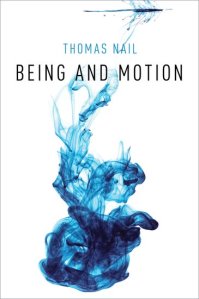
9780190908911Thomas Nail, Being and Motion – OUP, November 2018

More than at any other time in human history, we live in an age defined by movement and mobility; and yet, we lack a unifying theory which takes this seriously as a starting point for philosophy. The history of philosophy has systematically explained movement as derived from something else that does not move: space, eternity, force, and time. Why, when movement has always been central to human societies, did a philosophy based on movement never take hold? This book finally overturns this long-standing metaphysical tradition by placing movement at the heart of philosophy.

In doing so, Being and Motion provides a completely new understanding of the most fundamental categories of ontology from a movement-oriented perspective: quality, quantity, relation, modality, and others. It also provides the first history of the philosophy of motion, from early prehistoric mythologies up to contemporary ontologies. Through its systematic ontology of movement, Being and Motion provides a path-breaking historical ontology of our present.

Thomas also has a new blog Philosophy of Movement

Posted in Uncategorized | Leave a comment