Thoughts on borders

Christopher Smith on borders in the ancient world

Christopher Smith's avatarAnatomies of Power

For reasons both of a peripatetic existence, of the places in which that has taken place, and a growing concern in the relationship between power and the capacity to make definitions, topographic and otherwise, I have been thinking about borders, and what Greek and Roman antiquity might contribute to such a contested concept.

  1. The ubiquity of borders

Borders and boundaries have been ubiquitous.  We have seen the moment when the period since the fall of the Berlin Wall exceeded the time of its existence.  The most contentious remaining element of the current negotiations between the UK and Europe revolves around a border we thought we had almost eradicated.  Boundaries from picket lines to barbed wire lines to threatened walls have etched their cartographic existence into geographic memory, whilst metaphoric red lines and hostile environments have contributed to devastating psychological and physical damage.
berlin-1647098__480
A world without borders is barely conceivable in…

View original post 1,899 more words

Posted in Uncategorized | 1 Comment

American Book Review theme on Critical Lives – including piece by me on Foucault

A theme section of American Book Reviewpdfimage.png has just been published. Edited by Robert T. Tally Jr., it includes reviews of a number of recent biographies of social theorists and philosophers – Freud, the Frankfurt School, Habermas, Schmitt, Deleuze, Barthes, Hall and others.

I have a piece in there entitled ‘Do we need a new biography of Michel Foucault?‘ which is in place of a review, since there have been no new biographies since Eribon, Macey and Miller in the 1990s. I reflect on those biographies, and the later editions of Eribon’s biography, in the light of the research I’ve done for my Foucault books and newly available materials.

The issue is subscription only, but I’m happy to share my piece.


Posted in Michel Foucault, Uncategorized | Leave a comment

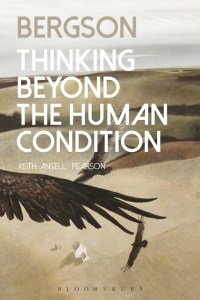
Keith Ansell-Pearson, Bergson reviewed at NDPR

9781350043947Keith Ansell-Pearson, Bergson: Thinking Beyond the Human Condition (Bloomsbury, 2018) is reviewed at NDPR by Donald A. Landes. Here’s the publisher description:

A thought-provoking contribution to the renaissance of interest in Bergson, this study brings him to a new generation of readers. Ansell-Pearson contends that there is a Bergsonian revolution, an upheaval in philosophy comparable in significance to those that we are more familiar with, from Kant to Nietzsche and Heidegger, that make up our intellectual modernity.

The focus of the text is on Bergson’s conception of philosophy as the discipline that seeks to ‘think beyond the human condition’. Not that we are caught up in an existential predicament when the appeal is made to think beyond the human condition; rather that restricting philosophy to the human condition fails to appreciate the extent to which we are not simply creatures of habit and automatism, but also organisms involved in a creative evolution of becoming.

Ansell-Pearson introduces the work of Bergson and core aspects of his innovative modes of thinking; examines his interest in Epicureanism; explores his interest in the self and in time and memory; presents Bergson on ethics and on religion, and illuminates Bergson on the art of life.

Posted in Uncategorized | Leave a comment

Foucault and Shakespeare – symposium at Garrick’s Temple, 23 June 2018

garricks-temple-sept-3-2016.jpgFoucault and Shakespeare – symposium at Garrick’s Temple, 23 June 2018

David Garrick built his Shakespeare Temple beside the Thames at Hampton in 1755 as a place where ‘the thinkers of the world’ would meet to reflect on the plays. He hoped Voltaire would come. Now the Kingston Shakespeare Seminar is realising the great actor’s vision, with a series of symposia on Shakespeare in Philosophy. Each of these Saturday events features talks by leading philosophers and Shakespeare scholars, coffee and tea in the riverside garden designed by Capability Brown, and lunch at the historic Bell Inn.

I’ll be one of the speakers at this event, with other contributions from Tom Brockelman, Jonathan Dollimore, Kélina Gotman, Jennifer Rust, Duncan Salkeld and Richard Wilson. I’ll be speaking about ‘Foucault, Shakespeare, Contagion’, which is mainly through a discussion of Troilus and Cressida.

To register, go to the Eventbrite page; more details here.

Posted in Michel Foucault, Uncategorized, William Shakespeare | 1 Comment

Recent reviews of my Foucault books – Mike Gane, JM Moore and Nancy Luxon

Foucault: The Birth of Power is reviewed by Nancy Luxon in Perspectives in Politics, and by JM Moore in Justice, Power and Resistance. That book, and Foucault’s Last Decade are also discussed in a review essay by Mike Gane in Cultural Politics, which also looks at two of Foucault’s courses. The Gane essay is critical, the Moore one is very positive, while the Luxon is positive but opens up some issues about how we might use Foucault too. The Moore one is open access, the others are behind pay-walls.

I’m not going to get into a bigger debate, especially with Gane, where there are clearly fundamental disagreements. But I will point out a few things. If I had wanted to write a book about how to use Foucault, then I would have tried to do that. I’ve been clear all along that I’m trying to write intellectual history. It’s interesting that Moore, who seems most involved in using Foucault in his own work with prisoners, found the book of worth for that project. In terms of the project of a socialist governmentality, what I think I do is to show the evidence for what Foucault had in mind, combining archives, interviews and other reports. I’d hope that was some use to someone interested in taking up the idea. I think Gane is wrong to say that the archives hold no interest. He takes a wilfully wrong-headed reading of my text to get there, suggesting that I was annoyed a box didn’t contain what I thought, when the point was to say the materials related to no previously-known project, which I then discuss. I’m prepared to accept I don’t make the importance of the archives as clear as I’d like. But to say there is nothing of interest there is just nonsense. Also, the idea that we already had most of the insights of Les Aveux de la chair before it was actually published seems wrong. Now the book is published, people can decide for themselves. My initial take is here.

Finally, while Luxon’s review begins and ends with the location of the Foucault archive, his papers are not actually at the newer BnF building – the Mitterand site – but at the older Richelieu one some miles away in the centre of Paris. Foucault spent a huge amount of his working life at the Richelieu library, which used to be the main site, so I think it’s actually entirely fitting that his papers ended up there, even if he got fed up with the library late in life, and moved to the Dominican Saulchoir library.

All the other reviews of these books are linked from this page.

Posted in Foucault's Last Decade, Foucault: The Birth of Power, Michel Foucault, Uncategorized | 1 Comment

Barry Hindess (1939-2018)

I have been hearing reports that Barry Hindess sadly died earlier this week. There is a brief notice in The Canberra Times. I only met him once, when I was at ANU for a term and we had lunch together. But I’ve known his work for much longer, including his 1975 book with Paul Hirst, Pre-Capitalist Modes of Production, and Discourses of Power: From Hobbes to Foucault in 1996. He was important in the Anglophone reception of Althusser, as well as Foucault, not least for his work with Theoretical Practice and the book he co-edited with Mitchell Dean, Governing Australia.

Update: there are some tributes here.


Posted in Louis Althusser, Michel Foucault, Uncategorized | Tagged | Leave a comment

Audio recordings of talks on Shakespearean Territories at Queen Mary and King’s College London

Shakespearean Territories cover - CopyBoth these talks summarise the Shakespearean Territories book, forthcoming from University of Chicago Press in October 2018.

The Queen Mary talk was part of a workshop on ‘Territory’s Value’, with Charles Maier and organised by Simon Reid-Henry. It’s about 20 minutes long.

The King’s College talk was to Richard Schofield’s MA seminar and is about 45 minutes long. I cover most of the Queen Mary talk, but also say a bit more about Hamlet, Othello and some more detail on other chapters.

There are lots of other older recordings of talks about this project here.

A summary of the whole project in six minutes can be heard in a British Academy podcast ‘From Our Fellows’. My contribution begins at 21.45 minutes.

https://soundcloud.com/britishacademy/from-our-fellows-02-december-2016

Posted in Conferences, Shakespearean Territories, Uncategorized, William Shakespeare | 2 Comments

Design Agency within Earth Systems – Architectural Association, 26 October 2018, Call for Projects

Design Agency within Earth Systems – Architectural Association, London, 26 October 2018

I’ll be involved in this event, in conversation with Neil Brenner and other speakers include Marti French, El Hadi Jazairy and Rania Ghosn.

8,000 meters above sea level exists what climbers call the ‘death zone’. This altitude marks the limit for human habitation, above which our species cannot survive. We thrive in the ‘life zone’ – the earth’s land surfaces and oceans, its geological layers beneath, the dynamic atmosphere above – all affected by gravitational and magnetic forces beyond. This living world is constantly being transformed by our social, economic and political interactions revealing our intricate dependencies on the the earth and its systems. Terms such as ‘Anthropocene’ and ‘Capitalocene’ have drawn attention to the role of political economy in transforming these earth systems and positioned design as a major geological force shaping the planet.

The ‘Design Agency within Earth Systems’ symposium invites submissions to look through these planetary lenses to reflect upon the complicity of design in the destruction of the planet; to question the two dimensional, land based political technologies, by which we order our lives and our relations to the earth; to explore the material dimensions of air, ground and ocean as inter-twinings of socio-political and earth systems; and to imagine relations between socio-political and earth systems differently through design.

The aim of this call is for proposals to present projects/papers in a format of 10-minute slide presentation alongside main speakers and as part of a one-day symposium at the Architectural Association 26th October 2018.

Call for Projects (deadline 7 July 2018) and further details here.

Posted in Conferences, Neil Brenner, Uncategorized | Leave a comment

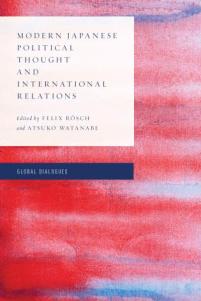
Modern Japanese Political Thought and International Relations, edited by Felix Rösch and Atsuko Watanabe – forthcoming in September 2018

9781786603678Modern Japanese Political Thought and International Relations, edited by Felix Rösch and Atsuko Watanabe – forthcoming in September 2018

In an ever more globalized world, sustainable global development requires effective intercultural co-operations. This dialogue between non-western and western cultures is essential to identifying global solutions for global socio-political challenges.

Modern Japanese Political Thought and International Relations critiques the formation of non-western International Relations by assessing Japanese political concepts to contemporary IR discourses since the Meji Restoration, to better understand knowledge exchanges in intercultural contexts. Each chapter focuses on a particular aspect of this dialogue, from international law and nationalism to concepts of peace and Daoism, this collection grapples with postcolonial questions of Japan’s indigenous IR theory.

Posted in Uncategorized | Leave a comment

Goldsmiths Annual Philosophy Lecture – Alienation & Freedom: Frantz Fanon – 1 June 2018, 4pm

Goldsmiths Annual Philosophy Lecture – Alienation & Freedom: Frantz Fanon – 1 June 2018, 4pm – free, but registration required

Jean Khalfa and Robert J.C. Young give the first Goldsmiths Annual Philosophy Lecture, on the hitherto unpublished and unavailable works of Frantz Fanon.

Since the publication of The Wretched of the Earth in 1961, Fanon’s work has been deeply significant for generations of intellectuals, philosophers and activists seeking to radically interrogate our understandings of violence, race, political subjectivity, mental illness and the challenges of decolonization. In CPCT’s first annual lecture, we are joined by the editors of the landmark collection Alienation and Freedom. This volume collects together unpublished and unavailable works comprising around half of Fanon’s entire output – which were previously inaccessible or thought to be lost. This book introduces audiences to a new Fanon, a more personal Fanon and one whose literary and psychiatric works, in particular, take centre stage. Khalfa and Young will explore how these writings provide new depth and complexity to our understanding of Fanon’s entire oeuvre, revealing more of his powerful thinking about identity, race and activism which remain remarkably prescient. The talk will shed new light on the work of a major 20th-century philosopher, and on newly available texts which oblige us to take a fresh look at the intellectual history of anti-colonial and post-colonial thought, as well as to address with Fanon some of the most pressing theoretical issues of our time.

The lecture will be followed by a response by Jane Hiddleston and will also feature a performance-reading of excerpts from the two plays by Fanon included in Alienation & Freedom: The Drowning Eye and Parallel Hands.

Jean Khalfa is a Senior Lecturer in French Studies at Trinity College, University of Cambridge. He is the editor of the first complete edition of Michel Foucault’s History of Madness (2006) and author of Poetics of the Antilles (2016) and an upcoming work on Frantz Fanon’s The Wretched of the Earth.

Robert J. C. Young, FBA, is Julius Silver Professor of English and Comparative Literature at New York University, USA. He is the author of White Mythologies (1990), Colonial Desire (1995), Postcolonialism: An Historical Introduction (2001), The Idea of English Ethnicity (2008), Empire, Colony, Postcolony (2015).

Jane Hiddleston is Exeter College Professor of Literatures in French at the University of Oxford, and the author, most recently of Writing after Postcolonialism: Francophone North African Literature in Transition.

All welcome.

https://cpct.uk/

https://www.gold.ac.uk/cpct/

Posted in Uncategorized | 1 Comment