Louis Althusser, Écrits sur l’histoire – now out with PUF

1519093812_9782130792949_v100Louis Althusser, Écrits sur l’histoire (1963-1985) – now out with PUF

Quatrième volume de l’entreprise de publication systématique des livres et textes inédits de Louis Althusser, établie par G. M. Goshgarian sur la base des manuscrits du fonds Althusser recueilli à l’IMEC, Écrits sur l’histoire rassemble un florilège d’inter­ventions et de méditations du philosophe, s’étendant de 1963 à 1986. Interrogeant sans relâche la place de l’histoire dans la théorie marxiste, et donc ce qu’Althusser voyait comme le danger historiciste au cœur de la lecture révolutionnaire du présent, ils témoignent d’un dialogue continu avec la discipline historique de son temps – dont plusieurs représentants ont échangé avec le philosophe. Soucieux de l’histoire, mais désireux d’éviter toute explication qui l’érigerait en une force déterministe, Althusser n’a en effet jamais cessé de méditer la manière dont histoire et concept s’équilibraient dans la théorie marxiste – équilibre qu’il chercha à réinventer pour son époque. Ce sont les traces de cette entreprise, toujours commentée dans le monde entier, qui se trouvent réunies dans ce volume.

Note d’édition, par Michael Goshgarian

I. Une conversation sur l’histoire littéraire (1963)

II. Note supplémentaire sur l’histoire (1965-1966?)

III. Sur la genèse (1966)

IV. Comment quelque chose de substantiel peut-il changer ? (1970)

V. À Gretzky (1973)

VI. Projet de réponse à Pierre Vilar (1973?)

VII. Livre sur l’impérialisme (1973)

VIII. À propos de Marx et l’histoire (1975)

IX. Sur l’histoire (1986)

Posted in Louis Althusser, Uncategorized | Leave a comment

The Meaning of Light: Seeing and Being on the Battlefield

Pip Thornton shares her 2015 paper on battlefield terrain – strong connections to my work on terrain and the Gordillo paper I shared earlier this week.

Pip Thornton's avatarpip thornton art & research

I haven’t always written about algorithms and digital capitalism, but I have previously used poetry as a lens through which to expose the politics and asymmetries of technology and space. The Meaning of Light: Seeing and Being on the Battlefield (cultural geographies Vol: 22 issue: 4) is a paper I published in 2015 based on my experiences as a reservist soldier in Iraq in 2003. It’s about vision, affect, bodies, materiality and the (often imperial) politics of terrain on the battlefield. It all started with a poem I wrote about watching illuminating shells lighting up Basra before an artillery attack.

Light Discipline (2013)

In a blackout we adjust our sights

by touch and cup our smoke against

the desert, waiting for the light.

At long last the barrel scrapes

into place and the night is instantly

exposed. I cover my ears and watch.

In the distance a fitful city crouches,

View original post 76 more words

Posted in Uncategorized | Leave a comment

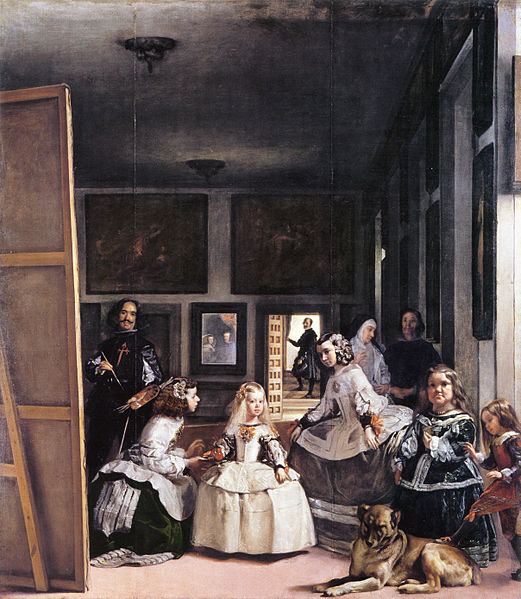
Interactive visualization of Diego Velázquez, Las Meninas (1656)

521px-Las_Meninas_by_Diego_Velázquez

Interactive visualization of Diego Velázquez, Las Meninas (1656)

The painting is in the Prado in Madrid – I was there just last week. The Prado website has some more information.

Thanks to Melissa Pawelski for the link.


Posted in Uncategorized | 1 Comment

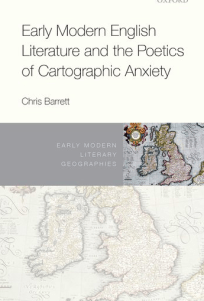
Chris Barrett, Early Modern English Literature and the Poetics of Cartographic Anxiety – OUP

Screenshot 2018-03-17 11.06.55.pngChris Barrett, Early Modern English Literature and the Poetics of Cartographic Anxiety – now published by Oxford University Press in their Early Modern Literary Geographies series.

The Cartographic Revolution in the Renaissance made maps newly precise, newly affordable, and newly ubiquitous. In sixteenth-century Britain, cartographic materials went from rarity to household décor within a single lifetime, and they delighted, inspired, and fascinated people across the socioeconomic spectrum. At the same time, they also unsettled, upset, disturbed, and sometimes angered their early modern readers. Early Modern English Literature and the Poetics of Cartographic Anxiety is the first monograph dedicated to recovering the shadow history of the many anxieties provoked by early modern maps and mapping in the sixteenth and seventeenth centuries.

A product of a military arms race, often deployed for security and surveillance purposes, and fundamentally distortive of their subjects, maps provoked suspicion, unease, and even hostility in early modern Britain (in ways not dissimilar from the anxieties provoked by global positioning-enabled digital mapping in the twenty-first century). At the same time, writers saw in the resistance to cartographic logics and strategies the opportunity to rethink the way literature represents space—and everything else. This volume explores three major poems of the period—Edmund Spenser’s The Faerie Queene (1590, 1596), Michael Drayton’s Poly-Olbion (1612, 1622), and John Milton’s Paradise Lost (1667, 1674)—in terms of their vexed and vexing relationships with cartographic materials, and shows how the productive protest staged by these texts redefined concepts of allegory, description, personification, bibliographic materiality, narrative, temporality, analogy, and other elemental components of literary representations.

Posted in Uncategorized | Leave a comment

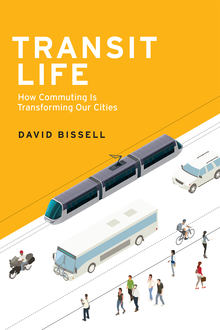
David Bissell, Transit Life: How Commuting Is Transforming Our Cities – now out with MIT Press

9780262534963David Bissell, Transit Life: How Commuting Is Transforming Our Cities – now out with MIT Press

We spend much of our lives in transit to and from work. Although we might dismiss our daily commute as a wearying slog, we rarely stop to think about the significance of these daily journeys. In Transit Life, David Bissell explores how everyday life in cities is increasingly defined by commuting. Examining the overlooked events and encounters of the commute, Bissell shows that the material experiences of our daily journeys are transforming life in our cities. The commute is a time where some of the most pressing tensions of contemporary life play out, striking at the heart of such issues as our work-life balance; our relationships with others; our sense of place; and our understanding of who we are.

Drawing on in-depth fieldwork with commuters, journalists, transit advocates, policymakers, and others in Sydney, Australia, Transit Life takes a holistic perspective to change how we think about commuting. Rather than arguing that transport infrastructure investment alone can solve our commuting problems, Bissell explores the more subtle but powerful forms of social change that commuting creates. He examines the complex politics of urban mobility through multiple dimensions, including the competencies that commuters develop over time; commuting dispositions and the social life of the commute; the multiple temporalities of commuting; the experience of commuting spaces, from footpath to on-ramp, both physical and digital; the voices of commuting, from private rants to drive-time radio; and the interplay of materialities, ideas, advocates, and organizations in commuting infrastructures.

“I read Transit Life, fittingly, while commuting in and out of a new city for the first time. The book is a guide to these taken-for-granted journeys, the infrastructures that make them possible, and the people that live them. It crackles and pops with insights of stories and encounters that will help us see commuting anew. It places practical reflection on the brushes, glances, gestures, and skills we experience and develop in our routes and routines in and out of cities. Accessible, perceptive, passionate, and often revelatory; it is a book about life on the move like no other.”
Peter Adey, Professor of Human Geography, Royal Holloway University of London; author of Mobility, 2nd edition
“Like John Urry’s Mobilities a decade ago, Transit Life convinces the reader that transport is fascinating and at the core of debates in the social sciences and humanities.”
Robyn Dowling, Professor of Urbanism, The University of Sydney
“David Bissell’s Transit Life offers a deep dive into the experiences of daily commuters and the rhythmic patterns of movement that make up our cities. Immersing himself in the troubled traffic that courses through Sydney, Australia, Bissell finds vibrant, diverse, intense human feelings about the commute, far richer and more surprising than statistics can provide. Despite its endless frustrations and disappointments, commuting emerges as a skilled practice that also brings moments of connection, camaraderie, and occasional enjoyment. He shows how commuting subtly transforms us and how we transform the places through which we pass. Transit Life exemplifies a new kind of mobility thinking, commuting us toward more rewarding forms of social inquiry.”
Mimi Sheller, Director, Center for Mobilities Research and Policy; Professor of Sociology, Drexel University; author of Aluminum Dreams

Posted in Uncategorized | Leave a comment

David Allison Memorial at Stony Brook University

David Allison memorial to be held at Stony Brook later this month.

Peter Gratton's avatarPHILOSOPHY IN A TIME OF ERROR

This week there is a memorial for the work and life of David Allison at SBU. I had David as an undergraduate and he was something of a legend with students even as he taught these huge seminar rooms on existentialism: he’d be teaching Camus and, like him, lighting up cigarette after cigarette. In the hallways of Stony Brook, he was always approachable (even if at that time he was still wont to wear an ascot). I took courses with him on Descartes and, of course, Nietzsche, and his Nietzsche was one of the few things I didn’t have to re- or un-learn when a postgraduate. His contributions early on with is his 1972 (that early!) work on Derrida on Husserl to all of his later work on Nietzsche and other figures made an impact on so many. Here is the program if you are in the NY area:

DAVID…

View original post 145 more words

Posted in Uncategorized | Leave a comment

CFP/Appel: L’œuvre de jeunesse de Michel Foucault : psychopathologie, phénoménologie et anthropologie

Doctoral workshop on the early Foucault

Clare O'Farrell's avatarFoucault News

L’œuvre de jeunesse de Michel Foucault : psychopathologie, phénoménologie et anthropologie

Appel à participation à un atelier doctoral sur l’œuvre de Michel Foucault
Université de Lübeck, 12-14.07.2018

PDF of call for Papers. French and German

Cet atelier doctoral sera focalisé sur des textes et manuscrits de jeunesse de Foucault, dans le cadre de ses premiers travaux critiques sur les sciences de l’esprit, dont l’édition est en cours de réalisation. La base de ce projet éditorial est un ensemble de manuscrits, traductions, es-quisses de thèse de doctorat et notes de cours jusqu’ici inédits, que Foucault a rédigés dans la période qui va de la fin de ses études à l’École Normale Supérieure (auprès de Maurice Mer-leau-Ponty, Jean Hyppolite et Louis Althusser) à sa thèse de doctorat (Folie et déraison, 1960). Pour expliciter le contexte, rappelons que Foucault a été recruté comme assistant de psychologie à l’Université de Lille en 1952, et…

View original post 80 more words

Posted in Uncategorized | Leave a comment

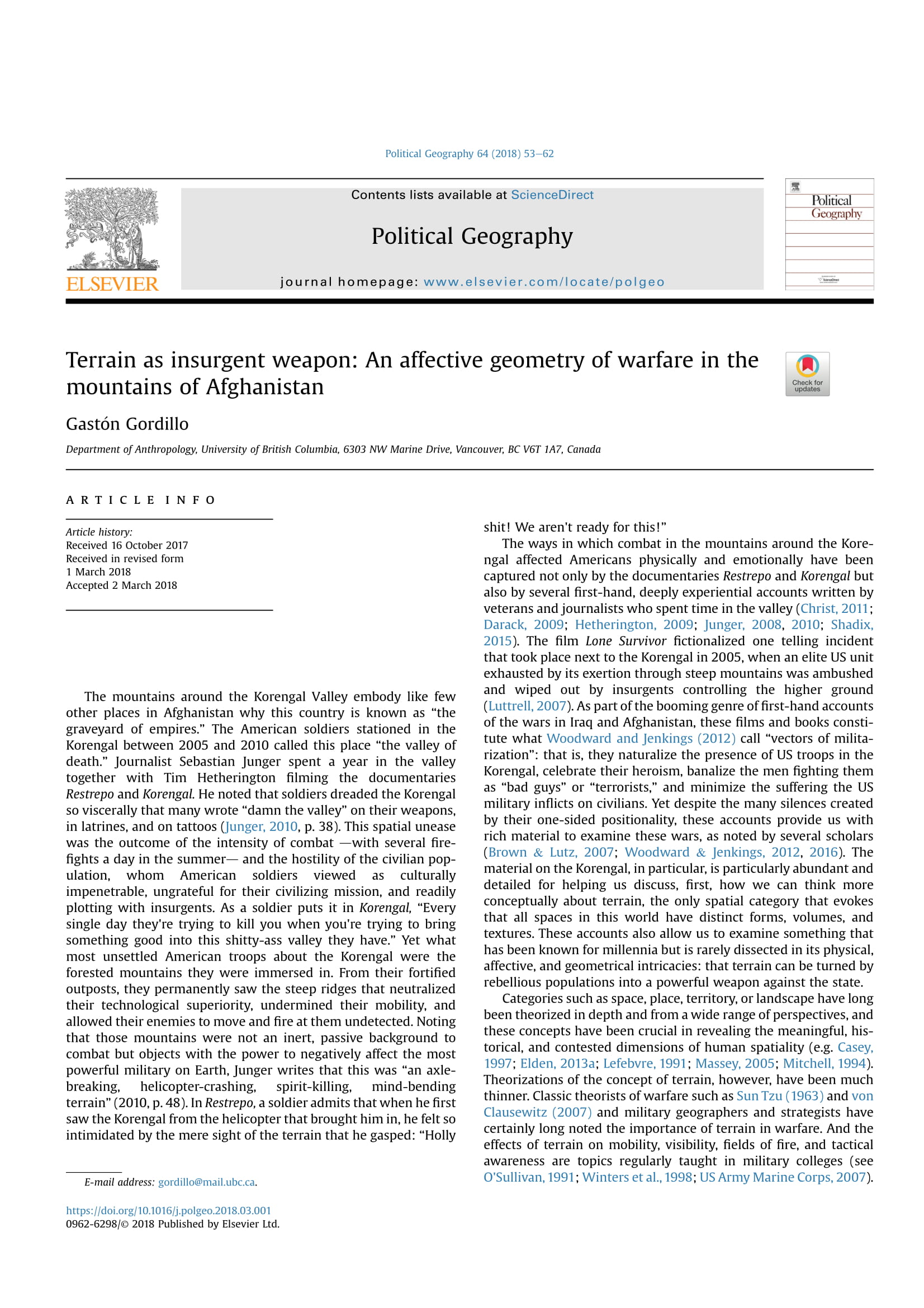
Gastón Gordillo, Terrain as insurgent weapon: An affective geometry of warfare in the mountains of Afghanistan

GordilloGastón Gordillo, “Terrain as insurgent weapon: An affective geometry of warfare in the mountains of Afghanistan“, Political Geography (requires subscription – first page available to preview or click on the image). No abstract, so I’ve taken this summary from Derek Gregory’s Geographical Imaginations site.

My argument…   is that the irreducibility of terrain can be best examined through the bodily experiences, affects, and agency of the human actors engaging it da lens I call an affective geometry. This is not the Euclidian or Cartesian geometry of mathematized grids, coordinates, and straight lines abstracted from bodies and affects. This is the qualitative, non-linear geometry conceptualized by Spinoza (1982), attentive to how bodies affect and are affected by other bodies in a multiplicity of ways, which range from negative ways that may diminish the body’s capacity to act to positive ways that may expand the body’s powers for action.

In analyzing how bodies are affected by and affect terrain, an affective geometry can be seen as a materialist phenomenology that conceives of human bodies in their subjective interiority and dispositions and also as mobile, self-propelling bodies that in situations of combat dand as long as they remain able bodiesd walk, run, climb rocks, duck on the ground, fall in ditches, shoot, feel exhausted hiking a mountain, and feel pain if hit by gunfire.

Gastón and I have been in dialogue for some time about ‘terrain’, and we organised two AAG conference sessions on this a few years ago before he visited Warwick to discuss some of his work with colleagues and PhD researchers. Great to see this piece as a continuation of the conversation.


Posted in Gaston Gordillo, terrain, Uncategorized | 2 Comments

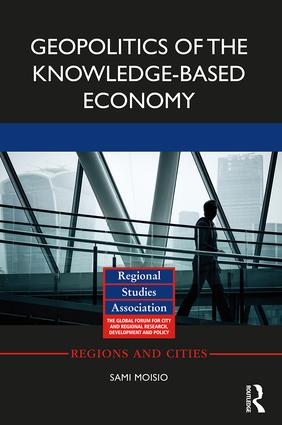
Sami Moisio, Geopolitics of the Knowledge-Based Economy – now out with Routledge

9781138821996Sami Moisio, Geopolitics of the Knowledge-Based Economy – now out with Routledge. Only a very expensive hardback or e-book at this stage, unfortunately. If you buy via Routledge, code FLR40 will give a 20% discount (Flyer – Geopolitics of the Knowledge-Based Economy).

We live in the era of the knowledge-based economy, and this has major implications for the ways in which states, cities and even supranational political units are spatially planned, governed and developed. In this book, Sami Moisio delves deeply into the links between the knowledge-based economy and geopolitics, examining a wide range of themes, including city geopolitics and the university as a geopolitical site. Overall, this work shows that knowledge-based “economization” can be understood as a geopolitical process that produces territories of wealth, security, power and belonging.

This book will prove enlightening to students, researchers and policymakers in the fields of human geography, urban studies, spatial planning, political science and international relations.

Posted in Uncategorized | 1 Comment

Territory Beyond Terra – reflections on the Rowman International blog

593b8b09f5ba741adc68db03.jpgTerritory Beyond Terra was published earlier this month. Edited by Kimberley Peters, Philip Steinberg and Elaine Stratford, the book has a series of essays which look at elements, environments and edges to challenge and extend our understanding of territory.

There are a series of reflections on the Rowman International blog from the book’s contributors. I wrote a preface to the book.

Posted in Philip Steinberg, Territory, Uncategorized | Leave a comment