Ben Clift, The IMF and the Politics of Austerity in the Wake of the Global Financial Crisis – now out with OUP

9780198813088.jpgA new book by friend and Warwick colleague Ben Clift – The IMF and the Politics of Austerity in the Wake of the Global Financial Crisis – is now out with OUP.

This book explores the IMF’s role within the politics of austerity by providing a path-breaking comprehensive analysis of how the IMF approach to fiscal policy has evolved since 2008, and how the IMF worked to alter advanced economy policy responses to the global financial crisis (GFC) and the Eurozone crisis. It updates and refines our understanding of how the IMF seeks to wield ideational power by analysing the Fund’s post-crash their ability to influence what constitutes legitimate knowledge, and their ability fix meanings attached to economic policies within the social process of constructing economic orthodoxy.This book is interested in the politics of economic ideas, focused on the assumptive foundations of different approaches to economic policy, and how the interpretive framework through which authoritative voices evaluate economic policy is an important site of power in world politics. After establishing the internal conditions of possibility for new fiscal policy thinking to emerge and prevail, detailed case studies of IMF interactions with the UK and French governments during the Great Recession drill down into how Fund seeks to shape the policy possibilities of advanced economy policy-makers and account for the scope and limits of Fund influence. The Fund’s reputation as a technocratic, scientific source of economic policy wisdom is important to for its intellectual authority. Yet, as this book demonstrates, the Fund makes normatively driven interventions in ideologically charged economic policy debates. The analysis reveals the malleability of conventional wisdoms about economic policy, and the processes of their social construction.

Contents:

1: The IMF and the Politics of Austerity in the Wake of the Global Financial Crisis
2: Ideational Change at the IMF after the Crash
3: IMF, Economic Schools of Thought, and Their Normative Underpinnings
4: Analysing the IMF Surveillance of Advanced Economies: The Social Construction of Fiscal Space
5: The Fund’s Fiscal Policy Views and the Politics of Austerity
6: The IMF, the UK Policy Debate, and Debt & Deficit Discourse
7: The IMF and the French Fiscal Rectitude amidst the Eurozone Crisis
Conclusion – IMF Intellectual Authority and the Politics of Economic Ideas After the Crash
 

Posted in Politics, Uncategorized | Leave a comment

Foucault in Hamburg – article in German by Rainer Nicolaysen (open access)

297Not much is known about Foucault’s time in Hamburg in 1959-60, except that he was working on his translation of Kant’s Anthropology at this time. The preface to History of Madness was also written there. A new piece in German by Rainer Nicolaysen looks at this period in detail, via Foucault Blog
Foucault in Hamburg: Anmerkungen zum einjährigen Aufenthalt 1959/60


.

Posted in Michel Foucault, Uncategorized | 1 Comment

Critical Planning issue with tributes to Jacqueline Leavitt and Ed Soja (open access)

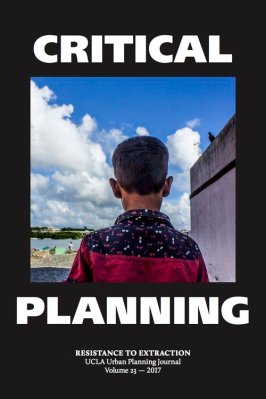
Vol+23+FINALCritical Planning – new issue with tributes to Jacqueline Leavitt and Ed Soja, and a number of stand-alone pieces (open access). Thanks to Kenton Card for the link.

Posted in Uncategorized | Leave a comment

The Critical Zone of Science and Politics: An Interview with Bruno Latour in LARB

The Critical Zone of Science and Politics: An Interview with Bruno Latour in Los Angeles Review of Books

Posted in Bruno Latour, Uncategorized | 1 Comment

Peter Sloterdijk in The New Yorker

Peter Sloterdijk in The New Yorker (via Peter Gratton)

Posted in Peter Sloterdijk, Uncategorized | Leave a comment

‘Un tout autre horizon…’ an interview with Jacques Bidet

Interview with Jacques Bidet about Foucault and Marx

manchestereviewofbooks's avatar

Jacques Bidet – Foucault with Marx, translated by Steven Corcoran (Zed Books, 2016, La fabrique, Paris, 2015)

In lieu of a review of Bidet’s book Foucault with Marx, we got in touch with him to discuss the way the text seems timely, now, in 2018. Here is the core of our dialogue: 

SH: It seems to me that Foucault has been given a different share recently, or allotment, among ‘the left’ in Britain certainly.

JB: Foucault indeed leaves several legacies. From the perspective of my book, which confronts its topicality with that of Marx, we can see that he shows a theoretical and critical creativity which continues today to manifest its fertility/fecundity on several fields, and with different posterities.

First, on the domain of sex and gender relations, on which Marxism itself could only manifest a limited relevance because those issues remain outside of a possible grip of its…

View original post 1,557 more words

Posted in Uncategorized | 1 Comment

Shakespearean Territories – forthcoming in October 2018 with University of Chicago Press

Pleased to be able to share the cover of my forthcoming book Shakespearean Territories – due out in October 2018 with University of Chicago Press.

Shakespearean Territories cover - Copy

As many people will recognise, the image is a detail of ‘the Ditchley Portrait‘ of Queen Elizabeth at the National Portrait Gallery.

You can read more about the book here. At the moment the only bookstore to have it listed is Blackwell’s.

Here’s the table of contents:

Introduction: Shakespearean Territories

  1. Divided Territory: The Geo-politics of King Lear
  2. Vulnerable Territories: Regional Geopolitics in Hamlet and Macbeth
  3. The Territories: Majesty and Possession in King John
  4. Economic Territories: Laws, Economies, Agriculture and Banishment in Richard II
  5. Legal Territories: Conquest and Contest in Henry V and Edward III
  6. Colonial Territories: From The Tempest to the Eastern Mediterranean
  7. Measuring Territories: The Techniques of Rule
  8. Corporeal Territories: The Political Bodies of Coriolanus
  9. Outside Territory: The Forest in Titus Andronicus and As You Like It

Coda: Beyond Pale Territories

Update: The publisher description is now live and reads:

A large part of Shakespeare’s enduring appeal comes from his engagement with contemporary social and political issues. The modern practice of territory as a political concept and technology that emerged during Shakespeare’s life did not elude his profound political-geographical imagination. In Shakespearean Territories, Stuart Elden reveals through close readings of the plays just how much Shakespeare’s unique historical position, combined with his imagination and political understanding, can teach us about territory. Throughout his prolific career as a playwright, Shakespeare dramatized a world filled with technological advances in measuring, navigation, cartography, military operations, and surveying. His tragedies and histories—and even several of his comedies—open up important ways of thinking about strategy, economy, the law, and the colonial, providing critical insight into a significant juncture in history. Shakespeare’s plays explore many territorial themes: from the division of the kingdom in King Lear to the relations among Denmark, Norway, and Poland in Hamlet; from the Salic Law in Henry V to questions of disputed land and the politics of banishment in Richard II. Elden traces how Shakespeare developed a nuanced understanding of the complicated concept and practice of territory and, more broadly, the political-geographical relations between people, power, and place.

A meticulously researched study of over a dozen classic plays, Shakespearean Territories will provide new insights for geographers, political theorists and Shakespearean scholars alike.


Posted in Shakespearean Territories, Uncategorized, William Shakespeare | 1 Comment

The History of Cartography – Free Online

0226316335The History of Cartography, the “Most Ambitious Overview of Map Making Ever,” Is Now Free Online” – via Open Culture. This isn’t new, but it’s still there, and still a remarkable resource.

The University of Chicago Press has made available online — at no cost — the first three volumes of The History of Cartography. Or what Edward Rothstein, of The New York Times, called “the most ambitious overview of map making ever undertaken.” He continues:

People come to know the world the way they come to map it—through their perceptions of how its elements are connected and of how they should move among them. This is precisely what the series is attempting by situating the map at the heart of cultural life and revealing its relationship to society, science, and religion…. It is trying to define a new set of relationships between maps and the physical world that involve more than geometric correspondence. It is in essence a new map of human attempts to chart the world.

If you head over to this page, then look in the upper left, you will see links to three volumes (available in a free PDF format).

Posted in Uncategorized | Leave a comment

Christian Laval, Bourdieu, Foucault et la question néolibérale – now published

9782707198693.jpgChristian Laval, Bourdieu, Foucault et la question néolibéraleforthcoming now out with La Découverte

Deux des intellectuels français parmi les plus importants de la seconde moitié du XXe siècle, Michel Foucault et Pierre Bourdieu, ont choisi de caractériser – le premier à la fin des années 1970, le second dans les années 1990 – le moment historique qu’ils traversaient par le même concept : « néolibéralisme ». Pour autant, leurs parcours théoriques et leurs styles de recherche se sont révélés très différents et, surtout, ils ont l’un et l’autre laissé inachevés leurs travaux sur cette question, rendant cet ouvrage, véritable enquête sur leurs enquêtes, indispensable.
La grande force de ce livre est de faire comprendre, dans une démarche à la fois politique et pédagogique, l’originalité et la cohérence de chacune d’elles, sans oublier leurs points aveugles et leurs limites. L’ouvrage montre en quoi Foucault et Bourdieu éclairent de façon à la fois différente et complémentaire ce qu’est le néolibéralisme.
Et comme celui-ci se prolonge d’une manière à la fois plus manifeste, plus radicale et plus violente, leurs analyses s’avèrent incontournables pour comprendre le mode de pouvoir actuel et pour rouvrir la question : quelle nouvelle politique faut-il inventer pour mener ce combat central du XXIe siècle ?


Posted in Michel Foucault, Pierre Bourdieu, Uncategorized | 2 Comments

Peter Cryle and Elizabeth Stephens, Normality: A Critical Genealogy, University of Chicago Press, 2017

9780226484051.jpgPeter Cryle and Elizabeth Stephens, Normality: A Critical Genealogy, University of Chicago Press, 2017

The concept of normal is so familiar that it can be hard to imagine contemporary life without it. Yet the term entered everyday speech only in the mid-twentieth century. Before that, it was solely a scientific term used primarily in medicine to refer to a general state of health and the orderly function of organs. But beginning in the middle of the twentieth century, normal broke out of scientific usage, becoming less precise and coming to mean a balanced condition to be maintained and an ideal to be achieved.

In Normality, Peter Cryle and Elizabeth Stephens offer an intellectual and cultural history of what it means to be normal. They explore the history of how communities settle on any one definition of the norm, along the way analyzing a fascinating series of case studies in fields as remote as anatomy, statistics, criminal anthropology, sociology, and eugenics. Cryle and Stephens argue that since the idea of normality is so central to contemporary disability, gender, race, and sexuality studies, scholars in these fields must first have a better understanding of the context for normality. This pioneering book moves beyond binaries to explore for the first time what it does—and doesn’t—mean to be normal.

via Normality: A Critical Genealogy (2017) on Foucault News

Posted in Uncategorized | 2 Comments