Emilio de Ípola, Althusser, The Infinite Farewell forthcoming from Duke University Press

Emilio de Ípola, Althusser, The Infinite Farewell forthcoming from Duke University Press. Few details as yet, except for a glowing review from Warren Montag.

“Emilio de Ípola’s Althusser: the Infinite Farewell is one of the most important books ever written on Althusser, not least because it offers a reading of Althusser from a perspective that is neither European nor North American. De Ípola’s account brings structuralism to life and demonstrates the relevance of structuralism’s questions and problems to our own time. De Ípola suggests that, seen from Latin America, reading and understanding Althusser is not a return to the past, but a confrontation with the most profound contradictions of the present.” — Warren Montag, author of, Althusser and His Contemporaries: Philosophy’s Perpetual War

Posted in Uncategorized | Leave a comment

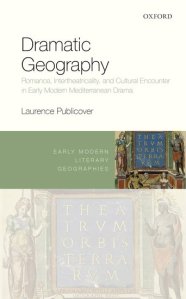
Laurence Publicover, Dramatic Geography – the latest volume in the Early Modern Literary Geographies series from OUP

9780198806813.jpgLaurence Publicover, Dramatic Geography: Romance, Intertheatricality, and Cultural Encounter in Early Modern Mediterranean Drama – the latest volume in the Early Modern Literary Geographies series from OUP.

Focusing on early modern plays which stage encounters between peoples of different cultures, this book asks how a sense of geographical location was created in early modern theatres that featured minimal scenery. While previous studies have stressed these plays’ connections to a historical Mediterranean in which England was increasingly involved, this volume demonstrates how their dramatic geography was shaped through a literary and theatrical heritage.

Reading canonical plays including The Merchant of Venice, The Jew of Malta, and The Tempest alongside lesser-known dramas such as Soliman and Perseda, Guy of Warwick, and The Travels of the Three English Brothers, Dramatic Geography illustrates how early modern dramatists staging foreign worlds drew upon a romance tradition dating back to the medieval period, and how they responded to one another’s plays to create an ‘intertheatrical geography’. These strategies shape the plays’ wider meanings in important ways, and could only have operated within the theatrical environment peculiar to early modern London: one in which playwrights worked in close proximity, in one instance perhaps even living together while composing Mediterranean dramas, and one where they could expect audiences to respond to subtle generic and intertextual negotiations. In reassessing this group of plays, Laurence Publicover brings into conversation scholarship on theatre history, cultural encounter, and literary geography; the book also contributes to current debates in early modern studies regarding the nature of dramatic authorship, the relationship between genre and history, and the continuities that run between the fourteenth and seventeenth centuries.

Posted in Uncategorized | Leave a comment

A guide to close reading – Marika Rose at An und für sich

A guide to close reading – Marika Rose at An und für sich

I’m planning to give my first year undergraduates a worksheet designed to help them engage with the theological and philosophical texts we study during our course. I’ve noticed that a lot of my students struggle to find critical ways into the texts, and I’m hoping that giving them some fairly generic questions to work through will help them find ways in. I’m planning to talk through the list of questions when I hand them out then use them as a basis for some of our seminar discussions over the rest of the semester so that the students can get a handle on how to use them.

Here’s the list of questions I’ve drafted so far; I’d really appreciate any comments/suggestions/wisdom gleaned from other people’s teaching experience, and of course you’re welcome to appropriate these for yourself if they look like they’d help you in your own teaching: [continues here]


Posted in Uncategorized | 2 Comments

Clarence Glacken’s ‘Traces on the Rhodian Shore’ at 50: Summaries and reflections

Philip Conway discusses the recent session on Clarence Glacken’s ‘Traces on the Rhodian Shore’ at 50 held at the RGS-IBG conference. He also shares an archive interview between Glacken and Allan Pred.

Posted in Clarence J. Glacken, Uncategorized | Leave a comment

Michel Foucault’s acid trip in Death Valley: Interview with Simeon Wade with great archival photos (updated)

Updated 14 November 2017: I’ve just heard that Simeon Wade died in October, making this interview even more important. There is a brief obituary here. My condolences to Wade’s family.

Boom California has just published an interview with Simeon Wade, conducted by Heather Dundas. If you’ve read the Foucault biographies, you’ll probably know about the acid trip in Death Valley story. James Miller makes a great deal of this, having talked to Simeon Wade who, with his partner Michael Stoneman, took Foucault on the journey. Wade was the originator of the ‘Chez Foucault’ fanzine which I’ve previously discussed and shared on this site.

The interview with Wade is fascinating, though some of its claims need to be taken with caution. The visit took place in June 1975, four months after Surveiller et punir appeared in French, and eighteen months before History of Sexuality volume I was published. That the trip had a profound effect on Foucault may well be true, but that it led him to criticise Bentham for the first time is impossible. And if it had such an impact on his thinking for the History of Sexuality, then why did he continue to work on the book for over a year, along with outlining the initial plan which, according to Wade, the trip made him discard?

The piece is open access and well worth a read. I was asked to look at it before publication, and the editors of Boom have used some of my comments in the notes. But what I didn’t see until its publication are the photos. Well worth a look. That jacket!

Another picture of Foucault with Wade and Stoneman was used for a feature in Time magazine in 1981. It can be seen here. Wade is also the author of an unpublished “121 page typescript”, ‘Foucault in California’, which recounts the trip in Death Valley in detail. Miller used this for his biography.

[Update 2019: the memoir, Foucault in California, has now been published]

Posted in Michel Foucault | 4 Comments

Foucault’s Punitive Society and my two Foucault books reviewed in 3am Magazine by Peter Gratton

140304_OUT_MichelFoucault.jpg.CROP_.promo-mediumlarge.jpgFoucault’s The Punitive Society lecture course and my Foucault’s Last Decade and Foucault: The Birth of Power are reviewed in 3am Magazine by Peter Gratton. It’s a long, thoughtful and generous review. As well as saying many insightful things about the books reviewed, it’s also a good meditation on Foucault’s enduring impact today. Many thanks to Peter for writing it.

Posted in Foucault's Last Decade, Foucault: The Birth of Power, Michel Foucault, Peter Gratton, Uncategorized | 1 Comment

5 Critical Theory books from August 2017

august-2017-critical-theory-releases-672x372.png5 Critical Theory books from August 2017 – a useful roundup of Agamben, Kleinberg, Morton, Johnson and Lubin, and Evangelou.

Posted in Giorgio Agamben, Timothy Morton | Leave a comment

Le foucaldien. Open access journal (2017)

New issue of Le foucaldien now available

Clare O'Farrell's avatarFoucault News

Le foucaldien. Open access journal along Foucauldian lines

Volume 3 – Issue 1 – 2017

The peer-reviewed open access journal Le foucaldien publishes interdisciplinary research along the lines of the philosopher and historian Michel Foucault (1926–1984) in English, German, and French. The Internet Encyclopedia of Philosophy credits Foucault with being “the author most frequently cited in the humanities” at the beginning of the 21st century, but his concepts are challenged in emerging fields such as media studies, digital humanities, post-colonialism, new materialism, and science and technology studies. Hence the main focus of Le foucaldien lies on updating and operationalizing Foucauldian approaches in preferably plain language.

View original post

Posted in Uncategorized | Leave a comment

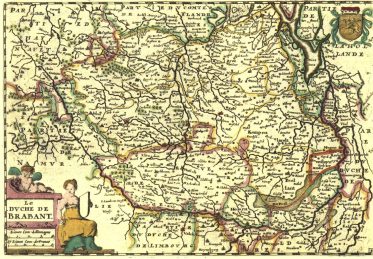
Imagining a territory. Constructions and representations of late medieval Brabant

An outline of an intriguing new research project on the late medieval Duchy of Brabant.

Mario Damen's avatarImagined territories

This research-project analyses how the interaction between prince, nobles and urban elites influenced the construction, perception, and representation of a territory. The test case will be the late medieval Duchy of Brabant, which still has historical and territorial significance for many people in present-day Belgium and the Netherlands. To underscore the fluidity and multiplicity of the concept of territory, this project sets out to disentangle the divergent, though sometimes overlapping, conceptions of what exactly Brabant was (or should be) in the eyes of different political actors, in this time before the availability of reliable scale maps. To answer the main research question the project takes a twofold approach. On the one hand, we will define ducal, noble, and urban conceptions of cropped-brabant1.jpgBrabant mainly through administrative sources, particularly those of the fourteenth century that reflect a turning point in the capturing of territory. On the other hand, we will explicate how…

View original post 105 more words

Posted in Uncategorized | Leave a comment

The Early Foucault update 11: Working in the Canguilhem archive at the École normale supérieure and at the Bibliothèque Sainte-Geneviève

I’ve been in Paris again for a few days, this time mainly to work at the Canguilhem archive at the Centre d’Archives de Philosophie, d’Histoire et d’Édition des Sciences (CAPHÉS) at the École normale supérieure. The collection comprises multiple boxes of material, and it’s somewhat daunting to see all of this material catalogued. The material comprises drafts of published pieces, lots of things relating to his various administrative roles, and the notes from his teaching. There is a wealth of material here. One initial thing I did was to examine pieces mentioned by others, in order to verify any quotes, to contextualize them and to read more widely. But I also began to do some work on other interesting looking materials in this collection. I know I will need to come back at least once, as I didn’t complete all this work.


The archive has draft versions of many of his essays, which often originated as talks. He writes out the text longhand, sometimes with amendments or additions in a different ink, and sometimes with old-fashioned cut and paste. But the versions preserved are, generally, fairly clean, fair copies. I imagine there were earlier versions which did not survive. There is usually then a typed copy of each text. It doesn’t seem he was his own typist. For his teaching, the notes he took into the classroom are generally handwritten, often fairly neat. He seems to have written things out in a fuller way than, for example, Foucault did for his lectures. His handwriting is neater too, and in the early years is miniscule. It grows in size over the decades, and in his last years becomes a little shakier. But he was active in events and correspondence until late in life, and he died at the age of 91. There are also lots of pages, scraps, recycled bits of letters or flyers, with notes and bibliographical references.

I haven’t worked through all the interesting materials by any means, but I did find some important things. For example there is an extensive draft of a book that was commissioned, contracted but never published. There is the correspondence preceding its writing with the publisher, and then quite a lot of material for its chapters – many of which also exist in typed versions. But there is no correspondence from the publisher asking where it is, and no explanation of why it was unfinished and unpublished. It’s worth noting that this is a little unusual for him. Canguilhem published books, of course, but he didn’t really write them as books. Three of his books are his theses – he had a doctorate in medicine and in philosophy, for which there were two theses – and the others are collections of essays or talks. While not wishing to diminish the work in these, or their value, I think there is a difference between these and things conceived of as books from the start.

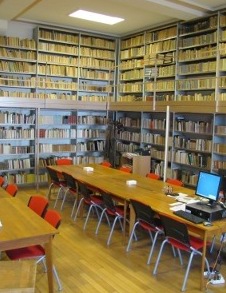
I also knew that the archive had the contents of Canguilhem’s personal library. What I didn’t imagine was that it would be on open shelving in the archive reading room (in the image above, all the books on the lower level are from this collection). Instead of having to order up things that might be useful, I was able to browse through it and discover a whole host of interesting books. Canguilhem has copies of all of Foucault’s major works, along with some less common ones, and many of these have handwritten dedications from Foucault. The collection is also helpful for providing access to some of obscure editions of texts which Canguilhem referenced, so I was able to resolve a number of issues there. I chanced across a copy of Henri Lefebvre’s Logique formelle, logique dialectique, which is also signed and dedicated to Canguilhem. There is a little correspondence between Canguilhem and Lefebvre, concerned with Canguilhem’s role as ‘Inspector General’ of philosophy teaching, and the difficulties that Lefebvre had with getting his post at the CNRS renewed. There are also letters from a large number of other figures including Louis Althusser, Jean Beaufret, Pierre Fougeyrollas, Albert Memmi, Michel Serres and so on.

The Canguilhem archive itself was the main reason I was here, and the work was primarily intended to be for the Canguilhem book, though some of the things in the archive connect directly to the Foucault work as well. The archive includes a copy of Foucault’s secondary thesis on Kant, and various things relating to Canguilhem’s role as rapporteur for Foucault’s thesis. Unfortunately a copy of the 943 page manuscript version of the History of Madness thesis which Foucault sent Canguilhem is not here – and it is not in the Foucault archive either. I anticipated this already, but I had hoped there might be a copy of the version of the History of Madness printed for the thesis defense, but that’s not here either. Canguilhem did have copies of the first Plon edition and the 1972 Gallimard edition, but I have those already. There is however Canguilhem’s report on the thesis. This is published in the second and third edition of Eribon’s biography of Foucault, and translated in Arnold Davidson’s Foucault and his Interlocutors collection.

I’m glad I told the archivist that I was working both on Canguilhem and the early Foucault, because she suggested a different archive held at CAPHÉS was worth a look too. I’ve largely found things by trial and error, methodological plod and searching online in the past, but this is the single most useful suggestion I’ve had from someone else in doing archival work on Foucault. I am sure I would never have thought to consult it otherwise.

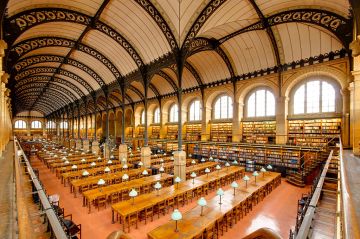
This week the Bibliothèque Nationale was closed, so in the evenings I made use of the Bibliothèque Sainte-Geneviève which is in this same part of Paris, next to the Panthéon. It’s a library for many of the Parisian universities, but also allows public readers. Like the old Richelieu site of the Bibliothèque Nationale, the main reading room is designed by Henri Labrouste, with wonderful  high arched ceilings and exposed ironwork. It gets very busy, and quite noisy, but the collection is extensive. While a lot of material is on open shelves, all the obscure items I wanted had to be ordered up from the store. So I was able to resolve a lot of reference issues and consult some hard-to-find things here too.


One quotation gives the sort of work that reference checking might entail. In the introduction to one of Canguilhem’s books in English translation the translators quote his self-assessment of his relation to Nietzsche. Their reference is to a German article on Canguilhem. That article says it is cited from a chapter in a French book. That chapter says it is cited from a conference proceedings. There, the speaker says it’s something Canguilhem once told him. That’s as good as it is going to get, but it took looking at three additional sources beyond the first to find that out.

Next week I’m off on a kind of writing/cycling retreat – an attempt to take a bit of a break before term starts and also to try to write a bit more of this book. The weather forecast looks grim, so it seems I may be getting a bit more writing than cycling done.


The previous updates on this project are here; and Foucault’s Last Decade and Foucault: The Birth of Power are now both available from Polity. Several Foucault research resources such as bibliographies, short translations, textual comparisons and so on are available here. On the related Canguilhem project, see this page.
Posted in Canguilhem (book), Georges Canguilhem, Henri Lefebvre, Michel Foucault, The Early Foucault, Uncategorized | 2 Comments