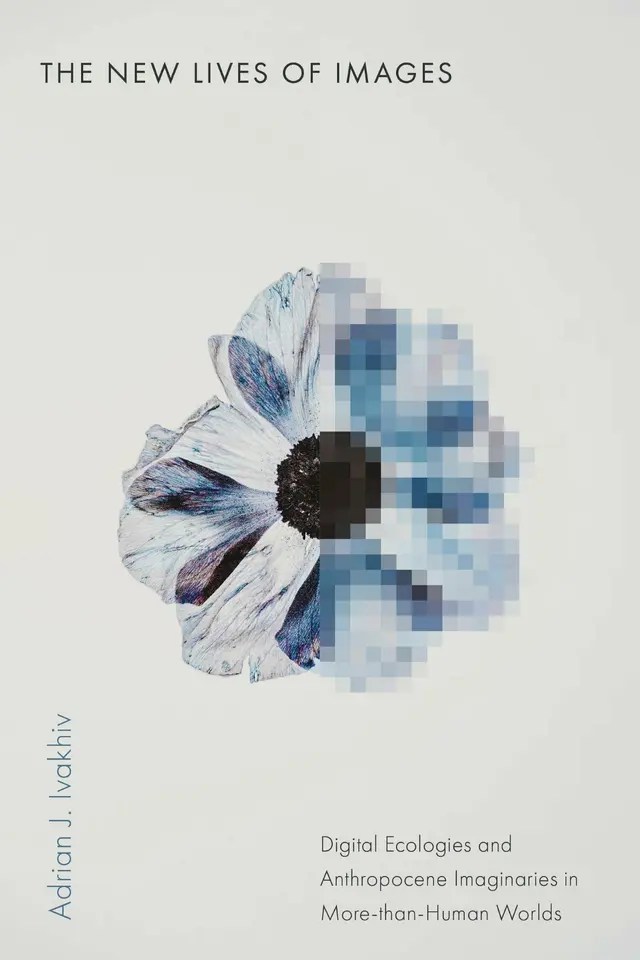
The Edinburgh Critical Edition of the Complete Works of Alfred North Whitehead, edited by Brian G. Henning and Joseph Petek

The Edinburgh Critical Edition of the Complete Works of Alfred North Whitehead, edited by Brian G. Henning and Joseph Petek

One volume was published in 2022, but three more are now announced.

Alfred North Whitehead was one of the 20th-century’s most original and significant philosophers. For the first time, this critical edition brings together his complete published works and previously unpublished lectures, papers and correspondence in a series of critically edited volumes.

The edition will include a projected six volumes of Whitehead’s unpublished works, including newly discovered materials long thought lost or destroyed. Many of these illustrations, equations and chalkboard diagrams used by Whitehead in classroom settings have never been seen before by contemporary scholars. They will illuminate many factors that influenced the development of Whitehead’s initial and later thought and elucidate, in considerably greater detail than ever before, many of his principal philosophical concepts set out in his published works.

New critical editions of Science and the Modern WorldSymbolism: Its Meaning and EffectThe Function of ReasonProcess and Reality and collections of later essays and public lectures such as Adventures of IdeasModes of Thought and Essays on Science and Philosophy will round out this ambitious edition, making it the ultimate scholarly collection of Whitehead’s work.
Posted in Uncategorized | Leave a comment

Stéphane Füzesséry, La Destruction de Berlin: De l’explosion urbaine à Germania, 1860-1945 – La Découverte, August 2025

Stéphane Füzesséry, La Destruction de Berlin: De l’explosion urbaine à Germania, 1860-1945 – La Découverte, August 2025

Thanks to John Raimo for the link.

La croissance explosive de Berlin entre 1860 et 1910 a-t-elle favorisé la réception du nazisme ? La ” décivilisation ” qu’a connue l’Allemagne après 1933 est-elle née en réaction à la nouvelle civilisation urbaine apparue en plein cœur du Brandebourg au début du XXe siècle ? Pourquoi les nazis, qui n’ont pourtant cessé de clamer leur haine de la très grande ville, ont-ils voulu transformer leur capitale en une mégalopole de dix millions d’habitants ? Et dans quelle mesure la mise en œuvre de ce projet à partir de 1938 a-t-elle préfiguré la destruction de Berlin par les bombes alliées ? 
Le livre tente de répondre à ces questions. Envisageant à nouveaux frais l’histoire convulsive de Berlin entre 1860 et 1945, il observe comment deux générations d’Allemands, confrontés au brutal changement d’échelle de leur capitale et aux formes inédites empruntées par la vie métropolitaine, sont parvenus à en surmonter les effets les plus déstabilisants tout en nourrissant de profonds doutes sur la viabilité à long terme de la très grande ville – une forme de peuplement en rupture complète avec la tradition urbaine allemande. 
Il apporte ainsi un éclairage neuf sur la détestation nazie de Berlin et sur la manière dont, une fois au pouvoir, les dirigeants du IIIe Reich ont voulu reconstruire leur capitale. Revenant sur la genèse et la mise en œuvre de ce projet connu sous le nom de  Germania, il montre que la destruction de Berlin a commencé avant les bombardements alliés et que le chantier de la mégalopole nazie – par ses besoins en main-d’œuvre et en matériaux – a participé à la fuite en avant du régime vers la guerre, entraînant en retour l’une des plus vastes campagnes de dévastation jamais entreprises contre une ville.

Posted in Uncategorized | Leave a comment

Books received – Febvre, Hiltebeitel, Comaroff, Kantorowicz, Glyph 7, Gadoffre, Eliade & Couliano, Harvey

Books received – mostly bought second-hand, but also Joshua Comaroff, Spectropolis: The Enchantment of Capital in Singapore, sent by University of Minnesota Press, and Ernst Kantorowicz, Radiances: Unpublished Essays on Gods, Kingship, and Images of the State, edited by Robert E. Lerner, sent by Cornell University Press. My review of the Kantorowicz collection is forthcoming in The English Historical Review – for two short previous pieces on him, see here and here.

The others relate to the Indo-European thought project, or some planned ‘Sunday History’ posts. Despite its title of The Eliade Guide to World Religions, and his co-author credit, the actual author was Ioan Culianu (or Couliano), on whose murder I write about here.

Posted in David Harvey, Ernst Kantorowicz, Mircea Eliade, Sunday Histories | 3 Comments

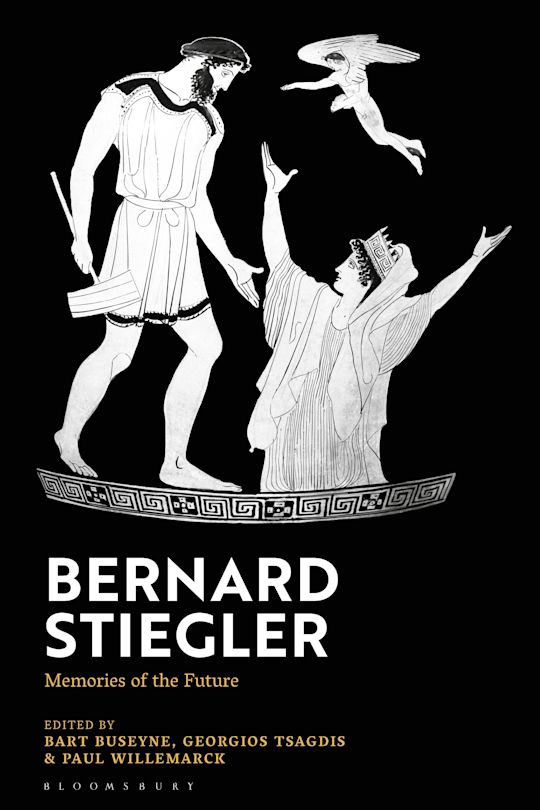
Bart Buseyne, Georgios Tsagdis and Paul Willemarck eds., Bernard Stiegler: Memories of the Future – Bloomsbury, August 2025

Bart Buseyne, Georgios Tsagdis and Paul Willemarck eds., Bernard Stiegler: Memories of the Future – Bloomsbury, August 2025

Honouring the memory of the late Bernard Stiegler, this edited collection presents a broad spectrum of contributions that provide a complex and coherently articulated image of Stiegler’s thought which reached beyond the boundaries of academic, artistic and experimental techno-scientific enclaves where it had been originally received.

Stiegler’s philosophical work encompassed theorization, social diagnosis, planning, practical and territorial experimentation, politics, and aesthetics. In its wake, the essays in this volume celebrate and explore the wealth of this multi-dimensional legacy. They examine the conditions of human life in general, its foundational intermittence, and carry forward Stiegler’s post-phenomenological unfolding of the distinctive spatio-temporalities that weave together the epoch we call ‘present’. Engaging closely with Stiegler’s original impetus for the creation of technologies of care, as well as of communities of knowledge and artistic practice,

Posted in Bernard Stiegler, Uncategorized | Leave a comment

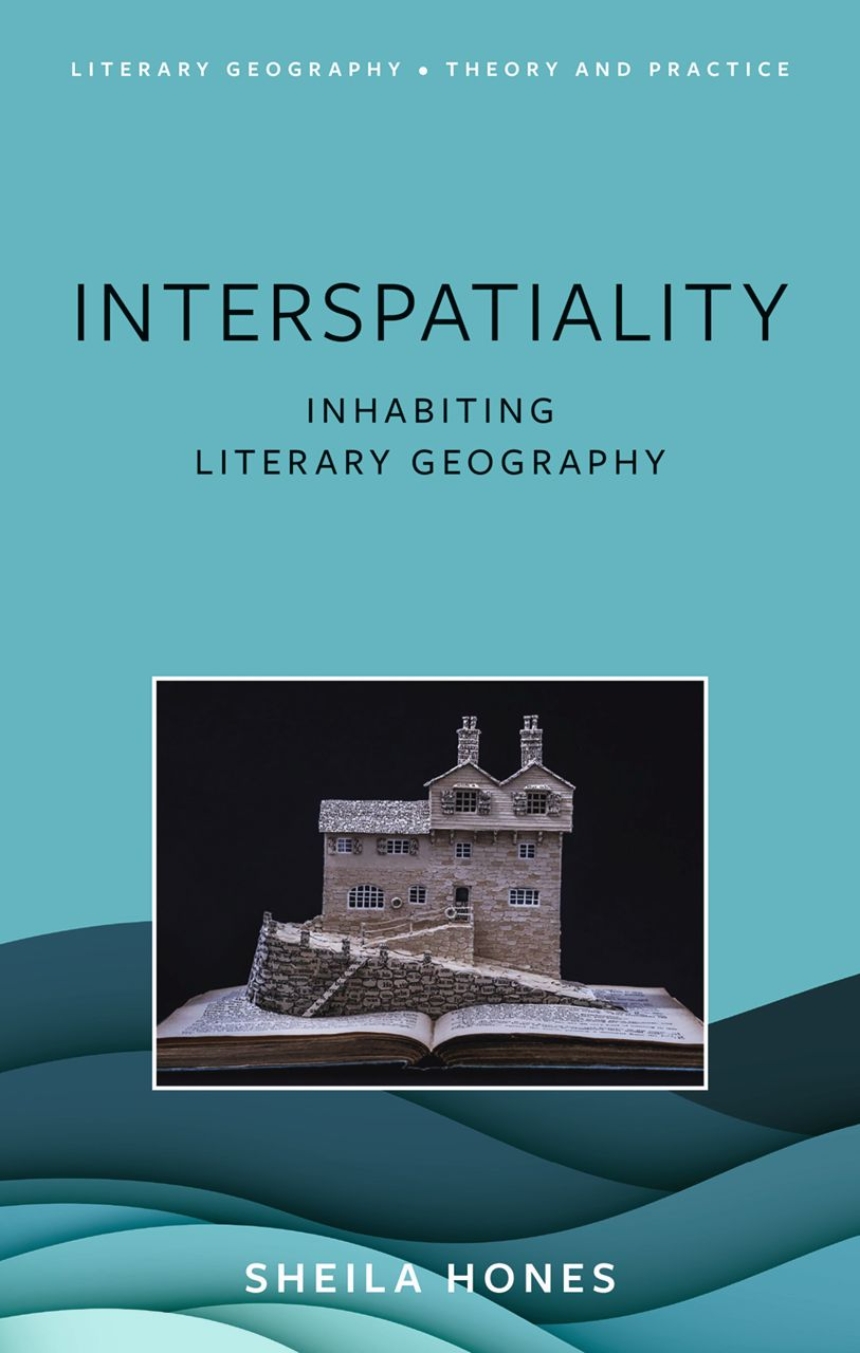
Sheila Hones, Interspatiality: Inhabiting Literary Geography – University of Wales Press, January 2025

Sheila Hones, Interspatiality: Inhabiting Literary Geography – University of Wales Press, January 2025

A consideration of literary geography as a specialist academic field.

Interspatiality is a book about the language, theory, and practice of a literary geography which takes as its subject matter the inseparability of writing, reading, and living. It explores ways of engaging with interrelated textual-social-spatial processes, working with the problem of how to appreciate these processes as inseparable; how to articulate the complex spatialities they generate; and how to convey their presence, power, and significance in literary texts. By focusing on literary geography as something inhabited as well as studied, it draws attention to the interspatiality of routine daily life.

Posted in Uncategorized | Leave a comment

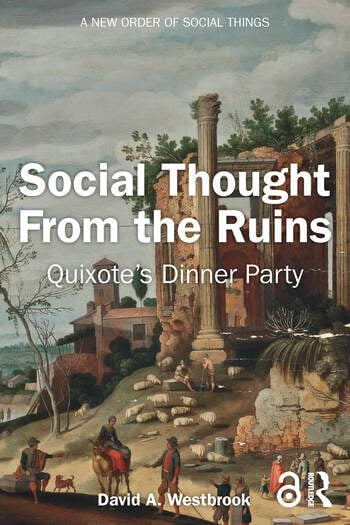
David A. Westbrook, Social Thought from the Ruins: Quixote’s Dinner Party – Routledge, August 2025, print and open access

David A. Westbrook, Social Thought from the Ruins: Quixote’s Dinner Party – Routledge, August 2025, print and open access

Through stories, conversations, and essays, this book pursues interwoven critical and philosophical inquiries into the nature of the contemporary in the North Atlantic, asking how are we to live as intellectuals, individually and in community?

Social Thought From the Ruins: Quixote’s Dinner Party is the product of informal discussion and academic work done over the last two decades among an international group of social scientists. An extended critique of academic life today and the context of our own thinking, this book interrogates aspects of our modernity, with its pervasive sense of crisis and uncertainty, and the difficulty of thinking clearly about things like the state and power, data and violence. Reflecting that the United States, indeed the North Atlantic countries, seem to have entered autumn, David A. Westbrook asks what spring might be. Will the critical social sciences have anything to offer the exercise of power, or are we doomed to incessant and ineffectual critique? Can bureaucracy be made at least more accountable, if not democratic? Conversely, can we feel less alienated from the structures of power that rule us, or that fail to govern at all? Can we feel at home?

The Open Access version of this book, available at http://www.taylorfrancis.com, has been made available under a Creative Commons Attribution (CC-BY) 4.0 license.

Posted in Uncategorized | Leave a comment

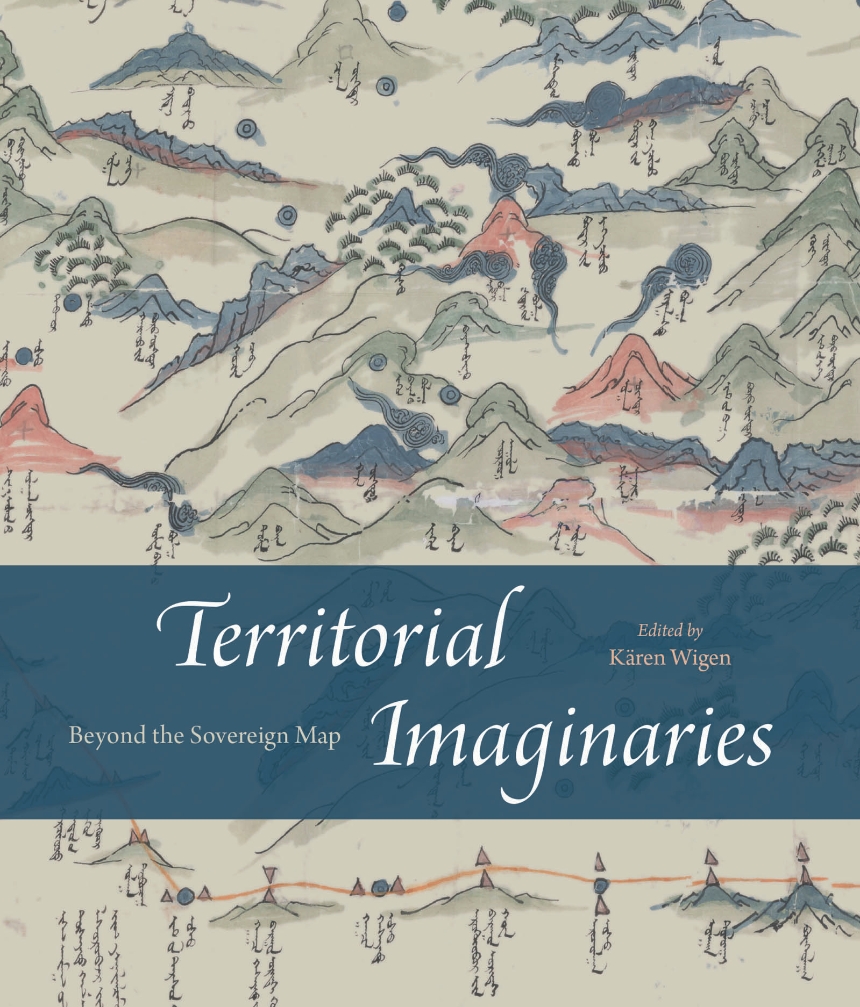
Kären Wigen ed., Territorial Imaginaries: Beyond the Sovereign Map – University of Chicago Press, April 2025

Kären Wigen ed., Territorial Imaginaries: Beyond the Sovereign Map – University of Chicago Press, April 2025

Fresh offerings on world mapping beyond Western conventions.
 
This strikingly colorful volume contends that modern mapping has never been sufficient to illustrate the complex reality of territory and political sovereignty, whether past or present. For Territorial Imaginaries, editor Kären Wigen has assembled an impressive slate of experts, spanning disciplines from political science to art history, to contribute perspectives and case studies covering three main themes: mapping before the nation-state, rethinking and critiquing mapping practices, and robust traditions of counter-cartography.
 
Each contributor proposes alternative ways to think about mapping, and the essays are supported with rich archival documentation. Among the far-reaching case studies are Barbara Mundy’s cartographic history of Indigenous dispossession in the Americas, Peter Bol’s examination of two Chinese maps created five hundred years apart, and Ali Yaycıoğlu’s exploration of tensions between top-down and bottom-up mapping of Habsburg and Ottoman border claims.

Posted in Uncategorized | Leave a comment

Maddalena Cerrato, Michel Foucault’s Practical Philosophy: A Critique of Subjectivation Processes – SUNY Press, May 2025 (paperback November) and New Books Network discussion

Maddalena Cerrato, Michel Foucault’s Practical Philosophy: A Critique of Subjectivation Processes – SUNY Press, May 2025 (paperback November)

New Books Network discussion with Morteza Hajizadeh – thanks to dmf for the link

Offers a holistic approach to Michel Foucault’s thought, introducing the idea of practical philosophy as an original interpretative framework.

Michel Foucault’s thought, Maddalena Cerrato writes, may be understood as practical philosophy. In this perspective, political analysis, philosophy of history, epistemology, and ethics appear as necessarily cast together in a philosophical project that aims to rethink freedom and emancipation from domination of all kinds. The idea of practical philosophy accounts for Foucault’s specific approach to the object, as well as to the task of philosophy, and it identifies the perspective that led him to consider the question of subjectivity as the guiding thread of his work. Overall, Cerrato shows the deep consistency underlying Foucault’s reflection and the substantial coherence of his philosophical itinerary, setting aside all the conventional interpretations that pivot on the idea that his thought underwent a radical “turn” from the political engagement of the question of power toward an ethical retrieval of the question of subjectivity.

Posted in Michel Foucault, Uncategorized | Leave a comment

Daniel Bessner & Michael Brenes eds. Cold War Liberalism: Power in a Time of Emergency – Cambridge University Press, January 2026

Daniel Bessner & Michael Brenes eds. Cold War Liberalism: Power in a Time of Emergency – Cambridge University Press, January 2026

In the mid-twentieth century, Cold War liberalism exerted a profound influence on the US state, US foreign policy, and liberal thought across the North Atlantic world. The essays in this volume examine the history of this important ideology from a variety of perspectives. Whereas most prior works that analyze Cold War liberalism have focused on small groupings of canonical intellectuals, this book explores how the ideology transformed politics, society, and culture writ large. From impacting US foreign policy in the Middle East, to influencing the ideological contours of industrial society, to reshaping the urban landscape of Los Angeles, Cold War liberalism left an indelible mark on modern history. This collection also illuminates the degree to which Cold War liberalism continues to shape how intellectuals and policymakers understand and approach the world.

Posted in Uncategorized | Leave a comment

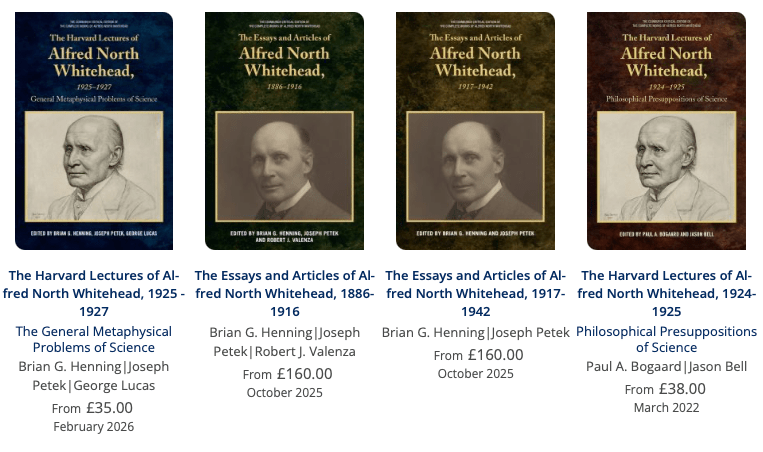
Adrian J. Ivakhiv, The New Lives of Images: Digital Ecologies and Anthropocene Imaginaries in More-than-Human Worlds – Stanford University Press, September 2025

Adrian J. Ivakhiv, The New Lives of Images: Digital Ecologies and Anthropocene Imaginaries in More-than-Human Worlds – Stanford University Press, September 2025

In this ambitious new work, eco-philosopher and cultural theorist Adrian Ivakhiv presents an incisive new way of thinking about images and imagination. Drawing upon an immense range of materials, Ivakhiv reassesses the place of imagination in cultural life, analyzing how people have interacted with images in the past and the ways that digital media are profoundly altering these relationships today. The book contributes powerfully to the study of visual culture and digital media, and provides provocative interpretations of a range of important artists and media movements: from the work of photographer Edward Burtynsky, the ambitious multi-screen installations of John Akomfrah, the abstract art of Swedish spiritualist Hilma af Klint, and the Afrofuturism of jazz musicians like Sun Ra and poet Alexis Pauline Gumbs, to the ever-expanding universe of animal videos on YouTube. Along the way, the book delves into animacy and religious imagery, iconophilia and iconoclasm, divination and prophecy, “truthiness” and “enchantment networks,” online communities and artificial intelligence, the political and affective economies of digital media, and the role of utopian futurism in the present “climate-colonial Anthropocene” predicament. The result is a vital contribution toward a more empowering conception of the creative imagination and its possibilities in today’s emerging digital ecology. 


Posted in Uncategorized | 2 Comments