Abstract Expressionism at the Royal Academy of Arts

qkij9wy1qygjhahijv2t

Jackson Pollack, Blue Poles, 1952

The Royal Academy of Arts in London has a major exhibition of Abstract Expressionism. I went on Friday after an interesting, but deeply depressing, day at the British Academy at a workshop on European Union and Disunion.

Here’s the Royal Academy’s description:

In the “age of anxiety” surrounding the Second World War and the years of free jazz and Beat poetry, artists like Pollock, Rothko and de Kooning broke from accepted conventions to unleash a new confidence in painting.

jyuymvcuzsaej4j2u57c.jpg

Mark Rothko, No 15, 1957

Often monumental in scale, their works are at times intense, spontaneous and deeply expressive. At others they are more contemplative, presenting large fields of colour that border on the sublime. These radical creations redefined the nature of painting, and were intended not simply to be admired from a distance but as two-way encounters between artist and viewer.It was a watershed moment in the evolution of 20th-century art, yet, remarkably, there has been no major survey of the movement since 1959.

This autumn we bring together some of the most celebrated art of the past century, offering the chance to experience the powerful collective impact of Pollock, Rothko, Still, de Kooning, Newman, Kline, Smith, Guston and Gorky as their works dominate our galleries with their scale and vitality.

I don’t know much about this movement, so the audio guide was helpful. I had a sense of the size of some of the many Mark Rothko canvases, but the scale of two Jackson Pollack murals was quite something. The guide was helpful on some of the techniques used to produce these – more than is perhaps obvious. There was a lot to take in, and the Friday crowds were a bit overwhelming, so perhaps I’ll be able to make a return visit before it closes in January. Worth a visit.

Posted in Uncategorized | 4 Comments

Books and journals received – Symposium, Radical Philosophy, Esposito and an early piece by Foucault

IMG_1893.JPGA few books and journals received. The final issue of Radical Philosophy in its present form; Roberto Esposito’s Two; an issue of Symposium and a book which contains an early piece by Foucault. The Symposium issue has the discussion between me, Peter Gratton, Eduardo Mendieta and Diana Taylor about ‘Foucault’s Last Decade’ – the topic and my book of that title. It’s not yet available online but will share when it is.
Posted in Eduardo Mendieta, Foucault's Last Decade, Peter Gratton, Uncategorized | Leave a comment

‘Step onto the map: the British Library’s exhibition is open’

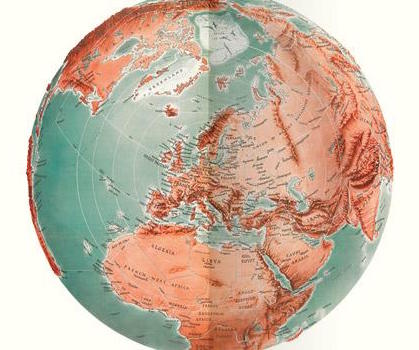
6a00d8341c464853ef01b8d23592df970c-800wi.jpgI mentioned the new British Library maps exhibition on Friday, and lead curator Tom Harper now has a post on the BL maps blog discussing it.

Welcome to Maps & the 20th century: Drawing the Line, the biggest map exhibition of the decade and the first to showcase the mapping of the ‘cartographic century’.

We have selected 200 maps from our collection of 4 million maps, supplemented by a handful of crucial loans) in order to showcase their technological development, their increasing variety, and what they meant to 20th century western  society

Viewing history through objects is an important way of unlocking our past, and maps are more eloquent than most objects in providing snapshots upon a past that may be just behind us, yet appears like a foreign country. [more here]

Posted in Uncategorized | Leave a comment

12 Critical Theory books that came out in October 2016

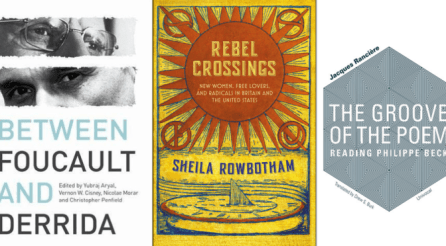
12 Critical Theory books that came out in October 2016 – another useful roundup. Includes Rowbotham, Rancière, Perreau, Lacan, Cavarero etc.

october-2016-critical-theory-books-672x372.png

Posted in Uncategorized | 1 Comment

British Library – Maps and the 20th Century: Drawing the Line

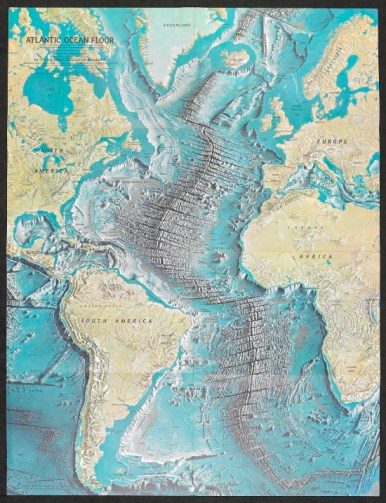
bl-maps-exhib-img-624x351Last night I attended the opening of the British Library exhibition ‘Maps and the 20th Century: Drawing the Line‘.

The lead curator is Tom Harper, but as he insisted, this was a collaborative project, and there were external experts used such as Mike Heffernan from the University of Nottingham.

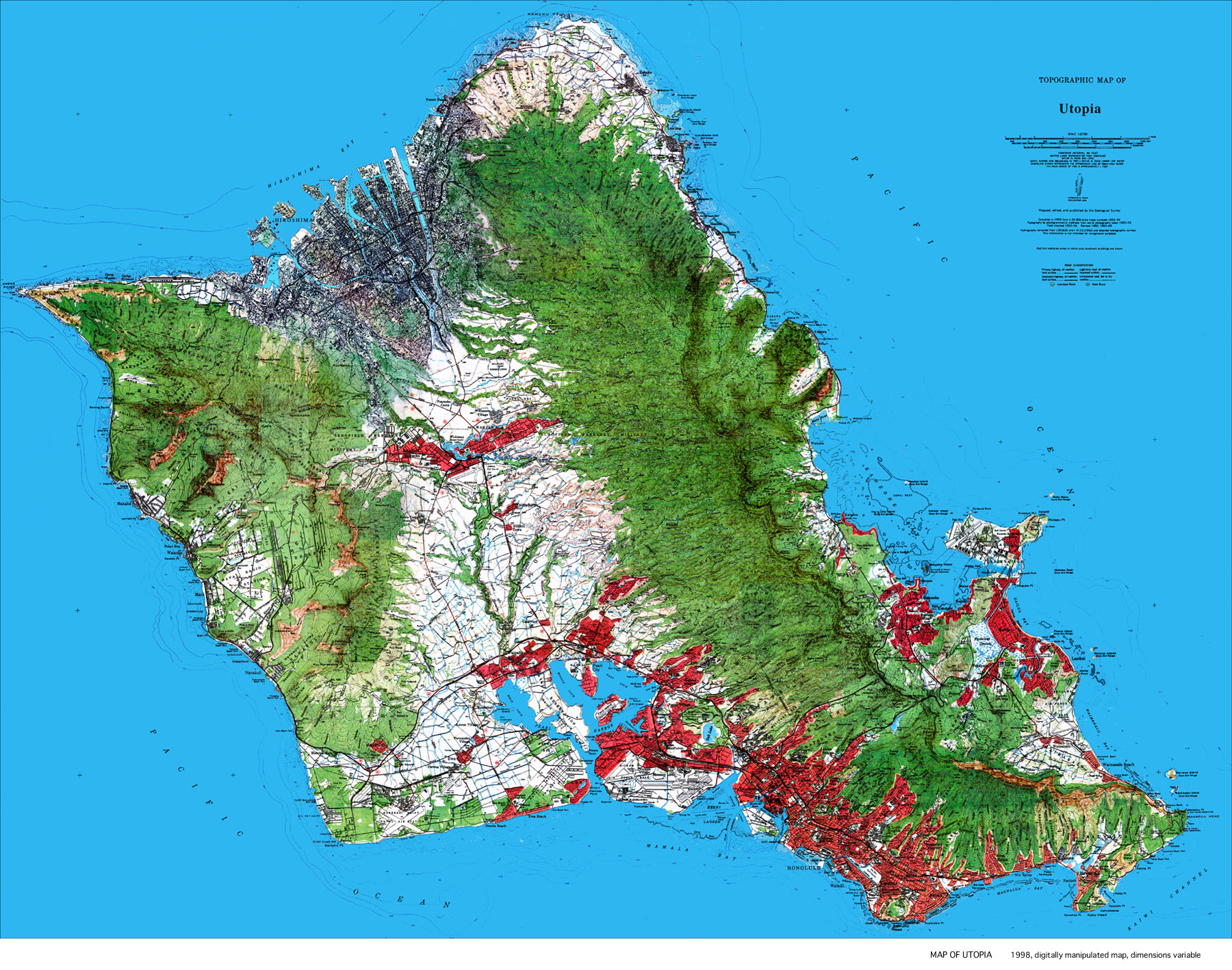
The British Library has a huge collection of maps, and one of the challenges was selecting just the 200 on display in the exhibition. Not all come from the BL collection, of course. Given the twentieth century focus, much is explicitly political or geopolitical, but there are also maps from fiction, artworks and tourism. There were some striking juxtapositions of maps and a single visit wasn’t enough to take it all in. I’m hoping to go back. I was particularly struck by Satomi Matoba’s Topographical Map of Utopia, which uses military maps to build up a representation of the island. Hiroshima and Pearl Harbor both appear. There was an example of the Sykes-Picot agreement map, with the blue and red pencil lines demarcating the French and British areas of the Ottoman Empire. Not all the maps were so serious – there was an example of The Weetabix Wonderworld Atlas – a child’s atlas from the early 1980s you could get by saving up breakfast cereal tokens.

The exhibition is open until 1 March 2017. It’s well worth a visit if you can get to London. There are a series of lectures and other talks linked to the exhibition happening over the next several months. I’ll be part of a session with Tim Marshall on ‘Power, Territory and Borders’on 31 January.

Posted in Uncategorized | 2 Comments

Literary Geographies of Political Economy – new section of the Progress in Political Economy blog

Literary Geographies of Political Economy – new section of the Progress in Political Economy blog

This section of the PPE blog is dedicated to Literary Geographies of Political Economy bringing together the emergence of work by Adam David Morton in this area as well as potential additional contributions. The objective is to co-ordinate material that focuses on literary geography and political economy. This entails an interdisciplinary focus on literary studies, geographical studies, and political economy addressing narratives of literary and material space.

The ambition is to reach out to cognate endeavours engaged with literary geographies and political economy, be it work linked to the journal Literary Geographies; work on Early Modern Literary Geographies; or work on Capital Fictions linking literary fiction and capitalist modernity.

Posted in Adam David Morton, Uncategorized | 1 Comment

Surviving October

Well, I survived October. It felt like the perfect storm after the calm of a year of research leave. I did what I thought I could to get in the best possible shape for it – a first draft of the Shakespeare manuscript was completed and printed before term started, home and work office were tidy and organised, all review commitments fulfilled and so on. But it still hit hard and I barely remained afloat. Most of my teaching is in the first half of term 1, so it’s a busy time, but add in welcome events, meeting lots of new tutees, an open day (on a Saturday), PhD supervisions, admin meetings etc. and it’s a very busy time. It wasn’t helped by external commitments – advisory council of the Durham Institute of Advanced Study, British Academy meetings, external member of an appointment committee at another university, multiple review requests and so on. And I didn’t help myself by going to a conference in California at this time of year – I flew on a Wednesday, got back on a Monday, and was teaching 10am-8pm on the Tuesdays before and after. But it was a crucial conference to be at, and it was  worth the trip. I also spoke at an event organised by the London Centre of International Law Practice. I managed to squeeze in a few hours on a few days at the British Library, and just about managed to keep getting out on the bike – many of the month’s miles were commuting to work, but I did just scrape over my 500 mile a month aim.

Part of the reason things feel so busy is that I’m trying to run research projects on three or four different themes. There is the Shakespeare project, and while I’ve barely touched the manuscript in the last month, I spoke about this in California and have done a little reading on it. There have been two interviews on the Foucault work this month, one by phone and one by email. I’m also beginning to think about how I will structure work on the earlier period of Foucault’s career. I’m developing a project around terrain in relation to my territory work, and I returned to that earlier work for the LCILP talk. Ideally I aim to put in a grant application on this in the near future, but this requires the time to do it properly. I’m also moving forward with the Lefebvre rural project with Adam David Morton. There are quite a lot of talks coming up in 2017, and just the logistical organisation for these can be draining – what dates are possible, how can I get from one US city to the next and then onto Boston for the AAG, what topic do I want to speak on, and does this fit with the organiser’s wishes, etc.

November should be much better. The teaching is much less, and we have the oasis of a reading week. I’m only giving one external talk, on ‘Foucault and Shakespeare’ in Cambridge, and that’s a paper which is written and is almost ready to submit. I am internal examining a PhD thesis, so need to block out a couple of days to read that. I’m not getting on a plane in the entire month, so that’s also a welcome break, though there are a lot of train journeys back and forth to London.

Posted in Conferences, Michel Foucault, Shakespearean Territories, terrain, Territory, The Early Foucault, Travel, Uncategorized, William Shakespeare | Leave a comment

New Society and Space site!!

Link to the new Society and Space open site – http://www.societyandspace.org

Posted in Uncategorized | Leave a comment

Books received – Foucault, Hollis, Rudwick, Maier

IMG_1880.JPG

Charles Maier’s Once Within Borders: Territories of Power, Wealth, and Belonging since 1500Martin Rudwick’s Earth’s Deep History, Gavin Hollis, The Absence of America: The London Stage 1576-1642 and two by Foucault – the recent reedition of his essay Sept propos sur le septième ange and a 1964 reprint of the 1961 edition of his Histoire de la folie. Hollis was sent as I’m on the editorial board of the series; Rudwick was pre-ordered in recompense for review work earlier this year. I found a cheap (and a bit tatty) version of Foucault’s book, so thought I’d get it as a reading copy – I have a much better-preserved version which I found earlier this year in Paris.

Posted in Michel Foucault, Territory, The Early Foucault, Uncategorized | 1 Comment

Interview with Sylvère Lotringer in Purple Magazine

Interview with Sylvère Lotringer about Semiotext(e), his quite amazing networks, and his background in Purple Magazine.

Posted in Uncategorized | Leave a comment