Open access collection from E-IR – Nations under God: The Geopolitics of Faith in the 21st Century

Open access collection from E-IR –  Nations under God: The Geopolitics of Faith in the 21st Century.

NuG-front-cover

This edited collection presents a balanced analysis of the multifaceted roles taken on by religions, and religious actors, in global politics. The volume brings together over thirty leading scholars from a variety of disciplines such as political science, IR theory, sociology, theology, anthropology, and geography.

Utilising case studies, empirical investigations, and theoretical examinations, this book focuses on the complex roles that religions play in world affairs. It seeks to move beyond the simplistic narratives and overly impassioned polemics which swamp the discourse on the subject in the media, on the internet, and in popular nonfiction.

Posted in Uncategorized | Leave a comment

RSC new season announced – Hamlet, Cymbeline, A Midsummer Night’s Dream, Dr Faustus, The Alchemist, Don Quixote – but no King Lear

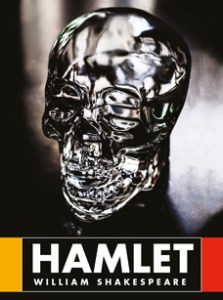
hamletThe RSC’s new season for summer 2016 has been announced – Hamlet, Cymbeline, A Midsummer Night’s Dream, Dr Faustus, The Alchemist and Don Quixote…  The first three are in the main theatre; the non-Shakespeare plays in the Swan. I hope to get to all of them.

I saw Hamlet at the RSC in 2013 (as well as other productions this year – see here and here), and the RSC’s A Midsummer Night’s Dream with Mendelssohn’s music at the Queen Elizabeth Hall earlier this year, but these are different productions. Paapa Essiedu is Hamlet. It was reported earlier this year that Antony Sher would be doing King Lear in summer 2016, so I guess that’s postponed until the second season?

Posted in William Shakespeare | Leave a comment

Does Anyone Have English Translations of GIP Intolerable docs?

A few links to documents relating to the Group d’Information sur les Prisons and a question about further material. Here’s what I know –

Marcelo Hoffman’s Foucault and Power has a translation of the ‘Inquiry into Twenty Prisons’ as an appendix; and there is a collection of documents on and by the GIP, including from the Intolérable collection and the earlier (and out-of-print) IMEC volume Archives d’une lutte, forthcoming from University of Minnesota Press.

Update: Marcelo has pointed out there is also a translation of ‘The Masked Assassination of George Jackson’ in Joy James’s Warfare in the American Homeland. There is a pdf of it here.

dmf's avatarDeterritorial Investigations

View original post

Posted in Uncategorized | 1 Comment

Volume 33 Issue 4 out now – currently open access

New issue of Society and Space published, all currently open access.

Posted in Uncategorized | 1 Comment

Boris Porchnev/Porshnev on feudalism – were any of his works translated from Russian?

I mentioned Boris Porchnev/Porshnev in a previous post today, looking at the two editions of his work on peasant uprisings in seventeenth century France. Foucault uses his work in his reading of the Nu-Pieds revolts in Théories et institutions pénales. In Claude-Oliver Doron’s essay on Foucault’s use of historians in that volume, there is a brief mention of Porshnev’s work on feudalism (TIP 293 n. 6).

Doron notes two books and an article in French on this theme, but provides no bibliographical references. The titles appear to be translations of the titles of Russian texts, taken from Igor Filippov, “Boris Porchnev et l’économie politique du féodalisme”, in Serge Aberdam and Alexandre Tchoudinov, Ecrire l’histoire par temps de guerre froide: Soviétiques et Français autour de la crise de l’Ancien régime, Paris: Société des études robespierristes, 2014, pp. 149-76, p. 150 (available online at academia.edu).

So, the question:  were any of his works on feudalism actually translated from Russian?

I’ve found a few references to one of the books as Essai d’économie politique du féodalisme, Paris: Éditions du Progrès, 1979, but I can’t find a copy in any online second-hand book stores, and worldcat.org suggests only one library in the world (in Canada) has a copy. That seems unusually few copies in circulation given the publisher – I believe it was the French equivalent of Progress Publishers, based in the USSR which did lots of translations of Marxist and other works during the Cold War.

Anyone shed any further light on this? (I know other works of his are in French – it’s the work on feudalism I’m interested in…)

Posted in Boris Porshnev, Foucault: The Birth of Power, Michel Foucault | 1 Comment

The Barbican’s production of Hamlet, with Benedict Cumberbatch

HamletLast Friday I went to see the Barbican’s production of Hamlet, directed by Lyndsey Turner, and starring Benedict Cumberbatch, Ciarán Hinds, Anastasia Hille, and Siân Brooke. Tickets sold out very quickly, but occasionally returns become available and a bit of persistence paid off. There are some available on the day, and I saw quite a few people pick up returns. It’s also being broadcast live-to-cinema on 15 October.

When I’ve talked about Hamlet for the Shakespeare project, I’ve said that one of the reasons I like the Kenneth Branagh film is its ability to give a sense of the much broader scale of the story, outside the claustrophobic court of Elsinore. This is so often sacrificed in stage productions, because of the difficulty in portraying some of those concerns. I said a bit more about that in a brief review of the Classic Stage Company version starring Peter Sarsgaard I saw in New York earlier this year.

As many reviews have noted, Cumberbatch himself was excellent, and I’m very pleased I saw it. The production of Hamlet though has had some criticisms. I didn’t find these a major distraction, and was intrigued by the staging. The Barbican doesn’t have a curtain, but a shutter. The scene opens on a single small room for the opening scene of Hamlet and Horatio (the appearance of the ghost just implied by a ‘who’s there?’), but then the back wall lifted up to open onto a huge set of a palace interior, but with a balcony and stairs down; and doorways to larger spaces beyond. I’ve seen productions at the Barbican before, but never felt the size of the stage in this way. After the interval, the shutter opened but to the same scene covered in rubble, dust and ashes. For the initial scene of the second half – Fortinbras’s camp and Hamlet’s encounter with the soldier as he is led away to England – this worked well. Without mass of numbers, it did give the sense of an army on the move. It was convincing, and must be quite a job to unload all this and then clean it up again during and after performances. The only downside was that there was clearly foam or something similar underneath the bigger piles, and so the cast moved a bit up-and-down on the spongy bits.

For the rest of the play though, the devastated landscape remained, and of course, much of the action is back in the castle or palace. It worked well for the burial scene, but less well for other parts, and they had to clear a path for the fencing bout. Fortinbras’s return right at the end worked nicely though, as the devastated court now matched the war outside as he clambered down the rubble to take the crown. The back-story of the King Hamlet-King Fortinbras duel, on the day of Hamlet’s birth, was quite substantially cut in this version, but enough was provided to make sense of the wider framing of the events. (That’s my focus in the reading I’m developing, so of course I’m especially interested in that aspect.)

Overall I thought it was very good, and I’d be going to see the live-to-cinema version too, if it didn’t clash with a Franco Moretti lecture at Queen Mary, but perhaps there will be encore screenings. The clash is ironic, in that Moretti’s analysis of Hamlet was one of the first things of his read.

Earlier last week I’d seen Christopher Marlowe’s Tamburlaine the Great at the small Tristan Bates theatre, and there they had managed to portray the vast geopolitical scale of the events with lighting, choreography and music. Heavily cut – the two plays in just over two hours – but well done. Tickets for that are still available, and much cheaper, though it’s only on for another few days.

Posted in Franco Moretti, Shakespearean Territories, William Shakespeare | Tagged , , | 4 Comments

Books received – Tawney, The ‘Katrina Effect’, La politique de l’espace parisien, Shakespeare

unnamed

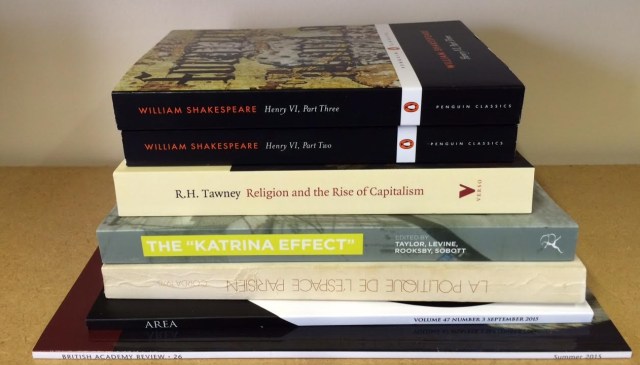
A couple of recent Penguin Shakespeare plays, the reissue of Tawney, Religion and the Rise of Capitalism (in recompense for review work), The ‘Katrina Effect’ (from the publisher), a couple of journal issues, and a copy of La politique de l’espace parisien. The last is a collaborative project which developed out of one Foucault led – there is no Foucault in this book, but it’s an interesting volume nonetheless.

Posted in Michel Foucault, William Shakespeare | Tagged | Leave a comment

The World Post interview with Peter Sloterdijk – ‘Man And Machine Will Fuse Into One Being’

55e47c0c1d00002f001465eaThe World Post interview with Peter Sloterdijk – ‘Man And Machine Will Fuse Into One Being‘.

Posted in Peter Sloterdijk | 1 Comment

Governmentality, Neoliberalism, Economy: strategies for critiques of power (7 – 9 December 2015) | CBS – Copenhagen Business School

News of an interesting PhD workshop to be held in Copenhagen in December. Unfortunately, due to a mix-up over dates, I will not be presenting at this event.

Clare O'Farrell's avatarFoucault News

Governmentality, Neoliberalism, Economy: strategies for critiques of power
(7 – 9 December 2015)
CBS – Copenhagen Business School, Denmark

PhD School
Doctoral School of Organisation and Management Studies
Department of Management, Politics and Philosophy

Faculty

Mitchell Dean, Professor of Public Governance, CBS
Stuart Elden, Professor, Monash University
Ute Tellmann, Fakultät Wirtschafts- und Sozialwissenschaften, Universität Hamburg
Kaspar Villadsen, Professor (mso), Department of Management, Politics & Philosophy, CBS, Denmark
Marius Gudmand-Høyer, Post.Doc. Scholar, Department of Management, Politics & Philosophy, CBS, Denmark

Course coordinator
Kaspar Villadsen and Mitchell Dean

Prerequisites

Only PhD students can participate in the course.

The course requires the submission of a short paper that deals with conceptual problems or analytical designs in relation to Foucauldian inspired/governmentality studies. Furthermore, papers that apply Foucauldian concepts to empirical problems in a variety of domains are welcomed. The paper should state the theme and the analytical strategy of the PhD project and it…

View original post 738 more words

Posted in Uncategorized | 1 Comment

Boris Porshnev – the two editions of Les soulèvements populaires en France: a book by one of Foucault’s key sources in Théories et institutions pénales

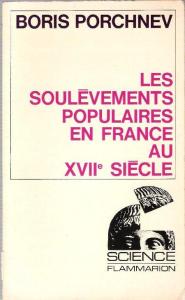
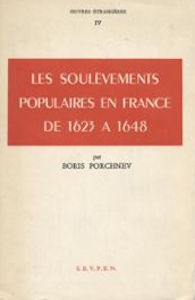
PorchnevRussian historian Boris Porshnev is one of Foucault’s key sources for the discussion of the Nu-Pieds revolts of 1639-40 in Théories et institutions pénales. Following my regular practice of reading Foucault’s sources as well as his own work using them, I bought a copy of Porchnev’s book Les soulèvements populaires en France au XVIIe siècle. I recently turned to the book to begin the work of going beyond Foucault’s own lectures – in this case it is especially useful, since Foucault’s course is edited on the basis of his manuscript, which is fragmentary and note-like, rather than a transcript of what he actually said. I’ll be speaking about Foucault and Porshnev in November at the Historical Materialism conference (abstract here).
(Incidentally, Porchnev seems to be the French rendering of his name; Porshnev the English one.)

But on turning to Porshnev’s book, I was surprised to discover there is nothing about the Nu-Pieds in it. Part 1 is on revolts between 1620-30 and 1640-50; Part 2 is on the Fronde (1648-53). But Porshnev’s book was the subject of a strong critique by Roland Mousnier in 1958 (based on the German translation), which was reprinted in 1970. Foucault uses Mousnier’s critique, as well as his own work on the revolts, and that of his students, in his analysis.

Porchnev-Boris-Les-Soulevements-Populaires-En-France-De-1623-A-1648-Livre-251106879_MLThe reason for the absence is quite simple – I’d picked up a copy of the 1972 reedition of Porshnev’s text from Flammarion, whereas Foucault used the 1963 original edition from SEVPEN. And the 1963 edition has three parts. Parts I and III appear to be exactly the same as the 1972 version; Part II is on the Nu-Pieds. So, even though the reading of the Nu-Pieds was the subject of the key Francophone debate about his work, it is the part which is excised in the pocket re-edition. A chronology and bibliography are also missing; as are an ‘Avant-Propos’ and a preface to the French edition. (The Russian preface appears in both.) The original edition has a slightly different title: Les soulèvements populaires en France de 1623 à 1648So, the original, which includes more, has the more specific title.

It misled me, since online bibliographies suggested it was a simple reprint with a slightly amended title. And the one I bought was appealing especially because the 1963 edition is quite a bit more expensive from online book stores than the 1972 one. I’ve taken a look at the 1963 version in the British Library, but have now ordered a copy from an online second-hand book store too. I’m writing this because there doesn’t seem to an online resource that explains the difference between the two editions, and especially with Foucault’s use of this work, interest in Porshnev might increase again.

Posted in Boris Porshnev, Michel Foucault | 5 Comments