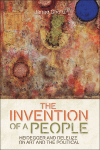
Janae Sholtz, The Invention of a People: Heidegger and Deleuze on Art and the Political – reviewed at NDPR

9780748685356.coverJanae Sholtz, The Invention of a People: Heidegger and Deleuze on Art and the Political – reviewed at NDPR by Antonio Calcagno. The topic sounds interesting, and the review notes that Sholtz discusses Kostas Axelos’s work as a way of developing Heidegger’s ideas.

Shame about the book’s price though.

Update October 2025: The book is finally available in paperback.

Posted in Gilles Deleuze, Kostas Axelos, Martin Heidegger, Publishing | 2 Comments

Nick Blomley, ‘The Territory of Property’ in Progress in Human Geography

Nicholas Blomley, ‘The Territory of Property‘, Progress in Human Geography (requires subscription) – an important piece on this question.

The pervasive and important territorial dimensions of property are understudied, given the tendency to view territory through the lens of the state. Viewing both property and territory as relational and mutually recursive, I introduce the practical work of property’s territory, the historical moment in which it was produced, the powerful metaphors that work through it, and the habits and everyday practices it induces. The territory of property, I suggest, has a specificity, a presence, and a consequentiality, all of which demand our attention.

Posted in Politics, Territory | Tagged | Leave a comment

Michel Foucault’s Collège de France Lectures (1970-1984): 13 Years at the Collège, 13 Seminars at Columbia

cccct-banner_copy

Michel Foucault’s Collège de France Lectures (1970-1984): 13 Years at the Collège, 13 Seminars at Columbia

Seyla Benhabib, Homi Bhabha, Judith Butler, Veena Das, François Ewald, Didier Fassin, James Faubion, Nancy Fraser, Frédéric Gros, Daniele Lorenzini, Nancy Luxon, Achille Mbembe, Paul Rabinow, Judith Revel, Pierre Rosanvallon, Ann Stoler, and Linda Zerilli

in conversation with Columbia University colleagues

Etienne Balibar, Partha Chatterjee, Jean Cohen, Souleymane Bachir Diagne, Katherine Franke, Robert Gooding-Williams, Stathis Gourgouris, Axel Honneth, Jeremy Kessler, Lydia Liu, Anna Lvovsky, Sharon Marcus, Alondra Nelson, John Rajchman, Emmanuelle Saada, Gayatri Chakravorty Spivak, Kendall Thomas, Adam Tooze, and Nadia Urbinati

Moderated by Bernard E. Harcourt and Jesús R. Velasco

Thanks to Graham Burchell for the link.

Posted in Conferences, Etienne Balibar, Judith Butler, Michel Foucault | 1 Comment

Ian Hacking’s Collège de France courses online

This was news to me – Ian Hacking’s Collège de France courses, where he held the Chaire de philosophie et histoire des concepts scientifiques between 2001-2006, are online at his website.

Posted in Ian Hacking | 3 Comments

An Update on the Derrida Seminars

An update on the publication of Derrida’s seminars – very informative and some fascinating material to come.

Peter Gratton's avatarPHILOSOPHY IN A TIME OF ERROR

Last week at the Collegium Phaenomenologicum, Peggy Kamuf, one of the English translators of the Derrida Seminars, provided a quick update on their publication schedule. This year, in French, will see the publication in October (as of now, but Galilée is becoming a bit notorious with delays), of the second volume of Derrida’s two-year seminars on the death penalty (2000-1). Next year, Elizabeth Rottenberg will provide an English translation of this second year, while in French is due to be published what I think will be the important 1975-6 seminar La vie la mort. Originally, the seminars were to be produced in French (with translations in English and now Italian to follow quickly) going backward. Thus we have translated the two years of the Beast and the Sovereign seminars (2001-2; 2002-3), then the move to death penalty lectures, with projections forward of the mid-90s seminars, and so…

View original post 426 more words

Posted in Uncategorized | 2 Comments

Time Served: Discipline and Punish Forty Years On – The Galleries of Justice, Nottingham, 11-12 Sept 2015

Further details and programme for this conference – I’ll be giving the opening plenary talk on the recently published Théories et institutions pénales course. Places are free but limited and registration is required.

Time Served: Discipline and Punish Forty Years On
Friday 11 September 2015 – Saturday 12 September 2015
The Galleries of Justice, NG1 1HN – Nottingham Trent University

ProgrammeFurther Details

40 years after it was first published in French, the impact of Michel Foucault’s seminal text Discipline and Punish on theories of incarceration, discipline and power remains largely unchallenged. The aim of this conference is to revisit the text in light of the past four decades of penal developments, public debate and social consciousness on incarceration as it continues to constitute society’s mode of punishment par excellence.

In addition to thinking through the legacy of Discipline and Punish and its continued relevance today, specific focus will be given to the text itself, its position within Foucault’s wider critical project and its important relationship with his activism most notably the work of the GIP (Groupe d’Information sur les prisons) during the early 1970s. For example, the publication in 2013 of his 1973 lectures at the Collège de France on La Société Punitive, calls for a return to this period and a new engagement with Foucault’s work on prisons, not least in its pursuit of a more openly Marxist critique of the relationship between incarceration and bourgeois capital accumulation.

The conference will bring together a range of scholars working in the fields of philosophy, sociology, criminology, urban geography, architecture, history, literature, media studies as well as artists, writers and activists involved in projects based in and about prisons and their conditions.

The conference is hosted by the School of Arts and Humanities with the generous support of the School of Social Sciences and the Society for French Studies.

Posted in Conferences, Michel Foucault, Politics | Leave a comment

Bradley Garrett on privately owned public spaces (Pops)

Jeremy Crampton links to a new piece by Bradley Garrett and asks some good questions about the vertical dimension.

Jeremy's avatarOpen Geography

Provocative piece by Bradley Garrett on privately owned public spaces, otherwise known as “Pops.” His intro reads in part:

Part of the problem, then, with privately owned public spaces (“Pops”) – open-air squares, gardens and parks that look public but are not – is that the rights of the citizens using them are severely hemmed in. Although this issue might be academic while we’re eating our lunch on a private park bench, the consequences of multiplying and expanding Pops affects everything from our personal psyche to our ability to protest.

His point is well exemplified in the (unusually thoughtful) comments by readers, one of whom asks:

Residential squares (open to the residents of the houses surrounding the square, but not to the general public) were a feature of London architecture up to the beginning of the 20th Century and still remain closed to the public in most cases. Why is…

View original post 304 more words

Posted in Uncategorized | 1 Comment

Public lectures and panels at Antipode’s 5th Institute for the Geographies of Justice – videos now available

Videos of the public lectures from Antipode’s recent Institute for the Geographies of Justice in Johannesburg.

Antipode Editorial Office's avatarAntipodeFoundation.org

The Antipode Foundation’s 5th Institute for the Geographies of Justice took place in Johannesburg, South Africa, in June. A highlight of the week was a series of public lectures and panels:

On Monday 22nd June, Ruth Wilson Gilmore (Professor of Geography, City University of New York) presented “Extraction: Abolition Geography and the Problem of Innocence”, with an introduction from Ruth Hopkins (Senior Journalist, Wits Justice Project);

On Tuesday 23rd, Edgar Pieterse (African Centre for Cities, University of Cape Town) participated in a discussion on “The Contemporary African City: Crises, Potentials, and Limits” with Alex Wafer and Prishani Naidoo (Wits University);

On Wednesday 24th, Gillian Hart (Professor of Geography and Development Studies at UC Berkeley) and Françoise Vergès (Chair in the Global South at the Collège d’études mondiales) participated in a discussion on “Capital, Disposability, Occupations” with Sharad Chari and Melanie Samson (Wits…

View original post 99 more words

Posted in Uncategorized | Leave a comment

Whatever Happened to Academic Freedom?

Thoughts on the relation between academic freedom and academic standards.

lizmorrish's avatarAcademic Irregularities

Paul Greatrix, writing on the Wonkhe blog on July 14th 2015, includes an account of how, as recently as the 1980s in the UK, autonomy, academic freedom and academic standards were thought to be inextricably linked.

In the blog piece, he quotes two key higher education reports: on efficiency (The Jarratt Report 1985), and on degree validation (The Lindop Report 1985). Both contain appeals to academic freedom.

  • “The most reliable safeguard of standards is not external validation or any other outside control; it is the growth of the teaching institution as a self-critical academic community’. (The Lindop Report 1985, p6)
  • “Academic excellence is crucially dependent on academic freedom” (Jarratt Report 1985, p6).

Academic freedom, then, is an issue of academic standards. What has changed, in the 30-year interim, except the infiltration of neoliberalism and managerialism? Why does each new report on governance, standards and ‘quality’ in higher education…

View original post 287 more words

Posted in Uncategorized | 1 Comment

Society and Space Vol 33 No 3 now out – this issue and selected back issues currently open access

From the Society and Space open site

This is the first Society and Space issue with new publisher, SAGE. All contents are currently open access as part of a free trial period.

Situated solidarities and the practice of scholar-activism 391-407 Paul Routledge and Kate Driscoll Derickson
Zapatismo: other geographies circa “the end of the world” 408-424 Alvaro Reyes
After the pop-up games: London’s never-ending regeneration 425-443 Ameeth Vijay
Topologies of vulnerability and the proliferation of camp life 444-459 François Debrix
Contradiction, intervention, and urban low carbon transitions 460-476 Vanesa Castán Broto
On the political nature of cyanobacteria: intra-active collective politics in Loweswater, the English Lake District 477-493 Claire Waterton and Judith Tsouvalis
Securing and scaling resilient futures: neoliberation, infrastructure, and topologies of power 494-511 Daniel Sage, Pete Fussey, and Andrew Dainty
Resilience governance and ecosystemic space: a critical perspective on the EU approach to Internet security 512-527 Mareile Kaufmann
Disrupting migration stories: reading life histories through the lens of mobility and fixity 528-544 Ben Rogaly
Corporate personhood and the corporate body: the case of former energy giant Enron on trial for fraud 545-559 Jayme Walenta
Field recording and the sounding of spaces 560-576 Michael Gallagher

Posted in Uncategorized | Leave a comment