Michael Kelly, Modern French Marxism, expanded and revised 2nd edition, Brill (Historical Materialism series), May 2025

Michael Kelly, Modern French Marxism, expanded and revised 2nd edition, Brill (Historical Materialism series), May 2025
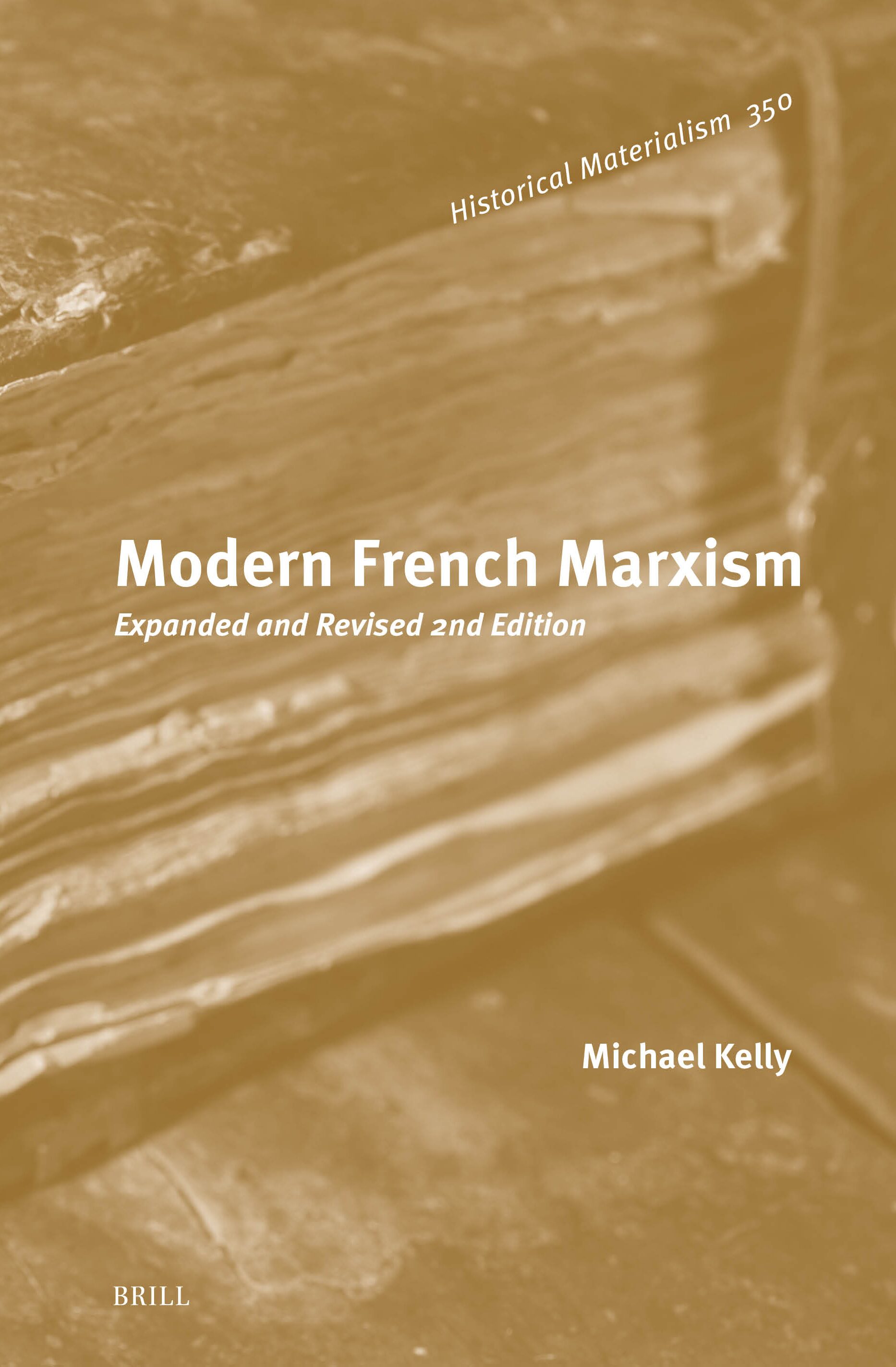
Books in this series published in paperback with Haymarket 12 months later.

Marxist thought was a powerful force in French political and intellectual life throughout the twentieth century. This book takes you from its early beginnings to its peak in the 1970s, when it dominated the battle of ideas. You will follow conceptual debates on the materialist dialectic, explore Marxism as a system of thought, and experience the ambition of the men and women of letters who sought to change the world. This second edition is augmented with essays on how Marxist thinkers grappled with religion, everyday life, the Cold War, and other leading intellectual movements.

This is a long time since the first edition of 1982. I remember using this book when I was first working on Henri Lefebvre during my PhD – at the time there were very few books discussing his work.

Posted in Henri Lefebvre, Karl Marx, Uncategorized | Leave a comment

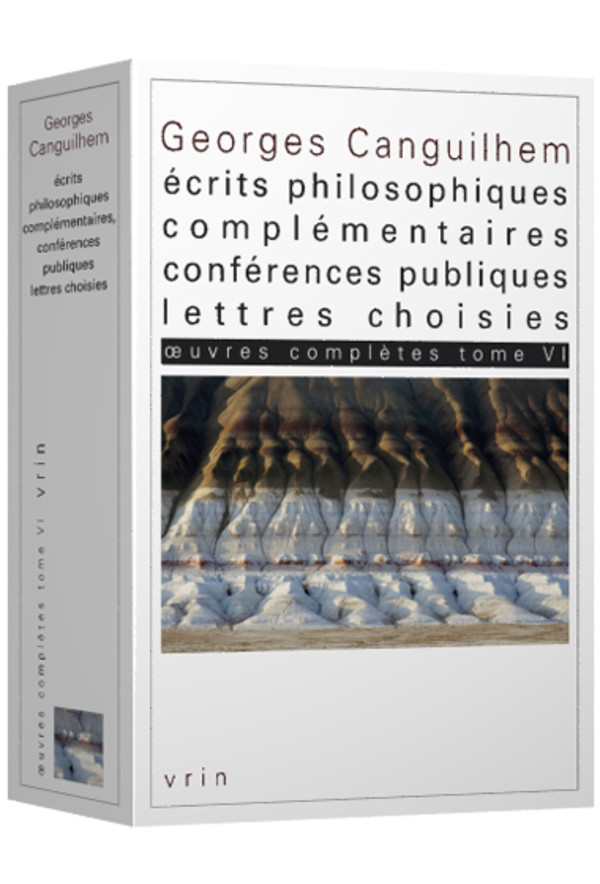
Georges Canguilhem, Œuvres complètes Tome VI : Écrits philosophiques complémentaires, conférences publiques, lettres choisies – eds. Camille Limoges and Pierre-Olivier Méthot, Vrin, July 2025

Georges Canguilhem, Œuvres complètes Tome VI : Écrits philosophiques complémentaires, conférences publiques, lettres choisies – Vrin, July 2025

The final volume of this really excellent series, published today.

Textes édités, introduits et annotés par Camille Limoges et Pierre-Olivier Méthot.

Le tome VI et dernier des Œuvres complètes de Georges Canguilhem réunit des écrits retrouvés et complémentaires, jusqu’ici peu accessibles, et dont souvent l’existence même restait ignorée. Y figurent des articles des années 1920, le mémoire de diplôme d’études supérieures sur la théorie de l’ordre et du progrès chez Auguste Comte, et
près d’une dizaine de conférences publiques prononcées des années 1940 aux années 1970, qui témoignent de l’élaboration chez Canguilhem d’une véritable doctrine sur les normes. Ce tome VI contient également quelque trois cents lettres à
une trentaine de correspondants de même qu’un important écrit, Philosophie, sa première synthèse philosophique personnelle, au tournant des années 1930, qui appelle à un réexamen des idées du jeune Canguilhem, notamment sur la psychologie et sur ses rapports avec la philosophie.

Tout en réaffirmant des constats dans la pensée de Georges Canguilhem, ce dernier tome permet d’élargir et d’approfondir notre compréhension d’une oeuvre qui ne connut jamais de purgatoire, mais dont la phase de gestation fut longtemps largement
ignorée.

Posted in Georges Canguilhem, Uncategorized | Leave a comment

CFP: After the Death of the Human: Michel Foucault’s 100th Anniversary International Conference, University of Lisbon, 18-19 June 2026

CFP: After the Death of the Human: Michel Foucault’s 100th Anniversary International Conference, University of Lisbon, 18-19 June 2026

Posted in Conferences, Michel Foucault | 2 Comments

CFP: Reassessing Foucault’s Transhistorical and Transdisciplinary Legacy, University of Pisa, 30-31 January 2026

CFP: Reassessing Foucault’s Transhistorical and Transdisciplinary Legacy, University of Pisa, 30-31 January 2026

Posted in Conferences, Michel Foucault | 1 Comment

Richard Bourke, Hegel’s World Revolutions – Princeton University Press, October 2023, paperback July 2025 and NDPR review

Richard Bourke, Hegel’s World Revolutions – Princeton University Press, October 2023

NDPR review by Bernardo Ferro

G.W.F. Hegel was widely seen as the greatest philosopher of his age. Ever since, his work has shaped debates about issues as varied as religion, aesthetics and metaphysics. His most lasting contribution was his vision of history and politics. In Hegel’s World Revolutions, Richard Bourke returns to Hegel’s original arguments, clarifying their true import and illuminating their relevance to contemporary society. Bourke shows that central to Hegel’s thought was his anatomy of the modern world. On the one hand he claimed that modernity was a deliverance from subjection, but on the other he saw it as having unleashed the spirit of critical reflection. Bourke explores this predicament in terms of a series of world revolutions that Hegel believed had ushered in the rise of civil society and the emergence of the constitutional state.

Bourke interprets Hegel’s thought, with particular reference to his philosophy of history, placing it in the context of his own time. He then recounts the reception of Hegel’s political ideas, largely over the course of the twentieth century. Countering the postwar revolt against Hegel, Bourke argues that his disparagement by major philosophers has impoverished our approach to history and politics alike. Challenging the condescension of leading thinkers—from Heidegger and Popper to Lévi-Strauss and Foucault—the book revises prevailing views of the relationship between historical ideas and present circumstances.

Terry Eagleton reviews the book in the London Review of Books.

Posted in Georg Wilhelm Friedrich Hegel | Leave a comment

Cristy Clark, Legal Geographies of Water: The Spaces, Places and Narratives of Human-Water Relations – Routledge, June 2025

Cristy Clark, Legal Geographies of Water: The Spaces, Places and Narratives of Human-Water Relations – Routledge, June 2025

Discussion on Law at the End of the World podcast – thanks to dmf for the link.

This book deepens our understanding of humanity’s diverse relationships with water and the law, providing a critical assessment of this relationship, and charting the course towards a more sustainable and just water future.

By using legal geography, this book pays particular attention to the place-based inter-relationships between water, people, and law (both formal and informal) and to the ways that law both constitutes and is constituted by the relationship between people and place. Starting in the 1980s, Chapter 2 investigates the early commodification of water through the liberalisation of rural water markets in Chile and the urban water supply and sanitation systems of England and Wales. Chapter 3 then examines the global expansion of neoliberal water governance in the 1990s, starting with donor-driven reforms in the global south and particularly Manila in the Philippines. Chapters 4 and 5 document both the grassroots response to these neoliberal water reforms and the inherent tensions in the attempts of the early 2000s to reconcile the recognition of a human right to water with the ongoing rollout of market mechanisms, both in the domestic context of South Africa and within the United Nations human rights system. Moving forward again, Chapter 6 examines the recent intensification of neoliberal water governance through financialisation and considers its specific impacts in Detroit and Flint, Michigan. Chapter 7 then considers the renewed global emphasis on living waters and Indigenous ontologies of water by examining the new legislative arrangements for the Whanganui River in Aotearoa, New Zealand. The book concludes in Chapter 8 by highlighting the stories of hope that can be found in many of the case studies explored in the book and in emerging examples from around the world.

This book is essential reading for students and scholars interested in water law, security, and justice from across a wide range of disciplines, including environmental studies, law, geography, human rights, and political ecology.

Posted in Uncategorized | Leave a comment

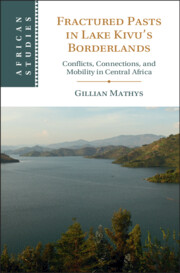
Gillian Mathys, Fractured Pasts in Lake Kivu’s Borderlands: Conflicts, Connections and Mobility in Central Africa – Cambridge University Press, July 2025

Gillian Mathys, Fractured Pasts in Lake Kivu’s Borderlands: Conflicts, Connections and Mobility in Central Africa – Cambridge University Press, July 2025

The Lake Kivu region, which borders Rwanda and the Democratic Republic of the Congo, has often been defined by scholars in terms of conflict, violence, and separation. In contrast, this innovative study explores histories of continuities and connections across the borderland. Gillian Mathys utilises an integrated historical perspective to trace long-term processes in the region, starting from the second half of the nineteenth century and reaching to the present day. Fractured Pasts in Lake Kivu’s Borderlands powerfully reshapes historical understandings of mobility, conflict, identity formation and historical narration in and across state and ecological borders. In doing so, Mathys deconstructs reductive historical myths that have continued to underpin justifications for violence in the region. Drawing on cross-border oral history research and a wealth of archival material, Fractured Pasts embraces a new and powerful perspective of the region’s history.

  • Provides a longue-durée perspective of socio-political processes in the Lake Kivu region
  • Offers an integrated analysis of processes that have shaped current relations between Rwanda and the Democratic Republic of the Congo
  • Rejects a focus on separations and violence in the region, instead exploring histories of continuities and connections
Posted in Boundaries, Territory, Uncategorized | Leave a comment

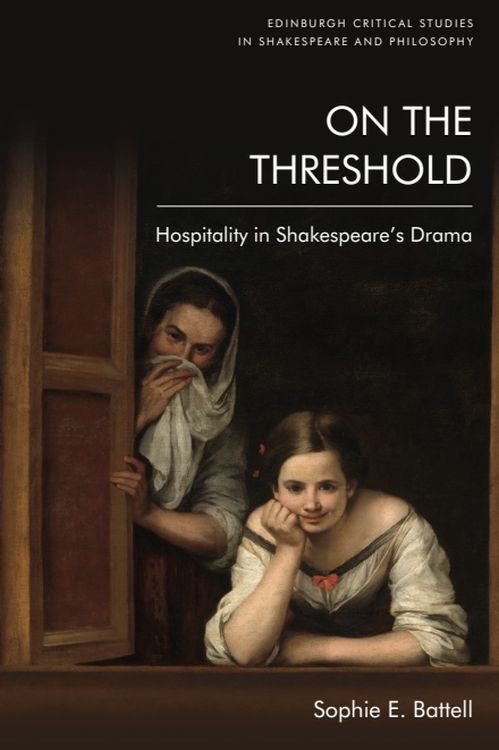
Sophie E. Battell, On the Threshold: Hospitality in Shakespeare’s Drama – Edinburgh University Press, paperback May 2025 and open access

Sophie E. Battell, On the Threshold: Hospitality in Shakespeare’s Drama – Edinburgh University Press, paperback May 2025 and open access

Renews our understanding of Shakespeare through an interdisciplinary focus on hospitality

  • Offers innovative literary analysis of canonical plays including The Merchant of Venice, providing a fresh interpretation of the stranger question
  • Engages with different theoretical approaches to hospitality in order to read Shakespeare as a dramatist of ethical encounter
  • Reconsiders the early modern interest in limits, thresholds, and boundaries, showing the significance to guest and host relationships in the drama
  • Assembles a wide-ranging, interdisciplinary methodology by drawing on major thinkers such as Jacques Derrida, Anne Dufourmantelle, Gaston Bachelard and Michel Serres

In this critical analysis, Sophie E. Battell examines hospitality in Shakespeare’s plays. By drawing on literary theory, modern philosophy, and anthropology as well as early modern scientific and religious texts, the book advances our understanding of Shakespeare as a dramatist concerned with the ethical questions at stake in encounters between guests and hosts of various kinds.

The close readings and scholarly interventions presented here reconceive the plays in terms of a poetics of hospitality while arguing for an expansive, far-reaching vision of what it means to be open to the world and welcoming of others. Moving from the levels of subjectivity, the body, and the senses to architecture, economics, legal discourse, and the natural environment, On the Threshold not only makes important contributions to Shakespeare studies but forges new connections between Renaissance literary scholarship and contemporary debates on the politics of migrants and refugees.

Posted in Uncategorized | 1 Comment

Michel Foucault and Daniel Defert’s library at 285 rue de Vaugirard – online catalogue soon available

La bibliothèque de Michel Foucault et de Daniel Defert du 285 rue de Vaugirard

update October 2025: the database is now available. Inventory of the Library of Michel Foucault and Daniel Defert

Philippe Chevallier, Henri-Paul Fruchaud and colleagues have catalogued much of Foucault and Defert’s personal library, which will soon become available online at the Foucault fiches de lecture site. Thanks to Niki Kasumi Clements, who helped with the cataloguing, for the link. Some other parts of Foucault’s collection – books with dedications from their authors – are at Yale’s Beinecke library, which I visited in 2018.

Foucault and his cat, apparently called ‘Insanity’

Michel Foucault s’est installé avec Daniel Defert au 285 rue de Vaugirard (Paris 15e) début 1971 ; il y resta jusqu’à sa mort en 1984.

L’inventaire de la bibliothèque conservée dans cet appartement est le fruit d’un travail collectif réalisé de mai à juillet 2024 grâce à l’accueil bienveillant d’Antoine Jabre, mari de Daniel Defert. Henri-Paul Fruchaud et moi-même avons été aidés dans notre tâche par deux stagiaires de la Bibliothèque nationale de France, Cecilia Drago et Annabelle de Traversay, ainsi que par François Ewald, Laurence Le Bras et Niki Kasumi Clements. L’opération a reçu le soutien de la Bibliothèque nationale de France et du Centre Michel Foucault.

Le fichier produit en 2024 a ensuite été intégralement corrigé et édité par Carolina Verlengia (Triangle – UMR 5206), en juin et juillet 2025, avec le soutien du Centre Michel Foucault et du Centre d’archives en philosophie, histoire et édition des sciences (CAPHÉS, UMS 2267)…

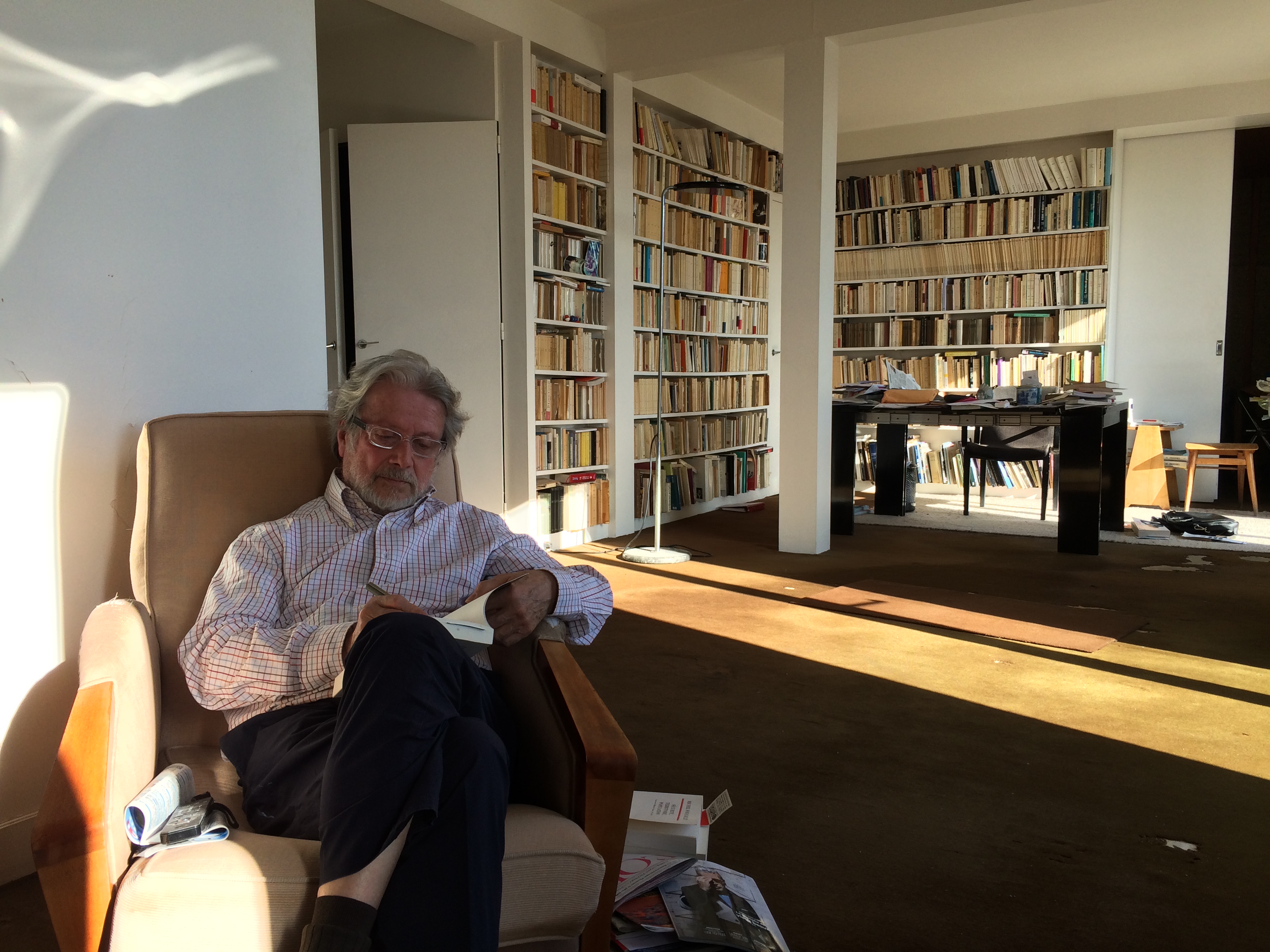
The shelves in different rooms of the apartment are in lots of photos of Foucault at home (i.e. here or here), and were still there when I visited Defert in 2015. He’s signing a copy of Un Vie Politique for me.

A photograph of Daniel Defert signing a book in Foucault’s old apartment
Posted in Daniel Defert, Michel Foucault | 2 Comments

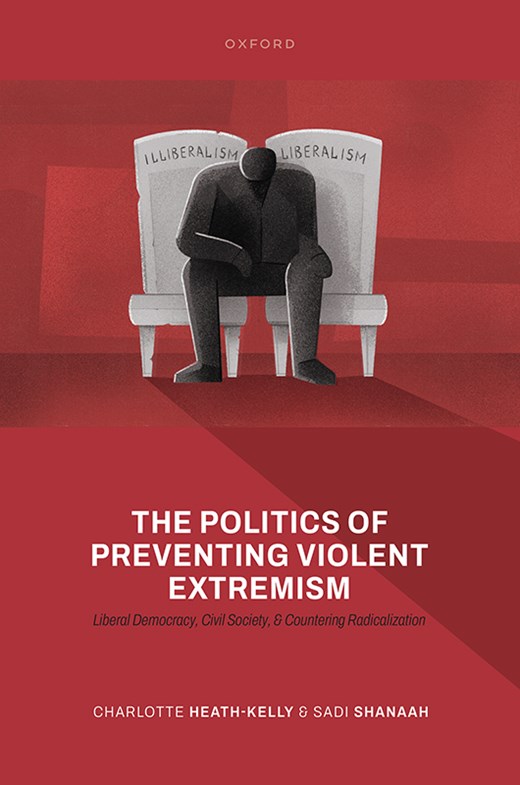
Charlotte Heath-Kelly and Sadi Shanaah, The Politics of Preventing Violent Extremism: Liberal Democracy, Civil Society, and Countering Radicalization – Oxford University Press, June 2025

Charlotte Heath-Kelly and Sadi Shanaah, The Politics of Preventing Violent Extremism: Liberal Democracy, Civil Society, and Countering Radicalization – Oxford University Press, June 2025

The Politics of Preventing Violent Extremism explores how counter-radicalization policies have come to dominate European counterterrorism and security. Using interviews with practitioners across seven European nations, it documents how national security policies have been repurposed to identify individuals deemed ‘vulnerable’ to extremism and radicalization, and to provide targeted preventative interventions from welfare state agencies. Crucially, however, the methods (and limits) of preventing violent extremism (PVE) policies vary between nations. The Politics of Preventing Violent Extremism explores how political culture, the welfare state, and the conception of civil society in each nation shapes the type of counter-radicalization employed. While some European states have designed extensive pre-crime surveillance networks to identify those ‘radicalizing’ others, other states in Europe are bound by constitutional commitments to liberty of thought and speech which restrain them from using any type of pre-crime intervention. Accordingly, while PVE policies have been heralded as a novel solution to the problem of radicalization, they remain rooted in, and limited by, the political and social traditions of European democracies.

Posted in Uncategorized | Leave a comment