Top posts on Progressive Geographies this week

Another quiet week here on the blog, partly due to being in the final stages of work on the Foucault’s Last Decade manuscript. Almost done…
Posted in Uncategorized | Leave a comment

Jeremy Crampton on maps, permissions and Asterix

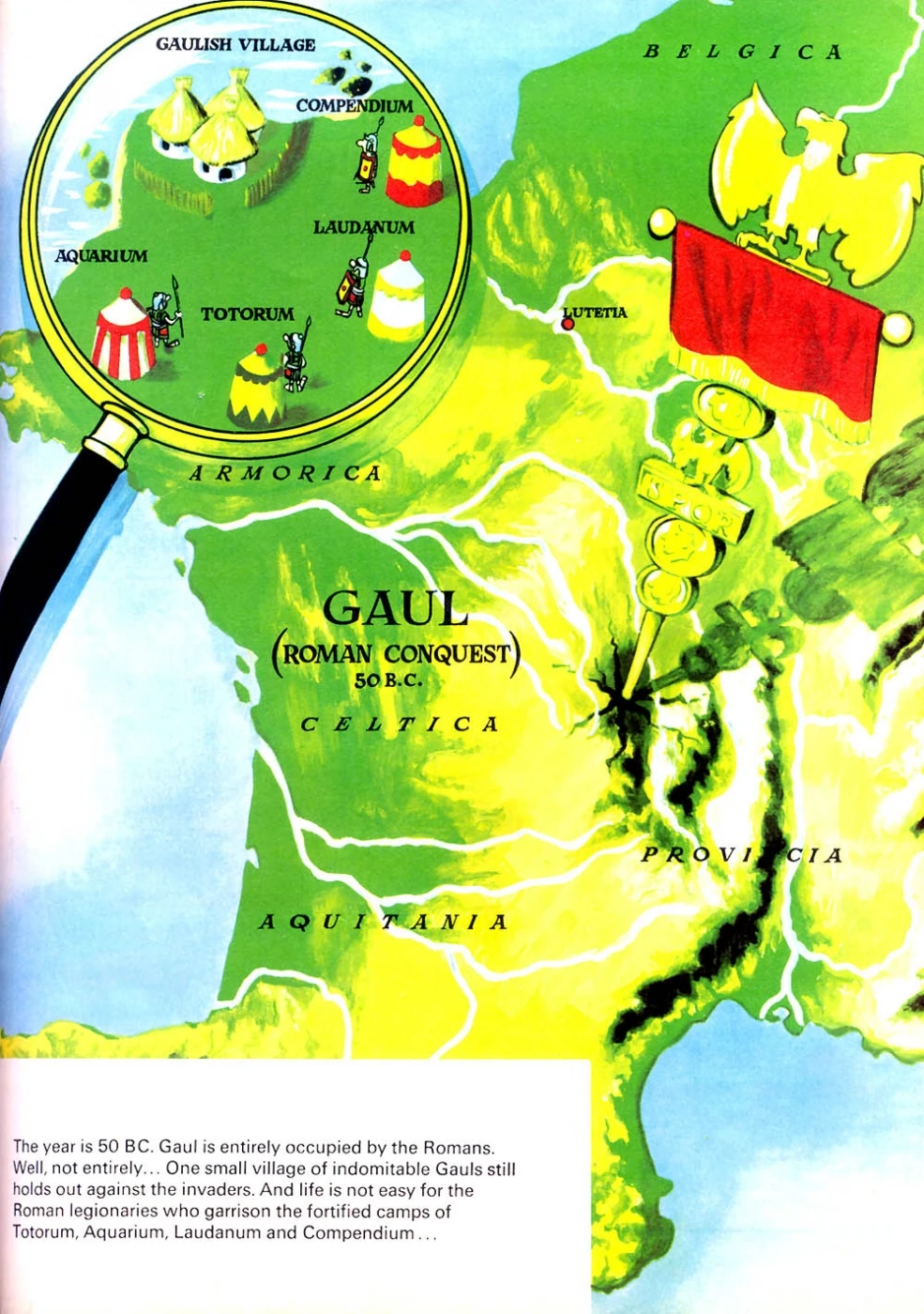
Asterix_-09-_Asterix_and_The_Big_Fight_-_00c_-_map.jpg_1400Slow linking to these, but Jeremy Crampton has two follow-up posts to my earlier sharing of Mary Beard’s interesting piece on the last stages of writing a book – SPQR: A History of Ancient Rome.

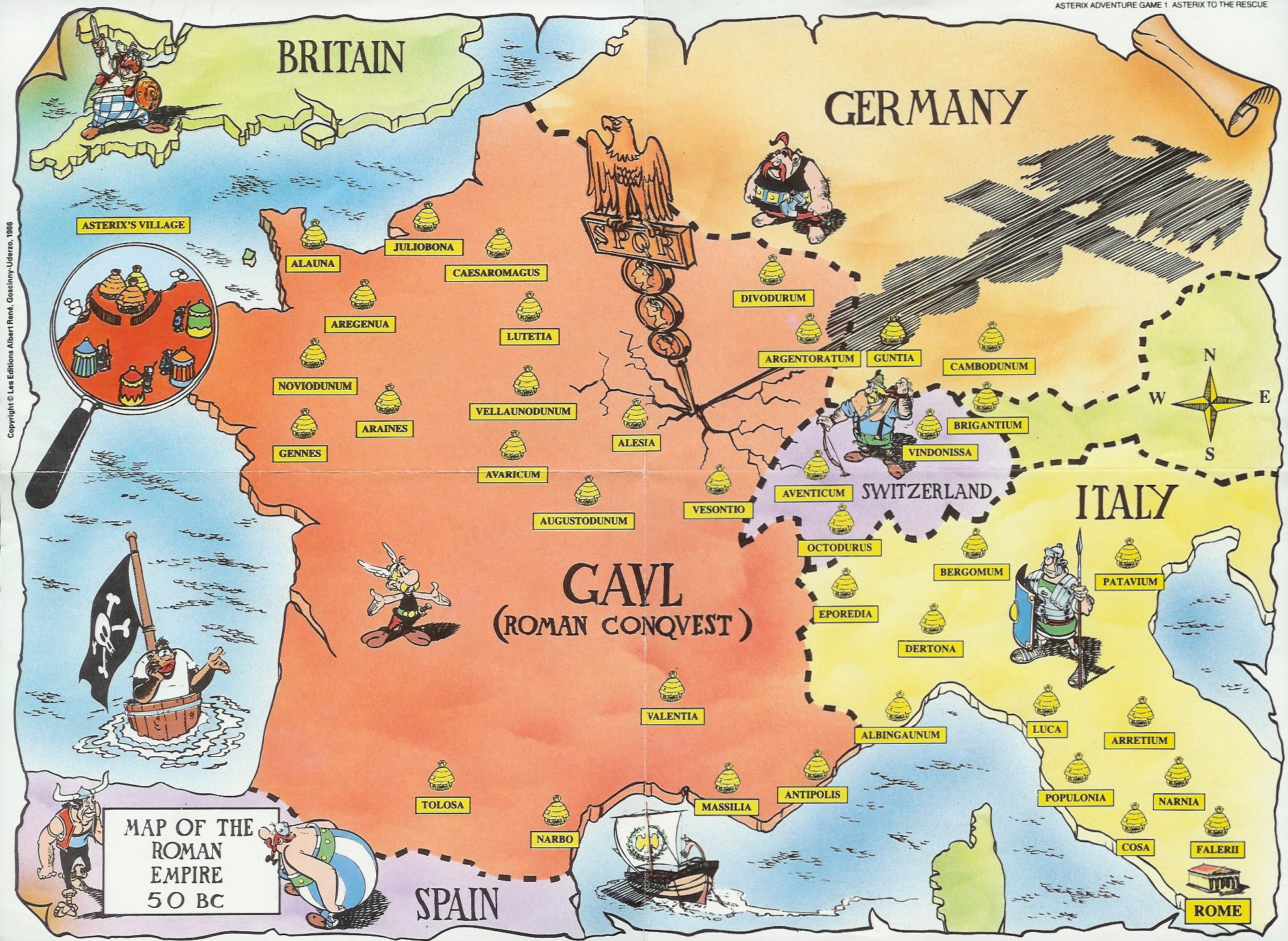
In the first he talks about maps and permissions, and in the second mentions a map he enjoyed as a child. I remember the one on the left well…

Looking for a copy to post online I also found this larger one which gives a wider frame. I hope the account of Rome in The Birth of Territory is a little more geographically-nuanced, but it will be interesting to see what Beard does with the spatial in her history.

asterix_to_the_rescue_map

Posted in Jeremy Crampton, Mary Beard | Tagged , | 1 Comment

Two Summer Schools about Geopolitics at Maastricht University

Two Summer Schools about Geopolitics at Maastricht University organised by Leonhardt van Efferink:

A key objective is to critically compare different perspectives on national identity, power, security and geography, and their role in world politics.

Participants who have registered so far come from various parts of Europe such as Croatia, Hungary, Norway and Portugal. There will also be students and professionals from countries further away such as Ethiopia, Japan, Lebanon and the US.

Posted in Uncategorized | Leave a comment

Universities and space

Clare O’Farrell reflects on university buildings and spatial design…

Clare O'Farrell's avatarRefracted Input

An example of the kind of building which is currently being constructed by universities in Australia. Interestingly, in this rendering, nobody actually seems to be doing any real work. And unless I missed it, there is a glaring absence of reference to the space that staff will be spending most of their time working in.

The teaching and public spaces are lovely, but what are the primary work spaces for academic staff going to look like? Contrary to public perception, perhaps, academics only spend a small proportion of their working time in classrooms.

View original post

Posted in Uncategorized | Leave a comment

Times Higher Education on William Cronon’s British Academy lecture – ‘ Who reads Geography or History anymore?’

image003The Times Higher Education has a report on William Cronon’s British Academy lecture, Royal Geographical Society, London, on 7 July 2015 – ‘ Who reads Geography or History anymore?

Posted in Publishing | Tagged , , | Leave a comment

Mark Blyth, ‘A Pain in the Athens: Why Greece isn’t to Blame for the Crisis’ in Foreign Affairs

Mark Blyth, ‘A Pain in the Athens: Why Greece isn’t to Blame for the Crisis‘ in Foreign Affairs.

Posted in Uncategorized | 1 Comment

Books received – Shakespeare, Shakespeare… and one by Foucault

books received

Books received – Shakespeare, Shakespeare… and one by Foucault. The Foucault is the ninth edition, but I don’t think is any different from the second – which he produced in 1972, though that has major changes from the 1963 version. With Shakespeare, the different editions have valuable editorial apparatus, which I am working on very carefully for texts I am writing about.

Posted in Michel Foucault, William Shakespeare | 2 Comments

Theory and Other Languages – short article at E-IR

Image-by-Gabriel-Bergin-700x394I have a short piece entitled “Theory and Other Languages” at E-IR (open access).

This was written on the request for a piece on this topic by Jan Tattenberg. It’s an autobiographical piece about how my work has been conducted with attention to original language materials.

Posted in Books, Foucault's Last Decade, Foucault: The Birth of Power, Henri Lefebvre, Kostas Axelos, Mapping the Present, Martin Heidegger, Michel Foucault, My Publications, Publishing, Shakespearean Territories, Speaking Against Number, Territory, Terror and Territory, The Birth of Territory, Understanding Henri Lefebvre, William Shakespeare | 1 Comment

Todd May reviews Balibar’s Violence and Civility

Todd May reviews Etienne Balibar’s Violence and Civility at NDPR

Peter Gratton's avatarPHILOSOPHY IN A TIME OF ERROR

At NDPR here. Having not read this yet, this looks like a great text to work through the next time I teach a course on violence. Here, May goes through Balibar’s “civility” approach as a counter to violence and non-violence:

If violence, or at least its threat, cannot be eliminated, what can be done to address it? Balibar briefly considers and rejects two options before embracing a third. The two he rejects are nonviolence and counterviolence. Nonviolence is to Balibar an “abstraction” (22) from violence. It fails to recognize that violence is always a threat, opting instead to occupy a position that seeks to be beyond the threat of violence. Counterviolence, by contrast, seeks to invoke violence against violence, hoping to end violence by violent means. This strategy, however, is simply an “inversion” (22) of violence, one whose consequence is often to repeat the cruelties that it set out…

View original post 107 more words

Posted in Uncategorized | Leave a comment

New open access book reviews

Antipode have a number of new, open access, book reviews available.

Antipode Editorial Office's avatarAntipodeFoundation.org

We’ve published some great book reviews on AntipodeFoundation.org recently, including…

Christopher Taylor (University of Chicago) on Martha Schoolman’s Abolitionist Geographies;

Ian Shaw (University of Glasgow) on Grégoire Chamayou’s Drone Theory and Adam Rothstein’s Drone;

Karen McCallum (University of London) on Gita Sen and Marina Durano’s The Remaking of Social Contracts: Feminists in a Fierce New World;

Anna Laing (Northumbria University) on Leandro Vergara-Camus’ Land and Freedom: The MST, the Zapatistas and Peasant Alternatives to Neoliberalism;

Anthony Ince (Stockholm University) on Constance Bantman and Bert Altena’s Reassessing the Transnational Turn: Scales of Analysis in Anarchist and Syndicalist Studies;

Mike Hodson (University of Manchester) on Federico Caprotti’s Eco-Cities and the Transition to Low Carbon Economies;

Kate Shaw (University of Melbourne) on Kirsteen Paton’s Gentrification: A Working-Class Perspective; and

Kevin Gould (Concordia University) on Silvia Posocco’s Secrecy and Insurgency: Socialities and Knowledge Practices in Guatemala.

As you might know, all Antipode

View original post 180 more words

Posted in Uncategorized | 1 Comment