Henry Somers-Hall and Jeffrey A. Bell (eds.), The Deleuzian Mind – Routledge, May 2025
Gilles Deleuze was one of the most influential philosophers of the second half of the twentieth century. As with other French philosophers of his generation, such as Jacques Derrida and Michel Foucault, Deleuze’s work and his collaboration with Félix Guattari has also had huge influence in other disciplines, particularly literature, film studies, architecture, and science and mathematics.
The Deleuzian Mind is an outstanding collection that explores the full extent and significance of Deleuze’s work, its reception and its legacy. Comprising 38 chapters written by an international and interdisciplinary team of contributors, the volume is divided into eight clear parts:
Situating Deleuze
A New History of Philosophy. Deleuze’s Precursors
Encounters Critical and Clinical
The Early Philosophy. A Logic of Sense
The Later Philosophy. The Wasp and the Orchid
Art and Literature
Deleuze, Maths and Science
Deleuze and Politics.
With its wide-ranging exploration of Deleuze’s thought and the huge influence it continues to have within the theoretical humanities and social sciences, The Deleuzian Mind is invaluable reading for students, researchers and scholars in philosophy, literature, film studies and political theory.
Josué V. Harari plays a small but important role in the story of Foucault in the United States. A PhD researcher at the University at Buffalo when Foucault visited in the early 1970s, he went on to edit a 1979 volume of essays, Textual Strategies: Perspectives in Post-Structuralist Criticism, in which Foucault’s essay “What is an Author?” appeared. Although it claims to be the lecture Foucault gave in Buffalo in 1970, it is rather an edited version of the 1969 Paris version of that lecture, with some Buffalo material added at the end (see here). The full version of the Buffalo text has been found, both Foucault’s notes and a transcription of a recording, and is due to be published. Textual Strategies also includes essays by Barthes, de Man, Derrida, Girard, Said, Serres and others. Out of print, it is easily available online. While less significant than, for example, The Structuralist Controversy a decade before,it was certainly a moment in the North American reception of “French Theory”. Harari was also one of the editors, with David F. Bell, of the original English selection of Michel Serres’s essays, Hermes: Literature, Science, Philosophy, in 1982.
In 1971, Harari had also published an 82-page reading guide, Structuralists and Structuralisms: A Selected Bibliography of French Contemporary Thought (1960-1970). It was dedicated to Eugenio Donato and René Girard, and appeared as a separate publication by the important Diacritics journal. It does not seem to be available online and is long out of print. But it’s easy to get a copy second-hand, and it’s in quite a few libraries, suggesting it circulated quite widely. As a guide rather than a text itself, it’s hard to track its influence through citations, since it is more likely to have been used to indicate other texts to read or reference. But in a pre-internet age, guides like this would likely have been invaluable. It has 1275 entries, across a wide range of disciplines, including reviews, and a useful author and periodical index. Harari says of the guide:
Thus this bibliography is introductory rather than definitive, analytical and selective rather than encyclopedic. It offers the best works of French contemporary thought in the humanities, philosophy and the sciences of man. We hope it will be useful to the specialist as well as to the beginner, to the scholar as well as to the student (p. 3).
As Jonathan Culler indicates (“1980: Structuralism and Poststructuralism”, pp. 80-81), most of the authors discussed by Harari as structuralists in 1971 reappear as poststructuralists in his 1979 collection – an indicator of the fluidity of the terms, and the changing work of the key figures involved, but also that what was called “poststructuralism” was largely a US-invention (see also Angermuller, Why There is no Poststructuralism in France).
The other point at which Harari is important to the story of Foucault is that the Foucault’s two-part Buffalo lecture on the Marquis de Sade, published in La Grande étrangère, was transcribed by Harari from a recording, and sent to Foucault. The typescript was found in Foucault’s papers after his death, included in the French collection, and translated in Language, Madness and Desire. As I’ve indicated here, and will discuss in more detail in a forthcoming piece in Foucault Studies,the two Sade lectures were part of a course Foucault delivered at Buffalo in 1970. Given in French, the course was advertised in English as “The desire for knowledge or the phantasms of knowledge in French literature in the nineteenth and twentieth centuries”. It also included lectures on Balzac, Flaubert, and possibly Jules Verne, Bataille and Blanchot. (The Balzac and Flaubert manuscripts are included in Madness, Language, Literature.) Outside the French focus, one or two Nietzsche lectures given in Buffalo were also part of the course. The introductory lecture and the first of the Sade lectures exist as audio recordings in the Buffalo archives. Given the transcription, it seems at least the second Sade lecture was also recorded, but if it still exists, I do not know where that is. My guess, unfortunately, is that the tapes – much more expensive in those days – were reused.
Interestingly, Harari’s PhD thesis was on Sade, submitted in December 1973. It’s a short text entitled Les métamorphoses du désir dans l’oeuvre de Sade. It was not easy to find a copy (Worldcat suggests just three libraries have it). Eventually I was able to get the microfilm version by inter-library loan while I was visiting New York University.
Textual Strategies, Structuralists and Structuralisms, Les métamorphoses du désir dans l’oeuvre de Sade
Chapter 2 of the thesis was translated by Hélène Pellegrin and published that same year in MLN (Modern Language Notes). While a close reading of texts by Sade, around incest and exogamy, it discusses broader philosophical questions, with references to Barthes, Bataille, Clastres, Deleuze, Girard, Mauss and, especially, Lévi-Strauss, among others. There is no mention of Foucault, but the article does contain a striking formulation, especially given the topic of Foucault’s Buffalo course:
In Western intellectual history, de Sade was the first to address himself to the notion that desire and knowledge, far from being mutually exclusive, are indissolubly linked; for him, there cannot be any real knowledge without desire (p. 1214).
Indeed, the thesis itself has a note on the final page which acknowledges how important Foucault was to his approach, and especially the Buffalo lecture Harari had taken the trouble to transcribe for Foucault.
Nous empruntons la trame générale de l’argumentation qui va suivre à Michel Foucault. Dans une très belle conférence inédite à ce jour, Michel Foucault avait cherché à montrer les rapports complexes entre l’existence irrégulière du libertin et le principle quadruple d’une quadruple inexistence—celle de Dieu, la loi, la nature et l’âme—que le libertin pose à chaque Instant dans tous ses discours et à partir de laquelle il se définit (p. 125 n. 28).
We borrow from Michel Foucault the general framework of the following argument. In a very beautiful and still unpublished lecture, Michel Foucault aimed to show the complex relationship between the irregular existence of the libertine and the quadruple principle of a quadruple inexistence—that of God, the law, nature and the soul—which the libertine poses at every moment in all his discourse and from which he defines himself.
The MLN article led to an exchange with Jane Gallop in 1974, who published her own book on Sade, read through Georges Bataille, Maurice Blanchot, and Pierre Klossowski, in 1980.
Harari taught at Stanford during his PhD, then in Romance Studies at Cornell University, at Johns Hopkins University, and finally at Emory University. He was chair of French at Johns Hopkins before moving to Emory, where he chaired the French and Italian department. In 1979 Harari published a study of the French Enlightenment, Scenarios of the Imaginary. In that book he says that “the master thinkers of contemporary theory—Derrida, de Man, Lacan, Foucault—appear only in the margins of my work” (p. 36 n. 20).
A decade after his thesis, Harari wrote an article on Sade again, but also published on another book Foucault covered in his 1970 Buffalo course, Balzac’s Quest for the Absolute. In a note to his essay, “The Pleasures of Science and the Pains of Philosophy”, Harari says: “I am borrowing here from remarks made by Michel Foucault during a seminar on the nature of the relationship between desire and knowledge from Sade to Nietzsche” (p. 154 n. 27). As well as corroborating the claim that Nietzsche was part of this course, it shows the impact Foucault’s teaching in Buffalo had on at least one of his auditors. Harari planned to write a book on Balzac’s Études philosophiques, one of the major divisions of his Comédie humaine,but it seems this was never completed.
Harari’s Balzac essay was published in the year of Foucault’s death, 1984. When Foucault visited Buffalo in 1970 it was his first visit to the United States, when little of his work was translated into English. His election to the Collège de France took place during his first visit. By 1984 he was a thinker of international stature. Harari; Foucault’s main host in Buffalo, John K. Simon, commentators including Edward Said, his early translators, and, a bit later, Hubert Dreyfus and Paul Rabinow, Richard Rorty, Richard Sennett and others, are crucial figures in the shaping of an American Foucault.
(A future post will discuss the short career of Eugenio Donato. Update July 2025: here)
References
Johannes Angermuller, Why There is no Poststructuralism in France: The Making of an Intellectual Generation, London: Bloomsbury, 2015.
Jonathan Culler, “1980: Structuralism and Poststructuralism”, Ex-position 40, 2018, 79-94.
Stuart Elden, “Foucault at Buffalo in 1970 and 1972: The Desire for Knowledge; The Criminal in Literature; and The History of Truth”, Foucault Studies, forthcoming 2025.
Michel Foucault, “What is an Author?”, in J.V. Harari ed., Textual Strategies: Perspectives in Post-Structuralist Criticism, Ithaca: Cornell University Press, 1979, 141-60.
Michel Foucault, La Grande étrangère: À propos de littérature, ed. Philippe Artières, Jean-François Bert, Mathieu Potte-Bonneville and Judith Revel, Paris: Éditions EHESS, 2013; Language, Madness, Desire: On Literature, trans. Robert Bononno, Minneapolis: University of Minnesota Press, 2015.
Michel Foucault, Folie, langage, littérature, ed. Henri-Paul Fruchaud, Daniele Lorenzini and Judith Revel, Paris: Vrin, 2019; Madness, Language, Literature, trans. Robert Bononno, Chicago: University of Chicago Press, 2023.
Michel Foucault, “La connaissance et le désir: Cours donné à l’université de Buffalo (mars-avril 1970)”, Nietzsche, Cours, conférences et travaux, ed. Bernard Harcourt, Paris: Gallimard/Seuil/EHESS, 2024, 109-32.
Jane Gallop, “The Critic’s Exchange [Josué V. Harari, “Exogamy and Incest”], MLN 89 (6), 1974, 1041-45.
Jane Gallop, Intersections: A Reading of Sade with Bataille, Blanchot, and Klossowski, Lincoln: University of Nebraska Press, 1980.
Josué V. Harari, Structuralists and Structuralisms: A Selected Bibliography of French Contemporary Thought (1960-1970), Ithaca: Diacritics, 1971.
Josué V. Harari, Les métamorphoses du désir dans l’oeuvre de Sade, unpublished PhD thesis, State University of New York at Buffalo, 1973.
Josué V. Harari, “Exogamy and Incest: De Sade’s Structures of Kinship”, trans. Hélène Pellegrin, MLN 88 (6), 1973, 1212-37.
Josué V. Harari, “Reply to Ms. Jane Gallop”, MLN 89 (6), 1974, 1046-48.
Josué V. Harari, Scenarios of the Imaginary: Theorizing the French Enlightenment, Ithaca: Cornell University Press, 1979.
J.V. Harari ed., Textual Strategies: Perspectives in Post-Structuralist Criticism, Ithaca: Cornell University Press, 1979.
Josué Harari, “Sade’s Discourse on Method: Rudiments for a Theory of Fantasy”, MLN 99 (5), 1984, 1057-71.
Josué Harari, “The Pleasures of Science and the Pains of Philosophy: Balzac’s Quest for the Absolute”, Yale French Studies 67, 1984, 135-63.
Richard Macksey and Eugenio Donato (eds.), The Structuralist Controversy: The Languages of Criticism and the Sciences of Man, Baltimore: Johns Hopkins University Press, 1972 [1970. Originally published with title and subtitle reversed].
Michel Serres, Hermes: Literature, Science, Philosophy, eds. Josué V. Harari and David F. Bell, Baltimore: Johns Hopkins University Press, 1982.
Archives
University at Buffalo special collections – material relating to Foucault’s 1970 and 1972 visits, including audio files (see fuller references here)
Johns Hopkins University, Office of Public Information/News and Information records, RG-10-020, box 12-1a, Josué Harari
This is the twenty-fourth post of a weekly series, where I post short essays with some indications of further reading and sources, but which are not as formal as something I’d try to publish more conventionally. They are usually tangential to my main writing focus, a home for spare ideas, asides, dead-ends and possible futures. I hope there is some interest in them. They are provisional and suggestions are welcome.
Leif Weatherby is an Associate Professor of German at New York University, where he directs the Digital Theory Lab. Robin Manley spoke with Dr. Weatherby about his latest book, Language Machines: Cultural AI and the End of Remainder Humanism (University of Minnesota Press, 2025), which argues that Large Language Models (LLMs) have effected a separation of cognition from language and computation in a form that corresponds to earlier structuralist theories.
How a supposedly apolitical form of philosophy owes its continuing power to social and political forces
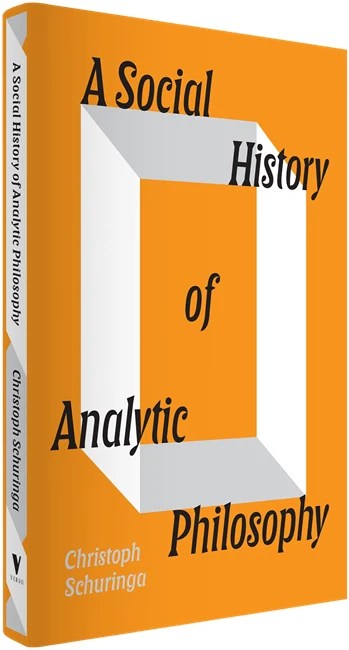
Analytic philosophy is the leading form of philosophy in the English-speaking world. What explains its continued success? Christoph Schuringa argues that its enduring power can only be understood by examining its social history. Analytic philosophy tends to think of itself as concerned with eternal questions, transcending the changing scenes of history. It thinks of itself as apolitical. This book, however, convincingly shows that the opposite is true.
The origins of analytic philosophy are in a set of distinct movements, shaped by high-ly specific sets of political and social forces. Only after the Second World War were these disparate, often dynamic movements joined together to make ‘analytic philosophy’ as we know it. In the climate of McCarthyism, analytic philosophy was robbed of political force.
To this day, analytic philosophy is the ideology of the status quo. It may seem arcane and largely removed from the real world, but it is a crucial component in upholding liberalism, through its central role in elite educational institutions. As Schuringa concludes, the apparently increasing friendliness of analytic philosophers to rival approaches in philosophy should be understood as a form of colonization; thanks to its hegemonic status, it reformats all it touches in service of its own imperatives, going so far as to colonize decolonial efforts in the discipline.
2025 marks the centenary year of the birth of Frantz Fanon. Despite Fanon’s enormous influence in postcolonial studies, political thought, the history of Marxism and the humanities more widely, the specifically philosophical significance of his works is less commonly recognized.
This significance can be borne out in two broad forms. First, his contributions bear upon the traditions of European thought to which he belongs, and the concepts from which he adapts within his own works. For instance, he offers modifications to important concepts found in the works of Hegel and Nietzsche predominantly, but also engages with Merleau-Ponty, Bergson, Césaire, Freud, Adler, Beauvoir, and Sartre. Second, and less addressed in the scholarship, his works can be taken to offer important contributions in their own right to phenomenology, metaethics, moral psychology, theories of recognition and intersubjectivity, and the philosophy of history, as well as (more obviously) the philosophy of race and political philosophy.
It is the strong expectation of the program committee that a great deal of philosophical attention will be paid to Fanon in the coming years. Thus, it is the ambition of this two-day conference to break ground ahead of this expected increase in attention. The conference will bring into dialogue both senior international scholars whose works on Fanon spans decades, and rising stars engaging in fruitful early career research.
This is an in-person event. It will also be a launchpad for an interdisciplinary research centre, the Birkbeck Centre for Fanon Studies and Decolonial Research.
The Gates of the Sea examines the paradoxes of maritime search and rescue at Europe’s frontier. Focusing on Spain, Luna Vives explores how governments have redefined maritime rescue systems towards border control. Unlike other European countries, Spain chose not to assign this responsibility to a militarized state security force, but to a civilian agency whose workers often liken themselves to firefighters of the sea: they are dedicated to saving lives, not enforcing borders. Caught between their duty to protect life at sea and government efforts to transform them into border enforcers, rescuers have pushed back, primarily through their anarcho-syndicalist union, the CGT. Committed to border abolition and international solidarity, the rescuers’ struggle positions them within a global movement of resistance to the politics of organized abandonment along the external borders of the European Union. Vives’ revelatory, deeply researched and accessible book grapples with both state methods of control and containment and, crucially, ways in which solidarity activism can thrive in unexpected places.
Foucault, “Les Hermaphrodites” – forthcoming in September 2025. France 24 reports on this here.
Not that many details, except it will be with Gallimard, and have a preface by Arianna Sforzini and a postface by Éric Fassin. The text is described as ‘substantial’, but it is more like a long essay or part of a book rather a full manuscript.
Update July 2025: Gallimard have a page for the book, with the title Histoire des hermaphrodites, 160 pages. [Update 23 July: now Les Hermaphrodites.] It’s listed as part of the Bibliothèque des Histoires series, in which several of Foucault’s books appeared, including the four volumes of the History of Sexuality. There is a piece by Hocine Bouhadjera about the book at Actualitté.
The personal website of Prof. Clive Barnett, who sadly and unexpectedly passed away in December 2021 is being maintained by colleagues to enable ongoing access to Clive’s work held here. The site was unavailable, unfortunately, for some time. However, with the help of Clive’s family and support from the University of Exeter Geography department the site will remain online.
You can find several tributes and obituaries of/for Clive online, some are linked here: