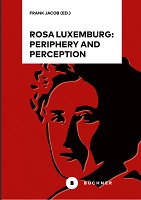
Rosa Luxemburg was a critical thinker and author of many political and social reflections which to readers of today seem quite up to date. Particularly in the Global South, there seems to exist a stronger interest in Luxemburg’s work today, which is not surprising at all, considering that many problems she thought about are still existent – especially there. The participants of the International Rosa Luxemburg Conference in Bodø, Norway, in March 2023, discussed her role in the 21st century in quite some detail. The present anthology contains the conference’s extended proceedings and particularly focuses on two important elements in regard to Luxemburg: Her role for and within the global ›periphery‹ and her ›perception‹ in relation to other intellectuals, social democracy or the political left in a broader sense of the spectrum.
Registration and further details at the above link
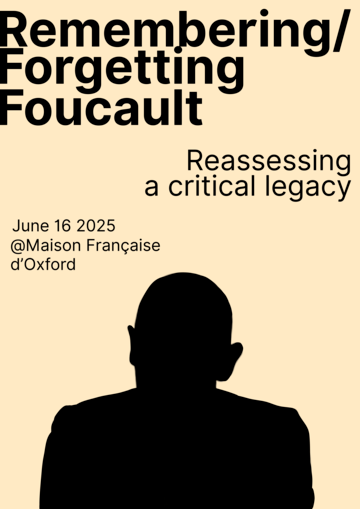
Nearly forty years after the death of Michel Foucault, the time may be ripe for a critical reassessment of his place in contemporary thought. Few thinkers have left such a deep imprint on the formation of critical theory, political sociology, and the history of ideas across disciplines. Yet today, Foucault’s legacy appears increasingly unsettled.
Critiques of Foucault have long pointed to his ontological flattening, methodological ambivalence, and a tendency to obscure structural domination in favour of dispersed power. Others have questioned the conceptual limits of his treatment of resistance. More recently, scholarship across political economy, Black studies, queer of color critique, Indigenous theory, disability studies, and decolonial thought has not only highlighted the silences within Foucauldian frameworks, but also raised the question of whether it is time to move beyond them. Yet, many of these same approaches have built on or been shaped by Foucauldian tools, creating a layered and often ambivalent intellectual inheritance.
This workshop seeks to open a space for reassessing Foucault’s place in the academy–not to reject or defend his thought as such–but to develop (new) practices of forgetting/remembering him. What does it mean to treat Foucault not only as a thinker, but as a conceptual industry? What are the long lasting effects of his influence on practices of critique, modes of teaching, and intellectual languages? And what might this re-reading make possible: intellectually, politically, affectively, and institutionally?
I’ll be speaking to the title “Before California: Foucault’s Early Visits to the Americas”.
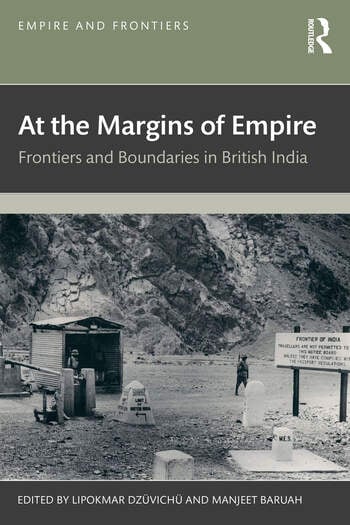
Empire building in British India was inseparably tied to the processes of frontier-making and the creation of boundaries. Through a range of complex practices and developments, the constitution of these spaces took shape at various historical conjunctures. The making of these spaces was also shaped by a variety of imperial concerns, including local and global processes, connections, and entanglements. Focusing on the period between the 19th and the early 20th centuries, this book looks at how the dynamics of frontier and boundary creation were shaped by a variety of agents, institutions, infrastructure and technologies, events, economy, travel, forms of representation, and imperial rivalries. The role of capital, war, and violence was also intrinsic to the creation of such spaces. Further, societies in these spaces responded to these processes in various ways. The book examines how they negotiated and mediated these complex developments of modern space-making in multiple ways at the margins of empire.
Part of the Empire and Frontiers series, this book will be of interest to researchers and readers of history, anthropology, cultural studies, social and cultural history, frontiers, boundaries and borderland studies, Himalayan studies, and studies of commodities and circulations.
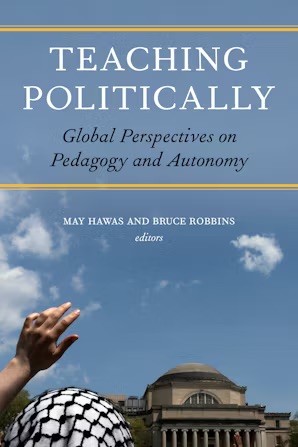
Culture is inextricable from politics. This includes the politics of who we are, as teachers, intellectuals, writers, cultural workers, and students, and what we want to bring to and take from the site of instruction. It also includes the politics of who we want to be, as citizens, professionals, and active contributors to our communities and to the world in general, and what we can be, realistically, in the particular contexts in which we live.
Teaching Politically addresses some of the political constraints that shape our pedagogical spaces, especially in the teaching of literature. The book brings together a global group of academics, activists, public intellectuals, poets, and novelists to examine the way politics manifest pedagogically, and how a commitment to educating manifests politically, in and beyond the classroom. At the heart of the discussion is how political and professional paradigms chafe against, intersect with, or otherwise become inseparable from each other in any vocation that attempts to educate: from writing, journalism, and public speaking to art, activism, and medicine.
Contributors: Dimitris Christopoulos, Dimitri Dimoulis, Khaled Fahmy, Rishi Goyal, May Hawas, Bonnie Honig, Mona Kareem, Benjamin Mangrum, Nora Parr, Bruce Robbins, Ahdaf Soueif, Omid Tofighian, Elahe Zivardar
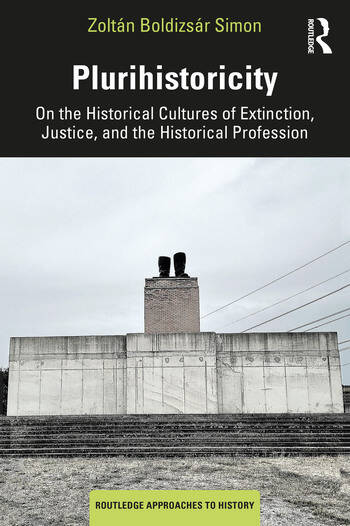
This book situates historical scholarship within a plurihistoricity of contemporary historical culture, exploring conflicting conceptions of historical change in technological utopias of human enhancement, in prospects of human extinction, in societal responses to the Anthropocene, and in the imperative of bringing colonial patterns of historical injustice to justice.
Contemporary societies increasingly reclaim history from the academic pursuit of historiography. On the one hand, societal engagement in history is growing palpably. History is literally everywhere: in the fallen statues of past political regimes, in trajectories of environmental degradation, and in technological prospects of space expansion. On the other hand, societal demand for history seems to diminish rather than strengthen the authority of professionalized historical studies. What do these societal historicities stand for? How do they create pasts that matter? What futures do they desire or attempt to avoid? How do they view the historical transitions into those futures? And what is the societal role of historical scholarship and scholarly conceptions of history in the plurihistoricity of contemporary historical culture?
By addressing these questions, Simon’s book is essential reading for everyone interested in the present and future of viewing the world historically.
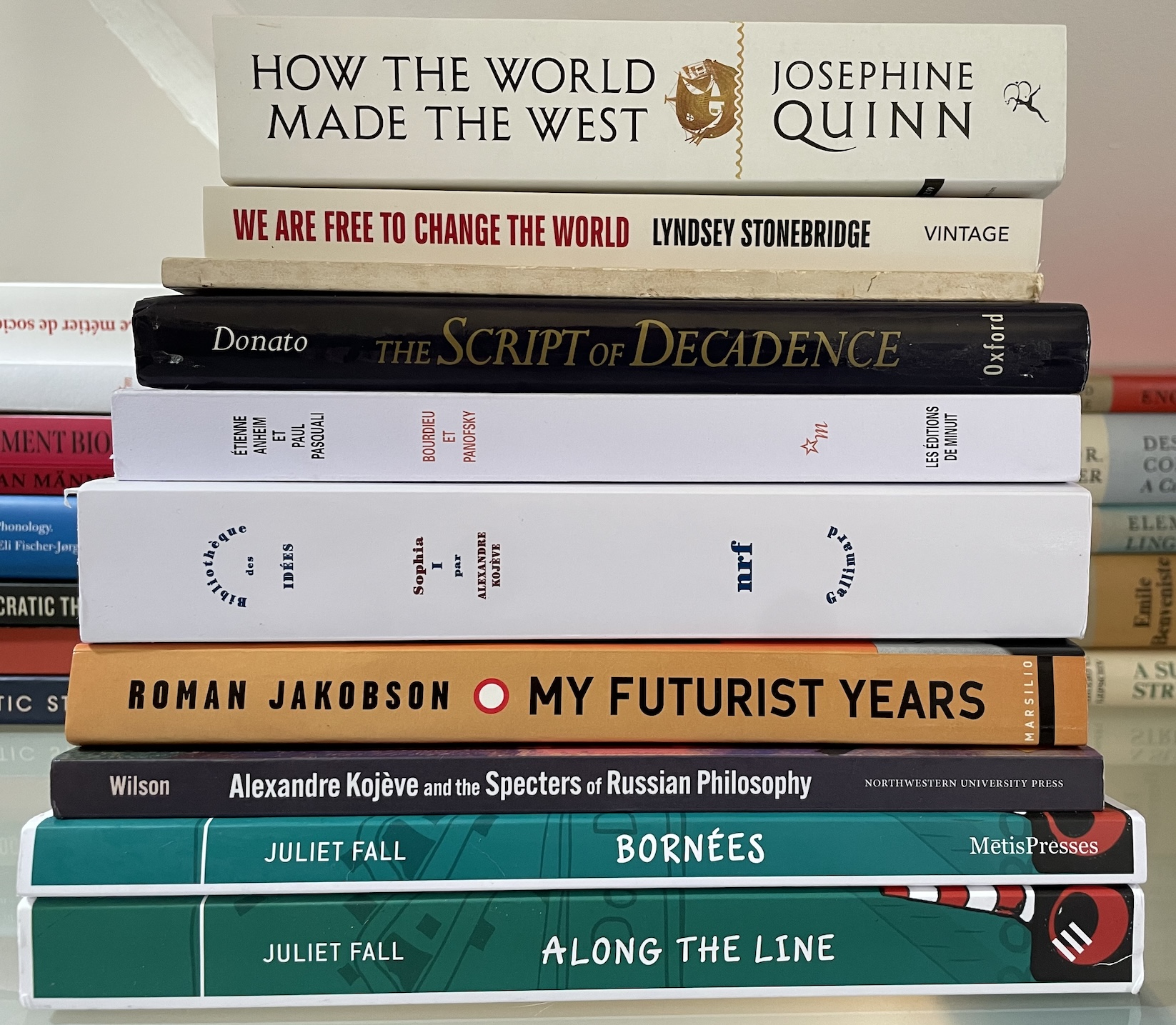
While I’ve been working on my Indo-European thought project, I’ve looked at a few books from the University of Warwick’s library which came from the Gillian Rose collection. Some of the books from that collection could not be borrowed – ones where she had marked the pages in some way. Warwick also has the Rose archive at the Modern Records Centre, and I’ve been hoping to consult that at some point. There has been a welcome resurgence of interest in Rose recently – the reissue of Love’s Work; the editing of lectures on Marxist Modernism; and a theme issue of Thesis Eleven.
I wasn’t initially sure where in her work Rose might discuss some of the people I was interested in, and whose books she had owned. There are odd references – Émile Benveniste, Georges Dumézil and Mircea Eliade are all mentioned in passing in Dialectic of Nihilism, for example. (That was the first book of hers I read, when writing my PhD.) Of the three, she mentions Benveniste the most often, mainly his Vocabulaire or Dictionary of Indo-European Concepts and Society.
Benveniste is referenced on “jurisdiction: ius dicere, to speak the law” and on the oath (see Dialectic of Nihilism, 89; 89 n. 17; 135 n. 22). On the first of these questions, she also references Dumézil’s Archaic Roman Religion on the “ius-dicere, declaring the law, the different forms which battle over jurisdiction have taken”, as a contrast to Derrida’s discussion of phone (voice) and writing(Dialectic of Nihilism, 169 and 169 n. 190). She also mentions Benveniste’s essay on subjectivityin relation to language (Dialectic of Nihilism, 111 n. 3), and Mircea Eliade’s The Myth of the Eternal Return on “the contrast of Greek archetype and Hebrew event” (Dialectic of Nihilism, 80 n. 16).
I had thought the place where she engages with this work the most would be The Broken Middle. This is one of her books which is perhaps neglected today. As Maya Krishnan and Nick Gane have both indicated, it is perhaps unfortunate that Rose’s Love’s Work is her best-known book today, rather than her philosophy. Krishnan says “Jacqueline Rose reports that Gillian regarded The Broken Middle (1992) as her masterpiece”. Krishnan adds:
It is certainly her hardest book. Here Rose takes on Kierkegaard, modern Jewish philosophy and theology, and literature and theory ranging across Kafka, Mann, Girard, Arendt and Luxemburg. The book revolves around a contrast between two metaphors: the “holy middle” and the “broken middle.” A “holy middle” is a kind of theoretical fairy tale, a place where the risk of perpetuating violence has been banished. The “holy middle” isn’t something anyone intends to create, but on Rose’s view, it’s what most post-Kantian philosophers have wound up fabricating…
As in Dialectic of Nihilism, in The Broken Middle Rose uses close readings of her interlocutors to show how, without realizing it, they pursue impossible and confused “philosophical purifications.” Rose puts forward the “broken middle” as her alternative. There are no abstract guarantees of justice and goodness. It’s a meta-philosophical thesis: philosophy cannot decide in advance of politics which courses of action will turn out to be genuinely violent.
But The Broken Middle is not a book which has an explicit engagement with the Indo-Europeanists. There are no references to Benveniste, Dumézil or Eliade. But there is a reason, I think, for this. Rose is engaging across the Graeco-Christian and Jewish traditions, in a way that those thinkers never really did. The Semitic was outside of the language and cultural groups that they were interested in. There may be political reasons for this. But even Benveniste – who was Jewish, had been born in Ottoman Syria, and whose parents were teachers for the Alliance israélite universelle – does not often draw on examples from the Semitic languages. Rose, though, as Krishnan indicates, turns her attention much more to Jewish figures within Western thought. She continues this in the companion book of essays, Judaism and Modernity.
One of the chapters in The Broken Middle has a reading of Thomas Mann’s four-part novel Joseph and his Brothers [Joseph und seine Brüder]. Mann’s book was published between 1933 and 1943, and written between 1926 and 1942. The first and second volumes were written in Germany, and published in Berlin, but by their publication Mann was already in exile from Hitler’s Germany in Switzerland. The third volume on Joseph in Egypt was mostly written in exile and published in Vienna, where the publisher had moved; the fourth volume in neutral Sweden. The later volumes were written in Czechoslovakia, Switzerland, Princeton and the final volume in California (on the book’s history, see Woods’s “Introduction”, xiii-xiv).
Rose’s reading is in no sense an engagement with Indo-European work, but the section title is one that is much on my mind when reading that tradition: “Myth out of the Hands of the Fascists” (pp. 115-33). The title is a slightly adapted quotation from Mann’s 17 November 1942 lecture at the Library of Congress about the work: “The Theme of the Joseph Novels”:
In this book, the myth has been taken out of Fascist hands and humanized down to the last recess of its language,—if posterity finds anything remarkable about it, it will be this (p. 21).
But instead of critically engaging with the work of, for example, Dumézil and Eliade – both mythologists with far-right affiliations – Rose’s reading turns, of the French mythologists of the twentieth-century, to René Girard. And Girard was working much more in a Judeo-Christian tradition than the Indo-European one.
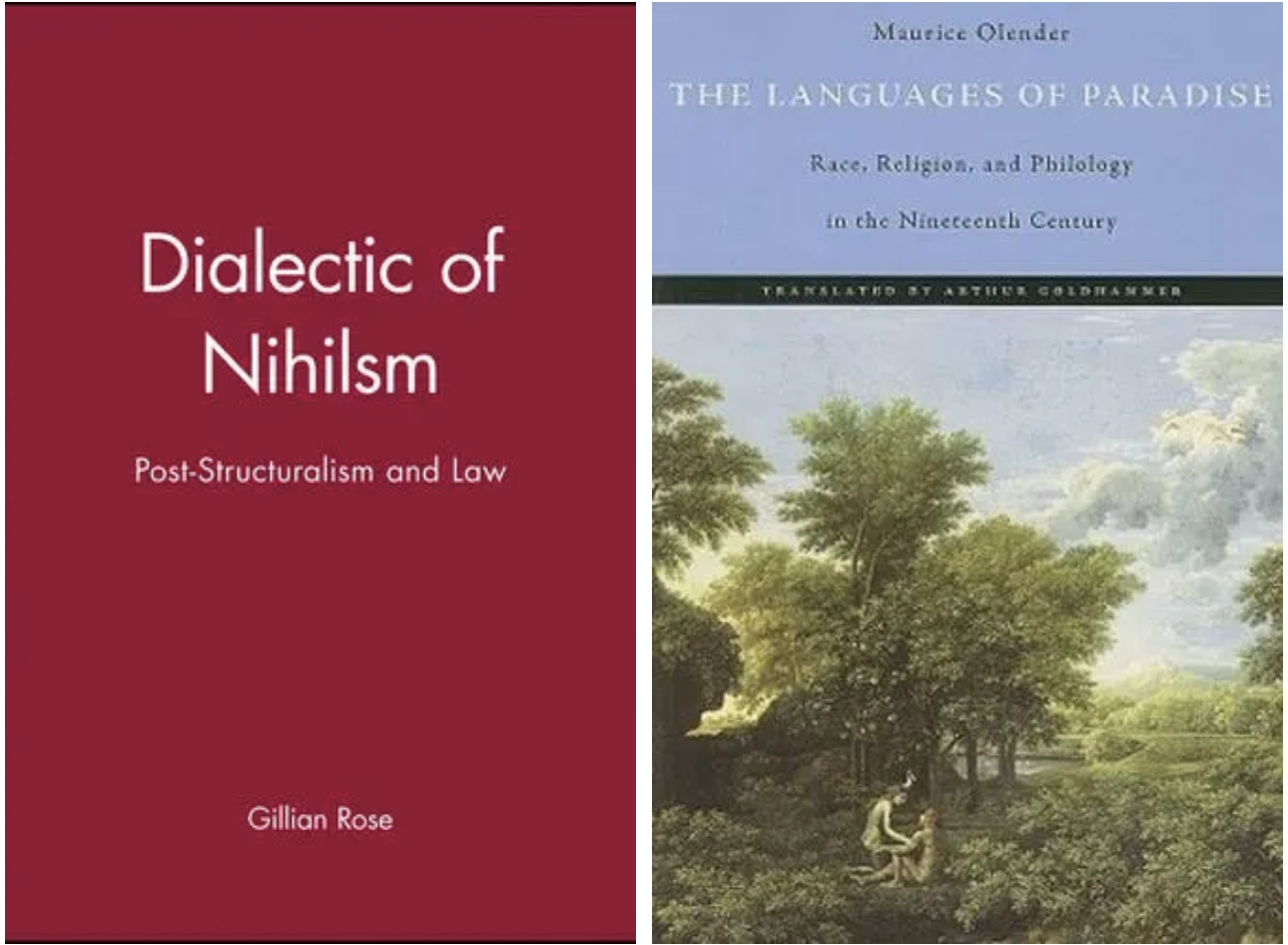
Gillian Rose, Dialectic of Nihilism and Maurice Olender, The Languages of Paradise
There are themes in Rose’s unfinished and posthumously published Paradiso which could conceivably have connected to the work of the Indo-Europeanists, especially in mystical theology – though Rose is again working on a Judeo-Christian, rather than pagan tradition. The published book, which includes a few sections only, pairs studies of ideas with people. I wonder what she would have made of Maurice Olender’s remarkable book Languages of Paradise, first published in French in 1989 and translated in 1992. It’s not a book in the Warwick library, which suggests Rose didn’t own a copy, though apparently the collection is not exhaustive, since until they introduced stricter controls, some books were stolen.
In his preface to the book, Jean-Pierre Vernant begins with a biblical story to engage with the Indo-European tradition of thought. The questions he asks are deceptively simple: where is the Garden of Eden and what language did Adam and Eve speak there? Hebrew is just one of the answers that has been given. In the book itself, Olender engages with hypotheses, ideas, histories and prejudices about primal languages, from Semitic to Indo-European, or, as it was sometimes known Indo-German or Aryan. This indicates understandings of the relation of Western European languages to Sanskrit, racial ideals and intellectual trends. It concentrates on the nineteenth century but anticipates debates of the twentieth. It is a book which speaks to so many questions Rose was interested in – relation, religion, language and politics – and crosses between the Indo-European and Semitic language groups.
Olender died in 2022, and I remember thinking at the time it was a shame he hadn’t done more work in the style of Languages of Paradise. I only knew his other book Race and Erudition. This led me to look for his other work, which is surprisingly brief. But then I learned that his major contribution to scholarship was as an editor, at Hachette, Fayard and Éditions du Seuil. Markus Messling has a good piece in tribute to him, which explains that important role. The list of people he published is quite extraordinary. His archives are at IMEC in Normandy, in 753 boxes!
Thomas Mann, Joseph and his Brothers, trans. John E. Woods, New York: Alfred A. Knopf/Everyman’s Library, 2005 (four volumes in one).
Markus Messling, “Writing as Commitment: In Memory of the Philologist and Editor Maurice Olender (1946–2022)”, Philological Encounters 8, 2023, 364-73.
Maurice Olender, Les langues du Paradis: Aryens et Sémites, un couple providential, Paris: Seuil, 1989, revised edition 2002; original version translated as Languages of Paradise: Race, Religion, and Philology in the Nineteenth Century, Cambridge, MA: Harvard University Press, trans. Arthur Goldhammer, 1992.
Maurice Olender, Race sans histoire, Seuil, 2009; parts in Race and Erudition, trans. Jane Marie Todd, Harvard University Press, 2009.
Gillian Rose, Dialectic of Nihilism: Post-Structuralism and Law, Oxford: Basil Blackwell, 1984.
Gillian Rose, The Broken Middle: Out of Our Ancient Society, Oxford: Blackwell, 1992.
Gillian Rose, Judaism and Modernity: Philosophical Essays, Oxford: Blackwell, 1993.
Gillian Rose, Mourning Becomes the Law: Philosophy and Representation, Cambridge: Cambridge University Press, 1996.
Gillian Rose, Paradiso, ed. Howard Caygill, London: The Menard Press, 1999.
Gillian Rose, “Interview with Gillian Rose”, ed. Vincent Lloyd, Theory, Culture & Society 25 (7-8), 2008, 201-18.
Kate Schick, Gillian Rose: A Good Enough Justice, Edinburgh: Edinburgh University Press, 2012.
John E. Woods, “Introduction”, in Thomas Mann, Joseph and his Brothers, trans. John E. Woods, New York: Alfred A. Knopf/Everyman’s Library, 2005, xiii-xvi.
This is the twenty-third post of a weekly series, where I post short essays with some indications of further reading and sources, but which are not as formal as something I’d try to publish more conventionally. They are usually tangential to my main writing focus, a home for spare ideas, asides, dead-ends and possible futures. I hope there is some interest in them. They are provisional and suggestions are welcome.
At the intersection of the history of constitutional ideas and of political theory, this book offers a new genealogy of the constitutional thought of the European Union. Centrally, the book traces the emergence and transformation of the ‘post-sovereign thesis’ – an argument that seeks to move beyond the routine opposition between states and European organization, by claiming the concept of sovereignty to be obsolete – and of its complicated relationship with political liberalism. Analyzing the thought of a series of constitutional thinkers who have developed different versions of this thesis in relation to European integration, the book shows that, far from being new, as is generally assumed, the post-sovereign thesis goes back to the late nineteenth century. Exploring the interplay of these thinkers’ critical conceptualizations of sovereignty and of their views on political liberalism, the book argues that, although they share a concern for the transformation of a world seen as increasingly interdependent, they imagined deeply different versions of post-sovereignty. Bringing this history into focus, the book offers a rich new perspective on contemporary debates about the EU and the possibilities of global constitutionalism. This book will appeal to scholars and students working in fields of EU and constitutional law, legal history and the history of political thought; as well as others with relevant interests working in political science.
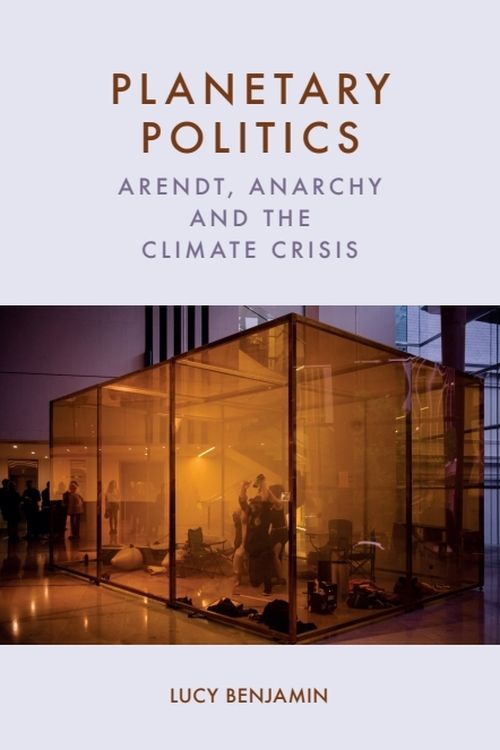
Explores the connection between ecological crisis and Arendtian politics of the earth
Rereads Hannah Arendt’s writings, with a view to foregrounding her recurrent yet overlooked references to the planetary dimension of politics.
Critically reinterrogates Arendt’s engagement with the politics of revolution and her refusal to explicitly confront the violence of colonialism in the US context.
Discusses the meaning of political unpredictably and spontaneity in light of climate modelling, planetary ‘tipping points’ and ‘baked in’ climate consequences.
Critical political theory has been transformed since the declaration of the Anthropocene in the early 2000s. However, a substantive account of a planetary politics, which begins by understanding politics as planetary – as opposed to politics applied to the planet – is yet to be developed. Planetary Politics: Arendt, Anarchy and the Climate Crisis offers precisely such an account of political theory. Rereading the key works of Hannah Arendt, it suggests that Arendt was a theorist of the planet and that claims of hers, such as the fact that ‘plurality is the law of the earth,’ have been radically overlooked. Recovering these moments in Arendt’s writing, this book makes the case for a planetary anarchism and the restaging of revolutionary politics.
This year’s event takes place on 14 June 2025, back in Garrick’s Temple on the banks of the Thames
Booking required one week ahead if you want lunch
Saturday, June 14, 2025 from 10:00-19:00 BST Garrick’s Temple to Shakespeare, Hampton, UK
For the Slovenian School of Philosophy and Psychoanalysis, a loose association of thinkers which grew out of dissident movements in socialist Yugoslavia, Shakespeare has always been a reference point – especially Hamlet and its reception by Hegel, Marx, Freud and Lacan. The title of one of Slavoj Žižek’s early books, Looking Awry, is taken from Richard II, and other members of the School have also used Shakespeare to think through the role of representation in politics and culture. Furthermore, the Slovenian School has always been in close dialogue with the artists, musicians and stage practitioners of the group Neue Slowenische Kunst who have been involved in diverse Shakespearean projects. Laibach’s involvement in the Macbeth production of Wilfried Minks and Peter Zadek is to be mentioned in this context, as well as several works of the Scipion Nasice Sisters Theatre (SNST). As SNST co-founder Eda Čufer writes, “Shakespeare exposed the theatrical aspects of establishing and transgressing the law, and made transparent the structural similarities between the ‘deeds’ of legal authorities, criminals (terrorists) and artists (activists).” This symposium will explore the complex history of this statement and its relevance for the relation between theatre, psychoanalysis, politics and philosophy in the present.
£20 ticket (+Eventbrite fee) includes admission, sandwich lunch at the Bell Inn as well as tea and coffee during breaks. NOTE: due to catering demands the sale of ticket ends a week before the event.
£10 ticket includes admission, tea and coffee during breaks
Online ticket, free, possibility to donate to the Temple
Community ticket: a limited number of tickets is available for those unable to pay. Please note this does not include lunch.
The event will be partially hybrid (one session) and as a whole will be streamed via Zoom.
All proceeds go to the Temple.
10:00-11:00 (Chair: Björn Quiring) Short intro Gregor Moder: Caesar’s Wounds
11:00-11:30: Coffee/tea
11:30-13:15 (Chair: Julia Ng) 11:30-12:15 Dominik Finkelde: The Remains of Richard II: Santner and Žižek on Political Flesh
12:15-13:15 Jure Simoniti: What Remains of Hamlet After Death?
13:15-15:00: Lunch
15:00-15:45 (Chair: Jennifer Rust) Todd McGowan: Hegel as Philosophy’s Shakespeare: Drama and the Unconscious (Zoom)
15:45-16:45 (Chair: John Gillies) Eda Cufer and Miran Mohar: NSK Theater: Play Within a Play (hybrid)
16:45-17:15: Coffee/Tea
17:15-18:00 (Chair: Stuart Elden) Richard Ashby: Face-Off: Defacement, Ethics and the ‘Neighbour’ in “The Comedy of Errors”