At the beginning of 2025 I decided to try to post a short essay each week on Progressive Geographies. I felt the blog had become too much of a noticeboard, sharing information about interesting books, talks or shorter pieces by other people and, much less often, a few things about my own work. I had not been writing very much for the blog itself, apart from the research updates on my Mapping Indo-European thought in twentieth-century France project; and some research resources – bibliographies, a few textual comparisons, sometimes very short translations.
Somewhat to my surprise I’ve managed to keep to a weekly schedule to these essays, usually with a few pieces in development at the same time. I called these ‘Sunday histories’ after the condescending name of ‘Sunday historian’ given to amateurs by professional historians, since these were people whose only time for doing history was outside of the working week. Philippe Ariès called his memoir Un Historien du Dimanche for this reason. But these short posts are also histoires in the French sense of stories as much as formal histories. At the end of each of these pieces I’ve tried to provide indications of sources which would provide much more information, some of which are published and others are archives.
The intention was not that the pieces would be parts of a paper or book chapter I’m writing, but usually something tangential to what I’m working on, perhaps a development of something which would only be a footnote or aside in another text. Sometimes they are some notes on a topic which might be further developed in the future, or where I’ve reached a dead end. A couple of times they have developed from a talk I’ve given or are a summary of what will be a longer piece published in a more formal way. A few times I’ve revisited earlier occasional pieces on this blog, and tidied them up into a similar format. A couple have seemed more minor, and have been posted mid-week.
These pieces are something of a reaction against academic publishing – its slow processes, its costs, and its metrics. These pieces are posted shortly I’ve finished them, though they might be revised later; they are free to access (I don’t plan to turn these into subscription-only); and they are not ‘outputs’ in the tradition sense.
I have a few drafts of future posts – another one relating to the early reception of Foucault’s work in the United States; a reworked version of the story of a possible collaboration between Alexandre Kojève and Lefebvre; and on Jakobson’s 1972 lectures at the Collège de France. There will maybe be something on Pierre Bourdieu and Erwin Panofsky, perhaps on Jean Hyppolite, probably on ancient Greek words for kings.
When I have been asked about running a blog, I’ve said the three guidelines I set myself were these: be useful to yourself, since you never know if anyone else will read it; be useful to others, if you do want an audience; and be nice, which means I rarely post about things I don’t like. Those still seem like good ideas to me, and they are ones that shape these little posts. The posts are provisional and suggestions are welcome. I’m sure specialists in the areas I discuss will know much more or correct details. I hope there is some interest in them.
Leonard Robert Palmer (1906-1984) was a British linguist, important both for his own work and as an editor. Early in his career he taught Classics at the Victoria University of Manchester, became Chair of Greek at King’s College London, and from 1952 was Professor of Comparative Philology at the University of Oxford. In the late 1950s he was President of the Philological Society. He invited Georges Dumézil to give lectures in London in 1951, and the resulting book, Les Dieux des indo-européens, was dedicated to Palmer. One lecture of Dumézil’s Déesses latines et mythes védiques was based on a lecture Palmer invited him to give in Oxford in May 1956, where Palmer also brought Émile Benveniste in 1964.
Palmer was known for his books including Descriptive and Comparative Linguistics in 1972, and The Interpretation of Mycenaean Greek Texts. He attended the 1956 conference outside Paris on Mycenaean studies I’ve discussed before – “Benveniste, Dumézil, Lejeune and the decipherment of Linear B”. This interest led him into archaeology, and debates about the dating of the Knossos site in Crete (see Mycenaeans and Minoans). He is also significant as an editor of two book series. One was entitled “The Great Languages”, in which his own studies of Greek and Latin were published, along with studies of most modern Western European languages, Russian and Slavonic, Chinese and Sanskrit. Anna Morpurgo Davies edited the series in later years, and co-edited Palmer’s Festschrift – Studies in Greek, Italic and Indo-European Linguistics offered to Leonard R. Palmer… Some of the names I’ve been discussing in relation to my wider project were contributors, including Françoise Bader, Harold Bailey, Ilya Gershevitch, Jerzy Kuryłowicz, Michel Lejeune, Manu Leumann, Rüdiger Schmitt, and Calvert Watkins.
Leonard Palmer, taken from his Festschrift
The other series Palmer edited was called “Studies in General Linguistics”. The initial series description appeared on the back-cover flap of David Abercrombie’s English Phonetic Texts, the second book in the series:
Professor L.R. Palmer, editor of the ‘Great Languages’ series, is preparing this new series of books on Linguistics. Elements of General Linguistics by André Martinet is the first volume in the series, and it is hoped that Professor Palmer’s own Introduction to Modern Linguistics will be added to the series at a later date. Other volumes will be concerned with Phonetics and Comparative Linguistics, and other related subjects.
The series is designed for the growing number of students of linguistics.
The books were published by Faber & Faber in London and often jointly appeared with an American publisher, usually a university press. Palmer said his Descriptive and Comparative Linguistics was a replacement for his 1936 book An Introduction to Modern Linguistics, noting in the revision that “a simple reissue was unthinkable” given the developments of the intervening years (p. 9).
As well as the translation of Martinet’s Elements of General Linguistics in 1964, the “Studies in General Linguistics” series also published the English version of Émile Benveniste, Indo-European Language and Society in 1973. (This translation was recently republished as Dictionary of Indo-European Concepts and Society by Hau books). Indo-European Language and Society was published in the USA by University of Miami Press, listing it as number 12 of their “Miami Linguistics Series”. Benveniste’s Problems in General Linguistics had appeared in that series as number 8. The University of Miami Press printing has that publisher embossed on the cover, but inside appeared to have simply rebound the Faber & Faber printing, including that publisher name on the title page. L.R. Palmer wrote a brief preface to the Martinet translation and originally proposed translating Benveniste’s Indo-European Language and Society himself.
A photograph of the five books in the series – David Abercrombie, English Phonetic Texts; Leonard R. Palmer, Descriptive and Comparative Linguistics; André Martinet, Elements of General Linguistics; Émile Benveniste, Indo-European Language and Society; and Guilio C. Lepschy, A Survey of Structural Linguistics
The translator of Martinet is Elisabeth Palmer (with an ‘s’), while Elizabeth Palmer (with a ‘z’) translated Benveniste. Leonard Palmer does a ‘thanks for typing’ acknowledgement to his wife in Descriptive and Comparative Linguistics (p. 11), and thanks her for her “experience of scientific drawing” in The Interpretation of Mycenaean Greek Texts (p. ix). But on neither occasion does he give her name. However, The Greek Language is dedicated “To Elisabeth” (an ‘s’, again, p. v) and his acknowledgements note that this dedicatee is his wife (p. xii).
It seems probable that Elisabeth and Elizabeth are the same person. But could there really be a spelling mistake in a translator name, especially if it was the name of the series editor’s wife? One obituary of Leonard Palmer mentions his wife was Austrian, and a medical scholar. Being Austrian would further support the ‘Elisabeth’ spelling, as do the reprints of Martinet, Éléments de linguistique générale with University of Chicago Press and Midway. Given ‘Elisabeth’ appears in Martinet’s translation (1964), and the dedication (1980), the spelling in the translation of Benveniste (1973) seems to be the anomaly. (Until I found the dedication, I did wonder if she’d anglicised the spelling at some point.) But if it was a misprint, would it not be corrected in later printings? Palmer is a common surname, so it can be hard to find details. Some of the identities in library catalogues have merged the names. There are other books by ‘Elizabeth Palmer’ which seem unlikely to be the same person. There is also an Élisabeth Palmer, who was married to the Swedish-born French gynaecologist Raoul Palmer, who also published with him.
Giulio C. Lepschy co-edited the “Studies in General Linguistics” series with Leonard Palmer in the 1970s, and his A Survey of Structural Linguistics, a revision of a text originally published in Italian, appeared in it in 1970. Unless I am missing books, the series was therefore uneven in chronology: two books in 1964 (Martinet and Abercrombie), and three in the early 1970s (Lepschy, Palmer, Benveniste). But the Martinet and Benveniste translations are interesting in themselves as a minor link between French and anglophone post-war linguistics and some of the names involved.
David Abercrombie, English Phonetic Texts, London: Faber & Faber, 1964.
Émile Benveniste, Problems in General Linguistics, trans. Mary Elizabeth Meek, Coral Gables: University of Miami Press, 1971.
Émile Benveniste, Le vocabulaire des insitutions indo-européenes, Paris: Les Éditions de Minuit, two volumes, 1969; Indo-European Language and Society, trans. Elizabeth Palmer, Coral Gables: University of Miami Press/London: Faber & Faber,1973; reprinted as Dictionary of Indo-European Concepts and Society, trans. Elizabeth Palmer, Chicago: HAU books, 2016.
Georges Dumézil, Les Dieux des indo-européens, Paris: PUF, 1952.
Georges Dumézil, Déesses latines et mythes védiques, Bruxelles: Latomus, 1956.
Guilio C. Lepschy, A Survey of Structural Linguistics, London: Faber & Faber, 1970.
André Martinet, Éléments de linguistique générale, Paris: Armand Colin, 1960; Elements of General Linguistics, trans. Elisabeth Palmer, London: Faber & Faber/Chicago: University of Chicago Press, 1964.
Anna Morpurgo Davies and Wolfgang Meid (eds.), Studies in Greek, Italic and Indo-European Linguistics: Offered to Leonard R. Palmer on the Occasion of his Seventieth Birthday, June 5, 1976, Innsbruck: Institut für Sprachwissenschaft der Universität Innsbruck, 1976.
L.R. Palmer, An Introduction to Modern Linguistics, London: Macmillan & Co., 1936.
L.R. Palmer, The Latin Language, London: Faber & Faber/Norman: University of Oklahoma Press, 1954.
Leonard Palmer, The Interpretation of Mycenaean Greek Texts, Oxford: Clarendon Press, 1963.
Leonard R. Palmer, Mycenaeans and Minoans: Aegean Prehistory in the Light of the Linear B Tablets, London: Faber & Faber, 2nd edition, 1965 [1961].
Leonard R. Palmer, Descriptive and Comparative Linguistics: A Critical Introduction, London: Faber & Faber/New York: Crane, Russak & Company, Inc., 1972.
Leonard R. Palmer, The Greek Language, London: Faber & Faber, 1980.
This is the twenty-sixth post of a weekly series, where I post short essays with some indications of further reading and sources, but which are not as formal as something I’d try to publish more conventionally. They are usually tangential to my main writing focus, a home for spare ideas, asides, dead-ends and possible futures. I hope there is some interest in them. They are provisional and suggestions are welcome.
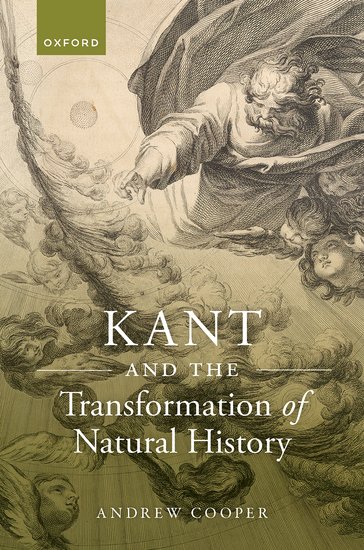
Andrew Cooper presents the first systematic study of Kant’s account of natural history. Cooper contends that Kant made a decisive contribution to one of the most explosive and understudied revolutions in the history of science: the addition of time to the frame in which explanations are required, sought, and justified in natural science.
Through addressing a wide range of Kant’s works, Cooper challenges the claim that Kant’s theory of science denies a developmental conception of nature and argues instead that it establishes a method by which natural historians can genuinely dispute historical claims and potentially come to consensus. This method, Cooper argues, can be used to expose serious flaws in Kant’s own historical reasoning, including the formation and defence of his racist views. The book will be valuable to philosophers seeking to discern both the power and limitations of Kant’s theory of science, and to historians of science working on the fractured landscape of eighteenth-century Newtonianism.
This series usually appears 12 months later in paperback from Haymarket books.
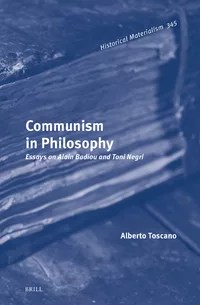
From the “red years” that followed the social explosion of May ’68 into the first decades of the 21st century, Alain Badiou and Toni Negri have produced two imposing and consequential bodies of philosophical writing, while never abandoning their commitment to a militant politics of equality. The essays collected in this book tackle multiple dimensions of their work—from ontology to biopolitics, from art to violence, from the theory of capitalism to the challenge of counter-revolution. But all of them are also efforts to explore and answer a single question: What does it mean to be a communist in philosophy?
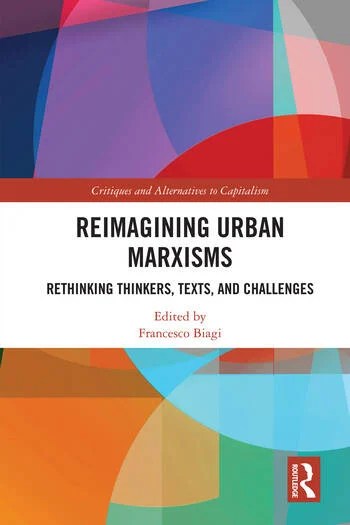
This volume presents an interdisciplinary and international revaluation of urban Marxisms.
Bringing together the main critical Marxist perspectives from around the world on contemporary urban studies, it engages with a range of issues connected to the “urban question,” such as urban sprawl, housing, and increasing rates of urbanization across the globe. With attention to the manner in which the three axes of class, gender, and race play a fundamental role in contemporary social phenomena, it interweaves different issues that are inextricably linked in matters of urban inequality. The book bridges a significant gap between urban studies and Marxists theories by reviving Marx and Engels’ ideas in the context of analyzing urban studies in the twenty-first century. The objective is to bring together diverse perspectives and directions of the ongoing debate on the “urban question.” Although there are multiple Marxisms and theoretical currents inspired by Marxism that seek to understand the urban and spatial transformations of today, there has been a lack of comprehensive scholarship that systematically brings them together to frame this debate. The goal is to unite the main critical Marxist perspectives on contemporary urban studies.
Reimagining Urban Marxisms will therefore appeal to scholars across disciplines with interests in Marxist analyses of contemporary urban and spatial transformations, and the phenomenon of planetary urbanization.
A few weeks ago I interviewed Katherine Hayles about writing, reading, using theory, being interdisciplinary and about various aspects of her books and ideas. The interview is now available as a video on the Media Theory journal website (as well as the full video, they’ve also included short versions based on different themes covered, and a transcript too). Or you can watch it [here]…
It begins with an interesting discussion of writing practices and book planning.
A wide-ranging history of the term “fascism,” what it has meant, and what it means today.
The rise and popular support for authoritarianism around the world and within traditional democracies have spurred debates over the meaning of the term “fascist” and when and whether it is appropriate to use it. The landmark study Fascism: The History of a Word takes this debate further by tackling its most fundamental questions: How did the terms “fascism” and “fascist” come to be in the first place? How and in what circumstances have they been used? How can they be understood today? And what are the advantages (or disadvantages) of using “fascism” to make sense of interwar authoritarianism as well as contemporary politics?
Exploring the writings and deeds of political leaders, activists, artists, authors, and philosophers, Federico Marcon traces the history of the term’s use (and usefulness) in relation to Mussolini’s political regime, antifascist resistance, and the quest of postwar historians to develop a definition of a “fascist minimum.” This investigation of the semiotics of “fascism” also aims to inquire about people’s voluntary renunciation of the modern emancipatory ideals of freedom, equality, and solidarity.
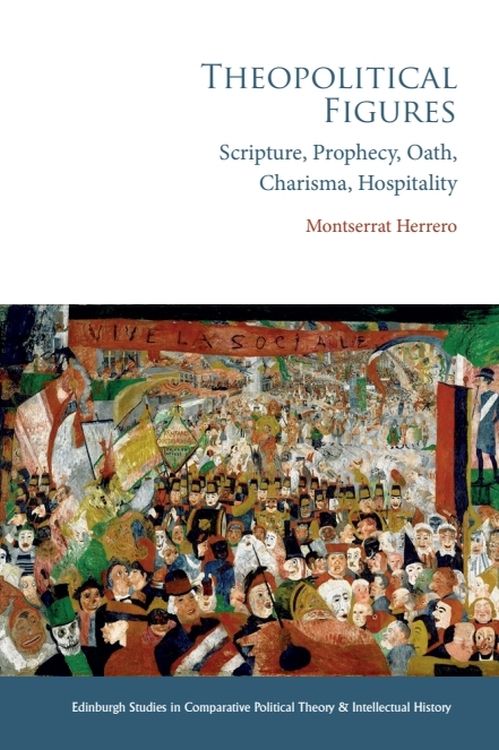
Examines the meaning of five theopolitical figures – scripture, prophecy, oath, charisma and hospitality – in contemporary philosophical-political discourse
Re-inscribes contemporary political concepts and experiences in the ‘theological locus’ from which they supposedly come and at the same time looks for new semantic derivations for the political arena
Engages with various 20th century continental philosophers, including Walter Benjamin, Jacques Derrida, Jean-Louis Chrétien, Michel Foucault, Giorgio Agamben, Jean-Luc Nancy, John Caputo, Jean Luc Marion among others
Brings into dialogue discussions of theological literature and history
Combines philosophical reflection with case studies of the political interpretation of the Bible; the Lisbon earthquake of 1755; the transferences between oath and sacrament in early Christianity; and acclamations from the imperial cult to modern autocracies
Considers different theological traditions of thought, mainly, Christian and Jewish
This book explores the extent to which theological discourse has been, and continues to be, relevant in shaping the meanings, symbols and realities of certain instituted political practices. This relevance has historically manifested itself in the hybridisation of theological and political concepts, images, gestures, and rituals.
Focuses on key aspects of Robert Esposito’s thought and explores the ways in which some major contemporary thinkers have been crucial interlocutors in their elaboration.
Political Ontology, Community, and Institutions offers a broad view of the current philosophical dialogue in Italy, both in relation to Robert Esposito’s own thought and with respect to major issues and authors of crucial philosophical relevance. From his earliest works, Esposito questions the crisis of politics and why thought is unable to convincingly respond to it. He does so by distancing himself not only from political theology but also from those paradigms-destituent and constituent-that have lost nowadays much of their analytical and propositional capacity. However, his proposal is not only critical. Esposito’s thought relates to our present through the creation of new categories-among the most recent, those of “instituting thought” and “common immunity”-capable of opening a breach in an apparently increasingly closed horizon. Therefore, dealing with his thought means, first of all, dealing with our present. This is the main goal of this volume, which focuses on Esposito’s dialogue with major contemporary thinkers. Also included is an unpublished interview with Esposito conducted by the editors.