The edition uses the existing translation by Derek Coltman, long out of print, and has a new critical apparatus and Introduction by me. There is a discussion of the editing work here. This is part of the work of my Mapping Indo-European thought in twentieth-century France research project, funded by the Leverhulme Trust.
A classic text that develops one prong of Dumézil’s tripartite hypothesis of Indo-European tribes: the sacred sovereign.
Georges Dumézil’s fascination with the myths and histories of India, Rome, Scandinavia, and the Celts yielded an idea that became his most influential scholarly legacy: the tripartite hypothesis, which divides Indo-European societal functions into three classes: the sacred sovereign, the warrior, and the producer. Mitra-Varuna, originally published in 1940, concentrates on the first function, that of sovereignty. Dumézil identifies two types of rulers, the first judicial and worldly, the second divine and supernatural. These figures, both priestly, are oppositional but complementary. The title nods to these roles, referring to the gods Mitra, a rational mediator, and Varuna, an awesome religious figure.
Stuart Elden’s critical edition, based on the 1988 English translation by Derek Coltman, identifies variations between the first and second French editions and completes—and in places corrects—Dumézil’s references. The editor’s detailed introduction situates Mitra-Varuna within Dumézil’s career, outlines how his treatment of its themes developed over time, and relates the book to the political controversy around his ideas. Two new appendices contain passages that did not appear in the second French edition.
Alexandre Koyré’s teaching career was predominantly in Paris and the United States. Born in Russia, he studied in Paris and Germany, before beginning teaching at the École Pratique des Hautes Études in the inter-war years. His EPHE teaching was in a temporary post from 1921-22 and then as Directeur d’études from 1932-33. He spent much of the Second World War in the United States, teaching at the École Libre des Hautes Études along Roman Jakobson, Claude Lévi-Strauss, Jean Gottman and others. His work there as its first general secretary, until he was replaced by Lévi-Strauss, has been discussed in some histories of French intellectuals in New York, particularly by Emmanuelle Loyer. He also taught courses at the New School for Social Research. I have indicated the titles of his courses at both these institutions here. After the war he returned to France, resuming his career at the EPHE. As I have discussed in History of European Ideas(open access), in 1951 he tried, unsuccessfully, to get elected to a chair at the Collège de France. He would continue teaching at the EPHE, but also combined this with various visiting posts in the USA, including at the Institute for Advanced Study in Princeton and at the University of Chicago and Johns Hopkins University. From autumn 1962 his health meant that others often had to cover his teaching. He died in April 1964.
All of his teaching is, I think, interesting to explore. He taught on topics both within the history of science and in philosophy more generally. His earliest teaching was on religion and mysticism, and the relation between science and religion was a regular theme. His book on Plato was a development from war-time teaching. Perhaps his most famous book, From the Closed World to the Infinite Universe,developed from teaching at Johns Hopkins University. I had thought it was a course there, but though he taught courses there in two academic years, the book’s immediate genesis was a single lecture given the following year, on a return visit when he was teaching at the University of Wisconsin-Madison. Before the war, it was his course on Hegel and religion which Alexandre Kojève took over when Koyré was absent, turning it into the famous courses on The Phenomenology of Spirit which had such a remarkable audience and which were so influential. (I say a bit more about those lectures and a planned co-translation of the Phenomenology by Kojève and Henri Lefebvre here.)
Koyré also had visiting posts in Cairo in the 1930s and early 1940s, at what was originally the Egyptian University, then the King Fuad University and is now the University of Cairo. Paola Zambelli’s biography of Koyré gives the Cairo dates as 1933-34, 1936-37, February to June 1940 and 1940-41. With the aid of EPHE teaching records, the first two dates can be specified as 1 December 1933-end May 1934 and 1 November 1936-1 June 1937. The EPHE also records a visit from 1 November 1937 to 1 June 1938. Around 1940 Charles de Gaulle and his colleagues in the France Libre government in exile persuaded Koyré that he could make a more significant contribution by running the École Libre than by joining the army. His return to Cairo after the Occupation of France was to facilitate his transfer to the United States in 1941, though he did this by travelling east rather than west across the Atlantic.
Compared to Paris, where annual reports were published of his teaching, we know less about his work in Cairo. The main record of his teaching is his book Trois leçons sur Descartes, later republished as Entretiens sur Descartes. These three lectureswere first given in Cairo. The first publication was a bilingual French-Arabic edition in 1937, the second in French alone in 1944. The first version maintains the spoken form more, which is edited out of the reprint. The lectures are later included in re-editions of hisIntroduction à Platon,but though the first part of the book was published as Discovering Plato, I don’t think the Descartes material is in English. (Discovering Plato was published slightly before the French version, even though the manuscript was written in French.) The copy of the Trois leçons at the Bibliothèque nationale de France, in the Rare Books room, is the one Koyré gave to Kojève, with a very brief dedication.
In Cairo Koyré lived in Zamalek, and some of his letters to Henry Corbin from this time have been published. Corbin was a French scholar of Islam and, among other things, a Heidegger translator. Heidegger’s “What is Metaphysics?” appeared in Bifur in 1931, translated by Corbin and introduced by Koyré. But most of the other letters of Koyré’s which are published are from earlier or later periods of his life. The letters to Edmund Husserl are much earlier, while his surviving letters to Hannah Arendt, for example, are all later than this period (on their friendship, see here). There is limited correspondence in Koyré’s archive.
In teaching in Cairo Koyré was following in the footsteps of the philosopher of science André Lalande, and among their students was Abdul Rahman Badawi. Some online sources suggest Koyré supervised Badawi’s doctoral thesis, but a more reliable obituary says Lalande initially, and then Koyré, supervised Badawi’s master’s level thesis on the problem of death in existentialist philosophy, written in French. It was published only in 1964 in Cairo, and is not easy to find. Badawi went on to write a doctoral thesis, Le temps existentiel, in Arabic. Given the importance of Badawi’s work in Arabic philosophy, this is quite significant. Sevinç Yasargil has an interesting piece on Badawi in the Heidegger in the Islamicate Worldcollection. Koyré was therefore an important figure in introducing both France to phenomenology and Egypt to existentialism.
I think Louis Massignon was also teaching in Cairo still too, which perhaps gives another connection. Massignon was Catholic but an important scholar of Islam, and did work to bring understandings of each faith closer to the other. Koyré’s work in Cairo is briefly discussed in Yoav Di-Capua’s work on Arab existentialism, but on this point doesn’t seem to add much beyond other sources.
Zambelli’s biography equally does not have much information about this part of his career. She actually spends much of the section on this discussing the courses on Hegel which Kojève took over. The historian and philosopher of chemistry, Hélène Metzger also covered some of his teaching in 1936-37, and on this and much else about Metzger, Cristina Chimisso’s book is an invaluable guide. Henry Corbin also covered some teaching in 1937-38, and post-war, several other people did when he was in the USA, or unwell. But the visits to Cairo seem interesting not just for who took over from him in Paris, but what Koyré himself did there.
Beyond what I outline above, I’ve not found much about this period of Koyré’s career. I say a bit more about his role in a European network of ideas here, with some reading suggestions. I also have said something some of the archival links to Georges Canguilhem and Jean Gottmann, and spoke about his connections to Canguilhem in Bristol in September 2024 (audio). As I mentioned above, I outline his New York teaching here, and I might follow up with more on his Paris teaching at the EPHE, and his other post-war courses in the United States.
References
Abdurrahman Badawi, Le Problème de la mort dans la philosophie existentielle: Introduction historique à une ontologie, Le Caire: Imprimerie de l’Institut français d’archéologie orientale, 1964.
François Chaubet and Emmanuelle Loyer, “L’École Libre des Hautes Études de New York: Exil et resistance intellectuelle (1942-1946)”, Revue Historique 302 (4), 2000, 939-72.
Cristina Chimisso, Hélène Metzger, Historian and Historiographer of the Sciences, London: Routledge, 2019.
Yoav Di-Capua, “Arab Existentialism: An Invisible Chapter in the Intellectual History of Decolonization”, The American Historical Review 117, 2012, 1061-91.
Yoav Di-Capua, No Exit: Arab Existentialism, Jean-Paul Sartre, and Decolonialization, Chicago: University of Chicago Press, 2018.
Sevinç Yasargil, “Anxiety, Nothingness, and Time: Abdurrahman Badawi’s Existentialist Interpretation of Islamic Mysticism”, in Kate Moser, Urs Gösken and Josh Hayes (eds.), Heidegger in the Islamicate World, London/New York, Rowman & Littlefield, 2019, 99-112.
Paola Zambelli, Alexande Koyré in Incognito, Firenze: Leo S. Olschki, 2016; trans. Irène Imbart, Alexandre Koyré, un juif errant? Firenze: Musée Galileo, 2021.
Aristide R. Zolberg with Agnès Callard, “The Ecole Libre at the New School 1941-1946”, Social Research 65 (4), 1998, 921-51.
This is the twentieth post of a weekly series, where I post short essays with some indications of further reading and sources, but which are not as formal as something I’d try to publish more conventionally. They are usually tangential to my main writing focus, a home for spare ideas, asides, dead-ends and possible futures. I hope there is some interest in them. They are provisional and suggestions are welcome.
In 1851, the physicist Léon Foucault performed an unforgettable experiment. By suspending a large pendulum inside the dome of Paris’ Pantheon, Foucault provided the first simple, direct empirical evidence of the Earth’s rotation—an undeniable demonstration of heliocentrism. This experiment, conducted long after the Copernican Revolution and using a laboratory apparatus rather than astronomical observation, visually confirmed what had previously been accepted as theory. The pendulum’s motion clearly illustrated the Earth’s rotation. But Foucault’s experiment did not end there. It sparked a range of subsequent reenactments and interpretations, each adding new layers to its meaning. Repeated over and again, its afterlives were many as were its ramifications.
Historian Michael Hagner revisits this epoch-making experiment and its reception from the nineteenth century to the present day and follows how cosmological questions conjoined political and aesthetic judgments about the public staging and history of science. The pendulum experiment, Hagner argues, is more than just a mere scientific demonstration. It contains within it the histories of technological innovation, ideological conflicts, and the rise of popular culture and visual media. In a series of insightful studies of literary, artistic, and scientific reenactments, Hagner uses both words and images to narrate the rich and complex legacy of this experiment.
Seeing Foucault’s Pendulum includes among other fascinating tales, a short but stunning history of the Copernican Revolution, the paradigm-shifting work of the nineteenth-century astronomer Camille Flammarion, and the reenactments of Foucault’s experiment at the Smithsonian Institution and New York’s United Nations building. Linking nature to culture and calling for world unity, the experiment’s legacy extends beyond science. It has been reimagined in Umberto Eco’s novel Foucault’s Pendulum and in Gerhard Richter’s 2018 installation, enchantments of the postmodern world theater where the relationship between knowledge and sensory experience is problematized anew. A complex symbol in the history of ideas—challenging our assumptions, inspiring artistic expression, and prompting philosophical reflection on our place in the cosmos—Foucault’s experiment serves as a powerful reminder that both the Earth and the universe should never be reduced to a disposable mass of human hubris and of irresponsible manipulation.
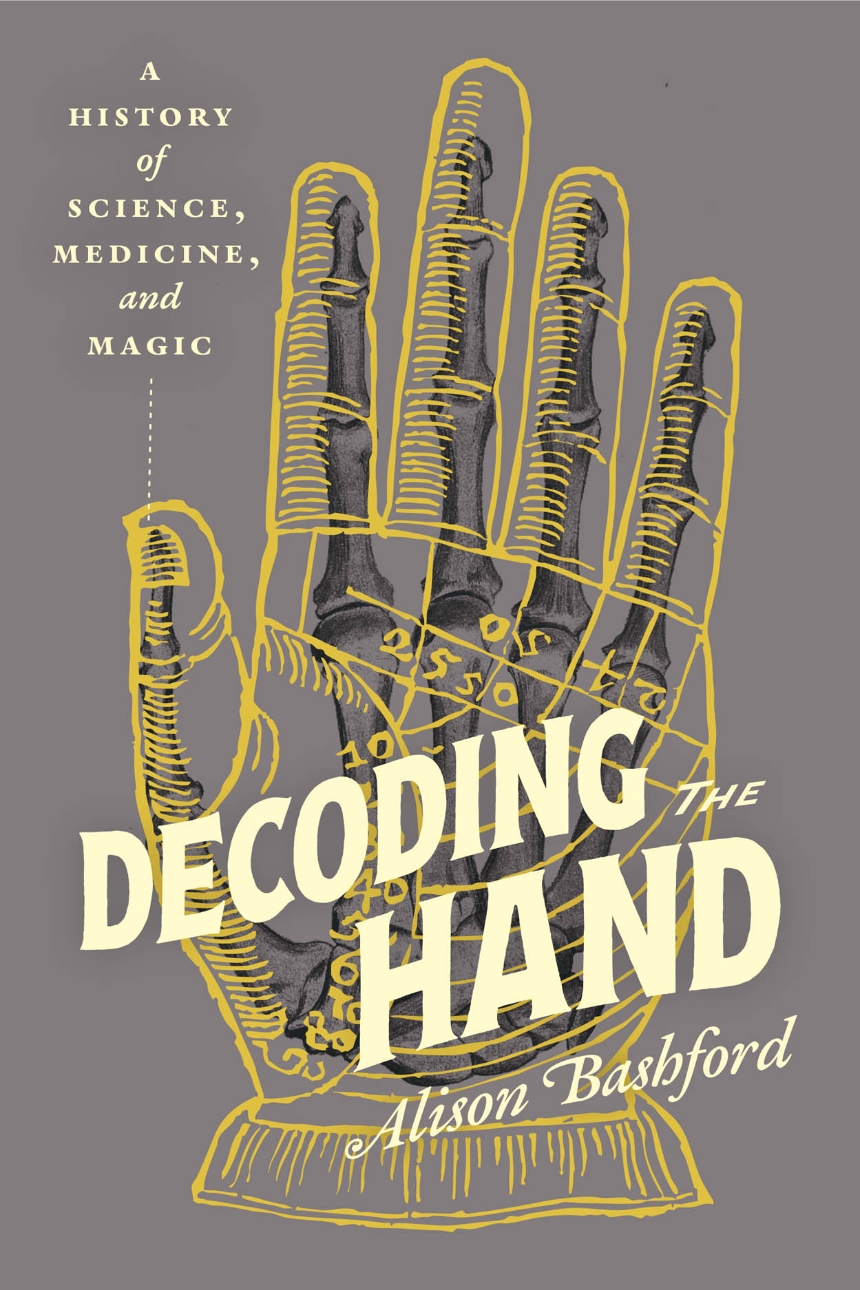
The astonishing story of palmistry—from occultists to the very foundations of modern science and medicine.
Why did Isaac Newton read books on chiromancy, the occult science of hand reading that revealed the secrets of the soul? Why did Charles Darwin claim that the hand gave humans dominion over all other species? Why did psychoanalyst Charlotte Wolff climb into the primate cages of the London Zoo, taking hundreds of delicate palm prints? Why did Francis Galton, the father of fingerprinting, take palm prints too? And why did world-leading geneticists study the geometry of palm lines in their search for the secrets of chromosomal syndromes?
Decoding the Hand is an astounding history of magic, medicine, and science, of an enduring search for how our bodily surfaces might reveal an inner self—a soul, a character, an identity. From sixteenth-century occult physicians influenced by the Kabbalah to twentieth-century geneticists, and from criminologists to eugenicists, award-winning historian Alison Bashford takes us on a remarkable journey into the strange world of hand readers, revealing how signs on the hand—their shape, lines, marks, and patterns—have been elaborately decoded over the centuries. Sometimes learned, sometimes outrageously deceptive, sometimes earnest, and more often than we ever expected, medically and scientifically trained, these palm-readers of the past prove to be essential links in the human quest to peer into bodies, souls, minds, and selves. Not only for fortune-telling palmists were the future and the past, health, and character laid bare in the hand, but for other experts in bodies and minds as well: anatomists, psychiatrists, embryologists, primatologists, evolutionary biologists, geneticists, and more.
Drawing telling parallels between the divination promised by palmistry and the appeal to self-knowledge offered by modern genetic testing, Decoding the Hand also makes clear that palm-reading is far from a relic or simple charlatanism. Bashford’s sagacious history of human hands touching and connecting opens wide the essential human pursuit of what lies within and beyond.
In this comprehensive work, David Eltis offers a two-thousand-year perspective on the trafficking of people, and boldly intervenes in the expansive discussions about slavery in the last half-century. Using new and underexplored data made available by slavevoyages.org, Eltis offers compelling explanations of why the slave trades began and why they ended, and in the process debunks long-held assumptions, including how bilateral rather than triangular voyages were the norm, and how the Portuguese rather than the British were the leading slave traders. Eltis argues that two-thirds of all enslaved people ended up in the Iberian Americas, where exports were most valuable throughout the slave trade era, and not in the Caribbean or the US. Tracing the mass involvement of people in the slave trade business from all parts of the Atlantic World, Eltis also examines the agency of Africans and their experiences in the aftermath of liberation.
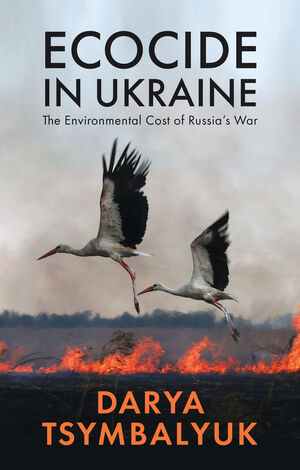
Russia’s war on Ukraine has not only destroyed millions of human lives, it has also been catastrophic for the environment. Forests and fields have been burned to the ground, animal and plant species pushed to the brink of extinction, soil and water contaminated with oil products, debris, and mines. On a single day in June 2023, the breached Kakhovka Dam flooded thousands of kilometres of protected natural habitat, as well as villages, towns, and agricultural land. The devastation of biodiversity and ecosystems across Ukraine has been immeasurable, long-lasting and its consequences stretch beyond national borders.
In this poignant book, Ukrainian researcher Darya Tsymbalyuk offers an intimate portrait of her beloved homeland against the backdrop of Russia’s war and ecocide. In elegant and moving prose, she describes the damage to the country’s rivers, the grasslands of the steppes, animals, insects, and colonies of birds, as a result of Russia’s ground and air operations. Alongside the everyday experiences of people in Ukraine living with the environmental consequences of the war, we share Tsymbalyuk’s own reckoning with the changing nature of cherished places and the loss of familiar worlds caused by the ongoing Russian invasion.
This year’s event takes place on 14 June 2025, back in Garrick’s Temple on the banks of the Thames
Saturday, June 14, 2025 from 10:00-19:00 BST Garrick’s Temple to Shakespeare, Hampton, UK
For the Slovenian School of Philosophy and Psychoanalysis, a loose association of thinkers which grew out of dissident movements in socialist Yugoslavia, Shakespeare has always been a reference point – especially Hamlet and its reception by Hegel, Marx, Freud and Lacan. The title of one of Slavoj Žižek’s early books, Looking Awry, is taken from Richard II, and other members of the School have also used Shakespeare to think through the role of representation in politics and culture. Furthermore, the Slovenian School has always been in close dialogue with the artists, musicians and stage practitioners of the group Neue Slowenische Kunst who have been involved in diverse Shakespearean projects. Laibach’s involvement in the Macbeth production of Wilfried Minks and Peter Zadek is to be mentioned in this context, as well as several works of the Scipion Nasice Sisters Theatre (SNST). As SNST co-founder Eda Čufer writes, “Shakespeare exposed the theatrical aspects of establishing and transgressing the law, and made transparent the structural similarities between the ‘deeds’ of legal authorities, criminals (terrorists) and artists (activists).” This symposium will explore the complex history of this statement and its relevance for the relation between theatre, psychoanalysis, politics and philosophy in the present.
£20 ticket (+Eventbrite fee) includes admission, sandwich lunch at the Bell Inn as well as tea and coffee during breaks. NOTE: due to catering demands the sale of ticket ends a week before the event.
£10 ticket includes admission, tea and coffee during breaks
Online ticket, free, possibility to donate to the Temple
Community ticket: a limited number of tickets is available for those unable to pay. Please note this does not include lunch.
The event will be partially hybrid (one session) and as a whole will be streamed via Zoom.
All proceeds go to the Temple.
10:00-11:00 (Chair: Björn Quiring) Short intro Gregor Moder: Caesar’s Wounds
11:00-11:30: Coffee/tea
11:30-13:15 (Chair: Julia Ng) 11:30-12:15 Dominik Finkelde: The Remains of Richard II: Santner and Žižek on Political Flesh
12:15-13:15 Jure Simoniti: What Remains of Hamlet After Death?
13:15-15:00: Lunch
15:00-15:45 (Chair: Jennifer Rust) Todd McGowan: Hegel as Philosophy’s Shakespeare: Drama and the Unconscious (Zoom)
15:45-16:45 (Chair: John Gillies) Eda Cufer and Miran Mohar: NSK Theater: Play Within a Play (hybrid)
16:45-17:15: Coffee/Tea
17:15-18:00 (Chair: Stuart Elden) Richard Ashby: Face-Off: Defacement, Ethics and the ‘Neighbour’ in “The Comedy of Errors”
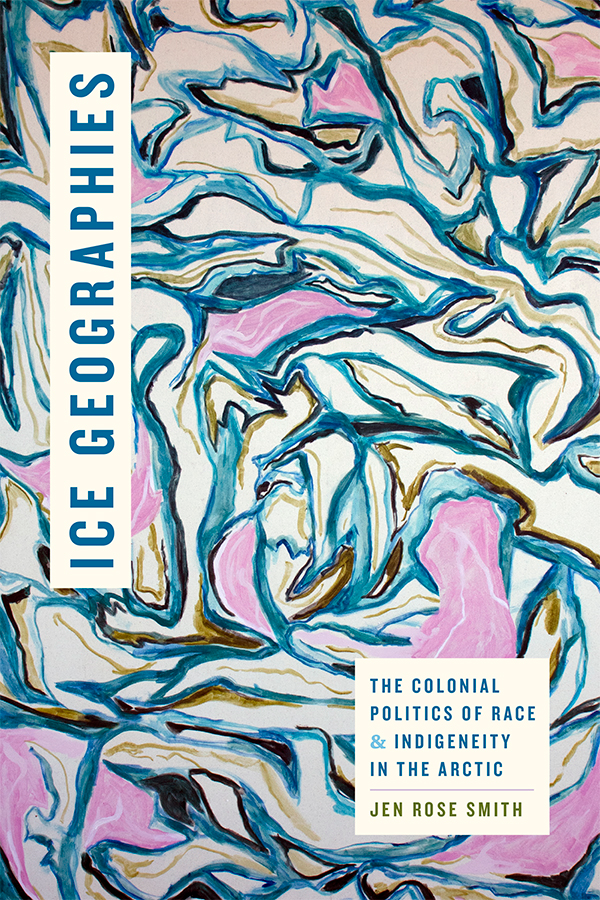
Ice animates the look and feel of climate change. It is melting faster than ever before, causing social upheaval among northern coastal communities and disrupting a more southern, temperate world as sea levels rise. Economic, academic, and activist stakeholders are increasingly focused on the unsettling potential of ice as they plan for a future shaped by rapid transformation. Yet, in Ice Geographies, Jen Rose Smith demonstrates that ice has always been at the center of making sense of the world. Ice as homeland is often at the heart of Arctic and sub-Arctic ontologies, cosmologies, and Native politics. Reflections on ice have also long been a constitutive element of Western political thought, but it often privileges a pristine or empty “nature” stripped of power relations. Smith centers ice to study race and indigeneity by investigating ice relations as sites and sources of analysis that are bound up with colonial and racial formations as well as ice geographies beyond those formations. Smith asks, How is ice a racialized geography and imaginary, and how does it also exceed those frameworks?