GCAS Interviews Prof. Michael O’Rourke

Very interesting interview with Michael O’Rourke on theory, reading and Derrida.

Global Center for Advanced Studies (GCAS)'s avatarGCAS--The BLOG

m orourke

The Global Center for Advanced Studies is honored to interview Professor Michael O’Rourke.

Q: How would you describe your research interests?

Michael O’Rourke [M O’R]: I would describe my research interests as extremely promiscuous, a kind of theoretical ADHD. I’ve published mostly on queer theory, deconstruction, speculative realism, object oriented ontology, feminist theory, psychoanalysis so those are the fields I generally occupy. But I don’t see myself as belonging to any discipline or area of scholarly expertise, whatever that might mean. In general what I try to do in my work is to stage unlikely encounters (Deleuze would say “unnatural alliances”) between thinkers or ideas or schools of thought that we might think of as incompatible. Sometimes these staged encounters work and sometimes they don’t. But in every case I think they are worth trying out.

Q: How did you get interested in theory?

M O’R: As an undergraduate…

View original post 707 more words

Posted in Uncategorized | 1 Comment

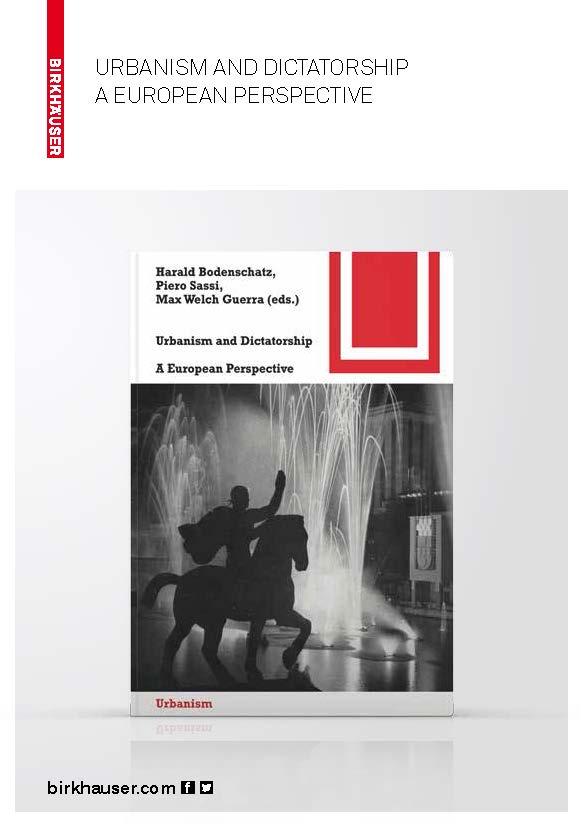
Urbanism and Dictatorship. A European Perspective — New book out!

This looks an interesting collection.

asevillab's avatarmultipliciudades

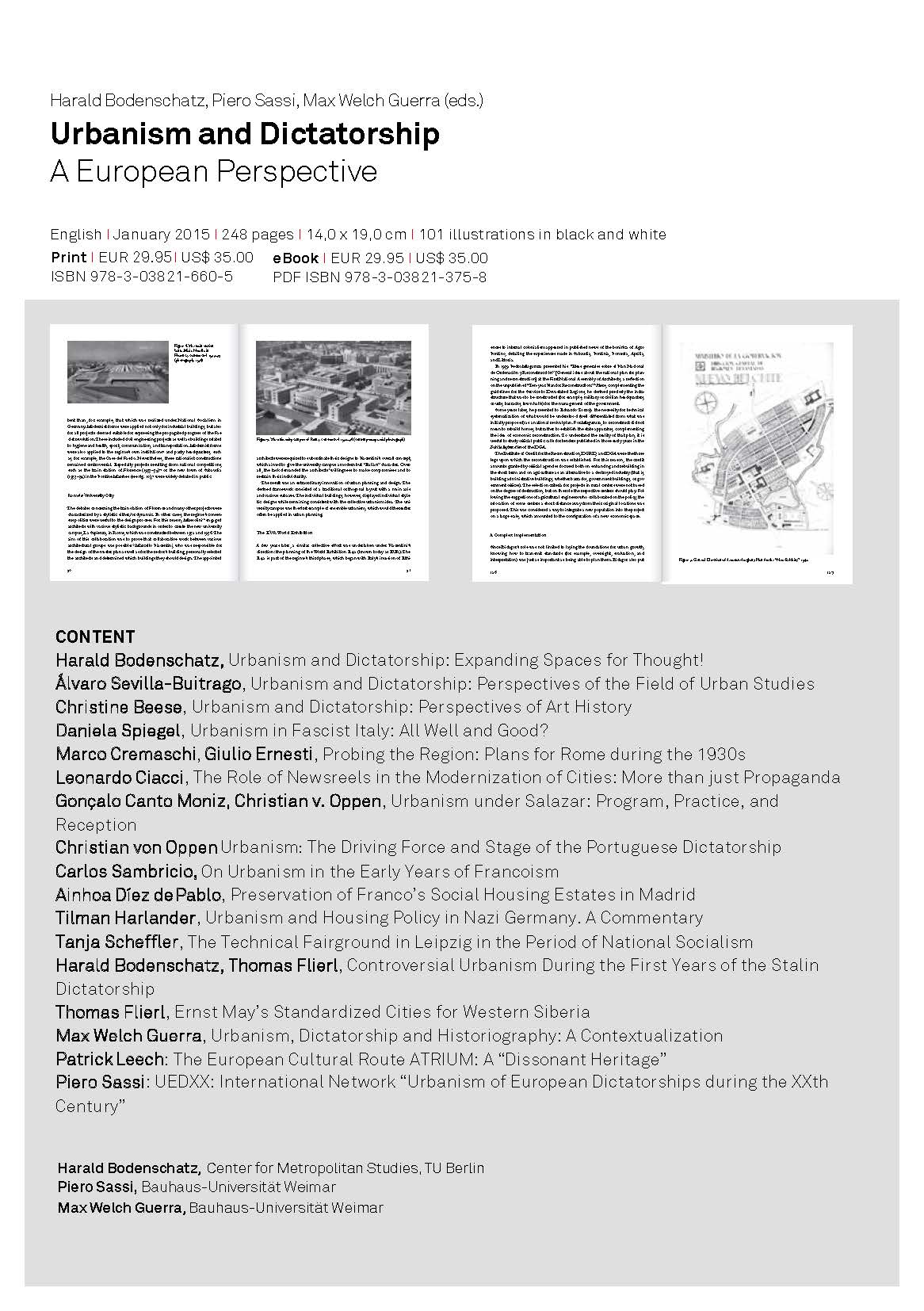
Urbanism and Dictatorship. A European Perspective, the new book of the renowned Bauwelt Fundamente series, is out. The volume has been edited by Max Welch Guerra, Harald Bodenschatz and Piero Sassi, and includes theoretical essays and case studies from Germany, Italy, Spain, Portugal and the former USSR. The material is an excellent opportunity for comparative analysis and the reconceptualization of the sociospatial experience of cities and urbanization under dictatorial regimes.

Urbanism_and_Dictatorship_2015_Página_1Urbanism_and_Dictatorship_2015_Página_2

In the first half of the twentieth century, urban design under the influence of European dictatorships not only served to support the rulers in their own country, but also to gain the recognition of the democratic states. After the National Socialist regime came to power in Germany, urban design increasingly became the trump card in the competition amongst the large dictatorships in Europe – almost as in the time of absolutism. Irrespective of all conflicts and political orientations, there…

View original post 166 more words

Posted in Uncategorized | 1 Comment

Foucault’s Les mots et les choses at 50 – conference at Harvard

2884Foucault’s Les mots et les choses at Year 50: An International Conference – Friday, April 17, 2015, 12:00pm to Saturday, April 18, 2015, 6:30pm, The Minda de Gunzburg Center for European Studies, Harvard University, sponsored by History and Theory. Vincent Descombes is the keynote speaker.

This seems a year ahead of time, as the book was published in 1966, but maybe they mean from date of finished manuscript. Thanks to Daniel Hoffman-Schwartz for the link.

Posted in Conferences, Michel Foucault | Leave a comment

Volume 33, Issue 1 now out

New issue of Society and Space out – including a review essay by me on recent work on territory.

Posted in Uncategorized | Leave a comment

Catarina Dutilh Novaes – ‘Reliable referees: a rare commodity’ at New APPS

At New APPS Catarina Dutilh Novaes reflects on a problem – ‘Reliable referees: a rare commodity‘.

With this post, I want to bring up for discussion what I think is one of the main issues with the peer-reviewing system… namely the extreme difficulties journal editors encounter at finding competent referees willing to take up new assignments. Until two years ago, my experience with the peer-review system was restricted to the role of author (and I, as everybody else, got very frustrated with the months and months it often took journals to handle my submissions) and the role of referee (and I, as so many others, got very frustrated with the constant outpour of referee requests reaching my inbox). Two years ago I became one of the editors of the Review of Symbolic Logic, and thus acquired a third perspective, that of the journal editor. I can confirm that it is one of the most thankless jobs I’ve ever had.

I can certainly relate to this – ten or more requests to get two useable reports is not at all uncommon. I wrote an editorial for Society and Space back in 2008, after I’d been editor for a couple of years. It was entitled ‘The Exchange Economy of Peer Review‘ (open access) – basically making the point that it is not editors, or publishers, who create the need for reviews, it is authors. And authors are also reviewers, which means that to make the system work we should do three times as many reviews as we make submissions – submissions, not published papers.

There are distortions in the system of course, because more senior people are probably asked more, and more junior people less. But I know I am not alone in reviewing far far more than that. In an average year, I accept and deliver on 30-40 review requests (articles, books or proposals, grants). This doesn’t count the papers I process for Society and Space, the ones I review for  Theory, Culture and Society as a board member, or the grant applications I review as International Officer for the Geography section in the British Academy. I regularly think I need to say ‘no’  to review requests much more often, but I still feel guilty, because I know editors are struggling to get reports. I’m unconvinced by suggestions for paying referees or other incentives, but it is a problem. It’s undoubtedly part of the wider issue – recently raised in The Times Higher – about how ‘academic citizenship’ is under increased pressure.

Posted in Publishing, Society and Space, Theory, Culture and Society, Universities | Leave a comment

Louis Althusser et nous – Le magazine littéraire interviews with Balibar, Rancière et. al.

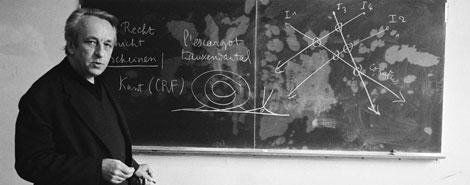
althus

To commemorate the fiftieth anniversary of Lire Capital and Pour Marx,  Le magazine littéraire interviews Balibar, Rancière, Lévy and Milner. It also announces two forthcoming volumes of previously-unpublished material.

Posted in Etienne Balibar, Jacques Rancière, Louis Althusser | 2 Comments

Counter-terrorism and security bill is a threat to freedom of speech at universities – letter in The Guardian

“Counter-terrorism and security bill is a threat to freedom of speech at universities”, letter in The Guardian from UK academics, in opposition to government plans. I’m one of over five hundred signatories (full list here).

More on this in The Guardian and The Independent.

Update 5.2.14 – developments on this story here.

Posted in Politics, Universities | 2 Comments

Interview with Bruno Latour from Festival of Ideas in Valparaíso, Chile

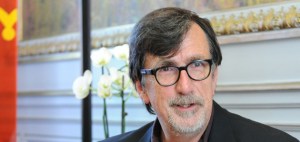
bruno-latourIn November 2014, Bruno Latour was in Chile for a Festival of Ideas in Valparaíso and was interviewed by Patricia Junge, Colombina Schaeffer and Leonardo Valenzuela. The interview is available in Spanish and English – Issuu and PDF.

Thanks to Colombina for sending me the link. It’s a very interesting and readable interview with a good introduction to his work.


Posted in Bruno Latour | 5 Comments

Back down to Earth: reassembling Latour’s Anthropocenic geopolitics

Speaking of Latour, Philip Conway’s article ‘Back down to Earth: reassembling Latour’s Anthropocenic geopolitics’ is now available in Global Discourse (requires subscription, or ask the author).

The principal intuition of this article is that Bruno Latour’s explicitly or implicitly ‘geopolitical’ works – strewn as they are across many years and innumerable texts – have not yet been coherently assembled in such a way that their critical interrogation relative to contemporary debates in political geography can gainfully proceed. Such a reassembly must consider ‘earlier,’ ‘later’ and whatever other Latours. Although ‘politics’ per se has, in his more recent works, become just one ‘mode of existence’ among others, every aspect of Latour’s thought has political ramifications. Consequently, his works must be read ‘anthropologically’ – that is to say, in cognisance of the interimplicatedness of every typological strand of ‘the social’ taken altogether. In short, this article attempts not only to read Latour’s works more interconnectedly than have other readers, but, furthermore, to read Latour’s ‘geopolitical’ writings in a more joined-up fashion than he has himself written them. To this end, it (1) introduces the major elements of Latour’s political philosophy, highlighting the importance of geopolitical issues and concepts from his early works onwards; (2) précises his 15 ‘modes of existence,’ laying out the philosophical resources that will be subsequently rewoven; (3) examines six key allies with whom he rearticulates first geo (James Lovelock, Peter Sloterdijk) and politics(Walter Lippmann, John Dewey) separately and then geopolitics (Michel Serres, Carl Schmitt) itself; and, finally, (4) details his Anthropocenic geopolitics conceptually by speculatively intertwining the above with his recent Gifford Lectures. The reassembly attempted – or, rather, initiated – herein is, therefore, neither disinterested nor definitive. It is a working through of the possibilities internal to a specific, albeit sprawling, bundle of texts. It presents a reading both constructive and ‘charitable’ – not in order to obviate critical interrogations but in the hope of provoking a more incisive debate concerning Latour’s works in relation to political geography.

Posted in Uncategorized | 1 Comment

Foucault – links to difficult-to-find short texts, and some requests for help

I’ve previously posted some requests for help in locating some difficult-to-find short texts by Foucault, and thanks to readers of this site have received copies of some of these. I’ve updated the requests for help page, along with a few more requests.

I’ve also updated the list of links to pieces I’ve been able to locate – these are basically short pieces which are not in Dits et écrits or major collections of his work in English. Additions to that last list very welcome – though this list, as stated there, does not aim to replicate Richard Lynch’s important work on English translations of pieces in Dits et écrits.

Posted in Uncategorized | 1 Comment