Top posts on Progressive Geographies this week

Only a few new posts this week, but still a reasonable amount of traffic.
Posted in Uncategorized | Leave a comment

Schindel and Colombo (eds.) Space and the Memories of Violence

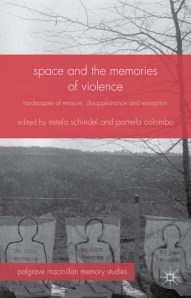
This looks an interesting collection – Estela Schindel and Pamela Colombo (eds.), Space and the Memories of Violence: Landscapes of Erasure, Disappearance and Exception. The final chapter is an interview with David Harvey.

9781137380906

This volume offers a variety of perspectives on the relation between violence, memory and space. Focusing on enforced disappearances and genocide as violent practices aimed at destroying and erasing the traces of the ‘enemy’, the authors explore the manifold spatial strategies of domination and violence, and the powers of memory, resistance and transformation. The originality of this book lies in the dialogue it establishes between memory studies and the critical studies of space. The bridging of these academic fields opens up a fertile and, to a large extent, unexplored research area. The volume brings together young academics and prominent international scholars from a variety of disciplinary fields including Geography, Sociology, Political Science, Philosophy, Literature and Cultural Studies, Theatre and Architecture. The contributions engage with the spatial deployment of past and present violence in Argentina, Cambodia, Germany, Greece, Poland, Spain, Turkey and the United States.

Posted in David Harvey, Politics, Territory | Leave a comment

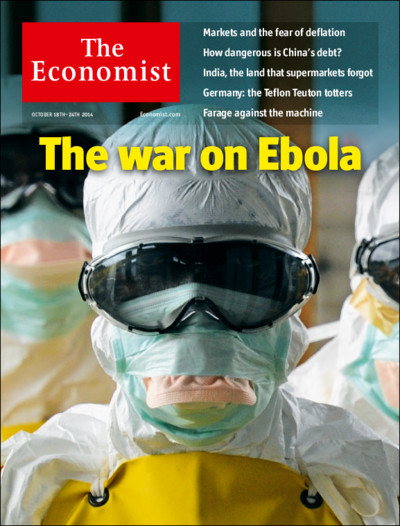
The war on Ebola

Derek Gregory discusses the militarised response to Ebola in a wide-ranging and well-referenced post.
The reading list I’ve been compiling on Ebola can be found here – http://wp.me/PUf6a-4yE

Derek Gregory's avatargeographical imaginations

ECONOMIST The war on Ebola

We’ve been here before – ‘wars’ on this and ‘wars’ on that.  It’s strange how reluctant states are to admit that their use of military violence (especially when it doesn’t involve ‘boots on the ground‘) isn’t really war at all – ‘overseas contingency operations’ is what the Pentagon once preferred, but I’ve lost count of how many linguistic somersaults they’ve performed since then to camouflage their campaigns – and yet how eager they are to declare everything else a war.

These tricks are double-edged.  While advanced militaries and their paymasters go to extraordinary linguistic lengths to mask the effects of their work, medical scientists have been busily appropriating the metaphorical terrain from which modern armies are in embarrassed retreat.

Yet all metaphors take us somewhere before they break down, and the ‘war on Ebola’ takes us more or less directly to the militarisation of the global response…

View original post 4,170 more words

Posted in Uncategorized | 1 Comment

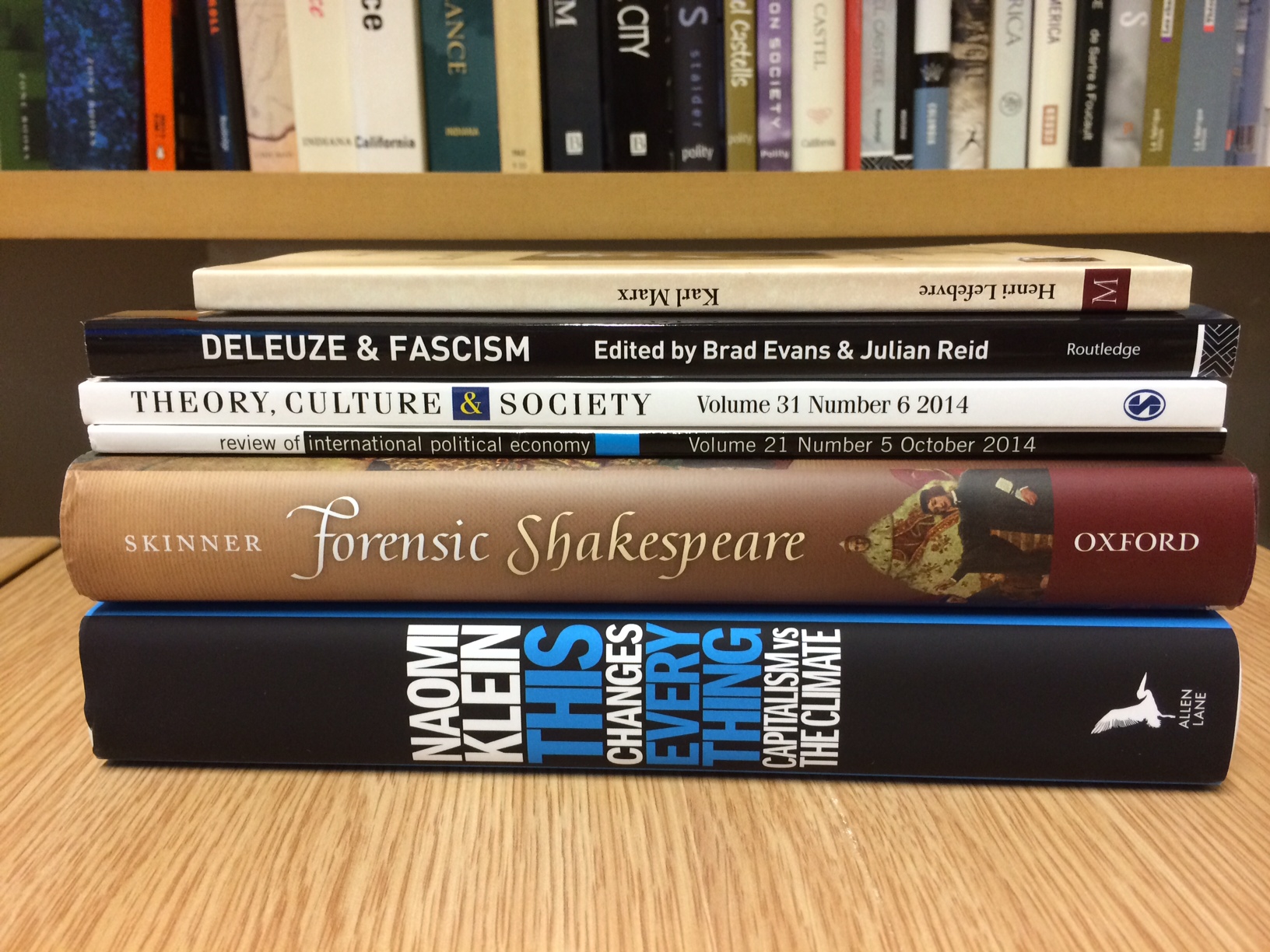
Books received – Klein on Climate Change, Skinner on Shakespeare, Lefebvre on Marx, Deleuze & Fascism

photoA re-edition of one of Henri Lefebvre’s books on Marx; Deleuze and Fascism, edited by Brad Evans and Julian Reid; Quentin Skinner’s Forensic Shakespeare; Naomi Klein’s This Changes Everything; and the new issues of RIPE and TCS.

Posted in Gilles Deleuze, Karl Marx, Naomi Klein, Politics, Quentin Skinnner, William Shakespeare | 2 Comments

Warwick Graduate Conference in Political Geography – call for papers

Deadline for proposals for this conference extended until 30 October.

stuartelden's avatarProgressive Geographies

A reminder of this conference coming up at Warwick, with a call for papers. Please spread the word in your institutions to potentially interested participants.tumblr_nb0rcfsHQZ1tkco2xo1_1280.pngPlease consider submitting a paper for the next Warwick Graduate Conference in Political Geography, held at the University of Warwick on 27-28 November, 2014.

Full details here – keynote from Alex Jeffrey (University of Cambridge)

Three travel grants of up to £250 each for non-UK attendees are available by Warwick’s politics department. All potential participants should submit a title, abstract (of no more than 300 words), and evidence of institutional affiliation by 25 October, 2014 to the organisers: Antonio Ferraz de Oliveira and Mara Duer (politicalgeographywarwick@gmail.com).

View original post

Posted in Uncategorized | 1 Comment

Italian literary mappings: new review by Tania Rossetto

A new review at the Society and Space open site.

Posted in Uncategorized | Leave a comment

“Foucault, Subjectivity and Truth”, University of Nottingham Centre for Critical Theory lecture, Nottingham Contemporary, 12 November 2014

9782020862592[Update: the video of the event is now available here.]

On 12 November 2014, I’ll be giving a University of Nottingham Centre for Critical Theory lecture at Nottingham Contemporary gallery. The title is “Foucault, Subjectivity and Truth”, and I’ll be speaking about the most recently published lecture course within the wider context of the work I’ve been doing for Foucault’s Last Decade. Details are here – the event is free, but needs to be booked.

Posted in Conferences, Foucault's Last Decade, Michel Foucault | 2 Comments

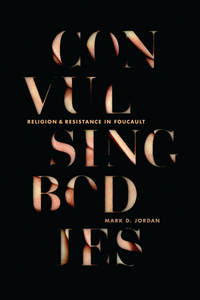
Convulsing Bodies. Religion and Resistance in Foucault (2014)

This looks an interesting new book on Foucault, though I’ll be curious to see how much it takes into account the most recent lecture courses.

Clare O'Farrell's avatarFoucault News

jordanMark D. Jordan, Convulsing Bodies. Religion and Resistance in Foucault, Stanford University Press, October 2014

Further info

By using religion to get at the core concepts of Michel Foucault’s thinking, this book offers a strong alternative to the way that the philosopher’s work is read across the humanities. Foucault was famously interested in Christianity as both the rival to ancient ethics and the parent of modern discipline and was always alert to the hypocrisy and the violence in churches. Yet many readers have ignored how central religion is to his thought, particularly with regard to human bodies and how they are shaped. The point is not to turn Foucault into some sort of believer or to extract from him a fixed thesis about religion as such. Rather, it is to see how Foucault engages religious rhetoric page after page—even when religion is not his main topic. When readers follow his…

View original post 121 more words

Posted in Uncategorized | Leave a comment

Top posts on Progressive Geographies this week

Posted in Uncategorized | 1 Comment

Bill Martin discusses animals, Maoism, and more

Interesting interview with Bill Martin.

Jon Hochschartner's avatarSpecies and Class

image

By Jon Hochschartner

Bill Martin, a professor of philosophy at DePaul University, emerged from the United States’ Maoist movement and is currently working with the Kasama Project. He is the author of ‘Ethical Marxism: The Categorical Imperative of Liberation,’ which among other things, addresses the treatment of animals.

Species and Class: How would you describe your economic politics? Are you a socialist? Would you consider yourself a Marxist, anarchist, social democrat or something else?

Bill Martin: I consider myself to be a communist, who is working for a world without classes and without exploitation and domination. To be very specific, though without explaining much of anything, I came through the Maoist movement, have been very influenced in recent years by Alain Badiou, and even more recently by Buddhism (and I practice Zen). I am working toward a synthesis that contains and brings together elements of all…

View original post 8,224 more words

Posted in Uncategorized | 1 Comment