CFP ‘Time Served: Discipline and Punish forty years on’ – 11-12 Sept 2015, The Galleries of Justice, Nottingham, UK

Posted on behalf of Sophie Fuggle – a call for papers for a fascinating sounding Foucault conference next year, in an intriguing venue. I’ll be giving one of the plenary talks.

Time Served: Discipline and Punish forty years on
11-12 September 2015, The Galleries of Justice, Nottingham, UK

40 years after it was first published in French, the impact of Michel Foucault’s seminal text Discipline and Punish on theories of incarceration, discipline and power remains largely unchallenged. The aim of this conference is to revisit the text in light of the past four decades of penal developments, public debate and social consciousness on incarceration as it continues to constitute society’s mode of punishment par excellence.

In addition to thinking through the legacy of Discipline and Punish and its continued relevance today, specific focus will be given to the text itself, its position within Foucault’s wider critical project and its important relationship with his activism most notably the work of the GIP [Groupe d’Information sur les prisons] during the early 1970s. For example, the publication in 2013 of his 1973 lectures at the Collège de France on La Société Punitive, calls for a return to this period and a new engagement with Foucault’s work on prisons, not least in its pursuit of a more openly Marxist critique of the relationship between incarceration and bourgeois capital accumulation.

Here, attention should also be paid to Foucault’s methodology in researching and writing the text. Discipline and Punish marks his movement from an archeological to a genealogical approach towards what he terms the ‘history of the present.’ What is at stake in this shift and how effective is his genealogical method for thinking through the material and discursive structures of incarceration operating within our own society and moment? How does the juxtaposition set up between the torture and killing of Damiens and the prison timetable of the book’s opening raise important questions not simply about punishment but the role of representation – images and narratives of incarceration – in framing public consciousness about the space of the prison?

It is hoped that the conference will bring together a range of participants: scholars working in the fields of philosophy, sociology, criminology, urban geography, architecture, history, literature, media studies as well as artists, writers and activists involved in projects based in and about prisons and their conditions.

If you would like to offer a paper or other form of intervention, please send us a 250 word abstract along with your name, e-mail and (if relevant) institutional affiliation by 1st March 2015. If you would like to organize a panel of 3 or 4 presenters, please also send a panel title along with the abstracts and contact details.

E-mail: sophie.fuggle@ntu.ac.uk

The conference is organized by Nottingham Trent University and will be held at the Galleries of Justice in Nottingham.

Posted in Conferences, Foucault's Last Decade, Michel Foucault | 2 Comments

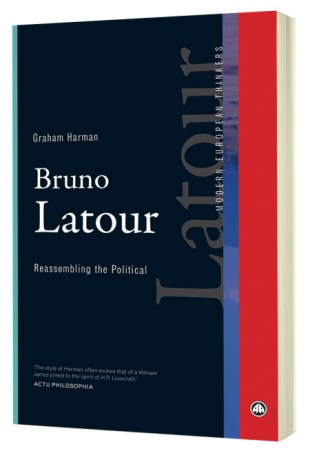
Between Truth and Power: Latour’s Political Philosophy

Graham Harman talks about his latest book on Bruno Latour at the Pluto Press blog.

plutopress's avatarThe Pluto Press Blog - Independent, radical publishing

by Graham Harman

‘In Bruno Latour: Reassembling the Political, I claim that Latour’s approach to political theory poses a strong challenge to reigning paradigms in the discipline. Politics since the French Revolution, whatever the complexities of any given historical moment, has habitually been carved up into “Left” and “Right” orientations. Indeed, this is how all of us instinctively classify each person we meet in political terms. As Emerson famously put it, every nation has its progressives (“The Party of Hope”) and its conservatives (“The Party of Memory”). Bruno Latour has always been difficult to place on this familiar spectrum. Clearly he is not a radical Leftist, having little in common with Jacobin countrymen such as Alain Badiou and Jacques Rancière, who are prepared to sacrifice everything in the name of egalitarian principle. In fact, Latour is sometimes tarred by the Left as a “neo-liberal,” though this label is always…

View original post 2,033 more words

Posted in Uncategorized | 1 Comment

Audio recordings of the Emory conference on Heidegger’s ‘Black Notebooks’

The audio files for the Emory University Conference “Heidegger’s Black Notebooks: Philosophy, Politics, Anti-Semitism” –which were already available on iTunes–  have also been uploaded on YouTube. Thanks to Philippe Theophanidis for the links.

Posted in Conferences, Martin Heidegger | Leave a comment

Foucault’s Collaborative Projects – some updates

photo 2I’ve updated this blog’s page on Foucault’s Collaborative Projects.

The page discusses Généalogie du capital; Généalogie des équipements de normalisation; Les machines à guérir; Politiques de l’habitat and Génealogie de la défense sociale en Belgique.

Posted in Foucault's Last Decade, Michel Foucault, Uncategorized | Leave a comment

“Who rules Britain? Another Coalition?”

Wyn Grant on the next election at the Warwick Politics Reconsidered blog.

politicsreconsidered's avatarPolitics Reconsidered

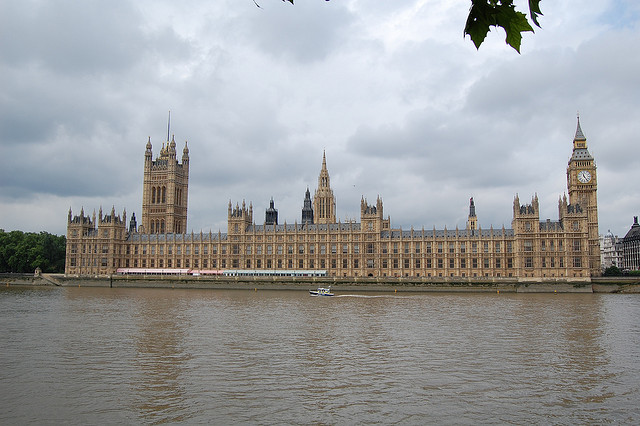
parliament

Emeritus Professor Wyn Grant on why Britain is heading for a hung parliament and another coalition. 

By Wyn Grant

Professor Peter Pulzer once stated ‘Class is the basis of British politics, all else is embellishment and detail.’   Of course, there were always voters who deviated from their class affiliation. Without the votes of working class Conservatives, whether instrumental or deferential, the Conservatives would not have been as electorally successful as they were in the 20th century.   There were also a smaller number of middle class Labour voters.

As a generalisation, Pulzer’s comment held true in the 1950s and 1960s and even into the 1970s.   It provided a basis for the two party system and for uniform swing across the nation as a whole.   I recently watched a re-run of the broadcast covering the October 1974 general election and there was a neat symmetry between the national swing and the…

View original post 827 more words

Posted in Uncategorized | Leave a comment

Top posts on Progressive Geographies this week

Only a few new posts this week, but still a reasonable amount of traffic.

Posted in Uncategorized | Leave a comment

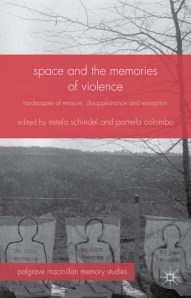
Schindel and Colombo (eds.) Space and the Memories of Violence

This looks an interesting collection – Estela Schindel and Pamela Colombo (eds.), Space and the Memories of Violence: Landscapes of Erasure, Disappearance and Exception. The final chapter is an interview with David Harvey.

9781137380906

This volume offers a variety of perspectives on the relation between violence, memory and space. Focusing on enforced disappearances and genocide as violent practices aimed at destroying and erasing the traces of the ‘enemy’, the authors explore the manifold spatial strategies of domination and violence, and the powers of memory, resistance and transformation. The originality of this book lies in the dialogue it establishes between memory studies and the critical studies of space. The bridging of these academic fields opens up a fertile and, to a large extent, unexplored research area. The volume brings together young academics and prominent international scholars from a variety of disciplinary fields including Geography, Sociology, Political Science, Philosophy, Literature and Cultural Studies, Theatre and Architecture. The contributions engage with the spatial deployment of past and present violence in Argentina, Cambodia, Germany, Greece, Poland, Spain, Turkey and the United States.

Posted in David Harvey, Politics, Territory | Leave a comment

The war on Ebola

Derek Gregory discusses the militarised response to Ebola in a wide-ranging and well-referenced post.
The reading list I’ve been compiling on Ebola can be found here – http://wp.me/PUf6a-4yE

Derek Gregory's avatargeographical imaginations

ECONOMIST The war on Ebola

We’ve been here before – ‘wars’ on this and ‘wars’ on that.  It’s strange how reluctant states are to admit that their use of military violence (especially when it doesn’t involve ‘boots on the ground‘) isn’t really war at all – ‘overseas contingency operations’ is what the Pentagon once preferred, but I’ve lost count of how many linguistic somersaults they’ve performed since then to camouflage their campaigns – and yet how eager they are to declare everything else a war.

These tricks are double-edged.  While advanced militaries and their paymasters go to extraordinary linguistic lengths to mask the effects of their work, medical scientists have been busily appropriating the metaphorical terrain from which modern armies are in embarrassed retreat.

Yet all metaphors take us somewhere before they break down, and the ‘war on Ebola’ takes us more or less directly to the militarisation of the global response…

View original post 4,170 more words

Posted in Uncategorized | 1 Comment

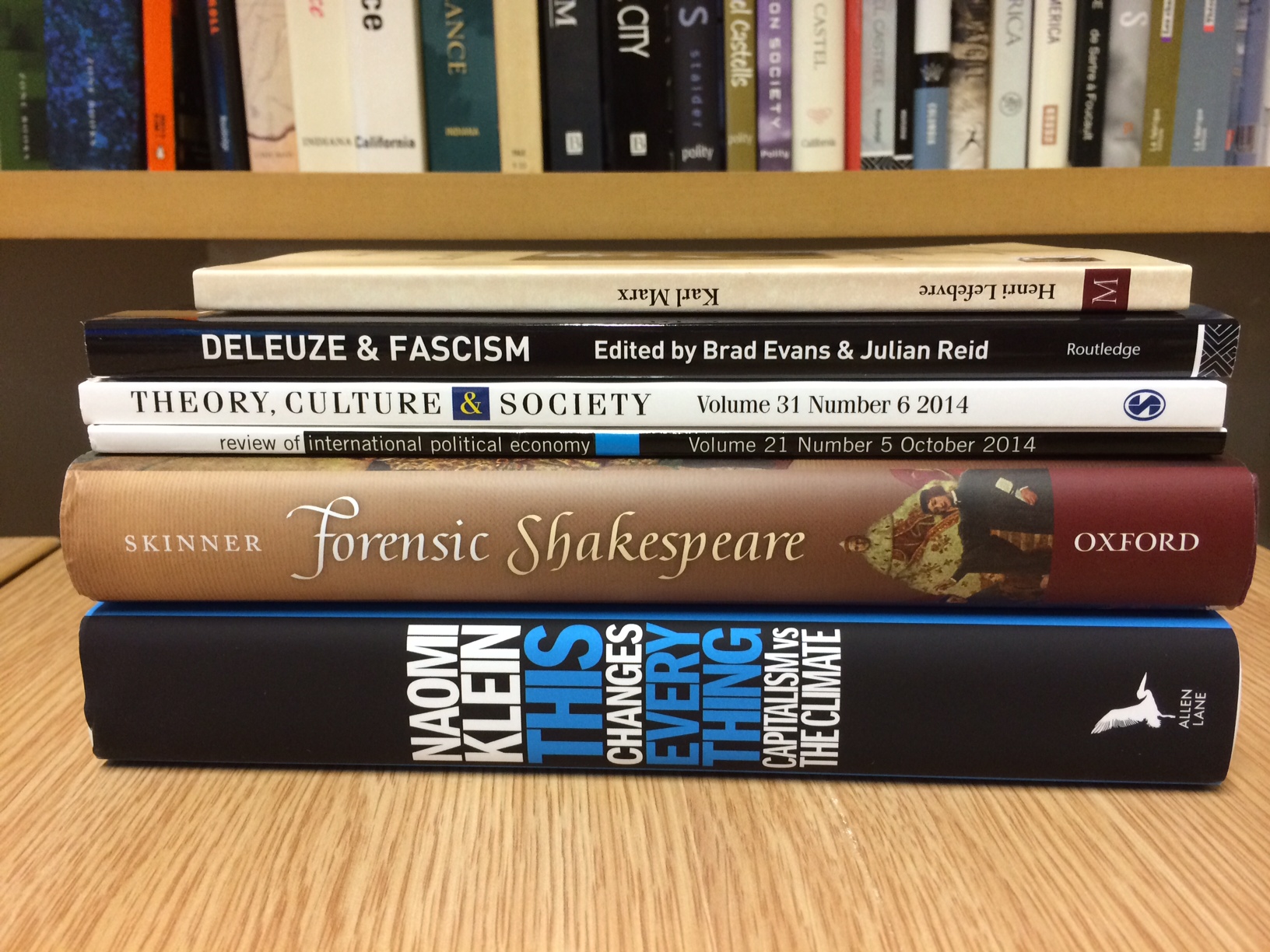
Books received – Klein on Climate Change, Skinner on Shakespeare, Lefebvre on Marx, Deleuze & Fascism

photoA re-edition of one of Henri Lefebvre’s books on Marx; Deleuze and Fascism, edited by Brad Evans and Julian Reid; Quentin Skinner’s Forensic Shakespeare; Naomi Klein’s This Changes Everything; and the new issues of RIPE and TCS.

Posted in Gilles Deleuze, Karl Marx, Naomi Klein, Politics, Quentin Skinnner, William Shakespeare | 2 Comments

Warwick Graduate Conference in Political Geography – call for papers

Deadline for proposals for this conference extended until 30 October.

stuartelden's avatarProgressive Geographies

A reminder of this conference coming up at Warwick, with a call for papers. Please spread the word in your institutions to potentially interested participants.tumblr_nb0rcfsHQZ1tkco2xo1_1280.pngPlease consider submitting a paper for the next Warwick Graduate Conference in Political Geography, held at the University of Warwick on 27-28 November, 2014.

Full details here – keynote from Alex Jeffrey (University of Cambridge)

Three travel grants of up to £250 each for non-UK attendees are available by Warwick’s politics department. All potential participants should submit a title, abstract (of no more than 300 words), and evidence of institutional affiliation by 25 October, 2014 to the organisers: Antonio Ferraz de Oliveira and Mara Duer (politicalgeographywarwick@gmail.com).

View original post

Posted in Uncategorized | 1 Comment