The History Manifesto by Jo Guldi and David Armitage – print book from CUP and open access online

The History Manifesto by Jo Guldi and David Armitage – open access book from Cambridge University Press.

How shoudownloadld historians speak truth to power – and why does it matter? Why is five hundred years better than five months or five years as a planning horizon? And why is history – especially long-term history – so essential to understanding the multiple pasts which gave rise to our conflicted present? The History Manifesto is a call to arms to historians and everyone interested in the role of history in contemporary society. Leading historians David Armitage and Jo Guldi identify a recent shift back to longer-term narratives, following many decades of increasing specialization, which they argue is vital for the future of historical scholarship and how it is communicated. This provocative and thoughtful book makes an important intervention in the debate about the role of history and the humanities in a digital age. It will provoke discussion among policymakers, activists and entrepreneurs as well as ordinary listeners, viewers, readers, students and teachers.
Posted in Books | 1 Comment

Remembering Derrida: A Forum in the Los Angeles Review of Books

Remembering Derrida: A Forum by Peggy Kamuf, Gil Anidjar, Elisabeth Weber,Michael Marder & Luce Irigaray in the Los Angeles Review of Books.

Posted in Jacques Derrida | Leave a comment

Peter Gratton, Speculative Realism – and links to journal articles on this theme

Some papers from the Society and Space journal and open site that relate to Peter Gratton’s newly published book.

Posted in Uncategorized | 1 Comment

Ebola reading list updated

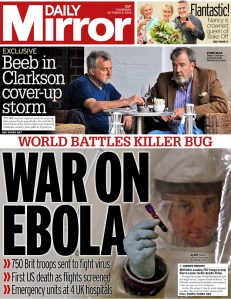
_78101022_mirrorEbola is all over the front-pages of newspapers today, in part due to the Spanish nurse and the death of the Liberian in the US. The Guardian has a live blog with updates, and the World Bank has produced a report on the wider impact on the countries most affected.

Much could be said of the shifting focus now the virus is having a direct impact on the West; of the economic focus of the World Bank report; and the militarised nature of the response from Western governments.

I’ve added several pieces to the Ebola reading list on this site. Many of the pieces linked there provide a lot more detail than the headlines.

Posted in Uncategorized | 2 Comments

Sarah Radcliffe on Inca Sacred Space

A new review at the Society and Space open site.

Posted in Uncategorized | Leave a comment

Thinking Allowed about Place Hacking

Interesting discussion with Bradley Garrett and Iain Sinclair – begins about 11 minutes in.

Posted in Uncategorized | Leave a comment

Two new posts at Politics Reconsidered – from airstrikes to food banks

Over at Warwick’s Politics and International Studies new blog ‘Politics Reconsidered’, two posts from colleagues:

Trevor McCrisken – ‘If at first you don’t succeed… call an airstrike’ (Banksy, 2010)

Matthew Watson – Convenience shopping for ethics? Food bank donation boxes in supermarkets

Posted in Politics | Leave a comment

Volume 32, Issue 5 now out

New issue of Society and Space out.

Posted in Uncategorized | Leave a comment

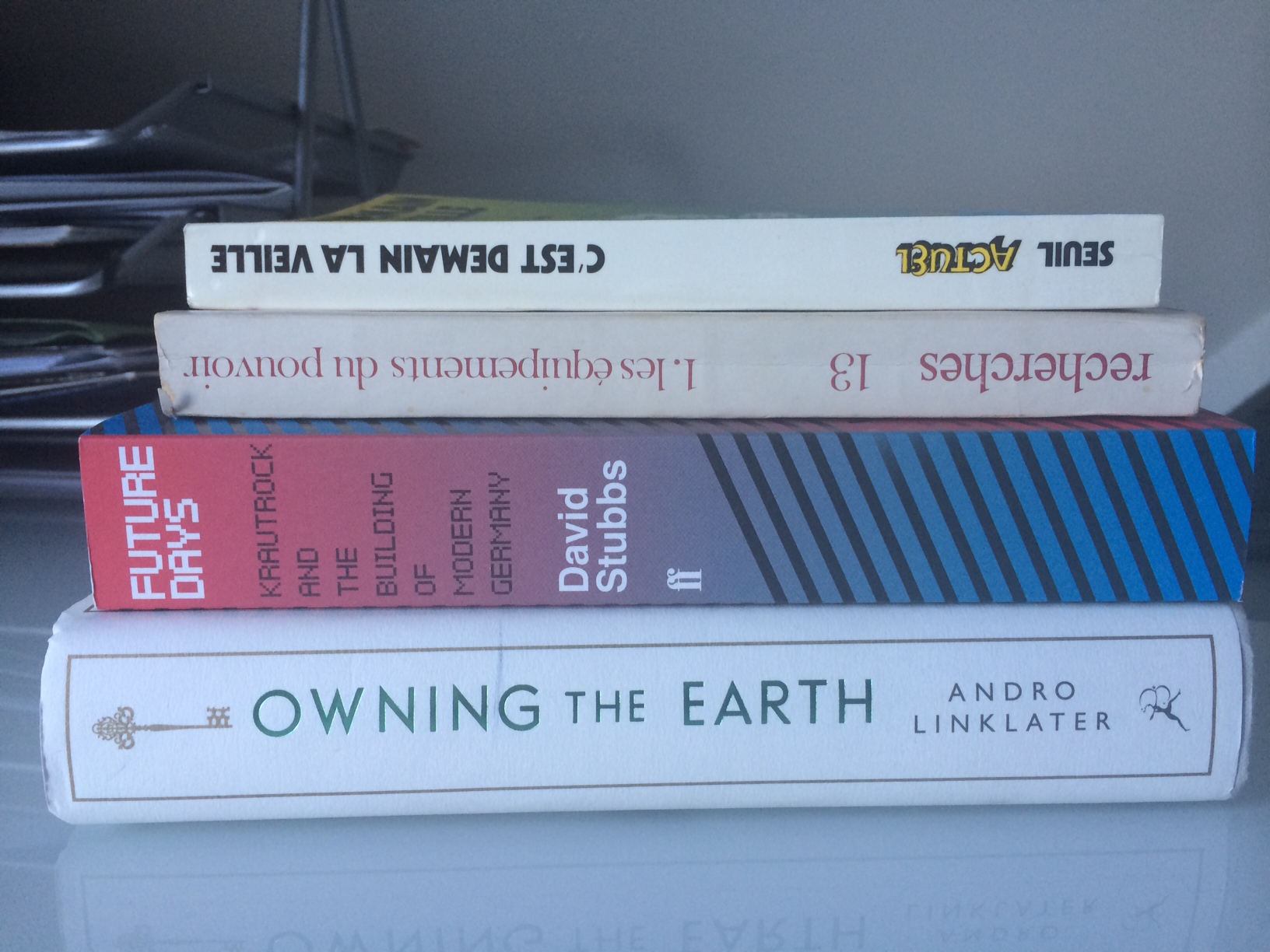
Books received – Linklater on land, Stubbs on Krautrock, Recherches 13 and Foucault, Lefebvre et. al. interviews

photoA book of interviews with, among others, Foucault and Lefebvre; one of the collaborative projects with which Foucault  was involved; David Stubbs, Future Days: Krautrock and the Building of Modern Germany and Andro Linklater‘s last book Owning the Earth: The Transforming History of Land Ownership.


Posted in Books, Henri Lefebvre, Michel Foucault, Music, Politics, Territory | Leave a comment

Politics Reconsidered: The Politics and International Studies blog reinvigorated

The Warwick Politics and International Studies blog launched.

politicsreconsidered's avatarPolitics Reconsidered

pais banner four dotsToday sees the launch of “Politics Reconsidered”, a new research blog from the University of Warwick Department of Politics and International Studies (PAIS). Alongside regular posts by our academics and PhD researchers, will also feature articles by academics from our partner institutions across the world to provide a global view of political issues. As digital media becomes the norm, we hope academics, policy makers and media will find our contributions relevant and useful in their own work.

This builds on an initiative launched a couple of years ago to share our thinking on a broad range of subjects in the field of politics and international studies. As a major department in a leading university, our scholars are some of the best in the world and positioned to provide an interdisciplinary perspective on world affairs grounded in academic research. This includes expertise within and across our major research clusters: Comparative Politics…

View original post 181 more words

Posted in Uncategorized | Leave a comment