Foucault’s Lectures on Subjectivity and Truth, VIII

Barry Stocker’s reading continues…

Barry Stocker's avatarStockerblog

Lecture of 1st March, 1981

Foucault highlights the difference between love for women and love for boys, and the value placed on the man-woman love, particularly man-wife love, in antiquity in the period of Hellentistic-Roman philosophy. He focuses on Plutarch’s discussion of love and sex, in the Dialogue on Love with particular reference to Plutarch’s reactions to Greek texts of the classical period like Plato’s Symposium and Euripides’ tragedy Hyppolitus (I presume that is what Foucault is referring to when he mentions a text called Phèdre, the name of the female character in the play, used to name the plays on the same story by Seneca and Racine) and to Stoic influenced texts of his own time on the art of living. It is the texts of his own time, which are more directed towards marriage as the ideal.

Foucault refers to Christian sexual morality as referring first to pagan…

View original post 937 more words

Posted in Uncategorized | Leave a comment

Top posts on Progressive Geographies this week

Explaining ISIS/ISIL – a roundup of things to read

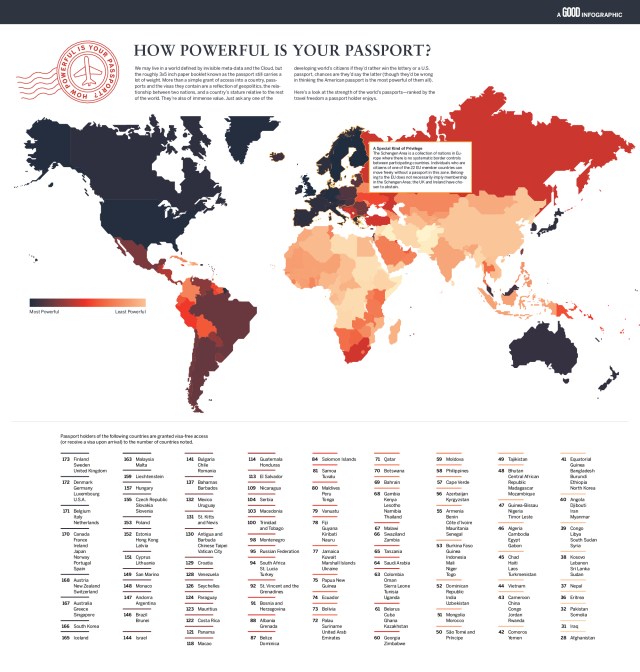
How powerful is your passport? – infographic

The Constitution of Scottish Territory

“Thought is the courage of hopelessness” – interview with Giorgio Agamben

Richard Wolin on Heidegger’s Black Notebooks in the Jewish Review of Books

Foucault on “Enlightenment” in Discipline and Punish

Why Metrics Cannot Measure Research Quality: A Response to the HEFCE Consultation

First translation of Deleuze’s course on Rousseau

Articles and Chapters

Megaevents and the city – virtual theme issue open access for the duration of the World Cup

The Political Geographies of FIFA and World Cup football

Posted in Uncategorized | Leave a comment

How powerful is your passport? – infographic

1403218847

Posted in Boundaries, Politics, Territory | 4 Comments

More on the Constitution of Scottish Territory

00451083At Terri-Stories, Randy Schiff adds some thoughts about the constitution of Scottish territory to the brief comments I made yesterday.

It is particularly good on the territorial status of the Orkney and Shetland Islands.

Posted in Boundaries, Politics, Territory | Leave a comment

Benjamin Kunkel reviews Thomas Piketty in the LRB

Benjamin Kunkel reviews Thomas Piketty in the LRB – free to read online.
Update – many more reviews here: thanks to Simone Tulumello for the link.

Posted in Uncategorized | 1 Comment

New issue of Parrhesia – Meillssoux, Garcia, Klossowski, Ivakhiv, Tropes of Transport etc.

New issue of Parrhesia: A Journal of Critical Philosophy just out – includes work by Quentin Meillassoux, Tristan Garcia, Pierre Klossowski on Walter Benjamin, a review panel of Katrin Pahl’s Tropes of Transport: Hegel and Emotion, a piece by Adrian Ivakhiv on the objects-processes debate in speculative realist philosophy, and more.

All open access – individual papers here; whole issue here.


Posted in Tristan Garcia | Leave a comment

The Constitution of Scottish Territory

00451083An interim constitution for Scotland has recently been published – a draft document for what would be the proposed constitution following a ‘yes’ vote in the forthcoming referendum.

It’s an interesting document for a number of reasons. Given my interests I went straight to the section on ‘territory’.

Here’s the first mention in the summary:

The territory of Scotland

In accordance with international law, the territory of Scotland continues to consist of all the land, islands, internal waters and territorial sea that formed the territory of Scotland immediately before Independence Day.

In suggesting that the territory of (independent) Scotland is the territory of Scotland, which seems tautologous, it is actually a clear attempt to trade on the idea of continuity, and to assuage fears of any potential problems. However, the expansion later on both restates and highlights the potential tension for the future.

Section 6 ensures that there would be continuity between the territory and boundaries of Scotland, as part of the UK, and Scotland as an independent State. Scotland’s territory, including all islands, internal waters and territorial sea, will remain exactly as it is at present. There is no question of any changes being made.

Scotland’s territory and boundaries, unlike that of many countries, have been firmly settled and uncontested for many centuries, with very few adjustments. That the territorial position would remain the same on independence reflects international legal principles in this area. It is widely accepted – including by the UK in previous situations – that when there is a change in political jurisdiction involving the emergence of a State, the boundaries of that State will be the same as the previous internal boundaries of that territory prior to its independence. Therefore an independent Scotland will inherit the integrity of the territory which constitutes Scotland prior to Independence Day, but as an independent state.

As set out in Question 559 of Scotland’s Future, an independent Scotland’s maritime boundaries would be set according to international law. Academics from Aberdeen University have calculated that over 90% of current UK oil and gas revenues are from fields in Scottish waters, based on international legal principles.

Others would be in a better position to judge the last of these paragraphs, but that obscures a lot of potential complexities. If international law were as simple as that, there would be no need for expert witnesses, lawyers and others making their way to the International Court of Justice to resolve boundary disputes at land and sea. If the Aberdeen academics are correct, then I can’t believe the rest of the UK would accept this without some kind of reaction. As the map on the cover of the recent The Land of Scotland and the Common Good shows – reproduced above – this is not straight-forward: see my initial comments here and Phil Steinberg’s more expert comments here.

I’ve written on the constitution of territory before –

Bialasiewicz, L., Elden, S. & Painter, J. (2005) “The Constitution of EU territory“, Comparative European Politics 3, 333-363.

Elden, S. (2008). “Reconstituting Iraq” in Cowen, D. & Gilbert, E. (eds.) War, Citizenship, Territory New York: Routledge, 147-176.

I’m not yet sure there is more to say with Scotland, but it does raise some interesting issues.

Posted in Boundaries, Politics, Territory | 2 Comments

Jens Bartleson review essay on new books on empire and sovereignty

Jens Bartleson –  “From Empire to Sovereignty—and Back?“, Ethics and International Affairs.

A review essay of David Armitage, Foundations of Modern International Thought; Lauren Benton, A Search for Sovereignty: Law and Geography in European Empires 1400–1900; and Jean L. Cohen’s Globalization and Sovereignty: Rethinking Legality, Legitimacy, and Constitutionalism.

Posted in Uncategorized | Leave a comment

Environment and Planning A theme issue on ‘territorial stigmatization’

Environment and Planning A theme issue on ‘territorial stigmatisation’.

Posted in Uncategorized | 1 Comment

Editors vs Publishers – The Times Higher story on Prometheus and Taylor & Francis

stuartelden's avatarProgressive Geographies

The Times Higher has an interesting and worrying piece about the clash between the editors of a journal and their publisher Taylor & Francis. Here’s the opening few lines:

A journal’s editorial board has been left on the brink of resignation after an eight-month standoff with its publisher Taylor & Francis over the publication of a debate on academic publishing and the profits made by major firms.

The debate, in the journal Prometheus: Critical Studies in Innovation, was due to appear last September, but was delayed by Taylor & Francis and published only at the end of last month.

Its “proposition” paper, “Publisher, be damned! from price gouging to the open road”, by four academics from the University of Leicester’s School of Management, criticises the large profits made by commercial publishers on the back of academics’ labours, and the failure of the Finch report on open access to address…

View original post 48 more words

Posted in Uncategorized | Leave a comment