A history of “priming” research that analyzes the field’s underlying assumptions and experimental protocols to shed new light on a contemporary crisis in social psychology.
In 2012, a team of Belgian scientists reported that they had been unable to replicate a canonical experiment in the field of psychology known as “priming.” The original experiment, performed by John Bargh in the nineties, had purported to show that words connoting old age unconsciously influenced—or primed—research subjects, causing them to walk more slowly. When subsequent researchers could not replicate these results, Nobel-winning psychologist Daniel Kahneman warned of a “train wreck looming” if Bargh and his colleagues could not address doubts about their work. Since then, the inability to replicate other well-known priming experiments has helped precipitate an ongoing debate over what has gone wrong in psychology, raising fundamental questions about the soundness of research practices in the field.
Anatomy of a Train Wreck offers the first detailed history of priming research from its origins in the early 1980s to its recent collapse. Ruth Leys places priming experiments in the context of contemporaneous debates over not only the nature of automaticity but also the very foundations of social psychology. While these latest discussions about priming have largely focused on methodology—including sloppy experimental practices, inadequate statistical methods, and publication bias—Leys offers a genealogy of the theoretical expectations and scientific paradigms that have guided and motivated priming research itself. Examining scientists’ intellectual strategies, their responses to criticism, and their assumptions about the nature of subjectivity, Anatomy of a Train Wreck raises crucial questions about the evidence surrounding unconscious influence and probes the larger stakes of the replication crisis: psychology’s status as a science.
In the NYU archives today, I read the typescript of a lecture given by Edmund Leach about Roman Jakobson at the New York Institute for the Humanities, and wondered if it had been published. One better, the audio recording of this lecture was made available on the New Books Network just a couple of years ago.
The lecture says it is from 1982, but since Leach says in the lecture that Jakobson died in July of “last year”, it must date from 1983, and the typescript suggests February.
In this episode from the Institute’s Vault, we hear the 1982 Gallatin Lecture, in which Sir Edmund Leach discussed the work of Roman Jakobson, who he met in 1960, at Stanford’s Center for Advanced Study in the Behavioral Sciences.
Jakobson was one of the pioneers of structural linguistics, and a major influence on Claude Levi-Strauss and Roland Barthes. He taught at Harvard from 1940 until his retirement in 1967. Leach was a British social anthropologist, and the provost of King’s College, Cambridge from 1966 to 1979.
More lectures from the Institute of Humanities vault are here.
A pioneering excavation of Adorno’s geography which engages fascism and antifascism in the terrain of geographical theorising
Brings fascism and antifascism into the heart of geographical theorising
Argues that thinking geographically is indispensable to thinking antifascistically
Argues that thinking antifascistically should be at the core of thinking geographically
The first staging of a sustained engagement between Adorno and geography
A systematic disclosure of how Adorno’s writings – on diverse matters from philosophy to music – entangle a critical-geographical sensibility
To think antifascistically is necessarily to think geographically; to think geographically ought to be to think antifascistically. This aphorism sets the compass for this book’s ambitious attempt to fold questions of fascism and antifascism into the remit of Geotheory (the focus of the host book series). Alert to fascism’s pernicious haunting of our contemporary moment, it reaches for intellectual resources through which to fashion constellations of antifascist thought hinging on attentiveness to space, place, landscape and nature.
Specifically, the book offers the first attempt to systematically explore the ‘geographies’ integral to the thinking of Theodor W. Adorno, premier exponent of the Frankfurt School of critical theory whose writings – on philosophy and sociology, politics and culture, literature and music – were often framed precisely against the threat of fascistic regression. By disclosing Adorno’s geographies, the shape of a geographical antifascism comes into view as a transformational restatement of critical geography’s spirit and purpose.
I’ll be part of a discussion of the book with Chris Philo and Felicitas Kübler, London Group of Historical Geographers, online 27 May 2025, 5pm. More details when I have them.
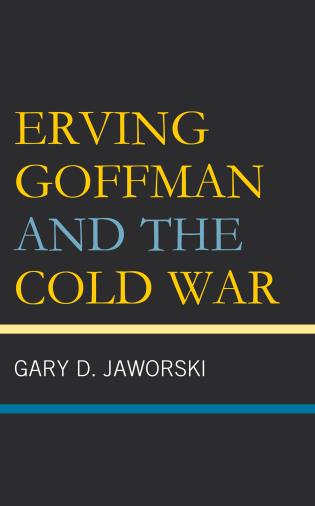
Erving Goffman and the Cold War presents a provocative new reading of the work of sociologist Erving Goffman. Instead of viewing him as a “marginal man” or academic outsider, Gary D. Jaworski explores Goffman as a social theorist of the Cold War. Goffman was deeply connected to both the ethos of his time and to a range of cold warriors and their critics, such as Edward A. Shils, Thomas C. Schelling, and the researchers on “brainwashing” associated with the Walter Reed Army Institute of Research, among others. Chapters on loyalty, betrayal, secrecy, strategy, interrogation, provocation, and aggression concretely illustrate these connections. Erving Goffman and the Cold War shows that Goffman was much more than a microsociologist of mundane life; he was a perceptive analyst of the Cold War America.
Iain D. Thomson is renowned for radically rethinking Heidegger’s views on metaphysics, technology, education, art, and history, and in this book, he presents a compelling rereading of Heidegger’s important and influential understanding of existential death. Thomson lucidly explains how Heidegger’s phenomenology of existential death led directly to the insights which forced him to abandon Being and Time’s guiding pursuit of a fundamental ontology, and thus how his early, pro-metaphysical work gave way to his later efforts to do justice to being in its real phenomenological richness and complexity. He also examines and clarifies the often abstruse responses to Heidegger’s rethinking of death in Levinas, Derrida, Agamben, Beauvoir, and others, explaining the enduring significance of this work for ongoing efforts to think clearly about death, mortality, education, and politics. The result is a powerful and illuminating study of Heidegger’s understanding of existential death and its enduring importance for philosophy and life.
The asylum–at once a place of refuge, incarceration, and abuse–touched the lives of many Americans living between 1830 and 1950. What began as a few scattered institutions in the mid-eighteenth century grew to 579 public and private asylums by the 1940s. About one out of every 280 Americans was an inmate in an asylum at an annual cost to taxpayers of approximately $200 million.
Using the writing of former asylum inmates, as well as other sources, Writing Mad Lives in the Age of the Asylum reveals a history of madness and the asylum that has remained hidden by a focus on doctors, diagnoses, and other interventions into mad people’s lives. Although those details are present in this story, its focus is the hundreds of inmates who spoke out or published pamphlets, memorials, memoirs, and articles about their experiences. They recalled physical beatings and prolonged restraint and isolation. They described what it felt like to be gawked at like animals by visitors and the hardships they faced re-entering the community. Many inmates argued that asylums were more akin to prisons than medical facilities and testified before state legislatures and the US Congress, lobbying for reforms to what became popularly known as “lunacy laws.”
Michael Rembis demonstrates how their stories influenced popular, legal, and medical conceptualizations of madness and the asylum at a time when most Americans seemed to be groping toward a more modern understanding of the many different forms of “insanity.” The result is a clearer sense of the role of mad people and their allies in shaping one of the largest state expenditures in the nineteenth and early twentieth centuries–and, at the same time, a recovery of the social and political agency of these vibrant and dynamic “mad writers.”
Walter Bruno Henning spent part of the 1955-56 academic year at the Institute for Advanced Study in Princeton. His project at the time was described by him as “Analysis of the Khwarezmian language; collection of material for the Corpus Inscriptionem Iranicarum”. Khwarezmian is an eastern Iranian language, related to Sogdian. Henning was one of the first Western scholars of Sogdian, working with texts brought back from the German Turfan expeditions, initially under the direction of Friedrich Carl Andreas in Berlin, and later in London, where he had a post at the School of Oriental and African Studies (SOAS). Henning was awarded a post at the IAS for the second term of the academic year, and was informed of this by the director Robert Oppenheimer on 12 October 1954.
Henning had been encouraged to apply by faculty at the IAS, including the medieval historian Ernst Kantorowicz. Kantorowicz had solicited the advice of Richard N. Frye, Professor of Iranian Studies at Harvard University. Frye told Kantorowicz that five or six years ago he had described Henning as “the outstanding scholar in the world in Iranian Studies” who would benefit from time at the IAS, and would offer much too. “Since that time Henning has grown in stature and is without question the most outstanding scholar of all time in the Iranian field”. He noted that Henning was already so eminent, yet only in his mid-40s. Kantorowicz and his colleague Llewelyn Woodward therefore encouraged Henning to apply. Kantorowicz wrote to Woodward, then spending the summer in Oxford, to encourage this, and at the same time noted that Woodward had left Princeton for Oxford just before the 1954 hearing which revoked Oppenheimer’s US government security clearance. Kantorowicz was one of Oppenheimer’s IAS colleagues who sent him a telegram of support during the hearing (quoted in Abraham Pais with Robert P. Crease, J. Robert Oppenheimer: A Life,260).
Oppenheimer remained director of the IAS until 1966, and Kantorowicz had had his own problems with anti-Communism, refusing to sign the loyalty oath in California in 1949, which is what led to his move from Berkeley to the IAS. (I write about that here.) Henning was keen on the idea of time in Princeton, describing the prospect of being at the IAS as “the scholar’s paradise”. But he did wonder if a visiting post there might require “a great deal of sociability”, noting that he was “somewhat of a retiring disposition” and hoped it would be more of a retreat to get some serious work done.
The reply to this question must have been sufficient to allay Henning’s fears. He was formally offered a position in October 1954, which came with a grant of $4000 and a suggestion to apply for a Fullbright grant to cover travel expenses. Once he had permission from SOAS to come to Princeton he did apply for a Fulbright grant, but was unsuccessful, because of the remuneration provided by the IAS. During the term he spent at the IAS in 1956, he produced a substantial treatment of Middle-Iranian for the Handbuch der Orientalistik.
Henning moved to a post at the University of California, Berkeley in 1961. He applied for membership of the IAS again for 1964-65. He said in his research programme that he intended to complete his work on the Khwarezmian language, begun as far back as 1936.
This work consists of reading, interpreting, and compiling a dictionary of, the Khwarezmian words written in the Arabic script and included in various medieval Arabic books. Its result, reviving a late form of that lost Eastern Iranian language, will supply the key to the decipherment, hitherto tried without success, of the Khwarezmian documents written in indigenous script and excavated by Soviet archaeologists in Khwarezm, at the southern shore of Lake Aral in the heart of Soviet Central Asia.
He indicates the progress of the dictionary had been slowed by other duties, and that it was “just impossible to carry it forward amidst the distractions of ordinary academic life”. For the 25 years he was at the University of London he was not given a sabbatical, but now teaching at Berkeley he was due a semester’s leave in the second half of 1964-65. He was hopeful that he could get unpaid leave for the other half. He hoped that another period at the IAS would provide “sufficient time to reach a final conclusion of this work and to prepare the aimed-for comprehensive publication”.
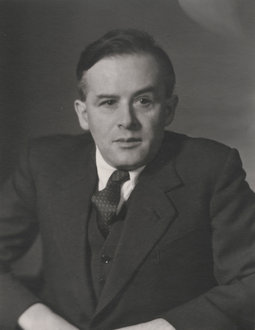
Walter Bruno Henning by Walter Stoneman – bromide print, April 1957, National Portrait GalleryTitle page of A Fragment of a Khwarezmian Dictionary
Andrew Alföldi of the IAS’s School of Historical Studies warned Henning that there would be competition, but that they would treat his application sympathetically. His application was, however, rejected. Henning never completed work on the dictionary. He broke his leg in December 1966, developed pulmonary edema, and died in January 1967. He was just 58 years old. Only a small part of the planned dictionary was published posthumously in 1971 as A Fragment of a Khwarezmian Dictionary. It was edited by D.N. MacKenzie, who also did important work on the language. As well as publishing Henning’s fragment, MacKenzie was working on a dictionary of his own, but this was also never completed. Based on the extant manuscript in Hamburg it is now being developed by Adam Benkato – see the project website.
[Update March 2026: I write about Henning’s dispute with Franz Altheim here.]
W. B. Henning, “Mitteliranisch” in Bertold Spuler (ed.), Handbuch der Orientalistik Erste Abteilung Vierter Band: Iranistik, Erster Abschnitt: Linguistik, Leiden: E.J. Brill, 1958.
Walter Bruno Henning, A Fragment of a Khwarezmian Dictionary, ed. D.N. MacKenzie, London: Lund Humphries, 1971.
W. B. Henning, Selected Papers, ed. J. Duchesne-Guillemin, Téhéran-Liège/Leiden: Bibliothèque Pahlavi/E.J. Brill, two volumes, 1977.
Abraham Pais with Robert P. Crease, J. Robert Oppenheimer: A Life, Oxford: Oxford University Press, 2006 (while far from the best biography, this is the most detailed source I know on his role as IAS director).
Henning’s own archives are at the Deutsches Exilarchiv 1933-1945, part of the Deutsche Nationalbibliothek. For a detailed study, see Adam Benkato, The Nachlass of Walter B. Henning: An Annotated Inventory, https://escholarship.org/uc/item/3gc5755t (open access)
The Institute for Advanced Study archives in Princeton have Director’s Office and School of Historical Studies files on Henning.
My thanks to Caitlin Rizzo of the IAS archives for scanning materials relating to Henning’s visit and later application, and Adam Benkato for his interest.
This is the eighth post of an occasional series, where I try to post short essays with some indications of further reading and sources, but which are not as formal as something I’d try to publish more conventionally. They are usually tangential to my main writing focus, a home for spare ideas, asides, dead-ends and possible futures. I hope there is some interest in them. They are provisional and suggestions are welcome. The other posts so far are:
In Judaism, meat is of paramount importance as it constitutes the very focal point of the dietary laws. With an intricate set of codified regulations concerning forbidden and permissible meats, highly prescribed methods of killing, and elaborate rules governing consumption, meat is one of the most visible, and gustatory, markers of Jewish distinctness and social separation. It is an object of tangible, touchable, and tastable difference like no other.
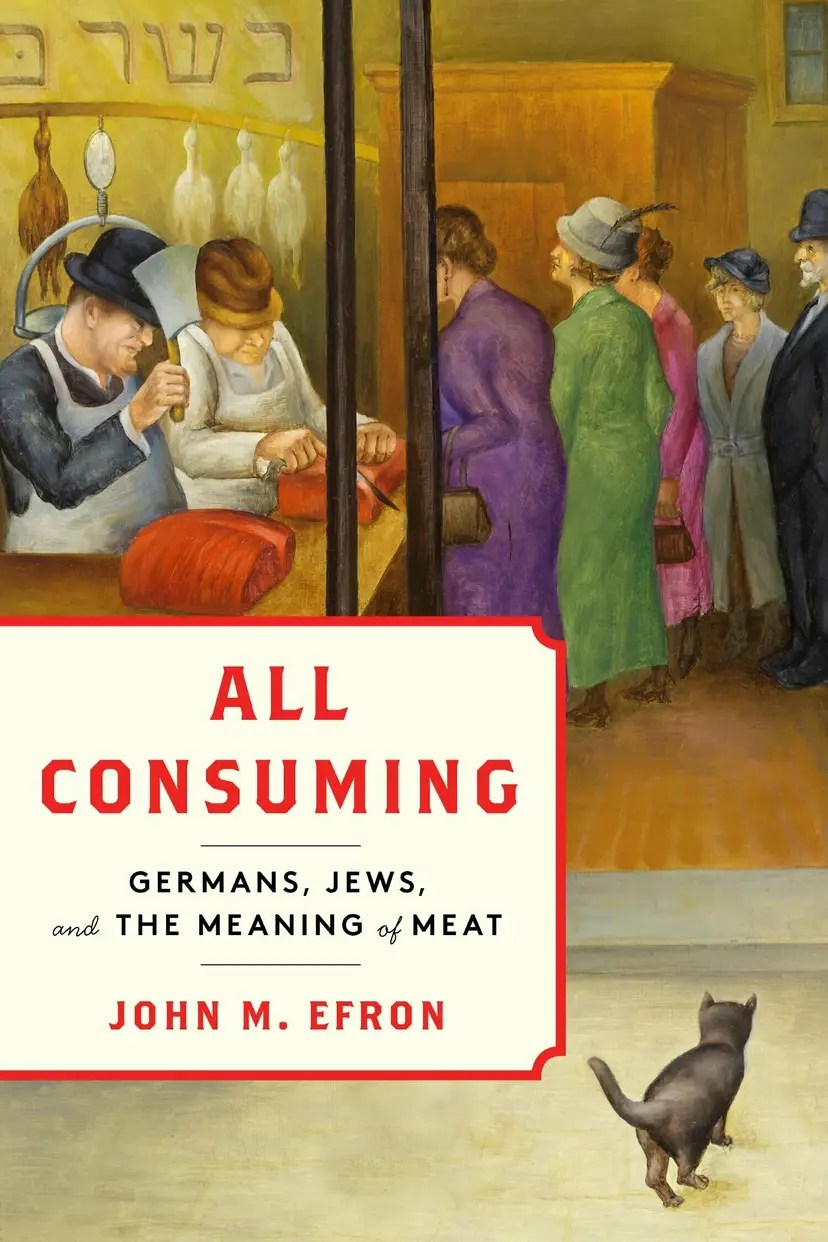
In All Consuming, historian John M. Efron focuses on the contested culture of meat and its role in the formation of ethnic identities in Germany. To an extent not seen elsewhere in Europe, Germans have identified, thought about, studied, decried, and gladly eaten meat understood to be “Jewish.” Expressions of this engagement are found across the cultural landscape—in literature, sculpture, and visual arts—and evident in legal codes and commercial enterprises. Likewise, Jews in Germany have vigorously defended their meats and the culture and rituals surrounding them by educating Germans and Jews alike about their meaning and relevance.
Exploring a cultural history that extends some seven hundred years, from the Middle Ages to today, Efron goes beyond a discussion of dietary laws and ritual slaughter to take a broad view of what meat can tell us about German-Jewish identity and culinary culture, Jewish and Christian religious sensibilities, and religious freedom for minorities in Germany. In so doing, he provides a singular window into the rich, fraught, and ultimately tragic history of German Jewry.