Foucault’s Last Decade – eighth update

Update EightThe first thing I did on arrival in Melbourne was finish work on a short piece on Grégoire Chamayou’s Manhunts for The Funambulist, which returns to some of the arguments I’ve made about Foucault and territory. I’m grateful to Léopold Lambert for this invitation. Since then, in my first few weeks here, I’ve been continuing work on the book manuscript, in between several meetings, other projects and record heat-waves. My review of La société punitive was also published; as were two interviews – at Polis and Groundwork.

The next thing – and which took far longer than expected, over several long days at the State Library of Victoria – was a careful re-reading of Surveiller et punir and Discipline and Punish. I wanted to get a sense of how the vocabulary from La société punitive was carried across to this work, and to understand the shifts in register. Reading Discipline and Punish alone wouldn’t have been sufficient for this given it is a question of precise words and tone. But in so doing I realized the extent to which Discipline and Punish is a problematic translation of this crucial text, not just because of the numerous small errors in the translation, but also because of the way discussion of Foucault, his context and concepts has changed in the past forty years. For these reasons – as I discuss at length here – I think we really need a new, or at least heavily revised, translation. I also shared a few notes on my re-reading of the first two chapters.

In doing that re-reading I realised not just the indebtedness of the analysis in the book to La société punitive, which has long seemed likely, but also to Lectures on the Will to Know, and what we currently know of Théories et institutions pénales, mainly in relation to the notion of the inquiry, but also on popular insurrections. The Rio lectures of 1973 on ‘Truth and Juridical Forms’ and the 1974 ones on medicine are also important sources of some of the examples and analysis. However, and this is a point well worth stressing, there is a lot in the book that appears never to have been trialled in a lecture context. In addition, and perhaps under-appreciated, there is a shift in the tone, the register, of how Foucault writes as opposed to how he speaks. There is a difference in genre between these different texts.

My notes on this rereading of Surveiller et punir and Discipline and Punish became quite extensive – about 10,000 words or so. I had not intended on having much in my book on that text – which in some respects is well known and which I’ve discussed at length elsewhere – but I’ve had to revise my view a bit. There is now quite a long discussion in Chapter Two, especially as to how it sits in relation to the lecture courses, but this section is almost certainly too long.

I then went back to La société punitive again and took even more detailed notes; from which I wrote a long section on this course for Chapter One,  which also discussed the last two ‘Truth and Juridical Forms’ lectures which develop (rather than merely repeat) its themes. I had hoped to deliver a lecture providing a comparative reading of La société punitive, those 1973 lectures, and Surveiller et punir here at Monash, in a workshop on Foucault, but that has now unfortunately been cancelled. It might be given as talk at the University of Melbourne in March (details when confirmed), and it might become the basis for a standalone article, which would help with the word-count issues I’m having with the book manuscript. This is a book which, I need to keep reminding myself, is on Foucault’s last decade, which essentially begins at the point the writing of Surveiller et punir ends…

The next task, now I’ve filled in those two missing sections from earlier chapters, is to turn to the first volume of the History of Sexuality, which will be the subject matter of Chapter Five. I may post something about the translation issues with that book too.

You can read more about the Foucault’s Last Decade project, along with links to previous updates, here.

Posted in Foucault's Last Decade, Grégoire Chamayou, Michel Foucault, My Publications, Territory | Leave a comment

REMEDIAEVAL: Proposal for a New Minigraph Book Series

In the Middle has news of an interesting publishing venture from Eileen Joy and Karl Steel – REMEDIAEVAL, a New Minigraph Book Series. Here’s a couple of paragraphs, but you should really check out the whole post:

Currently, the Middle Ages serve as a sort of “hot” contact zone in a wide variety of cultural, social, and political scenes, events, media, and disciplines. From fantasies of origin to the desire to escape from the present into the past, and from social, political, racial, and sexual caricatures of the Other as “medieval” to historical reenactors and what some have termed a new resurgence of “living history” attractions (Bede’s World, Jorvik Viking Centre, Provins, etc.), the Middle Ages inhabits a space of intimate exteriority with the modern. It can be argued, further, especially with regard to the development of theory in various fields — philosophy, sociology, political science, literary studies, cultural studies, history of science, etc. — that the Middle Ages occupy a sort of “black hole” position that stretches from the fall of the Roman Empire all the way to 1700.

For example, most contemporary theory skips the Middle Ages and Renaissance altogether, often taking leaps from Kant or Hobbes to Plato, or from Heidegger to Heraclitus, or from Carl Schmitt to Cicero, and so on. And yet, there has been much work done within medieval studies to unsettle the philosophical narratives that imagine the Middle Ages as the abjected past of a modernity that exists only in the contemporary, capitalist West and that refer exclusively to a very small subset of classical and Enlightenment thinkers. Thus, in recent years, journals like postmedieval (an editorial alliance of medieval and early modern researchers with cultural theorists in various fields), scholars such as Kathleen Biddick, Jeffrey Jerome Cohen, Aranye Fradenburg, Bruce Holsinger, and Steven Kruger (to name only a few), and a host of specialized conferences and symposia hosted by the BABEL Working Group, George Washington University’s Medieval and Early Modern Studies Institute, and the Australian Research Council’s Centre of Excellence for the History of Emotions (Europe: 1100-1800) have brought premodern subjects into vibrant contact with contemporary theory. In addition, both medieval and early modern studies have led the field in taking up some of the most exciting recent innovations in humanistic practice and thought, including new media studies, the digital humanities, new materialisms, eco-studies, the descriptive turn, post-humanisms, critical animal studies, the geological turn, and speculative realism.

This is very interesting, and spot on with its comment about the jumping from ancient to modern thinkers. My initial thinking with The Birth of Territory was that I wanted to avoid that, but the initial one chapter on the ‘Middle Ages’ became two, three and ended up – depending on dating – being five chapters and over half the book. My ongoing work on Foucault is taking me back to some of these debates. There is quite a bit on the early Church in two recent lecture courses that are coming out this year in English – Mal faire, dire vrai and, especially, Du gouvernement des vivants – and all the indications are there is a lot on the medieval in the forthcoming Théories et institutions pénales. And of course, Shakespeare is writing the cusp of early modernity, with many of his plays looking back to a medieval past, which I think is interesting in relation to the question of territory. Even some of Heidegger’s recent Gesamtausgabe volumes touch on medieval work – especially his reading of Aquinas. And while I learned an enormous amount from more traditional medievalists, the injection of contemporary theory into this work has opened up some really interesting avenues of research. So this series looks very interesting indeed.

Posted in Foucault's Last Decade, Jeffrey Jerome Cohen, Martin Heidegger, Medieval Studies, Michel Foucault, Publishing, Shakespearean Territories, Territory, The Birth of Territory, Theory, William Shakespeare | Leave a comment

CFP: The Politics of Legality in a Neo-liberal Age – symposium in Sydney August 2014

Posted on behalf of Ben Golder (b.golder@unsw.edu.au):

This symposium will examine the nexus between the political dominance of liberal legal ideas and the economic dominance of neo-liberal capitalism.

According to classical liberal theory the state is legitimate to the extent that it respects legality.  The idea that the state should respect individual rights and the rule of law continues to have considerable purchase on our political discourse: the language of human rights is used by NGOs to criticise state violence, and by the same states to justify the violence of military interventions; those concerned with the legal response to terrorism often invoke the rule of law to criticise the expansion of powers for the executive branch of government; while the very same executive pays meticulous attention to justifying actions such as torture in legal terms.  Indeed, law is so central to the contemporary political imagination that the theorist Norberto Bobbio has dubbed our time the ‘age of rights’.  Economically, however, the age in which we live is that of neo-liberal capitalism.  The critique of the regulatory state and the advocacy of the ‘free market’ developed by neo-liberal thinkers such as Frederich Hayek, Milton Friedman, and Ludwig von Mises have had a serious impact on practices of government over the last 30 years.  Indeed, it has been argued that neo-liberalism has played a major role in the concentration of economic power in this time, profoundly influencing the policies that have shaped the course of economic globalisation; those that led to Global Financial Crisis of 2008; and the politics of austerity that has characterised the state response to this crisis in the US and the EU.

Neo-liberalism is not, however, simply an economic theory but a political philosophy that has legality at its core, defining itself against the regulatory state for violating individual liberty and advocating private property rights and a certain vision of the rule of law as crucial to the functioning of capitalist economies.  The rule of law has also been central to the processes of neo-liberal globalisation with ‘rule of law promotion’ playing a crucial role in developing markets in the global South.  And, while human rights are often used as tools for political critique and resistance, the historian Samuel Moyn has illustrated that the language of human rights has colonised political discourse since the late 1970s.  This is the very same period in which neo-liberalism has restructured the relationship between economy and society and state, raising the question of whether there is a relationship between these two phenomena.

An understanding of the contemporary political conjuncture, and the possibilities for its transformation, demands an analysis of the relationship between liberal legality and the current hegemony of neo-liberal capitalism. This symposium will address this conjuncture through papers which engage, among a range of other possibilities, the following themes and topics:

–          What is neo-liberalism (a radical economic theory, a political philosophy, a governmental practice, a theory of the enterprising subject, a mutation in the history of liberalism)? How can we best understand and historicize the concept, and what set of theoretical analyses best sheds light on its contemporary operations?

–          What transformations has the neo-liberal era wrought to the state, its function, its operation, its ideological mode of presentation and legitimation?

–          What role specifically do law and legal ideas perform in undergirding and reinforcing neo-liberalism as a political and economic project?

–          What is the relationship between the critique of totalitarianism and the ideological defence of neo-liberalism? How can we think differently about the relation between state repression and the neo-liberal economic project?

–          How does the discourse surrounding the ‘rule of law’ and its promotion, especially in the global South, reinforce neo-liberalism? How might the rule of law, or aspects of the rule of law tradition, interrupt or restrain neo-liberal capitalism?

–          What is the relation between the discourse of human rights and neo-liberalism – historically, conceptually, and politically? How do human rights actors and institutions recreate (or oppose) neo-liberal hegemony?

–          What critical or emancipatory purchase, if any, do traditional liberal legal ideas (such as accountability, the separation of the political and the economic, the restraint of arbitrary power) still have in a neo-liberal context?

–          What relevance do the classic critiques of these liberal legal ideas (of legal objectivity and neutrality, of formalism, and of the commodity form in particular, etc.) have to our neo-liberal present? Do they perform the same work? What work might they do? How might we reframe or update them to take account of changed political-economic circumstances?

–          What prospects are there for legal resistance to contemporary forms of neo-liberalism? What might a strategic left response to neo-liberalism look like – a defence of the protections of the welfare state, or the creation of something new?

The symposium will take place over 2 days at the University of New South Wales Law School, Sydney, Australia on 1 and 2 August 2014. We invite paper proposals on any of the above, or related, themes. If you wish to discuss your proposed paper with the convenors in advance please email either Dr Ben Golder (b.golder@unsw.edu.au) or Dr Daniel McLoughlin (daniel.mcloughlin@unsw.edu.au).

Procedure: Please email a 300 word abstract, 75 word bio and your institutional affiliation (if appropriate) to b.golder@unsw.edu.au by 28 March with the email subject line: ‘Neo-liberalism and law symposium’. We regret that only a limited number of papers can be selected for this symposium.

Publication Plans: Whilst we do not require full length papers in advance of the symposium, the aim of our meeting is to work towards the publication of selected papers in an edited volume. Initial negotiations with interested publishers are already underway.

Posted in Conferences | 2 Comments

Will Self on Guy Debord

An audio recording of a discussion with Will Self on Guy Debord.

dmf's avatarsynthetic zerØ

Will Self on Guy Debord

Will Self in discussion with Patrick Keiller and Matthew Beaumont at the LRB bookshop.

View original post

Posted in Uncategorized | Leave a comment

Jennifer Atchison and Lesley Head – Photo gallery on invasive plant management

A photo gallery to accompany a recent Society and Space article – one of the many things that the open site can do that the traditional journal alone would find much harder.

More Galleries | Leave a comment

RSC new season announced – Love’s Labour’s Lost and Won

The RSC have announced the productions of their autumn/winter 2014-15 season. The plan, starting with Richard II last season, and continuing with the two parts of Henry IV and Two Gentlemen of Verona this coming summer, is to produce all of Shakespeare’s plays once over a six year period. I had expected that Henry V would therefore be next up, but instead they are producing Love’s Labour’s Lost and Love’s Labour’s Won. The latter is a title given to a play that Shakespeare is known to have written but which is – depending on who you believe – either a lost sequel, or a name used for another play. The RSC clearly believe the latter, because their Love’s Labour’s Won is a production of the play better known as Much Ado About Nothing…

Posted in William Shakespeare | Leave a comment

Patrick Dunleavy on choosing a better title for your article

Some generally decent advice at the LSE Impact of Social Sciences blog

An informative title for an article or chapter maximizes the likelihood that your audience correctly remembers enough about your arguments to re-discover what they are looking for. Without embedded cues, your work will sit undisturbed on other scholars’ PDF libraries, or languish unread among hundreds of millions of other documents on the Web. Patrick Dunleavy presents examples of frequently used useless titles and advises on using a full narrative title, one that makes completely clear your argument, conclusions or findings. 


Posted in Publishing, Writing | Leave a comment

Giorgio Agamben – From the State of Control to a Praxis of Destituent Power

Post image for From the State of Control to a Praxis of Destituent Power

Faced with absolute state control and the rapid eradication of political society, only a theory and praxis of destituent power can reclaim democracy.

This is the transcript of a public lecture by Italian philosopher Giorgio Agamben delivered to a packed auditorium in Athens on November 16, 2013 and recently published by Chronos.

Read it either at Chronos or Roarmag.org – thanks to Jaewon Lee for the link.

Posted in Giorgio Agamben, Politics | Leave a comment

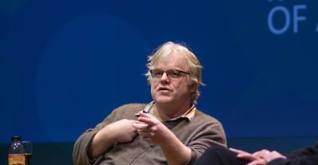
Simon Critchley and Philip Seymour Hoffman – video recording of discussion at Rubin Museum of Art

PSH

In Memoriam: Philip Seymour Hoffman
Just over a year ago philosopher Simon Critchley met with Philip Seymour Hoffman for the final in a series of on-stage conversations called Happy Talk. In a searching dialogue that in hindsight seems prescient, the actor wrestles with the concepts of happiness, love, and death with the same courage and compelling insight that he brought to his roles. Recorded at the Rubin Museum of Art on December 17, 2012

Thanks to Verso (images) and George Souvlis (video) for the links.

Posted in Simon Critchley | Tagged | Leave a comment

Authority & Political Technologies 2014 conference at Warwick – announcement and call for papers

Authority & Political Technologies 2014                                                  

Power in a World of Becoming, Entanglement & Attachment                          

‘In every era the attempt must be made anew to rescue tradition from a conformism that is about to overpower it’ (Walter Benjamin) 

June 2-3, 2014. University of Warwick

Confirmed Speakers:

  • William Connolly (Johns Hopkins)
  • Christian Borch (CBS, Copenhagen)
  • Costas Douzinas (Birkbeck)
  • Amade M’charek (Amsterdam)
  • Luciana Parisi (Goldsmiths)
  • AbdouMaliq Simone (Goldsmiths) 

Conference Organisers:

Claire Blencowe & Illan rua Wall – Authority & Political Technologies (APT) Warwick

Suggested Themes:

  • Biopolitics and Political Spirituality/Religion
  • Materialism and the Political Meaning of Entanglement
  • Authority, Sovereignty and Becoming in the (Post) Colony
  • Process and New Forms of Society(ism), Association and Being in Common
  • Necropolitics and Human Rights

Recently, there have been various calls for a move beyond ‘post-structuralism’ (i.e. Foucault, Deleuze, cultural/critical theory), which had long been seen as the radical edge of the critical social sciences. Such calls are motivated in part by the sense that post-structuralist philosophies – which were forged against a backdrop of totalitarian rule and burgeoning welfare states in Europe – fail to offer moral or political purchase in the contemporary governmental landscape. Moreover, there is a sense that various concepts and theories have become reified and constraining – closing down the possibilities of critical thought. However, the issues that post-structuralist theory placed on the critical social science agenda have become more vital than ever – be that the concern for the complex and dispersed nature of power and agency; the imbrication of power and economics with knowledge and science; rethinking the relation between equality and difference; the political/contested/changing nature of embodiment, biology and ecology; or the efforts of states and others to establish and exercise power over life itself. We maintain that now is the time, not to reject post-structuralist perspectives, but to reinvigorate and transform those traditions through empirical and political work that is creatively engaged with current problems. The Authority & Political Technologies group at Warwick will host a series of annual events that bring together world leading, emerging and postgraduate scholars from across the social sciences whose work promises to renew post-structuralist critical thought through empirical scholarship. This year we invite papers on the theme ‘Power in a World of Becoming, Entanglement & Attachment’. Topics may include, but are not limited to, the suggested themes above.

Deadline for abstract submission March 10th 2014.

For further information and updates see the conference website

APT Warwick:

Claire Blencowe; Miguel Beistegui; Will Davies; Stuart Elden; Nick Gane; Olga Goriunova; Amy Hinterberger; Hannah Jones; Cath Lambert; Nick Lee; Celia Lury; Alice Mah; Goldie Osuri; Maria Do Mar Pereira; Lynne Pettinger; Shirin Rai; John Solomos; Vicky Squire; Nathanial Tkacz; Emma Uprichard; Nick Vaughan-Williams; Illan rua Wall; Chiara Livia Bernardi; Sam Burgum; Rogan Collins; Esteban Damiani; Kathryn Medien; Marijn Nieuwenhuis; Hidefumi Nishiyama; Maurice Stierl; Lauren Tooker; Lorenzo Vianelli

Posted in Conferences, Politics, William E Connolly | 2 Comments