Indo-European Thought in Twentieth-Century France update 26: Benveniste’s late publications; Sunday Histories; beginning archival work in the United States

Since the last update in December, I’ve been making some good progress on this project. The focus has mainly been on Benveniste’s work in the 1960s. But, as ever, I’ve found myself backtracking to earlier parts of his career and seeing some potentially interesting diversions from that focus.

I went down a little detour about the decipherment of Linear B, as both Benveniste and Dumézil used this as an example in their teaching, and because both attended the first international conference on Mycenaean studies in 1956, held just outside of Paris and organised by Michel Lejeune and Pierre Chantraine. While the story of the deciphering has been told, the French connection is less explored, particularly in terms of Lejeune’s subsequent work. I say more about that story here.

I also discovered that there is a record of Benveniste’s 1937 lecture to the Prague Linguistic Circle, for which he told Roman Jakobson after the war that his papers were lost when his flat in Paris was occupied. The short summary, published in Czech, is translated by John Raimo and discussed by me here. I also mention Jakobson’s report of a lecture Benveniste gave in Brno on the same visit to Czechoslovakia. A couple of small pieces of evidence to add to the story of Benveniste’s early career.

Returning to my current focus on his final publications, I worked on Benveniste’s book Titres et noms propres en iranien ancien. It is another very specialist study, but which helps to shed some light on some of his other projects, some incomplete, and his collaborative work with archaeologists and epigraphists. It’s also interesting I think, because it touches on similar themes to his Dictionary of Indo-European Concepts and Society, but unlike that book it has more academic references. The discussion of Benveniste’s final few courses is now properly supported by references to the shorter publications from the 1960s, many of which are in Problémes de linguistique générale, especially its second volume. (Only a few pieces in there are in English translation.) A few late pieces which are not collected there or elsewhere can be difficult to find, but I think I’ve located most of them. 

I also wrote a short piece on Foucault’s 1972 visit to Cornell University, though I’d hoped the archives there might shed some more light on his short lecture trip. Posting that led to a source of which I was unaware which adds a bit more detail. I also updated an earlier post about Marie-Louise Sjoestedt – an interesting and tragic French Celtic scholar, who was a friend and colleague of both Benveniste and Dumézil. The updated piece is here. I’m hoping that I’ll make time in 2025 for more of these short pieces – brief sketches of a history, notes towards something, thoughts on a recent book, a development of an idea I only touch upon in a more formal text. I say more about these pieces, and a couple of others I’ve shared so far, which I’m calling ‘Sunday histories’, here.

Much of the work in early January was trying to get the text into as good a shape as possible before my New York trip. I didn’t manage to get as much done as I’d hoped, and the two main tasks left for this chapter are Benveniste’s Vocabulaire – the Dictionary of Indo-European Concepts and Society, and then the parallel discussion of Dumézil’s career.

I’ve been in New York a couple of weeks, spending time at the Remarque Institute at New York University where I’m based, and going to some events there, and a few elsewhere at NYU. I’ve committed to giving very few talks while I’m here. One was online for the University of Nottingham Futures of Ideology series. I’ll be making a side-trip to Buffalo to speak to the Just Theory series in Comparative Literature, and giving two short papers to events at Remarque.

One of the reasons why some time in the United States was appealing was the chance to get to some archives. I haven’t been here for several years and there are some interesting things to explore. Dumézil and Benveniste visited the US a few times. Dumézil had a series of visiting posts here after his retirement from the Collège de France, but there are, to my knowledge, relatively few sources here for his story. But other related figures do have material here. This includes Claude Lévi-Strauss, who spent much of the war in the United States, and Roman Jakobson, who also came at that time, but ended up staying here after the war. Jakobson’s main archive is at MIT, but there are some things here in New York. Walter Henning, whose main archive is in Germany, spent the final years of his career here. There is also correspondence between some of the people I’m working on in various archives. Some of these are further afield, and so I’ve been sending off a lot of requests to find out the extent of material. Some archives are very generous in scanning material, either free of charge or for a small fee. Others have digitised a lot of material already. One in New York only permits researchers to use their reading room if material is not already scanned, and led me to 11,000 pages of material relating to Ernst Kantorowicz. He’s certainly someone I’m interested in, but only as a very peripheral figure to the main story. When it is of that scale, I’d rather spend some weeks working through it on site than looking at it on a screen. But when it’s more like 20 pages, having something scanned and saving a flight is really appreciated.

I first looked at some of the Semiotext(e) papers at New York University, but that didn’t have as much about their conference on Benveniste as I’d hoped. The conference was initially planned for an issue of the Semiotext(e) journal, but ended up in Thomas Sebeok’s journal Semiotica instead. More useful material was at the New York Public Library, which has the papers of the Emergency Committee in Aid of Displaced Foreign Scholars. There is some interesting detail on a few people connected to my project. I’d not used their archive collections before, but there is at least one reason to go back.

Columbia University has some materials relating to Jakobson, who taught there for a few years before moving to Harvard. They also have the archives of a few people who were in correspondence with him and Alexandre Koyré, so it’s an interesting source of material. My first ever experience of working with archives was at Columbia, over twenty years ago, when I was working on Henri Lefebvre, as they have the archives of his friend and co-author Norbert Gutermann. The reading room has changed a lot but it was good to be back. I have a couple more trips there planned.

I also made a first visit to the Rockefeller Archives Center, which is about an hour north of New York City in Sleepy Hollow. My first appointment was cancelled due to the weather – it has been very cold here, with quite a bit of snow. The archives here have some material relating to funding for refugee scholars in the 1930s and 1940s, including Jakobson and Koyré, but also the papers of the Ford Foundation who funded Claude Lévi-Strauss in the 1950s. the Rockefeller Foundation also supported some projects that Benveniste undertook in the 1950s, including meetings with American linguists, a conference he organised in Nice, and his linguistic fieldtrips to work with native American groups in the Pacific northwest. There was a lot more material than I expected, and I hope I can get back.

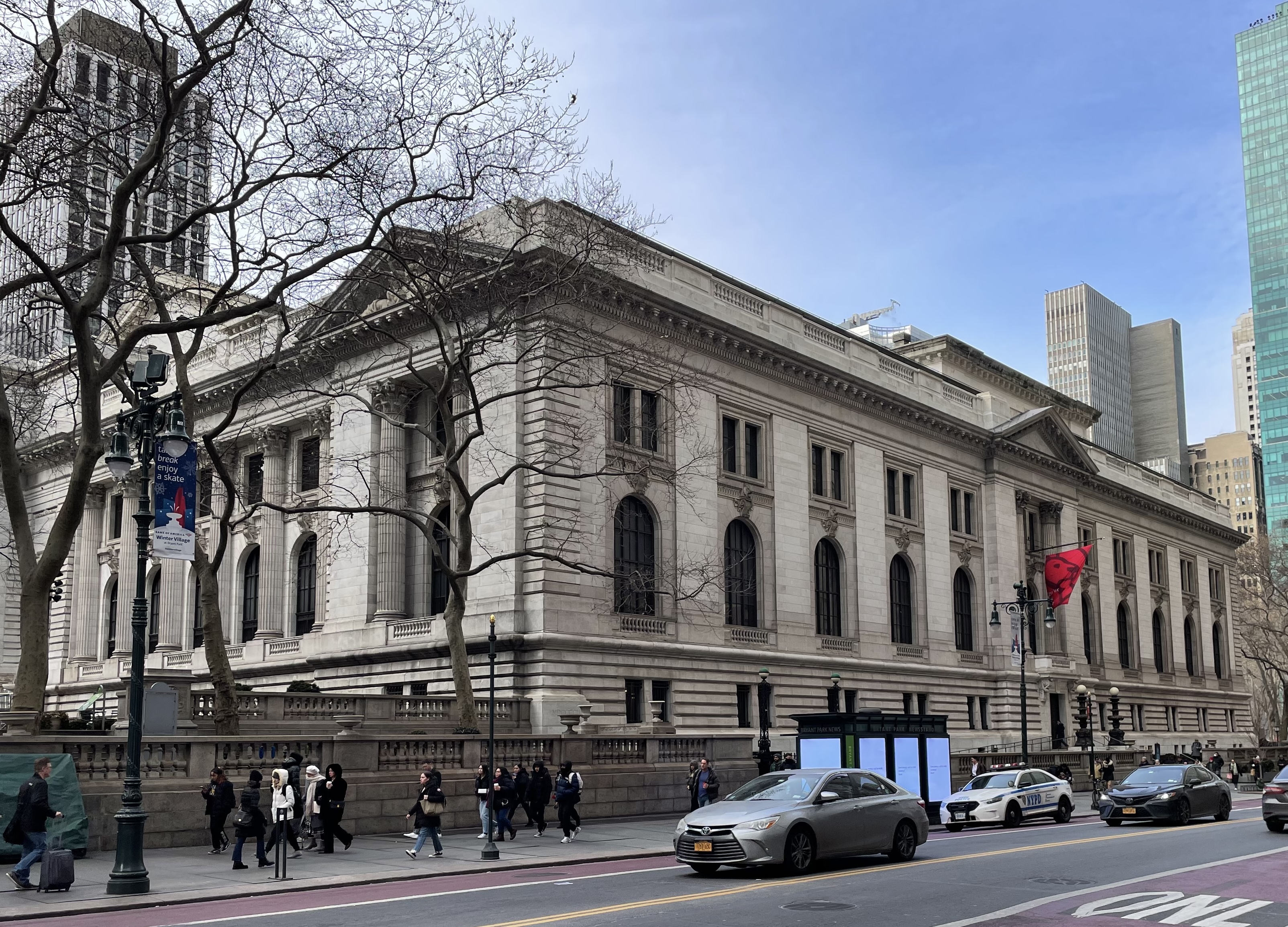
It’s also been great to have such excellent libraries here. The Bobst Library of NYU is one I’ve used before, and has a great collection. The Butler library at Columbia has a huge collection, and on previous New York trips it has been a regular place to visit. The current security at the Columbia campus means that just using the library is difficult, but if you have an appointment with manuscripts then you get a QR code to allow access. So, for that reason I’ve been using the New York Public Library more for its main collection. I’ve also been up to the Institute for the Study of the Ancient World, part of NYU near Central Park, which had a couple of hard-to-find things.

While I’m in Buffalo I plan to look at their archives relating to Foucault’s two visits in 1970 and 1972, and I also have a planned trip to Harvard and MIT to look at some things there. I’m also trying to get ahead with what I think will be the next project after this one, on Koyré. I’m not sure what form that will take yet, but I hope at least a couple more articles beyond the one I’ve published (open access) and the one on Canguilhem and Koyré I’ve presented (audio). Koyré was in the United States during the war, teaching at the École Libre des Hautes Études and the New School, and then was here in several visiting positions in the post-war period. There are some records of his teaching in these different places, and some correspondence. Some of this is nearby, other parts are further afield, so I’m making a lot more requests. A couple of the future ‘Sunday Histories’ will say more about what I’m finding out about him, his teaching and his intellectual friendships.

Previous updates on this project can be found here, along with links to some research resources and forthcoming publications. The re-edition of Georges Dumézil’s Mitra-Varuna is now published. There is a lot more about the earlier Foucault work here. The final volume of the series is The Archaeology of Foucault, and the special issue of Theory, Culture & Society I co-edited on “Foucault before the Collège de France” has some important contributions on the earlier parts of Foucault’s career, and is currently available free to access. My article “Foucault and Dumézil on Antiquity” was published in the Journal of the History of Ideas; “Alexandre Koyré and the Collège de France” is online first and open access.

Posted in Alexandre Koyré, Claude Lévi-Strauss, Emile Benveniste, Ernst Kantorowicz, Georges Dumézil, Henri Lefebvre, Mapping Indo-European Thought in Twentieth Century France, Michel Foucault, Roman Jakobson, Sunday Histories, Uncategorized, Understanding Henri Lefebvre | Leave a comment

Writing Intellectual History after the “Age of Forms”: An Interview with Elías J. Palti – Journal of the History of Ideas blog

Writing Intellectual History after the “Age of Forms”: An Interview with Elías J. Palti – Journal of the History of Ideas blog – Part I and Part II

In this interview, primary editors Jacob Saliba and Zac Endter speak with award-winning and internationally recognized intellectual historian Elías Palti on his most recent work, Intellectual History and the Problem of Conceptual Change (Cambridge University Press, 2024). Based on Seeley Lectures recently given at Cambridge University, the book consists of a meta-history of intellectual history in the last century. From the “Cambridge School,” Hans Blumenberg, and Reinhart Koselleck to Pierre Rosanvallon and Michel Foucault, Palti weaves together a complex range of thinkers as well as carefully reconstructs a wide array of concepts at the core of why and how intellectual historians do what they do. Ultimately, Palti seeks to clarify the evolving conditions, stakes, and epistemological ground on which intellectual history was built in the past and continues to be built up to the present.

Posted in Uncategorized | Leave a comment

Johanna Vuorelma, Irony in International Politics – Edinburgh University Press, December 2024

Johanna Vuorelma, Irony in International Politics – Edinburgh University Press, December 2024

Examines the use of ironic language among political leaders in international politics.

Irony in International Politics investigates ironic language in international politics, focusing on how political leaders use irony to articulate failures of the liberal international order. Underlining the political, performative, and affective nature of irony in international politics, the book introduces a novel typology of four forms of irony: justice-seeking irony, hegemony-seeking irony, recognition-seeking irony, and disruption-seeking irony. 

Irony is typically understood as a tool of the underdog who seeks to reveal the hypocritical nature of the powerful, but Irony in International Politics shows that irony is increasingly used by the powerful who expose that there is a wide gap between the ideal and the actual in international politics. Studying cases from Turkey, the United Kingdom, Hungary, the United States, Sweden, Germany, Greece, and Russia, the book illustrates how the post-Cold War era represents a distinct scene of irony with its particular identity struggles and power asymmetries that have prompted ironic reactions.

Posted in Uncategorized | Leave a comment

Sam Halvorsen (ed.), Latin American Geographies – Routledge, March 2025

Sam Halvorsen (ed.), Latin American Geographies – Routledge, March 2025

Latin American Geographies introduces student readers to cutting-edge scholarship on a range of topics from Indigenous geographies to sustainable development and dependency theory. The book is written primarily by a Latin American-based authorship and blends complex theory with in-depth case studies in an accessible way for students with little prior knowledge.

Each chapter contains a general overview of the topic and includes summary boxes, review questions and annotated further readings. The book is divided into three sections. Section 1, “Core Themes,” gives the reader the necessary historical, conceptual and theoretical tools to make sense of and engage in contemporary geographical debates in Latin American geographies. It is divided into four areas, covering major sub-themes (historical and colonial geographies, political geographies, economic and urban geographies, and development and environmental geographies). Section 2, “Key Perspectives,” outlines key identities and positionalities that have had a profound impact on Latin American geographies, exemplifying their significance through a range of case studies. Section 3, “Uneven Processes,” provides an in-depth analysis into core geographical trends across three main themes: ecologies, urbanisation and resistance.

The book is unique in providing an introduction to Latin American geography that showcases the ideas of some of the region’s leading geographical thinkers. Aimed at undergraduate students, chapters will also be of relevance to advanced researchers looking for introductions to specific areas. The book is designed for use in the classroom as well as for independent learning.

Posted in Uncategorized | Leave a comment

Amin Erfani, Theatricality Beyond Disciplines – Intellect, October 2025

Amin Erfani, Theatricality Beyond Disciplines – Intellect, October 2025

This book expands on theories of “theatricality” in French and critical studies, adopting a transdisciplinary approach that reaches beyond performance studies into poetry, media technology, translation, and psychoanalytic theory. 

Building on Artaud’s concept of theater as a “plague”—an unpredictable, cataclysmic, and contagious force that disrupts power structures and knowledge—the book challenges Aristotelian norms of theater as a medium of “healing” and “teaching.” Instead, theatricality emerges as a force of radical disruption, what Artaud called “the return of the repressed,” demanding openness to otherness. 

The chapters present theatricality as primarily aural rather than visual, inciting “paranoiac listening,” invoking unretrievable “primal scenes,” and allowing unconscious “psychic” contamination. “Theatricality” is explored through works by Artaud, Genet, Novarina, and Koltès, but also Freud, Barthes, Kristeva, Girard, and Derrida. Each writer challenges the premises of their own artistic genres and fields of study, questioning binary systems like artistic production versus theoretical articulation, the technological versus the natural, and art versus life. 

As shown, these binaries underpin mechanisms of repression, sacrificial violence, and the exclusion of the voiceless other. The book assigns a generative function to traditionally maligned notions like unintelligibility, madness, marginality, contagion, and criminality.

Posted in Uncategorized | Leave a comment

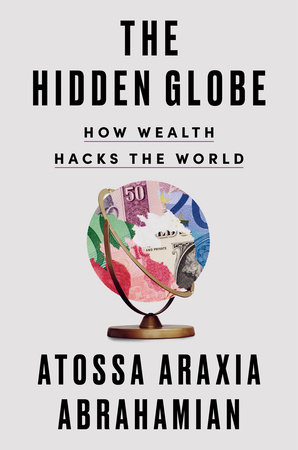
Atossa Araxia Abrahamian, The Hidden Globe: How Wealth Hacks the World – Penguin Random House, October 2024

Atossa Araxia Abrahamian, The Hidden Globe: How Wealth Hacks the World – Penguin Random House, October 2024

A globe shows the world we think we know: neatly delineated sovereign nations that grant or restrict their citizens’ rights. Beneath, above, and tucked inside their borders, however, another universe has been engineered into existence. It consists of thousands of extraterritorial zones that operate largely autonomously, and increasingly for the benefit of the wealthiest individuals and corporations.

Atossa Abrahamian traces the rise of this hidden globe to thirteenth-century Switzerland, where poor cantons marketed their only commodity: bodies, in the form of mercenary fighters. Over time, economists, theorists, statesmen, and consultants evolved ever more sophisticated ways of exporting and exploiting statelessness, in the form of free trade zones, flags of convenience, offshore detention centers, charter cities controlled by foreign corporations, and even into outer space. By mapping this countergeography, which decides who wins and who loses in the new global order—and helping us to see how it might be otherwise—The Hidden Globe fascinates, enrages, and inspires.

Posted in Uncategorized | Leave a comment

Clare O’Farrell reviews Michel Foucault, Entretiens radiophoniques (Radio Interviews) 1961-1983

Michel Foucault, Entretiens radiophoniques (Radio Interviews) 1961-1983

Posted in Uncategorized | Leave a comment

Francis Young, Silence of the Gods: The Untold History of Europe’s Last Pagan Peoples – Cambridge University Press, May 2025

Francis Young, Silence of the Gods: The Untold History of Europe’s Last Pagan Peoples – Cambridge University Press, May 2025

The formal conversion to Christianity in 1387 of the Grand Duchy of Lithuania seemingly marked the end of Europe’s last ‘pagan’ peoples. But the reality was different. At the margins, often under the radar, around the dusky edgelands, pre-Christian religions endured and indeed continued to flourish for an astonishing five centuries. Silence of the Gods tells, for the first time, the remarkable story of these forgotten peoples: belated adopters of Christian belief on the outer periphery of Christendom, from the Sámi of the frozen north to the Estonians, Latvians and Lithuanians around the Baltic, as well as the Finno-Ugric peoples of Russia’s Volga-Ural Plain. These communities, Dr Young reveals, responded creatively to Christianity’s challenge, but for centuries stopped short of embracing it. His book addresses why this was so, uncovering stories of fierce resistance, unlikely survival and considerable ingenuity. He revolutionises understandings of the lost religions of the last pagans.

Posted in Uncategorized | 1 Comment

Vladimir Nabokov, Roman Jakobson, Marc Szeftel and The Song of Igor

Superficially at least, the stories of Vladimir Nabokov (1899-1977) and Roman Jakobson (1896-1982) would seem to connect. Both were born in Russia – Nabokov in Saint Petersburg; Jakobson in Moscow; both went into exile after the Revolution – Nabokov in Cambridge and Berlin; Jakobson in Czechoslovakia then Scandinavia – before both moved to the United States.

They both taught in elite US institutions. Jakobson was the career academic, teaching at the École Libre des hautes études (ELHE), alongside Koyré, Lévi-Strauss and Jean Gottmann, among others, and then at Columbia University and Harvard University. In his final years he had an affiliate position at the Massachusetts Institute of Technology. Nabokov was primarily a novelist but also taught at Wellesley College and Cornell University. The historian Marc Moise Szeftel (1902-1985) had a similar life and career, escaping Ukraine to Poland, Belgium and then via France and Spain to the United States, teaching at Columbia, Cornell University and the University of Washington.

In the mid-1950s Nabokov was being considered for a chair in Russian Literature at Harvard, and there was support from some academics, but it was apparently Jakobson who destroyed his chances with a brutal, if very funny, putdown. Nabokov’s biographer Brian Boyd tells the story of a department discussion of the possibility:

There Roman Jakobson, the star performer in Harvard’s Slavic troupe, staunchly opposed someone else who might take top billing and attacked Nabokov for his quirky ideas on Dostoevsky and other great Russian novelists. Nabokov’s advocates asked if he were not a very distinguished novelist in his own right. Jakobson replied: “Gentlemen, even if one allows that he is an important writer, are we next to invite an elephant to be Professor of Zoology?” No one managed to parry that thrust (Vladimir Nabokov: The American Years, p. 303; compare Galya Diment, Pniniad, p. 39). 

Jakobson must have known that Nabokov had actually worked at Harvard’s Museum of Comparative Zoology as a curator of butterflies while teaching at Wellesley College. (On his lifelong work as a lepidopterist, see Nabokov’s Butterflies.)

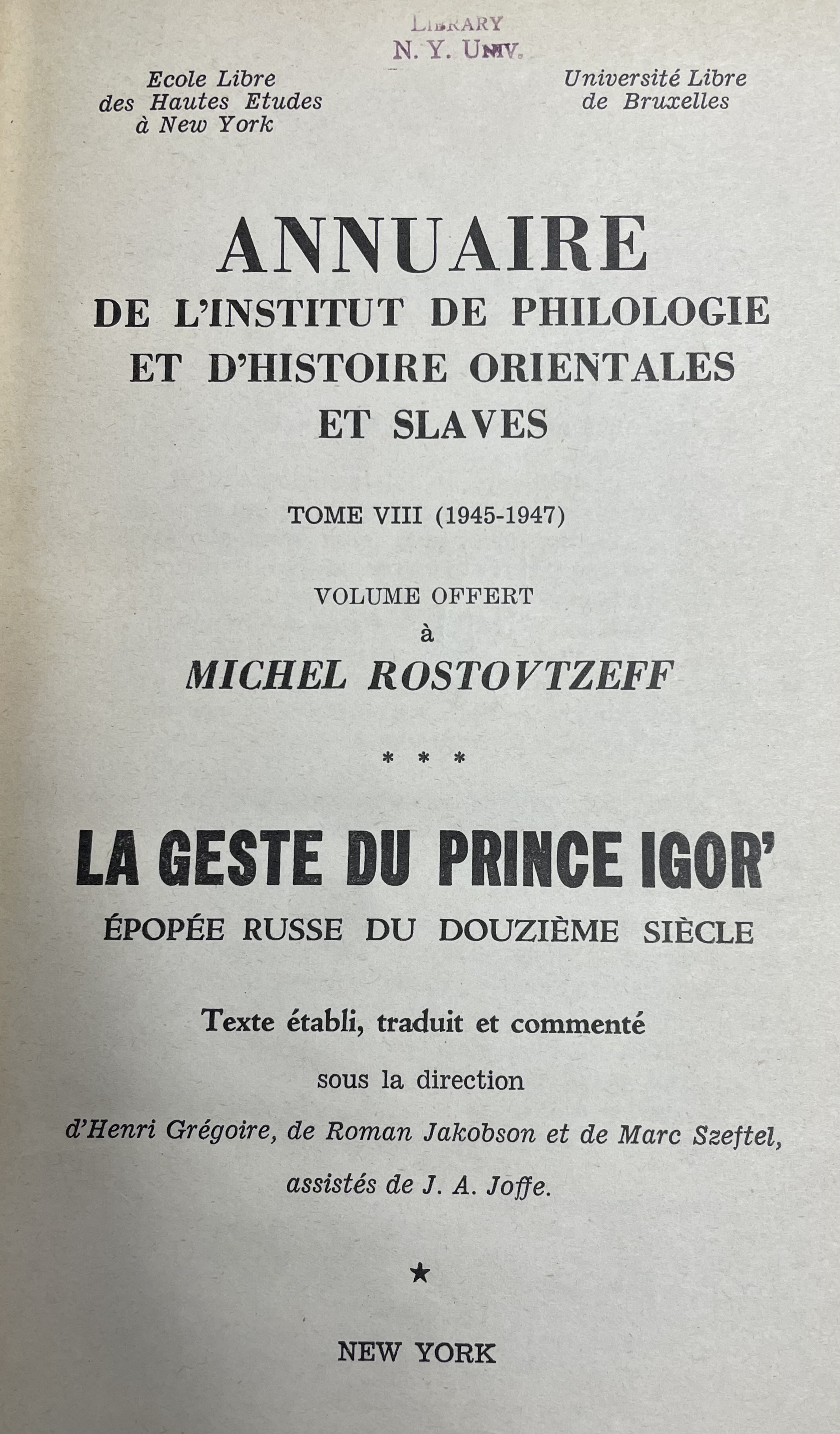
Nabokov of course learned of this opposition through mutual friends, and the acrimony was doubtless part of the reason for a failed collaboration between the two of them on an English translation of “The Song of Igor”. This was a Russian poem, alternatively known as “The Tale of Igor’s Campaign” or other variants. It dated from probably from the late 12th century or the early 13th, and was written in Old East Slavic. Jakobson had worked on a critical edition of the text with Henri Grégoire and Szeftel as La Geste du Prince Igor’, published in 1948. Though appearing with Columbia University Press, the essays and apparatus in the book were in French: this was a collaboration between scholars who had met at the ELHE, and the text was formally volume 8 of the Annuaire de l’Institut de philologie et d’histoire orientales et slaves. (A collaborative course on the text had been taught at the ELHE in 1942-43, with others involved, including Alexandre Koyré.) While the volume also included French and English translations, Jakobson’s contribution was the edition of the text, a modern Russian translation and an essay on the authenticity of the text. His parts are reprinted in his Selected Writings Volume IV.

Nabokov wrote a review essay of this volume, and Boyd tells the story of how he struggled to find a journal for it. Approaching Jakobson, the suggestion was made that Nabokov’s translation was included alongside the Russian text and notes for an English edition. This was for a series Jakobson was going to edit of Russian classics for students, and Nabokov agreed, suggesting also his translation of Eugene Onegin for the series (Boyd, p. 145). Around 1957 – following this slight at Harvard – Nabokov broke this collaboration off. There were other reasons – perhaps due to ideological differences, perhaps due to literary approaches. Boyd also tells the story of dinner party that did not go well (p. 215). Nabokov objected to Jakobson’s ties to the Soviet Academy of Sciences. Boyd picks up the story:

He had had a contract for years with the Bollingen Press for an annotated English edition of The Song of Igor’s Campaign to be prepared with Marc Szeftel and Roman Jakobson. All three contributors had been paid an advance. Although in no position to repay his share, Nabokov wanted to withdraw from the joint edition rather than work with Jakobson. To his delight, Bollingen agreed not to demand he return his part of the advance. He promptly wrote to Jakobson, explaining that he wanted to withdraw from their joint project on account of ‘your little trips to totalitarian countries.’ He had heard that the year before, in Moscow for a conference, Jakobson had wept at his return to the city, and had promised to come back soon. Nabokov was in fact convinced that Jakobson was a Communist agent. At a time when university faculties were hostile to the search for Communists on their campuses, Nabokov befriended the FBI agent assigned to Cornell and declared he would be proud to have his son join the FBI in that role. No wonder it was impossible for him to work alongside Jakobson (p. 311; the letter is from 14 April 1957).

Vladimir Nabokov, Selected Letters, 1940-1977, p. 216

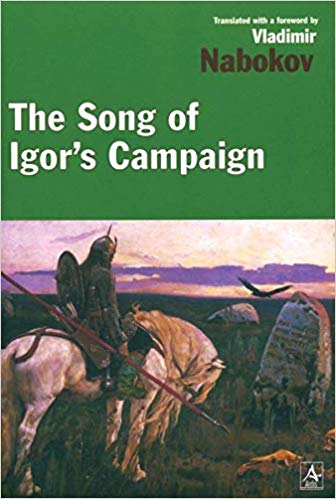
In the end, Nabokov made the English translation alone, published in 1960. He told Gleb Struve that it was “without the collaboration of the unacceptable Roman Jakobson” (3 June 1959). In this translation, Nabokov only briefly acknowledges the history:

I made a first attempt to translate Slovo o Polku Igoreve in 1952. My object was purely utilitarian—to provide my students with an English text. In that first version I followed uncritically Roman Jakobson’s recension as published in La Geste du Prince Igor. Later, however, I grew dissatisfied not only with my own—much too ‘readable’—translation but also with Jakobson’s views. Mimeographed copies of that obsolete version which are still in circulation at Cornell and Harvard should now be destroyed (p. 82 n. 18)

Nabokov was very critical of previous editions: “I have also seen The Tale of the Armament of Igor, edited and translated by Leonard A. Magnus, Oxford, 1915, a bizarre blend of incredible blunders, fantastic emendations, erratic erudition and shrewd guesses” (p. 19).

Nabokov did not spare the other scholars who had worked on the Song of Igor either. Of the French Slavist philologist André Mazon, he said his study “while containing many interesting juxtapositions, is fatally vitiated by his total incapacity of artistic appreciation” (p. 81 n. 17). His feud with Mazon was in part about the interpretation of the Song in relation to other Russian tales, with Mazon believing it was a much later forgery. There is also a debate about whether the Song is based on the Zadonschina, or if the Song preceded that and was its model. The debate is complicated by the destruction of the only manuscript in Napoleon’s invasion of Russia, leading to debates about its authenticity. But the Mazon-Nabokov dispute also fed into Mazon’s opposition to any innovations in linguistics being brought to bear on literary analysis. Mazon and his brother Paul (a Greek scholar) were a powerful force at the Collège de France, where they both had chairs. André Mazon was opposed to anyone with links to Jakobson. He tried, unsuccessfully, to prevent Georges Dumézil’s election in 1949, but they were part of the initial opposition to Claude Lévi-Strauss’s election around 1949-50, alongside the administrator Edmond Faral. Lévi-Strauss was eventually elected a decade later, after Mazon and Faral had retired.

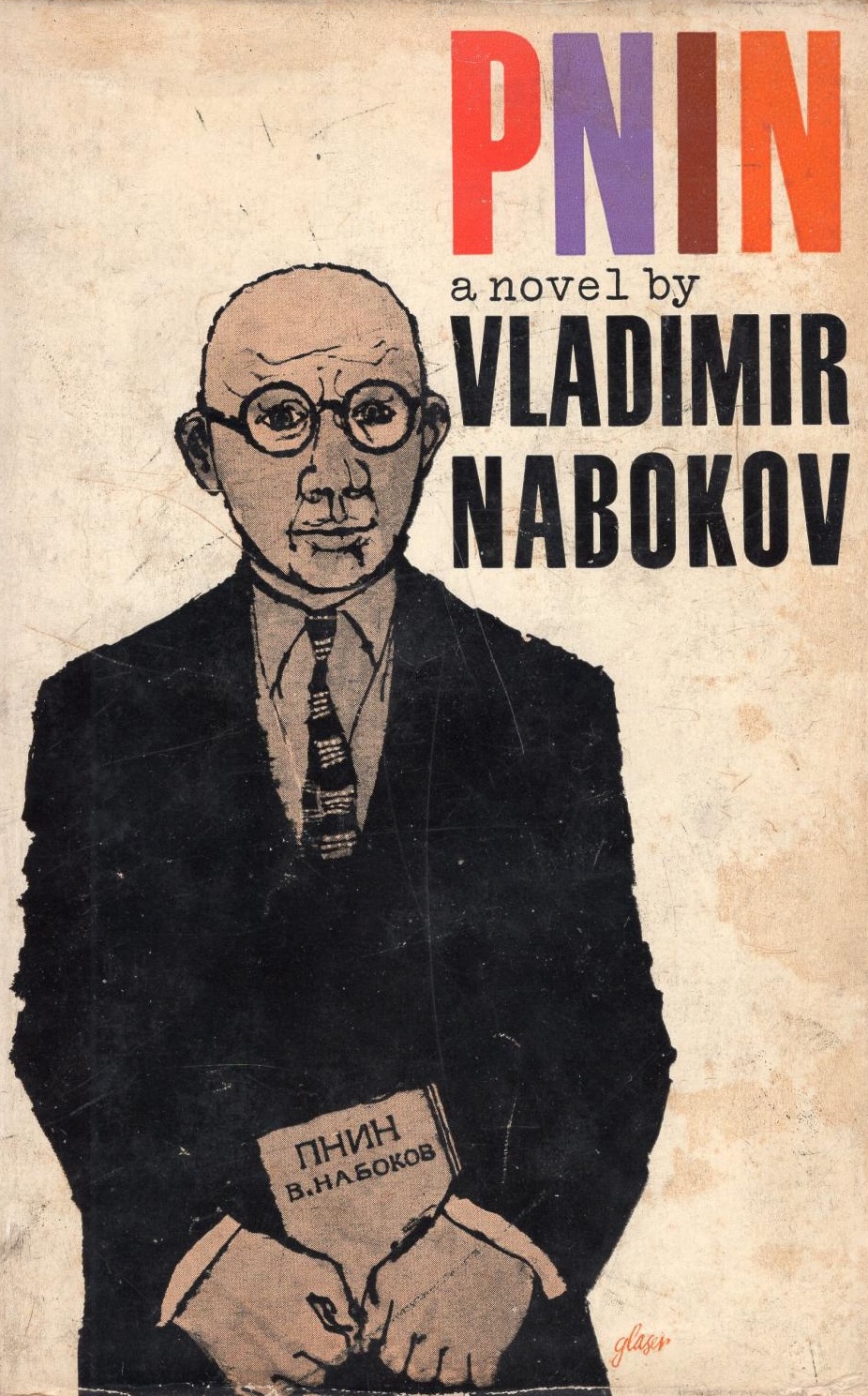
The proposed English edition of The Song of Igor for Bollingen was never published. Szeftel was unhappy Nabokov did not acknowledge his and Jakobson’s comments in his version (see Diment 1997, pp. 40-41). The Igor translation contract with Bollingen Press is interesting in itself, since this was the English-language outlet for publications from the Olga Froebe-Kapteyn and Carl Jung-led Eranos circle, funded by the Mellon family. Nabokov’s translation of Pushkin’s Eugene Onegin did appear in this series in four volumes in 1964. One contained an Introduction and the translation, there were two volumes of commentary, and a fourth with a photo-reproduction of the Russian text and an index. The professor in Nabokov’s Pnin has been compared to Szeftel, Jakobson, and Nabokov himself, though Nabokov denied at least Szeftel was the model (see Boyd pp. 288-89; Diment 1996 and 1997). Most likely Timofey Pnin is a composite of them and others, but as Diment indicates, he is working on a study of a text which sounds remarkably like the Song.

Update 4 May 2025: Some further sources for this story are discussed here.

9 Nov 2025: I discuss Nabokov’s original translation and Jakobson’s intent to complete his edition here.

References

La Geste du Prince Igor’: Épopée Russe du douzième siècle, ed. and trans. Henri Grégoire, Roman Jakobson and Marc Szeftel, New York: Columbia University Press, 1948.

The Song of Igor’s Campaign: An Epic of the Twelfth Century, trans. and foreword by Vladimir Nabokov, London: Weidenfeld and Nicolson, 1960.

Victoria A. Baena, “Past Tense: Nabokov and Jakobson”, The Harvard Crimson, 4 October 2012, https://www.thecrimson.com/article/2012/10/4/nobokov-jakobson-harvard-academy/

David M. Bethea and Siggy Frank (eds.), Vladimir Nabokov in Context, Cambridge: Cambridge University Press, 2018.

Brian Boyd, Vladimir Nabokov: The Russian Years, Princeton: Princeton University Press, 1990.

Brian Boyd, Vladimir Nabokov: The American Years, Princeton: Princeton University Press, 1991.

Galya Diment, “Timofey Pnin, Vladimir Nabokov, and Marc Szeftel”, Nabokov Studies 3, 1996, 53-75.

Galya Diment, Pniniad: Vladimir Nabokov and Marc Szeftel, Seattle: University of Washington Press, 1997.

Roman Jakobson, Selected Writings IV: Slavic Epic Studies, The Hague: Mouton & Co, 1966.

André Mazon, Le Slovo d’Igor, Paris: Librairie Droz, 1940.

Vladimir Nabokov, Pnin, London: Penguin, 1997 [1957].

Vladimir Nabokov, Selected Letters, 1940-1977, eds. Dmitri Nabokov & Matthew J. Bruccoli, London: Weidenfeld & Nicolson, 1990.

Vladimir Nabokov, Nabokov’s Butterflies: Unpublished and Uncollected Writings, eds. Brian Boyd and Robert Michael Pyle, trans. Dimitri Nabokov, Boston: Beacon Press, 2000.

Aleksandr Pushkin, Eugene Onegin: A Novel in Verse, trans. and ed. Vladimir Nabokov, New York: Bollingen Foundation, four volumes, 1964.

Marc Szeftel, “Correspondence with Vladimir Nabokov and Roman Jakobson”, in Galya Diment, Pniniad: Vladimir Nabokov and Marc Szeftel, Seattle: University of Washington Press, 1997, 103-119.

Lisa Wakamiya, “Nabokov’s ‘The Song of Igor’s Campaign’” (abstract for 7 November 2018 talk), Amherst College, https://www.amherst.edu/academiclife/departments/russian/acrc/events/node/726508

Archives

Marc Szeftel papers, University of Washington Libraries, Special Collections, https://archiveswest.orbiscascade.org/ark:80444/xv48364

Archives relating to Vladimir Nabokov are listed here – https://thenabokovian.org/archives

Roman Jakobson papers, MIT, https://archivesspace.mit.edu/repositories/2/resources/633


This is the sixth post of an occasional series, where I try to post short essays with some indications of further reading and sources, but which are not as formal as something I’d try to publish more conventionally. They are usually tangential to my main writing focus, a home for spare ideas, asides, dead-ends and possible futures. I hope there is some interest in them. They are provisional and suggestions are welcome. The other posts so far are:

Benveniste, Dumézil, Lejeune and the decipherment of Linear B – 5 January 2025

Foucault’s 1972 visit to Cornell University – 12 January 2025 (updated 14 January)

Benveniste and the Linguistic Circle of Prague – 19 January 2025

Marie-Louise Sjoestedt (1900-1940): an important scholar of Celtic languages and mythology – 26 January 2025

Thomas Sebeok, Umberto Eco and the Semiotics of Nuclear Waste – 2 February 2025

Ernst Kantorowicz and the California Loyalty Oath – 16 February 2025

The full list of ‘Sunday histories’ is here.

Posted in Alexandre Koyré, Claude Lévi-Strauss, Georges Dumézil, Jean Gottmann, Roman Jakobson, Sunday Histories, Uncategorized, Vladimir Nabokov | 17 Comments

Troels Schultz Larsen and Kristian Nagel Delica, Fragmenting Cities: The State, Territorial Stigmatization and Urban Marginality – Edward Elgar, 2025

Troels Schultz Larsen and Kristian Nagel Delica, Fragmenting Cities: The State, Territorial Stigmatization and Urban Marginality – Edward Elgar, 2025

Fragmenting Cities offers a conceptionally innovative and empirically detailed analysis of the surprising acceptance and normalization of state-based stigmatization and discrimination based on place. It does this by drawing on the example of the first state-sanctioned definition of “ghetto”, the controversial “ghetto list” produced by the Danish government.

Troels Schultz Larsen and Kristian Nagel Delica introduce policy schizophrenia as a concept to describe instances where the state simultaneously stigmatizes people from the top while engaging in urban renewal at the bottom, deepening the fragmentation of the city. They develop a meticulously researched neo-Bourdieusian model of the state as nested fields, designed for empirical confrontation and comparative analysis. Through comprehensive socio-historical analysis, this book demonstrates how marked urban and political changes over the past four decades constituted a symbolic revolution, radically upending the fundamentals of not-for-profit housing.

Investigating relationships that have been neglected in contemporary governance research, urban studies, and critical political geography, this book is an essential read for academics, researchers and students of human geography, sociology, urban studies, planning, and governance. Additionally, it is an accessible and innovative resource for policymakers in the field.

Posted in Uncategorized | Leave a comment