
An excellent compendium at critical-theory.com. Here are a few favourites, but do look at the whole list.

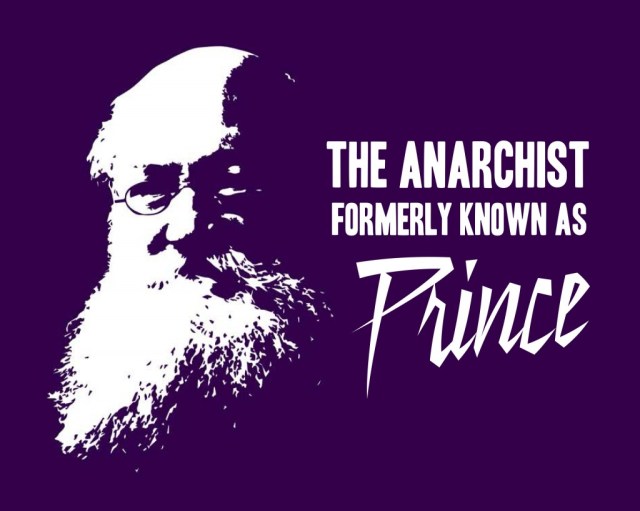

An excellent compendium at critical-theory.com. Here are a few favourites, but do look at the whole list.
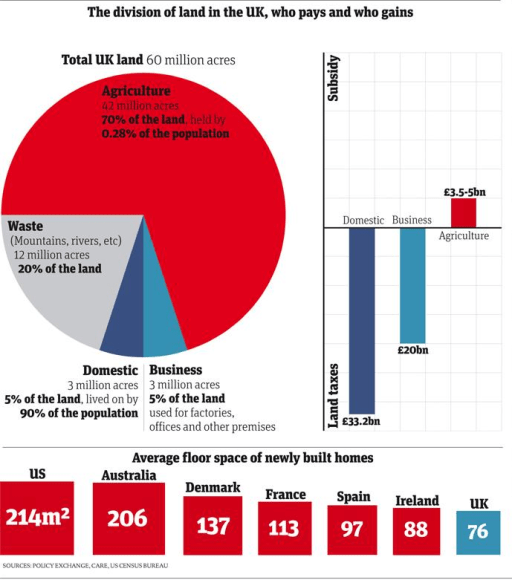
The New Statesman has a good piece about land politics in the UK today, puncturing the myth of overcrowding and urban sprawl; indicating the enormous subsidies given to already-rich landowners; and effectively demonstrating the continuing importance of feudal relations. Here are a couple of excerpts:
A political consensus has hardened that there are too few houses being built and that our planning laws are too restrictive. Equally most people seem to believe that too much of Britain, especially England, has been bulldozed and obliterated; that our land is less pleasant and less green with each passing year. In fact, only 10.6 per cent of England (and 6 per cent of Britain) is developed. The myth spun about this country is that land is scarce. It is not – landowners, many of them aristocrats who acquired their land through a quirk of ancestral good luck or who benefited from the Norman Conquest, the dissolution of the monasteries or the enclosure of common land, are paid to keep it off the market through a system of European Union agricultural subsidies (see table below). What is scarce is land on which there is planning permission to build…
The United Kingdom is 60 million acres in size, of which 42 million acres are designated “agricultural” land and 12 million are “natural wastage” (forests, rivers, mountains) owned by institutions such as the Forestry Commission, the Ministry of Defence and the National Trust. The remaining six million acres are the “urban plot”, the densely congested land on which our houses, factories and offices are built. (Most of the 62 million people of these islands live on just three million acres.)
What this means, in effect, is that 69 per cent of British acreage is owned by less than 1 per cent of the population, or 158,000 families (the so-called cousinhood), a concentration of ownership unrivalled in western Europe with the exception of the kingdom of Spain.
Environment and Planning A theme issue on Geoengineering.
A reminder of the London part of this event on Monday.
Details of events in Manchester and London – as part of the Spring project.
The Socialist President Salvadore Allende was elected to power in Chile in 1970, and embarked upon a series of radical reforms to Chilean society and the economy. As an alternative to a Soviet style ‘centrally planned’ economy, Allende’s government instead looked for another route through which to replace the market.
At the heart of this strategy was Project Cybersyn, a prototype internet system designed to link together the needs of the economy via ‘central nervous system’. A radical experiment in grass-roots networking, Cybersyn aimed to directly involve workers at all levels of production and distribution in the organic management of the economy.
Speaking at this event will be Nathan Coombs (Research Fellow at Edinburgh University) who will be speaking on the technological potentials of economic planning. Alongside him will be former Director of Project Cybersyn Raul…
View original post 33 more words
At Thinking with Shakespeare, Julia Lupton discusses two stand-out guides to Shakespeare – The Oxford Handbook of Shakespeare, edited by Arthur Kinney, and the Cambridge Companion to Shakespearean Tragedy, edited by Claire McEachern.
 Luke Glanville’s Sovereignty and the Responsibility to Protect, Sue Middleton’s Henri Lefebvre and Education, the new issues of RIS and Transactions, and a manuscript to review.
ANTHEM has the news of a new open access journal edited by Evelyn Ruppert – Big Data and Society.
 Dialogues in Human Geography has a discussion of big data and geography (requires subscription). Thanks to David Beer for the link.
Simon Critchley is giving another summer school on the philosophy of tragedy at Tilburg University.
Next summer’s Tilburg Philosophy Summer School will explore the relation between philosophy and tragedy in particular and philosophy, drama and aesthetics more generally.
My orienting claim will be that philosophy, as a discursive invention, beginning with Plato, but extending along the millennia into the present, is premised upon the exclusion of tragedy and the exclusion of a range of experiences and affects that we can call tragic. The view I will try and develop in daily lectures will be that this exclusion of tragedy is, itself, tragic, and this is perhaps philosophy’s tragedy. I want to defend tragedy against philosophy, or, perhaps better said, argue that tragedy articulates a philosophical view that challenges the authority of philosophy. […]
Full details here.
Three very interesting pieces on changes to academic publishing today. The first looks at the need for University Presses to adapt to a changing publishing landscape; the second at the costs of producing an open-access monograph – a good reason to use the language of open-access and not ‘free’; and the third at how Elsevier has been getting academia.edu to remove papers posted there in breach of copyright agreements between authors and the publisher.